

Business
Amazon Stock Rises as Prime Day Success and AWS AI Demand Drive Optimism Ahead of Q2 Earnings


Amazon.com Inc. shares gained more than 1% to trade near $245 Thursday as investors cheered strong early performance from Prime Day sales and continued momentum in the company’s cloud and artificial intelligence businesses.
The e-commerce and technology giant is benefiting from robust consumer spending during its major summer shopping event while its Amazon Web Services division capitalizes on enterprise demand for AI infrastructure. With fiscal second-quarter results scheduled for late July, analysts expect another solid report highlighting growth across retail, advertising and cloud segments.
Amazon reported first-quarter revenue of $181.5 billion, up 17% year-over-year, with AWS posting 28% growth to $37.6 billion — its fastest pace in several years. The performance underscored the company’s dual strengths in consumer retail and high-margin cloud services amid heavy investments in AI capabilities.
Prime Day, traditionally one of Amazon’s largest sales events, has reportedly generated billions in sales this year, building on the company’s dominance in online shopping. Early indicators suggest strong participation from Prime members, who benefit from exclusive deals, fast shipping and digital content perks.
AWS remains a key growth engine, with analysts highlighting accelerating demand for generative AI services. The division’s operating margins have expanded as Amazon optimizes its infrastructure and introduces specialized chips and tools for AI workloads.
The company has committed substantial capital expenditures — projected around $200 billion for the year — to expand data center capacity and support AI training and inference needs. While such spending has pressured near-term cash flow, executives express confidence in long-term returns from increased cloud usage.
Retail Resilience Amid Economic Uncertainty
Amazon’s core e-commerce business has shown resilience despite fluctuating consumer confidence. Improvements in logistics, including expanded fulfillment networks and automation, have helped maintain competitive delivery times and control costs.
Advertising revenue continues as a high-growth, high-margin segment, benefiting from more sophisticated targeting and integration across Amazon’s platforms. Sellers increasingly rely on Amazon’s tools to reach customers, creating a virtuous cycle for the company’s marketplace.
International expansion, particularly in key markets, contributes to overall sales growth even as the U.S. remains the largest contributor. Currency fluctuations and regional economic conditions can impact results, but diversified operations provide some buffer.
Prime membership, with its annual fee and bundled benefits, continues to drive customer loyalty and higher spending. The program underpins much of Amazon’s retail ecosystem, encouraging habitual use of the platform for everyday purchases.
Strategic Investments in Future Growth
Amazon has positioned itself at the forefront of AI innovation through both internal development and partnerships. Investments in custom silicon, such as Trainium and Inferentia chips, aim to reduce reliance on third-party providers while lowering costs for customers.
The company’s logistics network, already one of the world’s largest, incorporates more robotics and machine learning for efficiency gains. These advancements support faster delivery and better inventory management, key differentiators in competitive retail.
Content and entertainment offerings, including Prime Video, continue expanding with original programming and sports rights. Advertising opportunities within streaming further monetize the subscriber base.
Amazon’s bet on physical retail through formats like Amazon Go and Whole Foods integration provides omnichannel presence, though online remains the primary growth driver.
Competitive Landscape and Challenges
Amazon faces stiff competition in cloud computing from Microsoft Azure and Google Cloud, both of which are also investing heavily in AI. Pricing pressure and customer multi-cloud strategies require continuous innovation to maintain market share.
In e-commerce, rivals including Walmart, Shopify-powered merchants and emerging platforms challenge Amazon’s dominance. Regulatory scrutiny over antitrust concerns and labor practices adds another layer of complexity.
Supply chain disruptions, inflation and shifting consumer preferences toward value can impact margins. Amazon has responded with cost controls, efficiency programs and selective price adjustments.
Analysts project mid-teens percentage revenue growth for the full year, with AWS potentially outpacing overall sales. Operating income guidance reflects continued investment but also operating leverage as fixed costs are spread across larger revenue bases.
Outlook and Market Sentiment
Wall Street largely maintains bullish stances on Amazon, citing its diversified business model and leadership in key growth areas. Consensus price targets suggest further upside, though valuations remain premium given the scale.
Short-term focus centers on Prime Day results and any updates on AI deal flow or capex execution. The upcoming earnings report will provide fresh insight into second-quarter trends, including early back-to-school and holiday preparation signals.
Broader technology sector performance influences Amazon’s stock, given its weighting in major indexes. Positive sentiment around AI has provided tailwinds, though concerns over spending levels and return timelines create periodic volatility.
Amazon’s founder and executive chairman Jeff Bezos has maintained significant involvement, while CEO Andy Jassy oversees daily operations. The leadership team has emphasized disciplined capital allocation alongside aggressive innovation.
For consumers, Amazon represents convenience and selection, while for investors it embodies exposure to multiple secular trends: e-commerce penetration, cloud migration and artificial intelligence adoption.
The company’s ability to balance growth investments with profitability has improved over time, though the current AI spending cycle represents a significant commitment. Early indications suggest strong customer uptake, supporting optimism for future returns.
As Amazon prepares for its next earnings release, the narrative remains one of transformation and opportunity. From online bookstore to global technology leader, the company continues evolving to meet changing customer and enterprise needs in an increasingly digital economy.


Australia’s competition watchdog will take a merger between two subsea services rivals to a phase-two review after finding the move could significantly impact competition in the market.

Gauges in Japan and South Korea retreated, sending the broader MSCI Asia Pacific Index down 0.4%. The moves came after the tech-heavy Nasdaq 100 Index fell 1.6%, and a gauge of US chip stocks tumbled over 5%.
South Korea’s Kospi Index, the world’s best-performing major benchmark this year, dropped 0.8%, with SK Hynix Inc among the losers.
Elsewhere, Treasuries ended the holiday-shortened week with lower short-term yields after June employment data and lower oil prices challenged expectations for Federal Reserve rate hikes this year. There will be no cash trading in Treasuries on Friday due to a US holiday. The dollar edged higher in early Asian trading, recouping some of its losses from the New York session.
Technology shares extended their decline, with chipmakers leading losses as concerns grew that the AI-driven rally may have gone too far, too fast. While confidence in the technology’s long-term potential remains strong, investors are increasingly questioning whether sky-high valuations can keep pace with rising spending and a more crowded market.

“There are concerns that the high memory prices will bring AI solutions that need less memory, and that the data center build-out may not all get built in the end,” said Louis Navellier of Navellier & Associates. “And that token pricing of AI software will push users to lower-cost versions, especially Chinese offerings, and is bringing increased caution regarding the enthusiasm for all things AI.”
In other corners of the market, American crude slipped early Friday as tanker traffic through the Strait of Hormuz increased further, adding to a gush of near-term supply while talks between the US and Iran continue. The commodity traded just under $68.50 a barrel.Gold held its gains from the New York session as the weak US jobs numbers eased rate-hike bets. The non-yielding metal, which is less attractive when rates are increased, traded around $4,125 an ounce.
The yen gave up some of its gains from the previous session to trade near 161.40 to the greenback.
Earlier, the S&P 500 and Nasdaq 100 received a boost after data showed the labor market cooled in June, reinforcing expectations the Fed can afford to be patient on interest rates.
Nonfarm payrolls increased 57,000 last month after downward revisions to the prior two months took some of the shine off recent blockbuster reports, Bureau of Labor Statistics data Thursday showed. The unemployment rate fell to 4.2% as labor force participation plunged.
Traders pared back expectations for additional Fed rate hikes, though they continued to price in at least one increase this year.
“A labor market that is still expanding, but no longer overheating, allows the Fed to remain patient while assessing price pressures,” said Andrew Dubinsky at UBS Chief Investment Office. “If disinflation continues as expected, policymakers will have little reason to move away from a holding pattern in the second half of the year.”
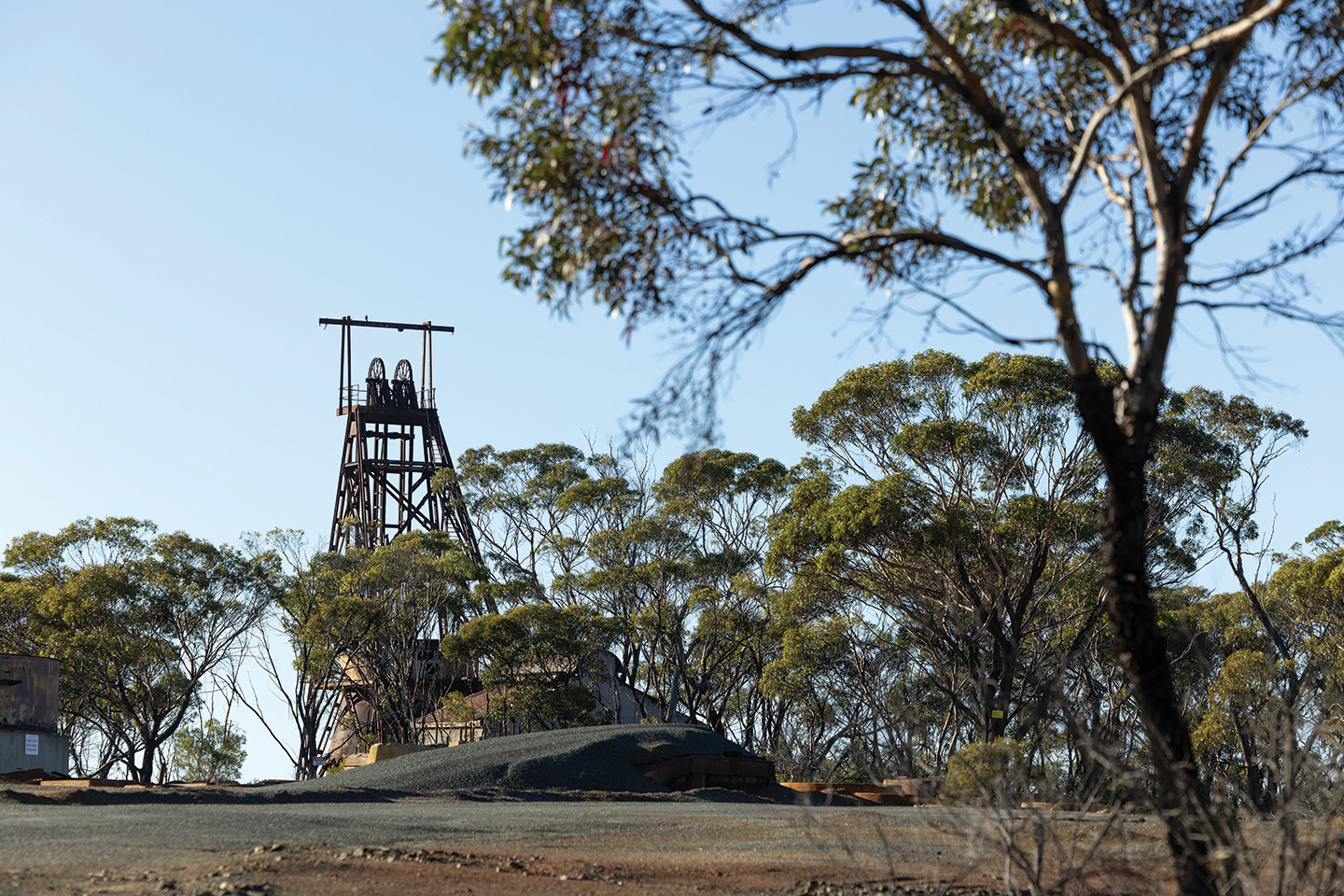
The historic Eldverton copper mine was abandoned in 1992. Its tailings have been used as a valuable fertiliser product by a local company

Form 4 CoreWeave Inc For: 2 July
Form 4 Procore Technologies Inc For: 2 July

“In uncertain times it’s almost more important to avoid the blowups than to pick the winners,” he writes. “Everyone seems to want to tell you what ‘to do’ … but not many discuss what you should avoid doing!”
Enter Piper Sandler’s “Sell Model,” which aims to identify stocks to avoid in your portfolio, highlight risks, and find potential shorts. The model factors in red flags related to valuation, risk, governance, earnings quality, sentiment, profitability, and operating efficiency.

Proposed gambling ad reforms go beyond some recommendations made in a Labor-led report that urged a total ban, the prime minister says.
Business
Nike Stock Extends Its Post-Earnings Rally Today as Investors Bet the Long-Awaited Turnaround

Nike shares climbed further Thursday, extending a two-day recovery from a dramatic after-hours selloff that followed Tuesday’s fourth-quarter results as investors increasingly bet that the worst of the athletic giant’s prolonged slump may be behind it, even if the road ahead remains difficult.
Shares of the Beaverton, Oregon-based company were trading at $43.81 as of 10:42 a.m. EDT, up 75 cents, or 1.74%, on the day, building on Wednesday’s 4.9% surge during regular trading that effectively reversed the initial panic selling that had sent the stock down as much as 10% in after-hours trading immediately following the results.
Nike’s fiscal fourth-quarter earnings report, released Tuesday after the close, showed quarterly revenue of $10.97 billion, modestly ahead of the $10.86 billion consensus estimate, while earnings per share came in at 72 cents versus the 13-cent estimate that analysts had set ahead of the report. The enormous EPS beat, however, came almost entirely from a one-time benefit: a 52-cent per-share gain tied to an expected recovery of tariffs under the International Emergency Economic Powers Act, worth approximately $986 million before tax, that inflated the bottom line well beyond what the underlying business produced in the quarter.
Stripping out that tariff-related windfall, adjusted earnings per share came in at approximately 20 cents, up from 14 cents in the year-ago period, representing what the company described as its first quarter of underlying earnings per share growth in two years, a milestone that has given bulls something to point to as evidence of gradual improvement.
Nike Chief Executive Elliott Hill, who took over the company last year and has been overseeing what management describes as a multiyear reset of the brand’s competitive positioning, was candid on the earnings call about where the company still falls short.
“Overall, the results aren’t there yet,” Hill said. “We know we’re not living up to our full potential, particularly in Nike sportswear and Jordan streetwear, where sell through remains challenged, impacting both current discounting and future order books.”
Despite those frank admissions, Hill also highlighted the areas where the turnaround appears to be gaining traction, particularly in running footwear.
“What feels different this time around is we’re not treating the tournament as a single moment, we’re using it to reshape our business, telling a connected story over time, engaging different communities in relevant ways and building momentum that carries well beyond the tournament,” Hill said of the company’s strategy around the 2026 World Cup, which Nike is participating in aggressively through advertising and athlete partnerships despite not being an official sponsor of the event.
The World Cup reference captures one of the more interesting dynamics of Nike’s recent quarter. The company reported that its advertising campaigns during the World Cup have dramatically outpaced rival Adidas in social media traction and brand attention metrics, even without the formal sponsorship rights that Adidas holds, a distinction that has given the marketing team confidence that the brand’s storytelling capabilities remain intact even as product sell-through has struggled.
Among the results themselves, several trends stood out as genuine positives despite the broader revenue decline of 1% on a reported basis or 4% on a currency-neutral basis. North American wholesale revenue rose 10% in the quarter, a meaningful reversal from periods in which Nike’s wholesale business had been deliberately scaled back as the company pushed toward its direct-to-consumer channels. Nike Direct fell 6%, reflecting continued softness in the company’s digital and owned-retail channels, and the Greater China market declined 12%, continuing a streak of weakness in what has historically been one of Nike’s highest-margin geographies.
Running footwear posted its fifth consecutive quarter of double-digit growth, a streak that has demonstrated Nike’s ability to fight back against competitive pressure from newer brands including Deckers’ Hoka and On Holding, two companies that had rapidly taken market share from Nike in the premium performance running category over the prior several years. Comparable sales and revenue at Foot Locker, one of Nike’s most important wholesale distribution partners and a relationship Nike had deliberately deprioritized during its earlier push toward direct-to-consumer, were positive for the first time in four years, a concrete sign that the company’s efforts to repair and rebuild its wholesale channel relationships are beginning to produce results.
On operating margin, Nike generated a 12% operating margin in the quarter, up 9.1 percentage points year over year, though that improvement was entirely attributable to the tariff windfall rather than underlying operational efficiency gains.
Looking ahead, Nike’s guidance was sober rather than optimistic. Chief Financial Officer Matt Friend indicated the company expects earnings to be “flattish” through the first two fiscal quarters of 2027, while gross margin for the first fiscal quarter of 2027 is expected to be slightly positive on a year-over-year basis, the first such improvement in several quarters.
The stock’s response to all of that reflects investor psychology at a critical inflection point. Shares had fallen to 11-year lows heading into the report, with the stock trading down nearly 42% over the trailing year and well below levels that many analysts had characterized as reflecting already-depressed expectations. When a deeply beaten-down stock beats estimates, even for complicated reasons involving one-time items, the response frequently reflects relief that the situation is not as bad as feared rather than genuine enthusiasm about fundamental improvement.
Analysts’ consensus price targets remain well above current levels, with several covering the stock citing the stock’s valuation at approximately three times trailing sales as a potential floor even if the turnaround takes longer than expected. Wall Street’s assessment is mixed, however, with some analysts cautioning that flat earnings guidance for fiscal 2027 reflects a missed opportunity at a moment when the World Cup, the NBA Finals, and other cultural moments could have provided meaningful revenue tailwinds if the brand had been better positioned to capitalize on them.
Marketwise general counsel Forney’s $13,608 stock withholding for taxes
Business
UPS says Boeing guidance led carrier not to adopt enhanced MD-11 inspections before fatal crash

Check out what’s clicking on FoxBusiness.com.
UPS said it relied on Boeing’s assessment that a known engine mount issue did not pose a flight safety risk when it chose not to adopt enhanced inspections before last year’s fatal cargo plane crash in Louisville, according to newly released National Transportation Safety Board filings.
In its post-hearing submission to the NTSB, UPS said it followed all required Boeing and Federal Aviation Administration-approved maintenance programs for its MD-11 fleet.
The company said Boeing’s 2008 and 2011 service letters described the issue as not a “safety of flight” condition and stated that existing inspection intervals were sufficient to identify problems involving the engine mount’s spherical bearings.
UPS Flight 2976, a McDonnell Douglas MD-11 cargo jet bound for Honolulu, crashed shortly after takeoff from Louisville Muhammad Ali International Airport on Nov. 4, 2025, after its left engine and pylon separated from the aircraft.
UNITED FLIGHT CARRYING 221 PASSENGERS HITS POLE AND TRUCK ON APPROACH TO NEWARK

Fire and smoke mark where a UPS cargo plane crashed near Louisville Muhammad Ali International Airport on Nov. 4, 2025, in Louisville, Kentucky. (Stephen Cohen/Getty Images / Getty Images)
Three crew members and 12 people on the ground were killed, while 23 others were injured. The NTSB has not yet released its final report on the accident.
UPS said it reviewed Boeing’s service letters and incorporated revisions to the aircraft maintenance manual, but did not alter its maintenance program. They said this was because Boeing also concluded the issue was not safety-related and never updated its Maintenance Planning Document (MPD), which operators use to establish required maintenance schedules.
According to UPS, Boeing’s failure to revise the MPD indicated that no additional maintenance tasks were necessary beyond those already being performed.

Smoke rises from the site of a UPS cargo plane crash near the UPS Worldport at Louisville Muhammad Ali International Airport in Louisville, Kentucky, on Nov. 4, 2025. (Leandro Lozado/AFP via Getty Images / Getty Images)
Boeing, in its own filing with investigators, said it reviewed an operator report involving a failed spherical bearing in 2008 and determined, based on the information available at the time, that the issue was not a safety concern.
The company said it issued a service letter recommending enhanced inspections of the bearing and later revised the aircraft maintenance manual to include an inspection procedure designed to detect bearing movement.
Boeing also said aircraft operators are responsible for maintaining their fleets in coordination with regulators, noting that its maintenance planning documents and manuals provide recommendations that operators use to develop their own maintenance programs.
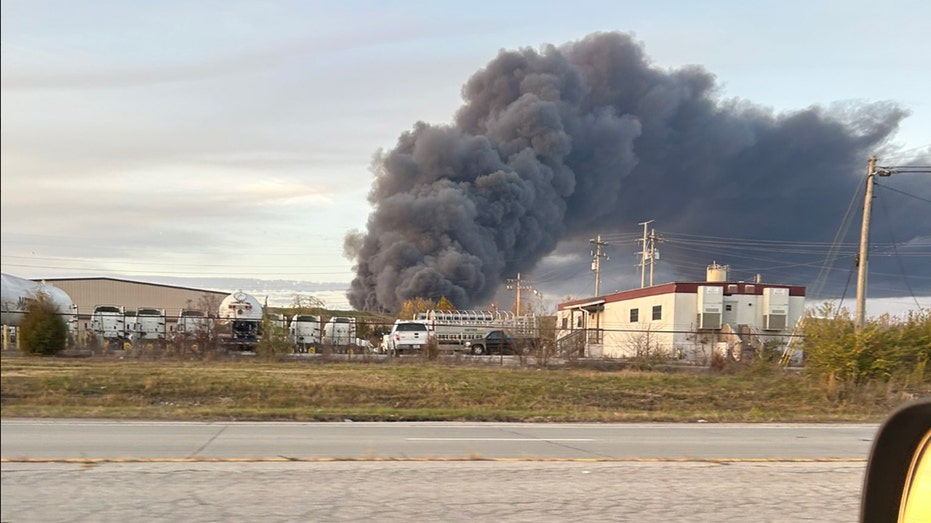
Black smoke could be seen near the Louisville Muhammad Ali International Airport. (Credit: X/@WT_Mason)
UPS also argued that Boeing’s Continued Operational Safety process failed to identify the damaged bearing and related structural damage as a flight safety issue. The carrier said maintenance records for the aircraft showed no evidence that the spherical bearing had migrated before the crash and argued testimony during the NTSB hearing established that bearings could fail without visible movement.
Both Boeing and UPS said in their NTSB submissions that they will continue cooperating with the investigation. Boeing said it has since worked with the FAA on updated inspection and maintenance procedures, developed a redesigned spherical bearing with a 4,000-flight-cycle life limit and implemented changes to its continued operational safety process.
CLICK HERE TO GET FOX BUSINESS ON THE GO
The FAA’s submission to investigators reiterated that the agency is supporting the NTSB’s investigation. The NTSB has not announced when it expects to issue its final report determining the probable cause of the crash.
FOX Business has reached out to UPS and Boeing for additional comment on their NTSB submissions.

Trump Says He Did Not Know About 1.4 Billion Crypto Earnings

Lucas Glover, Zac Blair share early lead at John Deere Classic

iFixit Shows How Replacement iPhone Batteries Take Shape Inside a Chinese Factory


-

 Fashion6 days ago
Weekend Open Thread: Staud – Corporette.com
-

 Politics7 days ago
The House | Manchesterism won’t survive the painful trade-offs unless it gets citizens on board
-

 Crypto World3 days ago
Strategy authorizes up to $1.25B in Bitcoin sales under new capital plan
-

 Politics7 days ago
Potential 2028er World Cup attendee leaderboard
-

 Business7 days ago
Asia stock markets slide as tech shares slump
-

 News Videos4 days ago
MAJOR BITCOIN & MARKET UPDATE!!!! (MUST WATCH ASAP!!!)
-

 Crypto World5 days ago
Coinbase, Circle Deepen Crypto Stock Losses Despite Resilient S&P 500
-

 Tech3 days ago
Anonymous researcher drops 0-day ‘exploitarium’ repo
-

 Business3 days ago
Australia treasurer says alleged access of prime minister’s bank data ’incredibly concerning’
-

 Crypto World6 days ago
Kraken's xStocks Opens Bending Spoons IPO Registration to EEA Retail
-

 Sports6 days ago
FIH Pro League: India defeat Pakistan 7-1, register biggest win of campaign | Other Sports News
-

 Crypto World7 days ago
Bitcoin Sparks $600M Hourly Liquidations With $65,000 Set To Become Resistance
-

 Tech5 days ago
Bluekit phishing kit adopts browser-in-the-middle for login theft
-
 Crypto World6 days ago
Hyperliquid Named on Singapore MAS Investor Alert Register
-

 Tech6 days ago
Russian hackers now target Signal backup recovery keys
-

 Crypto World7 days ago
Tether (USDT) Passes Ether in Market Cap as ETH Drops Toward $1.5K
-

 Crypto World6 days ago
RTX holders must register wallets before token distribution begins
-

 Sports2 days ago
Broncos roster: OL Ben Powers (No. 74) entering final year of contract
-
 Business3 days ago
The AI boom won’t burst all at once. It will pop in ‘rolling bubbles’: Macquarie
-

 Tech5 days ago
Claude Code turned every engineer into three. Now companies need more product thinkers
You must be logged in to post a comment Login