


Editor’s note: This article is intended to provide a general overview of the ETF for educational purposes only and, unlike other articles on Seeking Alpha, does not offer an investment opinion about the ETF.
Business
Analyzing the Causes Behind the Nation’s Long-Term GDP Growth Decline


Thailand’s post–COVID-19 economic recovery has been characterized by persistently weak growth, averaging only 2.3 percent during 2022–2024—well below its pre-pandemic performance and far from its historical peaks.
Key Points
- 📉 Growth slowdown: Thailand’s post-COVID recovery has been weak, averaging only 2.3% growth (2022–2024), far below historical peaks. This is seen as a structural, long-term decline rather than a temporary shock.
- 👥 Labor issues: Aging population, early retirement, conscription, preventable deaths, and declining education quality reduce both labor supply and productivity.
- 💰 Capital & productivity: Investment growth has slowed, and total factor productivity (TFP) gains have weakened, signaling declining fundamentals.
- 🏛️ Fiscal strain: Rising public debt (61% of GDP) and persistent deficits risk credit downgrades, with populist policies adding pressure.
- 🏠 Household debt: Exceptionally high for a developing economy (around 90% of GDP), constraining consumption and growth.
- 🌍 Exports & FDI: Export competitiveness is eroding under new tariffs and trade conflicts. FDI is shifting from Japanese-led industries to Chinese firms and data centers, with fewer local spillovers.
- ✈️ Tourism: Still below pre-pandemic levels, facing overcrowding, environmental issues, and stronger competition from regional peers.
- 📲 Services trade: Imports of services (digital platforms, IT, streaming, etc.) are rising faster than exports, creating a negative balance.
This paper argues that the slowdown reflects not a temporary cyclical shock, but a deepening structural deterioration in Thailand’s long-term growth potential. As the second installment in a three-part analytical series, the study focuses on diagnosing the key structural constraints that have contributed to Thailand’s sustained deceleration in growth relative to regional peers.
Using a combination of quantitative indicators and qualitative policy analysis, the paper examines ten core structural factors shaping Thailand’s growth dynamics: labor, capital, total factor productivity, fiscal sustainability, household debt, the goods-exporting sector, foreign direct investment, tourism, the services-importing sector, and external threats.
The analysis reveals that weaknesses are broad-based and mutually reinforcing. Demographic aging, early labor-force exit, and declining education quality are constraining labor supply and productivity. Sluggish investment and slowing total factor productivity signal weakening growth fundamentals. At the same time, high household debt, limited fiscal space, declining export competitiveness, changing patterns of foreign direct investment, a stagnating tourism model, and a widening deficit in services trade further undermine economic momentum. These challenges are compounded by rising exposure to global trade fragmentation and climate-related risks.
Taken together, the findings suggest that Thailand’s growth engine is impaired across multiple components rather than hindered by a single binding constraint. Each structural area requires targeted policy interventions to stabilize and, collectively, revive Thailand’s long-term growth trajectory.
Introduction
In the aftermath of the COVID-19 pandemic, Thailand’s economic growth during the period 2022–2024 averaged only around 2.3 percent, representing a marked slowdown compared with the pre-COVID period (2010–2019), when average growth stood at approximately 3.2 percent. This deceleration should not be interpreted as a temporary cyclical weakness. Rather, it reflects a deeper and more persistent deterioration in Thailand’s long-term growth prospects. Historically, Thailand’s GDP growth peaked at an average of 7.3 percent during 1993–1996, before declining to around 5.3 percent during 1999–2007, and subsequently falling further in the pre-COVID decade. Looking ahead, long-term projections suggest that Thailand’s growth rate will continue to decline steadily, period by period, at least until 2080 (Bisonyabut & Tantisan, 2025).
The downward revision of Thailand’s GDP growth trajectory is therefore not unexpected when viewed against the backdrop of the country’s accumulated structural challenges and the limited success of past efforts to address them. What is striking, however, is not merely the presence of these challenges, but their breadth and persistence. Multiple structural weaknesses continue to weigh on economic performance, collectively signaling a broad erosion of competitiveness. Thailand’s growth engine increasingly resembles an economic system suffering from failures across multiple components, rather than a single malfunctioning part.
This paper constitutes the second installment in a three-part series examining Thailand’s prolonged economic slowdown through three complementary analytical lenses. The first paper, published earlier, traced Thailand’s growth trajectory from its historical peak to the present, demonstrating that the observed slowdown is fundamentally structural and long-term in nature, with potentially severe consequences if left unaddressed. Building on that foundation, this paper focuses on identifying the key structural challenges that have contributed to Thailand’s persistently weak growth relative to its regional peers. The third paper, forthcoming, will examine institutional constraints that have hindered effective reform, helping to explain why well-known policy proposals have repeatedly failed to translate into meaningful and sustained progress.
Untangling Structural Challenges
To identify the underlying causes of Thailand’s long-term GDP projection decline, this paper examines a set of core macroeconomic structural factors that together form the backbone of the Thai economy. These include:
- labor
- capital,
- total factor productivity,
- fiscal sustainability,
- household debt,
- goods exporting sector,
- foreign direct investment (FDI) sector,
- tourism sector,
- import services sector
- external threats.
These structural components encompass both the supply side and the demand side of the economy and represent the primary channels through which economic growth is generated in Thailand. Weaknesses in any one of these areas can constrain growth; however, when multiple factors deteriorate simultaneously, their combined effects can substantially depress long-term GDP performance.
For each structural factor, this study employs quantitative and/or qualitative analyses to evaluate the extent to which it has supported or constrained Thailand’s economic growth over time. Where appropriate, empirical evidence is complemented by institutional and policy analysis to capture mechanisms that may not be fully observable in aggregate data. Based on these assessments, policy recommendations are proposed for each factor with the aim of mitigating structural constraints and improving Thailand’s long-term growth potential.
Findings
This section presents a detailed analysis of each structural factor, along with corresponding policy recommendations aimed at addressing identified weaknesses and enhancing Thailand’s long-term economic performance.
Labor
Labor employed in the agricultural, manufacturing, or service sectors directly contributes to GDP by producing goods and services that add value to the economy. A key challenge for this growth factor is demographic aging: as the population ages, the labor force both shrinks and becomes older, thereby limiting its contribution to GDP growth. Thailand currently faces several challenges related to this factor.
High-income economies typically counter labor-force shrinkage by extending the retirement age. As shown in Figure 1, most high-income economies have an official retirement age of around 65, while developing economies tend to maintain an official retirement age closer to 60.
In Thailand, there is no formal retirement age for most workers, except for civil servants, whose mandatory retirement age is 60. However, in practice, many workers retire earlier—often around age 55—which coincides with the age at which individuals become eligible to leave their jobs and receive pension benefits. More concerningly, labor-force statistics (Figure 2) indicate that a significant number of workers exit the labor market as early as their early 50s (TDRI, 2025a).
In addition, Thailand loses part of its labor force through channels that are largely avoidable. Three notable examples include:
- Mandatory military conscription among young workers (Prachathai, 2019);
- loss of life due to road accidents (approximately 16,000–20,000 fatalities per year, TDRI, 2025b); and
- premature deaths related to climate-related incidents, including natural disasters (Kosako, 2025) and prolonged exposure to PM2.5 pollution (Hermayurisca & Taneepanichskul, 2023).
Qualitative aspects further exacerbate the problem. Recent PISA test results (PISA, 2022) show that Thailand’s scores are below the OECD average and below those of peer economies such as China, Malaysia,and Vietnam. More importantly, the trend in Thailand’s educational performance has been declining over time.
In summary, population aging and labor-force shrinkage constitute major constraints on GDP growth. These challenges are compounded by both quantitative losses of labor and declining labor quality. Government policy should therefore focus on extending working lives by raising the effective retirement age and keeping workers in the labor market for as long as possible. At the same time, it should address labor leakage through mechanisms such as military conscription and preventable premature deaths, while placing greater emphasis on improving labor quality.
Capital
Capital refers to machinery and equipment used in the production of goods and services. In Thailand, capital investment indicators have remained sluggish following the COVID-19 pandemic. According to the Bank of Thailand’s database, Business loan growth declined from an average of 4.3% during 2015–2019 (pre-COVID) to just 2.3% between 2021–2024. Similarly, according to NESDC’s database, investment as a share of GDP has grown more slowly, falling from an average growth rate of 2.9% to 1.7% over the same period. Notably, a strong investment cycle is typically characterized by growth rates of around 3.5%–7% per year.
However, the decline in investment indicators should not be viewed as a standalone problem to be addressed directly. Rather, it reflects deeper structural weaknesses, particularly in foreign direct investment (FDI) and export performance, which will be discussed in subsequent sections.
Total Factor Productivity
Total factor productivity (TFP) measures how efficiently an economy transforms labor and capital into output, capturing gains from technology, innovation, skills, and organizational improvements beyond the mere accumulation of labor and capital. Based on NESDC analysis, TFP accounted for approximately 50% of Thailand’s GDP growth during 2011–2024. However, a clear slowdown in TFP growth has been observed in the post-COVID period. During 2015–2019, TFP growth averaged around 2.0% per year, but following the COVID-19 shock, it declined to just 1.34% per year, signaling increasing constraints on Thailand’s future growth potential (NESDC, 2025).
This trend underscores the urgent need to strengthen Thailand’s technology and innovation system, including policies that support technological upgrading, technology transfer, and the effective adoption of new technologies across firms and sectors.
Fiscal Sustainability
Thailand’s post–COVID-19 GDP growth slowdown is very pronounced, but less widely recognized is the fact that fiscal policy has already been stretched in supporting the economy. The public debt-to-GDP ratio rose from an average of 41.8% during 2015–2019 to 61.1% in the post-COVID period (2021–2024), and the current medium-term fiscal framework (Cabinet, 2025) projects the ratio to approach its statutory ceiling of 70%. The IMF and international credit rating agencies have warned that Thailand faces an increased risk of a sovereign credit downgrade, which would raise borrowing costs for both the public and private sectors. This situation is not surprising, as the government has operated under persistent fiscal deficits for more than two decades, with the deficit widening from an average of −2.6% of GDP per year during 2015–2019 to −4.1% per year in the post-COVID period (2021–2024).
Looking ahead, the country faces heightened political risks arising from competition between populist policy agendas and expanding welfare-state commitments, which could further undermine fiscal discipline. Comprehensive fiscal reform is therefore essential to safeguard Thailand’s long-term macroeconomic stability.
Household Debt
Thailand is one of the countries with very high household debt. Notably, many countries with high household debt are high-income economies (Ishak, 2026), such as Switzerland (125% of GDP), Australia (112% of GDP), Canada (100% of GDP), and the Netherlands (94% of GDP). In contrast, Thailand’s household-debt-to-GDP ratio is unusually high for a developing economy, standing at around 84% of GDP before COVID-19 and rising to around 90% after COVID-19. Among developing peers, Malaysia is the closest comparator, with household debt of around 70% of GDP, which is still significantly lower than Thailand’s level.
High household debt constrains economic growth through the consumption channel. Highly indebted households must allocate a large share of their income to debt repayment before consumption, reducing aggregate demand. In addition, high debt burdens can prevent households from expanding economic activities or investing to increase future income, trapping some households in persistent vulnerability or poverty.
Household debt can be reduced gradually over time through economic growth (base-effect reduction) and debt-restructuring or relief programs, typically offered by lenders, the Bank of Thailand, and the government. However, such adjustment processes often take a long time. Even so, targeted debt-support programs can generate positive macroeconomic effects, as they help revive consumption and create multiplier effects throughout the economy.
Goods-Exporting Sector
Before this point, the factors discussed are primarily internal factors that serve as the backbone of the economy. The remaining factors are external factors that inject income into the system, among which the goods-exporting sector plays a central role. Based on Trademap database, during 2015–2019, Thailand accounted for roughly 1.3% of global exports. After COVID-19, this share declined slightly to 1.2% during 2021–2024.
Looking ahead, however, the global trade environment has changed markedly. The United States has introduced reciprocal tariff measures that apply to a broad range of imported goods, under which Thailand faces a tariff rate of 19% (USTR, 2025). Although this rate is broadly comparable to those imposed on competing exporting countries, the tariffs nonetheless impose significant cost pressures that cannot be easily passed on to U.S. consumers.
Moreover, the emerging trade regime is increasingly shaped by strategic competition between the United States and China, placing Thailand in a vulnerable intermediary position. According to Trademap database, Thailand’s combined export share to the U.S. and China increased from 23.2% during 2015–2019 to 29.3% during 2021–2024, while imports from these two countries rose from 27.3% to 30.8% over the same period. This rising dependence heightens Thailand’s exposure to economic shocks arising from bilateral trade conflicts.
A clear example of this vulnerability is Thailand’s role as a transshipment hub for Chinese products. In 2025, the United States imposed final tariff rates on solar panels and components originating from Thailand, ranging from approximately 375% to 972%, significantly increasing the cost of Thai exports to the U.S. market.
A new export enhancing strategy is therefore needed to protect the country under this new global trade order and to guide the goods-exporting sector forward.
Foreign Direct Investment
Foreign direct investment (FDI) has long served as a foreign-driven engine of investment and growth for Thailand. Notably, Japanese investment in major industries—including automotive, electrical appliances, and electronics—has not only generated large-scale employment (including jobs in related and upstream industries) but has also supported the development of local supply chains and contributed significantly to the broader local economy.
In the post–COVID-19 period, however, the composition of FDI has begun to shift (Suleesathira, 2025). Thailand has transitioned from an investment landscape dominated by Japanese firms toward one increasingly shaped by Chinese conglomerates and data center investments. These new forms of investment differ substantially from earlier FDI patterns. First, Chinese firms tend to rely more heavily on their own workers and supply chains, limiting spillovers to local labor and suppliers. Second, data center investments fewer opportunities for local supply chain development.
As a result, although headline FDI inflows have continued to rise and recently reached new record levels, it is unclear whether Thailand’s economy will benefit to a similar extent as in the past. In practice, the primary beneficiaries may instead be industrial estate developers and utility providers servicing these investments. Moreover, growing competition for limited resources—particularly utilities—has emerged as an additional concern, as new FDI projects may crowd out more labor-intensive and supply-chain-rich forms of investment that have traditionally generated broader economic benefits.
A balanced approach is therefore required—one that carefully weighs the gains from both traditional and new forms of FDI, while ensuring that Thai workers and local supply chains remain integral parts of the investment equation.
Tourism Sector
The tourism sector is a major contributor to Thailand’s GDP. At its peak in 2019, Thailand welcomed nearly 40 million international visitors, with tourism contributing around 10% of GDP (World Travel and Tourism Council, 2024).
However, even in 2025, the number of international visitors has not yet returned to its 2019 level. Estimated arrivals remain at around 33–34 million visitors. Two developments are particularly concerning.
First, Thailand continues to rely heavily on traditional tourism assets, including mountains, beaches, sunshine, and cultural heritage sites. These strengths have long positioned Thailand as one of the world’s most visited destinations. Nevertheless, after decades of offering largely similar experiences, many destinations now face overcrowding, rising prices, environmental degradation, tourist scams, and “tourist traps.” Policy choices have also contributed to these challenges, including the legalization of cannabis, which has affected Thailand’s tourism image in some markets.
Second, regional competitors have not remained static. Countries such as China, Japan, and Vietnam have actively upgraded and promoted their tourism sectors by introducing new attractions and differentiated experiences. Compounding these pressures, the strength of the Thai baht has placed Thailand at a cost disadvantage, making travel expenses approximately 4–10% higher than those of peer destinations.
To revitalize the tourism sector, it is imperative to reinvigorate the visitor experience. Thailand must preserve the qualities that once defined its appeal—friendliness, hospitality, local character, and a sense of joy—while simultaneously developing new sources of excitement, including well-designed man-made destinations, to compete more effectively with regional peers.
Services-Importing Sector
The services-importing sector functions as a leakage from the economy, capturing expenditures by local residents on services provided outside the Thai economy. It includes travel services, business services (trade-related, professional, and management consulting), transport, financial services, government goods and services, telecommunications, computer and information services, the use of intellectual property, construction services, and insurance and pension services.
In analyzing the external services sector, it is useful to compare services imports with services exports (Tables 1 and 2). During the periods 2015–2019 and 2021–2024, a sharp contrast emerged between these two sectors. While the services-exporting sector declined from an average of USD 70,297 million to USD 48,282 million, the services-importing sector increased from an average of USD 48,898 million to USD 64,847 million.
As a result, Thailand has shifted into a negative external services balance vis-à-vis the rest of the world. More disaggregated statistics show that Thailand’s major service exports are concentrated in travel, business services (primarily trade-related), and transport, which together account for approximately 95 percent of total service exports. In contrast, service payments have been rising in transport, business services, intellectual property rights, insurance and pension services, financial services, telecommunications, computer and information services, and personal, cultural, and recreational services. Looking ahead, the services-exporting sector remains heavily dependent on relatively stagnant activities, namely travel (linked to tourism), business services (linked to goods exports), and transport (linked to both tourism and goods exports)—all of which face limited growth prospects. Meanwhile, services-importing sectors are growing rapidly in popularity among Thai consumers and businesses, particularly in ride-hailing and food delivery, accommodation platforms, e-commerce marketplaces, mobile app stores, streaming and digital content services, and cloud and IT services. Without policy intervention, the negative balance in services trade is likely to widen further.
External Threats
Last but not least, looking ahead, several external threats could have a significant impact on the economy and overall GDP. One such threat is global warming. Climate-related disasters not only cause premature deaths but also generate substantial economic losses. In recent years, Thailand has experienced an increasing number of extreme events, many of which have set new records. For example, the severe flooding in Hat Yai was caused by an unprecedented rainstorm, the heaviest in more than 300 years (Pasutan, 2025). Similarly, the earthquake in 2025, which was clearly felt in Bangkok. It is a once in a lifetime for most Bangkok’s residents.
Other catastrophic events, whether natural or man-made, cannot be ruled out in the future. Countries that are well prepared for such shocks are better positioned to preserve economic stability and protect their citizens from the unforeseen hardships these events may impose.
Conclusion
This article compiles empirical evidence and statistical data to diagnose Thailand’s economic growth slowdown. The findings suggest that the deceleration is not driven by a single factor, but rather by simultaneous deterioration across ten structural dimensions, collectively producing a systemic weakness. This dynamic can be likened to the human body, which may withstand isolated health issues to some extent, but becomes critically ill when multiple conditions occur concurrently.
The article also outlines broad policy directions for addressing each structural challenge, emphasizing that problem recognition and appropriate strategic orientation are essential first steps toward effective reform. However, given space limitations, the article does not provide detailed policy prescriptions for each area. More comprehensive solutions are discussed in the referenced literature, alongside additional policy proposals that have long been debated within academic and policy circles.
References
Bisonyabut, N., & Tantisan, W. (2025). Tracking Thailand’s economic growth: Past, present and future. TDRI Quarterly Review, 40(3), 2–9.
Cabinet. (2025). Revised Medium Term Fiscal Framework (MTFF).
Hermayurisca, F., & Taneepanichskul, N. (2023). Estimation of premature death attributed to short- and long-term PM2.5 exposure in Thailand. Environmental Monitoring and Assessment, 195(10), 1176. https://doi.org/ 10.1007/s10661-023-11807-4
Ishak, I. (2026, January 30). Ranked: The 35 countries with the highest household debt. Visual Capitalist. https://www.visualcapitalist. com/cp/35-countries-with-highest-household-debt/
Kosako, J. (2025, December 23). Voices from Hat Yai in the wake of the flood crisis [เสียงจากหาดใหญ่ หลังวิกฤตน้ำท่วม]. Business Voices, No. 2. https:// www.bot.or.th/th/research-and-publications/ research/business-voices/business-voices-2025-12.html
National Economic and Social Development Council. (2025). Capital stock of Thailand, 2024 edition.
Pasutan, P. (2025, November 24). What does Hat Yai’s “heaviest rainfall in 300 years” actually mean? [ฝนตกหาดใหญ่ “หนักสุดในรอบ 300 ปี” หมายความว่าอย่างไร?] ThaiPBS. https://www. thaipbs.or.th/now/content/3403
PISA. (2022). Press conference: results of the PISA 2022 Assessment [การแถลงข่าวผลการประเมิน PISA 2022]. https://pisathailand.ipst.ac.th/news-21/
Prachatai. (2019). TDRI recommends strategies to cope with an aging society: invest in human resources, reduce military service requirements, increase automation, and develop cities. [TDRI แนะรับมือ ‘สังคมอายุยืน’ ลงทุนมนุษย์-ลดเกณฑ์ทหาร-เพิ่มระบบอัตโนมัติ-พัฒนาเมือง]. https://prachatai. com/journal/2019/05/82475
Suleesathira, P. (2025, September 16). In-depth analysis: Why investment in the Eastern region fails to improve the lives of local people [เจาะลึก: ทำไมเม็ดเงินลงทุนภาคตะวันออกไม่ทำให้คนในพื้นที่ดีขึ้น] Bangkokbiznews. https://www.bangkokbiz news.com/business/economic/1198863
Thailand Development Research Institute. (2025a). Silver economy.
Thailand Development Research Institute. (2025b). Reimagining Thailand’s development’s model. https://tdri.or.th/2025/09/tdri-annual-public-conference-2025/
United States Trade Representative. (2025). Fact sheet: The United States and Thailand reach a framework for an agreement on reciprocal trade. https://ustr.gov/about/policy-offices/ press-office/fact-sheets/2025/october/fact-sheet-united-states-and-thailand-reach-framework-agreement-reciprocal-trade
World Travel and Tourism Council. (2004). Travel & tourism economic impact research (EIR). https://wttc.org/research/economic-impact/
Author: Nonarit Bisonyabut, Ph.D. and Sunan Phumkham.
Other People are Reading
Continue Reading
As a strong supporter of our great military’s Operation Epic Fury, and someone who has great faith in President Trump and his judgement, I do feel obliged to weigh in on the fact that any deal cobbled together too quickly runs the risk of making the next Iranian conflict more likely, not less. I’m worried that a poor deal today could mean a bigger war tomorrow. When I sat down with Mr. Trump for our interview eight weeks ago, I raised the concern that no one can ever believe anything Iran says.
As a former Reagan guy, I am always acutely sensitive to the Gipper’s phrase “trust but verify.” Over the past five decades, numerous American presidents have made deals with Iran that were never verified. International nuclear authorities have never been able to verify Iranian promises or activities. And, as Mr. Trump has said, the whole issue was boiled over with Iran’s shocking imminent nuclear threat with enriched uranium that is greater than anyone thought. And with intercontinental ballistic missile capability with a range that is longer than anyone thought. And once again, Iran is bottling up the Strait of Hormuz in an attempt for worldwide economic blackmail.
There’s so much that we don’t know yet regarding discussions that are mostly indirect. And even now it seems that Iran has cut off any communications with America. Yet just looking at the positions of the two sides, Iran wants an end to conflicts in the region, a protocol for safe passage through the Hormuz Strait, reparations and reconstruction, and lifting sanctions. That’s their position.
Former House Speaker Newt Gingrich discusses the urgency of confronting Iran’s nuclear ambitions on ‘Kudlow.’
Mr. Trump’s key points have been a complete end to all nuclear capabilities and facilities. No uranium enrichment on Iranian soil. Handing over Iran’s stockpile of enriched uranium to the international atomic energy agency, completely decommissioning and dismantling of their nuclear sites at Fordow, Isfahan, and Natanz sites. Plus a complete end to their state sponsorship of terrorism. And an end to supporting proxy terrorist groups. A dismantling of their ballistic missile programs. And reopening the Strait of Hormuz. In other words, the two sides remain monumentally far apart, as far as we know.
So, a deal looks to be impossible. A few quotes from Mr. Trump suggest that there is no deal. When reporter asked “if Iran does not meet your demands, Mr. President, are you willing to continue the war?” Mr. Trump replied: “We’ll you’ll have to watch.” The reporter followed up: “Are you committing …” Mr. Trump then responded: “The answer is yes, but you have to watch.” He added that “the entire country can be taken out in one night, and that night might be tomorrow night.” He said “we have, we have a plan, because of the power of our military, where every bridge in Iran will be decimated by 12:00 tomorrow night, where every power plant in Iran will be out of business, burning, exploding, and never to be used again. I mean, complete demolition by 12:00.”
Former U.S. special representative for Iran Brian Hook and Ronald Reagan Institute director Roger Zakheim discuss President Donald Trump’s strategy against the Iranian regime on ‘Kudlow.’
Meanwhile, any talk of ceasefires or deal extensions should be rejected. This is Iran’s game. They have been playing it for decades. They love to string things along. They are experts at playing their adversaries. They love to stall. To postpone. To argue over location. Or who is invited to the high table. They’ve been doing this for so long, and I hope that Mr. Trump doesn’t let them get away with it. I doubt that he will, because he’s a man of action and instinct. He knows that letting Iran play these games with him, he will lose international respect. He knows that if he ever walked away without reopening Hormuz, it would make him look weak. And he is never weak. Ever. He is transparently a man of his word.
In all likelihood, a few ticks of the clock after 8 P.M. Eastern time will be met by the final war push by America and presumably Israel. Mr. Trump knows that at this moment, he can change history. He can end all of Iran’s capabilities: nuclear, terrorist, missiles, Hormuz, all of it. He can bring freedom and prosperity to the Middle East and the rest of the world. He can end a scourge of civilization. He can also become one of the greatest presidents in American history.

Form DEF 14A Tempus AI Inc For: 7 April


Aaron Leach to chief commercial and supply chain officer.

European and Asian refiners are paying record high prices of near $150 a barrel for some crude oil grades, far exceeding prices for paper futures, highlighting the worsening supply crisis from the U.S.-Israel war with Iran.
The Iran war has forced the shutdown of at least 12 million barrels per day – about 12% of world supply – from the Middle East due to Iran’s effective closure of the Strait of Hormuz. As a result, Brent oil futures reached $119.50 a barrel last month, the highest since 2022 although still short of the 2008 record high of $147.50. The nearby Brent contract is for June delivery.
Competition for supply from Asian and European refiners to replace disrupted Middle Eastern oil flows has helped to drive up the prices of replacement crudes for more immediate delivery, such as those in Europe and Africa.
As a result, some crudes are hitting records already. The outright price of North Sea Forties crude reached $146.09 a barrel on Tuesday, according to LSEG data, above the 2008 level and an all time high.
The main driver of prices such as that of Forties is “panic” over supplies, said Adi Imsirovic, a veteran oil trader. “When there is a real, physical shortage, people are not thinking about July delivery – June loading and hence June futures prices – but oil NOW.”
The price of Forties and many other cargoes around the world is linked to the physical crude benchmark called dated Brent which is trading almost $20 higher than the price of Brent futures for June delivery according to LSEG data because it reflects the price of cargoes for immediate delivery.
“At the moment, the market is scrambling for prompt, refinery-usable barrels, and stress is appearing first in the part of the benchmark that is closest to the immediate physical problem,” Morgan Stanley analysts said in a report.Prices of refined products in Europe were close to record highs on Tuesday.
Jet fuel prices in Europe hovered at $226.40 a barrel, close to a record high hit in mid-March. Diesel prices were still shy of their record highs hit in 2022, standing at $203.59 a barrel on Tuesday.


IvelinRadkov/iStock via Getty Images
Fast Facts About The JPMorgan International Value ETF
The JPMorgan International Value ETF (JIVE) is an actively managed ETF launched on September 13, 2023, with an objective of long-term capital appreciation. JIVE has a portfolio of 337 companies, a trailing 12-month yield of 2.67%, a 30-day SEC yield of 3.12%, and an expense ratio of 0.55%. Distributions are paid annually. It is quite a large and liquid ETF, with about $2 billion in assets under management (“AUM”) and an average daily dollar trading volume of $30 million. The fund’s sponsor, JP Morgan (JPM), is a leading global financial services firm with about $3.9 trillion of assets.
Strategy
As described in the prospectus by JP Morgan, the fund may invest in both developed (ex-U.S.) and emerging markets and intends to maintain geographic and sector exposures similar to those of the MSCI ACWI ex USA Value Index. Value companies are primarily identified based on price/sales, price/earnings, and price/net assets ratios. The investing process blends quantitative screens and in-depth fundamental analysis. The fund may also invest in ETFs and use derivatives for investing and hedging purposes. Exposure in certain currencies may be hedged with currency forwards from time to time, even though the fund is generally not currency-hedged.
The portfolio’s turnover rate was 46% in the most recent fiscal year. This article will use the iShares Core MSCI Total International Stock ETF (IXUS) as a benchmark. IXUS tracks the MSCI ACWI ex USA IMI Index.
The JIVE Portfolio
The portfolio is mostly invested in large- and mega-cap companies (about 75% of asset value), with notable exposure in Japan (15.3%) and the U.K. (10.7%). The geographical allocation is close to that of IXUS, although JIVE significantly downplays Canada and Taiwan.
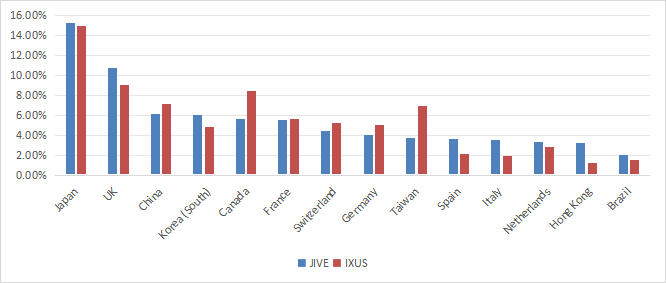
JIVE top countries, % of asset value (Chart: author; data: iShares)
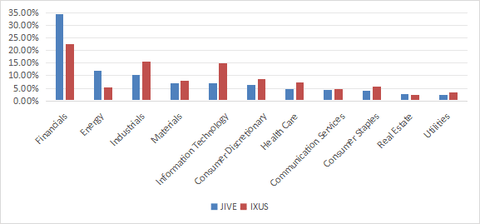
The fund has a focus on financials (34.5% of asset value), in particular banks (22.5%). The second heaviest sector (energy) weighs only 12%. Compared to the benchmark, JIVE overweights financials and energy, while it mostly downplays technology and industrials.
JIVE sector breakdown, % of asset value (Chart: author; data: iShares)
The portfolio is well-diversified, with low company-specific risk. The top 10 issuers, listed in the next table, represent 15.4% of asset value, and the largest position weighs 2.65%.
Fundamentals
In accordance with the strategy description, JIVE has strong value characteristics. It is much cheaper than IXUS based on valuation ratios and has lower growth rates, as reported in the table below.
Data source: Fidelity
Portfolio composition and fundamental metrics are given as an example from April 7, 2026. They may have changed by the time you read this.
Performance
JIVE has greatly outperformed IXUS, by 9.7% annualized from its inception to the present, with similar risk measured by maximum drawdown and volatility.
Data: Portfolio123
JIVE is 18% ahead of IXUS just over the 12 months prior to April 7, 2026, again with similar risk metrics.
JIVE Vs. Competitors
The next table compares characteristics of JIVE and five international value ETFs without currency hedges:
- Schwab Fundamental International Equity ETF (FNDF).
- Dimensional International Value ETF (DFIV).
- iShares MSCI International Value Factor ETF (IVLU).
- Avantis International Large Cap Value ETF (AVIV).
- VictoryShares International Value Momentum ETF (UIVM).
This list is not intended to be exhaustive.
* Calculated with Portfolio123 from 9/20/2023.
JIVE has the highest expense ratio and is the best performer based on total return and Sharpe ratio (a measure of risk-adjusted return) since its inception.
Takeaway
JIVE holds over 300 international value stocks with a focus on large companies. The fund has low company-specific risk, moderate country risk, but high sector risk in financials. JIVE has greatly outperformed the ex-U.S. benchmark IXUS and its closest competitors since its inception, with similar volatility. JIVE is best suited for investors seeking exposure in international value as a long-term holding or for tactical allocation.
- Pros: low company and country risks, superior risk-adjusted return.
- Cons: financial sector risk, high expense ratio.
This article answers these three main questions about JIVE:
- How is the JIVE portfolio structured?
- How does JIVE compare to a benchmark and competitors?
- What kind of strategy is JIVE best suited for?
Business
Medical Properties Trust: New Tenant Risk Meets Promising Recovery Cadence – Contrarian Buy

Medical Properties Trust: New Tenant Risk Meets Promising Recovery Cadence – Contrarian Buy

Meta: Hated Again, And That's An Opportunity
‘Barron’s Roundtable’ panelists discuss investors’ tendency to buy when stocks dip.
Goldman Sachs said on Thursday it has completed the acquisition of active exchange-traded fund provider Innovator Capital Management, expanding the Wall Street bank’s presence in the fast-growing active ETF segment.
Active ETFs are among the fastest-growing areas of asset management, attracting investors with lower costs and flexible strategies at a time when returns from some passive index products have lagged.
The bank said in December that it would acquire Innovator Capital, which managed 171 ETFs with about $31 billion in assets, in a deal worth about $2 billion.
“With this acquisition, we have taken a transformative step in our commitment to provide sophisticated investment solutions that are designed to deliver specific outcomes for investors through market cycles,” Goldman Sachs Chief Executive Officer David Solomon said.
VANGUARD FUND STRIPS OUT CHINA IN EMERGING MARKETS INVESTMENT PLAY
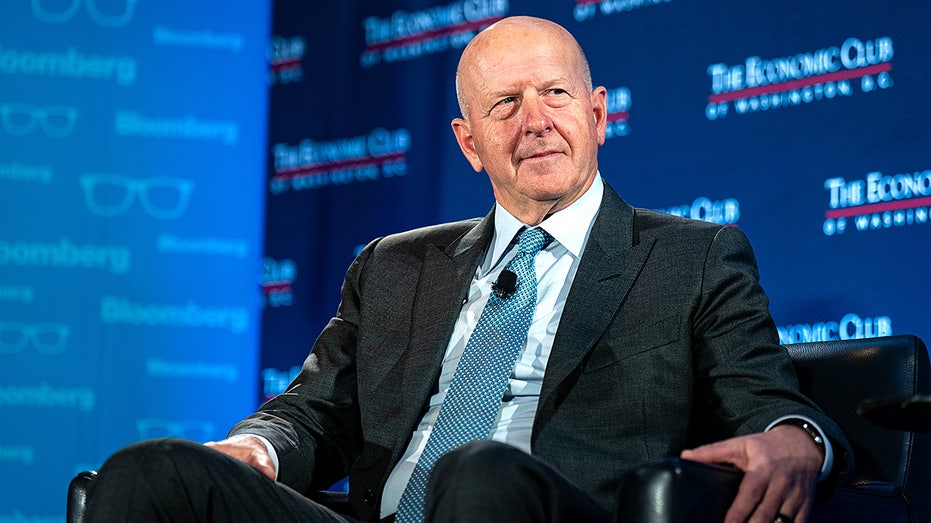
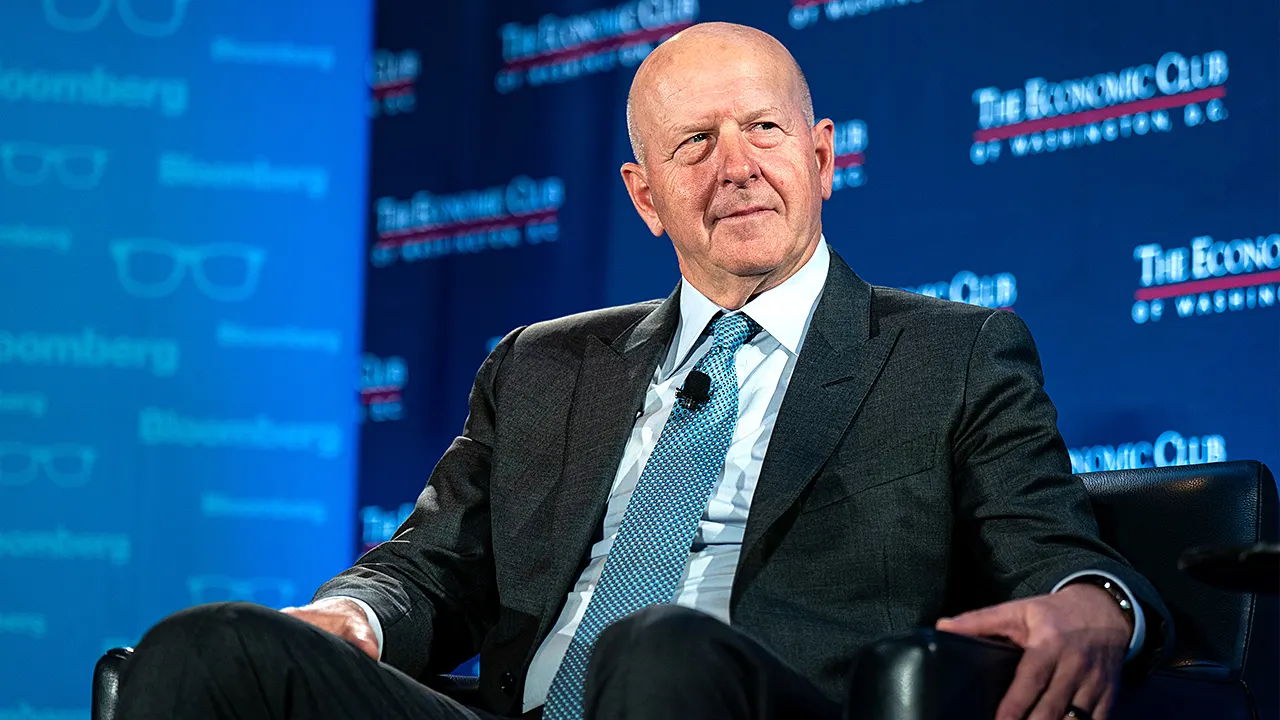
David Solomon, chief executive officer of Goldman Sachs Group Inc., speaks during an Economic Club of Washington event in Washington, D.C., on Oct. 30. (Al Drago/Bloomberg via Getty Images)
Following the deal, Innovator’s co-founders Bruce Bond and John Southard will join Goldman Sachs as advisory directors, the firm said, while Chief Investment Officer Graham Day and Head of Distribution Trevor Terrell will join as partners.
More than 70 Innovator employees will join the firm, Goldman Sachs said.
THE ETF REPORT: NEWS & ANALYSIS
Goldman Sachs Asset Management now oversees about 240 ETFs globally, with total ETF assets under supervision of $90 billion, the firm said.

A sign is displayed in the reception of Goldman Sachs in Sydney, Australia. (David Gray/Reuters)
Innovator uses a so-called defined outcome strategy, employing exchange-traded options to protect investors from market downside while capping upside to help pay for the protection.
INVESTORS BET BIG ON BOOMING DRONE ECONOMY
| Ticker | Security | Last | Change | Change % |
|---|---|---|---|---|
| GS | THE GOLDMAN SACHS GROUP INC. | 864.52 | -1.96 | -0.23% |
“What we found is a lot of advisors have clients that are in pre-retirement or in retirement. They are prioritizing capital preservation over capital appreciation,” Graham Day told Reuters.
The current size of the defined outcome market is between $70 billion and $80 billion and is growing faster than the traditional ETF space, he said.
GET FOX BUSINESS ON THE GO BY CLICKING HERE
“The traditional correlations are breaking down. So more and more investors are looking for different ways to get exposure to markets,” said Bryon Lake, Chief Transformation Officer, Goldman Sachs Asset Management.


Cookie startup is updating its products, branding to reflect current consumer trends.

‘Barron’s Roundtable’ panelists discuss investors’ tendency to buy when stocks dip.
BlackRock has filed for an exchange-traded fund that will track the Nasdaq-100, in a challenge to Invesco’s dominance in a market where only a handful of funds directly follow the tech-heavy index.
The world’s largest asset manager is seeking approval for iShares Nasdaq-100 ETF, which will trade under the ticker “IQQ,” it said in a filing with the Securities and Exchange Commission on Monday.
JAMIE DIMON WARNS IRAN WAR COULD DRIVE INFLATION, INTEREST RATES HIGHER
Fees for the fund were not specified.

BlackRock CEO Larry Fink visits “Special Report” with Bret Baier at FOX News D.C. Bureau on March 10, 2026, in Washington, D.C. (Paul Morigi/Getty Images)
NY FED PRESIDENT JOHN WILLIAMS WARNS IRAN-DRIVEN OIL SPIKE COULD RIPPLE THROUGH ECONOMY
The fund would compete with Invesco’s QQQ Trust ETF, one of the largest ETFs in the world, with around $376 billion in assets under management, according to data compiled by LSEG.
“Expanding access to the Nasdaq-100 is intended to be additive, supporting investors by improving the efficiency, liquidity, and availability of benchmark-linked exposure across markets and product types,” Nasdaq said in a public statement.
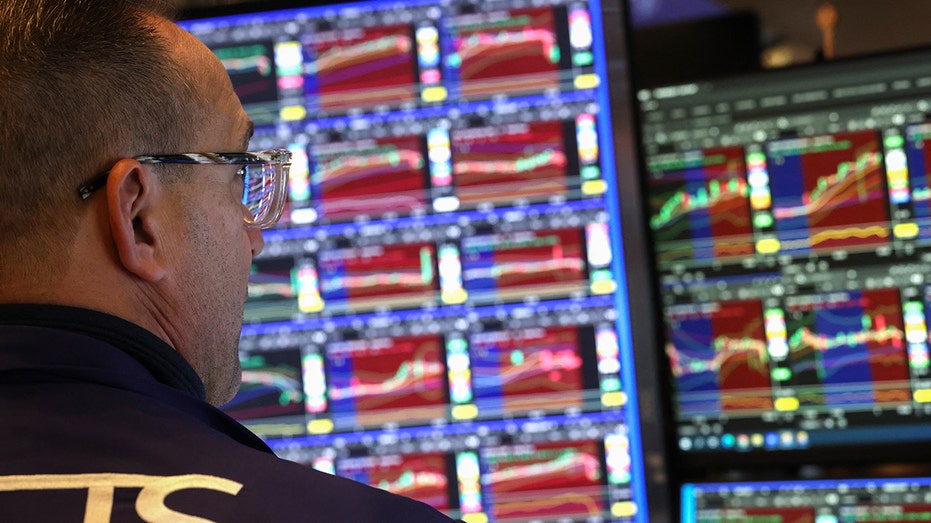
A NYSE trader monitoring U.S. stock benchmarks after several economic reports. (Timothy A. Clary/AFP via Getty Images)
POWELL WARNS OF NEW ENERGY SUPPLY SHOCK AS GAS PRICES SURGE: ‘NO ONE KNOWS HOW BIG IT WILL BE’
Only a handful of publicly available ETFs exclusively track the Nasdaq-100, according to data from VettaFi’s ETF database.
Invesco’s product is one of the most widely traded funds in the U.S. and a popular way for investors to gain exposure to large-cap growth and technology companies.
| Ticker | Security | Last | Change | Change % |
|---|---|---|---|---|
| BLK | BLACKROCK INC. | 958.46 | -0.95 | -0.10% |
GET FOX BUSINESS ON THE GO BY CLICKING HERE
The Nasdaq-100 comprises 100 of the largest non-financial companies listed on the Nasdaq exchange, including tech giants such as Nvidia and Apple.
Invesco shares declined close to 4% to $23.19 in early trading. BlackRock shares edged 0.6% lower.

NewsBeat1 minute ago
how the planet’s climate has changed since the photo that inspired the environmental movement

Business2 minutes ago
LARRY KUDLOW: A Bad Deal Today Would Mean a Bigger War Tomorrow

Crypto World3 minutes ago
Solana Crypto Foundation Launches STRIDE Program to Strengthen Ecosystem Security


-

 NewsBeat5 days ago
Steven Gerrard disagrees with Gary Neville over ‘shock’ Chelsea and Arsenal claim | Football
-

 Business5 days ago
No Jackpot Winner and $194 Million Prize Rolls Over
-

 Fashion4 days ago
Weekend Open Thread: Spanx – Corporette.com
-

 Crypto World6 days ago
Gold Price Prediction: Worst Month in 17 Years fo Save Haven Rock
-

 Business2 days ago
Three Gulf funds agree to back Paramount’s $81 billion takeover of Warner, WSJ reports
-

 Business4 days ago
Expert Picks for Every Need
-

 Sports3 days ago
India men’s 4x400m and mixed 4x100m relay teams register big progress | Other Sports News
-

 Business6 days ago
Login and Checkout Issues Spark Merchant Frustration
-
Business2 days ago
No Jackpot Winner, Prize to Climb to $231 Million
-

 Crypto World7 days ago
Bitcoin enters the public bond market as Moody’s gives a first-of-its-kind crypto deal a rating
-
Crypto World7 days ago
Bitcoin stalls below key resistance as technical signals skew bearish
-

 Tech5 days ago
Commonwealth Fusion Systems leans on magnets for near-term revenue
-

 Politics7 days ago
Starmer’s centre has collapsed, and the left was right all along
-

 Crypto World6 days ago
Ripple rolls out enterprise crypto treasury platform for corporates
-

 Fashion1 day ago
Massimo Dutti Offers Inspiration for Your Summer Mood Board
-

 Crypto World6 days ago
Why It’s Partnering, Not Issuing
-

 Business3 days ago
Akebia Therapeutics, Inc. (AKBA) Discusses Pipeline Progress and Strategic Focus on Kidney Disease Treatments at R&D Day – Slideshow
-

 Tech7 days ago
Solo Leveling: Ranking All Sung Jinwoo Shadows by Power
-

 Tech6 days ago
Drawing Tablet Controls Laser In Real-Time
-
Sports6 days ago
Tom Pelissero Drives the Final Nail in the Coffin
You must be logged in to post a comment Login