






Connect with us
DAPA Banner
DAPA Coin
DAPA
COIN PAYMENT ASSET
PRIVACY · BLOCKDAG · HOMOMORPHIC ENCRYPTION · RUST
ElGamal Encrypted MINE DAPA
🚫 GENESIS SOLD OUT
DAPAPAY COMING

Business

Apollo Hospitals Q4 Results: Cons PAT jumps 36% YoY to Rs 529 crore, revenue rises 18%; Rs 10 per share dividend declared

Published

on

Apollo Hospitals Q4 Results: Cons PAT jumps 36% YoY to Rs 529 crore, revenue rises 18%; Rs 10 per share dividend declared
Apollo Hospitals Enterprise reported a consolidated net profit of Rs 529 crore in the March-ended quarter versus Rs 390 crore in the year-ago period, a 36% growth. The profit after tax (PAT) is attributable to the owners of the parent.

The hospital chain posted an 18% revenue growth to Rs 6,605 crore in Q4FY26 versus Rs 5,592 crore posted in the corresponding quarter of the previous financial year.

The company’s PAT grew 5.4% sequentially from Rs 502 crore in Q3FY26 while the topline increased 2% compared to Rs 6,477 crore in the October-December quarter of FY26.

The company’s board recommended a final dividend of Rs 10 per equity share for FY26 and has set the record date on August 14, 2026 for determining the shareholders who are entitled for the final dividend.

Advertisement

The company’s Earnings Before Interest, Taxes, Depreciation and Amortisation (EBITDA) in the quarter under review stood at Rs 1,011 crore, recording a 31% YoY growth.


In its filing to the exchanges, the company reported strong growth in revenue and EBITDA across all three business verticals, as well as at the consolidated level, reflecting sustained operational momentum and resilient demand across healthcare services.
Healthcare service Q4FY26 performance
• Revenue at Rs 3,268 crore vs Rs 2,822 crore in Q4FY25; growth of 16% YoY
• EBITDA grew 14% at Rs 781 crore vs Rs 686 crore in Q4FY25; Margins at 23.9% in Q4FY26
• PAT stood at Rs 412 crore vs Rs 385 crore in Q4FY25, up 7% YoY

Apollo Health and Lifestyle Q4 performance
• Revenue at Rs 489 crore vs Rs 394 crore in Q4FY25; growth of 24% YoY
• EBITDA grew 58% at Rs 75 crore vs Rs 47 crore in Q4FY25; margins at 15.3% in Q4FY26
• PAT profit of Rs 10 crore vs loss of Rs 4 crore in Q4FY25

Apollo HealthCo Q4FY26 performance
• Revenue at Rs 2,848crore vs Rs 2,376 crore in Q4FY25; growth of 20% YoY
• EBITDA at Rs 156 crore vs Rs 36 crore in Q4FY25; margins at 5.5% in Q4FY26
• PAT stood at Rs 107 crore vs Rs 9 crore in Q4FY25

The company reported a strong consolidated performance for FY26, with revenue rising 16% YoY to Rs 25,229 crore compared with Rs 21,794 crore in FY25, driven by robust growth across its healthcare and digital platforms businesses.

Advertisement

EBITDA stood at Rs 3,769 crore against Rs 3,022 crore in the previous financial year, despite continued investments in Apollo 24/7, which incurred costs of Rs 467 crore during FY26, including a non-cash ESOP charge of Rs 118 crore.

Reported profit after tax (PAT) increased sharply to Rs 1,942 crore from Rs 1,446 crore in FY25, while diluted earnings per share (EPS) came in at Rs 134.95 for the year.

Meanwhile, Apollo 24/7 recorded a gross merchandise value (GMV) of Rs 2,037 crore, reflecting continued traction in the company’s digital healthcare ecosystem.

(Disclaimer: The recommendations, suggestions, views, and opinions given by the experts are their own. These do not represent the views of The Economic Times.)

Advertisement
Continue Reading
Click to comment

You must be logged in to post a comment Login

Leave a Reply

Business

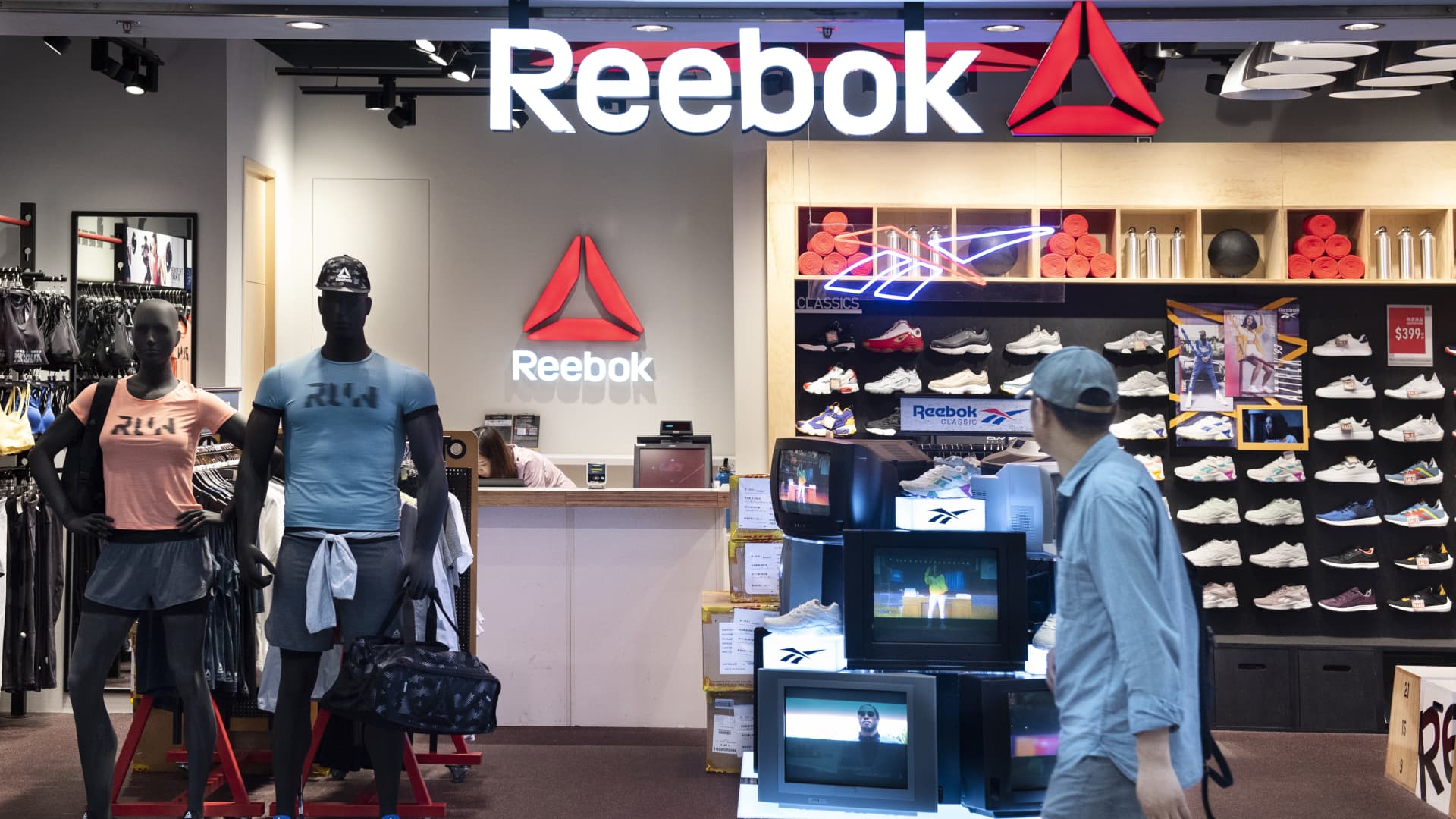
Reebok owner Authentic Brands Group could IPO in 12 months

Published

on

Reebok owner Authentic Brands Group could IPO in 12 months
Authentic Brands Group expects IPO in next 12 months, founder tells CNBC

The founder of Authentic Brands Group, the management firm behind dozens of retail and media names including Reebok, Champion and Brooks Brothers, said he expects to take the company public in the next 12 months as he announced a former Wynn Resorts CEO will be its next chief executive.

In an exclusive interview with CNBC’s Sara Eisen, Jamie Salter said Authentic’s president, Matt Maddox, who joined the firm as president in January 2025 after a 20-year career at Wynn, will take over as CEO so Salter can transition to executive chairman.

When asked if this means the company is headed for an initial public offering, Salter said he expects the company to go public “sometime in the next 12 months.”

“There’s no doubt about it that Matt is definitely a great Wall Street CEO,” said Salter. “We’ve almost gone public twice, we’ve filed twice and both times we were taken out by other private equity firms at much higher prices. I think this time, the company has grown so big that I think this time we’ll probably end up going public sometime in the next 12 months.”

Advertisement

Salter said the transition is necessary because he’s trying to grow Authentic into a $100 billion company over the next five years, and said he needs to spend “100% of my time” focused on the mergers and acquisitions that have long formed the lifeblood of his business.

In his new role, Salter will remain “deeply engaged in the business” but will focus on long-term strategy, Authentic said in a news release. Maddox will lead day-to-day operations with a mandate to scale the business, drive organic growth, and create value for the firm’s “shareholders and partners.”

In a release, Maddox added “the opportunity ahead is significant, and we are just getting started.”

(L-R) Jamie Salter and Matt Maddox attend the Michael Rubin REFORM Alliance Casino Night Event on September 13, 2025 in Atlantic City, New Jersey.

Advertisement

Arturo Holmes | Getty Images

Authentic generates about $38 billion in systemwide retail sales and has become a major force in the retail industry, known for buying the intellectual property behind popular brands that are distressed or bankrupt and licensing that IP for lucrative royalties. 

It has more than 50 brands in its portfolio, including Sports Illustrated, Guess and Juicy Couture, and has partnered with major figures like Shaquille O’Neal, David Beckham and Kevin Hart.

Authentic was almost entirely focused on apparel retailers for years, but these days, Salter said he is looking more toward entertainment acquisitions, which are currently the “driving force” of the business.

Advertisement

“Entertainment today is roughly 20% of our business, 80% beauty and lifestyle, but I believe that over a period of time entertainment will become much stronger, going from 20% to 50%,” said Salter. “The reason why I want to focus so much on the entertainment business is because it’s clear as day that content drives commerce.”

Authentic has been signaling it’s ready for a public offering for years, most recently in April during the Reuters Momentum AI event where Salter said the company will attempt another IPO “soon.”

He added that once the company was ready to file with the U.S. Securities and Exchange Commission, he planned to be in a leadership position other than CEO. 

That moment appears to have arrived with Maddox’s appointment as CEO and Salter’s transition to executive chairman.

Advertisement

Salter, who has spent decades in the consumer and retail space, is an accomplished investor and dealmaker, but he is less experienced than Maddox when it comes to the chops necessary to run a public company. During his time at Wynn, a near $10 billion market cap company traded on the Nasdaq, Maddox spent almost 15 years in the C-suite as CFO, president and CEO, according to his LinkedIn profile. 

Often when companies are nearing an IPO, they will choose leaders who have deep experience running public companies, especially when those firms are led by founders.

Choose CNBC as your preferred source on Google and never miss a moment from the most trusted name in business news.
Continue Reading

Business

Ola Electric Q4 Results: Net loss contracts 42% YoY to Rs 500 crore, revenue tanks 57%

Published

on

Ola Electric Q4 Results: Net loss contracts 42% YoY to Rs 500 crore, revenue tanks 57%
Pure-play electric two-wheeler maker Ola Electric Mobility reported a consolidated net loss of Rs 500 crore for the March quarter, marking a contraction of 42.5% from Rs 870 crore reported in the same period last year. This is attributable to the owners of the company.

The company’s revenue from operations came in at Rs 265 crore, down 57% from Rs 611 crore it posted in the corresponding quarter of the previous financial year.

The company reported an EBITDA loss of Rs 281 crore for the quarter under review versus Rs 630 crore in the year-ago period.

Consolidated gross margin stood at 38.5% in Q4FY26 compared with 34.3% in Q3FY26 and 13.7% in Q4FY25.

Advertisement

The company said this now represents an industry-leading gross margin profile, significantly ahead of most two-wheeler OEMs, including established ICE players.


However, Ola cautioned that gross margins could moderate in Q1 and Q2FY27 due to commodity inflation and pricing measures aimed at accelerating growth amid ongoing geopolitical uncertainties. Despite this, the company said it has sufficient margin buffers to remain aggressive on pricing and customer value propositions while continuing to maintain strong unit economics.
The company said Q4FY26 marked its first quarter of positive operating cash flow despite being a relatively low-volume quarter.Consolidated cash flow from operations (CFO) stood at Rs 91 crore during the quarter, supported by PLI inflows, stronger gross margins, lower operating expenses and tighter working capital discipline. Consolidated free cash flow (FCF) improved to negative Rs 131 crore.

The Auto business generated cash flow from operations of Rs 213 crore and free cash flow of Rs 173 crore in Q4FY26. Meanwhile, the Cell business continued to remain in investment mode as the company ramped up its Gigafactory operations and prepared for the next phase of cell and energy storage product launches.

Ola said FY26 was also a year of cost rationalisation and tighter operating discipline. Consolidated operating expenses, including lease rentals, declined sharply to Rs 428 crore in Q4FY26 from Rs 844 crore in Q4FY25.
According to the company, the reduction was driven by network rationalisation, tighter control over sales and service costs, lower fixed overheads and improved operating governance.

The company added that operating expenses are expected to decline further towards Rs 350 crore per quarter over the next few quarters as the full impact of FY26 cost measures begins to reflect in the business. It said the leaner cost structure positions the company better as volumes recover.

Advertisement

Ola Electric outlook

Based on current trends, the company expects Q1FY27 orders to be in the range of 40,000-45,000 units, nearly double the levels seen in Q4FY26.

As volumes improve, the company expects its auto business to move towards adjusted operating EBITDA and free cash flow positivity during FY27. It said this transition will be supported by strong gross margins, further reduction in operating expenses over the next few quarters, disciplined working capital management, supplier and factory ramp-up, and better utilisation of the existing gross block.

Ola Electric shares ended at Rs 36.94, higher by 1% on the BSE on Wednesday.

Advertisement
Continue Reading

Business

Google tests AI-powered ad formats to enhance search experience

Published

on


Google tests AI-powered ad formats to enhance search experience

Continue Reading

Business

Goodies enters US retailers

Published

on

Goodies enters US retailers

The children’s food brand features a variety of “better-for-you” snacks. 

Continue Reading

Business

BakeMark names Sean Leer as CEO

Published

on

BakeMark names Sean Leer as CEO

Food distribution veteran to lead baking company’s “next phase of expansion.”

Continue Reading

Business

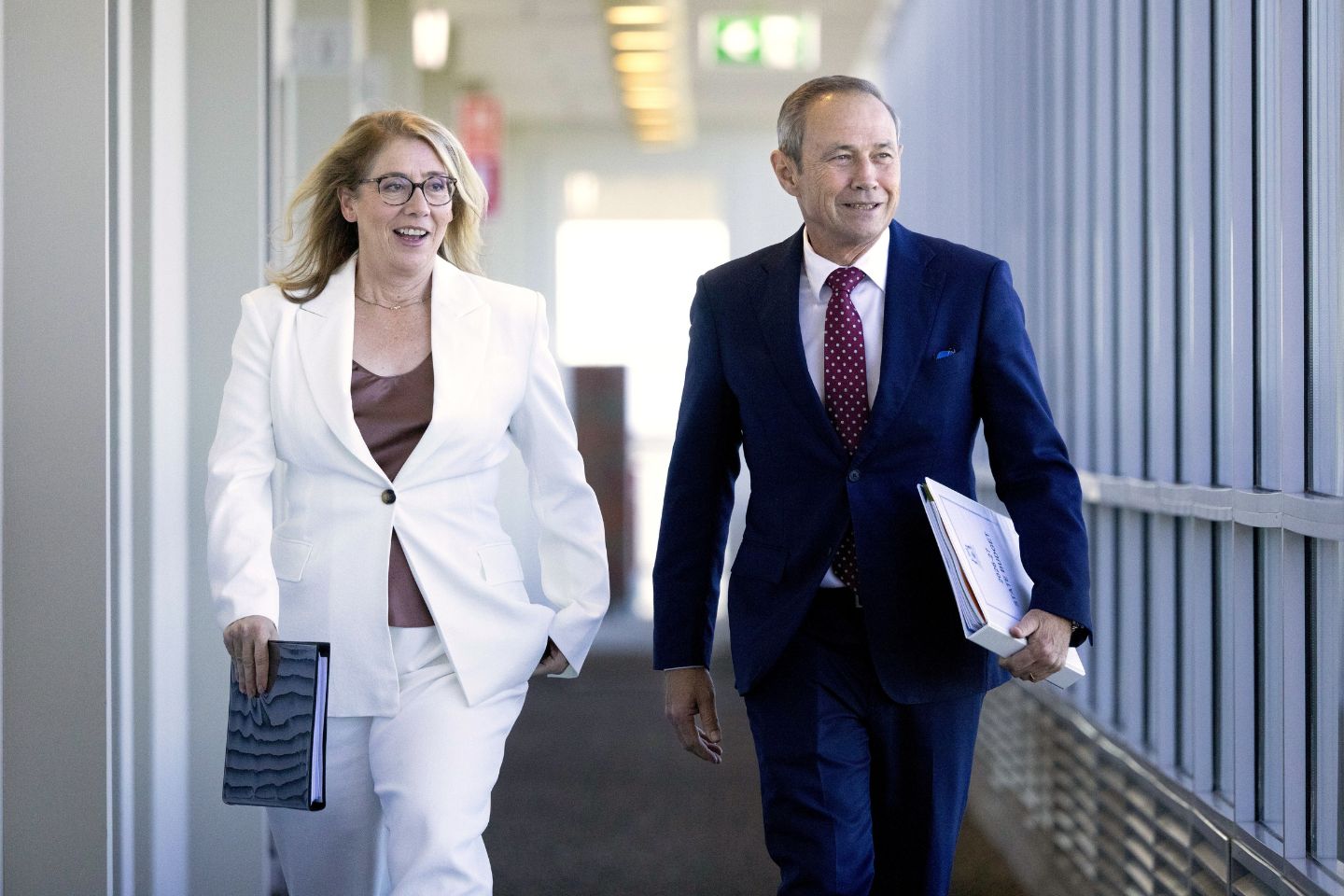
Opinion: Fuel thrown on fire by $100 cash splash

Published

on

Opinion: Fuel thrown on fire by $100 cash splash

The treasurer’s big-spending budget was met with a lukewarm reception.

Continue Reading

Business

Prepare for turbulence – how a prolonged Middle East conflict could reshape how we fly

Published

on

Prepare for turbulence - how a prolonged Middle East conflict could reshape how we fly

The Gulf’s hub airports made long-distance travel cheaper – but now their future looks unclear.

Continue Reading

Business

Stock market rebounds: Sensex recovers 790 points from day’s low, Nifty closes above 23,650

Published

on

Stock market rebounds: Sensex recovers 790 points from day’s low, Nifty closes above 23,650
Indian stock market recovered all morning losses, with Sensex rebounding nearly 790 points and Nifty jumping over 260 points from their respective intraday lows to close in the green as oil prices cooled down below $110 per barrel, and bond yields inched lower after soaring to record high levels.

At close, Sensex was up over 117 points at 75,318 while Nifty 50 was up 41 points at 23,659. This came as India VIX, which measures volatility in markets, declined around 2% to 18.31 in the afternoon.

The sharp reversal in investor sentiment was broad-based, with Nifty Smallcap 100 and Nifty Midcap 100 indices gaining around 0.6% and 0.07% respectively. Sectorally, Nifty Oil & Gas gained around 1.7% to lead gains, while Nifty Media fell over 1% to lead losses. Around 1,722 stocks advanced on NSE, while 1,543 stocks declined and 107 remained unchanged.

“Markets recovered from intraday lows, supported by selective buying in largecap stocks across autos, financials, and oil & gas. Autos and financials gained on relatively better Q4 earnings, while recent fuel price hikes supported sentiment for OMCs and refiners. Realty stocks also witnessed value buying after the recent correction,” said Vinod Nair, Head of Research at Geojit Investments.

Advertisement

Bond yields inch lower

After a skyrocketing rally to record high levels, bond yields slightly declined. The benchmark 10-year U.S. Treasury yield hit a 16-month high of 4.687% overnight, while the 30-year yield climbed to 5.198%, levels last seen in 2007. Both have since eased slightly to 4.65% and 5.17% respectively. While the bond yields have slightly cooled down on Wednesday morning, the yields remain elevated.


High bond yields typically make bonds attractive to investors, which in turn can lead to some downturn in equity markets.

Iran-US conflict

US President Donald Trump told lawmakers at the White House that the country will “end the war very quickly” with Iran. “There’s so much oil out there, they’re going to come plummeting down..We’re going to end that war very quickly. They want to make a deal so badly…You are going to see oil prices plummet. They’re going to come down. There’s so much oil out there, they’re going to come plummeting down,” he said at a press conference. This came after he threatened Iran, saying the US may launch new attacks if Tehran fails to agree to some of the terms of the peace deal.Meanwhile, US Vice President JD Vance said that the Iran conflict will not become a “forever war”. “We’re going to take care of business and ⁠come home,” he said during a White House briefing.

Oil prices fall below $110/barrel

As a result, oil prices cooled down. Brent crude fell nearly 2% to close at a little over $109 per barrel. WTI Crude also fell around 2% to $102 per barrel. Oil prices, however, continue to remain above the $100 per barrel level amid the prolonged blockade over the Strait of Hormuz, a narrow 33-kilometre waterway connecting the Persian Gulf with the Gulf of Oman that handles over 20% of the world’s daily oil and gas shipments.

Advertisement

Global markets

Asian markets mostly closed in the red, with Japan’s Nikkei and South Korea’s Kospi dropping around 1% each. Hong Kong’s Hang Seng fell 0.7% while China’s Shanghai Composite recorded marginal losses.

European markets moved into the green with the UK’s FTSE, France’s CAC and Germany’s DAX recording marginal gains. Wall Street closed in the deep red yesterday, but Dow Jones futures are currently in the green, indicating a positive start for the American stock market later today.

Rupee hits fresh record low

Despite the optimism, some caution is warranted. Indian rupee extended is free fall, ending at a record closing low of 96.82 against the US dollar. Rupee’s weakness comes as elevated crude oil prices and continued pressure on capital flows kept the currency under stress, said Jateen Trivedi, VP Research Analyst of Commodity and Currency at LKP Securities. “Sustained higher crude prices are increasing concerns over India’s import bill and widening trade deficit, which is keeping sentiment weak for the rupee,” he said.

“Market participants continue to prefer dollar buying and rupee selling as a hedge against ongoing volatility and external sector pressure. The broader trend remains weak, with the rupee expected to trade in a range of 96.25–97.00 in the near term,” according to the analyst.

Advertisement

FII selling resumes

Foreign investors remained net sellers of Indian equities on Tuesday, selling shares worth Rs 2,457 crore on Dalal Street. This comes after a three-session buying streak during which FII bought Indian shares worth Rs 5,240 crore.

However, foreign investors have mostly remained bearish on Indian markets this month so far, remaining net sellers of Indian equities in eight out of 12 sessions so far in May.

(Disclaimer: Recommendations, suggestions, views, and opinions given by experts are their own. These do not represent the views of the Economic Times.)

Continue Reading

Business

The Open University warns that student demand in Wales is outstripping funding

Published

on

Business Live

It is calling on the Welsh Goverment to provide more funding to support flexible learning

The Open University.

Rising demand for flexible higher education in Wales is outpacing funding putting future workforce development and access to study at risk, warns the Open University.

The university says its ability to support growing numbers of students could come under increasing pressure without action from the new Plaid Cymru Welsh Government, despite a sharp increase in learners seeking flexible learning.

Advertisement

Figures show that student numbers at the Open University in Wales have more than doubled over the past decade from 7,000 to over 16,000 currently.

Numbers accelerated notably during the pandemic – with numbers rising by 32% in 2020/21 -and have continued to climb steadily since. More than half of all part-time higher education students in Wales now study with the Open University.

Despite this sustained growth, funding for flexible higher education has fallen significantly in real terms over the last ten years. The university said in today’s prices, this equates to a reduction of approximately £288 (18.98%) per student compared with 2015/16 levels, placing increasing pressure on provision as student numbers continue to rise.

The university warns that while demand is continuing to rise, the financial support system has not kept pace, placing increasing pressure on provision.

Advertisement

Across all providers in Wales, total funding for part-time higher education provision in Wales was £28.6m in 2015/16. By 2024/25 this had risen to £34.8m. The Open University says if funding kept pace with inflation, the equivalent figure would have been around £38.3m in 2024/25 terms.

At the same time, student numbers studying part-time across Wales increased by around 12%, meaning the system is supporting more learners with comparatively fewer resources in real terms.

READ MORE: Cardiff and Vale College acquires major office building to support growth planREAD MORE: Welsh Rugby Union appoints its first ever director of corporate affairs

On a per-student basis, funding equated to £1,135 in 2015/16. Adjusted for inflation, this would be around £1,519 today, compared with actual funding of £1,231 per student – a real-terms reduction of approximately 19%.

Advertisement

In the current 2025-26 financial year Medr, the Welsh Government’s post-16 education body, has allocated the Open University £22.9m for its Welsh activities.

While the university doesn’t incur the same campus related costs of physical universities it stressed that flexible and distance learning provision still requires significant investment in teaching, student support, specialist course development and support services – particularly given the high proportion of part-time, working, disabled and widening participation learners it supports.

Ben Lewis, principal and nation director of the Open University in Wales, said:“Flexible learning has moved firmly into the mainstream, becoming central to how many people access education and develop their skills throughout their lives.

“We are seeing sustained growth in demand from people who are balancing study with work and family commitments, but the current funding model is not keeping pace with that reality.

Advertisement

“Without early action from the new Welsh Government, there is a real risk to the long-term sustainability of flexible higher education. This matters not just for universities, but for Wales’ future workforce, its economic growth, and the delivery of the government’s priorities.

“Flexible higher education plays a critical role in widening participation, enabling people to retrain, upskill and change careers. It helps address workforce shortages in key sectors such as teaching, nursing and social care, and opens up access to higher education for those who may not otherwise have the opportunity.”

The university is calling on the Welsh Government to take action to safeguard and strengthen the sector. This includes improving funding for flexible provision, protecting maintenance support for part-time students, and increasing the amount part-time students can borrow to cover tuition fees.

It says flexible learning helps retain skills within local communities, enabling people to study and progress without leaving their area.

Advertisement

Many Open University students in Wales use flexible learning to progress in their careers, retrain or access new opportunities while continuing to work and support their families – with learners like Rachel Townsend demonstrating the real-world impact of flexible study.

Rachel, 43, from Ystalyfera, balanced full-time work and raising two children as a single parent while studying for a BA (hons) in social work through a local authority scheme with the Open University.

Previously working in social care support roles, she had reached a ceiling in her career progression without a qualification. Unable to give up work or attend in-person sessions, traditional university was not an option. Flexible learning provided a route into higher education that could fit around family responsibilities and working fulltime.

Since graduating, she has progressed into senior leadership roles within social care, including managing a hospital social work team, and has now launched her own care home business, supporting people with disabilities and complex needs. Alongside her work, she also mentors and supervises Open University social work students herself, helping support the next generation entering the profession.

Advertisement

She said: “Without the flexibility of the Open University, I simply would not have been able to study. I was working full time, raising two children on my own and needed to keep earning while improving my qualifications. Traditional university was never a realistic option for me.

“The flexibility meant that I could fit study around my life – often doing coursework in the evenings after the children had gone to bed. It completely changed my future.

“My degree has given me the opportunity to progress in my career, improve my financial stability and ultimately achieve things I never thought would be possible. I’ve gone from feeling stuck in my role to managing teams, mentoring students and now building my own care business supporting others.”

Since 2021/22, 248 social workers have qualified through the Open University in Wales, with annual graduate numbers rising by more than 220%.

Advertisement
Continue Reading

Business

Retired FBI Agent Claims More DNA Evidence Likely Exists in Kidnapping Case

Published

on

Savannah Guthrie & Nancy Guthrie

TUCSON, Ariz. — The disappearance of Nancy Guthrie, the 84-year-old mother of NBC “Today” show co-anchor Savannah Guthrie, entered its 109th day on May 20, 2026, with a retired FBI agent raising new questions about the amount of trace evidence recovered from her Catalina Foothills home.

Guthrie was last seen on the evening of Jan. 31 after being dropped off at her residence. She failed to appear for a scheduled church livestream the next morning, prompting family members to report her missing on Feb. 1. Investigators found signs of a violent confrontation, including an open door, blood confirmed as belonging to Guthrie near the entrance, and other physical evidence. A doorbell camera captured a masked individual armed with a handgun tampering with the device around 1:47 a.m. on Feb. 1.

Pima County Sheriff Chris Nanos has described the investigation as active and ongoing, with the department working closely with the FBI. In recent comments to media outlets, Nanos stated that authorities continue to analyze biological and digital evidence. “We continue to work with our labs, whether it’s on the digital end or the biological end: DNA,” he said.

Nanos has expressed confidence that an arrest will eventually be made. “I believe, at some point in time, we will make an arrest in this case,” he told reporters.

Retired FBI Special Agent Steve Moore, who has commented publicly on the case, challenged aspects of the early investigation and the handling of trace evidence. In an interview with NewsNation correspondent Brian Entin, Moore questioned claims that only a single hair was recovered from the home. He argued that if investigators found one hair, “there must be probably 10 more” that may have been overlooked or not yet discovered.

Advertisement

Moore emphasized that much of the physical evidence in violent abduction cases is “invisible” to the naked eye and requires specialized forensic processing. He suggested that fingerprints, skin cells, microscopic fibers and additional hair strands could still provide critical leads.

The single hair sample recovered from inside the residence was initially tested at a private laboratory with inconclusive results and no match in national databases. It has since been forwarded to the FBI laboratory in Quantico for advanced DNA analysis, including potential genetic genealogy testing.

The case has drawn intense national attention due to Savannah Guthrie’s prominence. The family has offered a $1 million reward for information leading to Nancy Guthrie’s safe return. Fake ransom demands involving cryptocurrency appeared shortly after the disappearance, resulting in the arrest of one individual on related charges.

Surveillance footage and digital evidence continue to be reviewed, with thousands of videos from traffic cameras and nearby Ring devices analyzed. Public tips have exceeded 13,000. Unidentified DNA profiles from the scene remain under examination.

Advertisement

Moore has also criticized the initial response at the scene as chaotic, citing communication gaps between local deputies and federal investigators during the first week. He stressed that kidnapping cases require immediate perimeter control, organized evidence collection and separate interview teams for family members.

Sheriff Nanos has faced public criticism and calls for leadership changes as the case passed the 100-day mark without a breakthrough. Some local officials pushed for his removal, though those efforts did not advance immediately. Separate perjury allegations from his past have been referred for review.

Nancy Guthrie lived independently despite mobility issues and was described as mentally sharp. She had no critical medications with her when she vanished, raising health concerns for her well-being. Family members, including Savannah Guthrie, have made public appeals for information.

The Catalina Foothills neighborhood saw extensive early searches involving law enforcement, the FBI and volunteers. Efforts focused on surrounding desert areas, but leads have dwindled over time. Community memorials have appeared near the home.

Advertisement

No vehicles or additional suspects have been publicly identified. The investigation involves multiple agencies, including the FBI, local law enforcement and forensic teams. Communication with the Guthrie family is now primarily handled through detectives and federal agencies.

Moore noted that locating Guthrie’s remains, even months later, could still yield important clues such as tire tracks, soil patterns or additional DNA. He suggested that kidnappers rarely travel extreme distances to dispose of evidence.

Tips continue to be accepted through the Pima County Sheriff’s Department and the FBI. Authorities urge anyone with information from late January or early February, including unusual activity near the home, to come forward.

Nancy Guthrie’s status remains listed as missing and endangered. The investigation has no confirmed motive or location for her current whereabouts. As the case enters its fourth month, focus remains on forensic analysis, surveillance review and community tips.

Advertisement

Pima County officials and the FBI have reiterated that the case is active. Official statements emphasize protecting investigative integrity while pursuing all available avenues.

The Guthrie family has cooperated fully with investigators. Savannah Guthrie returned to the “Today” show in early April after a period of absence and has shared occasional public messages honoring her mother.

Forensic processing, including advanced DNA techniques, continues at the FBI laboratory. Results from the hair sample and other evidence could take additional months, though some cases have seen faster turnaround with new technology.

The high-profile nature of the case has generated widespread media coverage and public interest. As days extend without resolution, pressure mounts on investigators to deliver answers in one of Arizona’s most closely watched missing persons investigations.

Advertisement
Continue Reading

Trending

Copyright © 2025