

Business
Apple customers could pay more as AI demand drives up chip costs: report

Check out what’s clicking on FoxBusiness.com.
Apple customers may soon pay more for their favorite devices as the company faces soaring costs for memory and storage chips.
The tech giant’s CEO, Tim Cook, told The Wall Street Journal that Apple has tried to absorb the increases but can no longer fully protect customers from higher prices. Cook did not say when prices would rise or which products would be affected.
“Unfortunately, price increases are unavoidable,” Cook told the outlet. “We’re doing our best to mitigate the huge increases that are being passed to us, and we’ve been trying to shield our customers from the increases, but the situation has become unsustainable.”
HOW YOU CAN GET A SLICE OF APPLE’S $250M IPHONE SETTLEMENT
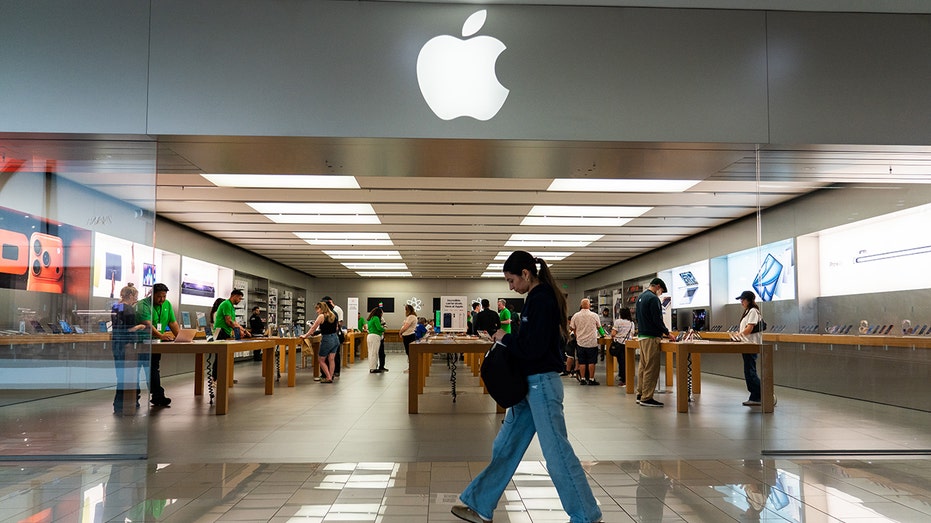
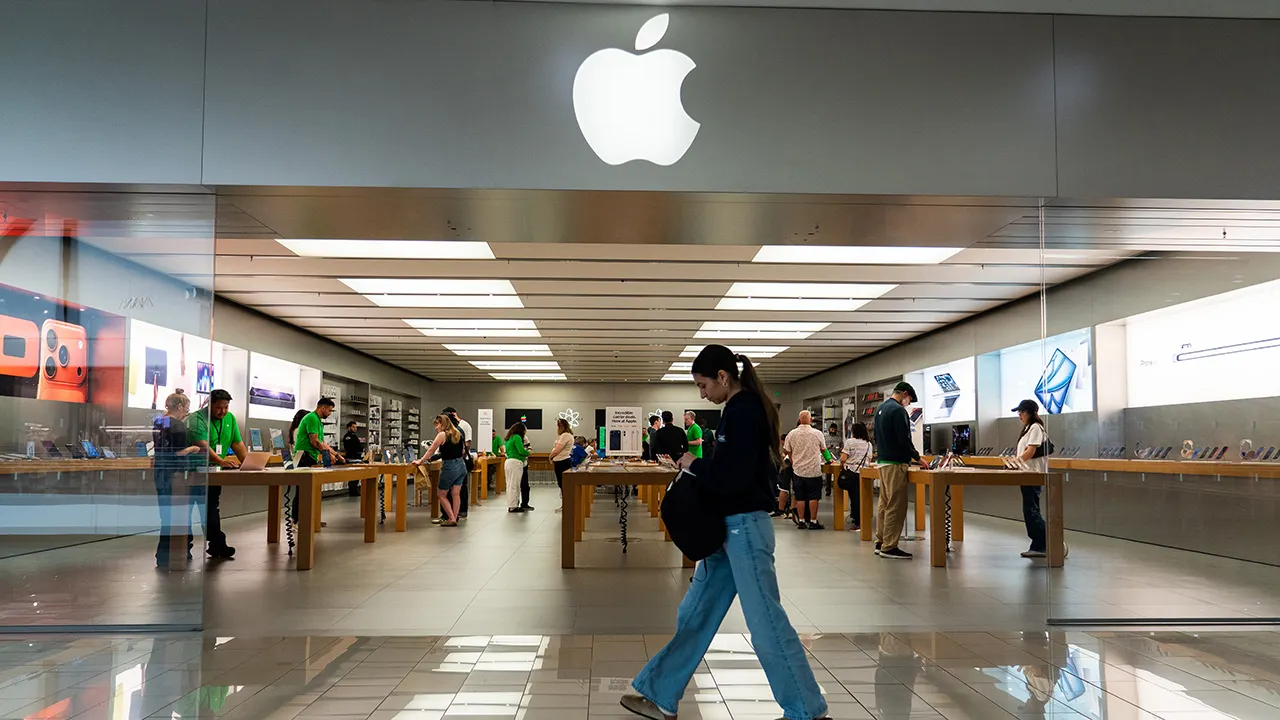
Apple’s next major product launch is expected in September, when the company is likely to unveil its iPhone 18 lineup. (Kyle Grillot/Bloomberg via Getty Images / Getty Images)
Apple’s next major product launch is expected in September, when the company is likely to unveil its iPhone 18 lineup.
The remarks come as artificial intelligence (AI) companies buy up huge amounts of memory and storage chips, according to The Wall Street Journal.
Research firm TechInsights estimates Apple would need to add about $270 to the next iPhone Pro model to maintain its profit margins, the outlet reported.
APPLE CHIEF TIM COOK SAYS IT WAS THE ‘RIGHT TIME’ TO STEP DOWN AS CEO

Apple CEO Tim Cook said the company can no longer fully protect customers from higher prices. (David Paul Morris/Bloomberg via Getty Images / Getty Images)
Cook said DRAM chips are a key concern because more of them are now being used for AI servers.
“There’s less supply at a time when consumers want devices and the memory guys are passing along huge price increases,” Cook told The Wall Street Journal. “We definitely need memory pricing and supply to return to reasonable levels for consumer products. That’s the bottom line.”
| Ticker | Security | Last | Change | Change % |
|---|---|---|---|---|
| AAPL | APPLE INC. | 295.95 | -3.29 | -1.10% |
Apple may use its cash reserves to help expand chip supply, Cook said, but the company does not plan to build its own memory factories.
“This is a hundred-year flood,” said Cook. “I’ve never seen anything like it in any area in over 40 years.”
FORMER APPLE CEO SEES OPENAI POSES LARGEST COMPETITIVE THREAT TO TECH GIANT IN YEARS

The remarks come as artificial intelligence companies buy up huge amounts of memory and storage chips. (Kevin Carter/Getty Images / Getty Images)
Apple announced earlier this year that Cook will step down on Sept. 1 after 15 years as chief executive.
He will transition to executive chairman of the company’s board of directors and will be succeeded by longtime Apple veteran John Ternus, the company’s senior vice president of hardware engineering.
GET FOX BUSINESS ON THE GO BY CLICKING HERE
Apple could not immediately be reached by FOX Business for comment.
FOX Business’ Bonny Chu contributed to this report.


UK wages rise more than forecast as jobless rate drops

The company’s shares dropped to Rs 40.70 apiece on the NSE, with its market capitalisation nearing Rs 16,000 crore. Vedanta Power debuted at Rs 41.80 per share on the NSE on Monday. The shares of the company fell 2% on the first day, and another 2% on Tuesday, before jumping 5% on Wednesday.
About Vedanta Power
Vedanta Power has more than 4 GW of installed capacity in four strategic assets in Punjab, Andhra Pradesh, Chhattisgarh and Odisha. It has several long-term and mid-term Power Purchase Agreements (PPAs) with state utilities.
The power company aims to become one of India’s top three private thermal power players by FY33 through a combination of organic expansion and asset turnarounds. Its portfolio comprises Vedanta Power Talwandi Sabo Thermal Plant in Punjab (1,980 MW), Vedanta Power Meenakshi Energy in Andhra Pradesh (1,000 MW), Vedanta Power Sakti in Chhattisgarh (600 MW operational with another 600 MW under commissioning), and Vedanta Power Jharsuguda Thermal Plant in Odisha (600 MW).
Also read: Vedanta Power shares list at Rs 42 as mega demerger concludes

“The company believes coal will continue to play an important role in India’s energy mix for decades to come, co-existing alongside renewable and clean energy sources. In parallel, Vedanta Power, currently a pure-play thermal player, is evaluating future growth opportunities across hydro, battery storage and nuclear power as part of its long-term diversification strategy. The company recognises nuclear energy’s potential as a clean, reliable 24×7 power source and a key enabler of India’s energy transition,” the company said in a press release.
What lies ahead for Vedanta Power shares?
While the post-listing volatility across the new four Vedanta entities spooked investors, Harshal Dasani, Business Head at INVasset PMS, explained that this is typical of demerger scenarios where price discovery happens in compressed windows and pre-listing positioning unwinds rapidly.
He suggested a framework for investors to evaluate these names based on business quality rather than price action. “Four variables matter: where the underlying commodity sits in its cycle, the balance-sheet position of each entity post-demerger, capex visibility and execution credibility, and the regulatory or pricing environment specific to that sub-sector. A directional view at the sector level is the appropriate framing,” the analyst said.
Also read: 4 new Vedanta Group stocks debut on Dalal Street. What’s ahead?
Power is the most defensive of the four, with regulated returns offering stability but limited upside, and the modest price action fits that profile, according to the analyst. “Oil and gas face the most challenging setup, with mature fields, a declining production trajectory in domestic blocks, an unsupportive crude price backdrop, and limited reinvestment optionality, which the price action through three lower circuits reflects. The honest read is that the quality and visibility tilt favours the early-cycle commodity exposure and the regulated utility profile over the late-cycle and declining-asset profile,” he concluded.
(Disclaimer: Recommendations, suggestions, views and opinions given by the experts are their own. These do not represent the views of The Economic Times)
cherdchai chawienghong/iStock via Getty Images

• The fund posted a return of -0.20% ((Class I shares)) for the first quarter of 2026.
• Structured products, selection among agency mortgage-backed securities (MBS), and U.S. investment grade credit sector allocation contributed to performance, while U.S. rates, emerging market debt, and

Daily inflows from foreign portfolio investors (FPIs) through the so-called fully accessible route (FAR) have turned positive in June and are so far the highest on record in this category.
Bankers said the government measures announced on June 5 along with a stable rupee and a calmer geopolitical environment in recent days have contributed to higher FPI inflows into government securities. However, continuation of the momentum will depend on several factors including the geopolitical scenario remaining calm. If India’s sovereign debt is included in major global bond gauges, including the Bloomberg Global Aggregate Index, that would offer a significant advantage.
 Agencies
Inflows through ‘FAR’ Turn Positive In June
India’s central bank, the RBI, is opting against direct settlement of government securities via offshore platforms like Euroclear. Instead, it prefers overseas investors to trade directly on the domestic NDS-OM platform. This move aims to consolidate liquidity and enhance price discovery, despite recent tax incentives designed to attract foreign capital.
According to data from the Clearing Corp of India website, FPIs invested ₹33,000 crore so far in June, six times the ₹5,512 crore they invested in May. The previous highest investment in this category in the last one year was ₹12,246 crore in October 2025.
“The de-categorisation of sub-limits, simplifying processes and widening of the list of specified securities for FPIs to invest have clearly spurred these new investments. A better macro environment with issues linked to tariffs, oil prices and also by extension the rupee has given some lift to investor sentiment which are reflecting in these numbers,” said Ajay Manglunia, head of fixed income at Capri Global Capital.
The government on June 5 announced removal of restrictions such as short-term investment limit, concentration limit and the security-wise limit for investments by FPIs in government securities. Sub-categories of investment limits, viz., ‘general’ and ‘long-term’ were merged into a single limit for investment in central and state government securities, respectively.
More importantly, the government removed taxes, directly enhancing FPI returns. Earlier FPIs faced a 12.5% long-term capital gains tax on listed shares and bonds held longer than 12 months and a 20% withholding tax on interest earned on government bonds. Tenors of 15, 30 and 40 years, as well as sovereign green bonds, were also added to the list of specified securities under the fully accessible route for FPIs.Bankers said the measures have no doubt increased investor confidence, which has resulted in the inflows. But how long the momentum will continue will depend on a variety of factors. “In a way the money that has come now was always on the side lines and was boosted by the tax and other reforms. For more new money to come, we will have to wait and watch on how the macro factors behave in which global factors will also play a part,” said Gopal Tripathi, head of treasury at Jana Small Finance Bank.
There are expectations that Indian securities will be included in major global bond gauges due to the above reforms. Reserve Bank of India and finance ministry officials may reach out to the Basel-based Bank for International Settlements (BIS) for talks on investing into India, ET reported earlier this month. BIS has been given a special tax-exempt status in the latest rejig. BIS invests significantly in government securities and enjoys tax-free status everywhere.

Aramco, seeking tens of billions of dollars, lines up more asset sales, sources say
Business
NSE IPO: NIACL, IFCI, other stocks gain up to 14% as NSE files for India’s largest IPO. Who’s selling stake?
Shares of New India Assurance Company shares rallied 14% to Rs 188. While, that of IFCI rose over 4% to Rs 94 apiece on NSE. Bank of Baroda and General Insurance Corporation of India (GIC) followed suit, up around 2% at Rs 287. Meanwhile, SBI traded marginally higher.
NSE filed its Draft Red Herring Prospectus (DRHP) with capital markets regulator SEBI on Wednesday, setting the ball rolling for an IPO that has been delayed for nearly a decade. The maiden public issue of the stock exchange will entirely comprise an offer for sale (OFS) of up to 14.89 crore shares, expected to be worth around $3 billion.
Also read: NSE files DRHP for mega $3 billion IPO, SBI among 10 investors to sell stake
According to the DRHP, the government-owned insurer, NIACL will offload more than 1 crore NSE shares through the offer-for-sale. The total acquisition cost of these shares stands at Rs 33.60 lakh.
State Bank of India (SBI) has been listed out as the largest listed selling shareholder in the OFS, as it aims to offload nearly 2.47 crore shares in the NSE through its IPO. Bank of Baroda, meanwhile, aims to offload 1.099 crore shares via the OFS, while Stock Holding Corporation offers 1.089 crore shares. GIC aims to sell 1.0658 crore shares, while the New India Assurance Company offers 1.05 crore shares.
Sharp surge in IFCI, IDBI Bank shares ahead of NSE IPO filing
Notably, these stocks have seen a significant surge in recent days amid rising buzz over NSE soon filing its DRHP. IDBI Bank shares rallied more than 17% on Wednesday, surging 24% in one week and 29% in one month amid the buzz around the private lender likely being one of the sellers. The stock, however, dropped more than 4% today.IFCI shares jumped nearly 28% in one week and 45% in one month to hit fresh record highs. The rally was driven by the fact that IFCI owns a 52.86% stake in Stock Holding Corporation of India (SHCIL), which in turn, holds 4.4% of NSE as of the December quarter. Through its controlling interest in SHCIL, IFCI enjoys indirect exposure to NSE, making its stock particularly sensitive to developments related to the exchange’s IPO.
SBI and Bank of Baroda shares have gained 3-7% in one week amid the rising buzz around NSE IPO and overall optimism in stock markets.
NSE’s much-awaited IPO will provide liquidity for several long-term institutional investors while marking a major milestone for the country’s leading stock exchange. Earlier this year, SEBI granted a no-objection certificate (NOC) for NSE’s much-awaited IPO, removing a key regulatory hurdle that had delayed the process for years.
Also read: 10 key things investors need to know about NSE IPO
NSE currently trades in the unlisted market at around Rs 1,950-2,050 per share, implying a valuation of nearly Rs 5 lakh crore. This would make it one of the most valuable listed financial institutions in India once the public issue is completed.
According to Nitant Darekar, Research Analyst at Bonanza, the exchange is already commanding premium valuations in the unlisted market. “NSE remains a capital-light near-monopoly. At around Rs 1,950-2,170 in the unlisted market, it trades near 45x FY26 earnings. That’s rich, but below BSE at around 70x and MCX at around 80x,” Darekar said, adding that the recent settlement of the long-running co-location case has removed a key overhang that had weighed on the listing process for years.
Unlike most IPOs, where companies raise capital to fund expansion plans, NSE’s IPO is largely intended to provide liquidity and an exit route for long-standing investors.
Business
Native title must be seen as a property right, heritage review author Glen Kelly tells miners

The resources industry must view native title as a property right if it wants to remove barriers impeding project approvals, the author of a landmark heritage review says.

NEW YORK — As artificial intelligence and space innovation drive market enthusiasm, investors are weighing shares of NVIDIA Corp. against the newly public Space Exploration Technologies Corp., known as SpaceX, in a high-stakes comparison of established semiconductor leadership versus ambitious aerospace growth.
NVIDIA, the dominant player in AI chips, continues to deliver strong results amid surging demand for data center infrastructure. SpaceX, fresh from its record-breaking initial public offering, commands attention with its Starlink satellite network and reusable rocket technology, though its valuation reflects lofty expectations.
The choice between the two reflects differing risk-reward profiles in a market captivated by transformative technologies. NVIDIA offers proven execution and consistent revenue growth, while SpaceX bets on exponential expansion in the emerging space economy.
NVIDIA reported robust performance through mid-2026, with analysts maintaining strong buy ratings and price targets suggesting significant upside. The company’s forward price-to-earnings multiple remains attractive relative to its growth trajectory, supported by AI capital expenditures from major technology firms.
SpaceX, trading under ticker SPCX, debuted in June 2026 at $135 per share, raising approximately $75 billion in the largest IPO on record. Shares climbed in initial trading, pushing the market capitalization above $2 trillion amid excitement over its multi-faceted business.
The company reported $18.7 billion in revenue for 2025, with Starlink as the primary growth driver. Its IPO prospectus highlighted heavy investments in Starship development and emerging AI infrastructure, contributing to a net loss despite top-line expansion.
Analysts offer contrasting views. Some see SpaceX potentially surpassing NVIDIA’s market value over time due to its diversified revenue streams and long-term vision. CNBC’s Jim Cramer has suggested the company could reach a $6 trillion valuation, while hedge fund manager Ron Baron has projected even higher figures.
Others urge caution. CFRA analyst Keith Snyder initiated coverage with a sell rating and $115 price target, citing a premium valuation that leaves limited room for execution shortfalls.
NVIDIA’s business benefits from secular tailwinds in AI. The company supplies critical graphics processing units for training and inference workloads, with data center revenue forming the bulk of its results. Multiple analysts project continued strong growth, with some forecasting the stock could approach $357 by the end of 2026 under optimistic scenarios.
SpaceX’s appeal lies in its leadership in commercial spaceflight and satellite communications. Starlink has scaled rapidly, serving millions of subscribers and generating recurring revenue. Government contracts and potential deep-space missions add further optionality, though capital intensity remains high.
Valuation metrics highlight the divergence. NVIDIA trades at multiples that reflect its earnings power and market position. SpaceX’s post-IPO pricing implies aggressive assumptions about future revenue scaling to justify its enterprise value.
Risk factors differ markedly. NVIDIA faces competition in AI chips and potential cyclicality in semiconductor demand, though its technological moat provides resilience. SpaceX contends with technical and regulatory challenges in rocket development, alongside execution risks in scaling Starlink globally.
Broader market context favors companies with clear paths to profitability and cash flow generation. NVIDIA has demonstrated both, while SpaceX’s profitability is concentrated in Starlink amid substantial spending on future initiatives.
Investor sentiment remains buoyant for both amid the technology rally. SpaceX’s low public float has contributed to post-IPO volatility, while NVIDIA benefits from broad institutional ownership and index inclusion.
For those prioritizing near-term fundamentals, NVIDIA presents a more established track record. Long-term believers in the space economy may favor SpaceX despite higher uncertainty. Diversification across both could balance exposure to AI infrastructure and orbital services.
The coming quarters will test these narratives. NVIDIA’s earnings trajectory depends on sustained AI investment, while SpaceX must deliver on launch cadence and subscriber growth to support its premium valuation.
Neither stock suits conservative portfolios given sector volatility. Thorough due diligence, including review of financial filings and analyst reports, remains essential before committing capital.
Market participants continue monitoring macroeconomic factors, including interest rates and capital spending trends, which influence both companies’ outlooks. Technology leadership in their respective domains positions them for potential long-term success, subject to execution and competitive dynamics.
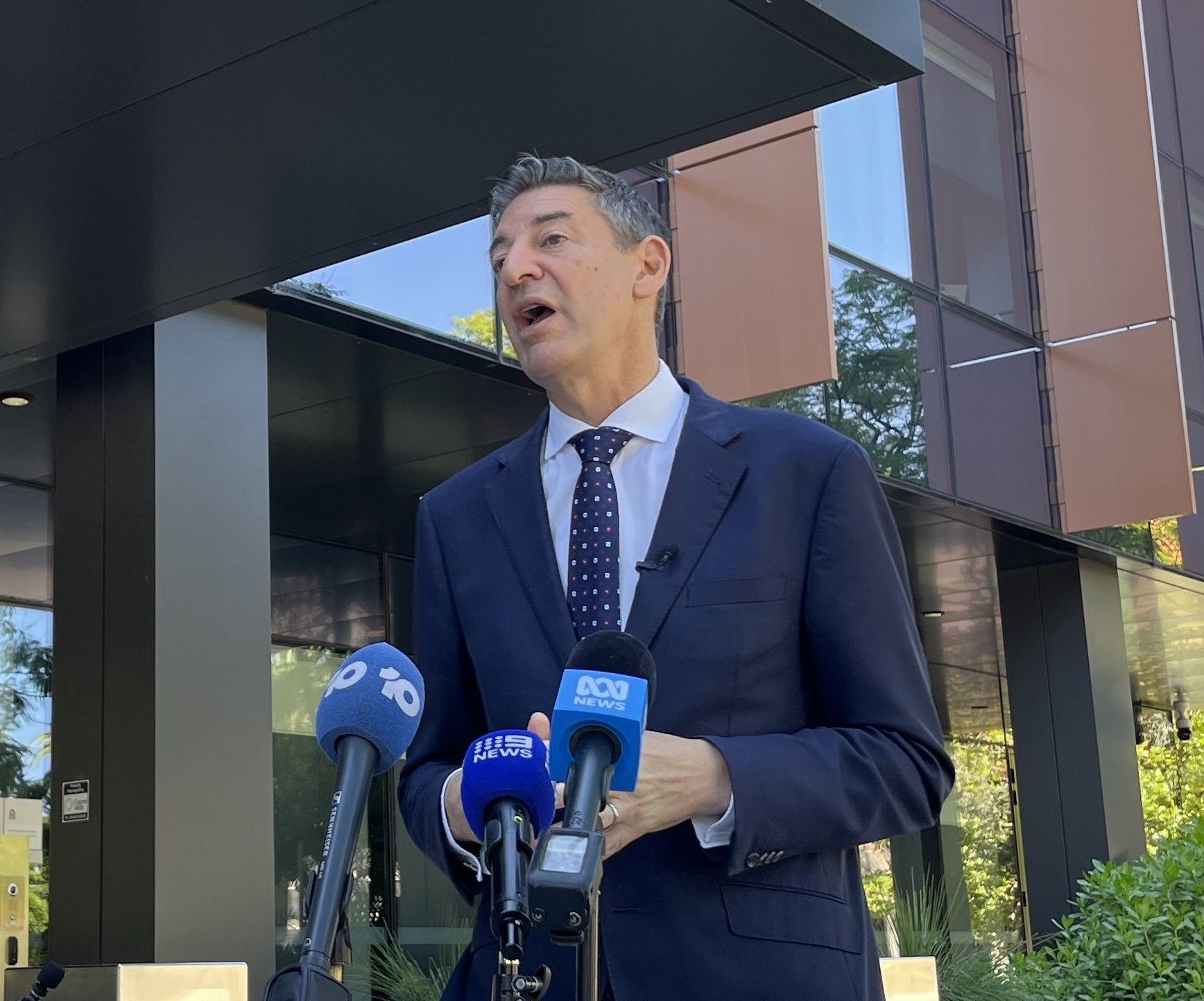
Liberal leader Basil Zempilas says it’s not for him to interpret “what Pauline Hanson may, or may not, have meant” when she promised to turn Australia into a “monoculture” and abolish multiculturism at her National Press Club address on Wednesday.
Business
Market has already priced in plenty of negativity; outlook looks promising: Prashant Khemka
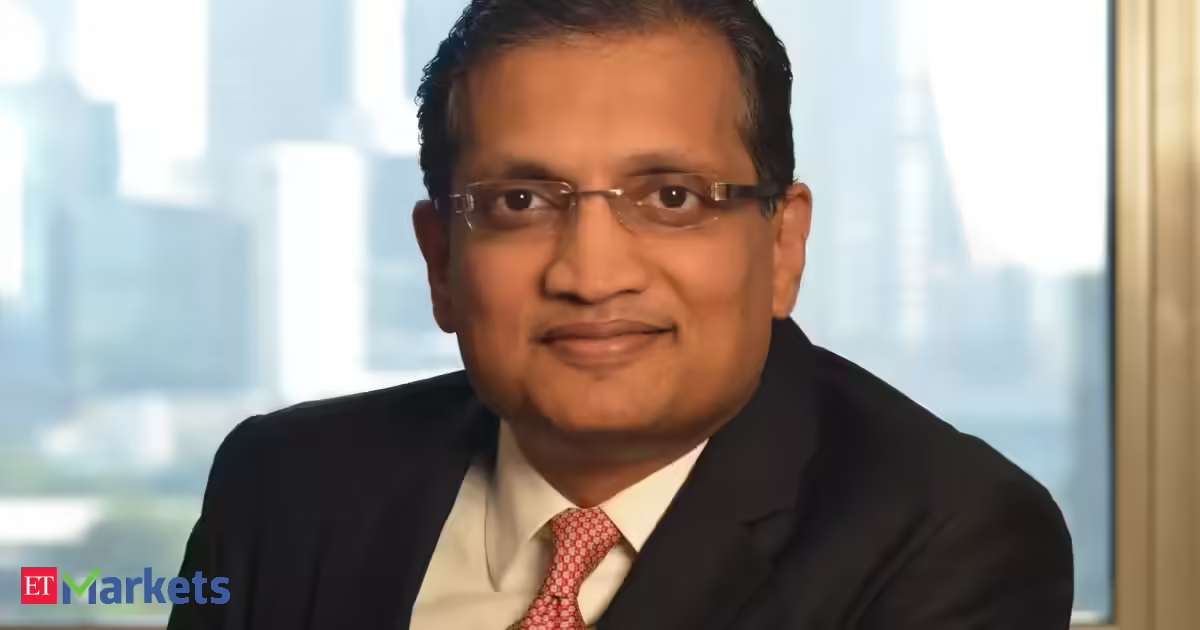
Uncertainty is a Constant, Not an Exception
Khemka dismissed the notion that the current environment is unusually uncertain, saying every market cycle has its own set of fears.
“I have been investing in Indian markets, or markets in general, for much longer. I do not recollect a point in time when there were no uncertainties or concerns. The closest the market came to having no concerns was during the peaks of the 2007 bubble, the 2000 bubble, or the 1992 bubble. It is only closer to the peak that you see fewer concerns.”
He noted that concerns evolve with time, but markets eventually move on.
“We have forgotten most of those matters. People were worried about Grexit, then Brexit, and later tariffs. COVID was obviously very serious. Right now, the concerns and uncertainties we are talking about will not even be remembered in a few months’ time. Certainly, by next year, they will disappear.”
According to Khemka, the correction from the September 2024 peak, combined with the cost of equity and the time value of money, effectively reflects a much steeper adjustment than headline index levels suggest.
“The market is down from its September 2024 peak by a mid-to-high single-digit percentage. Add another 5% to 7% for the time value of money and the cost of equity, and it is equivalent to a decline of more than 25%. I feel that already builds in a lot of negativity and pessimism. I feel very good about making money from here on.”
No Bubble in India, Says Khemka
Responding to concerns about elevated valuations, Khemka said India is not experiencing a market bubble.
“I would say there is no bubble in India. One can ask whether AI is a bubble globally or not. Only in hindsight does one know whether it was a bubble. But in India, there is no bubble because there is not much that is tied to AI.”
He explained that creating new highs is simply part of the market’s long-term behaviour.
“It is in the nature of the market to create new highs all the time. Over anybody’s investing journey, there would be thousands of new highs. A new high does not necessarily mean the market is overvalued.”
Sideways Phase May Eventually Give Way to an Uptrend
Khemka believes Indian equities have largely been moving sideways for nearly two years, rather than being in a sustained bear market.
“Sometimes markets are rallying, sometimes they are declining, and sometimes they move sideways. We have been in a sideways market for the last 21 months or so. Yes, I would like to see the market eventually trend upwards. It does not necessarily go in a straight line. There will be some ups and downs, but a gradual upward trend would obviously be the desirable outcome.”
Foreign Investors Remain Deeply Pessimistic
Khemka pointed out that foreign institutional investors remain far more negative on India than domestic investors, describing current sentiment as one of the weakest he has witnessed.
“Among foreign investors, the pessimism towards India, on a relative basis, is higher than at any point I have seen during my 20 years of professionally managing India money.”
He clarified that the pessimism is relative to other global equity markets rather than reflecting a broad risk-off environment.
“Emerging market fund managers are substantially underweight India. India is one of the most underweight countries in emerging market portfolios, reflecting that pessimism.”
Domestic Investors Less Optimistic, But Not Bearish
While domestic investor confidence has weakened from last year’s highs, Khemka believes it has not reached extreme levels.
“Today, the sentiment among domestic investors is weaker than it was 12 months ago. I would not call it peak pessimism, but it is definitely weaker. If pessimism is at one end and optimism at the other, I would say sentiment today is below average and tilted more towards pessimism than optimism, but far from the peak pessimism that global investors currently have.”
Long-Term Opportunity Amid Weak Sentiment
Khemka’s assessment suggests that weak investor sentiment—particularly among foreign investors—may itself present an opportunity. While acknowledging that uncertainties remain, he believes markets have already discounted much of the bad news. In his view, periods marked by widespread caution often lay the groundwork for stronger long-term returns rather than signalling the end of the investment cycle.

Oukitel WP66 rugged phone review

Nabung #nabung #tabungan #uang #money

Clarkson’s Farm’s Kaleb Cooper speaks out on Jeremy Clarkson cancer diagnosis shock


-

 Business4 days ago
No Jackpot Winner as $257 Million Prize Rolls Over to $269 Million Monday Draw
-

 Fashion6 days ago
Weekend Open Thread: Tuckernuck – Corporette.com
-

 Crypto World7 days ago
Oppenheimer backs SpaceX as $70 billion retail frenzy builds
-

 Crypto World7 days ago
Markets Rally as SpaceX IPO Looms Amid Iran Tensions and Inflation Surge
-
 Crypto World3 days ago
Zimbabwe Requires Crypto Businesses to Register Annually Under New FIU Regulations
-

 Tech5 days ago
NanoClaw integrates JFrog registries to secure AI agent downloads
-

 Crypto World5 days ago
Bitget enters Argentina’s regulated crypto market through PSAV registration
-

 Tech6 days ago
This Week In Security: Microsoft On Microsoft, Register Your Domains, Linux On ARM, And FreeBSD Joins The File Cache Club
-

 NewsBeat6 days ago
El Nino has formed in the Pacific and could set records, forecasters say
-
 Tech7 days ago
Dutton Ranch star claims they ‘didn’t see any disruption’ on set following Chad Feehan’s exit from Yellowstone spinoff fueled by Taylor Sheridan clash rumors
-

 Politics7 days ago
Politics Home | Healey Resignation Is “Colossal Failure Of Government”, Says Former Labour Defence Secretary
-
 Entertainment7 days ago
Donnie Wahlberg & More Heat Up Las Vegas at Circa’s Barry’s Downtown Prime
-
 Tech7 days ago
Opendoor Ends India Operations, Fueling a Bigger Conversation About AI and Outsourcing
-

 Sports7 days ago
First Time Since 1971: Australia Register Historic Low In ODI Cricket
-

 Politics7 days ago
Belfast burns, while Met chief points finger at Iran and Russia
-

 NewsBeat5 days ago
FBI searches office of Ohio voter registration group
-

 Business7 days ago
AT&T: Verizon's 27% Outperformance Sets Up A Solid Entry Point
-
 Tech6 days ago
Anthropic is spending $150M to embed 1,000 AI fellows inside nonprofits. No degree required.
-

 Politics7 days ago
Modi thanks Trump for wishes as US attacks Indian seafarers
-
 Entertainment6 days ago
‘The Pitt’s Fan-Favorite Doctor Confirms Noah Wyle Gave His Blessing to Return [Exclusive]
You must be logged in to post a comment Login