The TV star revealed that he’s battling an aggressive form of the disease during the final episodes of his Prime Video series
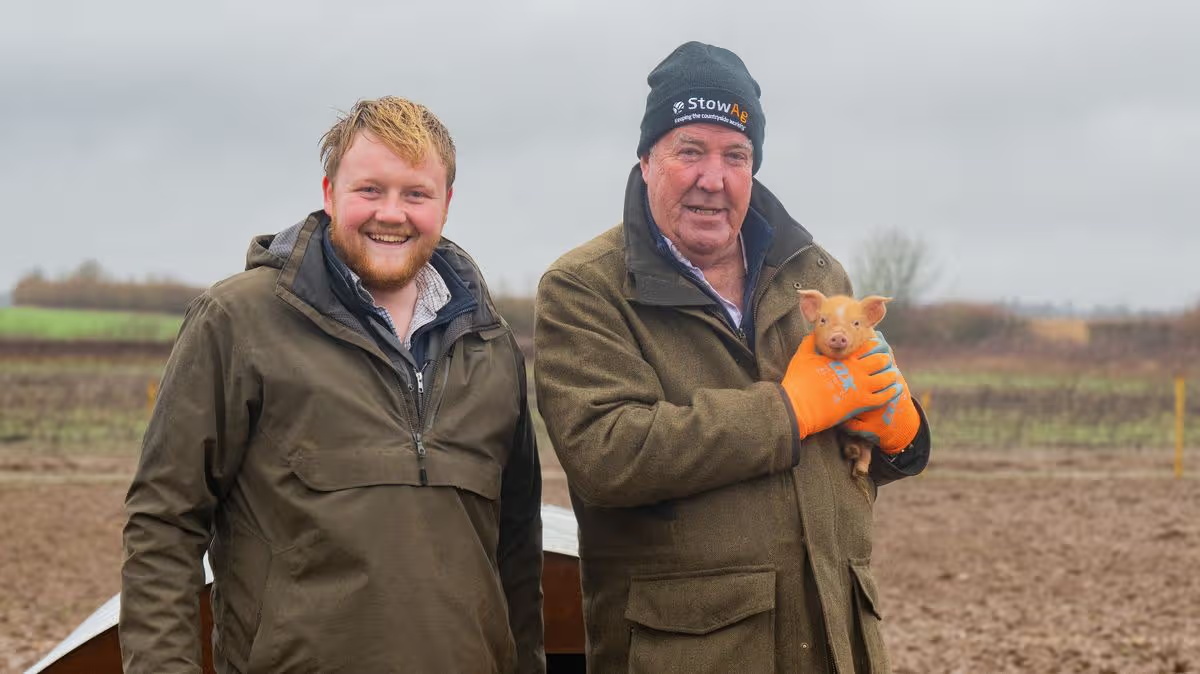
Jeremy Clarkson is said to be in “spirits are high” despite his cancer diagnosis. The 66-year-old revealed that he’s battling an aggressive form of the disease during the final episodes of his Prime Video series, Clarkson’s Farm.
Advertisement
In the scenes, Jeremy was heard telling farm manager Kaleb Cooper and farmhand Charlie Ireland that he had been diagnosed with cancer in May during discussions about harvest planning. The TV presenter said he expected to be “fine” but would be out of action “for a while”.
A stunned Kaleb replies: “No, you haven’t. Where?” Jeremy replied: “Where it is is of no concern of anybody. I’ve known since May. I had a medical, you remember back in May.
Click here to get the biggest stories straight to your inbox in our Daily Newsletter
“I disappeared off the other week and I had a biopsy and it is cancer and it’s aggressive, but it’s really early so the treatment will be, you know. I was praying we could get the harvest done and then I could go and get some treatment but it’s going to be slap bang in the middle.”
Advertisement
He later reveals that the cancer was in his prostate and that he had undergone a procedure to remove part of it. “The prostate, 10 per cent of it’s dead,” he said. “The 10 per cent where the cancer is.”
Speaking from a hospital bed at the end of the season finale, the former Top Gear host revealed he had experienced complications during treatment. “We started season five with me in a hospital bed, and here we are at the end of season five, and I’m back in a hospital bed,” he said.
Jeremy was referring to being rushed to the hospital in 2024 after suffering chest pains. At the time, doctors found that one of his arteries was “completely blocked”. It’s said Jeremy had been “days from death”.
Advertisement
Despite the shock of the news, Kaleb, his Clarkson’s Farm co-star, has revealed that Jeremy is “good” amid his health struggles. Speaking to the Daily Mail, Jeremy shared: “He is good. The spirits are high, which is good.
“If anything like this happens to any of your friends and you just said to my best mate, you’ve gotta be supported through that whole journey. And that’s where I’ve been, I’ve been right by his side and his spirits are really good, so thank you.”
Kaleb went on to praise Jeremy for the determination he’s shown since receiving his diagnosis. The TV star and farmer said: “He’s strong-minded, he’s got a strong mind on him, which is good. And the message about catching anything early is quite important.
Advertisement
“That’s the main thing, but you’ve gotta keep checking, you know what I mean, it’s all these things, you know, people can sit there and say I’m busy, busy, busy. But actually, sometimes you’ve gotta go I’m gonna just have to check and see if I’m OK.”
No trains are running between Monument and both South Shields and South Hylton, due to cable theft.
A Metro service (Image: LDR)
The suspension affects all Metro services south of the Tyne and is expected to remain in place for the “foreseeable future” while engineers work to get the line back in operation.
Shortly after 6.30am, Metro operator Nexus said: “We have a service suspension between Monument and South Shields/South Hylton due to a cable theft.
“Ticket acceptance has been arranged on Go North East and Stagecoach services in the affected areas. Thank you for your continued patience during this time.”
Advertisement
Metro tickets are being accepted on several local bus services while the suspension remains in place.
Passengers can use all Go North East services between Monument and South Shields, the 56 between Newcastle and Sunderland, the service nine between Jarrow and Sunderland, the 24 between South Shields and Sunderland, and the four between Heworth and Concord.
Stagecoach services accepting Metro tickets include the X24 between Newcastle and Sunderland, the E2 between South Shields and Sunderland, the 18 between South Shields and Brockley Whins, and all Stagecoach services between Sunderland and South Hylton.
Advertisement
Tickets can also be used on Northern Rail services between Newcastle, Heworth and Sunderland.
Nexus has urged passengers to allow extra time for their journeys while the disruption continues. The operator’s live travel page and social media pages are also providing Metro service updates.
Further updates are expected as engineers work to restore services.
In Toy Story 5, Woody, Buzz, Jessie and the gang are up against a new challenge: Bonnie’s tablet. Even Rex the toy dinosaur is worried about going extinct again.
The storyline reflects a broader shift in childhood. Traditional toys increasingly share space with digital devices as part of children’s everyday play experiences.
There is substantial evidence showing a decline in traditional free play and an increase in digital play among children around Bonnie’s age (eight to ten years). Research has suggested that children in this age group spend an average of four hours per day on screens. This has approximately doubled compared to previous studies from 2009 to 2010, which mainly focused on traditional TV and video viewing for children of similar ages.
It is important to recognise that digital play is still a form of play. While defining play can be challenging, it is often described in terms of how and why someone engages in an activity to have fun rather than solely by the activity itself.
Some experts argue that play is defined more by a child’s motivation and mental attitude than by the specific activity taking place. This means that using a tablet or smartphone can still be considered play, depending on how children interact with it.
Different – but still play
In 2002, play theorist Bob Hughes developed a framework categorising 16 distinct forms of play. These ranged from imaginative and socio-dramatic play, where children create stories and act out roles, to creative play, exploratory play and rough-and-tumble play.
More recently, other scholars have examined the place of digital play within this framework. The findings suggest that all forms of play, except two previously defined types – “recapitulative play” (play that involves re-enacting aspects of human history, such as building dens or making camps) and “rough and tumble” – can be adapted to the digital context. The authors contend that it is not necessarily the type of play that changes when screens are introduced, but rather the nature of the play experience itself.
Advertisement
Another study compared tablet play with traditional toy play by observing 98 different activities, both digital and non-digital. The authors concluded that tablet play was more likely to involve exploration, problem solving and skill acquisition. Traditional play involved more imagination and fantasy-based activities. Both forms of play may be important for development.
Play focused on exploration and problem solving (epistemic play) can support learning and skill acquisition. Imaginative (ludic) play can help children develop flexibility in their thinking, understanding of symbols and emotional processing. Rather than one form of play being better than the other, research suggests that different play experiences may provide different developmental opportunities.
A recent study randomly assigned children to play with either dolls or a tablet featuring open-ended creative games. The results indicated that children who played with dolls exhibited greater social understanding compared to those who interacted with tablets. This suggests that traditional imaginative play may provide opportunities for children to practise empathy and perspective taking.
Research has also raised questions about whether digital play may displace other forms of play. A large study found that greater screen time in young children was associated with less playtime with peers. This, in turn, was linked to developmental outcomes, including motor, communication, social and cognitive skills.
At the same time, research suggests that some forms of interactive digital play may support aspects of language development, executive function, memory and problem solving. Educational games and apps can provide opportunities for exploration and learning, particularly when children are actively engaged and supported by adults. The benefits of digital technologies often depend on factors such as the content being used, the child’s age and whether parents are involved in the activity.
Not all screen time is equal
These findings highlight why, in our research, we are moving beyond simple measures of screen time. A child passively watching videos for long periods is having a very different experience from a child creating digital artwork, solving puzzles, exploring an educational app or video-calling family members. Understanding how children engage with screens may be just as important as assessing how long they spend using them.
Advertisement
Setting time limits and designating screen-free periods can provide children with a better balance between free play and digital play. However, it is important to note that the decline in play is not solely due to children’s choices.
For instance, fewer opportunities for free play – child-led play that is unstructured and directed by children’s own interests and imagination – may contribute to this shift. Limits on children’s free play are often linked to concerns about neighbourhood safety. It is important to recognise that children have not lost their ability to engage in free play and, if given the opportunity, will do so.
While Toy Story 5 may treat the tablet as the antagonist, the truth is more complicated. The use of electronic devices is a regular part of growing up now, and some forms of digital play can actually build useful skills. At the same time, traditional imaginative play continues to provide significant opportunities for social and emotional development.
Advertisement
The challenge may not be about choosing between toys and tablets. Instead, it may be about ensuring children have opportunities to experience a wide range of play experiences.
The identity of Preston’s mother was never revealed to the jury. She has since been in and out of prison.
In April 2023, Jamie Varley, a former secondary school head of year, and his partner, John McGowan-Fazakerley, adopted Preston when he was nine-months-old.
Advertisement
In the next four months up until his murder, Preston was used as a ‘plaything’ being routinely physically and emotionally abused, sexually assaulted and had indecent photos and videos taken of him.
He was killed when he was aged just 13-months-old. Varley claiming he had accidentally drowned in a bath at their Blackpool home on July, 27 2023.
But a post-mortem examination identified more than 40 injuries on his body, as well as internal injuries indicating sexual abuse. His cause of death was established as acute upper airway obstruction, suggesting something had been inserted into his mouth blocking his airway.
He had been admitted to hospital three times in the months before his death and a social services investigation is under way.
Advertisement
Jamie Varley, left; Preston Davey, middle; and John McGowan-Fazakerley(Image: Lancashire Constabulary/M.E.N.)
Susannah Streeter, chief investment strategist at the Wealth Club, said: “The digital signing of the interim agreement between the US and Iran, ahead of an official ceremony on Friday, is exerting a fresh downward force on (oil) prices, as new supplies are expected to hit the market just as demand has been weakened by rationing and energy-efficiency measures.”
Malique, who has also appeared in I’m A Celebrity and Celebs Go Dating, often shares pictures on his Instagram that give followers a small insight into the life he lives when he isn’t filming as Prince.
Recently, he took to his social media page to post an update on his life and how he’s been feeling.
Advertisement
The images Malique shared feature him out and about, on the Hollyoaks set, and with some of his loved ones. In the caption, the star admits that the last two years of his life ‘haven’t been easy’.
‘Life lately’, he begins.
Prince has endured a lot of drama while living in the Hollyoaks village (Picture: PA)
‘Life is one big learning curve, full of lessons that shape into who you’re meant to be. The last two years haven’t been easy. Feelings of depression, body dysmorphia, anxiety, days where I couldn’t see a way forward. But God had a plan bigger than my pain’.
‘Here I am. Still standing’.
Malique added: ‘My faith in Jesus Christ, the gym, work, family, and learning to believe in myself again. Consistency and prayer changed everything. Praise the Lord.’
Advertisement
Offering some words of advice to anyone else in a similar position to him, Malique said: ‘Life is you vs. you. Get out of your own way. Buy the clothes. Book the flight. Learn to love yourself.
‘Nothing is impossible. I’m living proof.
‘If you’re in a dark place right now, it doesn’t have to be the end of your story.’
Don’t miss a Soaps scoop! Add us as a Preferred Source
As a loyal Metro Soaps reader, we want to make sure you never miss our articles when searching for stories. We have all the latest soaps news, spoilers, videos, and interviews, with a vibrant community of highly engaged readers.
Advertisement
Click the button below and tick Metro.co.uk to ensure you see stories from us first in Google Search.
Malique has played Prince since 2016 (Picture: PA)
Not keen on Prince’s new partner, Goldie was left devastated when the couple revealed their plans to move to New Zealand so Olivia could begin a teaching job. Goldie purposefully ruined Olivia’s job application, leaving her and Prince forced to stay in England.
Olivia and Prince began working at Hollyoaks High School, but Prince got fired after vodka bottles hidden by John Paul McQueen were found by students DeMarcus and Leah.
Most recently, Prince attempted to connect with Vicky Grant, but she made it clear that she wanted Prince to stop using steroids before their romance could continue.
Ukraine hit a Moscow oil refinery for a second time in a week and disrupted commercial flights at Moscow airports in one of its biggest drone attacks since Russia’s invasion more than four years ago, Russian officials said Thursday.
The Russian Defense Ministry said that its air defenses overnight shot down 555 Ukrainian drones over multiple regions, with almost 200 intercepted as they were approaching the Russian capital.
Several drones hit the Moscow Oil Refinery on the southeastern outskirts of the city, Moscow Mayor Sergei Sobyanin said.
The Russian Transport Ministry said that flights from four Moscow airports were halted.
Advertisement
The attack came hours after Ukrainian President Volodymyr Zelenskyy said he had held “an important coordination call” with U.S. President Donald Trump and French President Emmanuel Macron that may “bring about significant change.”
Zelenskyy said Wednesday his country had won key pledges of further support from world leaders attending the G7 summit in France.
″These last few days were very important for Ukraine because it is the reunification of the G7 around Ukraine,″ Macron told reporters as he and Trump left the Palace of Versailles near Paris.
″And now we will continue to advance to help Ukraine to resist″ and to build up its ″capacity to defend itself and capacity to counterattack,” Macron said.
Advertisement
The attack comes as President Vladimir Putin is in Kazan, 700 kilometers (430 miles) east of Moscow, hosting leaders of the Association of Southeast Asian Nations as Russia seeks to bolster business and other ties.
The two-day meeting is set to consider ways to expand Russia’s “strategic partnership” with ASEAN nations that include Brunei, Cambodia, Indonesia, Laos, Malaysia, Myanmar, the Philippines, Singapore, Thailand, East Timor and Vietnam, according to Kremlin foreign affairs adviser Yuri Ushakov.
Niger has been fighting a militant Islamist insurgency for a decade and in January suspected jihadists launched an attack on the same airport. Like its neighbours, Burkina Faso and Mali, Niger is run by a military junta that came to power in part because of the failure to deal with the violence.
BRUSSELS (AP) — U.S. Defense Secretary Pete Hegseth said Thursday that America’s allies in Europe must take the lead on the defense of their own continent and help turn NATO into “a read hard-line military alliance.”
At a meeting of NATO defense ministers, Hegseth called for a reboot of the 32-nation organization to turn it into a “NATO 3.0” capable of deterring any threat.
His remarks came a few weeks after the United States told its allies that it would no longer supply certain warships and aircraft if one of them comes under attack. European allies and Canada are trying to work out how to plug the gaps.
“NATO 3.0 is post-Cold War recognition that (NATO) needs to go back to a real hard-line military alliance that has real military capabilities capable of deterring right here on the continent and taking the lead for the conventional defense of Europe,” Hegseth said.
Advertisement
As part of that, he told reporters, the United States would be investing $1.5 trillion in its own defense in 2027, sending “a message to the world” that America is building an “arsenal of freedom.”
Hegseth said that this arsenal “first and foremost protects America and American interests but also backstops the strength of NATO and our allies.”
He said he would tell U.S. allies they “have to be willing to stand up and do something in a strong way about” the defense of their own continent.
NATO’s supreme allied commander, an American, is working on backup plans to defend Europe after the U.S. signaled on June 3 that it would no longer supply an aircraft carrier and support ships, aerial refueling planes and dozens of fighter jets, among other military assets, in a crisis.
Advertisement
The Trump administration insists that it needs to be able to plan for two simultaneous conflicts and wants more military resources at hand should a conflict break out with China in the Indo-Pacific region.
Under NATO’s collective security guarantee – Article 5 of its founding treaty – the 32 allies pledge that an attack on one of them will be considered an attack on all. It does not oblige them to provide military support, although many likely would.
In essence, the United States is scaling back how it might help should an ally trigger Article 5. The U.S. has by far NATO’s biggest armed forces. It does not intend to withdraw its nuclear weapons in Europe, which are key to NATO’s deterrence.
A new online petition is calling for changes to Personal Independence Payment (PIP) assessment standards to better recognise the impact Type 1 diabetes can have on daily life
Linda Howard Money and Consumer Writer
04:00, 18 Jun 2026
A new online petition is urging reforms to Personal Independence Payment (PIP) assessment criteria to better acknowledge how Type 1 diabetes affects everyday living. Over 14,400 individuals have already backed the petition, posted on the Petitions Parliament website, meaning it has now secured the right to a written response from the UK Government.
The petition contends that those living with the condition face a “relentless, 24-hour responsibility” encompassing blood glucose monitoring, insulin management and meticulous planning around diet, physical activity and stress levels, yet frequently fail to meet the criteria for disability benefits.
Advertisement
Launched by Emily Jones, the petition calls on the UK Government to revise PIP assessment criteria to explicitly encompass people with Type 1 diabetes and alleges there is insufficient understanding of the condition which may influence assessment results.
The petition states: “Managing Type 1 Diabetes is a relentless, 24-hour responsibility that requires frequent blood glucose monitoring, insulin adjustments, and careful planning around food, activity, and stress.”
It adds that the demands of managing the condition alongside full-time employment can lead to physical exhaustion and mental burnout, reports the Daily Record. Campaigners argue that broader access to PIP could enable people with Type 1 diabetes to fund technology not routinely supplied by the NHS and assist those who need to cut their working hours due to the condition.
PIP is a benefit designed to assist with the additional costs linked to a long-term health condition or disability. Eligibility is determined by how a person’s condition impacts their daily living and mobility requirements, rather than a particular diagnosis.
Advertisement
This means that having Type 1 diabetes does not automatically entitle someone to PIP, though those with the condition may still receive the benefit if they satisfy the assessment criteria. New figures from the Department for Work and Pensions (DWP) reveal that at the end of April, some 43,986 people were in receipt of PIP.
The petition remains open for signatures until 2 December and should it reach 100,000 signatures, it would be considered by the Petitions Committee for a parliamentary debate. The petition can be viewed in full on the Petitions Parliament website.
Just three miles from Stonehenge, archaeologists have made a remarkable discovery which sheds new light on the history of prehistoric religion.
For decades, it has been known that solar alignments formed a crucial part of the design of Stonehenge – but now, excavations near the world-famous monument have revealed that sun worship was a significant part of the Stonehenge area’s religious practice at least 450 years before the main phase of Stonehenge was constructed.
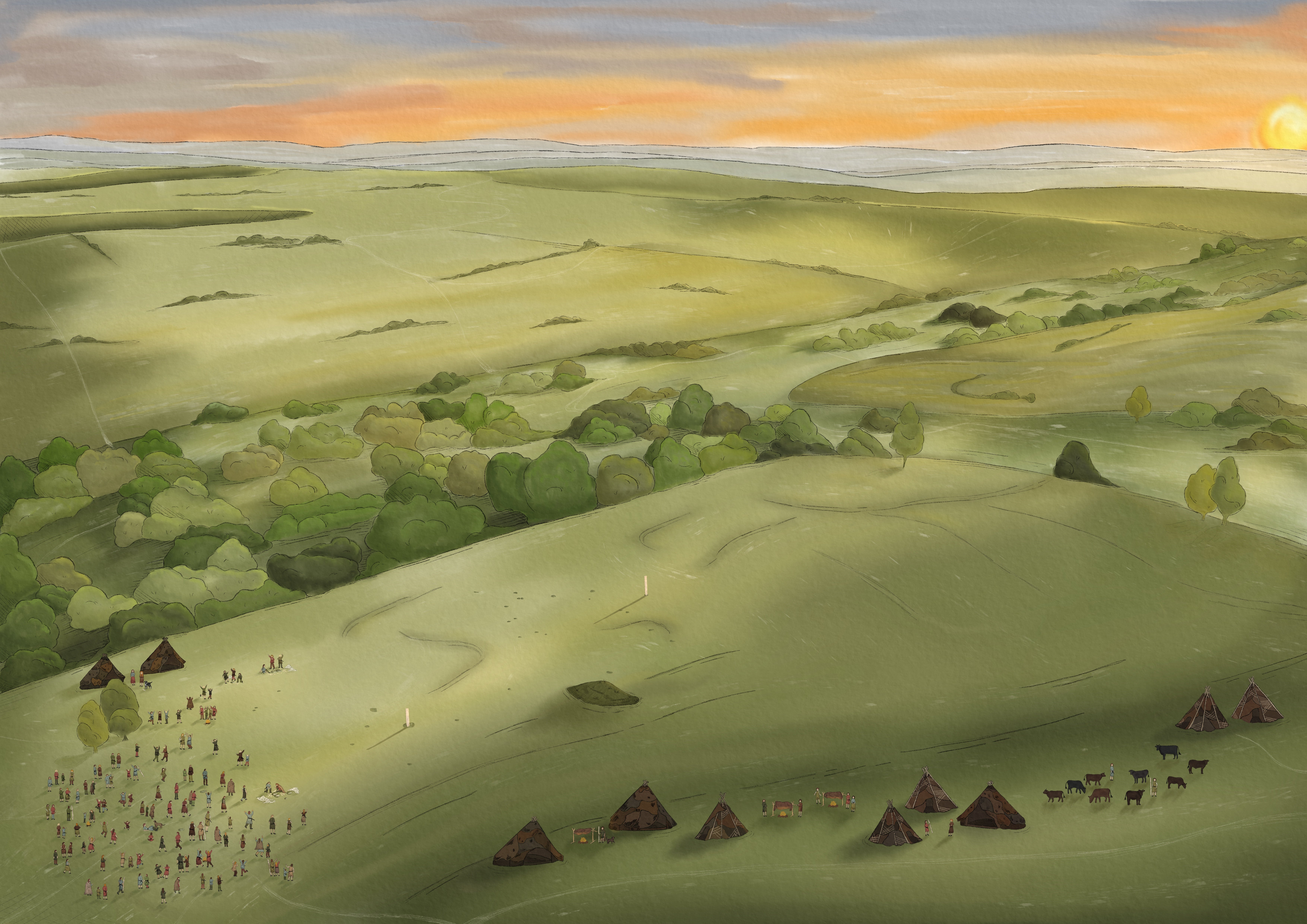
The discovery at Bulford in Wiltshire shows that by 3000 BC, prehistoric Britons were celebrating the midsummer sunrise and midwinter sunset.
Now archaeologists are beginning to wonder whether similar rituals and celebrations may have been going on at the site of Stonehenge centuries before the famous stones were erected.
Advertisement
At Bulford, archaeologists, directed by a leading expert on the Neolithic era, Phil Harding of Wessex Archaeology, have unearthed a complex religious site consisting of 50 ritual pits – and what were almost certainly two timber monuments, exactly 120 metres apart, which were deliberately aligned with the summer and winter solstices.
The pits (ritually filled with feasting debris) and the timber monuments (probably 3.5-metre tall 50-centimetre diameter potentially highly decorated wooden posts) were dug and erected around 5000 years ago – and the posts prefigure what was to be constructed in stone 450 years later at Stonehenge itself (when the key stones at that famous monument were specifically positioned to mark the summer and winter solstitial alignments).
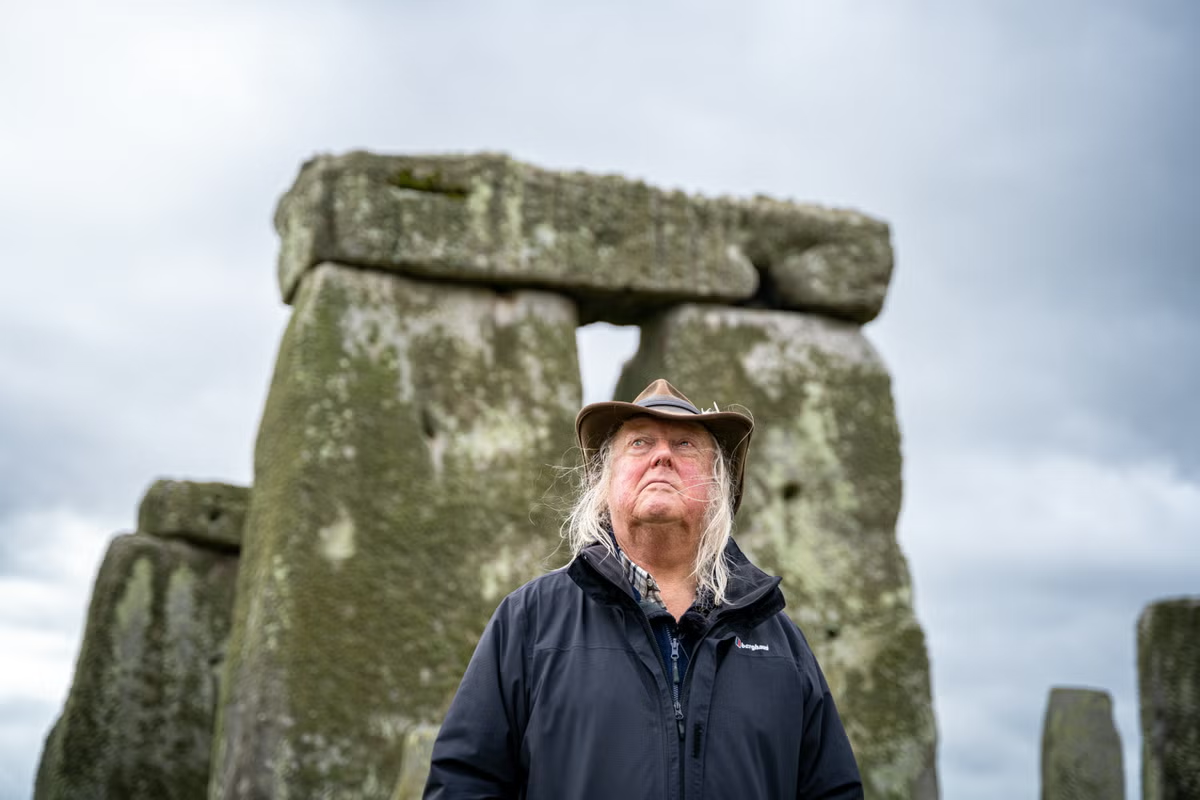
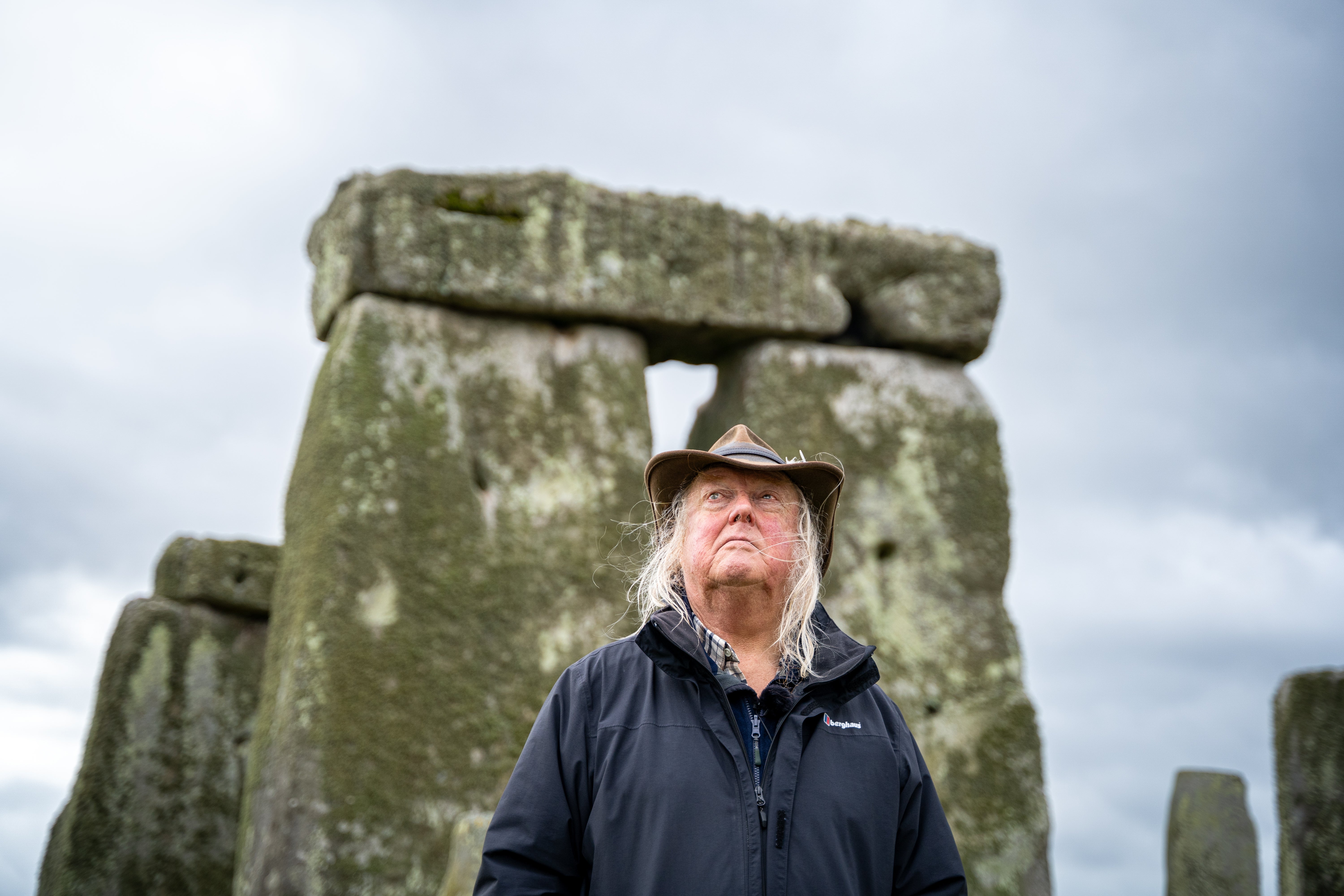
Archaeologist Phil Harding at Stonehenge on Salisbury Plain (Wessex Archaeology)
What’s more, Stonehenge’s circular earthen bank, built long before the famous still-surviving stone monument, but at the same time as the newly-discovered Bulford site, is roughly 115 metres in diameter – so it is now conceivable that early Stonehenge may have had similar solstice-marking’ totem poles’ externally on opposite sides of its still extant earthwork circle (Stonehenge’s original ‘henge’).
Apart from Stonehenge and Bulford, the only other precisely solar aligned monuments (of identical or older vintage) known in Europe are at a giant tomb in Ireland and in at least two temples in Malta.
Now scientists are likely to start redoubling efforts to search for such alignments at other sites.
Advertisement
“The solstitial alignment discovered at Bulford is likely to help encourage archeoastronomers to investigate whether there are similar solar alignments in even older monuments in Britain, Ireland, western France and elsewhere,” said archeoastronomer Dr Fabio Silva of Bournemouth University.
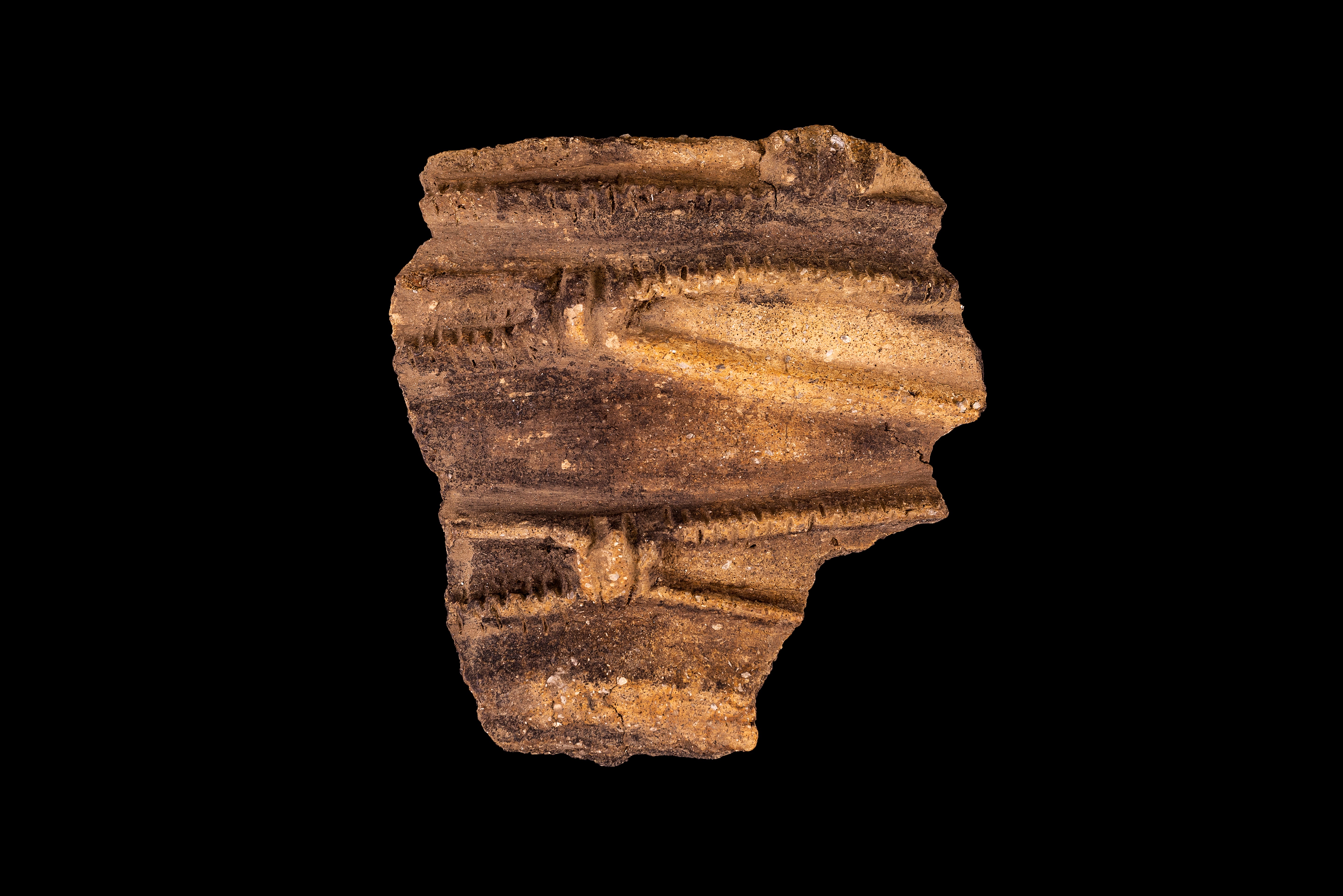
Neolithic woodlands pottery Found in Bulford, Wiltshire (Wessex Archaeology)
Interest in heavenly objects – stars, planets, the moon and the sun – were of immense importance to early civilisations and cultures. Yet, counterintuitively (within at least Europe and the Middle East), very early respect for the sun seems to have been a mainly Western European phenomenon, with early tombs often very roughly oriented towards the east, ie., towards the rising sun. Early sunrise-oriented tombs in Britain for instance date back to roughly 3700 BC.
While in the Middle East, where civilisation originated, huge respect for the sun and sun worship itself did not happen, on the whole, until slightly later – indeed, in ancient Egypt, not until around 2700 BC. But, significantly, star worship (rather than sun-worship) appears to have been equally important in both early prehistoric Western Europe and the Middle East.
The Bulford research is still in progress and will help archaeologists to understand the importance of cosmology in prehistoric religions.
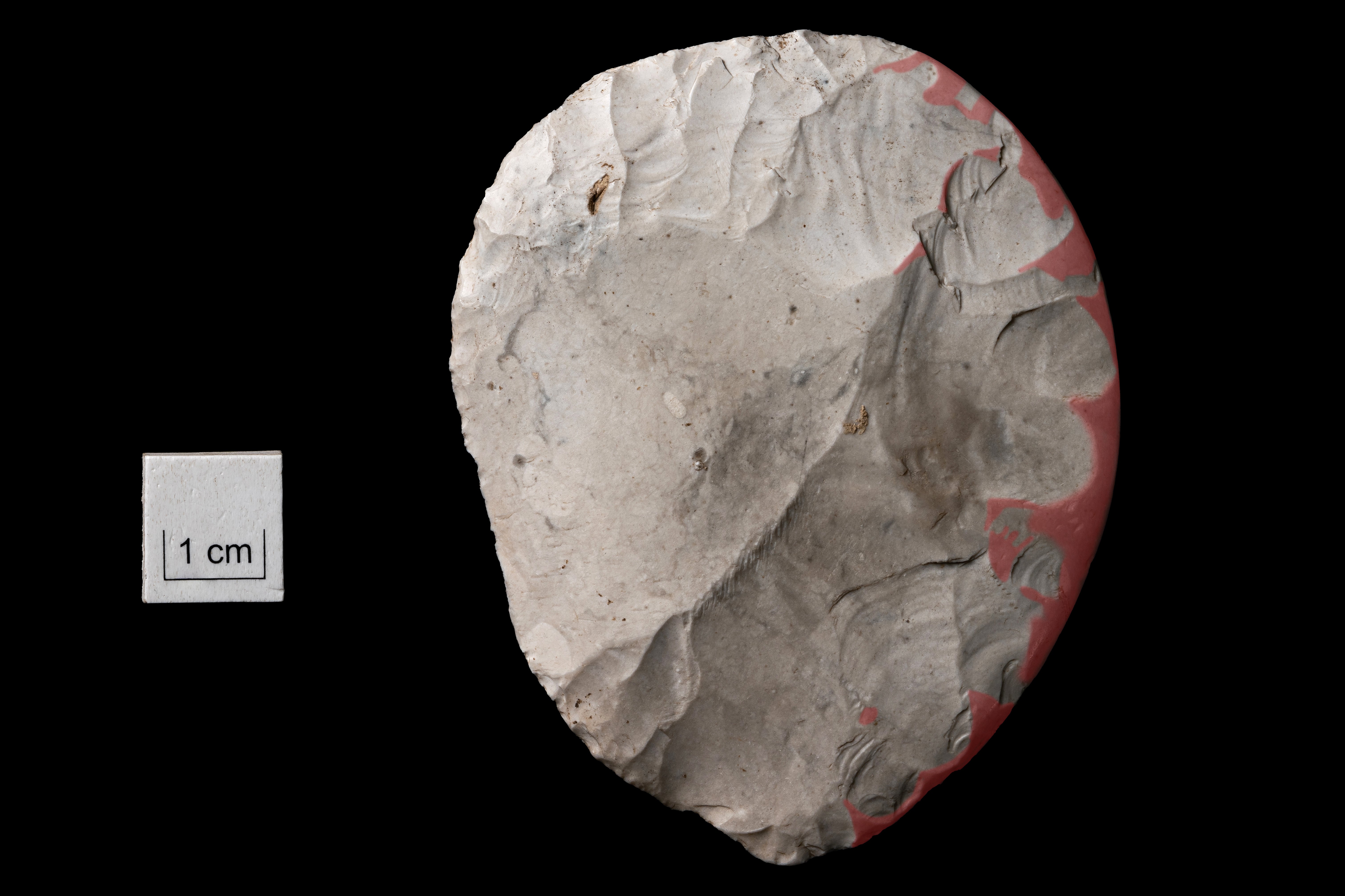
A disc-shaped flint knife found at Bulford by Phil Harding of Wessex Archaeology (Wessex Archaeology)
Some of the ritual pits at the newly discovered site may, in some way, be connected to the solar alignment celebrations. It’s likely that those events featured communal feasting – and the pits certainly show evidence of that. Each of them is filled with feasting debris, broken pottery, goat/sheep and pig bones and flint artefacts.
But a cluster of them have more unusual contents – bones from giant wild cattle (aurochs) and red and roe deer, and in one specific pit, a very rare high status roughly circular flint knife (possibly symbolising the Sun) which had been placed in a deliberately vertical position, its now no-longer-extant wooden handle buried in the ground and its circular blade pointing upwards.
Advertisement
It is conceivable that the area around this pit was used by key people (potentially priests or others) to witness the crucial solstitial alignments.
The apparently extremely limited distribution of such neolithic era precise solar alignments in the world is as yet an unsolved mystery. As far as is known, they only occur in the Stonehenge area, a very major monument in Ireland (a huge tomb at Newgrange), in at least two very important temples on the small Mediterranean island of Malta and in a tiny number of locations elsewhere in the world.
An illustration issued by Wessex Archaeology of a reconstruction of summer solstice celebrations as they might have appeared at Bulford 5,000 years ago (Wessex Archaeology)
In virtually all the areas they occur, they tend to be associated with extremely high status prehistoric sites and locales. That suggests that any highly developed prehistoric – and often probably un-connected – solar cults may well have been elite-associated and relatively uncommon (though high profile), rather than common and widely distributed.
The ongoing Bulford research is likely to shed further light on the nature of at least the Stonehenge area’s solar alignment tradition.
“The Bulford and other discoveries reveal that precise prehistoric solar alignments were very important in the Stonehenge area. Bulford itself pushes that phenomenon in that ritual landscape back by several hundred years,” said archaeologist Dr Amanda Chadburn, co-author of Stonehenge – Sighting the Sun.


















































You must be logged in to post a comment Login