Connect with us
DAPA Banner
DAPA Coin
DAPA
COIN PAYMENT ASSET
PRIVACY · BLOCKDAG · HOMOMORPHIC ENCRYPTION · RUST
ElGamal Encrypted MINE DAPA
🚫 GENESIS SOLD OUT
DAPAPAY COMING

Business

Apple Focuses on AI Upgrades and Software Innovations in 2026

Published

on

Tim Cook

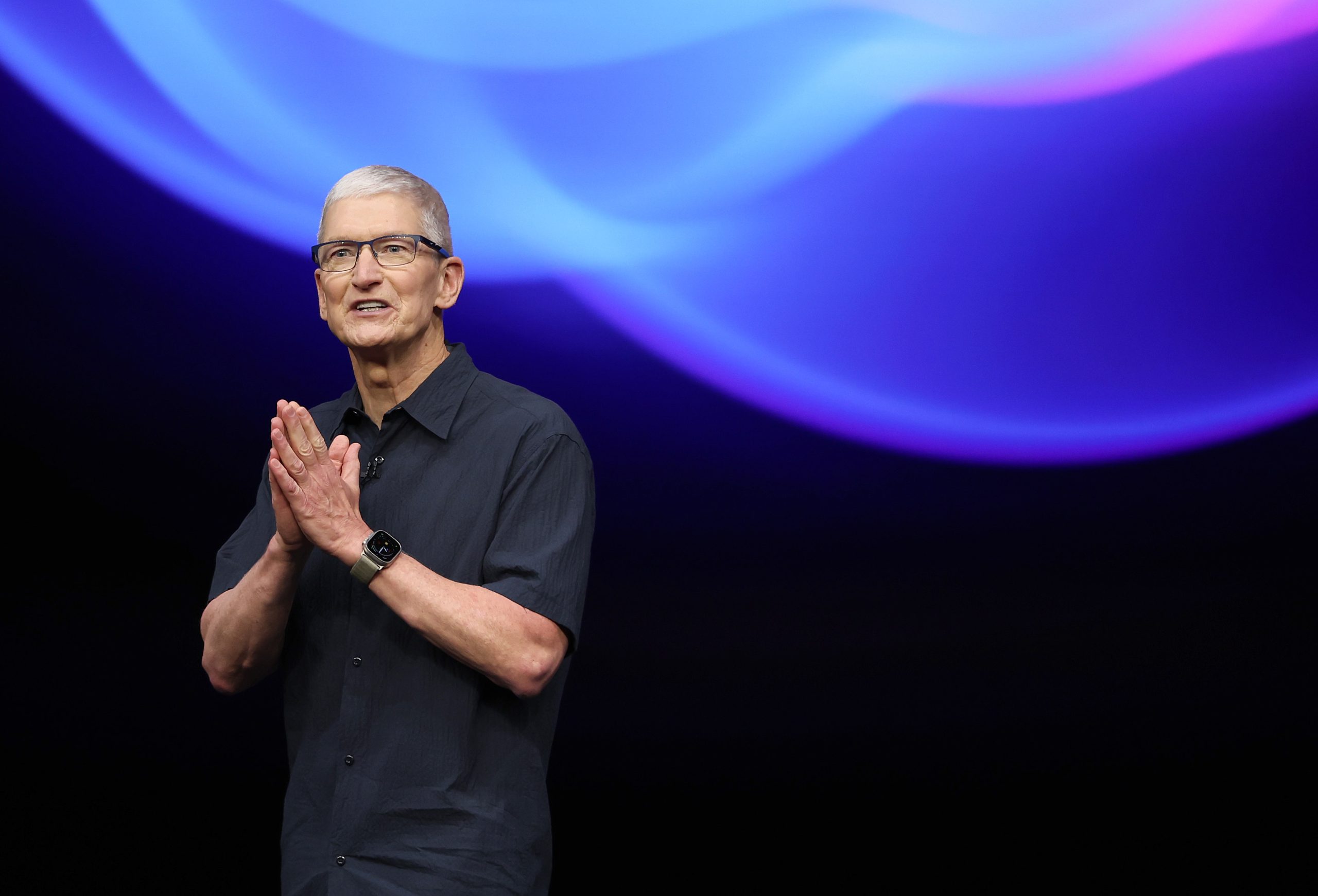
CUPERTINO, Calif. — Apple Inc. CEO Tim Cook opened the 2026 Worldwide Developers Conference on Monday with a keynote address that placed artificial intelligence and the next generation of software updates at the center of the company’s strategy, marking his final appearance in that role before stepping down later this year.

The event, running June 8-12 at Apple’s headquarters, drew developers, investors and technology observers eager for details on advancements across iOS, macOS, iPadOS, watchOS, tvOS and visionOS. Cook’s keynote, beginning at 1 p.m. ET, set the tone for the week by emphasizing practical AI integration and ecosystem enhancements designed to strengthen Apple’s position in an increasingly competitive landscape.

Apple has faced questions about the pace of its artificial intelligence rollout compared with rivals. The company introduced Apple Intelligence last year, featuring writing tools, image editing and Visual Intelligence capabilities. While these features have been well-received in targeted applications, analysts and users have called for more transformative advancements, particularly in the digital assistant Siri.

Advertisement

Monday’s presentation is expected to preview a significantly upgraded Siri that leverages Google’s Gemini AI models for enhanced conversational abilities and multi-step task handling. The assistant is anticipated to gain its own dedicated app and appear more prominently in the Dynamic Island on iPhones. Additional integrations, such as in the Camera app for quick information extraction from nutrition labels, aim to make Siri more proactive and useful in daily scenarios.

The keynote also highlighted broader software improvements. iOS updates are likely to focus on deeper Apple Intelligence integration, enhanced privacy controls and productivity features. macOS advancements may emphasize better cross-device continuity and AI-assisted workflows for creative professionals. Similar refinements are expected across other platforms, creating a more cohesive experience for users with multiple Apple devices.

For developers, the conference provides essential tools and APIs to build applications that leverage Apple Intelligence. More than 100 video sessions are scheduled throughout the week, offering technical deep dives and opportunities to explore new capabilities. The Platforms State of the Union, set for 4 p.m. ET, will offer a more detailed look at the technologies behind the keynote announcements.

Cook’s appearance carried added significance as his final WWDC keynote as CEO. He is expected to transition to an expanded board role in early September, marking the end of an era that began when he succeeded Steve Jobs in 2011. Under Cook’s leadership, Apple has grown into one of the world’s most valuable companies, with a focus on services, ecosystem loyalty and privacy as core pillars.

Advertisement

Investor attention centered on whether Apple can demonstrate a clearer path for turning AI features into stronger iPhone demand and services revenue growth. Bernstein analyst Mark Newman recently noted that Apple Intelligence “presents a huge opportunity to reinvent the company, accelerate product replacement cycles, and drive increased services revenue.”

Evercore ISI analyst Amit Daryanani echoed this view, stating that Apple’s edge lies in its massive distribution network. “We don’t think Apple needs to win the frontier-model race to monetize AI, but rather its edge is in distribution to a ~1.25B iPhone install base,” he wrote.

Apple’s deliberate approach to AI emphasizes on-device processing for privacy and efficiency. This strategy distinguishes it from cloud-heavy competitors but has also limited access to the most powerful frontier models, prompting partnerships such as the one with Google for Siri. The company has invested heavily in silicon development, data centers and machine learning talent to support its ambitions.

The event comes at a pivotal time for Apple. Shares have experienced mixed performance in 2026, reflecting concerns about AI leadership and slowing growth in core hardware segments. A compelling demonstration of progress could help reassure markets and re-accelerate device upgrade cycles.

Advertisement

WWDC serves as Apple’s annual platform to regain narrative control in the AI conversation. By showcasing practical, user-focused applications rather than flashy demonstrations, the company aims to differentiate itself through seamless ecosystem experiences. The conference typically generates significant media coverage and social conversation, with live streaming available on Apple’s website and YouTube.

For developers, the week offers hands-on sessions to explore new tools that enable third-party apps to leverage Apple Intelligence. This strategy allows Apple to extend its AI reach while maintaining control over the core user experience and privacy standards.

As the keynote concluded, attention shifted to the week’s technical sessions and the potential for surprise announcements. Apple has a strong track record of using WWDC to introduce features that define the next era of its products. This year’s focus on making Siri smarter and more capable represents another step in that tradition.

The Platforms State of the Union will provide developers with deeper insights into the tools and frameworks supporting the new features. This session often includes code examples, best practices and forward-looking roadmaps that help the developer community prepare for the fall software releases.

Advertisement

Apple’s emphasis on responsible AI development, including transparency and user control, aligns with its longstanding privacy-first philosophy. The company has positioned its AI strategy as one that prioritizes user benefit and data protection over rapid feature expansion.

Investor reaction to the keynote will likely influence Apple’s stock performance in the coming days. While the event is primarily developer-focused, its announcements often have immediate implications for product demand, services growth and competitive positioning.

As Cook prepares to step back from day-to-day leadership, the conference offers a platform to demonstrate the strength of Apple’s innovation pipeline and the vision guiding its next chapter. The company’s ability to translate its vast resources and engineering talent into compelling AI experiences will shape its trajectory for years to come.

WWDC 2026 arrives at a critical juncture for Apple. The tech giant’s success in AI will influence not only its financial performance but also its cultural relevance in an industry increasingly defined by artificial intelligence capabilities.

Advertisement

The week ahead promises technical depth, strategic announcements and a glimpse into Apple’s future. As developers and users digest the information, the focus will remain on how these updates translate into real-world benefits and whether they position Apple more competitively in the AI era.

Continue Reading
Click to comment

You must be logged in to post a comment Login

Leave a Reply

Business

Former White House ‘AI czar’ warns overregulation could hand China AI lead

Published

on

Former White House 'AI czar' warns overregulation could hand China AI lead

Former White House “AI czar” David Sacks warned Monday that overregulation of artificial intelligence could erode America’s lead over China in the global race for AI dominance.

“If you try to have an FDA for AI and there are some people who want to go that far, then I think we could lose this AI race to China,” he said Monday on “Kudlow.” “We’re only six to nine months ahead of China. So really, every month counts.”

Advertisement

His remarks come after President Donald Trump signed an executive order last week establishing a voluntary framework for AI companies to share certain advanced models with the federal government before wider public release.

Sacks, a longtime Silicon Valley entrepreneur, advocated for a lighter approach to AI regulation and cautioned that adding too many guardrails risks stifling innovation at a critical point in the competition with Beijing.

CHINA RACES AHEAD ON AI —TRUMP WARNS AMERICA CAN’T REGULATE ITSELF INTO DEFEAT

CHINA-US-DIPLOMACY

US President Donald Trump (L) shakes hands with China’s President Xi Jinping at the Great Hall of the People in Beijing on May 14, 2026.  (Kenny HOLSTON / POOL / AFP via Getty Images / Getty Images)

He likened Washington’s “tremendous” desire to regulate AI to that of climate change.

Advertisement

“AI has become the new climate change,” he argued. “It’s this imminent catastrophe that is requiring all this government intervention. But there’s very little evidence to support it.”

“We’re open to evidence – if there’s actually a problem, we should do something about it. But I don’t think we should do it in this knee-jerk way,” he continued.

MORNING GLORY: WHY THE ANGST ABOUT AI?

While Sacks admitted that some frontier AI models – including Anthropic’s Mythos, which he described as an “at the level of a cyber weapon” – present serious cybersecurity concerns, he also cautioned against the “moral panic” surrounding emerging technology.

Advertisement

“There is this panic, almost like a moral panic, around AI,” he told host Larry Kudlow. “And I’m just afraid that we might overreact and shoot ourselves in the foot and then hand this incredible technology to China.

White House AI czar David Sacks

David Sacks, White House Artificial Intelligence (AI) and Crypto czar, during The White House Digital Assets Summit in the State Dining Room of the White House in Washington, DC, US, on Friday, March 7, 2025. (Chris Kleponis/CNP/Bloomberg via Getty Images / Getty Images)

Sacks also pushed back on concerns that AI will take jobs from average Americans, pointing to recent labor market strength from a strong May jobs report.

PALANTIR’S SHYAM SANKAR: AMERICANS ARE ‘BEING LIED TO’ ABOUT AI JOB DISPLACEMENT FEARS

“There’s been a lot of claims that AI is gonna create some sort of imminent job apocalypse, but we’re seeing the exact opposite right now,” the former AI czar argued.

Advertisement

“We just had this gangbuster jobs report in May, something like 172,000 new jobs, twice what all the economists were expecting, and a lot of that is because of AI.”

Sacks said a unified federal playbook for AI governance would be preferable to a patchwork, state-by-state regulations that have been guard railing the technology since its emergence.

GET FOX BUSINESS ON THE GO BY CLICKING HERE

Advertisement

“What President Trump has called for is one rulebook. And I think if we can get that, if we work with Congress to work out a compromise, then that would be better than patchwork from the states,” he told FOX Business.

Trump is reportedly set to meet with executives from leading AI companies at the White House this week as the administration weighs its next steps on AI policy.

Continue Reading

Business

OpenAI files confidential S-1 with SEC in step toward potential IPO

Published

on

Florida sues OpenAI over ChatGPT risks to children, seeks billions

OpenAI said Monday it has taken a formal step toward a potential stock market debut, signaling that the artificial intelligence company is preparing for the possibility of becoming a publicly traded firm.

The move gives OpenAI flexibility to pursue an initial public offering in the future, though the company indicated no final decision has been made on whether or when shares would begin trading publicly.

Advertisement

“We recently submitted a confidential S-1. We expect it to leak so we’re just announcing it,” OpenAI said in a statement Monday. “We have not decided on timing yet; it may be a while because there are things we want to do that are likely easier as a private company. But it’s a complicated set of tradeoffs and this gives us the option to go public sooner if that ends up being best.”

The company added that the announcement does not constitute an offer to sell securities and that any future offering would be conducted in accordance with federal securities laws.

ANTHROPIC FILES CONFIDENTIALLY FOR IPO

Sam Altman, chief executive officer of OpenAI.

Sam Altman, chief executive officer of OpenAI Inc., speaks during BlackRock’s 2026 Infrastructure Summit in Washington, D.C. (Daniel Heuer/Bloomberg / Getty Images)

A confidential S-1 filing allows companies to begin the IPO process with the Securities and Exchange Commission without immediately disclosing detailed financial information to the public. The filing is often viewed as an important milestone for companies considering a future public listing.

Advertisement

FOX Business previously reported that OpenAI was targeting a public offering as early as September and had been working with Goldman Sachs and Morgan Stanley on a draft IPO prospectus, according to a Reuters report at the time.

The Sam Altman-led company has emerged as one of the dominant forces in artificial intelligence following the launch of ChatGPT, helping ignite a wave of investment and competition across the technology sector.

BAY AREA BANKER WANTS TO SWAP HIS $8M ESTATE FOR AI COMPANY STOCK

Illustration shows OpenAI logo

OpenAI logo is seen in this illustration taken February 16, 2025.  (REUTERS/Dado Ruvic / Reuters)

OpenAI has since expanded its lineup of AI products for consumers and businesses while attracting billions of dollars in funding.

Advertisement

Reuters previously reported that OpenAI had been laying the groundwork for a public listing that could value the company at up to $1 trillion, underscoring the enormous investor appetite for AI-related businesses.

AI LEADERS ARGUE SOFTWARE WILL ADAPT – NOT DIE – BUT VALUATIONS ARE STRETCHED

Wall Street and cash

Dollars bills. Background with paper dollar sheets and stamps for printing. 3D render. Wall Street sign in New York City’s financial economy and business district with America’s national flag background. Stock market trade and exchange zone. (istock / iStock)

The announcement comes as Wall Street closely watches the next generation of AI companies for signs they may enter public markets.

Earlier this month, rival Anthropic disclosed that it had confidentially filed for a U.S. initial public offering, potentially setting the stage for a high-profile race between two of the industry’s biggest players.

Advertisement

GET FOX BUSINESS ON THE GO BY CLICKING HERE

While OpenAI stressed that no timeline has been finalized, Monday’s disclosure signals the company is keeping its options open as it weighs the benefits of remaining private against the opportunities that come with a public listing.

FOX Business’ Eric Revell and Reuters contributed to this report.

Advertisement
Continue Reading

Business

IMF approves $163 million in new funding for Papua New Guinea

Published

on


IMF approves $163 million in new funding for Papua New Guinea

Continue Reading

Business

Medtronic: A Dividend Aristocrat At A Steal Now (NYSE:MDT)

Published

on

Medtronic: A Dividend Aristocrat At A Steal Now (NYSE:MDT)

This article was written by

Hi, my name is Kody. Aside from my articles here on Seeking Alpha, I am also a regular contributor to Sure Dividend, The Dividend Kings, and iREIT+Hoya Capital. I have been investing since September 2017 (age 20) and interested in dividend investing since about 2009.Since July 2018, I have ran Kody’s Dividends. This is a blog that is documenting my journey towards financial independence using dividend growth investing as the means to transform the dream of financial independence into a reality. It’s also the inspiration of my pseudonym here on Seeking Alpha.By God’s grace, I owe everything to my blog for introducing me to the Seeking Alpha community as an analyst. That’s my story and I hope you enjoy my work examining dividend growth stocks and the occasional growth stock!

Analyst’s Disclosure: I/we have a beneficial long position in the shares of MDT either through stock ownership, options, or other derivatives. I wrote this article myself, and it expresses my own opinions. I am not receiving compensation for it (other than from Seeking Alpha). I have no business relationship with any company whose stock is mentioned in this article.

Seeking Alpha’s Disclosure: Past performance is no guarantee of future results. No recommendation or advice is being given as to whether any investment is suitable for a particular investor. Any views or opinions expressed above may not reflect those of Seeking Alpha as a whole. Seeking Alpha is not a licensed securities dealer, broker or US investment adviser or investment bank. Our analysts are third party authors that include both professional investors and individual investors who may not be licensed or certified by any institute or regulatory body.

Advertisement
Continue Reading

Business

Earnings call transcript: Mama’s Creations beats Q1 2027 forecasts, stock rises

Published

on


Earnings call transcript: Mama’s Creations beats Q1 2027 forecasts, stock rises

Continue Reading

Business

Regeneron Pharmaceuticals, Inc. (REGN) Presents at Goldman Sachs 47th Annual Global Healthcare Conference 2026 Transcript

Published

on

OneWater Marine Inc. (ONEW) Q1 2026 Earnings Call Transcript

Regeneron Pharmaceuticals, Inc. (REGN) Goldman Sachs 47th Annual Global Healthcare Conference 2026 June 8, 2026 2:00 PM EDT

Company Participants

Ryan Crowe – Senior Vice President of Investor Relations & Strategic Analysis
Christopher Fenimore – Executive VP of Finance & CFO
L. Sirulnik – Senior VP and Clinical Development Unit Head of Hematology

Conference Call Participants

Advertisement

Salveen Richter – Goldman Sachs Group, Inc., Research Division

Presentation

Salveen Richter
Goldman Sachs Group, Inc., Research Division

Advertisement

Good afternoon, everyone. Thank you so much for joining us. Really pleased to have with us the Regeneron team. Next to me is Chris Fenimore, CFO; Andres Sirulnik, SVP, Clinical Development Unit Head of Hematology and Ryan Crowe, IR and strategic analysis. And Ryan, let me turn it over to you.

Ryan Crowe
Senior Vice President of Investor Relations & Strategic Analysis

Just to get this out of the way. And Salveen, thank you very much for having us. Great to be back in Miami again to see a lot of familiar faces and excited to have this chat. But first, let me get through this forward-looking statement disclaimer.

Advertisement

I’d like to remind you that remarks made today may include forward-looking statements about Regeneron, and each forward-looking statement is subject to risks and uncertainties that could cause actual results and events to differ materially from those projected in such statements. A description of material risks and uncertainties can be found in Regeneron’s SEC filings that are on our website. And with that, Salveen, let’s jump in.

Question-and-Answer Session

Advertisement

Salveen Richter
Goldman Sachs Group, Inc., Research Division

Great. Chris, to start here, Regeneron has been challenged recently on both the earnings front, driven by headwinds facing the EYLEA franchise. And on the pipeline, most recently for fianlimab Phase III failure. In that context, how do you see the company positioned from here for second half of the

Advertisement
Continue Reading

Business

Comparing the Tech Titans Shaping 2026

Published

on

Corning GLW Stock 2026 Outlook: Buy or Sell the AI

NEW YORK — As artificial intelligence reshapes industries and fortunes in 2026, two leaders stand out for their outsized influence: Elon Musk, the visionary behind Tesla, SpaceX and xAI, and Jensen Huang, the steady architect of Nvidia’s dominance in AI chips. While both have driven transformative technologies, their approaches, company scopes and personal impacts differ markedly.

Musk’s net worth has soared past $800 billion, fueled by SpaceX’s valuation nearing $2 trillion and Tesla’s continued leadership in electric vehicles and autonomy. Huang’s fortune hovers around $170-200 billion, tied closely to Nvidia’s record $5 trillion-plus market capitalization, making it the world’s most valuable company.

Musk operates a sprawling empire spanning electric vehicles, space exploration, neural interfaces and artificial general intelligence. His companies push boundaries in multiple domains simultaneously. SpaceX’s Starlink provides global broadband, Tesla advances sustainable transport and robotics, and xAI pursues fundamental understanding of the universe. This breadth gives Musk influence across transportation, energy, communications and computing.

Huang has focused Nvidia on a singular, explosive opportunity: graphics processing units that power modern AI. Under his leadership, Nvidia evolved from a gaming chip maker to the indispensable supplier of accelerators for data centers. The company’s CUDA software platform created a dominant ecosystem, while its Blackwell and future architectures set the pace for AI training and inference. Nvidia’s market cap surpassing $5 trillion underscores Huang’s success in capitalizing on the AI boom.

Advertisement

Both leaders have distinct styles. Musk is known for bold, long-term bets and public engagement, often using social media to shape narratives around his ventures. Huang maintains a lower public profile, emphasizing technical excellence, customer partnerships and disciplined execution. Nvidia’s consistent delivery on roadmaps has earned Huang respect as a methodical operator who prioritizes engineering fundamentals.

In terms of immediate economic impact, Huang’s Nvidia holds the edge. Its chips are foundational to the current AI wave, powering everything from ChatGPT-like models to autonomous systems. Analysts credit Huang with foreseeing the shift to accelerated computing years before it became mainstream. Musk, meanwhile, bets on convergence: autonomous vehicles, humanoid robots and brain-computer interfaces that could define the next decade.

Wealth comparisons favor Musk decisively. His combined stakes across companies have pushed him toward trillionaire status, with SpaceX alone contributing hundreds of billions. Huang, while extraordinarily wealthy, remains more concentrated in Nvidia equity.

Influence extends beyond balance sheets. Musk’s ventures inspire public imagination and policy debates on space colonization, sustainable energy and AI safety. Huang’s work quietly powers the infrastructure enabling those ambitions, supplying the computational horsepower behind modern AI breakthroughs. Their occasional interactions, including text exchanges, highlight mutual respect in the AI ecosystem.

Advertisement

For investors, both represent high-conviction technology bets. Nvidia offers exposure to the current AI infrastructure buildout with strong near-term visibility. Musk’s portfolio provides leveraged plays on multiple future technologies, albeit with higher execution and regulatory risks.

Challenges differ. Musk juggles multiple capital-intensive companies while navigating regulatory scrutiny and public controversies. Huang focuses on maintaining Nvidia’s technological lead against increasingly capable competitors and potential export restrictions.

Both CEOs have transformed their industries. Musk accelerated the global transition to electric vehicles and reusable rockets. Huang made GPUs the essential building block of AI, creating an entirely new computing paradigm. Their legacies will be measured not only by financial success but by societal impact.

Looking ahead, the AI race will test both leaders. Musk’s xAI and Tesla’s Dojo supercomputer pursue vertical integration, while Huang’s Nvidia supplies the foundational hardware. Their companies are interdependent yet competitive, creating a fascinating dynamic at the frontier of technology.

Advertisement

Public perception splits along lines of admiration for audacity versus appreciation for steady execution. Musk embodies the charismatic innovator willing to tackle humanity’s biggest challenges. Huang represents the consummate engineer delivering reliable, scalable solutions that power the AI revolution.

In 2026, “bigger” depends on the metric. Musk leads in personal wealth, media presence and breadth of ambition. Huang leads in current market impact, consistent execution and direct enablement of the AI era. Both are indispensable to the technological future.

The comparison ultimately highlights complementary strengths. Musk pushes boundaries with visionary goals; Huang builds the foundational tools that make those goals feasible. Their parallel rises underscore how different leadership styles can drive progress in the same transformative era.

As AI reshapes economies and societies, the influence of both CEOs will likely grow. Investors, policymakers and technologists will continue watching their moves closely. Whether through bold leaps or methodical advancement, Musk and Huang exemplify the leadership required to navigate the complexities of rapid technological change.

Advertisement

The coming years will reveal which approaches yield the most enduring impact. For now, their combined contributions have accelerated humanity’s AI journey, setting the stage for breakthroughs that will define the 21st century.

Continue Reading

Business

Superior Plus Corp. (SPB:CA) Shareholder/Analyst Call Transcript

Published

on

OneWater Marine Inc. (ONEW) Q1 2026 Earnings Call Transcript

Superior Plus Corp. (SPB:CA) Shareholder/Analyst Call May 13, 2026 4:00 PM EDT

Company Participants

David Smith
Darren Hribar – Senior VP & Chief Legal Officer
Chris Lichtenheldt – Vice President of Investor Relations
Allan MacDonald – CEO, President & Director

Presentation

Advertisement

Operator

Hello, and welcome to the Annual Meeting of Shareholders of Superior Plus Corp. Please note that today’s meeting is being recorded. [Operator Instructions] It is now my pleasure to turn today’s meeting over to David Smith, Chair of the Board of Directors of Superior Plus. Mr. Smith, the floor is yours.

David Smith

Advertisement

Ladies and gentlemen, good afternoon, and welcome to the 2026 Annual Meeting of the Shareholders of Superior Plus Corp. I am David Smith, and as Chair of the Board of Directors of Superior Plus, it is my responsibility and privilege to act as Chair of this annual meeting. Consistent with prior years and now common practice among other public companies in Canada, we are holding this meeting virtually via live audio webcast again this year. The virtual nature of this meeting has an impact on the way the meeting is conducted. Our goal is to preserve the rights of shareholders and proxy holders to vote on each of the resolutions before the meeting and to the extent possible, provide you with opportunities to participate in this virtual-only format similar to the way you would have at an in-person meeting.

As with any technology applications, unexpected issues may occur and Computershare, our service provider for this platform will help to resolve any issues that arise. I welcome our registered shareholders and all guests that are joining this meeting today through our virtual meeting platform. We’re excited to have your participation in the meeting, and thank you for your interest in the affairs of Superior Plus.

There is

Advertisement
Continue Reading

Business

Voyager Technologies Is Set To Launch In 2027 And Beyond (Rating Upgrade)

Published

on

Voyager Technologies Is Set To Launch In 2027 And Beyond (Rating Upgrade)

Voyager Technologies Is Set To Launch In 2027 And Beyond (Rating Upgrade)

Continue Reading

Business

Private sector banks are the best contrarian bet for the next 3 years, says S Naren

Published

on

Private sector banks are the best contrarian bet for the next 3 years, says S Naren
The continued rise in leverage among retail and high-net-worth investors through derivatives and margin trading facilities (MTFs) remains a key concern for the market, S Naren, Executive Director and CIO of ICICI Prudential AMC said at ICICI Securities India Investor Conference 2026.

While there has been significant discussion around the sustainability of mutual fund inflows and SIP contributions, Naren believes leverage in the derivatives market poses a much bigger risk than any moderation in mutual fund investments.

Also Read | Sensex down over 10K points from Dec peak. Should investors buy the dip, hold positions, or wait on sidelines?

“The level of leverage in the derivatives market and the amount of margin trading funding taken from brokers have continued to increase. That is a concern because leverage among retail and HNI investors is rising,” he said.

According to Naren, even if SIP inflows witness a marginal slowdown, it is unlikely to pose a significant challenge as mutual fund investors are typically long-term participants who invest without leverage. In contrast, derivative traders often operate with borrowed money, increasing risks during periods of market volatility.

Advertisement


He noted that margin trading facility exposure is currently at its highest-ever level, highlighting the growing appetite for leveraged market participation.
Against this backdrop, Naren sees an interesting contrarian opportunity emerging in segments that have witnessed relentless foreign institutional investor (FII) selling over the last 20 months.”If you look for something contrarian today, it would be stocks where FIIs have been persistent sellers over the last 20 months,” he said.

Among these, private sector banks stand out as one of the most attractive investment opportunities for long-term investors, according to Naren.

He believes private banks could emerge as the best-performing sector over the next three years. One key reason is the significant reduction in foreign ownership resulting from sustained FII selling.

Also Read | Four mutual funds restrict large inflows into gold ETFs and FoFs; Rs 25 crore cap imposed

“FIIs used to have nearly 40% of their India portfolios allocated to private banks. Whenever they wanted to reduce exposure to India, private banks became the natural source of liquidity,” Naren explained.

Advertisement

As a result, FIIs have consistently sold private banking stocks over the last 20 months, creating a valuation opportunity for long-term investors willing to take a contrarian view.

Beyond equities, Naren remains optimistic about India’s debt markets following recent policy measures aimed at improving foreign investor participation.

According to him, two critical factors that influence foreign investment in debt markets—currency stability and taxation—have both moved decisively in India’s favour.

“In debt, there are two factors: currency and taxation. Both have turned very positive, which significantly improves India’s attractiveness,” he said.

Advertisement

Naren believes these developments improve India’s chances of gaining inclusion in global bond indices such as the Bloomberg Global Aggregate Bond Index and have contributed to a highly optimistic mood in the domestic debt market.

He pointed out that bond yields have moved well below policy rates in several segments, particularly in three-year corporate bonds, creating attractive investment opportunities.

However, Naren cautioned that the global fixed-income environment today is very different from what prevailed during the 2013 taper tantrum period.

At that time, interest rates across much of the developed world were close to zero, making India’s bond yields highly attractive to international investors. Today, investors can earn meaningful returns even in developed-market government bonds.

Advertisement

“US 30-year government bonds are yielding around 5%, and even Japanese government bond yields are at levels not seen for decades,” he said.

As a result, the yield differential between India and developed markets has narrowed significantly compared with 2013.

Also Read | Gold and silver ETFs slip up to 8% amid Israel attack and crude oil spike. What should investors do?

While India has strengthened its macroeconomic position considerably over the past decade, global investors now have a wider range of attractive fixed-income options available to them.

Advertisement

Naren also highlighted the relatively small size of foreign portfolio investor exposure to Indian debt compared with equities.

According to him, FPI debt investments remain only a fraction of FPI equity allocations. In contrast, foreign investors had built substantial equity positions in India during a period when domestic valuations traded at significant premiums to other emerging markets.

He noted that Indian equities became exceptionally expensive after 2023 as domestic investors increasingly channelled savings into equities rather than debt.

“Valuations in India reached levels that were several times higher than markets like China. In such an environment, FIIs logically chose to reduce equity exposure,” he said.

Advertisement

At the same time, India has historically adopted a cautious approach towards opening its debt markets to foreign investors.

Naren believes this measured approach has helped preserve financial stability while gradually increasing foreign participation in government securities.

With improving debt market fundamentals, supportive policy measures, and attractive opportunities emerging in sectors overlooked by foreign investors, Naren sees both fixed income and select equity segments offering compelling opportunities for long-term investors.

Commenting on the recent correction in Kospi, Naren said that it is a healthy correction but even now I don’t think on market cap terms it is cheap.

Advertisement

(Disclaimer: Recommendations, suggestions, views and opinions given by the experts are their own. These do not represent the views of The Economic Times)

If you have any mutual fund queries, message on ET Mutual Funds on Facebook/Twitter. We will get it answered by our panel of experts. Do share your questions on ETMFqueries@timesinternet.in alongwith your age, risk profile, and Twitter handle.

Add ET Logo as a Reliable and Trusted News Source

Continue Reading

Trending

Copyright © 2025