Connect with us
DAPA Banner
DAPA Coin
DAPA
COIN PAYMENT ASSET
PRIVACY · BLOCKDAG · HOMOMORPHIC ENCRYPTION · RUST
ElGamal Encrypted MINE DAPA
🚫 GENESIS SOLD OUT
DAPAPAY COMING

Business

Apple Reclaims Title as World’s Most Valuable Company, Overtaking Nvidia for First Time Since April 2025

Published

on

Ismael Saibari

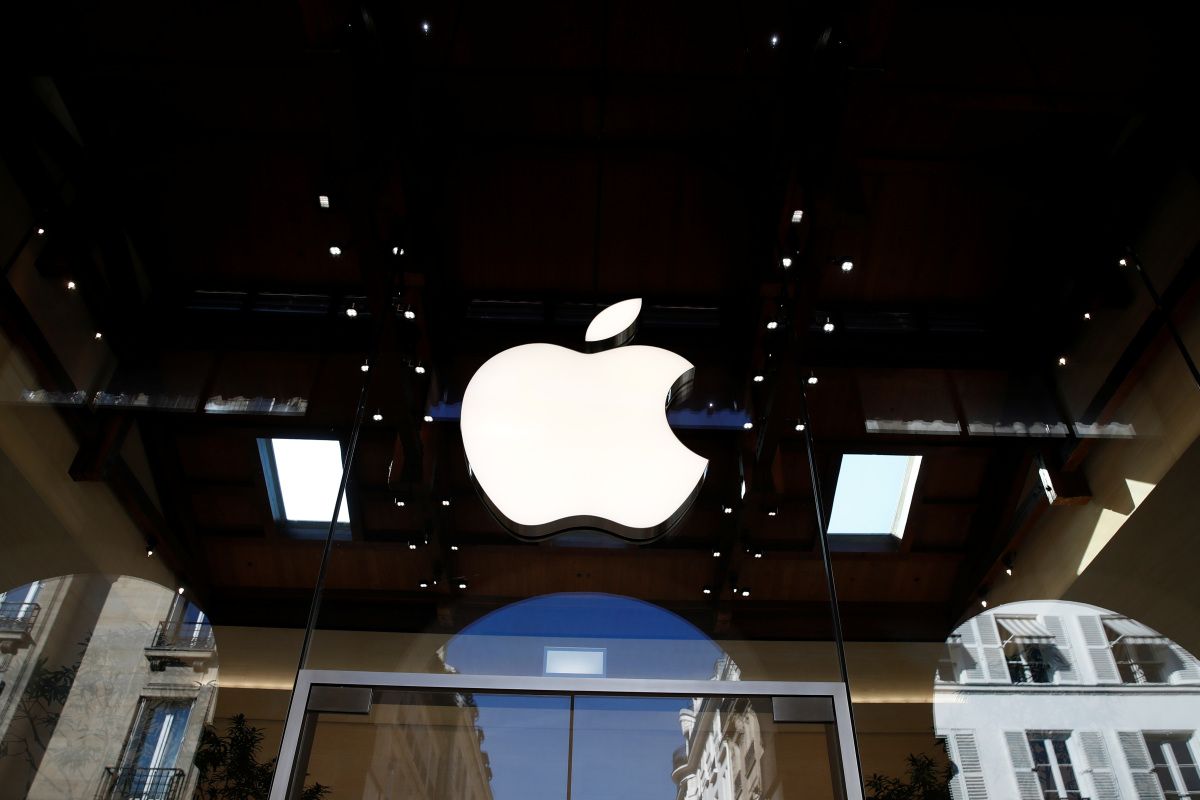
Apple briefly reclaimed its position as the world’s most valuable publicly traded company on Friday, edging past Nvidia in market capitalization for the first time in more than a year, as investors reassessed the pace and payoff of massive spending across the artificial intelligence infrastructure buildout.

Apple shares climbed to an all-time high of $334.99 in early trading Friday, lifting the company’s market value to approximately $4.88 trillion. Nvidia, meanwhile, saw its shares fall more than 3% in early trading, pulling its market capitalization down to roughly $4.84 trillion. The two companies traded the top spot back and forth throughout the session, with Nvidia’s value dipping as low as $4.84 trillion at one point while Apple hovered near $4.88 trillion, before the positions shifted again later in the day.

The milestone marks the first time Apple has surpassed Nvidia in market value since April 2025, ending a run of roughly 15 months during which Nvidia had held the title of the world’s most valuable company. Nvidia first claimed the top spot in June 2025, when it overtook Microsoft, and went on to become the first publicly traded company in history to reach a $5 trillion market capitalization in October of that year. Apple, notably, also crossed the $4 trillion market cap threshold for the first time that same month, driven by strong iPhone sales.

The reversal in fortunes between the two technology giants reflects a broader shift underway across markets this year. Apple shares have surged 22% in 2026, outperforming the broader market as investors have rewarded the company’s approach to artificial intelligence and its comparatively modest capital spending model, even as businesses across the technology sector commit unprecedented sums toward AI infrastructure buildout. Nvidia, by contrast, has gained just 7% so far this year and has largely sat on the sidelines as Wall Street’s attention has pivoted toward the memory chip and infrastructure stage of the data center buildout, a shift that has instead benefited memory stocks such as Micron Technology, which crossed $1 trillion in market value in May, and SanDisk.

Advertisement

A significant driver behind Apple’s rally came Thursday evening, when HSBC upgraded the stock to a Buy rating from Hold, raising its price target to $366 from $260, a level Apple’s stock had not traded at since April. Analyst Erwan Cote-Colisson wrote in a note cited by multiple outlets that Apple has reached what the firm characterized as an operational turning point. He noted that Apple can largely avoid the debate swirling around excessive capital expenditure among AI infrastructure companies, since Apple invests only about 2.5% of its estimated 2026 sales in capital spending, compared with roughly 39% among major hyperscale cloud providers. Cote-Colisson added that Apple is well positioned to leverage its installed base of 2.5 billion active devices through its forthcoming revamped Apple Intelligence platform, including a new agentic version of Siri expected to launch later this year, which he said could drive additional device demand. “This AI boost comes at the right moment, when we think Apple has one of its most innovative product pipelines in place,” Cote-Colisson wrote.

HSBC’s bullish case also rested in part on Apple’s upcoming hardware roadmap, which the firm views as unusually strong. That pipeline includes the iPhone 18 Pro and Pro Max expected this fall, an iPhone Air slated for April 2027, and what HSBC described as the most significant upcoming release: a book-style foldable phone. Apple also received government approval this week to roll out its Apple Intelligence features in China, another development that has contributed to recent investor optimism around the stock.

Not all of the news swirling around Apple this week has been strictly financial. A separate report from the Financial Times indicated that Apple has sent legal letters to roughly 40 former employees now working at OpenAI, expanding an ongoing trade-secrets investigation. That outreach follows a lawsuit Apple filed last week accusing OpenAI of recruiting key engineers in order to obtain confidential hardware and product-development information, a dispute that has added a legal dimension to the broader competitive tension between the two companies as both push further into AI-driven consumer hardware.

Nvidia’s pullback this week has coincided with a broader retreat across semiconductor stocks. The Philadelphia Semiconductor Index has fallen nearly 19% from its all-time highs, and chip stocks were on pace for their worst weekly performance in more than a year as of Friday’s session, according to reporting from Quartz. Nvidia’s own market capitalization has shed roughly $900 billion since peaking at $5.7 trillion on May 14, even as Apple added more than $500 billion in value over the same stretch, climbing from approximately $4.35 trillion in mid-May. As recently as two months ago, Nvidia’s valuation exceeded Apple’s by roughly $1.35 trillion, underscoring how quickly sentiment has shifted between the two companies.

Advertisement

Looking ahead, both companies have upcoming earnings reports that could further shape investor sentiment. Apple is scheduled to report fiscal third-quarter results on July 30, following a second-quarter period in which revenue rose 17% to $111.2 billion on the strength of a 22% jump in iPhone sales. Nvidia is expected to report its own second-quarter results in late August.

Market strategists have framed Friday’s shift as part of a broader rotation within the AI trade, as investors move away from rewarding companies purely for the scale of their AI infrastructure spending and instead favor companies demonstrating a clearer path toward turning AI investment into actual profit. Apple’s relatively conservative capital spending approach, paired with substantial free cash flow generation, has positioned the company favorably in that emerging narrative, even as questions remain about how quickly its AI-driven product features will translate into a meaningful upgrade cycle across its massive installed device base.

With Apple’s valuation now approaching the $5 trillion threshold Nvidia first crossed last year, the rivalry between the two companies for the title of world’s most valuable business appears likely to remain closely contested in the weeks ahead, particularly as both companies prepare to report earnings that could reshape investor expectations heading into the back half of the year.

Advertisement
Continue Reading
Click to comment

You must be logged in to post a comment Login

Leave a Reply

Business

Form 4 Robinhood Markets Inc For: 17 July

Published

on


Form 4 Robinhood Markets Inc For: 17 July

Continue Reading

Business

Nvidia, CXL, And The Battle To Improve AI Inference Economics

Published

on

Nvidia, CXL, And The Battle To Improve AI Inference Economics

Nvidia, CXL, And The Battle To Improve AI Inference Economics

Continue Reading

Business

US stocks today: Nasdaq, S&P fall over 1%, end lower for week as chip selloff broadens

Published

on

US stocks today: Nasdaq, S&P fall over 1%, end lower for week as chip selloff broadens
​Wall Street extended its decline on Friday as a pullback on stocks associated with the AI boom, which has driven many of the gains so far this year, morphed into a larger risk-off sentiment.

Semiconductor shares, which have led the broader market’s move in recent sessions, initially led ‌the selloff, which broadened ⁠as the ⁠session progressed.

All three major U.S. stock indexes closed lower on the day and posted weekly losses.

The Philadelphia SE Semiconductor Index logged its steepest weekly ​loss in over a year, and has tumbled nearly 18% so far in July. Even so, the index remains up about ​65% year-to-date, compared with the S&P 500’s nearly 9% gain over the same time frame. Some investors in the artificial intelligence space have begun positioning for a slowdown in the nearly trillion-dollar spending boom, with some active managers already scaling back their exposure, ​according to a Reuters analysis.

Advertisement

“It’s like the market has chip fatigue,” said ⁠Ryan Detrick, chief ‌market strategist at Carson Group in Omaha, Nebraska. “Chip stocks are down three of the ​last four weeks, ​and it’s the same worries, the same concerns; those stocks got way ahead of themselves, and ⁠now they’re coming back to Earth.”


According to preliminary data, the S&P 500 ​lost 75.99 points, or 1.01%, to end at 7,457.78 points, while the Nasdaq Composite ​lost 370.83 points, or 1.40%, to 25,511.12. The Dow Jones Industrial Average fell 394.01 points, or 0.75%, to 52,158.96. Among the major sectors of the S&P 500, energy stocks were the biggest gainers, benefiting from spiking crude prices amid signs of escalating hostilities in the Iran war.
Q2 EARNINGS SEASON GETS OFF TO AN UPBEAT STARTSecond-quarter earnings season is still in its early days, with 49 of the companies in the S&P 500 having reported. Of those, 90% have delivered better-than-expected ‌results, according to LSEG.

Analysts now see year-on-year S&P 500 earnings growth of 26.0%, in aggregate, up from the 19.2% expectations as of April 1, per LSEG.

“It’s early in earnings season, but we’re off ​to a tremendous start,” ​Detrick added. “Over the next several ⁠weeks, we’re going to get a lot more sectors and industries reporting. But so far, the banks have really started us off on the right foot.” Netflix tumbled after the company’s weaker-than-expected earnings forecast, raising doubts about the sustainability of the content ​growth momentum. Uber Technologies dropped after the rideshare app announced it would acquire Germany’s Delivery Hero in a deal worth nearly $15 billion. Intuitive Surgical shares slid after the medical device maker kept its da Vinci procedure growth forecast unchanged and warned insurance-plan changes may be delaying patient care. On the economic front, consumer sentiment increased to a five-month high in July, but single-family housing starts and building permits dipped, and industrial output increased by a meager 0.1%.

Advertisement
Continue Reading

Business

Lamb Weston unveils olive oil-based par-frying blend

Published

on

Lamb Weston unveils olive oil-based par-frying technique

The frozen potato company is introducing new foodservice items par-fried in olive oil.

Continue Reading

Business

America Is Spending Billions Pivoting Away from Chinese Minerals and These Countries Could Benefit

Published

on

America Is Spending Billions Pivoting Away from Chinese Minerals and These Countries Could Benefit

America Is Spending Billions Pivoting Away from Chinese Minerals and These Countries Could Benefit

Continue Reading

Business

Look Out Below When the Price Isn’t Right

Published

on

Look Out Below When the Price Isn’t Right

Look Out Below When the Price Isn’t Right

Continue Reading

Business

Ransomware disrupts Fairlife production

Published

on

Ransomware disrupts Fairlife production

The Coca-Cola Co. dairy subsidiary temporarily pauses US operations.

Continue Reading

Business

Trevi Therapeutics Shares Surge 13% as Biopharma Investors Cheer Cough Drug Data at London Conference

Published

on

4DMedical Ltd

Shares of Trevi Therapeutics jumped 13.10%, or $2.27, to $19.64 in Friday morning trading, as investor attention turned to the clinical-stage biopharmaceutical company’s presence at a major European medical conference focused on chronic cough treatment.

The New Haven, Connecticut-based company has had representatives at the European Respiratory Society’s Cough Conference in London this week, running from Wednesday through Friday. Trevi Chief Executive Jennifer Good and Chief Development Officer James Cassella have been presenting the company’s clinical trial results for Haduvio, its lead investigational therapy, at the conference, discussing findings the company says demonstrate the drug’s advantages in treating chronic cough associated with several difficult-to-manage lung conditions.

Haduvio, an oral extended-release formulation of nalbuphine, is being developed by Trevi to treat chronic cough in patients with idiopathic pulmonary fibrosis, or IPF, as well as chronic cough associated with non-IPF interstitial lung disease and refractory chronic cough, a condition that persists without an identifiable underlying cause. According to the company, Haduvio is the first and only investigational therapy to demonstrate a statistically significant reduction in cough frequency in clinical trials spanning both IPF-related chronic cough and refractory chronic cough populations. The drug works by acting on the cough reflex pathway both centrally and peripherally, functioning as what the company describes as a kappa agonist and mu antagonist, targeting opioid receptors involved in regulating the chronic cough response.

Trevi’s presentation in London builds on data from its Phase 2b CORAL trial, which evaluated nalbuphine extended-release specifically in patients with IPF-related chronic cough. Primary and subgroup analyses from that trial, including breakdowns by baseline cough count and background use of anti-fibrotic medications, were previously accepted for oral presentation at the American Thoracic Society’s 2026 International Conference earlier this year, underscoring the growing scientific interest in the trial’s results as Trevi works toward advancing Haduvio through additional pivotal studies.

Advertisement

The company has described chronic cough associated with IPF and non-IPF interstitial lung disease as a substantial and underserved market opportunity, citing an estimated 140,000 patients in the United States affected by the condition. Trevi has positioned Haduvio as potentially the only investigational therapy currently addressing this specific unmet medical need with meaningful commercial potential, with the company’s own investor materials pointing to peak sales potential across its target indications reaching as high as $6 billion if the drug successfully advances through further clinical trials and regulatory review.

Friday’s share price jump adds to a volatile but generally upward trajectory for Trevi’s stock so far this year. The stock’s 52-week range spans from a low of $6.50 to a high of $20.15, reflecting a dramatic run-up in valuation over the past twelve months as clinical trial data and analyst coverage have accumulated. As of Friday’s trading, shares remained just below that 52-week high, putting the stock within striking distance of a new record.

Wall Street analysts have generally maintained a bullish stance on the company. According to data compiled by Public.com, ten analysts covering the stock have arrived at a consensus Strong Buy rating as of early July, with an average price target of $21.10. Individual analyst targets have varied more widely: Morgan Stanley raised its price target on Trevi to $20 from $18 following the company’s first-quarter results in May while maintaining an Overweight rating, and Clear Street lifted its target to $29 from $21 earlier in May. Additional coverage from firms including Stifel Nicolaus and H.C. Wainwright has similarly maintained Buy ratings on the stock in recent weeks, according to data tracked by CNBC.

Trevi has also taken steps this year to strengthen its balance sheet ahead of continued clinical development. The company closed an underwritten stock offering in June that raised net proceeds of approximately $162 million, with underwriters fully exercising their option to purchase additional shares as part of the deal. According to the company, the additional capital extends its expected cash runway into 2030, providing funding through the potential FDA approval of Haduvio for IPF-related chronic cough and supporting continued advancement of the company’s broader pipeline across its other targeted indications.

Advertisement

Not all recent developments have been unambiguously positive for the stock. Trevi Therapeutics was recently removed from several Russell stock indexes, including the Russell 3000E and Russell Microcap index families, as part of a periodic index reshuffling process. Such removals can sometimes trigger forced selling from index-tracking funds, though the stock’s continued strength in recent sessions suggests any technical pressure from the index changes has been outweighed by broader investor enthusiasm tied to the company’s clinical progress and conference presentations.

Trevi’s next major scheduled catalyst is its upcoming earnings report, expected August 6, when the company is likely to provide further updates on the progress of its ongoing Phase 3 trials for Haduvio in IPF-related chronic cough, along with any additional data emerging from this week’s presentations in London. The company was founded in 2011 by Thomas R. Sciascia and Jennifer L. Good and has built its pipeline around nalbuphine-based therapies through a license agreement with Keenova Therapeutics for various formulations of the compound.

With a market capitalization now in the range of $2.5 billion to $2.6 billion, Trevi remains a mid-cap biotechnology name whose valuation continues to hinge heavily on the outcome of its ongoing and upcoming clinical trials rather than existing product revenue, given that Haduvio has not yet received regulatory approval from the U.S. Food and Drug Administration or any other regulatory authority. Some independent analysts have cautioned that the company’s current valuation may not yet fully reflect the risks inherent in bringing a novel therapy through the remaining stages of clinical development and eventual commercial launch, even as the stock has continued climbing on the strength of its trial data and growing analyst support. For now, Friday’s rally reflects renewed investor optimism following the company’s presence at one of the field’s most closely watched medical conferences this year.

Advertisement
Continue Reading

Business

Judge delays ruling on Paramount Warner Bros. merger until July 22

Published

on

Los Angeles County orders economic study on Paramount, Warner Bros. merger

A judge on Friday declined to issue a ruling from the bench regarding California’s request for a temporary restraining order freezing Paramount’s planned takeover of Warner Bros. Discovery (WBD) 

Paramount CEO David Ellison is seeking to acquire WBD in a $111 billion deal that was expected to close during the third quarter of this year, but California Attorney General Rob Bonta is leading a group of 12 state attorneys general who filed a lawsuit challenging the merger. The lawsuit claims the megadeal would “lead to higher prices, lower quality, and less content for film and television, harming movie theaters, basic cable distributors, and ultimately, audiences on every sofa and movie theater seat in the U.S.” 

Advertisement

The lawsuit, filed in the U.S. District for the Northern District of California, claims that the merger violates Section 7 of the Clayton Act, which holds that mergers that may substantially lessen competition or tend to create a monopoly are illegal. 

PARAMOUNT ADVISERS PUSH FOR CALIFORNIA EXIT AS STATE SUES TO BLOCK WARNER BROS DISCOVERY MERGER: REPORT

Paramount Warner Bros.

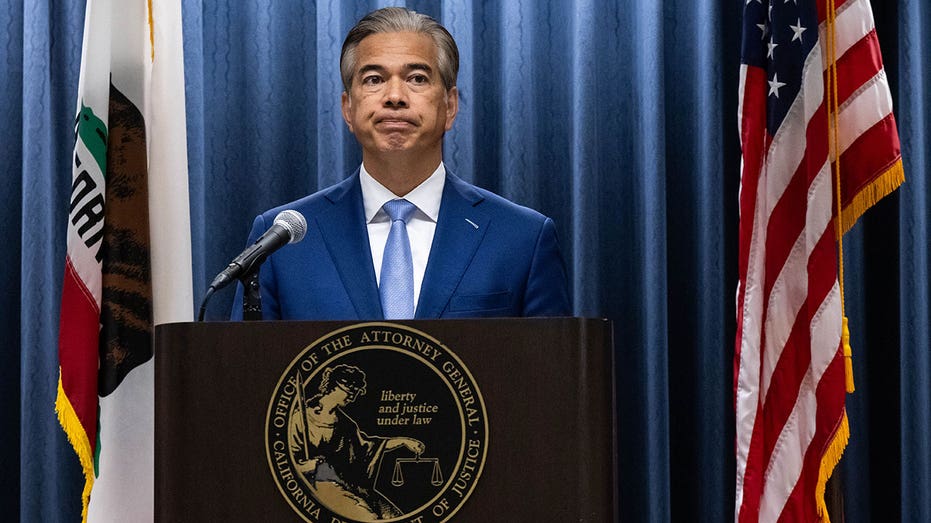
California Attorney General Rob Bonta believes Paramount’s planned takeover of Warner Bros. Discovery is “an illegal merger.”  (AaronP/Bauer-Griffin/GC Images / Getty Images)

A TRO hearing on Friday got deep into antitrust law, with Paramount arguing the merger would actually increase competition while the state insists that combining two major Hollywood studios would hurt the industry while giving too much power to the company. 

District Judge Araceli Martínez-Olguín promised to issue a ruling by July 22. 

Advertisement

Paramount is seeking to move forward as soon as possible to avoid exorbitant ticking fees, a term for charges that accrue as the merger is delayed. Reporters were prohibited from taking photos or video of the hearing.

WARNER BROS DISCOVERY SHAREHOLDERS APPROVE PARAMOUNT SKYDANCE DEAL

California Attorney General Rob Bonta

California Attorney General Rob Bonta. (Sarah Reingewirtz/MediaNews Group/Los Angeles Daily News via Getty Images / Getty Images)

The Justice Department (DOJ) announced last week it has closed its antitrust investigation into Paramount Skydance’s proposed acquisition of WBD, concluding the transaction is not likely to harm competition or American consumers.

The Antitrust Division said its eight-month review examined more than two million documents and found the deal could strengthen competition across the media and entertainment industry, including in streaming video, traditional television and theatrical film distribution. However, state attorneys general retain independent authority under antitrust laws. 

Advertisement

Ellison, the son of billionaire Oracle co-founder Larry Ellison, took control of Paramount last year when Skydance Media and Paramount Global completed an $8 billion merger. Adding WBD to his portfolio would make the younger Ellison one of Hollywood’s most powerful people.

CALIFORNIA AG BLASTS PARAMOUNT-WBD MERGER AS ‘ILLEGAL,’ SAYS THREAT TO LEAVE STATE IS ‘BLACKMAIL’ EFFORT

New Paramount CEO David Ellison

Paramount CEO David Ellison. (Charly Triballeau/AFP via Getty Images / Getty Images)

Paramount fired back Monday shortly after the complaint was filed, saying the lawsuit “reflects a fundamentally flawed application of the antitrust laws and is wrong on both the facts and the law.”

“We will vigorously defend the transaction and demonstrate that this challenge is inconsistent with sound competition policy and the competitive realities of the media marketplace. Delaying this transaction will only harm entertainment workers who have already suffered over recent years as technology has disrupted their livelihood and cost California tens of thousands of entertainment jobs,” a Paramount spokesperson said in a statement to Fox News Digital.

Advertisement

“The combination of Paramount and WBD will create a stronger, well-capitalized, creative-first media company that is better positioned to compete with companies like Netflix that have come to dominate the industry for audiences, premium content, and creative talent,” the spokesperson continued. “Put simply, any attempt to block this transaction undermines the very principles antitrust law is designed to promote: more competition, more choice for consumers, and more opportunities for creators and workers.”

CLICK HERE TO GET THE FOX NEWS APP 

Continue Reading

Business

Sandvik AB (publ) (SDVKY) Q2 2026 Earnings Call Transcript

Published

on

OneWater Marine Inc. (ONEW) Q1 2026 Earnings Call Transcript