

Business
Apple Tests New Genius Bar AI Tool That Transcribes Customer Chats, Raising Employee Privacy Concerns

Apple is piloting a new artificial intelligence tool designed for use at its Genius Bar locations that transcribes and summarizes conversations between employees and customers, a feature that has already prompted concerns among staff about how the resulting data might be used to evaluate their performance.
The tool, called Live Notes, was first reported by Bloomberg’s “Power On” newsletter as part of the outlet’s ongoing coverage of Apple’s internal artificial intelligence initiatives. According to the report, Live Notes uses AI to listen to interactions between Genius Bar employees and customers, generating a transcript and summary of the conversation so that staff members can focus more fully on the customer in front of them rather than manually taking notes throughout the exchange.
How the tool is designed to work
Live Notes requires consent from both parties before activation, according to the report, meaning both the employee and the customer must agree to its use during any given interaction. There is currently no indication that Apple plans to make the tool mandatory for Genius Bar staff, and the available reporting suggests it is being introduced as an optional, time-saving feature rather than a company-wide requirement.
Despite those built-in consent requirements, some Genius Bar employees have reportedly expressed concern about the broader implications of having their customer interactions recorded, transcribed and summarized by an AI system, given the potential for that data to later be reviewed by management as part of performance evaluations.
Apple’s current safeguards during testing
According to the report, Apple has implemented a specific policy during the current testing phase intended to address those concerns directly: managers are not given access to the transcripts generated by Live Notes, and employees themselves retain the ability to edit the transcripts produced from their conversations. However, it remains unclear whether that policy protecting employees from manager access will remain in place once testing concludes and the tool potentially moves toward a broader rollout.
That uncertainty around long-term data access appears to be a central source of the unease among staff, since a policy limiting managerial visibility during a testing phase does not necessarily guarantee the same protections will persist if and when the tool becomes a permanent fixture of the Genius Bar workflow.
Part of a broader push into internal AI tools
Live Notes appears to be one piece of a larger effort by Apple to integrate artificial intelligence into its internal operations and employee-facing tools, following earlier reports of separate AI assistants being tested across the company. One previously reported tool, called Enchante, is designed to help employees proofread written work, brainstorm ideas and answer general knowledge questions. A second tool, referred to as Enterprise Assistant, is built around a centralized internal knowledge hub intended to help employees quickly access company information and resources.
According to the report, Live Notes could represent a variation of the broader Enterprise Assistant framework, though the exact relationship between the tools has not been detailed publicly. Both Enchante and Enterprise Assistant reportedly rely on Apple’s own foundation AI models, and while the specific underlying technology behind Live Notes has not been confirmed, it is considered likely to be built on the same internal Apple AI infrastructure given the company’s broader approach to these tools.
No timeline for a wider rollout
There is currently no publicly available information regarding a rollout timeline for Live Notes, nor any confirmed details about how or whether the tool might eventually be implemented more broadly across Apple’s retail locations. Based on available reporting, the tool is expected to remain optional for both employees and customers even if it eventually moves beyond its current testing phase, though Apple has not issued public comment confirming those plans.
Part of a broader industry trend
Apple’s testing of Live Notes comes amid a broader wave of AI tool adoption across the technology industry, both in customer-facing and internal workplace contexts. Many companies across sectors have introduced AI tools for employees in recent years, with some organizations mandating their use as part of broader efficiency and productivity initiatives. So far, available reporting has not indicated that Apple is taking a similarly mandatory approach with any of its internal AI tools, including Live Notes, positioning the company’s current strategy as more conservative and employee-consent-driven compared with some industry peers.
The concerns raised by Genius Bar staff reflect a broader tension increasingly playing out across workplaces as AI-driven monitoring and transcription tools become more common: balancing the genuine efficiency benefits such tools can offer employees, such as reduced note-taking burden and more focused customer interactions, against legitimate worries about surveillance, performance evaluation, and how collected data might ultimately be used once initial testing safeguards are no longer guaranteed to remain in place.
As Apple continues testing Live Notes and its related internal AI tools, additional details are likely to emerge regarding the company’s longer-term plans for data access policies, potential rollout timelines, and whether the current employee protections established during testing will carry forward into any eventual broader deployment. For now, the tool remains in a limited testing phase, with Apple yet to confirm publicly how it intends to address the underlying employee concerns that have already surfaced around monitoring and evaluation as the technology continues to develop.


A mid-sized company can spend months perfecting a LinkedIn page that a few hundred people follow, while the audience it actually wants sits quietly in the contact lists of its own staff.
Every employee who logs in brings a network of clients, suppliers, former colleagues and peers. Added together, that reach usually dwarfs anything the corporate account can manage on its own. For smaller businesses without a large media budget, this is one of the few channels where size is not the deciding factor.
The reach already sits inside your business
The instinct of most owners is to push everything through the brand account, then wonder why engagement stays flat. People follow people. A post from a recognisable colleague lands in a feed with a face and a name attached, and it carries a credibility no logo can buy. This is the thinking behind a deliberate employee advocacy strategy: instead of asking the marketing team to shout louder, you give the wider workforce a simple, low-effort way to share what the company is doing in their own words.
The barrier has never really been willingness. Most staff are happy to support the business they work for. The barrier is friction. People do not know what to post, worry about getting the tone wrong, or simply forget. Remove those obstacles and participation climbs quickly.
Turning goodwill into a repeatable habit
The firms that get this right treat sharing as a light routine rather than a campaign: a short prompt, a draft they can edit, a nudge at the right moment. Newer thought leadership software now handles much of that groundwork, suggesting angles based on someone’s role and letting them rewrite a post so it still sounds like them rather than a press release. The technology matters less than the principle: keep it personal, keep it easy, and let consistency do the heavy lifting.
Measurement helps too, though it is easy to overcomplicate. Track how many people are active, which themes earn replies, and whether any of it turns into conversations with prospects. As recent coverage in the magazine’s business news pages has shown, buyers increasingly research suppliers through the individuals behind them long before they ever fill in a contact form.
There is a cultural payoff as well. When employees post about their work, they tend to feel more connected to it. Recruitment gets easier because candidates can see real people enjoying real projects. The company page becomes a supporting act rather than the entire show, which is exactly where it belongs for most growing businesses.
None of this requires a rebrand or a six-figure agency retainer. It asks for a clear reason to take part, a bit of structure, and the patience to let a handful of regular contributors set the tone. The businesses that build that habit now will own a presence on LinkedIn that competitors with deeper pockets find surprisingly hard to copy, because it rests on something they cannot simply buy: the trust their own people have already earned.

AMD: Get Out While You Still Can

Getty Images

By James Picerno
The outlook for the Federal Reserve’s mandate to control inflation isn’t getting any easier.
The Middle East conflict is escalating again, creating new shipping bottlenecks for energy exports from the region, which could delay – and possibly reverse – the

The businessman brought in to fix Britain’s cost of living crisis has quit, declaring it “damn hard to get anything done” in Whitehall, the day before Andy Burnham sets out measures to give families more “breathing space” on rising bills.
Lord Walker of Broxton, the executive chairman of Iceland Foods, was appointed by Sir Keir Starmer in February to “work across government” as cost of living champion. Announcing on LinkedIn that his role had “expired” with Starmer’s departure, he warned the new prime minister that he “doesn’t have time for rests and delays”.
His parting verdict on government will ring true for any business owner who has waited months for a policy decision. “Plans are all very good but daily political machinations consume everything,” he wrote, adding that restricted communication flows mean “anyone from the outside with fresh ideas” can be frozen out.
Walker saved his sharpest criticism for the building itself, saying No 10 “as a building is not fit for purpose”. “The 17th Century rabbit-warren design makes collaborative co-working impossible,” he wrote.
His advice to Burnham was to make plans for a No 10 North “more than just a PR exercise”. “I would move the cost of living remit into there and away from the Westminster bubble to make policy work better for every part of the country.”
Walker is not the only business figure heading for the exit. Lord Timpson, former chief executive of the shoe repair and key-cutting chain, is also leaving his role as prisons minister, pointing to “green shoots” in the system and saying he looked forward to returning to lead the family business. For SMEs hoping commercial experience would carry weight inside government, the departure of two of its most prominent business voices within days of a new premiership is not an encouraging signal.
The resignations landed as business groups gave a cautious welcome to Burnham’s first speech as prime minister, in which he spoke of the need to “regain our stability” and a “new economic model”, including a “ten-year plan”, devolution, “stronger public control” of “life’s essentials”, more council homes and “re-industrialising Britain, using public procurement to back British industry”. It follows weeks of business leaders demanding an end to drift and delay during the handover of power.
Their message now is that firms must not be an afterthought. Shevaun Haviland, director general of the British Chambers of Commerce, said: “The cost of living and the cost of doing business are two sides of the same coin. Our surveys show energy and taxation are squeezing businesses, hitting confidence and investment. Easing the cost of doing business will deliver the growth we all want to see.”
Burnham has already pledged a 20 per cent business rates cut for pubs and high street firms, but recruiters want him to go further. Neil Carberry, chief executive of the REC, said “firms across the country need to see action. Over the past few years, businesses have seen a swathe of well-intentioned policies raise costs and dampen hiring, contributing to the rising cost of living people face.”
He urged Burnham to insert “pragmatism into the unworkable elements of the government’s employment law changes, reducing the tax wedge on hiring people, and re-invigorating the industrial strategy with the kind of skills, planning and infrastructure reforms that will get private capital working”. Small firms have long warned the employment law overhaul would hit hiring.
The Institute for Fiscal Studies offered a colder dose of realism. Helen Miller, its director, said: “Seeking to rewire the British state, against a backdrop of constrained public finances and with an in-tray full of domestic and international challenges, will require much more than ambition.”
She added that the government “will need to quickly flesh out the vision of what it wants to achieve and be ruthless in its prioritisation”, warning that generous NHS settlements would mean cuts elsewhere, and that on council housing “the subsidies required won’t come cheap”.
With consumer price inflation still running at 2.8 per cent, Burnham’s breathing space cannot come soon enough, for households or the firms that serve them. Walker’s parting message suggests delivering it from inside the rabbit warren will be the hard part.

Jamie Young
Jamie Young is Senior Reporter at Business Matters, covering SME finance, employment law and Westminster policy since 2016. He has reported on every Budget and Autumn Statement since 2018, helped make sense of the ‘covid era’ and the bounce-back loan scheme from launch through the fraud investigations, and broke the magazine’s coverage of the 2024 late-payment reforms. He joined Business Matters straight from completing his BA in Administration from Exeter University and is NCTJ-qualified. Reach him at jyoung@cbmeg.co.uk
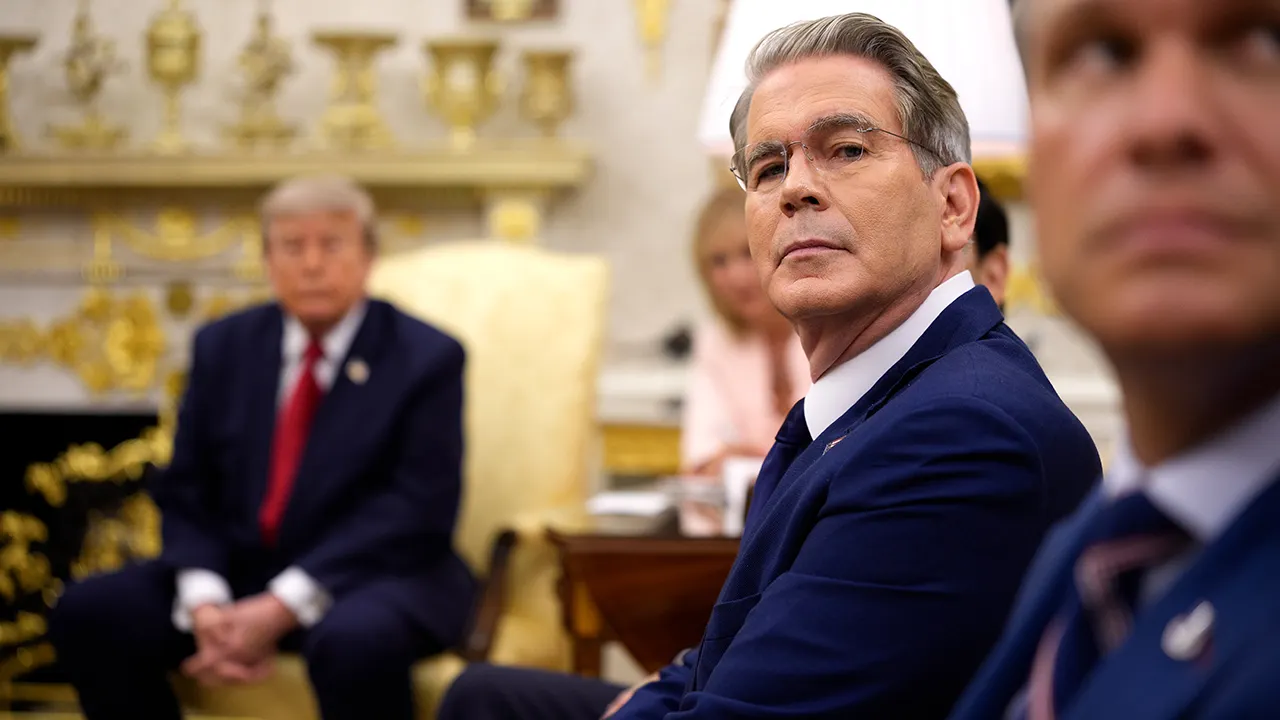
Treasury Secretary Scott Bessent joins ‘Mornings with Maria’ to discuss the Trump administration’s payment verification system that blocked ‘about $100 million’ in payments to deceased people and could stop $350 million this year.
The U.S. Department of the Treasury has prevented nearly $99 million in federal payments from being disbursed to deceased individuals using a new verification system deployed under President Donald Trump’s executive order targeting government fraud, waste and abuse.
Following Executive Order 14249, “Protecting America’s Bank Account Against Fraud, Waste, and Abuse,” the Department of the Treasury and the Bureau of the Fiscal Service implemented a verification process that reviewed more than 885 million payments totaling approximately $2.77 trillion.
That screening flagged more than 4,900 payments totaling nearly $99 million that were associated with deceased individuals, returning the payments to the originating federal agencies for review before any funds were disbursed.

Treasury Secretary Scott Bessent attends a meeting with President Donald Trump and other Cabinet members. (Getty Images)
“So far, we’ve saved about $100 million, payments that didn’t go to deceased people… We think that there’s up to $350 million that we can stop before the end of this year,” Treasury Secretary Scott Bessent said on “Mornings with Maria” Tuesday. “The [Government Accountability Office] estimates that… this number might be up to $500 billion, which is about 1.66% of GDP. So that could go a long way towards paying down the debt, providing more services, and this is just the start.”
“In the Biden administration, HHS got rid of about 50 or 60 of the people who were charged with monitoring fraud. And, Maria, what’s important here is that we are stopping the money from going out. So once the money gets out, trying to retrieve it, it’s very, very difficult. So stopping it at the source here is our goal,” he continued.
Treasury Secretary Scott Bessent joins ‘Mornings with Maria’ to discuss the Trump administration’s crackdown on government fraud, mounting economic pressure on Iran, the AI race with China and the outlook for the U.S. economy.
The initiative relies on permanent access to the Social Security Administration’s Full Death Master File, access that was initially granted on a temporary three-year basis in 2021 through the Consolidated Appropriations Act, according to a Treasury press release.
GET FOX BUSINESS ON THE GO BY CLICKING HERE
Following initial projections estimating $330 million in net benefits between 2024 and 2026, Congress made the verification authority permanent through the “Ending Improper Payments to Deceased People Act,” which President Trump signed into law in February.
“This new safeguard addresses a longstanding vulnerability and helps ensure every dollar the federal government spends reaches its intended recipient,” Bessent also said in the press release. “Treasury will continue efforts to modernize the federal payment system, strengthen safeguards against fraud and improper payments, and protect taxpayer dollars.”

The maker of Wegovy and Ozempic, Novo Nordisk, has launched legal action accusing its arch rival Eli Lilly of false advertising in suggesting its weight-loss drugs perform better.
The Danish company filed a lawsuit in the US on Tuesday claiming Eli Lilly, which makes Mounjaro and Zepbound, deployed ad campaigns to “create the misleading impression that Eli Lilly’s medicines are superior”.
Novo said its rival compared the highest approved doses of its medicines for obesity and type-2 diabetes with lower doses of Novo Nordisk’s, while omitting newer, higher-dose options.
The BBC has contacted Eli Lilly for comment.
The lawsuit comes as Novo and Eli Lilly are locked in battle to dominate the fast–growing weight-loss drug industry, especially in the US, which analysts have estimated could be worth more than $100bn by 2030.
Novo Nordisk claimed its main competitor in the weight-loss drug business had committed “multiple violations” of federal and state false advertising and unfair competition laws, through its nationwide ad campaigns.
The company said Eli Lilly’s current campaigns “intentionally” selected outdated studies comparing Lilly’s highest doses against lower doses of Novo Nordisk’s medicines.
It said the ads had “deceptively” presented that Eli Lilly’s products were superior, but buried or omitted “critical clinical context”.
The products being compared incorrectly, according to Novo, were Mounjaro vs. Ozempic and Zepbound vs Wegovy.
“As new and more effective treatment options become available, people deserve accurate information that reflects the latest scientific evidence and helps them make informed care decisions,” said John F. Kuckelman, senior vice president and group general counsel for Novo Nordisk.
“Healthcare companies have a responsibility to keep their public claims accurate and current – ineffective, fine-print disclaimers do not fix the misleading impression created by major national campaigns,” he said.
Novo said it was seeking a court order requiring Eli Lilly to pull its ads and instead run what it called a “corrective advertising campaign”.
It added if Eli Lilly did not voluntarily remove the commercials, it would file a motion in the coming days to seek a preliminary injunction to block them.

Why is Hasbro stock surging today?

Buying AI's Upside And Shorting Its Implosion Risk: Long Microsoft, Short Oracle

Australia is already engaged in a conflict with China, former defence minister Linda Reynolds told the Aukus Public Inquiry in Fremantle recently.
Business
Dow Rebounds as Chip Stocks Rally and Iran Signals a Diplomatic Opening Ahead of Earnings This Week

The Dow Jones Industrial Average climbed Tuesday morning, trading at 52,010.37, up 0.33%, or 171.11 points, as semiconductor stocks staged a fresh rebound and easing rhetoric from Iranian officials helped lift broader investor sentiment ahead of a heavy week of corporate earnings reports from major technology companies.
The gains extended into the broader market as well, with the S&P 500 rising roughly 0.6% and the tech-heavy Nasdaq Composite climbing about 0.9%, as chip names took center stage ahead of results due later this week from Alphabet, Intel, IBM and Tesla, among others.
Chip stocks lead the rebound
Semiconductor shares were the standout performers of Tuesday’s session, continuing to recover after a difficult stretch of losses last week. Asian equities had already risen for the first time in four days overnight, with the MSCI Asia Pacific Index climbing 1.7% and chip giants Samsung Electronics and Taiwan Semiconductor Manufacturing Co. among the biggest contributors to that regional rally. South Korea’s Kospi and Taiwan’s benchmark index each gained more than 2.5% overnight, while Japan’s Nikkei 225 rose 2.2% as trading resumed following Monday’s holiday.
That momentum carried directly into U.S. trading, with a broad gauge of American chip stocks rebounding from last week’s sharp selloff and continuing to build on early gains through Tuesday’s session.
A reversal from Monday’s decline
Tuesday’s advance follows a weaker session Monday, when the Dow fell 307.16 points, or 0.59%, to close at 51,839.26, dragged lower in part by a more than 2% decline in Apple shares. The S&P 500 dropped 0.19% to 7,443.28 on Monday, while the Nasdaq Composite slipped 0.05% to 25,508.07, as oil prices advanced following the latest round of military exchanges between the United States and Iran.
Signs of a possible diplomatic opening
Much of Tuesday’s improved sentiment traced back to comments from Iranian officials suggesting a possible path toward renewed negotiations, even as the underlying military conflict continued. The United States completed its ninth consecutive night of strikes on Iranian targets overnight into Monday, but investor sentiment began improving by midmorning London time after Iranian Foreign Ministry spokesman Esmail Baghaei signaled openness to a diplomatic resolution.
Baghaei told reporters that intermediaries had continued exchanging messages with Iran even amid the latest round of U.S. strikes, and said negotiations between the two countries could still be pursued based on each side’s national interests. That comment, while not a formal breakthrough, was enough to ease some of the geopolitical risk premium that had been weighing on markets in recent sessions, contributing to lower oil prices Tuesday after crude had briefly touched $90 a barrel over the weekend.
A pivotal week for earnings season
With markets now entering what TheStreet Pro contributor James “Rev Shark” DePorre described as the heart of earnings season, investor attention is increasingly shifting toward how companies’ quarterly results are received rather than simply whether they beat expectations. “The big question is whether the recent carnage has changed expectations enough to change the response to the numbers,” DePorre said. “Will in-line reports be good enough, or does the sell-the-news dynamic that has been punishing some strong results remain in charge?”
DePorre noted that more than 86% of S&P 500 companies that have reported results so far this season have beaten analyst expectations, “and the market has sold plenty of them anyway,” underscoring how closely investors are scrutinizing forward guidance and capital spending plans rather than headline earnings beats alone.
Intel layoffs add to sector-specific news
Beyond the broader market moves, individual company developments continued to shape sentiment within the technology sector. Intel confirmed plans for a new round of layoffs as part of what the company described as a broader strategic realignment, with more than 5,000 U.S. employees affected so far, concentrated primarily in California and Oregon, alongside additional cuts in Arizona and Texas.
An Intel spokesperson explained the rationale behind the restructuring. “As part of our broader strategy to become a more focused and efficient company, our data center group is aligning its organization to ensure it has the right roles and skills in place to position the business for long-term success,” the spokesperson said, adding that the company remains committed to treating all affected employees with respect throughout the transition.
Markets bracing for a wave of Big Tech results
With Alphabet, Intel, IBM and Tesla all scheduled to report earnings later this week, market participants are looking for the next meaningful catalyst for the broader artificial intelligence trade following a series of sharp sector rotations in recent weeks. Analysts said Wall Street has raised its expectations heading into those reports, given the extent to which capital expenditure guidance from major technology companies has increasingly driven stock reactions this earnings season, often more so than the headline profit and revenue figures themselves.
With chip stocks attempting to build on Tuesday’s rebound and cautious optimism building around potential U.S.-Iran diplomatic engagement, investors are likely to remain focused on this week’s earnings reports as the next major test of whether the broader technology rally can regain its footing following weeks of volatility. At the same time, any further developments in the U.S.-Iran conflict, whether toward continued escalation or renewed negotiation, are expected to remain a significant factor shaping both oil prices and broader market sentiment in the sessions ahead.

Why Your Team Is Your Most Underused Marketing Channel on LinkedIn

Circle Wants to Own Crypto’s Financial Stack, but Tether Still Owns the Dollar

CWG 2026: The new faces who could shape India’s future in Glasgow | Commonwealth Games


-
 NewsBeat5 days ago
London Mayor Sadiq Khan handed a peerage by Keir Starmer alongside 15 other Labour figures… just days before the PM leaves No10
-

 Fashion4 days ago
Weekend Open Thread – Corporette.com
-

 Politics3 days ago
The House | The City of London can help the new chancellor deliver growth in every postcode
-

 Politics6 days ago
Young campaigners urge incoming PM to act on outdoor junk food ads
-

 Crypto World6 days ago
CFTC blocks Kalshi from unwinding Michigan trades after court order
-
 Crypto World4 days ago
Two July Windows Left: The CLARITY Act’s Senate Fight and What Failure Means
-

 Crypto World3 days ago
Ripple Payments Joins MiCA With 14 Firms, Does It Mean Anything For XRP?
-

 Business6 days ago
Nvidia Stock Slips After Big Tuesday Rally as Huang Confirms Vera Rubin Chip Is Now in Production Today
-

 Politics2 days ago
Democrats look to World Cup watch parties to register thousands of voters
-
 Entertainment6 days ago
Disney’s Most Ambitious Failed Star Wars Attraction Is Coming to SDCC
-

 Crypto World4 days ago
Ripple wins EU-wide access as ESMA adds it to MiCA register
-

 Crypto World5 days ago
Injective Submits SEC Transfer-Agent Registration to Onchain Ownership Records
-

 Crypto World6 hours ago
Grayscale Files For Worldcoin ETF, WLD Registers Sharp Rise
-

 Business5 days ago
Palantir Shares Rise After Expanded Nvidia Partnership and Fresh Analyst Upgrades Ahead of Earnings Day
-

 Tech14 hours ago
Sail Virtually Aboard The “Itanic” With IA-64 Emulator
-
 Tech12 hours ago
Turtle Beach Command Series KB7 review: a nifty screen-equipped gaming keyboard
-

 Tech7 days ago
Dark Secrets Emerge When Jailbreaking LLMs
-

 NewsBeat4 days ago
Registration is now open for March for Men with Kev 2026
-

 News Videos7 days ago
XRP BOMBSHELL… XRP OMBOARDED FOR TRANSACTIONS!!!
-

 NewsBeat1 day ago
Unregistered fitter used Gas Safe logo on business flyers
You must be logged in to post a comment Login