Despite lingering concerns over
geopolitical tensions, weak consumption trends and global uncertainty,
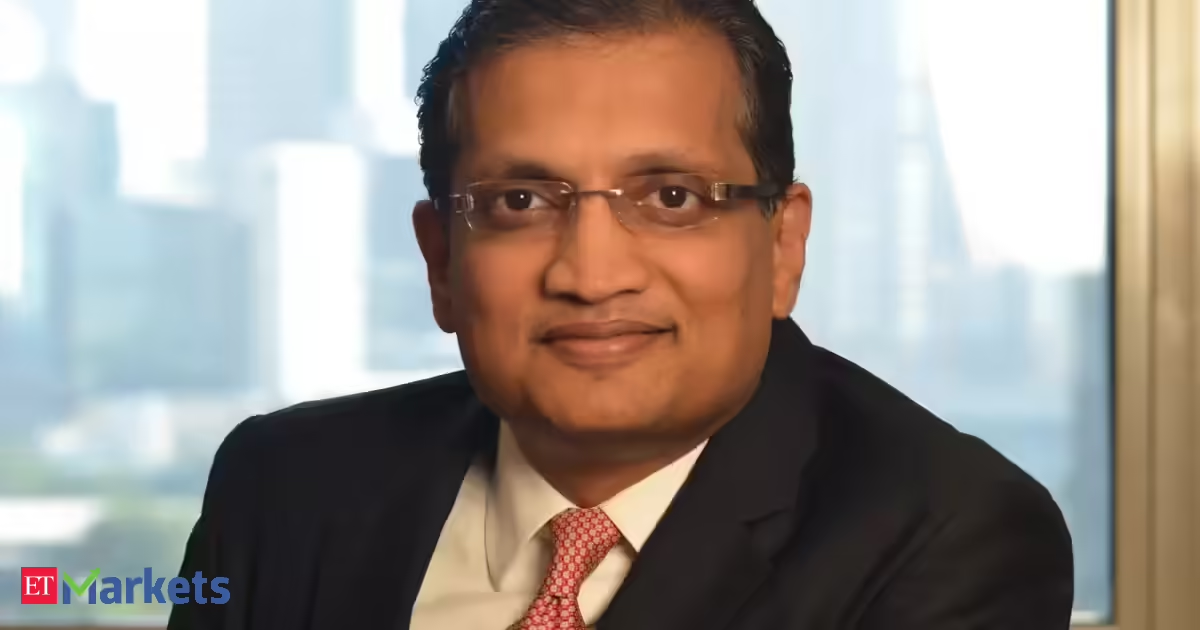
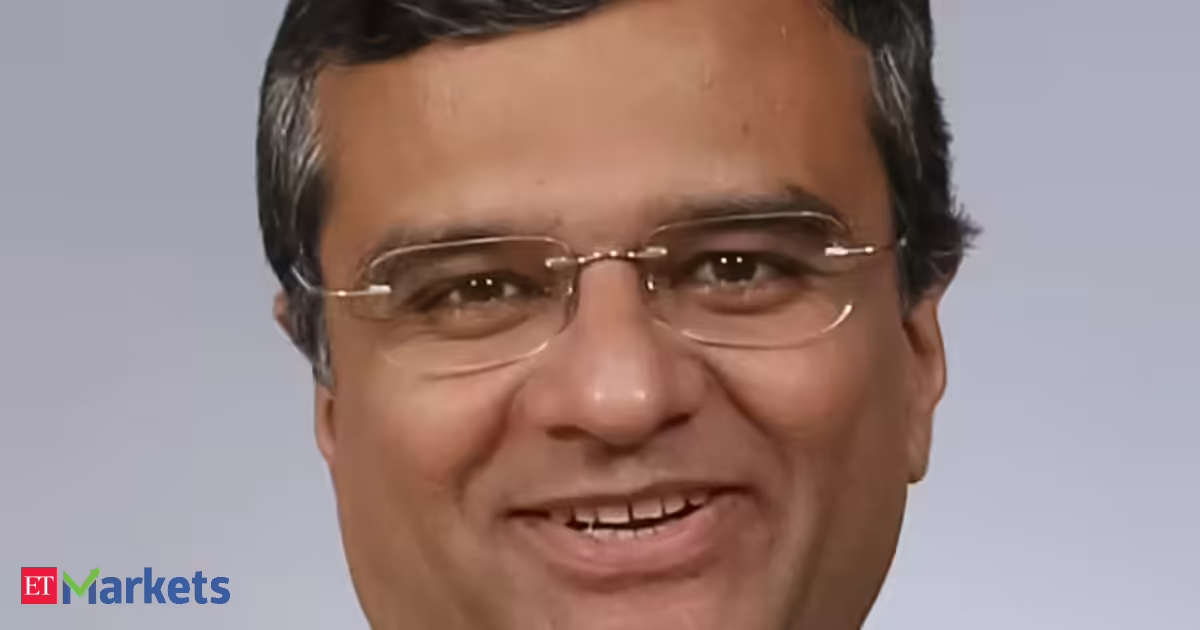
Prashant Khemka, Founder,
WhiteOak Group believes the
Indian equity market has already absorbed much of the pessimism. Speaking to ET Now, Khemka argued that uncertainty is a permanent feature of
investing and that markets often reward investors when sentiment is at its weakest.
Uncertainty is a Constant, Not an Exception
Khemka dismissed the notion that the current environment is unusually uncertain, saying every market cycle has its own set of fears.
“I have been investing in Indian markets, or markets in general, for much longer. I do not recollect a point in time when there were no uncertainties or concerns. The closest the market came to having no concerns was during the peaks of the 2007 bubble, the 2000 bubble, or the 1992 bubble. It is only closer to the peak that you see fewer concerns.”
He noted that concerns evolve with time, but markets eventually move on.
“We have forgotten most of those matters. People were worried about Grexit, then Brexit, and later tariffs. COVID was obviously very serious. Right now, the concerns and uncertainties we are talking about will not even be remembered in a few months’ time. Certainly, by next year, they will disappear.”
According to Khemka, the correction from the September 2024 peak, combined with the cost of equity and the time value of money, effectively reflects a much steeper adjustment than headline index levels suggest.
“The market is down from its September 2024 peak by a mid-to-high single-digit percentage. Add another 5% to 7% for the time value of money and the cost of equity, and it is equivalent to a decline of more than 25%. I feel that already builds in a lot of negativity and pessimism. I feel very good about making money from here on.”
No Bubble in India, Says Khemka
Responding to concerns about elevated valuations, Khemka said India is not experiencing a market bubble.
“I would say there is no bubble in India. One can ask whether AI is a bubble globally or not. Only in hindsight does one know whether it was a bubble. But in India, there is no bubble because there is not much that is tied to AI.”
He explained that creating new highs is simply part of the market’s long-term behaviour.
“It is in the nature of the market to create new highs all the time. Over anybody’s investing journey, there would be thousands of new highs. A new high does not necessarily mean the market is overvalued.”
Sideways Phase May Eventually Give Way to an Uptrend
Khemka believes Indian equities have largely been moving sideways for nearly two years, rather than being in a sustained bear market.
“Sometimes markets are rallying, sometimes they are declining, and sometimes they move sideways. We have been in a sideways market for the last 21 months or so. Yes, I would like to see the market eventually trend upwards. It does not necessarily go in a straight line. There will be some ups and downs, but a gradual upward trend would obviously be the desirable outcome.”
Foreign Investors Remain Deeply Pessimistic
Khemka pointed out that foreign institutional investors remain far more negative on India than domestic investors, describing current sentiment as one of the weakest he has witnessed.
“Among foreign investors, the pessimism towards India, on a relative basis, is higher than at any point I have seen during my 20 years of professionally managing India money.”
He clarified that the pessimism is relative to other global equity markets rather than reflecting a broad risk-off environment.
“Emerging market fund managers are substantially underweight India. India is one of the most underweight countries in emerging market portfolios, reflecting that pessimism.”
Domestic Investors Less Optimistic, But Not Bearish
While domestic investor confidence has weakened from last year’s highs, Khemka believes it has not reached extreme levels.
“Today, the sentiment among domestic investors is weaker than it was 12 months ago. I would not call it peak pessimism, but it is definitely weaker. If pessimism is at one end and optimism at the other, I would say sentiment today is below average and tilted more towards pessimism than optimism, but far from the peak pessimism that global investors currently have.”
Long-Term Opportunity Amid Weak Sentiment
Khemka’s assessment suggests that weak investor sentiment—particularly among foreign investors—may itself present an opportunity. While acknowledging that uncertainties remain, he believes markets have already discounted much of the bad news. In his view, periods marked by widespread caution often lay the groundwork for stronger long-term returns rather than signalling the end of the investment cycle.
















































You must be logged in to post a comment Login