

Connect with us

Business

ASEAN’s Neutrality Is Failing the South China Sea Test

Published

on

How China is quietly replacing Japan as Thailand's dominant industrial partner
  • ASEAN’s traditional non-aligned approach, which has preserved regional peace for decades, faces mounting strain as China’s sustained pressure in the South China Sea exposes the limits of consensus-based diplomacy. Two decades of negotiations over a legally binding Code of Conduct have produced no agreement, illustrating how neutrality can enable gradual territorial encroachment rather than prevent it.
  • The bloc’s structural reliance on consensus allows members with close ties to China to block unified responses, creating an institution capable of swift diplomacy with Russia yet unable to defend its own waters in binding terms. Genuine regional security may require ASEAN to move beyond diplomatic silence and assert firmer positions when sovereignty is directly threatened.

ASEAN faces its toughest test balancing neutrality amid global disorder, particularly in the South China Sea. While its consensus-based diplomacy has maintained regional peace, China’s territorial pressure exposes critical weaknesses. Staying friendly with everyone fails when one party quietly encroaches, making silence increasingly insufficient.

Key Points

  • ASEAN, chaired by the Philippines this year, faces mounting global pressures, balancing trade, energy, and food security while maintaining friendly ties with all major powers, including Russia and China, through its traditional non-aligned “ASEAN way” approach.
  • The South China Sea remains ASEAN’s greatest challenge, where two decades of negotiations with China over a legally binding Code of Conduct have stalled, exposing how consensus-based decision-making becomes a weakness when members have conflicting ties.
  • While ASEAN’s neutrality has successfully prevented interstate war, its reluctance to confront assertive actors like China risks enabling gradual territorial encroachment, suggesting the bloc must find courage to move beyond diplomatic silence when regional sovereignty is genuinely threatened.

ASEAN’s Balancing Act in a Divided World

A Tested Approach | Strengths of Neutrality

In 2025, the Philippines chairs ASEAN during one of its most demanding periods, as global disorder strains a region deeply dependent on trade and stability. From crisis management at the Cebu summit to maintaining friendly ties with Russia despite Western pressure, ASEAN demonstrates its defining characteristic: refusing to choose sides. This strategic neutrality has historically served the region well. By keeping ties open with all major powers, ASEAN secures energy, food, and security through multiple relationships rather than dependence on a single hegemon. Decades without interstate war stand as evidence that this approach delivers results.


When Neutrality Becomes a Liability

The South China Sea Challenge | Institutional Limitations

However, ASEAN’s greatest strength becomes its most dangerous weakness when one party at the table is not merely talking but actively taking. Nowhere is this clearer than in the South China Sea. After over twenty years of negotiations, ASEAN and China have yet to agree on whether a Code of Conduct would even be legally binding. The Philippines, the most directly pressured member, exemplifies this dilemma — President Marcos Jr. advocates for binding rules yet expresses little confidence in achieving them. Staying neutral toward a party applying sustained pressure ultimately allows that pressure to continue unchallenged.


The Courage ASEAN Must Find

Consensus as Constraint | A Call for Decisive Action

Advertisement

ASEAN’s consensus-based decision-making, while ensuring inclusivity, creates a structural paralysis precisely when firmness is most needed. Members with close ties to China effectively prevent any unified, assertive response to territorial encroachments. The result is a body capable of reaching agreements with Russia within days yet unable to produce a single binding sentence defending its own waters in years. China’s gradual territorial gains — never large enough to trigger war, yet sufficient to redraw boundaries — expose this vulnerability. Genuine regional security ultimately requires not just skillful diplomacy, but the institutional courage to firmly reject actions that threaten the foundations of the regional order itself.

Source : ASEAN has to stand up to Beijing’s ambitions – Taipei Times

Advertisement
Continue Reading
Click to comment

You must be logged in to post a comment Login

Leave a Reply

Business

AVL, Alcoa explore vanadium battery storage rollout

Published

on

AVL, Alcoa explore vanadium battery storage rollout

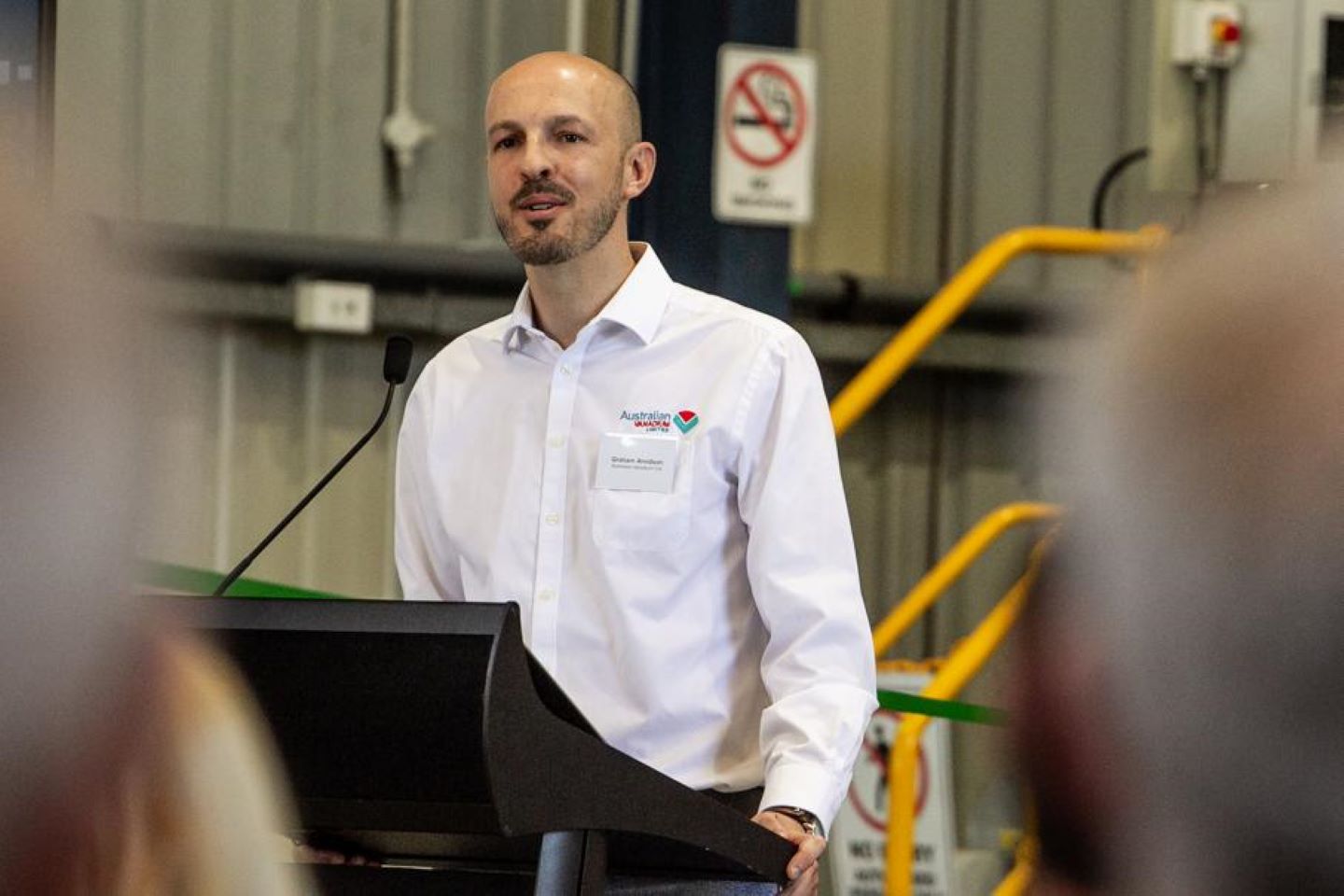
Australian Vanadium and Alcoa Australia are working together to evaluate the potential rollout of vanadium flow battery technology at the miner’s WA alumina refineries.

Continue Reading

Business

Australian shares surge as banks, miners charge higher

Published

on

Australian shares surge as banks, miners charge higher

Australia’s share market is narrowing on its record high as easing oil prices and confidence in a strong earnings season for heavily weighted sectors bolster risk sentiment.

Continue Reading

Business

BP profit highest since 2022 as Iran war pushes up oil price

Published

on

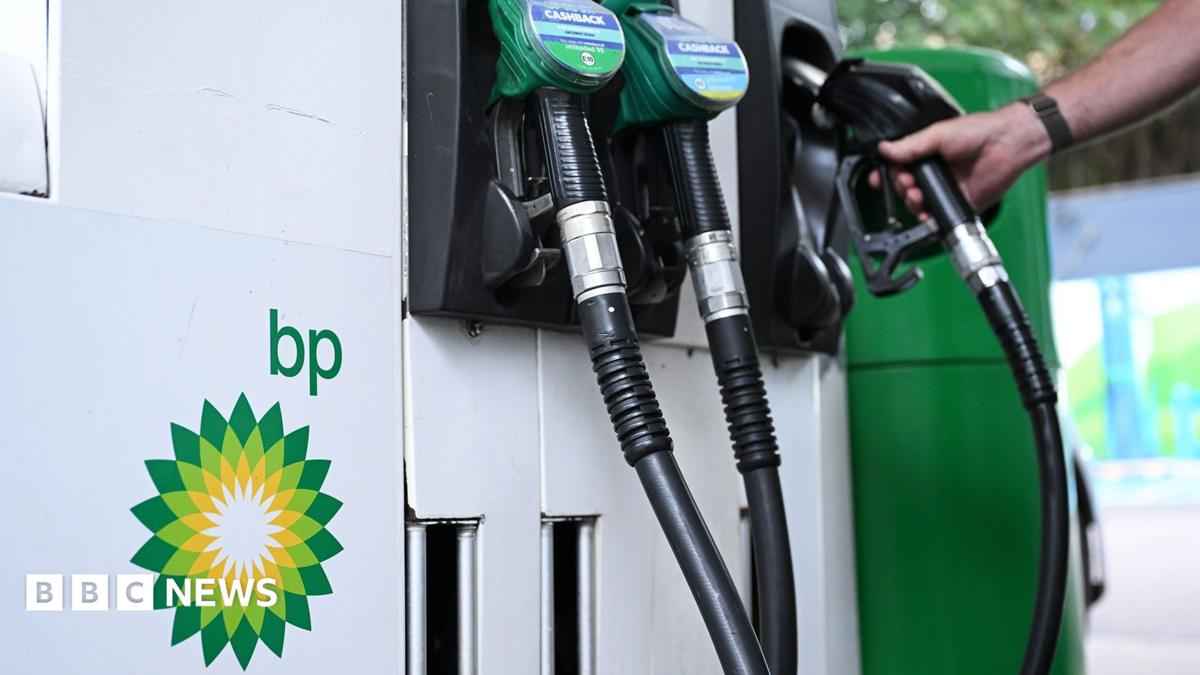
Close up of petrol and diesel pumps and hand on one of the pumps with the BP logo to the side

Despite the big rise in profits, BP chief executive Meg O’Neill said the company was not reaching its full potential.

BP, which employs nearly 14,000 people in the UK, confirmed plans to move further away from clean energy, revealing plans to sell off its US renewable natural gas business Archaea.

O’Neill said this was part of her plan to prioritise “value, not sentiment or history”.

“We have to focus on the assets with the strongest potential to deliver competitive returns and long-term value,” she said.

Advertisement

Last week, BP announced it was putting its North Sea business up for sale in a move that would end 60 years of production in the region by the company.

Russ Mould, investment director at AJ Bell, said the sell-offs intended to make the business more streamlined.

“O’Neill will be aware she cannot rely on oil and gas prices remaining this high indefinitely,” he said.

“She needs to make sure it can prosper even when the backdrop is less helpful.”

Advertisement

The bumper profits reported by oil companies have led to an angry response from campaign groups.

Angharad Hopkinson, from environmental group Greenpeace, said BP’s results showed that “corporate gains have become entirely divorced from the public good”.

She said “the one point on which we agree with BP” is its decision to sell off its North Sea operations.

“Prolonging this parasitic relationship by trying to squeeze the last few drops of expensive oil out of the North Sea is sheer folly,” Hopkinson said.

Advertisement

Simon Francis, co-ordinator of the End Fuel Poverty Coalition, said oil firms “have banked more billions from a crisis that has created real hardship for millions of households”.

“The lesson is not to hand yet more tax breaks to an industry posting billions in profit every quarter, but to use Windfall Tax receipts to clear the record energy debt households built up during the crisis,” he said.

Energy firms operating in the UK are subject to a windfall tax – called the Energy Profits Levy – that was introduced in 2022.

However, the tax only applies to profits made from extracting oil and gas in the UK.

Advertisement
Continue Reading

Business

Yorkshire’s Caddick Construction to build huge new storage centre in Newcastle

Published

on

Business Live

The facility will become the second Big Yellow Self Storage in the city

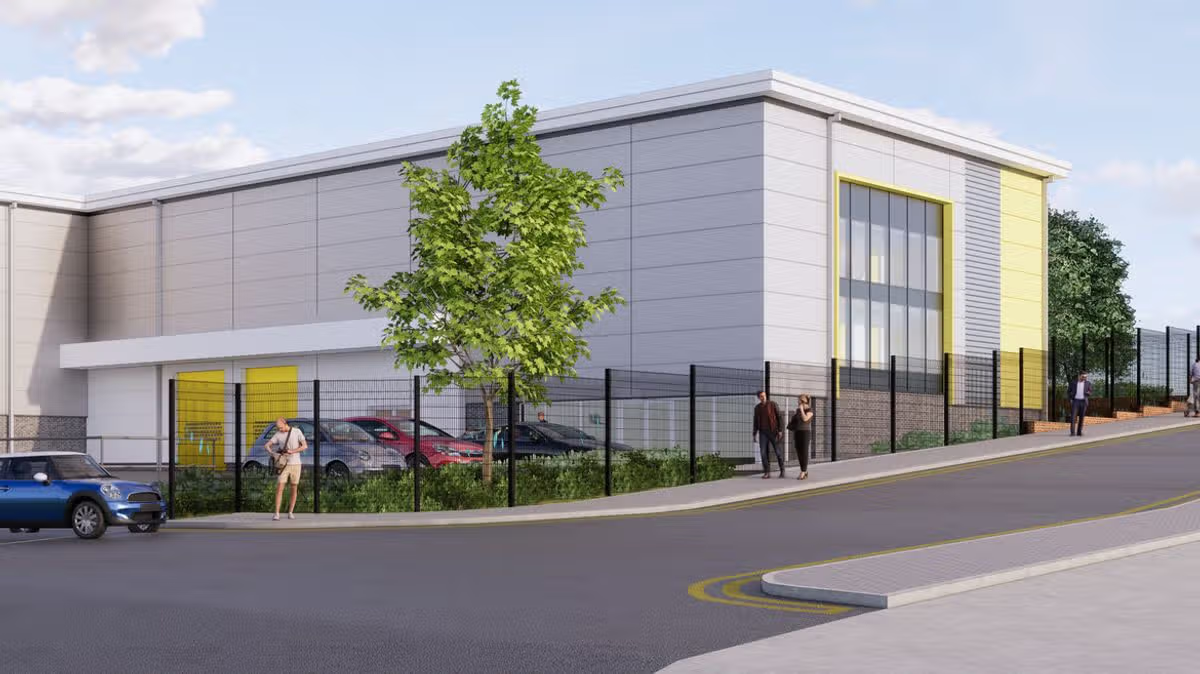
A CGI of the new Big Yellow self storage site being created in Newcastle

A CGI of the new Big Yellow self storage site being created in Newcastle(Image: Caddick Construction)

A new storage facility is set to be built in Newcastle following the appointment of a leading Yorkshire construction company. Caddick Construction, based in Wakefield, has been named principal contractor for the design and build of a new Big Yellow Self Storage facility in Newcastle’s west end – the second in the city alongside its Industry Road site.

The company is a leading provider of secure, modern self-storage units, offering customers rooms of varying sizes for both personal and business needs, and rapid expansion over the last few years has seen it grow to operate 114 locations across England, Scotland, and Wales.

Being delivered on behalf of the Big Yellow Construction Company, the new facility will have around 60,000 sqft of internal storage space spread across four floors, customer loading bays, staff welfare, office and reception areas.

Based on Scotswood Road, the facility will also have roof mounted solar photovoltaics (PV), battery storage, car parks, landscaping and external works. The storage centre is due to be completed next summer, and will be built to meet BREEAM ‘Very Good’ requirements.

Advertisement

The appointment builds on the success of Caddick’s first year in the North East, having secured a range of contracts totalling £127m since opening its new office in Durham in 2025. It also adds to its portfolio of industrial projects, which includes Richardson Barberry’s new DPD parcel hub at Newton Aycliffe.

Steve Ford, regional managing director, Caddick Construction North East & Yorkshire, said: “We’re pleased to have been appointed to the design and construction of Big Yellow Self Storage’s new facility. This project expands our industrial portfolio in the North East and builds on our team’s expertise in delivering high-specification schemes.

“As one of the most active development markets in the UK, we’re proud to support the region and the local area through this investment, and we look forward to working closely with the Big Yellow team and our regional supply chain to deliver a high-quality, sustainable development.”

Nigel Hartley, Big Yellow’s construction director, added: “Big Yellow Construction has a strong track record of delivering high-quality, sustainable assets for the operational business across the UK. To maintain these consistently high standards, we work only with the best, and we are delighted to partner with Caddick Construction on what we hope will be another successful project for everyone involved.”

Advertisement

Headquartered in Wakefield and with regional offices in Warrington, Kendal, Durham and Birmingham, Caddick Construction Group employs over 500 people across Yorkshire, the North East, North West and Midlands. In its last financial year, Caddick Construction Group – which is formed of Caddick Construction, Caddick Civil Engineering and CCL Facades – reported a turnover of £375m, a pre-tax profit of £4.5m and a forward order book of over £1.4bn.

Like this story? For more news from the commercial property scene around the regions, visit our dedicated section here for the latest news and analysis within the sector.

Continue Reading

Business

Isuzu Motors Limited (ISUZY) Q1 2027 Earnings Call Prepared Remarks Transcript

Published

on

OneWater Marine Inc. (ONEW) Q1 2026 Earnings Call Transcript