
Business
Asia Faces Inflation Pressures Through 2027, ADB Warns


The Asian Development Bank projects inflation across developing Asia-Pacific economies will stay above 2025 levels through 2027, driven by geopolitical conflicts, higher energy costs, and extreme weather. The September Asian Development Outlook update slightly lowered the 2026 inflation forecast to 4.2% while raising the 2027 projection to 3.5%. Conflicts affecting oil markets and an expected severe El Niño event threaten to raise transport, food, and electricity costs, though government subsidies are helping moderate near-term price pressures at fiscal cost.
Thailand faces particular vulnerability, with growth forecasts adjusted to 2% for 2026 and 1.9% for 2027. The combination of persistent inflation and modest growth limits policy options, as expanded household support increases fiscal strain while loose monetary policy risks worsening high household debt. Regional growth overall will moderate to 5% in 2026 before rising to 5.1% in 2027, though this does not guarantee protection for consumers facing rising essential goods prices.
Inflation across Asia could remain above last year’s levels through 2027 as geopolitical conflicts, higher energy costs and extreme weather combine to keep pressure on food, transport and electricity prices, according to the Asian Development Bank.
In its September update of the Asian Development Outlook, the ADB slightly reduced its inflation forecast for developing economies in Asia-Pacific for 2026 to 4.2%, from 4.3% previously. However, it raised its 2027 projection to 3.5%, from 3.4%.
Although the 2026 revision appears limited, the figures confirm that price pressures are unlikely to disappear quickly. Both forecasts remain above the 3% recorded in 2025, pointing to a more persistent inflationary period for households, businesses and central banks.
The report attributed part of the pressure to conflicts in Europe and the Middle East. Disruptions in oil and refined fuel markets threaten to raise transport, manufacturing and electricity-generation costs in economies that depend on imported energy.
Weather conditions add a second risk. The ADB expects a severe El Niño event, with possible consequences for harvests from India to Thailand. Lower agricultural output could push food prices higher, while reduced hydropower generation could increase dependence on fossil fuels, according to Bloomberg.
Governments are using broad subsidies to contain the impact of higher energy prices. These measures have helped moderate the 2026 inflation forecast, but they also carry a considerable fiscal cost. Relief for consumers could become a longer-term burden on public finances if international prices remain elevated.
Thailand’s recovery remains fragile
Thailand is not insulated from this environment. Higher fuel prices affect transport, distribution and production, while extreme weather can damage agriculture and electricity generation.
The ADB slightly raised its growth forecast for Thailand in 2026 to 2%, from 1.8%, supported by technology exports and regional demand. For 2027, however, it lowered its projection to 1.9%, from 2%.
The combination of persistent inflation and moderate growth leaves Bangkok with limited room for manoeuvre. Authorities can expand support for households, but additional spending could increase fiscal pressure. They can also maintain an accommodative monetary policy, although excessively loose financial conditions could intensify risks in a country with high household debt.
Regional growth will remain resilient, according to the ADB. Growth across developing Asia will moderate from 5.5% in 2025 to 5% in 2026 before edging up to 5.1% in 2027. But a growing economy does not necessarily protect consumers when the prices of essential goods rise faster than incomes, as their analysis report.
For Thailand, the outlook for the coming months will depend on how long the energy shocks last and whether El Niño significantly affects harvests. If both pressures intensify at the same time, the government will have to decide which costs to absorb, which to pass on to consumers and how long it can finance broad-based support.
Asian inflation is not out of control, but it has not disappeared either. In 2027, households will continue to measure the recovery not through regional forecasts, but by the cost of filling the tank, buying food and keeping a business open.


TSMC 2nm wafer capacity to exceed earlier estimates, EDN reports

The euro and sterling were both 0.1% weaker against the dollar, last at $1.1379 and $1.3232, respectively, hovering near multi-month lows against the greenback.
The dollar index, which measures the US currency against a basket of peers, was a touch higher at 101.15 and on track for a 1.7% gain in September, its best month since June.
Oil prices climbed more than 1% on Monday with Brent crude futures last above $106 a barrel, after US President Donald Trump rejected a peace deal with Iran to resolve their conflict and reopen the Strait of Hormuz.
Energy supply risks and robust fundamentals in the US have heightened inflation concerns and prompted traders to price in a more hawkish Federal Reserve, while elevated long-end Treasury yields also supported the dollar.

“The greenback could overshoot in the near term if energy market tensions persist and inflation risks continue to build,” said Sim Moh Siong, FX strategist at OCBC.
The bank’s base case remains for a moderate USD rally into year-end, he added.The market’s focus is set to turn to US data releases as the week unfolds, with the PCE Index on Wednesday and non-farm payrolls on Friday both expected to be consistent with further policy tightening.
Currently, markets are seeing a 65% chance of a rate hike from the Fed when the central bank meets next at the end of October, according to CME Group’s FedWatch tool.
Other data for the week include China PMIs on Wednesday ahead of the week-long National Day holidays and Japan and euro zone CPIs on Friday.
The yen was last down 0.3% at 157.7 per dollar. It gained on Friday after Japan’s Finance Minister Satsuki Katayama and US Treasury Secretary Scott Bessent held a call on Friday and reaffirmed that yen undervaluation is a matter of concern and that the two nations intend to strengthen cooperation.
The Australian dollar fetched $0.7017, down 0.07%, and the kiwi traded flat at $0.5661.
The Reserve Bank of Australia is expected to raise interest rates by 25 basis points to a near 15-year high of 4.60% on Tuesday, expected to be the final rate increase in the tightening cycle.
Elsewhere, offshore yuan weakened to 6.7235 per dollar after Trump and Chinese President Xi Jinping’s three-day summit did not yield any big public breakthroughs on a host of contentious issues.

The ‘Barron’s Roundtable’ panel analyzes Anthropic’s potential IPO amid AI growth concerns.
President Donald Trump and Anthropic CEO Dario Amodei are meeting for a private dinner at the White House on Sunday evening.
Trump confirmed the meeting to Fox News’ Aishah Hasnie.
This comes after the leader of the AI firm raised concerns this month about the technology’s risks, warning that the pace of its advancement needs to be slowed down.
“We must slow the pace at which we improve the capabilities of AI models. Progress will still seem fast, and we must make wise use of the time we gain,” Amodei wrote in an essay.
ANTHROPIC CEO SAYS AI COULD CURE MOST DISEASES WITHIN NEXT DECADE

President Donald Trump and Anthropic CEO Dario Amodei are meeting for a private dinner at the White House on Sunday evening. (Getty Images / Getty Images)
Last week, Amodei spoke before the U.N. Security Council about the need for the AI industry to establish international standards and cooperation to manage the threats posed by rapid AI developments and capabilities.
Former Anthropic researcher Jacob Coxon also stepped down from the company earlier this month, arguing that leading AI companies are not acting responsibly as AI capabilities rapidly advance.
“I resigned from Anthropic today. I spent the last three years doing pretraining research at both OpenAI and Anthropic. Neither company is acting responsibly. They are racing straight to self-improving superintelligence and gambling with our lives,” Jacob Coxon said on Sept. 8.
Trump was asked by Hasnie about Amodei’s call for slowing the pace of AI improvement.
MELANIA TRUMP URGES AI ‘VIGILANCE,’ SAYS AMERICANS NEED TO GET EDUCATED

CEO of Anthropic, Dario Amodei, warned that the pace of AI advancement needs to be slowed down. (Anna Moneymaker/Getty Images / Getty Images)
“We’re going to talk about it. I’m for let’s go and let’s win. We’re about a year, maybe a year and a half up on China. There is nobody in third place. It’s just us and China. We’re leading by quite a bit. I spoke a little bit about it with President Xi. Not too much, it wasn’t a topic of conversation. Because I think if you, as they say, open it up to China, you give up the lead. But I’ll be speaking to Dario and others,” Trump said.
Amodei was not among the tech industry leaders to attend Thursday’s state dinner at the White House for Chinese President Xi Jinping, although the group included OpenAI CEO Sam Altman, Amazon CEO Jeff Bezos and Meta CEO Mark Zuckerberg.
Trump also said a broader White House meeting with House Speaker Mike Johnson and AI executives is scheduled for Tuesday.
“We have a very big meeting on Tuesday where everybody’s coming in and that’ll be very important,” Trump told Hasnie.

Anthropic has been involved in a legal fight with the Pentagon over its designation of the tech company as a supply-chain risk. (Samyukta Lakshmi/Bloomberg via Getty Images / Getty Images)
GET FOX BUSINESS ON THE GO BY CLICKING HERE
Anthropic has been involved in a legal fight with the Pentagon over its designation of the tech company as a supply-chain risk.
In a 2-1 ruling Friday, an appeals court sided with the Pentagon, allowing the department to continue designating Anthropic as a “supply chain risk” for Defense Department procurement purposes.
“Confirmed: @AnthropicAI = Supply Chain Risk. The @DeptofWar does what is right for the Country and our Warriors,” Pentagon chief Pete Hegseth said on social media following the ruling.
Business
Musk Says Optimus Could Make Tesla a $25 Trillion Company. Here’s What the Math Actually Requires to Happen
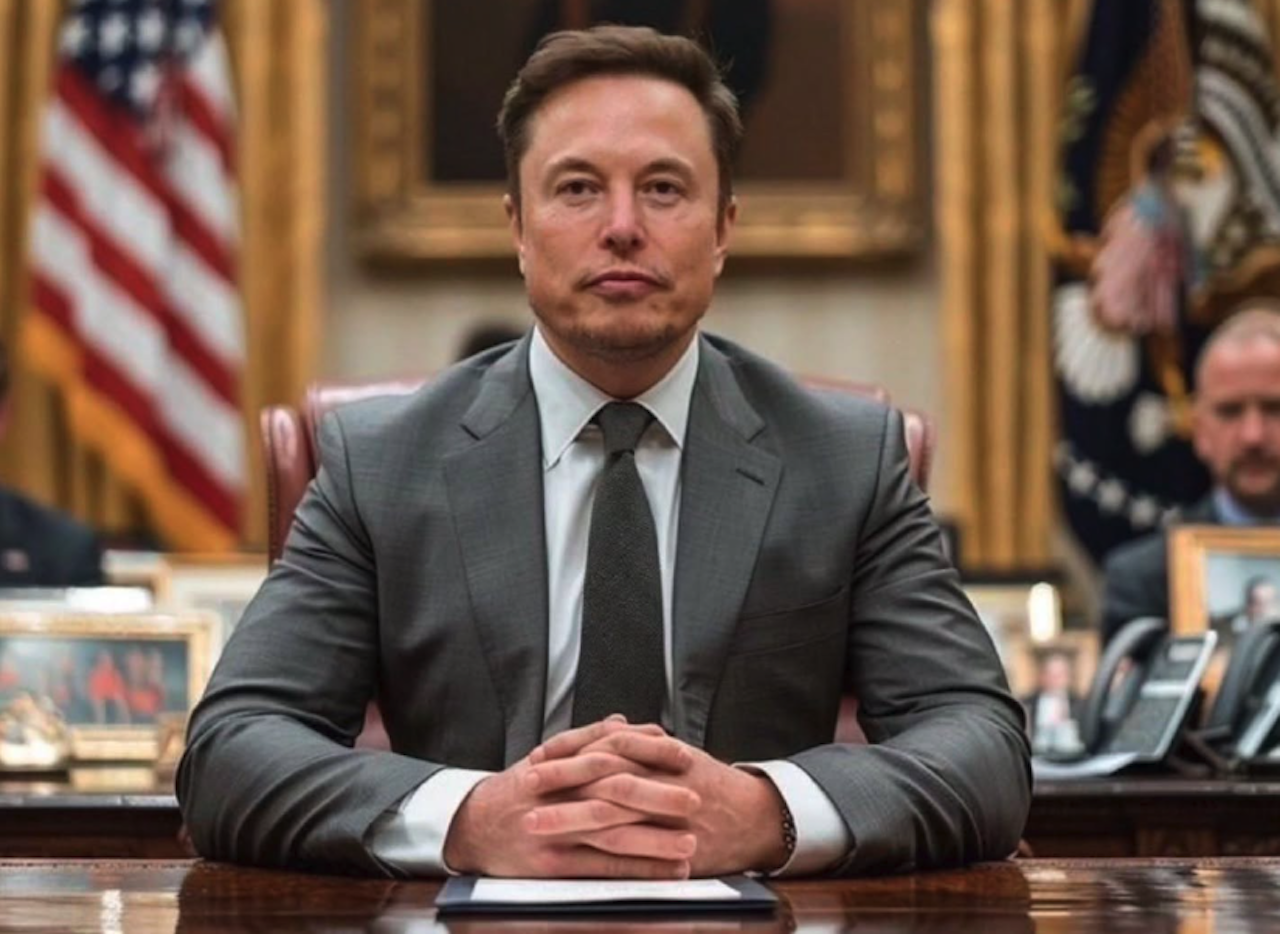
Tesla Chief Executive Officer Elon Musk has never shied away from bold predictions, and few have been bigger than his forecast for the company’s Optimus humanoid robot program. According to an analysis published by The Motley Fool’s Ryan Vanzo, turning that prediction into reality would require Tesla to capture an outsized share of a robotics market that, even under optimistic projections, remains far smaller than what the math would ultimately demand.
Musk made the prediction in 2024, saying of the robot, “Optimus, I think, is … literally a $25 trillion market cap situation.” Taken at face value, that statement suggests Optimus alone could help grow Tesla’s total market capitalization by roughly 2,500% from where the company traded at the time.
Musk has built a track record of predictions that often prove overly optimistic, particularly around timelines, even as he has also built multiple trillion-dollar businesses over the course of his career, according to Vanzo’s analysis. That combination, a tendency toward inflated near-term forecasts paired with a genuine history of long-term value creation, forms the backdrop against which analysts have evaluated the Optimus prediction specifically.
To assess whether the $25 trillion figure is realistic, Vanzo’s analysis draws on a separate industry projection from JPMorgan Chase, which estimates that total sales across the robotics industry could reach $2.5 trillion by 2035, up sharply from approximately $100 billion in 2025. Applying Tesla’s current price-to-sales ratio of roughly 13 times to that broader industry projection, the analysis estimates Tesla’s robotics division alone could be worth approximately $3 trillion if the company were to capture 10% of the entire global robotics market by 2035, a scenario the analysis describes as an already ambitious outcome given the scale of competition likely to emerge across the robotics sector over the coming decade.
Even under that relatively optimistic scenario, the resulting $3 trillion valuation for Tesla’s robotics business alone falls dramatically short of Musk’s full $25 trillion prediction, underscoring just how large a gap exists between the industry’s own current growth projections and the scale of value creation Musk has suggested Optimus could deliver.
The analysis also situates the $25 trillion figure within the broader context of the U.S. stock market as a whole. The entire S&P 500 index currently carries a combined value of roughly $70 trillion. If Tesla’s market capitalization were to reach $25 trillion at today’s overall market pricing, the company alone would account for approximately 36% of the entire index’s total value, an outcome without any clear historical precedent among individual companies within a major stock index of that scale.
Vanzo’s analysis does not dismiss the possibility that Optimus could create substantial value for Tesla shareholders over time, but frames any such outcome as likely to unfold over a much longer timeline than Musk’s original framing may have implied, potentially stretching across multiple decades rather than materializing within the coming years. The analysis explicitly cautions that Tesla’s current valuation multiples may not remain constant as the robotics business scales, adding a further layer of uncertainty to any long-term projection built on today’s financial ratios.
Musk’s Optimus prediction is only the latest in a long series of ambitious public forecasts he has made across his various companies, spanning Tesla’s self-driving technology timelines, SpaceX’s Mars colonization plans, and other major initiatives. Financial analysts have generally treated these predictions with a mix of interest and skepticism, acknowledging Musk’s demonstrated ability to build genuinely transformative businesses while also noting his consistent pattern of overestimating how quickly those outcomes will actually materialize.
Tesla shares were trading down 1.54% at last check, even as the broader U.S. stock market posted gains Sunday, with the S&P 500 up 0.51%, the Dow Jones Industrial Average up 0.93%, and the Nasdaq Composite up 0.48%. Nvidia, a company frequently mentioned alongside Tesla in broader discussions of major technology and AI-adjacent stocks, traded up a more modest 0.22% over the same period.
For investors weighing Musk’s Optimus prediction specifically, the underlying analysis suggests that while the robotics business could meaningfully contribute to Tesla’s long-term valuation growth, reaching anything close to the full $25 trillion figure Musk described would require Tesla to not only dominate a robotics industry still in its early stages of development, but to do so at a scale that would make it, by a significant margin, the most valuable company in stock market history relative to the broader index it trades within. As with many of Musk’s public predictions, the eventual outcome, and the timeline required to reach it, remains highly uncertain, and investors are encouraged to approach such forward-looking statements with appropriate skepticism rather than treating them as firm financial guidance.

BOSTON — A rare inherited change in the EGFR gene was tied to a sharp rise in lung cancer risk, including among people who have never smoked, according to a study in the journal Science.
Researchers at Dana-Farber Cancer Institute and 23andMe Research Institute analyzed data from more than 3.3 million people. They reported that the EGFR T790M variant raised lung cancer risk about 25-fold compared with people who did not carry it. Among never-smokers, carriers had about 62 times the odds of lung cancer compared with never-smokers without the mutation.
The variant did not show a similar increase across 17 other cancers in the same analysis.
Most U.S. carriers were traced to a shared ancestry linked to British and Irish settlers in Southern Appalachia about 200 to 225 years ago, the team said. Nationwide, the mutation remains uncommon — roughly one in 15,000 to 16,000 people. In some parts of Southern Appalachia, researchers estimated as many as one in 2,000 people may carry it.
Jaclyn LoPiccolo, an attending physician and lung cancer researcher at Dana-Farber and a co-author, said in a statement released with the paper: “Today, lung cancer screening is driven almost entirely by smoking history. Our findings raise the possibility that, in the future, screening could also be dictated by inherited genetic risk. If further studies confirm the benefit, people with EGFR T790M could be identified through genetic testing and offered personalized CT screening to identify lung cancers when they are at their most curable stage.”
She added: “We found that the vast majority of carriers inherited the mutation from the same ancestral lineage. We could trace that lineage to British and Irish settlers in the United States and show that the mutation became enriched after a founder event and genetic bottleneck in Southern Appalachia about 200 years ago. It’s a fascinating example of how human migration and genealogy can shape disease risk, generations later.”
Alexander Gusev, a quantitative geneticist at Dana-Farber, said: “To my knowledge, it’s one of the strongest, if not the strongest, cancer risk-increasing mutations that has ever been found.”
On smoking he said: “Smoking is bad for lung cancer. This mutation is bad for lung cancer. When you do both, your risk is the sum of those two risks. So, you definitely don’t want to smoke.”
U.S. screening guidelines still center on age and pack-years of cigarettes. Never-smokers who develop lung cancer often present later. EGFR mutations are already familiar to oncologists as targets in tumor DNA. An inherited T790M change is different: it is present in every cell from birth, not only in a tumor that has evolved resistance to certain drugs.
The authors suggested that people with a strong family history of lung cancer, multiple lung nodules or tumors, or family roots in parts of the southeastern United States consider speaking with a genetic counselor about testing or CT screening. That is a clinical conversation, not a population mandate.
The study has limits the authors and the Fox News account both flagged. Because the mutation is rare, researchers found relatively few carriers even in a multimillion-person dataset, so the exact size of the risk increase is uncertain. Much of the sample came from 23andMe research participants, who may not match the broader U.S. population. Risk estimates may not apply equally outside the regions where the founder effect is strongest.
The work shows association, not proof that genetic testing cuts deaths. No trial in this report showed that offering CT scans to T790M carriers improves survival. Funding included the National Institutes of Health and the American Cancer Society.
Lung cancer remains a leading cause of cancer death in the United States. Smoking still drives most cases. The new finding does not invert that fact. It adds a small, geographically clustered group whose risk is high even without cigarettes — and higher still if they smoke.
For clinicians, the practical next step is pedigree and geography: unexplained family clusters of lung cancer, especially among never-smokers with Appalachian or British-Irish roots, may justify counseling. For everyone else, the mutation is too rare to turn into a mass screening add-on without more outcome data.
Gusev’s arithmetic is the line that travels. The gene is bad. Smoking is bad. Together they add. Quitting does not erase an inherited allele. It still removes one of the two stacked risks.
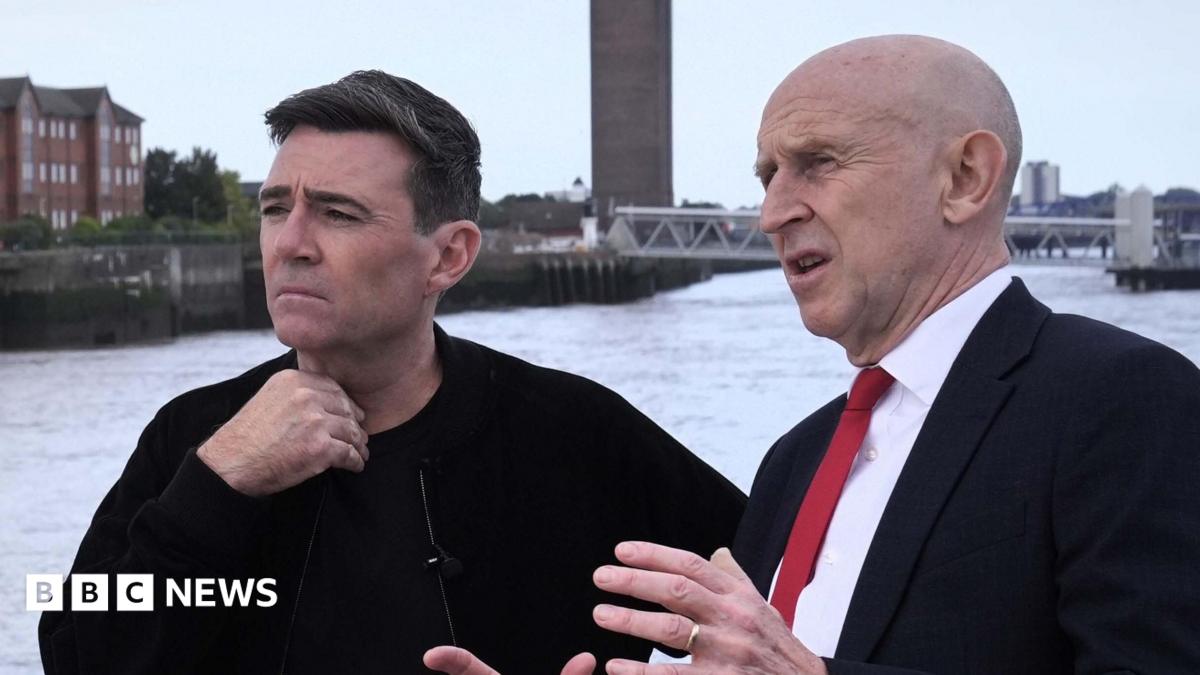
John Healey will promise “a new age of industrialisation” for the UK, when he delivers his first Labour conference speech as chancellor on Monday.
Healey will tell delegates “our coal mines are not coming back”, but that Labour will remake Britain’s industrial past “for the modern age” by backing advanced manufacturing.
He will also announce plans to boost Britain’s shipbuilding industry, with new orders for Royal Navy floating docks and a maritime research vessel.
With just a month to go until his first Budget, the chancellor is under pressure to cut spending or raise taxes to tackle the ballooning cost of government borrowing.
But he is not expected to reveal any details about his Budget plans in his speech at Labour’s annual conference in Liverpool.
Instead, he will attempt to set out a positive vision for the future of British industry, based around what he will call a “new confidence in Britain”.
The former defence secretary will announce that three new floating docks at HM Royal Naval Base Clyde, at Faslane, will be built in the UK, rather than put out to international tender.
Plans for the new docks were first set out in 2023 and are expected to upgrade Faslane’s facilities for the next generation of British submarines.
The docks form part of a wider £15bn upgrade programme for the Royal Navy’s shipyards and are expected to come into service in the early 2030s.
First Secretary of State Louise Haigh said in a speech on Sunday that the government would also commission a new marine research vessel as part of plans for a “new era of reindustrialisation”.
The chancellor is expected to announce £115m in funding for the ship, which is also set to come into service in the early 2030s.
Ahead of his speech, Healey said: “By backing British shipyards, we are not only boosting national security but also securing resilience in the industries that will drive growth today while building the capabilities the country needs for the future.”
Shadow chancellor Andrew Griffith said the plans were “reheated announcements” with “no clarity on where the money is coming from”.
He added: “Labour are running scared of making the tough choices needed to pay for Britain’s defence.
“All they can offer is reannounced docks and more hot air from Healey. Only the Conservatives will cut the welfare bill to fund defence.”
Charlotte Brumpton-Childs, national secretary of the GMB union, which has campaigned for the move, said it would be a “massive boost” for the UK’s shipbuilding sector.
“For too long juicy contracts have been sent to overseas – often subsidised – yards.
“This policy could reinvigorate UK yards and the communities that depend on them,” he added.
Prime Minister Andy Burnham – who is due to deliver his big conference speech on Tuesday – has previously spoken about his ambition to “reindustrialise” Britain, including in talks last week with US President Donald Trump.
But in a survey to be published on Monday, the Confederation of British Industry (CBI) will highlight falling economic activity across key sectors such as retail and services in the three months to September, with manufacturing declining more moderately.
CBI deputy chief economist Alpesh Paleja said rising energy and employment costs combined with weak demand were continuing to put pressure on profit margins.
He added: “Uncertainty ahead of next month’s Budget is also holding back activity in some sectors.
“Against the backdrop of renewed fiscal pressures, the Budget must draw a clear red line under any more rises in the cost of hiring, investing and doing business.”
The chancellor is also under pressure from some of Labour’s trade union backers to do more to tackle the cost of living.
Sharon Graham, general secretary of the Unite union, has called on Healey to “do something for workers and the working class” in his Budget.
She urged him to unfreeze income tax thresholds “to put money back into people’s pockets” and take further action on energy bills.
In his conference speech, Healey will also announce plans to bring back a training scheme run by trade unions, to help workers in England gain new skills and adapt as technology, including AI, changes the workplace.
The Union Learning Fund will get £15m in taxpayers’ money, taken from existing government budgets.
Employees do not need to be union members to benefit, with support options ranging from essential English, maths and digital skills, to training for jobs in growing industries, such as advanced manufacturing.

In Aberdeen’s boom years of North Sea oil, from the late 1970s through to the early 2010s, it didn’t have to work hard to fill its hotels and restaurants and get the cash tills ringing because of the wealth the energy industry brought to the city.
I remember weekends with friends as a teenager, spending whatever cash we had in the fashion chains and shoe shops. Later came the pubs and bar-hopping, and trips to the art deco Capitol Theatre (now office space), where I saw Duran Duran.
But by the end of 2022, Union Street had hit rock bottom. Aberdonians had long deserted the High Street for a shopping centre, which opened in 2009 next to the railway station.
“They’d fallen out of love with their city,” says Bob Keiller, head of Our Union Street coalition, a community-led group formed after an emergency summit to reverse the decline.
The first thing it did was listen to what residents wanted, receiving thousands of submissions. Restoring a bit of civic pride and filling empty units became the focus.
It’s been a co-ordinated effort, involving letting agents, the council, landlords, businesses and a big team of volunteers, led by Keiller, a former FTSE 100 CEO, who isn’t getting paid. He has a map on his office wall, detailing the status of every property, unit by unit, with colour-coded Post-it notes.
They audited the street, tracking down absent landlords, and logging what was empty and why. Volunteers offered to give the empty properties a clean and a lick of paint, to make them more attractive to let. They also spruced up the streets, picking litter, weeding, and painting bins. A small team still goes out once a fortnight.

LSEG head of consumer research Jharonne Marti discusses the mind of the consumer and the Walmart overreaction on ‘Making Money.’
Walmart is assuring customers it will not use personal data or AI to personalize prices.
In a letter published Friday, Walmart President and CEO John Furner reaffirmed the retail giant’s long-standing “Every Day Low Prices” strategy, saying the company prices “the product, not the person.”
“I’ve heard concerns about companies using that information and technology to charge you more,” Furner said. “I want to tell you where we stand: We price the product, not the person.”
Furner said prices may fluctuate when the cost of goods or transportation changes, but stressed that Walmart will not use a customer’s income, shopping history, urgency or other personal information to set prices.
WALMART LAUNCHES WEEKLONG FALL SALE OVERLAPPING AMAZON PRIME BIG DEAL DAYS

Walmart is assuring customers it will not use personal data to charge different shoppers different prices. (Christopher Dilts/Bloomberg via Getty Images)
“We won’t do it,” Furner said. “YOU are at the heart of our WHY and our relationship with you has always been built on trust. For decades, our associates have built that trust, one interaction at a time.”
“So, as technology improves, we’re putting the same attention on trust and serving you as we do when you walk into our stores and clubs.”
Furner also addressed Walmart’s rollout of digital shelf labels, saying the technology is meant to improve price accuracy while reducing the amount of time that employees spend replacing paper tags.
“A shelf price should match what rings up at checkout. Digital shelf labels help us do that more consistently by displaying the right price,” he said. “They also save associates time replacing paper tags.”
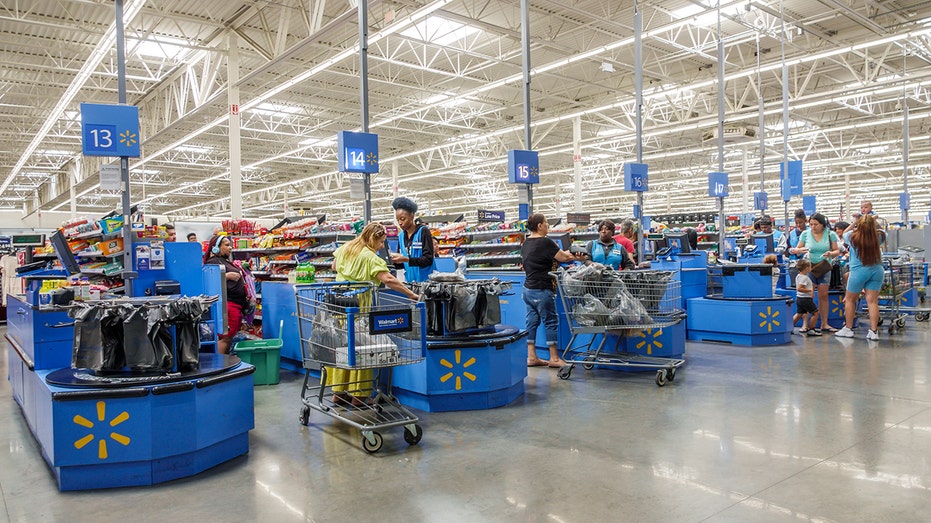
Furner also addressed Walmart’s rollout of digital shelf labels, saying the technology is intended to improve price accuracy and reduce the time employees spend replacing paper tags. (Jeffrey Greenberg/Universal Images Group via Getty Images)
Furner added, “It may sound like an easy task – but as someone who has had to change those paper tags by hand over the years, I can tell you it’s a time-consuming and unrewarding task.”
The CEO also detailed Walmart’s plans for artificial intelligence, including its AI shopping assistant, Sparky, noting that the tool is intended to deliver more personalized shopping assistance.
“When you engage with Sparky, that’s an invitation to serve you better, not to use your personal information to set a personalized price. We’ve never used the relationships our associates have with customers to charge more, and we won’t do that with AI,” Furner said.
Walmart said it is making three commitments: it will not set different prices based on who a customer is or the time of day; it will not use information shared through Sparky to raise prices or hide lower-priced options; and it will continue giving customers control over how their personal information is used.
WALMART LAUNCHES NEW FASHION BRAND WITH MOST ITEMS PRICED UNDER $25

The CEO also detailed Walmart’s plans for artificial intelligence, including its AI shopping assistant, Sparky, saying the tool is meant to deliver more personalized shopping assistance. (Paul Morigi/Getty Images for Semafor)
“Our people will continue to oversee pricing, and we’ll monitor and test our technology against these commitments,” Furner said.
CLICK HERE TO GET FOX BUSINESS ON THE GO
“Thank you for trusting us with part of your family’s budget. If there’s one thing I hope you take from this note, it’s how much we value the trust you place in us. Technology will keep changing. Our responsibility to earn your trust and help you save money and live better won’t.”

NIO sells 30% stake in battery unit to Geely subsidiary


Seeking Alpha’s transcripts team is responsible for the development of all of our transcript-related projects. We currently publish thousands of quarterly earnings calls per quarter on our site and are continuing to grow and expand our coverage. The purpose of this profile is to allow us to share with our readers new transcript-related developments. Thanks, SA Transcripts Team

‘Lanterns’ Best Team-Up Officially Rewrites HBO’s Detective Sci-Fi for the Better

What Does LOA Mean In Boating, And How Is It Measured?

United States complete thrilling comeback to retain Presidents Cup





-

 Fashion2 days ago
Weekend Open Thread: J.McLaughlin – Corporette.com
-

 Crypto World5 days ago
Goldman Sachs and Deutsche Bank Agree: The S&P 500 Rally Isn't Over
-

 Fashion4 days ago
8 iPhone Accessories That Add Personality
-

 Entertainment5 days ago
These 17 Fall Amazon Dresses Seriously Look Like Anthropologie
-

 Tech5 days ago
Reolink’s solar 4K security camera falls to its lowest price in months
-

 Crypto World5 days ago
This Bearish Netflix Stock Trade Can Cash In On Video Streaming Giant’s Woes
-

 Crypto World6 days ago
Trump-Xi Polymarket Odds for Handshake Hit 50%
-

 Tech7 days ago
Google’s $899 Googlebook is a bet that you’ll buy a new laptop for Gemini
-

 Crypto World4 days ago
Crude Oil Prices Pressured by Diplomatic Hopes in the Middle East
-
 Business5 days ago
Oil Price Today (September 23): Crude oil below $100 on hopes of US-Iran talks. What did Trump say?
-

 Crypto World4 days ago
Bitcoin price tests $83,600 Supertrend support after $87K rejection
-

 Crypto World4 days ago
Bitcoin Threatens Sub-$84,000 Breakdown as Long Liquidations Spike
-
 Crypto World6 days ago
Meta Jumps 11% As Muse Shines and Investors Show an Appetite for Advancing AI
-

 Crypto World5 days ago
BitGo says Bitcoin absorbed Fed hike, CLARITY failure
-
 Crypto World5 days ago
Did Jim Cramer Just Give GameStop Stock the Kiss of Death When He Said the Turnaround Is Working?
-

 Crypto World7 days ago
Bitcoin price holds above $81K as key catalysts line up
-
 Crypto World6 days ago
Trump, Xi Meet on S&P 500's Best Day Since Early August: Will Markets Stay Bullish?
-
 Tech4 days ago
UiPath’s Dines says AI needs a manual and launches Cartographer to write it
-

 Tech7 days ago
Amazon blocks Meta’s Muse AI assistant in new standoff over agentic shopping
-

 Crypto World7 days ago
Strategy Adds 950 BTC for $76M, Funds $174M STRC Buyback
You must be logged in to post a comment Login