






Connect with us
DAPA Banner

Business

Openn booted from ASX after two-year suspension

Published

on

Openn booted from ASX after two-year suspension

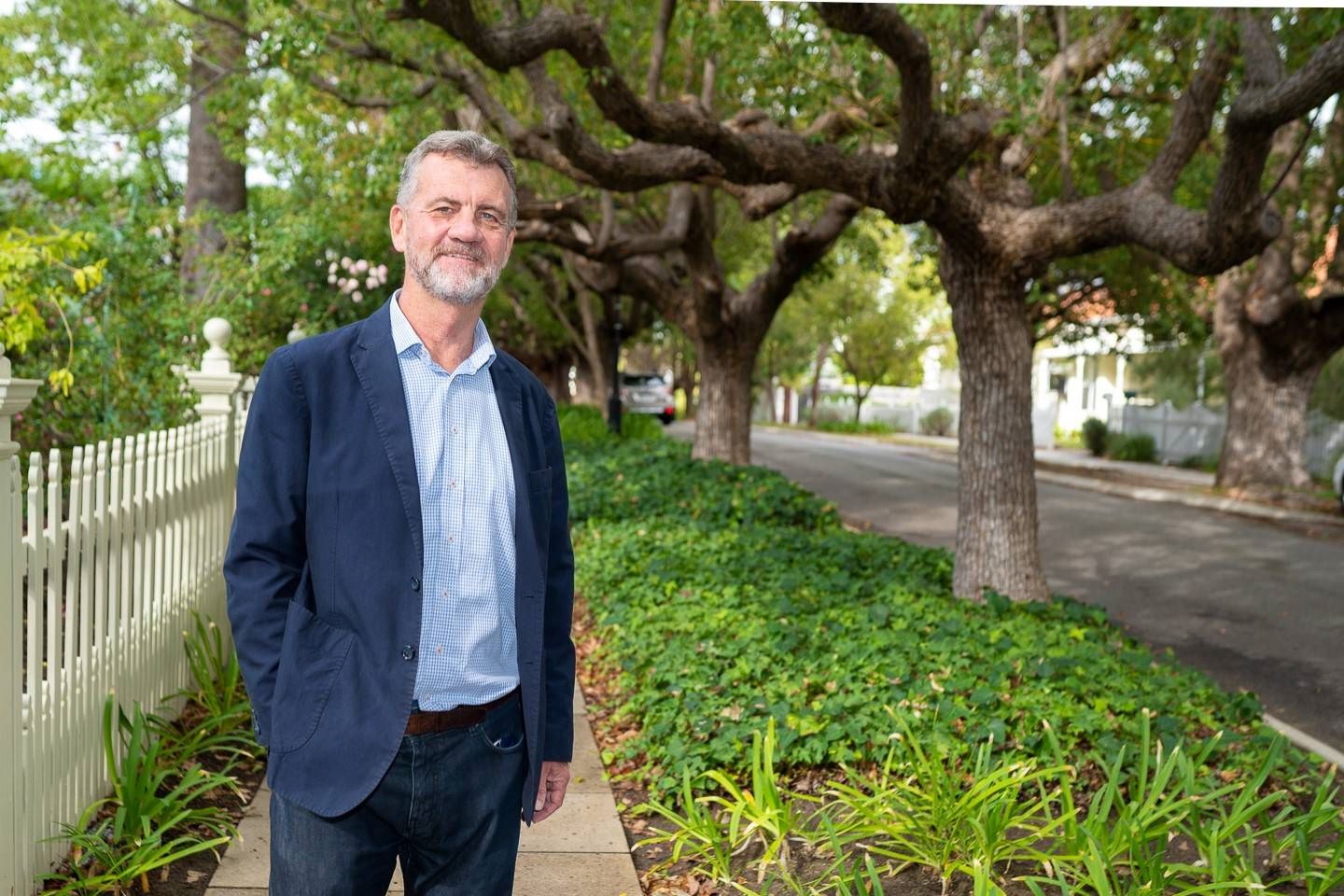
Perth-founded proptech Openn Negotiation has been removed from the Australian Stock Exchange after a two-year trading hiatus through several financial woes.

Continue Reading
Click to comment

You must be logged in to post a comment Login

Leave a Reply

Business

NOBL: High-Quality Dividend-Raisers Out Of Favor Lately, But May Not Be For Long

Published

on

NOBL: High-Quality Dividend-Raisers Out Of Favor Lately, But May Not Be For Long

NOBL: High-Quality Dividend-Raisers Out Of Favor Lately, But May Not Be For Long

Continue Reading

Business

On Course to Shatter DMK-AIADMK Dravidian Duopoly in 2026 Election Wave

Published

on

Tamilaga Vettri Kazhagam

CHENNAI — Actor-turned-politician Joseph Vijay’s Tamilaga Vettri Kazhagam (TVK) surged to a commanding lead across Tamil Nadu on Monday as vote counting progressed for the 234-seat Assembly elections, positioning the debutant party to potentially break the decades-old Dravidian duopoly of the DMK and AIADMK in a historic political shift. Early trends showed TVK leading in a majority of constituencies, with reports indicating the party ahead in over 100 seats by late morning while only three of the ruling DMK’s 34 ministers held leads.

Tamilaga Vettri Kazhagam

Counting of votes, cast in a single phase on April 23 with a record 85 percent turnout, began at 8 a.m. amid tight security. By 10 a.m., TVK had established a strong wave across all regions — north, south, west, delta and Kongu — signaling massive youth and urban support for Vijay’s debut. The party, formed in 2024, contested all 234 seats independently, rejecting alliances and promising a fresh alternative focused on jobs, education and social justice.

Vijay himself appeared on track for victory in both Perambur and Tiruchirappalli (East), the two constituencies he contested. In Perambur, he led against DMK and AIADMK rivals, while similar trends emerged in Trichy East. Chief Minister M.K. Stalin trailed in Kolathur against a TVK candidate, adding to the drama as the ruling DMK struggled in early rounds. AIADMK, led by Edappadi K. Palaniswami, held some ground but lagged behind the TVK surge.

The developments mark a potential earthquake in Tamil Nadu politics, where DMK and AIADMK have alternated power since the 1960s. Political analysts described the early trends as a “Vijay wave” driven by first-time voters, women and disenchanted sections seeking change beyond traditional Dravidian ideologies. Exit polls had varied, with some predicting a DMK hold and others, notably Axis My India, forecasting TVK in the 98-120 seat range — enough to challenge for power or emerge as kingmaker.

TVK’s campaign emphasized anti-corruption, youth employment, farm loan waivers and infrastructure. Vijay, a superstar with a massive fan base known as “Thalapathy,” leveraged his cinematic appeal and social media presence to mobilize voters. High turnout, which he credited partly to children encouraging families, reflected enthusiasm unseen in recent cycles. Supporters chanted “TVK” at public events, including a viral video from Velankanni church.

Advertisement

DMK leaders expressed confidence in their welfare schemes and governance record but faced stiff anti-incumbency. The party highlighted achievements in infrastructure and social programs during campaigning. AIADMK positioned itself as the main opposition, attacking both DMK corruption allegations and TVK’s inexperience. Neither major Dravidian party formed pre-poll alliances with TVK, leading to triangular contests in most seats.

As trends solidified, TVK officials projected confidence. Party spokespersons said the results would rewrite Tamil Nadu’s political map, with Vijay potentially emerging as a decisive leader. The party activated strategies to retain MLAs-elect amid speculation of post-poll maneuvers. Vijay, maintaining a low profile on counting day, focused on spiritual visits earlier, seeking blessings for a “huge victory.”

Key battlegrounds reflected the shift. In urban centers like Chennai and Coimbatore, TVK gained traction among young professionals. Rural and delta regions showed mixed but competitive trends, with TVK splitting votes in traditional DMK and AIADMK strongholds. Congress and BJP, in alliances with DMK and AIADMK respectively, saw limited early leads.

The Election Commission deployed robust measures for smooth counting, with results expected to trickle in through the day. High security in Chennai and other cities prevented any untoward incidents. Voter turnout of 85 percent, one of the highest ever, underscored the stakes in this triangular contest.

Advertisement

If early leads hold, TVK could secure enough seats to form a government or force a hung Assembly scenario, ending the binary dominance that defined Tamil Nadu politics for over half a century. Political observers noted parallels to past actor-politicians like M.G. Ramachandran but cautioned that Vijay’s path remains uncharted. His success would signal a new era driven by celebrity, social media and generational change.

DMK spokespersons urged patience, noting that early trends often fluctuate and full results could differ. AIADMK leaders highlighted their organizational strength in certain belts. Yet the momentum clearly favored TVK in most regions, with reports of only a handful of DMK ministers ahead.

The election carries implications beyond Tamil Nadu. A TVK breakthrough could inspire similar celebrity entries elsewhere and reshape southern politics. Issues like economic growth, education loans, MSP for farmers and caste dynamics played central roles in campaigning. TVK’s solo contest strategy amplified its disruptive potential.

As counting continued into the afternoon, all eyes remained on key constituencies and overall seat projections. Markets and political circles buzzed with speculation. Regardless of the final tally, Vijay’s TVK has already altered the discourse, proving that a new force can challenge entrenched powers in India’s most politically conscious state.

Advertisement

The 2026 verdict will determine not just the next government but the future trajectory of Dravidian politics. With TVK leading strongly in early counts, Tamil Nadu stands at the cusp of history, where a film star’s political debut threatens to redraw the map.

Continue Reading

Business

India’s factory growth stays sluggish in April amid war-led soaring costs, PMI shows

Published

on

India’s factory growth stays sluggish in April amid war-led soaring costs, PMI shows


India’s factory growth stays sluggish in April amid war-led soaring costs, PMI shows

Continue Reading

Business

Nifty’s 2 pillars now facing structural headwinds: Ravi Dharamshi’s warning on IT & consumption

Published

on

Nifty’s 2 pillars now facing structural headwinds: Ravi Dharamshi's warning on IT & consumption
India’s equity benchmark Nifty50 index may be masking a deeper fault line. Two of its largest sectoral pillars of IT services and consumption are facing headwinds that go well beyond cyclical softness, according to Dalal Street’s top stock picker Ravi Dharamshi whose firm ValueQuest Investment Advisors handles around Rs 24,000 crore worth of investor money.

“The index is inherently backward-looking and does not adequately capture many of the emerging sectors that are driving incremental growth,” Dharamshi told ET Markets in an interview. “The index tells you where the market has been. The opportunity lies in where the economy is going.”

His warning carries weight. ValueQuest has been quietly repositioning for months by moving capital away from consumption-oriented exposures and steering clear of IT services entirely, even before the geopolitical shock that roiled markets over the past two months.

The Structural Problem With the Two Pillars

Advertisement

Dharamshi argues that IT services is in the early stages of AI-led structural disruption — not a temporary demand lull, but a fundamental reshaping of the sector’s business model. Consumption, meanwhile, is suffering as a second-order casualty of the same transition: as IT employment and income growth slow, discretionary spending softens downstream.

“IT is dealing with AI-led disruption, while consumption is a second-order derivative of the same slowdown, as income growth and job creation adjust to this transition,” he said. “While headline valuations may appear reasonable, they don’t fully reflect the dispersion underneath.”
This creates a troubling optics problem for investors relying on index-level reads. Apparent reasonableness at the top level hides deteriorating fundamentals in the components that have historically driven Nifty‘s returns.
War, Crude Oil, and a 3–4% Earnings Downgrade
The geopolitical crisis has added a second layer of pressure. Dharamshi estimates the ongoing conflict could shave 3–4 percentage points off FY27 earnings growth, bringing expectations down from 16–17% to approximately 12–13%. The Union Budget had implicitly assumed crude at around $70 as oil has since moved closer to $90 for the full year.

“Apart from higher crude and commodity prices, we are also seeing supply chain disruptions, elevated logistics costs, and pressure on government finances,” he said. “Importantly, this shock comes at a time when India was on the cusp of a cyclical recovery, which makes the timing unfortunate.”

If crude sustains near $100, Dharamshi flags risks that go well beyond headline inflation. The real stress, he cautions, is in sectors like chemicals, pharmaceuticals, fertilisers, and agrochemicals that are heavily dependent on crude derivatives for their input costs. Gas availability has emerged as a parallel constraint.

“Crude is not just an inflation variable — it is a supply chain variable. And that’s where the second-order impact becomes far more disruptive,” he said.

Advertisement

Where ValueQuest Has Been Moving Money
Against this backdrop, Dharamshi’s firm has been decisively reallocating into energy transition, defence and aerospace, AI infrastructure enablers, and grid capex plays. The thesis is that a fragmented, security-conscious world will structurally reward countries and companies that build hard assets and self-reliant capacity.

“This is not a short-term trade; it is a structural reallocation of capital globally, and India is a key beneficiary,” he said.

On manufacturing and electronics manufacturing services, a space that has seen sharp corrections after earlier enthusiasm, Dharamshi remains constructive but selective. He believes the cycle is shifting from assembly-led growth, which drove narratives but also valuation excesses, toward deeper component manufacturing and value-chain integration.

“Assembly builds volumes. Components build profits. And that cycle is just getting started,” he said.

Advertisement

On data centres, Dharamshi sees one of India’s most significant investment opportunities of the decade. From a current base of roughly 1.5 GW, announced projects could take capacity to 8–10 GW in the near term, scaling to around 15 GW by 2032–33 — representing approximately $150 billion in cumulative capex. His preferred play is through the enablers: power equipment, grid infrastructure, and electrical components.

“The real money in a gold rush is rarely made by the miners — it’s made by those selling the tools,” he said.

The FII Question
On the question of foreign institutional investor returns, Dharamshi says peace would likely trigger tactical inflows and short-covering as India is meaningfully under-owned but sustained capital flows require more than geopolitical calm.

He flags a structural disadvantage: FPI flows into India are taxed, unlike in most other major markets, creating a persistent competitiveness gap. Without coordinated policy action to attract foreign capital across equities, bonds, FDI, and NRI deposits, the loop of FPI outflows, rupee depreciation, inflation, and widening deficits risks becoming self-reinforcing.

Advertisement

“Flows don’t chase peace alone — they chase growth, stability, and ease of capital movement. Fix those, and flows will follow,” he said.

The Medium-Term View: Earnings Dispersion, Not Index Returns
Beneath the caution, Dharamshi’s structural outlook for India remains intact. Corporate balance sheets are deleveraged. A private sector capex cycle is still ahead. RoE expansion, he argues, is a multi-year story — one that markets will look through near-term macro disruption to price in.

“In the short term, macros will dominate headlines; in the medium term, earnings dispersion will dominate returns,” he said.

For investors still anchored to the Nifty, that earnings dispersion is the core risk. The pillars that built the index may no longer be the pillars that drive its next chapter.

Advertisement

“If this cycle is about building real assets,” Dharamshi said, “we want to be owning the pipes, not the paint.”

Continue Reading

Business

Samsung family pays off record $8bn inheritance tax bill

Published

on

Samsung family pays off record $8bn inheritance tax bill

The bill is tied to the estate left by the firm’s late chairman Lee Kun-hee, who died in October 2020.

Continue Reading

Business

What an empty car park tells us about the UK's debt problem

Published

on

What an empty car park tells us about the UK's debt problem

The BBC has been speaking to people living in one of England’s poorest communities.

Continue Reading

Business

Apple: Wait For A Drop

Published

on

Apple: Comeback Starts Now As AI Bubble Fears Hit Peers (Rating Upgrade)

Apple: Wait For A Drop

Continue Reading

Business

Tourism businesses cut staff as forward bookings drop

Published

on

Tourism businesses cut staff as forward bookings drop

A slump in forward bookings has prompted a third of tourism businesses to cut down on employee numbers and staff hours, according to Tourism Council WA.

Continue Reading

Business

Buffett Describes Investing Environment as Not Ideal. And He's Glad Powell Is Staying at Fed.

Published

on

Insurance Market Growing More 'Challenging,' Abel Says

Buffett Describes Investing Environment as Not Ideal. And He's Glad Powell Is Staying at Fed.

Continue Reading

Business

Anthropic close to finalizing $1.5 bln AI venture with Wall St firms- WSJ

Published

on


Anthropic close to finalizing $1.5 bln AI venture with Wall St firms- WSJ

Continue Reading

Trending

Copyright © 2025