

Business
Tourism businesses cut staff as forward bookings drop



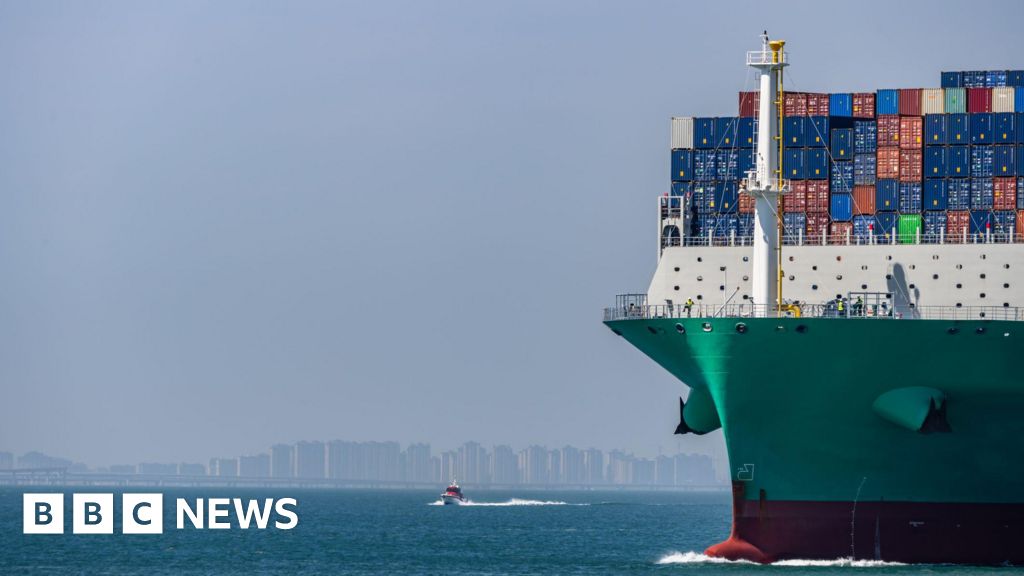
It comes after the US Supreme Court struck down many of US President Donald Trump’s previous duties in February.

Howdens stock rises on DIY Kitchens acquisition deal
Business
Victor Wembanyama Joins Kobe Bryant and LeBron James in Rare NBA Finals Scoring Club at Age 22
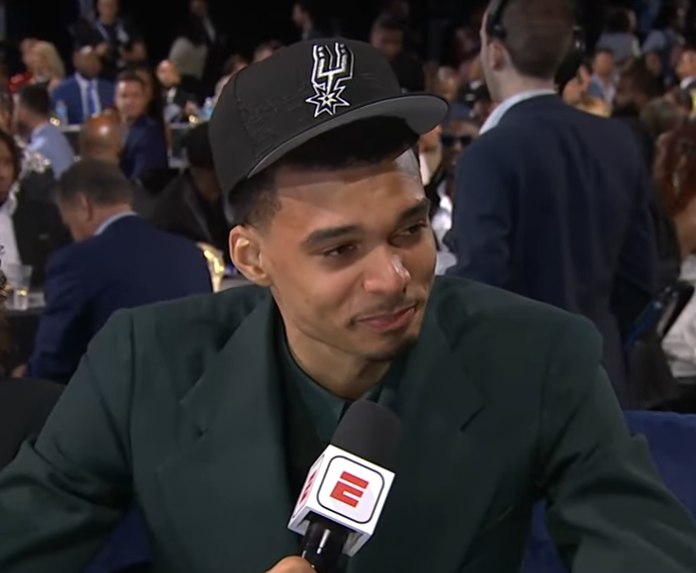
Victor Wembanyama has etched his name alongside NBA legends Kobe Bryant and LeBron James, becoming just the third player in league history to lead his team in playoff scoring entering the NBA Finals at age 22 or younger.
The San Antonio Spurs’ 22-year-old superstar has emerged as a dominant two-way force in the 2026 playoffs, powering the franchise to an unexpected Finals appearance against the New York Knicks. Through the postseason, Wembanyama has tallied 394 points, outpacing teammate Stephon Castle by 49 points despite missing one first-round game.
The official NBA account highlighted the achievement, noting Wembanyama’s place in an exclusive group with Bryant and James. This milestone underscores the rapid ascent of a player once considered the most hyped prospect in NBA history, now delivering on that promise at an elite level during his third professional season.
The Spurs have exceeded expectations in 2025-26. Many analysts predicted a playoff appearance as the young core matured, but few foresaw a Western Conference title that included a series victory over the defending champion Oklahoma City Thunder. San Antonio’s surprising run reflects careful roster construction centered on Wembanyama’s unique skill set.
Wembanyama’s statistical dominance extends beyond raw scoring. His postseason averages of 23.2 points, 10.8 rebounds and 3.5 blocks per game demonstrate impact on both ends of the floor. His ability to protect the rim while stretching defenses with perimeter shooting has created matchup problems throughout the playoffs, particularly in the conference finals where he averaged 27.3 points.
At 7-foot-4 with exceptional coordination and basketball IQ, Wembanyama blends size rarely seen with guard-like skills. His willingness to attempt threes in crucial moments, including a game-changing 30-footer in the Western Conference finals, reflects growing confidence and clutch reliability expected from franchise cornerstones.
The Spurs organization has taken a patient approach to building around their young star. Rather than aggressive trades, the team prioritized the draft. In Wembanyama’s rookie season, the Spurs endured a difficult campaign that allowed them to select Castle with the fourth overall pick in 2024. A season-ending injury to a key player in year two further improved their draft position, leading to the addition of Dylan Harper.
This methodical strategy has produced a complementary roster. Castle has developed into a reliable secondary scorer and defender, averaging 19.2 points and 6.7 assists in the playoffs. Harper and other young pieces provide depth and athleticism that fit Wembanyama’s timeline. The front office’s restraint in the trade market preserved assets while allowing organic growth.
San Antonio’s path to the Finals involved overcoming higher-seeded teams through defensive intensity and balanced scoring. Wembanyama’s two-way presence proved decisive in several closeout games, where his shot-blocking altered opponent strategies and his scoring bursts shifted momentum.
Comparisons to Bryant and James carry weight given their championship pedigrees. Bryant led the Lakers into the 2000 Finals at age 21, while James did so with the Cleveland Cavaliers in 2007 at age 22. Both players went on to win multiple titles and earn Hall of Fame careers. Wembanyama now shares their distinction of carrying scoring load at a remarkably young age in the game’s premier stage.
This achievement arrives amid broader discussions about player development and franchise building. The Spurs, with five championships in franchise history, appear positioned for sustained contention. Their emphasis on drafting and development contrasts with teams relying on superstar acquisitions, offering a blueprint for long-term success.
Wembanyama’s maturity has impressed observers. Despite the massive expectations following his 2023 draft selection, he has handled scrutiny with poise. His work ethic, defensive instincts and offensive versatility have silenced early skeptics who questioned his frame or adaptability to NBA physicality.
The 2026 Finals matchup against the Knicks presents new challenges. New York features a balanced attack led by Jalen Brunson, Karl-Anthony Towns and strong perimeter defenders. Containing Wembanyama will require coordinated efforts, likely involving help rotations and physicality to limit his paint touches and three-point attempts.
For the Spurs, reaching the Finals validates their timeline. What many viewed as a multi-year rebuild has accelerated into immediate contention. Credit goes to coaching staff for maximizing personnel and to players for buying into team concepts that elevate Wembanyama without overburdening him.
Beyond individual stats, Wembanyama’s leadership has grown. Teammates describe his vocal presence and ability to elevate those around him during critical stretches. His defensive communication and offensive gravity create opportunities for role players, a hallmark of transcendent stars.
The NBA landscape increasingly favors versatile big men. Wembanyama exemplifies this evolution, combining traditional center duties with modern perimeter skills. His block rate and rebounding numbers rank among the league’s best, while his assist totals reflect improved playmaking.
Looking ahead, a strong Finals performance could further cement Wembanyama’s place among the league’s elite. Even in defeat, his postseason body of work marks significant progress. A championship would accelerate his trajectory toward MVP consideration and potential dynasty building in San Antonio.
The Spurs’ supporting cast development remains crucial. Sustaining this level requires health, chemistry and possible future additions through free agency or draft. For now, the focus stays on the present series and maximizing their opportunity on basketball’s biggest stage.
Wembanyama’s journey reflects the best of NBA storytelling — a generational talent joining a historic franchise and rapidly transforming expectations. From French professional leagues to NBA dominance, his path has been remarkably smooth despite the spotlight’s intensity.
Analysts project continued improvement as he gains experience. At 22, physical maturation and tactical refinement could elevate his game even higher. The league has witnessed few players with his combination of size, skill and basketball sense at such a young age.
For San Antonio fans, this Finals appearance revives memories of previous championship eras while building new ones. The team’s deliberate approach around Wembanyama has created excitement and belief in a bright future.
As the series unfolds, Wembanyama’s scoring leadership and all-around contributions will face their toughest test. Matching the achievements of Bryant and James in this statistical category places him in rare company. Delivering a championship would place him on an even more exclusive path.
The basketball world watches closely as a new superstar writes his chapter in NBA history. Victor Wembanyama’s rapid rise offers compelling evidence that exceptional talent, paired with smart organizational planning, can accelerate success in today’s league.
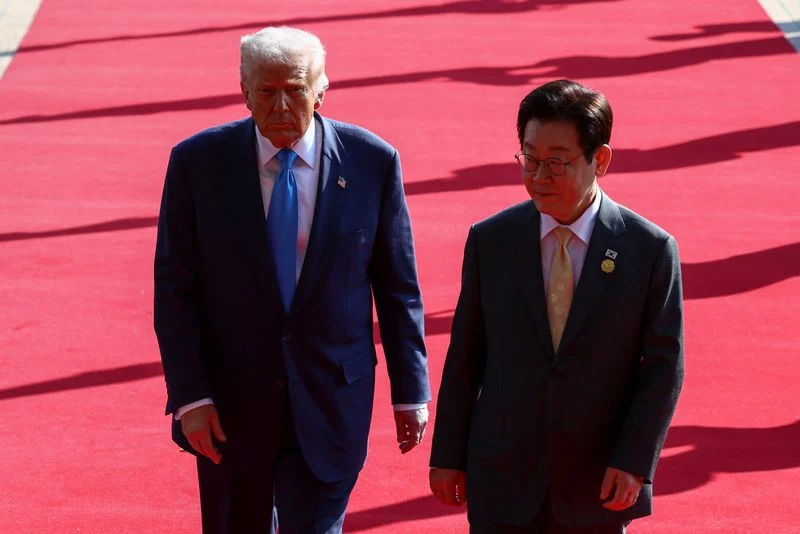

US, South Korea discuss nuclear cooperation in security talks

AWP: 12% Yield, But NAV Support Is Still The Key

Rare Earth Stocks Are a Perfect Buy. So Are These 7.
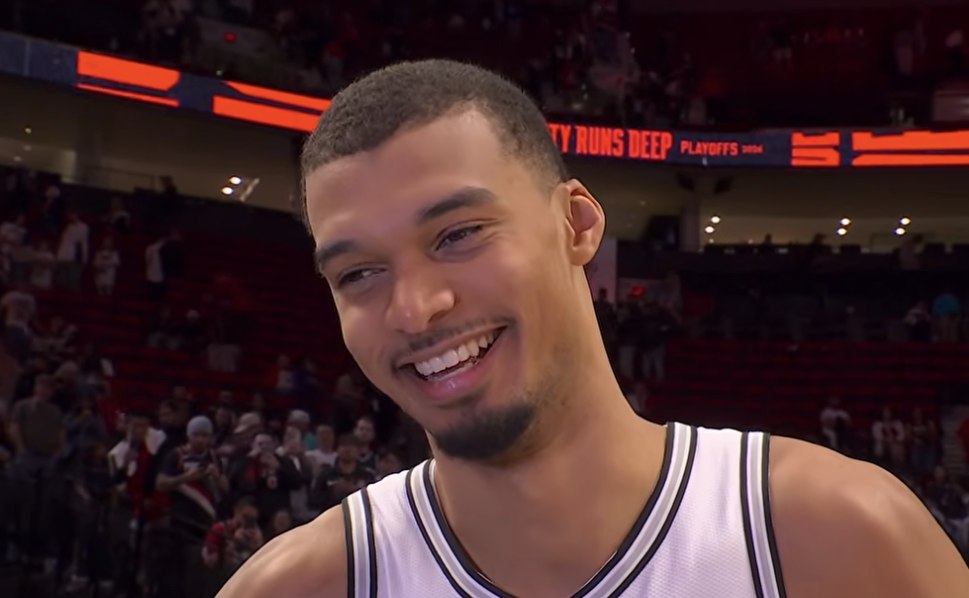
NEW YORK — Victor Wembanyama and Jalen Brunson headline the 2026 NBA Finals MVP race as the San Antonio Spurs and New York Knicks prepare for a highly anticipated best-of-seven series that could define the next era of league stardom.
The Finals MVP award, known as the Bill Russell Trophy, carries special prestige because it is awarded exclusively to a champion — with one notable exception in 1969 when Jerry West won it despite a loss. This year’s matchup between two star-driven teams offers multiple candidates capable of claiming the honor alongside the Larry O’Brien Trophy.
Wembanyama stands as the clear frontrunner on most MVP ladders entering the series. The 22-year-old Spurs phenom has dominated the postseason with averages of 23.2 points, 10.8 rebounds and 3.5 blocks per game. His two-way impact, combining elite rim protection with perimeter shooting, positions him to control the outcome of games on both ends of the floor.
Few players reach the NBA Finals by their third season, a feat accomplished by legends such as Tim Duncan, Magic Johnson and Larry Bird. Wembanyama joins that rare group through a combination of extraordinary talent, basketball IQ and competitive drive. His defensive presence alone forces opponents to alter shots and attack strategies, particularly around the rim where his length and timing disrupt even the most skilled finishers.
Offensively, Wembanyama has elevated his game in high-stakes moments. He averaged 27.3 points in the Western Conference finals and showed willingness to take — and make — critical three-pointers. His ability to finish lobs and stretch the floor creates matchup nightmares for the Knicks, who must decide how to contain him without sacrificing help defense elsewhere.
Brunson ranks a close second in the MVP conversation. The Knicks guard has posted strong playoff numbers of 26.9 points, 6.6 assists and steady leadership. Despite his listed height of 6-foot-2, Brunson overcomes physical limitations with exceptional skill, vision and clutch performance. His ability to create shots from all angles and make smart decisions under pressure has propelled New York to this stage.
Brunson’s signature moments include explosive fourth quarters and overtime heroics, such as his dominant display in Game 1 of the Eastern Conference finals against Cleveland. That resilience and big-shot capability make him a proven winner who thrives when games tighten in the Finals.
Karl-Anthony Towns provides the Knicks with a vital third option on the MVP ladder. The big man contributes consistent double-doubles, averaging 16.9 points and 10.6 rebounds in the playoffs, along with an improved 5.9 assists. His shooting range and size create spacing that complements Brunson’s drives, while his passing from the high post has added a new dimension to New York’s offense.
Towns faces a formidable challenge matching up against Wembanyama. The Knicks plan to rotate defenders, but Towns’ ability to pull the Spurs center away from the paint with his perimeter shooting will be crucial. His consistency on the glass and willingness to adapt his game have been key factors in New York’s playoff success.
Stephon Castle emerges as a dark horse candidate for the Spurs. The 21-year-old guard has shown remarkable maturity, posting 19.2 points, 4.9 rebounds and 6.7 assists per game in the postseason. His growth has been evident in reduced turnovers and increased aggression on both ends. Castle’s defense against primary ball handlers, including his containment of top scorers in earlier rounds, could prove decisive against Brunson.
OG Anunoby rounds out the top five on the ladder. The Knicks forward delivers elite two-way production at 19.7 points and 6.9 rebounds per game. His versatility allows him to score effectively while providing strong perimeter and help defense. Anunoby’s strength and positioning could see him assigned to Wembanyama at times, using physicality to limit the big man’s effectiveness in the paint — reminiscent of past Finals standouts like Andre Iguodala.
The depth of talent on both rosters creates uncertainty around the eventual MVP. Additional candidates include Dylan Harper, Devin Vassell and De’Aaron Fox for San Antonio, and Josh Hart and Mikal Bridges for New York. Each brings specific strengths that could shine in a long series.
The Knicks-Spurs matchup features contrasting styles. San Antonio relies on Wembanyama’s generational talent and a young, athletic supporting cast. New York counters with Brunson’s craftiness, Towns’ versatility and a tough, defensive-minded group. The series outcome likely hinges on which star imposes his will most effectively across multiple games.
Historical precedents show the Finals MVP often goes to the player who delivers the most memorable performances in decisive moments. While superstars usually claim the award, role players have surprised in the past when their contributions prove pivotal in a championship run.
Wembanyama’s defensive dominance gives him a slight edge in projections. His ability to alter shots and protect the rim could neutralize New York’s interior attacks, forcing the Knicks into difficult mid-range and perimeter shots. If he pairs that with efficient scoring, the trophy could be his to lose.
Brunson counters with proven playoff pedigree and leadership. His experience carrying a team through tough stretches and delivering in clutch situations makes him dangerous. Should the series extend deep and New York prevails, Brunson’s consistency and big moments could sway voters.
Towns’ evolution into a more complete player adds intrigue. His expanded passing and continued rebounding provide balance. Success for the Knicks may require him to stretch the floor and limit Wembanyama’s paint touches.
Castle represents the potential for youth to steal the spotlight. His poise and two-way contributions have already exceeded expectations. A strong series defensively against Brunson combined with scoring bursts could elevate his candidacy.
Anunoby’s value lies in quiet excellence. Even on nights when his shot is off, his defensive assignments and rebounding keep him impactful. His potential to guard Wembanyama effectively could mirror past defensive masterpieces that earned Finals MVP honors.
As the series begins, focus remains on execution over seven games. Factors such as home-court advantage, injuries, officiating and adjustments will influence individual performances. Both teams have shown resilience throughout the playoffs, suggesting a competitive battle.
The NBA Finals MVP race adds narrative depth to an already compelling series. Fans and analysts will track every statistic and moment as candidates vie for the ultimate individual prize in a team sport. With two franchises seeking their next championship chapter, the spotlight on these five players — and others — will intensify with each game.
Observers note the rarity of such young talent colliding at this stage. Wembanyama and Castle highlight San Antonio’s bright future, while Brunson, Towns and Anunoby represent New York’s contention window. The winner of this series and its MVP will likely shape league conversations for years ahead.
As tip-off approaches, the basketball world awaits a series that promises drama, standout performances and, ultimately, one player hoisting both trophies in celebration of a championship run.

Lord Abbett is an independent, privately held, global asset manager and one of the oldest money management firms in the United States. They manage assets across a full range of U.S. mutual funds, UCITS funds, institutional and separately managed accounts for clients around the world. Note: This account is not managed or monitored by Lord Abbett, and any messages sent via Seeking Alpha will not receive a response. For inquiries or communication, please use Lord Abbett’s official channels.


Amazon launches Prime in South Africa for under $4 a month
Business
NHPC shares jump 5% as OFS worth Rs 4,300 crore opens for retail investors. Here’s all you need to know

The government on Tuesday decided to exercise the green shoe option in the 6% stake sale in NHPC after the OFS was oversubscribed 3.47 times on the first day. “Offer for Sale in NHPC Limited received enthusiastic response from investors and was oversubscribed 3.47 times on the first day. Allocation will be on a price priority basis. The government has decided to exercise the entire green shoe option. Retail investors and employees get to bid on 3rd June 2026,” Department of Investment and Public Asset Management (DIPAM) Secretary Arunish Chawla said in a post on X.
Offer for Sale in NHPC Limited received enthusiastic response from investors and was over subscribed 3.47 times on the first day. Allocation will be on price priority basis.
Government has decided to exercise the entire green shoe option. Retail investors and employees get to… pic.twitter.com/tK9cwzplwT
— Secretary, DIPAM (@SecyDIPAM) June 2, 2026
Also Read | NHPC OFS subscribed nearly 3.5 times on Day 1, Govt to exercise green shoe option
All about NHPC’s OFS
NHPC announced on Monday that the government aims to sell 3% of the company’s total paid-up equity capital as part of the base offer, along with an oversubscription option to sell an additional 30 crore shares, taking the total potential offer size to 60.27 crore shares or 6% equity. At the floor price of Rs 71 per share, this would be worth more than Rs 4,279 crore.The shares of NHPC had crashed over 6% on Tuesday as the OFS floor price of Rs 71 per share implied a discount of nearly 8% to Monday’s closing price, weighing on investor sentiment. However, the strong interest from institutional investors may have boosted confidence.

The government owned more than 67% stake in the PSU company as of March 31, 2026. The share sale by its promoter is being conducted through a separate window mechanism on BSE and the National Stock Exchange in accordance with the Securities and Exchange Board of India’s OFS guidelines.
NHPC’s OFS comes days after the government divested some of its stake in state-run miner Coal India through an offer for sale at a floor price of Rs 412 per share. The government owned more than 63% stake in the PSU company as on March 31, 2026.
Also Read | NHPC shares tumble 5% as govt’s OFS worth up to Rs 4,300 crore opens at 8% discount. Check details
NHPC share price
NHPC shares have fallen around 7% in one week and 9% in one month. The stock is down more than 5% in 2026 so far. In the longer term, the shares of the PSU have fallen 12% in one year, but gained more than 74% in three years and 190% in five years.The company currently has a market capitalisation of more than Rs 75,709 crore. The stock’s P/E ratio stands at 17.
What lies ahead for NHPC shares?
For a long term, dividend oriented investor comfortable with a low yield utility, the entry at a discount is attractive, said Abhinav Tiwari, Research Analyst at Bonanza. NHPC’s earnings can be lumpy and seasonal (hydro depends on water flows), capex is heavy and project timelines often slip, he added.
“The stock does not appear particularly cheap on current valuations. However, the Rs. 71 level provides a reasonable margin of safety, as it is close to the stock’s 52-week low and limits downside risk relative to the current market price. Although its expanding project pipeline and capacity additions are positive long term drivers, current valuations already factor in a strong recovery. Returns will depend heavily on successful execution and improvement in operational profitability,” the analyst further said.
Technical view on NHPC
Virat Jagad, Senior Technical Research Analyst at Bonanza, said the NHPC’s recent sharp decline on exceptionally high volumes suggests aggressive selling activity and a breakdown of short-term support near Rs 78. He placed the immediate support near Rs 72–73, while resistance is seen around Rs 78–80.
“A sustained move above Rs 80 would be required to improve the technical outlook and open the possibility of a recovery towards Rs 84–86,” he added.
(Disclaimer: Recommendations, suggestions, views and opinions given by the experts are their own. These do not represent the views of The Economic Times)

Kaiko Acquires Amberdata in Blockchain Data Consolidation Push

Morgan Wallen Breaks Silence After Flipping Over Piano

Financial Advisors React to Viral Money Advice



-

 NewsBeat7 days ago
Israel says it has killed new Hamas military leader in Gaza City airstrikes
-

 Tech5 days ago
Waymo dominates autonomous vehicle registrations as Tesla trails behind
-

 News Videos5 days ago
This is BROKEN! INSANE 5x MONEY CAR WASH WEEK! The NEW GTA Online UPDATE Today! (GTA5 New Update)
-
 Tech4 days ago
SpaceX just won a second Golden Dome contract. This one is $4.16 billion.
-

 News Videos5 days ago
SHE IS KILLING XRP!!! WATCH URGENT AND ACT FAST
-
 NewsBeat4 days ago
FIRST NIGHT REVIEW: Take That bring the Circus back to life in spectacular sun-soaked style
-

 Business2 days ago
Jade Biosciences, Inc. (JBIO) Discusses Positive Interim Results From JADE101 Phase I Healthy Volunteer Study and Development Plans Transcript
-

 Tech7 days ago
The Samsung pay deal is the moment Korean unions changed register
-
 Crypto World5 days ago
CFTC Has Approved the First Regulated Bitcoin Perpetual Contract in the U.S.
-
 Entertainment7 days ago
The Most Misunderstood Sci-Fi Horror Movie of the Last 10 Years Just Took Over Netflix
-
Crypto World7 days ago
SpaceX’s $2 Trillion IPO: Why Tech Giants Nvidia (NVDA), Apple (AAPL), and Microsoft (MSFT) May Face Pressure
-

 Business4 days ago
Is the Spurs Phenom Already Better Than Prime Diesel?
-
 NewsBeat5 days ago
Novak Djokovic v Joao Fonseca LIVE: French Open latest scores and results after Jannik Sinner’s shocking collapse
-
 Crypto World5 days ago
Snowflake (SNOW) Stock Rallies on Strong Q1 Results and AI Product Growth
-
 Entertainment4 days ago
Weak ‘Supergirl’ Box Office Tracking Amid Milly Alcock Backlash
-

 Business4 days ago
Demand Conditions Improve In Chemicals Sector In April 2026
-

 Crypto World5 days ago
MicroStrategy Moves $30 Million in BTC to Coinbase Prime: Is the Bitcoin Sell-Off Already Here?
-

 Politics4 days ago
The House | Inside Andy Burnham’s Makerfield Campaign: “Nobody Thinks This Is In The Bag”
-

 Tech5 days ago
This Week In Security: Ubiquiti Fixes, And FreeBSD Joins The Club You Don’t Want To Join
-
 Entertainment4 days ago
One of the Greatest Sitcoms of All Time Shoots Up Apple TV’s Charts 11 Years Later
You must be logged in to post a comment Login