

Business
Asia Pacific Fintech Boom Leaves Millions Behind


New GSMA report maps a region of striking contrasts, where blockchain-powered payment rails and AI-driven credit scoring coexist with deep divides in access, literacy, and trust.
Key takeaways
- Asia Pacific holds 41% of the world’s 2.1 billion mobile money accounts, yet 1.3 billion adults globally remain locked out of the formal financial system.
- India, Cambodia and Thailand show how digital public infrastructure like UPI, Bakong and PromptPay can drive near universal payment adoption, while Pakistan and Myanmar reveal how far the inclusion frontier still stretches.
- Closing the gender, literacy, and trust gaps, not just expanding access, will determine whether the region’s fintech boom translates into real financial health for the unbanked.
From Cambodia’s blockchain backed payment system processing transactions worth three times the country’s GDP, to Pakistan’s gender gap that still leaves millions of women outside the formal financial system, a sweeping new report from the GSMA paints a complex portrait of digital finance across Asia Pacific, a region that is simultaneously a world leader in fintech innovation and home to the largest concentration of unbanked adults on the planet.
The report, Digital Financial Services in Asia Pacific: Driving Inclusion Through Innovation, published by GSMA Intelligence in April 2026, examines twelve markets across the region and concludes that while digital financial services (DFS) have delivered transformative gains in financial inclusion, progress remains deeply uneven, shaped by regulatory ambition, infrastructure investment, and the persistent barriers of literacy, trust, and gender.
A Global Surge, Unevenly Distributed
The headline trend is unmistakably positive. According to the World Bank’s Findex 2025 study cited in the report, global account ownership climbed from 62% of adults in 2014 to 79% in 2024, a jump driven largely by the proliferation of mobile-based financial services. In low-income countries, the proportion of adults holding a mobile money account rose from just 2% a decade ago to 16% globally by the end of 2024, with the figure reaching 32% in the world’s poorest nations.
By December 2024, East Asia & Pacific and South Asia together accounted for 41% of the world’s 2.1 billion registered mobile money accounts. South Asian markets recorded a 20% year on year growth in transaction volume, while East Asia & Pacific saw a 16% increase, with transaction values of $257 billion and $238 billion, respectively.
Yet approximately 1.3 billion adults, the majority of them in Africa and the Asia Pacific, remain entirely outside the formal financial system. And even where accounts exist, the report warns, access has not always translated into improved financial health. “Increased access to financial services has not always resulted in improved financial health,” the report states, noting that many account holders still depend on informal savings and credit and struggle to manage irregular incomes.
The economic stakes are considerable. GSMA Intelligence analysis cited in the report estimates that, as of 2023, countries with mobile money systems had GDP levels $720 billion higher than they would otherwise have been, a 1.7% uplift attributed directly to mobile money adoption.
Three Models, One Convergence
One of the report’s central analytical contributions is its mapping of the operating models that define DFS across the region. It identifies three principal types: bank-led models, where traditional financial institutions retain primary customer relationships; non-bank-led models, where mobile network operators (MNOs) and fintech firms hold the dominant position; and hybrid models, increasingly the direction of travel for the entire region.
The report documents a clear and accelerating shift toward hybrid DFS structures, driven by a convergence of government incentives to promote financial inclusion, technological advances such as AI and cloud computing, and market demand for personalised, scalable, and secure services that no single entity model can reliably deliver.
This evolution has unfolded in four identifiable stages, from basic single-use mobile wallets offering airtime top-ups, through QR payment ecosystems and bank integrations, to fully fledged super apps and digital banks. The Philippines’ GCash, which began in 2004 as a USSD-based airtime service, and Cambodia’s Wing Bank, which evolved from a simple money transfer operator into a licensed commercial bank, exemplify how DFS providers have matured into comprehensive financial hubs within a single generation.
Country by Country: Pioneers and Laggards
The report’s twelve market profiles reveal a region that defies simple generalisations.
India stands apart as a benchmark for digital public infrastructure (DPI). Its Unified Payments Interface (UPI), introduced in 2016, has become a global protocol, now accepted in France, Singapore, and the UAE, enabling Indian tourists to pay local merchants in rupees without forex markups. By mid 2025, digital payments represented 99.8% of total transaction volume in India, an extraordinary achievement for a country of 1.45 billion people where 63% of the population lives in rural areas. India’s Aadhaar biometric identity system underpins the entire ecosystem, reducing customer acquisition costs, minimising fraud, and enabling access to credit and insurance.
Cambodia’s Bakong platform, built on blockchain by the National Bank of Cambodia, has become one of the region’s most ambitious DPI stories. As of September 2025, it had connected 70 financial institutions, supported 34 million user accounts, and processed over 600 million transactions valued at $147 billion. More than 4.5 million Cambodian merchants now accept KHQR, the national QR standard, which has overtaken cash to become the country’s leading payment method, accounting for 47.2% of transactions.
Thailand presents perhaps the clearest model of government-led digital transformation. PromptPay, the country’s flagship instant payment system, launched in 2017, processes more than 75 million daily transactions. Thailand’s financial inclusion rate stands at 92% of adults, with women slightly ahead of men, a phenomenon the report attributes in part to cultural norms in which women manage household finances. Three new digital bank licences were issued in 2025, with operations expected by 2026, targeting underserved segments such as SMEs.
Indonesia has seen an extraordinary rise in QR payments. Its QRIS system, introduced in 2019, recorded 2.6 billion transactions between March 2024 and March 2025, a year on year increase of 596%, making it the fastest-growing form of digital payment in the country. Around 80% of Indonesian adults now have access to formal financial services, up from just 36% in 2014.
Pakistan, by contrast, illustrates the scale of the challenge that remains. Financial inclusion reached 67% in 2025, up from 47% in 2018, driven by microfinance and digital banking initiatives, a significant leap, but still below the regional average. The gender gap, while narrowing from 47 to 30 percentage points, remains “significantly higher than in most other countries in the region,” the report notes. Only 27% of the population uses a smartphone, and 62% lives in rural areas. The country’s Raast instant payment platform, launched in 2021, has processed over 3 billion transactions worth nearly PKR 80 trillion ($285 billion) since launch, offering a foundation on which further inclusion can be built.
Myanmar presents a distinctive case of mobile-led inclusion in a constrained environment. With the most recent financial inclusion estimate dating to 2018 at 48%, the country has shifted almost entirely toward DFS, capitalising on 70% smartphone penetration. Wave Money, the first non-bank entity licensed under Myanmar’s mobile financial services regulation, now serves 35 million customers through an agent network of over 58,000 outlets, the majority operated by women.
The Three Pillars: Regulation, Infrastructure, Partnership
The report identifies three interlocking enablers that determine the pace and depth of digital financial inclusion in any given market: progressive regulation, robust digital public infrastructure (DPI), and collaborative cross-sector partnerships.
On regulation, the emergence of specialised licensing regimes, digital banking licences, e-money issuance permits, branchless banking authorisations, and fintech licences has been transformative, allowing non-traditional players to enter markets that were previously the exclusive domain of commercial banks. Regulatory sandboxes have become a cornerstone of DFS policy across the region, offering controlled environments for testing blockchain remittances, AI-driven credit scoring, and P2P lending before full-scale deployment.
On infrastructure, the availability of national instant payment systems and secure digital identity frameworks is increasingly the decisive factor separating markets that are scaling rapidly from those that are stagnating. Countries that invested early in DPI, India’s UPI, Thailand’s PromptPay, Pakistan’s Raast, have seen markedly faster adoption, broader use cases, and smoother participation from both banks and non-banks.
On partnerships, the report is categorical: “DFS ecosystems are highly complex, making it challenging for any single provider to achieve success independently.” Strategic alliances between MNOs, banks, fintech firms, government agencies, and commercial platforms, from GCash’s agricultural supply chain partnerships in the Philippines to Wave Money’s collaboration with MoneyGram for international remittances in Myanmar, are described as vital catalysts for scaling inclusion to the hardest-to-reach populations.
The Persistent Gaps: Gender, Literacy, and Trust
Alongside the progress narrative, the report catalogues a set of recurring barriers that threaten to entrench a usage gap even as access gaps close.
The digital gender divide remains acute across the region. In Cambodia, only 60% of women have access to formal financial services compared to 73% of men. Pakistan’s gender gap in financial access, while narrowing, remains the starkest in the study. The report attributes these disparities to compounding disadvantages: lower digital and financial literacy, reduced smartphone ownership, greater exposure to fraud risk, and cultural barriers to engaging with formal institutions.
Low digital financial literacy is consistently identified as a primary obstacle to DFS uptake. “Even when services are available, user willingness to adopt or effectively use them plays a crucial role,” the report notes. Apprehensions about fraud, difficulty navigating app interfaces, and a reluctance to move away from cash all dampen take-up, particularly among rural populations, older citizens, and those employed in the informal economy.
Business model sustainability presents a parallel challenge. Many DFS providers, the report acknowledges, are squeezed by low-value transactions, high distribution costs, and narrow margins, a combination that makes it commercially difficult to serve remote areas or develop the more sophisticated products, such as credit, savings, and micro insurance, that could deliver deeper financial health outcomes.
Eight Priorities for the Decade Ahead
The report concludes with a set of eight strategic opportunities for stakeholders, governments, regulators, MNOs, fintech firms, and development partners, seeking to accelerate inclusion:
Enhancing digital and financial literacy through targeted community campaigns, SMS programmes, and locally developed applications.
Expanding agent networks by leveraging existing businesses as trusted community hubs, particularly in underserved rural areas.
Accelerating cross-border transfer initiatives to reach unbanked populations that depend on remittances for basic needs, education, and business investment.
Addressing demand side barriers, including the cost of DFS relative to cash, fraud risk perceptions and the degree to which available products genuinely meet user needs.
Adopting best practice in DPI development, building interoperable layers for digital identification, instant payments, and secure data exchange to replace fragmented, siloed systems.
Digitalising government payment flows, both from government to citizens (G2P) and from citizens to government (P2G), which often serve as a first point of entry into the formal financial system for vulnerable groups.
Using alternative data for credit scoring, including mobile transaction history, utility payments, and social media behaviour, to develop models that extend credit access to rural women, gig workers, and SMEs who lack conventional financial records.
Incorporating AI, edge computing, and blockchain into product development to support scalability, inclusion, and regulatory compliance, and as a gateway to more advanced services, including decentralised finance.
Conclusion
The GSMA’s analysis offers a timely corrective to two competing narratives about digital finance in Asia Pacific: the triumphalist account of a region leading the world in fintech innovation, and the pessimistic view that structural inequalities render inclusion aspirations hollow.
The reality, as the report demonstrates across twelve distinct markets, is more nuanced and ultimately more hopeful. The infrastructure is increasingly in place. The regulatory frameworks are maturing. The partnerships are forming. What remains is a question of will and design, whether governments, companies, and development partners can direct the momentum of DFS toward the populations it has not yet fully reached: rural women in Cambodia, informal workers in Indonesia, smallholder farmers in Nepal, the unbanked millions in Pakistan and Myanmar.
As the report’s authors conclude, recognising the diversity of the DFS landscape is not just an analytical necessity; it is the prerequisite for advancing financial inclusion on a meaningful scale.
Other People are Reading


Standard Chartered ’overweights’ Asia ex-Japan; favours Taiwan, China on AI, earnings
Business
Floyd Mayweather Faces Lawsuit From Promoters Claiming $4.65 Million in Advances for Tyson and Pacquiao Fights
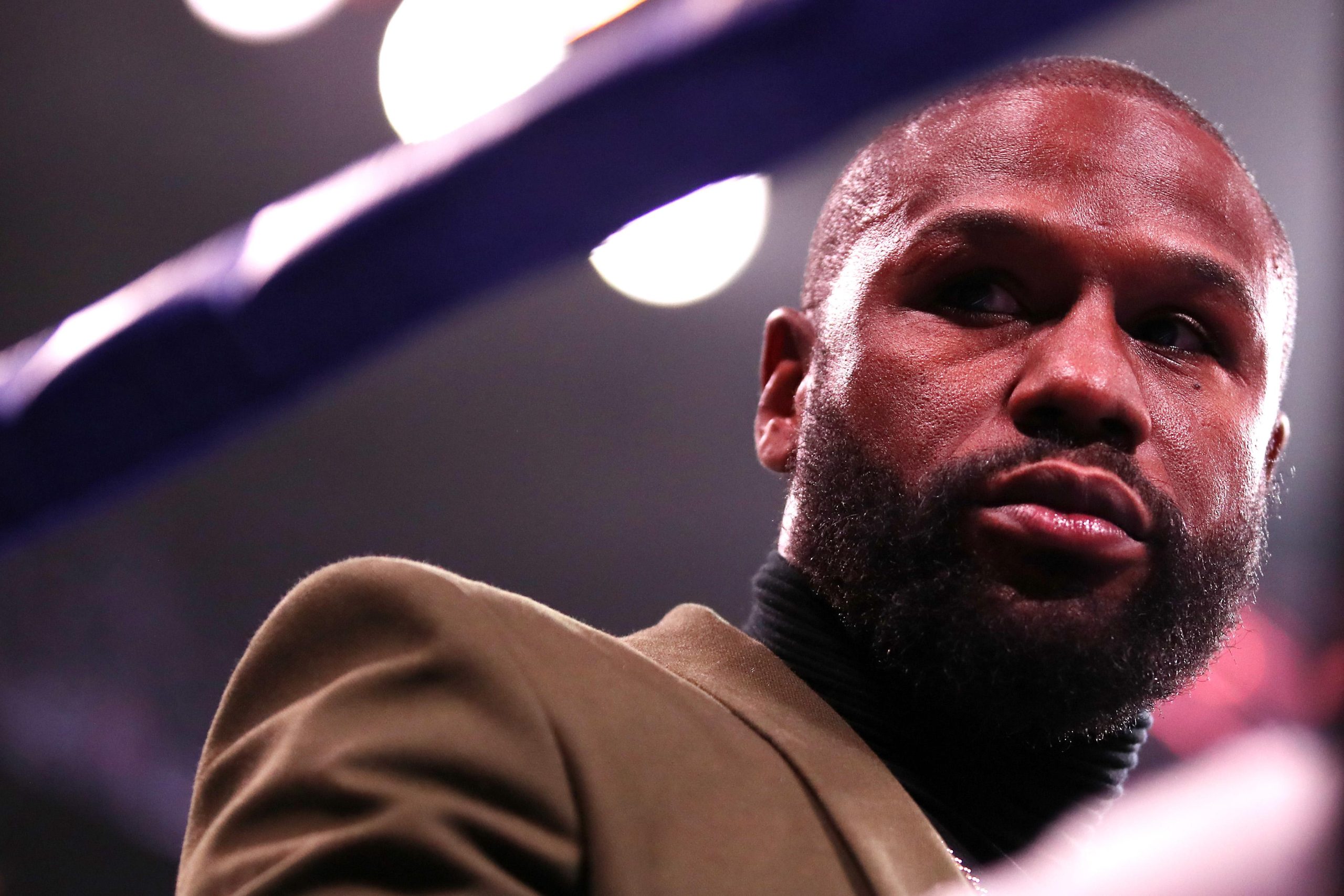
Legendary boxer Floyd Mayweather Jr. is the target of a lawsuit filed by a promotions company that alleges it paid millions in advance fees for exclusive rights to two high-profile exhibition bouts, only for the undefeated former champion to pursue other opportunities. The legal action highlights the complex financial arrangements common in professional boxing’s exhibition circuit.
CSI Entertainment filed the complaint Thursday in New York, seeking damages and injunctive relief after claiming it transferred $4.65 million to secure rights for Mayweather fights against Mike Tyson and Manny Pacquiao. According to the filing, the payments went to Mayweather’s management company, Frist Apex Ventures, with the boxer personally approving the agreements.
The first proposed bout involved an exhibition against Tyson, the former heavyweight champion known for his power and cultural impact. The second was described as a potential rematch with Pacquiao, which would have seen Mayweather risk his perfect 50-0 professional record. Both fights represented significant commercial prospects given the star power involved.
CSI Entertainment asserts it invested substantial resources in promoting the events, including marketing and logistical planning. The company claims that shortly after receiving a separate $150,000 advance, Mayweather announced a different fight against Greek kickboxer Mike Zambidis with another promoter. Additionally, the lawsuit alleges Mayweather secretly agreed to a streaming deal for the Pacquiao bout on Netflix from Las Vegas’ Sphere venue.
The promoters argue these actions violated their exclusive rights and caused financial harm. They are requesting the court block the Zambidis fight scheduled for next week and prevent the Netflix event from proceeding under terms that conflict with their agreement. The suit also seeks recovery of the advanced funds or compensatory damages.
Mayweather, 49, has maintained an active presence in exhibition boxing since retiring from traditional professional competition. His bouts often draw large audiences due to his technical skill and history of pay-per-view success. The Tyson and Pacquiao matchups would have capitalized on nostalgia for iconic rivalries from earlier eras of the sport.
This is not the only legal matter involving Mayweather’s management. The boxer is reportedly pursuing his own $175 million lawsuit against Frist Apex Ventures and a former manager, alleging fraud. Such disputes underscore the intricate and sometimes contentious business dealings in combat sports.
Boxing promoters frequently invest heavily in securing talent for major events, with advances serving as commitments from fighters. When deals collapse, the financial repercussions can be significant, particularly for smaller entities competing against larger players in the industry. CSI Entertainment’s complaint details the resources expended in anticipation of the fights proceeding.
Mayweather’s legal team has not issued a public response to the latest filing. The undefeated champion, whose career earnings exceed hundreds of millions of dollars, has a history of navigating high-stakes negotiations and disputes. His exhibitions continue to generate interest despite questions about competitive integrity compared to his prime professional years.
The proposed Tyson fight carried particular intrigue given both fighters’ larger-than-life personas. Tyson, now in his 50s, has participated in several exhibition bouts in recent years, including a high-profile encounter with Roy Jones Jr. A matchup with Mayweather would have blended different eras and styles, appealing to longtime fans.
Pacquiao, a former multi-division champion and Philippine senator, has also stayed active in select bouts. A rematch with Mayweather, who defeated him by unanimous decision in 2015, would have revisited one of boxing’s biggest pay-per-view events. The 2015 fight generated record revenue but left many observers wanting more action.
The lawsuit alleges that CSI Entertainment’s promotional efforts were undermined by Mayweather’s subsequent agreements. This includes claims of secret negotiations that bypassed their exclusive rights. Such allegations, if proven, could have implications for how future exhibition deals are structured and enforced.
Combat sports industry observers note that exhibition bouts often involve complex contracts with multiple stakeholders. Advances help secure commitments but carry risks if fighters pursue alternative opportunities. The Mayweather case may serve as a cautionary example for promoters navigating this landscape.
Mayweather’s business acumen has been widely discussed throughout his career. He built a substantial fortune through savvy pay-per-view deals and diversified investments. His post-retirement activities, including exhibitions and brand partnerships, reflect continued engagement with the sport he dominated for years.
Tyson and Pacquiao represent different chapters in boxing history. Tyson’s explosive power defined the heavyweight division in the late 1980s and early 1990s, while Pacquiao’s speed and ferocity made him a superstar across weight classes. Pairing either with Mayweather’s defensive mastery would have created compelling narratives.
The Netflix streaming angle adds another layer to the dispute. Major platforms have increasingly entered combat sports, offering global reach and alternative revenue models. A Sphere event would have combined cutting-edge venue technology with high-profile talent, potentially setting new standards for live broadcasts.
CSI Entertainment seeks to halt proceedings that allegedly infringe on their rights. The request for injunctive relief underscores the time-sensitive nature of fight promotions, where dates and logistics are critical. Courts will need to balance contractual claims against the practicalities of event scheduling.
Boxing fans have reacted to news of the lawsuit with a mix of disappointment and curiosity. Many hoped for the proposed matchups, which promised entertainment value regardless of competitive outcomes. The dispute may delay or derail those possibilities, shifting focus to legal proceedings.
Mayweather’s undefeated record remains a significant part of his legacy. Any bout risking that status would generate substantial interest, particularly against a legend like Pacquiao. The Tyson exhibition carried different appeal, focusing more on spectacle than traditional scoring.
As the case progresses, additional details may emerge about the agreements and communications between parties. Both sides are likely to present evidence supporting their positions regarding the validity and scope of the deals.
The combat sports world continues evolving, with exhibitions filling gaps between major professional events. High-profile names like Mayweather drive much of the attention and revenue in this space. How this lawsuit resolves could influence future negotiations and promoter-fighter relationships.
For now, the focus remains on the claims and requested remedies. Promoters argue they acted in good faith with significant investments at stake. Mayweather’s team will presumably defend against the allegations as the matter advances through the courts.
The boxing community will monitor developments closely, given the potential impact on upcoming events and industry practices. Exhibition bouts have become an important revenue stream for veterans, but they require careful contractual management to avoid disputes like this one.

BME, which has a history spanning more than nine decades, has built an extensive network across the non-ferrous metals trade and industry ecosystem. Through the partnership, NSE’s derivatives market infrastructure will be combined with BME’s industry expertise and engagement with participants in the physical non-ferrous metals market.
The collaboration is aimed at increasing market participation, strengthening price risk management practices and supporting the development of hedging tools for stakeholders across the non-ferrous metals value chain.
India is among the world’s largest consumers of industrial metals such as copper, aluminium, zinc, lead and nickel. With domestic manufacturing activity, infrastructure development, renewable energy investments and electric mobility continuing to expand, demand for mechanisms to manage commodity price volatility has also increased.
As part of the agreement, NSE and BME will work together on developing products in the non-ferrous metals segment and undertake initiatives to create awareness around price risk management through exchange-traded non-ferrous metal derivatives.

The two organisations will also engage with a broad set of stakeholders, including producers, consumers, processors, traders, importers, exporters, industry associations and financial market participants,to encourageg wider adoption of exchange-based risk management solutions.
Commenting on the development, Sriram Krishnan, Chief Business Development Officer (CBDO) at NSE, said India’s expanding industrial economy requires efficient and transparent tools to help businesses manage commodity price fluctuations. He said the collaboration with BME is intended to deepen awareness and participation in non-ferrous metal derivatives and help market participants manage price risks more effectively.Sushil R. Kothari, President of BME, said the partnership is aimed at strengthening India’s non-ferrous metals ecosystem by increasing awareness of risk management tools and encouraging broader participation from producers, consumers, traders and processors. He added that the collaboration would help bridge the gap between physical and derivatives markets by leveraging BME’s industry knowledge and NSE’s market infrastructure.
Under the arrangement, NSE and BME will jointly conduct industry outreach programmes focused on the role of non-ferrous metal derivatives in managing price risks. The partnership reflects the efforts of both organisations to support the development of India’s commodity markets and expand access to transparent and efficient risk management solutions.
(Disclaimer: Recommendations, suggestions, views and opinions given by the experts are their own. These do not represent the views of The Economic Times)

Olivia Rodrigo achieves her third No. 1 album on the Billboard 200 chart as her third studio release, “You Seem Pretty Sad for a Girl So in Love,” launches atop the list dated June 27. The set bows with 485,000 equivalent album units earned in the United States in the week ending June 18, according to Luminate — marking Rodrigo’s biggest week ever by units, and the largest week of 2026 for any album by a soloist.
A Consistent Track Record at No. 1
Rodrigo also topped the Billboard 200 with her two previous studio albums, GUTS in 2023 and SOUR in 2021, extending her perfect record of debuting every studio album at the top of the chart.
Hit Singles That Set the Stage
The new album was preceded by a pair of top-five-charted singles on the Billboard Hot 100: its lead-off track “drop dead,” which reached No. 1 in May, and “the cure,” which peaked at No. 5 in June.
A Breakdown of the Units
Of the album’s 485,000 equivalent album units earned in the latest tracking week, album sales comprised 273,000 — Rodrigo’s best sales week and the largest sales week for a woman in 2026, allowing the album to debut at No. 1 on Top Album Sales. Streaming equivalent album units comprised 211,000, equaling 218.41 million on-demand official streams of the set’s tracks, the largest streaming week of 2026 by a woman, debuting the album at No. 1 on Top Streaming Albums. Track equivalent album units comprised 1,000.
Vinyl Sales Played a Major Role
The album’s first-week sales were bolstered by its availability across more than 15 physical variants, including two signed editions. Of the album’s opening-week sales, vinyl purchases comprised 164,000 — Rodrigo’s biggest week on vinyl and the largest week of 2026 by a woman.
How the Billboard 200 Is Calculated
The Billboard 200 chart ranks the most popular albums of the week in the U.S. based on multi-metric consumption as measured in equivalent album units, compiled by Luminate. Units comprise album sales, track equivalent albums and streaming equivalent albums. Each unit equals one album sale, or 10 individual tracks sold from an album, or 2,500 ad-supported or 1,000 paid or subscription on-demand official audio and video streams generated by songs from an album. The new June 27, 2026-dated chart will be posted in full on Billboard’s website on June 23.
A Tour to Follow the Release
Rodrigo will embark on The Unraveled Tour beginning on September 25 in Hartford, Connecticut, and continuing through at least May 10, 2027, in London, giving fans an extended opportunity to see the new material performed live across North America and Europe.
The Only New Entry in the Top 10
Rodrigo’s new album is the only debut in the top 10 of the latest Billboard 200, reflecting the strength of her launch relative to a chart otherwise populated entirely by previously established releases.
Drake’s ICEMAN Drops After a Four-Week Reign
Drake’s ICEMAN cedes the No. 1 slot after spending its first four weeks atop the Billboard 200, as the set dips from No. 1 to No. 2 in its fifth week on the list, earning 105,000 equivalent album units, down 21% from the prior week.
The Rest of the Top 10
Four former No. 1s follow ICEMAN on the chart. Ella Langley’s “Dandelion” falls from No. 2 to No. 3 with 84,000 units, down 4%. Morgan Wallen’s “I’m the Problem” slips from No. 3 to No. 4 with 78,000 units, down 2%. Noah Kahan’s “The Great Divide” moves up from No. 4 to No. 5 with 71,000 units, up 5%. Michael Jackson’s “Thriller” holds steady at No. 6 with 53,000 units, down 4%.
Rounding out the top 10, Jackson’s “Number Ones” rises a spot to No. 7 with 49,000 equivalent album units, down 4%. Wallen’s former chart leader “One Thing at a Time” climbs from No. 9 to No. 8 with 39,000 units, down 4%. Olivia Dean’s “The Art of Loving” moves up a spot to No. 9 with 35,000 units, down 1%. And BTS’ chart-topping “ARIRANG” ascends from No. 11 to No. 10 with 34,000 units, down less than 1%.
How the Chart Data Is Verified
Luminate, the independent data provider to the Billboard charts, completes a thorough review of all data submissions used in compiling the weekly chart rankings. Luminate reviews and authenticates data. In partnership with Billboard, data deemed suspicious or unverifiable is removed, using established criteria, before final chart calculations are made and published.
A Strong Showing Internationally as Well
Beyond the U.S. chart performance, Rodrigo’s new album has also delivered a career milestone overseas, achieving a career-best opening week as the set claimed the top spot on the U.K. albums chart. The album’s first-day streaming performance similarly broke records, underscoring the global scale of the demand surrounding the release in the days immediately following its launch.
With the album already setting multiple career and yearly benchmarks in its debut week, attention now turns to whether Rodrigo can sustain that momentum in subsequent chart weeks as she heads toward the September launch of The Unraveled Tour. Given the album’s dominant performance across sales, streaming, and vinyl purchases alike, “You Seem Pretty Sad for a Girl So in Love” appears positioned to remain a fixture near the top of the Billboard 200 in the weeks ahead, even as it now faces competition from previously established hits like Drake’s ICEMAN and a deep field of country and pop releases that have continued performing strongly throughout 2026.

Karooooo: Good Growth, Real Cash Flow, And A Fair Multiple
Sam Jones and Tom Zaunmayr talk about the recent Indigenous Business publication.

Yoga enthusiasts gathered in different parts of the world on Sunday to mark the International Day of Yoga. This year, the annual tribute to yoga coincided with the summer solstice, the longest day of the year.
A 12th Year of Global Observance
International Yoga Day 2026 was celebrated across the world on June 21 with the theme “Yoga for Healthy Ageing.” The annual observance highlighted the importance of yoga in promoting physical fitness, mental well-being, emotional resilience, and active ageing. Millions of people from different countries participated in yoga sessions, wellness programs, and community events to mark the occasion.
This Year’s Theme
The theme emphasizes the role of yoga in enhancing both lifespan and healthspan. It encourages people of all ages to adopt yoga as a regular practice for maintaining physical strength, flexibility, mental clarity, and emotional balance. The focus on healthy ageing comes at a time when countries worldwide are addressing challenges associated with ageing populations, lifestyle diseases, and mental health concerns.
Modi Leads Celebrations in Kolkata
Prime Minister Narendra Modi led the national observance of the 12th International Day of Yoga at Red Road in Kolkata. Modi performed yoga asanas alongside thousands of people, asserting that yoga has the power to unite the entire world.
Speaking during the nationwide celebrations, Modi noted that June 21 holds special significance because it is the longest day of the year for many parts of the world. “June 21, which marks the longest day on Earth, has now become the largest community celebration day because of yoga. Yoga brings people together. I congratulate the people of the world on this occasion,” Modi said.
Modi also emphasized that yoga should not be confined to a single annual occasion. The prime minister said people should not restrict yoga to only particular occasions, and it must be made part of people’s lives. Emphasizing the importance of healthy ageing, Modi said efforts must be made to ensure that advancing age does not reduce human potential.
The Astronomical and Spiritual Significance of the Date
The timing of International Yoga Day carries both scientific and traditional significance, tied directly to the Earth’s position relative to the sun. The summer solstice, which happens around June 21 each year, is an astronomical event that marks the longest day and shortest night of the year in the Northern Hemisphere. It happens when the Earth’s North Pole is tilted closest to the Sun, resulting in the maximum amount of daylight.
The summer solstice occurs when the Earth’s axial tilt is most inclined toward the Sun, positioning the Sun directly over the Tropic of Cancer. This results in the longest period of daylight in the Northern Hemisphere. In 2026, the summer solstice falls on June 21, with countries including India, the United States, and much of Europe experiencing the highest number of sunlight hours of the year.
Beyond the astronomical timing, the date also carries deep roots within yogic tradition itself. According to tradition, it was after the summer solstice that Adiyogi, regarded as the first yogi, began imparting yogic knowledge to his disciples, known as the Saptarishis. Because of both the symbolic and the spiritual importance of June 21, it is celebrated as International Yoga Day, standing for the harmony between humanity and all of nature, as well as representing yoga’s contribution to the improvement of physical, mental, and spiritual health.
The Origins of the Global Observance
International Yoga Day was first observed in 2015 after the United Nations adopted India’s proposal to dedicate June 21 to yoga. Prime Minister Narendra Modi proposed International Yoga Day during his address to the UN General Assembly in 2014. The resolution received support from 177 countries, making it one of the most widely supported resolutions in UN history.
A Movement That Has Grown Dramatically
Since its first observance, participation has expanded dramatically, with mass yoga sessions being organized in cities, towns, schools, community centres, and public spaces around the world. What began as a single coordinated day of practice has since evolved into one of the most widely observed annual wellness events globally, drawing participants across vastly different cultures, age groups, and levels of yoga experience.
Celebrity and Athletic Voices Join the Movement
Beyond the political and institutional observances, the day also drew participation from prominent figures in entertainment and sport. Notable personalities, including actress Shilpa Shetty and Olympic javelin medalist Neeraj Chopra, joined celebrations promoting yoga and fitness awareness, helping extend the day’s visibility beyond traditional wellness and political circles.
A Day That Continues to Resonate
International Yoga Day 2026 reaffirmed yoga’s position as a global movement for health, harmony, and well-being. With the theme “Yoga for Healthy Ageing,” this year’s celebrations highlighted yoga’s role in improving quality of life across generations. As millions participated worldwide, yoga continued to serve as a bridge connecting people, cultures, and nations while showcasing India’s rich civilizational heritage to the world.
With this year’s observance once again drawing record levels of participation across continents, the annual celebration appears poised to continue its trajectory as one of the most widely embraced global wellness initiatives tied to a single calendar date. Given the United Nations’ continued institutional backing and the consistent involvement of national leaders, celebrities, and athletes each year, International Yoga Day’s twin observance alongside the summer solstice is likely to remain a fixture of the global calendar, with organizers and participants alike continuing to draw on both the astronomical and spiritual significance of June 21 as the foundation for the day’s worldwide celebrations.

TDVG: Still A Buy But Losing Momentum

The firm’s marketing email appeared to reference an incident involving a toddler at a zoo.

British Smaller Companies VCT2 pays dividend, issues shares

Keir Starmer’s departure is the perfect chaotic way to mark 10 years of Brexit | News Politics

Standard Chartered ’overweights’ Asia ex-Japan; favours Taiwan, China on AI, earnings

Bank of England Publishes Stablecoin Rules, Targets 2027 Launch


-

 Tech6 days ago
The Adder At The Heart Of Intel’s 8087 FPU
-

 Fashion3 days ago
Weekend Open Thread: Miami – Corporette.com
-

 Entertainment2 days ago
Renter of Home in Anne Heche Crash Denies Settlement With Son
-
 Business2 days ago
Wall Street Week Ahead: Investors see Micron earnings as pulse check of AI rally momentum
-

 Crypto World2 days ago
HIVE shares jump as $220M AI deal speeds Bitcoin mining pivot
-

 Business2 days ago
Soccer-U.S. defends Iran World Cup travel restrictions, says discussions ongoing
-

 Sports3 days ago
FIFA World Cup 2026: Canada beat 9-men Qatar 6-0 to register first ever win | FIFA World Cup 2026
-

 Crypto World2 days ago
Jake Chervinsky accuses CME of protecting derivatives monopoly
-

 Business1 day ago
MHP SE 2026 Q1 – Results – Earnings Call Presentation (OTCMKTS:MHPSY) 2026-06-20
-

 Crypto World4 days ago
Anthropic’s Dario Amodei Urged AI Unity at G7, Even as US Banned His Models
-

 Business3 days ago
Brexit cost 6% of UK economy, Bank of England company data suggests
-
 Crypto World2 days ago
Can Charles Hoskinson Really Rescue Cardano?
-

 Crypto World6 days ago
Robinhood opens AI-powered trading to all users, sending HOOD stock past $100
-

 Tech5 days ago
Weeks Of In-The-Field Testing And A Verdict
-

 Politics2 days ago
Andy Burnham and the meaning of Makerfield
-

 Politics4 days ago
BBC Reporter Discusses Cross Party Criticism Of Trumps Iran Deal
-

 Tech4 days ago
Adobe adds its AI assistant to Premiere, Illustrator and InDesign
-
 Crypto World4 days ago
Iren (IREN) Stock Surges on Jefferies Buy Rating: AI Infrastructure Play Gains Momentum
-

 Tech3 days ago
Instagram Now Lets You Add A Unique Caption To Each Carousel Slide
-

 News Videos3 days ago
Nightcore – MONEY ON THE DASH (Soft Rock Version) (Lyrics)
You must be logged in to post a comment Login