Connect with us
DAPA Banner
DAPA Coin
DAPA
COIN PAYMENT ASSET
PRIVACY · BLOCKDAG · HOMOMORPHIC ENCRYPTION · RUST
ElGamal Encrypted MINE DAPA
🚫 GENESIS SOLD OUT
DAPAPAY COMING

Business

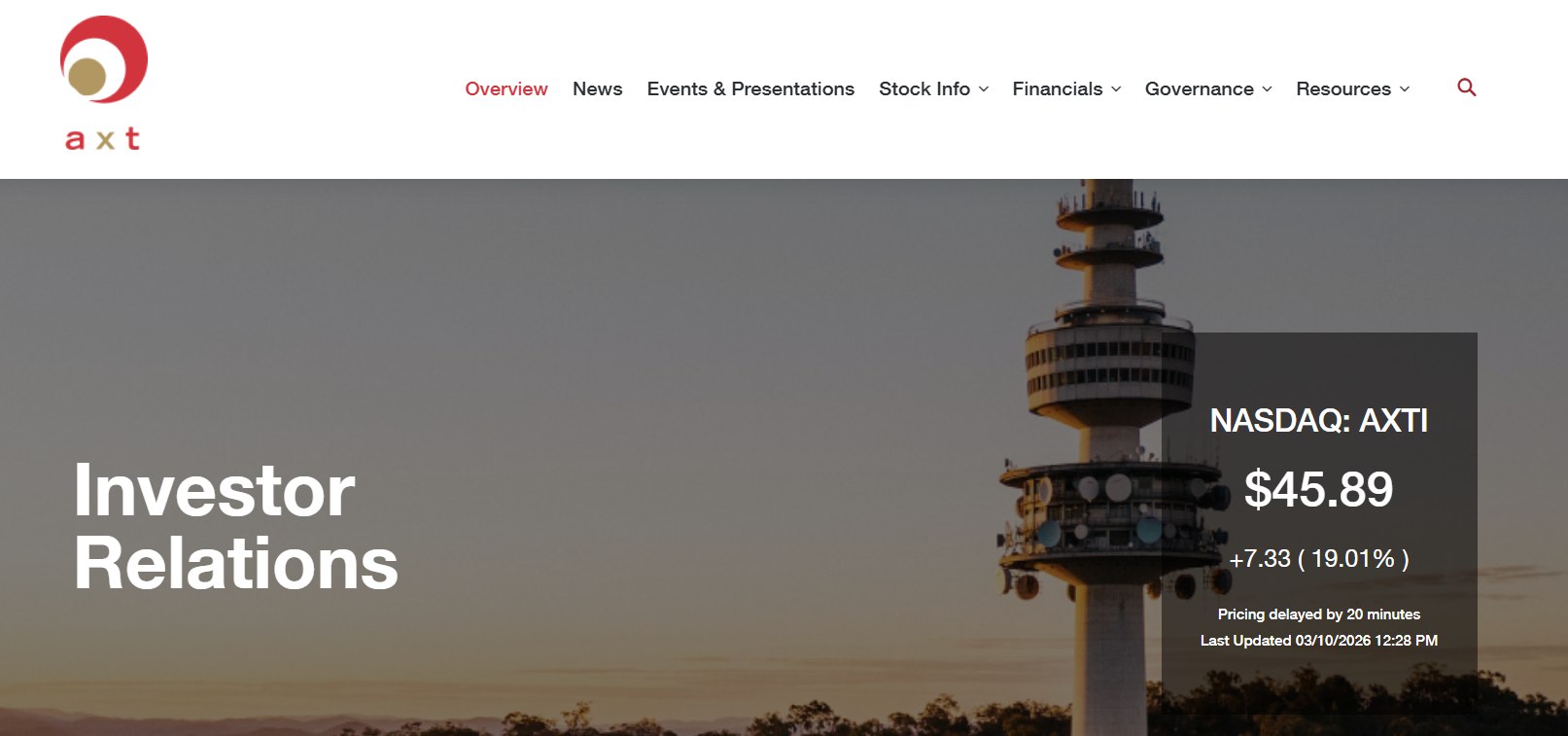
AXT Inc Stock Soars 30% to $81.78 on AI Hype but Faces Analyst Warnings to Sell in 2026

Published

on

GameStop stock graph is seen in front of the company's logo

NEW YORK — AXT Inc. shares exploded higher Thursday, surging nearly 30% to close at $81.78 after a volatile session that saw the stock swing from $59.30 to an intraday high of $82.19, as momentum traders piled into the compound semiconductor maker amid broader excitement over artificial intelligence infrastructure demand.

AXT Inc
AXT Inc Stock Soars 30% to $81.78 on AI Hype but Faces Analyst Warnings to Sell in 2026

The dramatic one-day gain on April 16, 2026, came on heavy volume exceeding 16.7 million shares, more than 10 times the average, pushing the company’s market capitalization well above $3 billion despite trailing 12-month revenues of roughly $88 million and ongoing net losses. The rally extended a stunning run that has seen the stock climb from around $1 in early 2025 to current levels, delivering returns exceeding 2,800% for early holders.

Yet the surge has left many Wall Street analysts shaking their heads. Consensus price targets from five to 11 covering analysts hover between $14.75 and $35.60, implying potential downside of 55% to 82% from Thursday’s close. Ratings remain mixed, with a lean toward “Hold” overall — two Buy, two Hold and one Sell in recent tallies — even as some longer-term forecasts see revenue growth ahead.

AXT, based in Fremont, California, specializes in indium phosphide (InP), gallium arsenide (GaAs) and germanium substrates used in high-speed optical components, data center connectivity, wireless communications and other advanced applications. Indium phosphide has emerged as a critical material for optical interconnects that help alleviate bandwidth bottlenecks in AI training clusters and hyperscale data centers.

Management has highlighted strong underlying demand, particularly for InP wafers tied to the AI build-out. In comments accompanying delayed fourth-quarter 2025 results, Chief Executive Morris Young noted progress on export permits from China and expressed confidence in sequential revenue growth for the first quarter of 2026. The company plans to more than double its InP production capacity by the end of 2026, with potential for another doubling in 2027 to meet projected order growth.

Advertisement

First-quarter 2026 earnings are scheduled for release after the market close on April 30, with analysts expecting revenue around $26 million and a loss per share of about $0.05. Full-year 2026 revenue estimates range from roughly $100 million to $125 million in some models, reflecting optimism about recovering shipments and capacity expansion, though earlier guidance had been tempered by export control delays in late 2025.

The bullish case rests on AXT’s positioning in a multi-year growth cycle for optical communications. As AI models scale, the need for faster, more efficient data movement between servers drives demand for InP-based lasers and detectors. Company executives have pointed to broadening customer relationships, including with tier-one optical players previously underserved, and a robust backlog once permitting issues ease.

Yet skeptics argue the stock’s valuation has detached from fundamentals. At current levels, AXT trades at elevated multiples — roughly 20-30 times forward sales in some calculations — while still posting losses. Trailing earnings remain negative, and the company carried a net loss of $21.3 million on $88.3 million in revenue for fiscal 2025. Insider selling totaling millions of dollars in recent months has added to concerns about whether executives view the run-up as a selling opportunity.

Geopolitical risks loom large. A significant portion of AXT’s manufacturing occurs in China, subjecting indium phosphide shipments to export license approvals by Chinese authorities. Delays in permits contributed to a fourth-quarter 2025 revenue miss, and any future tightening of U.S.-China technology restrictions or retaliatory measures could disrupt supply chains or customer orders.

Advertisement

Analysts at firms like B. Riley have expressed incremental caution on the InP supply chain, while others note that competitors or alternative technologies could eventually ease the current bottleneck. Some models peg fair value closer to $28, suggesting the stock is overvalued by more than 50% even if growth materializes.

Technical analysts observe that the rapid ascent has left the shares extremely extended. The stock has broken out dramatically but now sits well above most moving averages, raising the risk of a sharp pullback if momentum fades or if the upcoming earnings disappoint. Short interest and options activity reflect heightened speculation, with traders betting on continued volatility.

For investors considering a position in 2026, the debate centers on timing and risk tolerance. Bulls point to the transformative potential of AI-driven demand and AXT’s capacity ramp as reasons to hold or add on dips, arguing that current prices bake in optimistic scenarios for 2027 and beyond when revenue could approach or exceed $200 million in some projections. Capacity expansion, if executed smoothly, could support higher margins and eventual profitability.

Bears counter that the market has gotten ahead of itself. With analyst targets clustered far below current trading levels and persistent losses, the risk-reward skews negative for new buyers at these prices. Those who rode the rally from single digits may consider taking profits, especially ahead of earnings that could serve as a reality check on near-term execution.

Advertisement

Broader semiconductor sector sentiment remains supportive, with AI spending by hyperscalers like Microsoft, Google and Amazon continuing to fuel optimism. However, AXT’s small size, customer concentration risks and exposure to policy shifts differentiate it from larger, more diversified chip players.

Longer-term forecasts vary widely. Some optimistic models see the stock reaching $85 or higher within 12 months under ideal conditions, while more conservative estimates warn of a return toward the $20-$30 range if growth disappoints or macro headwinds intensify. Revenue visibility improves in the second half of 2026 if capacity comes online and permits flow more freely, but investors should prepare for quarterly lumpiness.

Dividend investors will find little appeal, as AXT does not currently pay one and focuses resources on growth and operations. The balance sheet includes some cash but also reflects investments in expansion.

Market participants should monitor upcoming developments closely: the April 30 earnings report and conference call, any updates on China export permits, progress on capacity additions, and shifts in AI capital expenditure plans by big tech. Broader trade tensions or interest rate moves could also sway sentiment.

Advertisement

In summary, AXT Inc. offers exposure to a compelling secular theme in AI infrastructure but carries substantial valuation, execution and geopolitical risks. The explosive move to $81.78 in April 2026 has rewarded patient holders yet left new entrants facing a high bar for justification. Conservative investors may prefer to wait for a pullback or clearer evidence of sustained profitability, while aggressive growth-oriented traders might view volatility as opportunity — albeit with tight risk management.

Whether the stock ultimately justifies its current premium will depend on AXT’s ability to convert hype into consistent revenue growth and positive earnings in the quarters ahead. For now, the market appears split between euphoria over AI tailwinds and skepticism about stretched fundamentals.

Continue Reading
Click to comment

You must be logged in to post a comment Login

Leave a Reply

Business

Mixed reviews for R&D tax overhaul amid 'complexity' and investment fears

Published

on

Mixed reviews for R&D tax overhaul amid 'complexity' and investment fears

Changes to the research and development tax incentive have received a mixed review from industry and experts, with some warning it risked legitimate research missing out on funds.

Continue Reading

Business

London traders hit by 'king of mangoes' shortage

Published

on

London traders hit by 'king of mangoes' shortage

London’s Alphonso mango supply is down this year due to fewer imports and higher prices for shoppers.

Continue Reading

Business

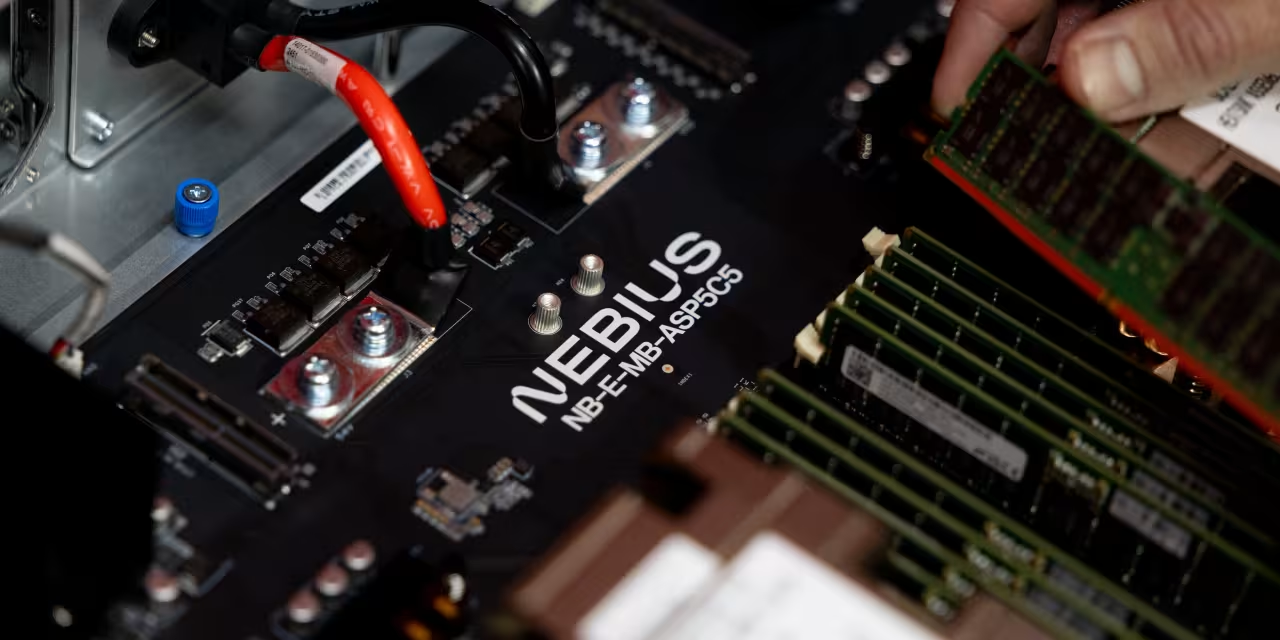
Nebius Stock Spikes After Earnings. The AI Neocloud Sees ‘Unprecedented Demand.’

Published

on

Nebius Stock Spikes After Earnings. The AI Neocloud Sees ‘Unprecedented Demand.’

Nebius Stock Spikes After Earnings. The AI Neocloud Sees ‘Unprecedented Demand.’

Continue Reading

Business

Legacy Titans Clash with 4th-Gen Powerhouse in Global Popularity Showdown

Published

on

Beyonce has won the most Grammys of anyone in history, but can she finally take home the top prize that has eluded her?

SEOUL — As 2026 unfolds, the K-pop world remains gripped by the ultimate showdown: BTS, the undisputed kings of global domination, versus Stray Kids, the self-producing 4th-generation juggernaut rewriting records during BTS’ military hiatus. While BTS boasts unmatched legacy metrics and a powerful March comeback, Stray Kids flexes superior current momentum in touring, album sales and active fan engagement.

BTS
BTS

BTS, formed in 2013 under Big Hit Music (now HYBE), redefined K-pop’s global reach. Their catalog continues to dominate long-term streaming, with Spotify monthly listeners hovering around 24.6 million in early 2026 — roughly double Stray Kids’ 12.1 million. The septet — RM, Jin, Suga, J-Hope, Jimin, V and Jungkook — completed mandatory military service by mid-2025, paving the way for their full-group return.

In March 2026, BTS unleashed their comeback album “Arirang,” blending Korean roots with global pop sounds. The release sparked massive YouTube and streaming surges, with the group dominating U.S. and global charts. Their “Arirang” world tour quickly became one of the most anticipated in K-pop history, with analysts projecting over 5 million tickets and nearly $2 billion in revenue across 82 shows. Early stops, including massive Mexico City dates drawing 150,000 fans, reaffirmed their unparalleled draw.

Social media metrics underscore BTS’ enduring empire. The group holds over 82 million YouTube subscribers and 44.5 million X followers. Their fandom, ARMY, remains the largest and most organized in K-pop, driving consistent catalog streams even without new material. In March 2026 alone, BTS racked up 1.38 billion Spotify streams as a group, far outpacing others.

Stray Kids
Stray Kids

Yet Stray Kids, debuting in 2018 under JYP Entertainment, has capitalized on BTS’ absence to claim the throne of active dominance. The eight-member group — Bang Chan, Lee Know, Changbin, Hyunjin, Han, Felix, Seungmin and I.N. — self-produces much of its music, fostering deep authenticity that resonates with younger fans. In 2025, they sold approximately 7 million albums, a staggering figure compared to BTS’ lower output during the hiatus period.

Their “dominATE” world tour in 2025 shattered K-pop records, selling over 2 million tickets across 56 shows and grossing hundreds of millions. The tour set benchmarks in North America (over 600,000 tickets), Latin America and Europe, often outdrawing previous BTS legs in specific markets. Stray Kids became the first K-pop act to headline major venues like London’s Tottenham Hotspur Stadium and sold out stadiums globally.

Advertisement

Streaming data reveals a nuanced picture. While BTS leads in total monthly listeners and historical catalog, Stray Kids frequently ranks as the second-most streamed K-pop act. In March 2026, they achieved 304 million streams, and they crossed 12.8 billion lifetime Spotify streams — only the third Korean act to do so after BTS. Their hit “God’s Menu” surpassed 500 million streams, cementing longevity.

Social platforms tell another story. Stray Kids boast around 22.7 million YouTube subscribers and 11.2 million X followers — impressive for a younger group but trailing BTS significantly. Their fandom, STAY, is among the fastest-growing, known for intense loyalty and rapid mobilization.

Billboard and IFPI charts highlight Stray Kids’ commercial peak. They secured multiple No. 1 debuts on the Billboard 200, including eight consecutive albums, and landed second on the 2025 IFPI Global Artist Chart. Their ability to sell out arenas without the same decade-long buildup demonstrates remarkable current popularity.

BTS’ brand power remains unmatched in broader recognition. The group has amassed over 500 global awards and dozens of daesangs. Their influence extends beyond music into fashion, diplomacy and social causes, with the United Nations and global brands seeking partnerships. Even in 2026, casual audiences worldwide recognize BTS more readily than Stray Kids.

Advertisement

Analysts debate metrics of “popularity.” Legacy favors BTS: cumulative streams, social following, cultural impact and name recognition. Current activity favors Stray Kids: recent sales, touring revenue, active chart performance and younger demographic penetration. In South Korea, polls sometimes show Stray Kids leading in popularity points among active idols, with one metric giving them 20.5 million versus BTS’ 19.5 million.

The 2026 landscape shifts with BTS’ full return. Their March comeback already boosted streams dramatically, with some reports noting monthly listeners climbing toward 46 million post-release. The “Arirang” tour promises to eclipse previous records, potentially reclaiming the crown in live attendance.

Stray Kids show no signs of slowing. Their consistent comebacks, global tours and self-sufficient creative model sustain momentum. As members approach military service age in coming years, questions linger about their ability to maintain dominance like BTS did.

Fan communities fuel the rivalry. ARMY emphasizes BTS’ pioneering role in bringing K-pop mainstream, while STAY highlights Stray Kids’ innovation and resilience. Social media debates rage daily, with hashtags comparing streams, sales and concert footage. Both fandoms demonstrate impressive organization, though ARMY’s scale often tips viral moments.

Advertisement

Industry experts view the competition as healthy for K-pop. BTS elevated the genre globally; Stray Kids and peers like ENHYPEN prove the ecosystem thrives without sole reliance on one act. Hybrid metrics — combining streams, sales, touring and social data — show BTS leading overall but Stray Kids closing gaps in key 2025-2026 windows.

Looking forward, BTS’ 2026-2027 activities could widen their lead again. A full world tour alongside new music promises historic numbers. Stray Kids will counter with fresh releases and continued touring innovation. The “who is more popular” question depends on timeframe: all-time favors BTS overwhelmingly; right-now momentum tilts toward Stray Kids.

Global K-pop consumption has evolved. Streaming favors catalog depth (BTS advantage), while physical sales and live events reward active groups (Stray Kids edge). TikTok virality, brand deals and regional strength further complicate comparisons. BTS dominates Japan, parts of Latin America and brand power; Stray Kids excel in North America and Europe touring.

Ultimately, 2026 underscores K-pop’s maturation. BTS remains the benchmark, but Stray Kids prove a new generation can achieve massive success. As BTS fully re-enters the fray, the friendly rivalry elevates both acts, benefiting fans and the industry. Whether measured by streams, tickets or cultural footprint, both groups stand as titans — one built on unmatched legacy, the other on relentless current excellence.

Advertisement
Continue Reading

Business

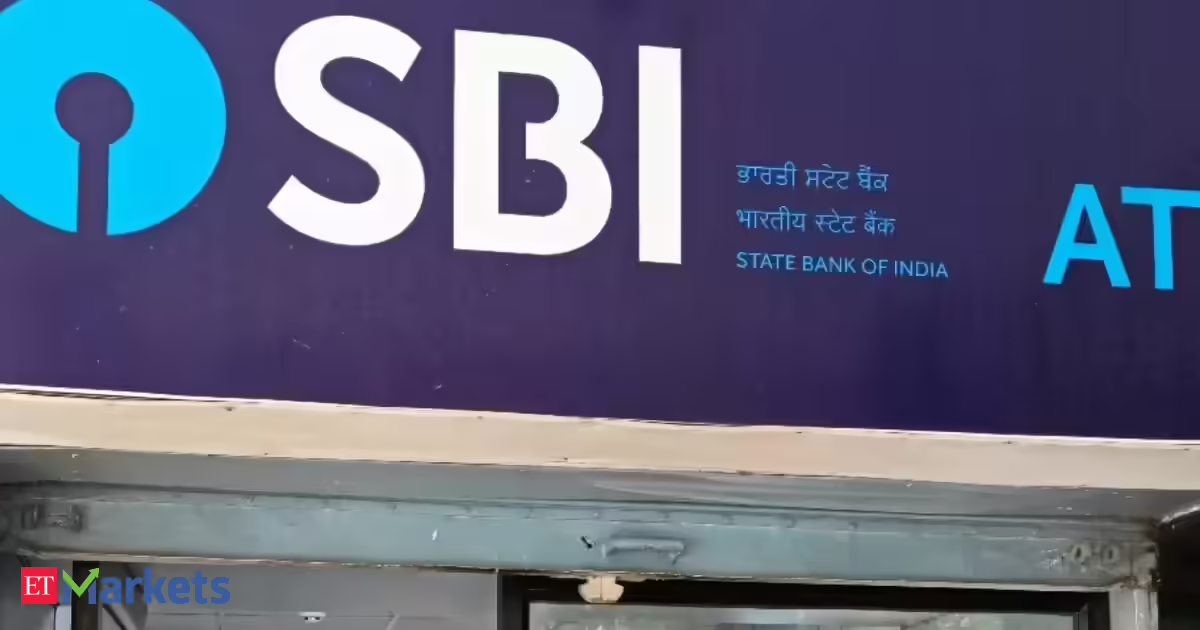
SBI shares extend fall to 20% from peak after Q4 NIMs contraction rattles investors. What’s ahead for investors?

Published

on

SBI shares extend fall to 20% from peak after Q4 NIMs contraction rattles investors. What's ahead for investors?
Shares of State Bank of India (SBI) are down by over 20% from their peak, and the slide accelerated following the announcement of its Q4 earnings where the PSU bank reported margin contraction and a sequential drop in net interest income (NII). While the stock appears weak on charts, brokerages remain confident about its fundamental credentials, recommending a buy.

SBI shares have lost momentum since hitting their 52-week high of Rs 1,235 on the NSE. The stock rallied 60% between May and February, outperforming the sector and most of its PSU bank peers. But its underperformance is not an isolated event as domestic markets have had a rough ride in 2026, so far. While Nifty and Bank Nifty are down 10% year-to-date, the sectoral benchmark Nifty PSU bank has declined over 5% in this period.

After the state-lender reported its quarterly earnings, the Street responded negatively, worried about the margins. The country’s largest PSU bank saw its net interest margins (NIMs) contract both year-on-year and sequentially, while net interest income (NII) declined 1.4% quarter-on-quarter. SBI also reported a fall in operating profit for Q4FY26.

The operating profit stood at Rs 27,704 crore, falling 16% YoY and 11.5% QoQ versus Rs 31,286 crore in Q4FY25 and Rs 32,862 crore in Q3FY26.

Advertisement

The PSU lender’s net interest income (NII) stood at Rs 44,380 crore, sliding 1.35% QoQ. The NII, which is the difference between interest earned and interest expended, rose 4% YoY.


Commenting on the current trends, Dr. Ravi Singh, Chief Research Officer from Master Capital Services said selling pressure in SBI followed its latest quarterly results, with the stock slipping sharply from the Rs 1,100 zone. “Although the bank continues to report strong overall profitability and stable asset quality, investors appeared concerned about pressure on margins and slower earnings momentum going ahead. The sharp decline in the stock reflects profit booking after a strong rally seen over the past year,” he said.
The public sector lender reported a standalone net profit rose 6% YoY to Rs 19,684 crore in the fourth quarter. The same stood at Rs 18,643 crore in the last year’s quarter. The profit beat the analysts’ estimates of Rs 18,898 crore.SBI’s Q4FY26 earnings missed estimates on the back of a collapse in margins despite healthy growth on both sides of the balance sheet and a strong fee income profile, said HDFC Securities in a note, echoing a similar sentiment.

The loan book grew 17% YoY continuing to outpace the system, led by the corporate and overseas segment but deposit growth of 11% YoY raises liquidity risks.

Brokerage view

HDFC Securities expects SBI to continue benefiting from productivity and efficiency gains along with stable asset quality, helping sustain RoA at around 1.1%. It reiterated its ‘Buy’ rating on the stock with a revised target price of Rs 1,195 and maintained SBI as its top pick among PSU banks.

The brokerage further noted that asset quality improved across segments and credit costs moderated despite a slight uptick in gross slippages.

Advertisement

Axis Securities believes SBI remains well-placed to deliver healthy medium-term earnings growth supported by steady credit expansion, improving fee income and stable asset quality. While margins saw some pressure in Q4, the brokerage highlighted management’s confidence in sustaining domestic NIMs near 3% through a better asset mix, stronger CASA mobilisation and lower reliance on expensive bulk deposits.

Axis Securities also pointed to multi-decade low asset quality stress levels across domestic and overseas portfolios and expects the transition to the Expected Credit Loss framework to remain smooth. It further expects improving operational efficiency and rising cross-sell intensity to support profitability, enabling SBI to sustainably deliver around 1% RoA through the cycle.

What charts suggest?

Decoding the charts, Dr. Singh said the SBI chart has turned weak from the near term perspective as the stock has broken below key short-term support levels, while RSI has moved close to the oversold zone, indicating bearish momentum is still dominant. Rising volumes during the fall suggest institutional selling as well.

In his view, SBI’s strong fundamentals, healthy loan growth, improving balance sheet quality, and strong leadership within the banking sector augur well for the stock’s prospects. The Rs 960 area now becomes an important support zone, while recovery above Rs 1,000 could help sentiment stabilise again, he added.

Advertisement

(Disclaimer: The recommendations, suggestions, views, and opinions given by the experts are their own. These do not represent the views of The Economic Times.)

Continue Reading

Business

Glassmaker questions future of UK manufacturing

Published

on

Glassmaker questions future of UK manufacturing

Bristol Blue Glass says rising energy costs and taxes have forced its closure.

Continue Reading

Business

Panel approves $7.8m office plan for vacant Nedlands land

Published

on

Panel approves $7.8m office plan for vacant Nedlands land

An assessment panel has approved a multi-million-dollar office plan in Nedlands, to be built on land which has been vacant for many years.

Continue Reading

Business

Bristol lab developing hantavirus vaccine ‘excited’ after breakthrough

Published

on

Business Live

Ensilitech has been working with scientists in Texas on the project – and is now looking for more funding

Ensilitech chief executive Dr Asel Sartbaev.

Ensilitech chief executive Dr Asel Sartbaev(Image: EnsiliTech)

A group of Bristol scientists who are developing a vaccine to treat a type of hantavirus say they are “hugely excited” after a breakthrough in their work. Ensilitech, a University of Bath spin-out now based at Science Creates in St Philips, says its new antigen against hantaan has been tested in labs and already works well on animals.

Hanantaviruses are a group of viruses carried by rodents, such as rats or mice, and transmitted through droppings and saliva. The viruses can be found in some areas of Europe, Africa, Asia and South America, and there is currently no specific treatment or cure.

Advertisement

The hantaan strain, which Ensilitech is developing a vaccine for, can cause haemorrhagic fever, with symptoms including headache, gastrointestinal problems and renal dysfunction.

The company has been working with a team of researchers at the University of Texas Medical Branch on the project, alongside Cape Town-based biotech business Afrigen.

“We wanted to work on a disease that is neglected,” said Dr Asel Sartbaeva, co-founder of Ensilitech. “It is a completely new vaccine. It has been tested in labs and it works well on animals.”

The project has so far been funded by the government’s Small Business Research Initiative and Ensilitech is now hoping to secure a continuation grant as it moves towards pre-clinical development and then human trials.

Advertisement

“Hantaviruses have been around for a long time. Around 200,000 people a year get infected with hantaan and it has horrendous outcomes.

“We are living in a more and more globalised world where people travel to a lot to places where these diseases are endemic, so there is a case for a travel vaccine,” said Dr Sartbaeva.

Scientists inside the Ensilitech lab

Scientists inside the Ensilitech lab(Image: Anthony Brown Photography)

“It is super important to continue this work. We are excited that we have created an antigen already which really can be scaled up and put forward as a potential vaccine, but without the funding we won’t be able to continue this work.”

According to Dr Sartbaeva, if funding is secured and development continues, the vaccine could be ready for use in about three to four years.

Advertisement

The news comes as 10 people from the UK Overseas Territories of Saint Helena and Ascension Island who were aboard the hantavirus-hit cruise ship MV Hondius – or had contact with passengers – are being brought to Britain for self-isolation as a “precautionary measure”.

The UK Health Security Agency (UKHSA) is currently monitoring and providing public health advice about the outbreak, following the death of three people who died on board.

The head of the World Health Organisation (WHO), Dr Tedros Adhanom Ghebreyesus, has also warned health officials to expect to see hantavirus infection rates climb, but said this week there was “no sign” of the start of a larger outbreak.

“Of course, the situation could change,” he said. “And given the long incubation period of the virus, it’s possible we might see more cases in the coming weeks.”

Advertisement

He added: “All suspected and confirmed cases have been isolated and managed under strict medical supervision, minimizing any risk of further transmission.”

WHO’s assessment continues to be that the risk to health globally is low.

“The message is clear: preventing diseases is a lot cheaper than treating them,” added Dr Sartbaeva. “If we get more funding for development, the return on investment will be amazing. It’s a no brainer economically speaking.”

Ensilitech, which was co-founded by Dr Sartbaeva and Dr Aswin Doekhie in 2022, has already developed novel tech to allow vaccines and other biological materials to be transported and stored without the use of fridges.

Advertisement

According to its founders, the special platform protects biopharmaceuticals from heat damage by encasing them in a tailored silica shell. Last year, the technology was recognised at a national awards for helping to sustainably improve access to life-saving treatments worldwide, particularly in regions where refrigeration is unreliable.

Continue Reading

Business

A short squeeze or sentiment rally? Here’s why SAIL shares surged 14% today

Published

on

A short squeeze or sentiment rally? Here's why SAIL shares surged 14% today
Shares of Steel Authority of India (SAIL) surged nearly 14% on Wednesday in a sharp rally that market experts attributed largely to a short squeeze triggered by extremely crowded bearish positioning in the derivatives segment.

The stock witnessed unusually high activity during the session as traders rushed to cover short positions amid rising prices and mounting margin pressure.

According to Apurva Sheth, Head of Market Perspectives and Research at Samco Securities, the counter had already been under close watch because it was nearing its market-wide position limit (MWPL), a key derivatives market indicator that tracks total exposure allowed in a stock.

“SAIL counter was in limelight today as it was on the verge of hitting its MWPL,” Sheth said.

Advertisement

MWPL, or Market Wide Position Limit, refers to the maximum derivatives exposure permitted in a stock across all market participants. The mechanism is designed to cap excessive speculation and concentration risk in individual counters.


Sheth said a sharp rise in MWPL usage often indicates heavily crowded positioning in futures and options contracts. In SAIL’s case, derivative exposure had become unusually concentrated among a handful of traders.
“The chart shows 14 clients holding 99.51% of the total derivative positions, with one client contributing close to 10% of the total limit individually,” he said, adding that this pointed to “an overly concentrated trade by a few individuals which might be operating in tandem with each other.”Such concentrated bearish trades can become highly vulnerable when stock prices begin moving in the opposite direction.

According to Sheth, that is precisely what unfolded during Tuesday’s trading session.

The stock’s sharp upward move likely triggered stop losses for short sellers, forcing them to buy back shares and futures contracts to limit losses. That additional buying pressure further accelerated the rally.

“In leveraged markets, positioning itself can become fuel for price action,” Sheth said.

Advertisement

Analysts explained that the rally followed the classic mechanics of a short squeeze. Traders initially build aggressive short futures positions expecting prices to decline. As more participants crowd into the same bearish trade, MWPL utilisation rises sharply. When the stock unexpectedly moves higher, leveraged traders face margin calls and risk-management triggers, forcing rapid short covering.

That forced buying creates a feedback loop that pushes prices even higher in a short span of time.

“The key takeaway is not just that SAIL rallied sharply, but that the rally was intensified because too many traders were positioned on the bearish side at the same time,” Sheth added.

Also read: Crorepati investors splurge $1 billion to buy these 10 stocks. Should you follow the smart money?

Advertisement

The sharp move in SAIL also highlights broader concerns around concentrated positioning in the derivatives market, especially in highly liquid PSU and commodity-linked stocks, where speculative participation tends to increase rapidly during volatile phases.

(Disclaimer: Recommendations, suggestions, views and opinions given by the experts are their own. These do not represent the views of Economic Times)

Continue Reading

Business

2026 King’s Speech: All the new Bills announced as Keir Starmer pledges ‘new direction for Britain’

Published

on

Business Live

Legislation will cover areas from late payments and competition to Northern Powerhouse Rail

King Charles III and Queen Camilla in the Chamber of the House of Lords during the State Opening of Parliament

King Charles III and Queen Camilla in the Chamber of the House of Lords during the State Opening of Parliament(Image: Kirsty Wigglesworth/PA Wire)

Embattled Prime Minister Sir Keir Starmer has used the King’s Speech to promise a package of measures to set a “new direction for Britain”.

The Prime Minister said the legislation in the King’s Speech would make the country “stronger and fairer” and help deliver the “change we promised” in Labour’s 2024 general election landslide.

Advertisement

In his speech in the House of Lords, the King said the Government would “defend the British values of decency, tolerance and respect for difference under our common flag”. Charles said the Government would “harness the potential of the pride felt across the country for its communities” and “take urgent action to tackle antisemitism”.

In his introduction to the package of legislation set out by the King in the traditional State Opening of Parliament ceremony, Sir Keir said the country was “at a pivotal moment” as it dealt with the fallout from wars in Iran and Ukraine.

But he said: “The fundamentals of our economy remain sound and this will help us emerge from the Iran conflict stronger and fairer.”

The war in the Middle East required “greater urgency” in the reforms the Government has promised, Sir Keir said. he added: “We will strengthen our economic security, energy security, our defence and national security.”

Advertisement

The new pieces of legislation set out in the King’s Speech:

– Steel Industry (Nationalisation) Bill: Will give the Government powers to nationalise British Steel.

– High Speed Rail (Crewe – Manchester) Bill: The plan for Northern Powerhouse Rail is intended to deliver faster, more frequent services between cities in northern England. The Bill will outline a “foundational” element for the scheme from Manchester to Millington in Cheshire, via Manchester Airport.

– European Partnership Bill: The legislation will provide a framework to adopt EU rules where the Government strikes deals with Brussels.

– Small Business Protections (Late Payments) Bill: The law is intended to protect small and medium-sized enterprises (SMEs) with powers including maximum payment terms of 60 days, and mandatory interest rates 8% above the Bank of England base rate for late payments.

Advertisement

– Clean Water Bill: Creates a new regulator for the industry and a new water ombudsman to provide stronger consumer protections.

– Competition Reform Bill: Will make the Competition and Markets Authority’s investigations faster and more predictable and reduce burdens on businesses.

– Regulating for Growth Bill: Includes measures aimed at tackling a system the Government views as complex, risk-averse and poorly suited to modern technologies and business models.

– Enhancing Financial Services Bill: Will modernise how lenders are regulated and update consumer protection arrangements.

Advertisement
King Charles III, wearing the Imperial State Crown and the Robe of State, and Queen Camilla

King Charles III, wearing the Imperial State Crown and the Robe of State, with Queen Camilla(Image: 2026 WPA Pool/Getty Images)

– Highways (Financing) Bill: Will introduce a new funding model to get greater levels of private capital investment into road schemes.

– Overnight Visitor Levy Bill: Will allow mayors and potentially other leaders of large authorities in England to introduce a tourist tax in their areas.

– Social Housing Renewal Bill: Will prioritise the building of new social rented homes and tighten eligibility for the Right to Buy to protect existing social housing stock.

– Commonhold and Leasehold Reform Bill: Marks the beginning of the end for what Sir Keir Starmer called the “unfair feudal system” of leasehold properties. It will ban the use of leasehold for new flats, cap ground rents at £250 a year and implement a new process for converting to commonhold.

Advertisement

– Education for All Bill: Will reform the system in England for children with special educational needs or disabilities (SEND).

– Representation of the People Bill: Will lower the voting age to 16 in all UK elections, along with other reforms.

– Remediation Bill: Boosts powers for regulators and closes loopholes to accelerate the removal of unsafe cladding from buildings.

– Draft Conversion Practices Bill: Will protect people from “harmful and abusive” attempts to change their sexual orientation or transgender identity.

Advertisement

– Draft Ticket Tout Bill: Will make it illegal to resell a ticket at more than its original cost, cap the service fees charged by resale platforms and allow regulators to impose fines of up to 10% of global turnover on firms breaking the new laws.

– Sporting Events Bill: Will put in place measures to support the delivery of the Euro 2028 football tournament and position the UK as an attractive bidder for other events such as the Women’s World Cup in 2035.

– Police Reform Bill: Scraps police and crime commissioners and includes other reforms including a new legal framework for the use of facial recognition technology.

– NHS Modernisation Bill: Abolishes NHS England and puts in place reforms including a new single patient record that people can view on their NHS app.

Advertisement

– Railways and Passenger Benefits Bill: Establishes Great British Railways, the new state-owned company in charge of both track and trains, and creates a new passenger watchdog.

– Digital Access to Services Bill: Creates a new voluntary digital ID system for use across public services and the wider economy.

– Public Office (Accountability) Bill: The long-running wrangle over the Hillsborough Law’s application to the security services prevented the legislation being passed before the end of the last parliamentary session.

– Removal of Peerages Bill: Creates a mechanism to strip titles from disgraced peers without the need for a new law to be passed in each individual case. The Prime Minister promised the legislation in the wake of the Lord Peter Mandelson scandal.

Advertisement

– Courts Modernisation Bill: Includes the Government’s controversial plan to restrict trial by jury to the most serious cases.

– Northern Ireland Troubles Bill: Another piece of legislation that has been carried over from the previous session, it is an attempt to deal with the complicated and controversial legacy of the Troubles.

– Draft Taxi and Private Hire Vehicle Bill: Modernises Victorian-era rules and addresses licensing vulnerabilities which have been exploited by grooming gangs.

– Civil Aviation Bill: Will strengthen consumer rights and protections for passengers and change the regulation of airport slots to support the expansion of airports.

Advertisement

– Sovereign Grant Bill: Will enable the amount of money paid to support the King’s official duties to fall once work to update the plumbing and wiring of Buckingham Palace is completed.

– Energy Independence Bill: Legislates for a series of reforms to upgrade homes, speed up the construction of infrastructure and the deployment of renewable power.

– Nuclear Regulation Bill: Modernises the way nuclear projects are regulated to support the quicker delivery of new power stations.

– Electricity Generator Levy Bill: Will break the link between electricity and gas prices and increase the windfall tax from 45% to 55% to drive low-carbon generators currently benefiting from high market prices set by gas onto fixed-price contracts.

Advertisement

– Tackling State Threats Bill: Will allow the Government to ban foreign state-backed organisations engaged in espionage, sabotage and interference in the UK, like Iran’s revolutionary guard.

– Armed Forces Bill: Will ensure the UK continues to have an army, a commitment which must be renewed for constitutional reasons every five years. It will also enshrine the Armed Forces Covenant in law.

– National Security Bill: Will criminalise a range of harmful online content, and criminalise planning mass attacks, to clamp down on extremist threats to the country.

– Immigration and Asylum Bill: Will take steps to clamp down on small boat crossings, and tighten up the asylum appeals system.

Advertisement

– Cyber Security and Resilience Bill: Will aim to bolster online protections for businesses and services across the country, to make sure they are protected from cyber attacks.

Continue Reading

Trending

Copyright © 2025