

Politics
Greens push Labour to adopt rent controls in King’s Speech


Since the local elections, the key political question in the UK has been, ‘When will the Labour leader go?’. Notably, that’s when, not if, because let’s face it, the writing has been on the wall for Keir Starmer for some time now.
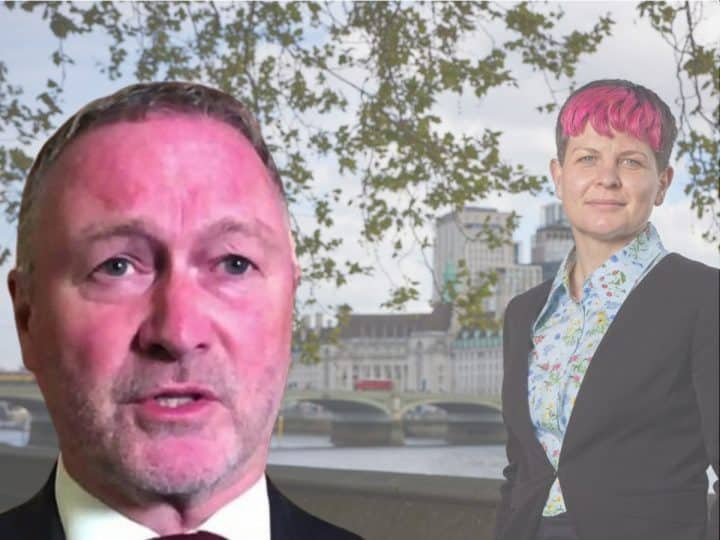
While Labour has obsessed over itself, the Green Party has been working to get things done. In aid of this, the Green’s new mayors and MP Carla Denyer have put the following to the government:
Our mayoral, council and Senedd campaigns were rooted in fighting to end the housing affordability crisis, and voters have spoken. We need action to end rip-off rents now.
So newly elected Green Mayors @ZoeGarbett and @LiamShrivastava alongside Carla Denyer MP have written to… pic.twitter.com/B7l9WF7YVu — The Green Party (@TheGreenParty) May 12, 2026
Labour, ‘This scandal has to end’
The above letter is addressed to Steve Reed. Although Reed is the housing minister, you may be more familiar with his campaign to smear Green Party activists and politicians.
In their letter, they ask Reed to actually get on with his job and deliver for ordinary renters. It reads (emphasis added):
We are writing to you as newly elected Green Mayors, alongside Carla Denyer MP and on behalf of every newly elected and sitting Green Councillor, to request that you take urgent action to end rip-off rents, and include a Rent Controls Bill in the King’s Speech this week.
Spiralling rents are ripping the heart out of our communities. People are being forced to cut back on essentials just to afford a roof over their heads. Young people are being priced out of the areas they grew up in, with schools in London closing as families are pushed out of the city. Teachers, nurses and careworkers cannot afford to live in the boroughs they work in. Renters across the UK now pay on average a third of their wages on rent, the highest level on record.
But whilst renters get poorer, wealth is being funnelled straight into landlords’ pockets. As you will be aware, the government is set to transfer £70 billion to private landlords through housing support between 2024-28. That is six times the amount of money that was spent on affordable homes over the past five years. Housing has become a way to make money, rather than a universal right.
This scandal has to end. If we had frozen rents four years ago, households in Britain would now be saving over £3,300 per year on average.
It’s time to get serious
The letter continues:
The Green Party’s success last week shows that the country is desperate for an urgent and transformative programme to end rip-off Britain, and are angry that your government has failed to deliver. Our mayoral, council and Senedd campaigns were rooted in fighting to end the housing affordability crisis, and voters have spoken.
Keir Starmer has said that a break with the status quo is needed. The King’s Speech is your opportunity to do this by getting behind the Green Party’s longstanding demands for crucial measures to make life affordable for all, starting with rent controls. With food and energy costs set to sky-rocket as a result of the illegal war on Iran, it has never been more critical.
If your government is in any way serious about improving the lives of the 11 million private renters in England, you must commit to introducing rent controls now.
Keir Starmer himself said the status quo cannot stand in his make-or-break speech on Monday, but at this point, we’ve heard it all before.
Starmer in 2020: "We cannot go back to business as usual after this"
Starmer now: ".. every single time in the past we've simply tried to get back to a status quo that didn't work, we can't do the same again"
The same line, 6 years apart. He wants to fool us twice. https://t.co/aieAKqyj4B pic.twitter.com/MsRDJfakyS
— Saul Staniforth (@SaulStaniforth) May 11, 2026
Is change on the horizon?
In the lead up to the local elections, Labour made it clear that the party wouldn’t introduce rent controls. The question is whether the local elections have taught Starmer’s government anything, or whether status quo policies remain the politics of choice.
Featured image via the Canary
By Willem Moore


Where is the World Cup being played again?
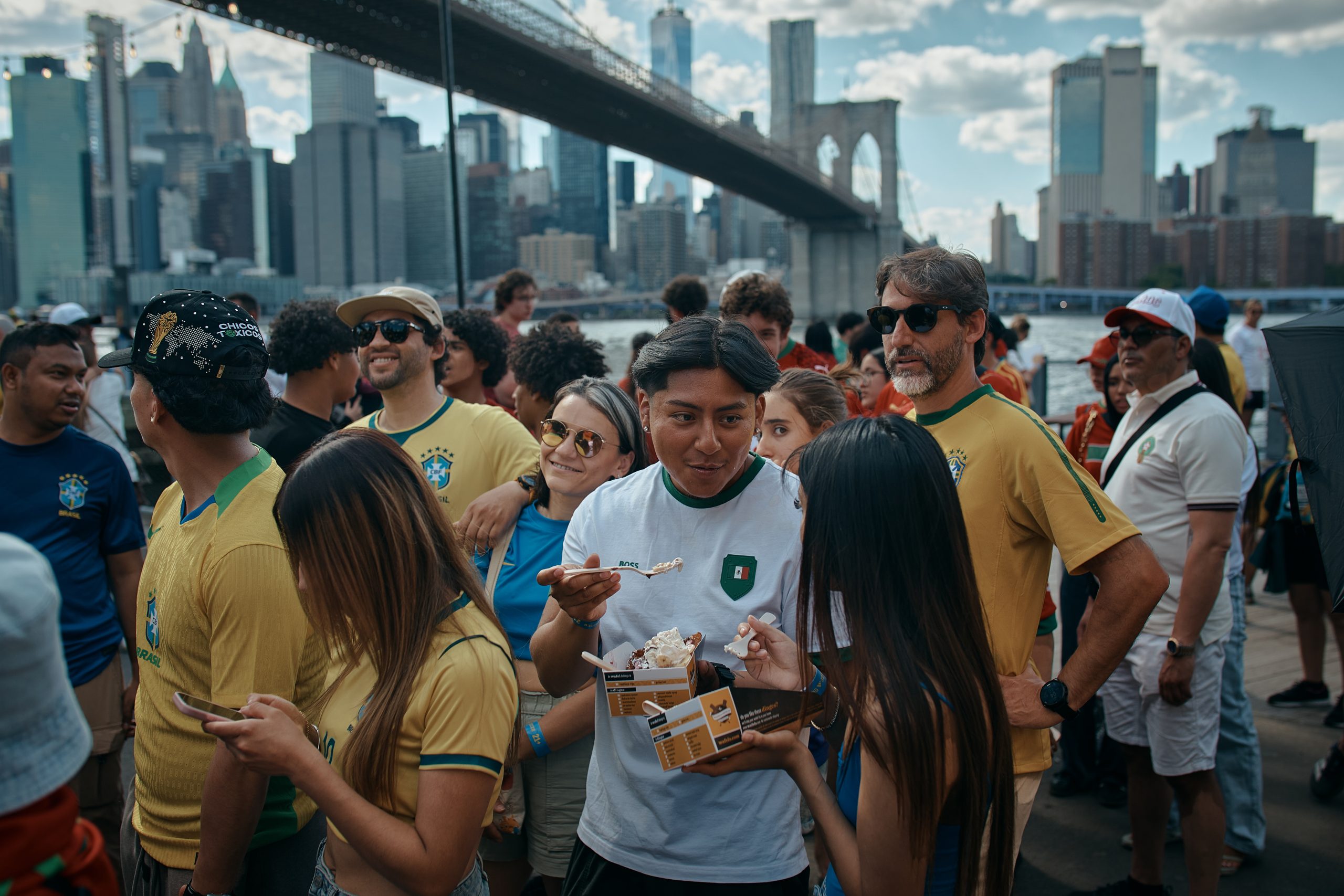
In the northeastern United States, eight World Cup games, including the final, will be played in what FIFA calls “New York New Jersey.” But elected leaders from this portmanteau place are jostling over where exactly it is.
The state of New Jersey and New York City bid for and won the right to be a host city, but New York state officials have become increasingly involved. So politicians on both sides of the river are just bursting with border-state rivalry that can be lighthearted and serious all at once.
The matches, for the record, are at MetLife Stadium in East Rutherford, New Jersey. But that hasn’t stopped New York Gov. Kathy Hochul from repeatedly declaring that “New York is not just hosting the World Cup, New York is the World Cup.”
There’s some truth to it — most of the fans are expected to stay in and visit New York between matches. But New Jersey doesn’t shrug off such slights because they reinforce long-running dynamics of New York as the bigger sibling and the Garden State’s struggle for recognition.
Rep. Josh Gottheimer (D-N.J.) made avenging this wrong a dayslong cause célèbre and taunted Hochul with social media posts such as: “If you’re planning to watch a FIFA match in New York, you’ll be SOL.”
New Jersey Gov. Mikie Sherrill pushed to get one of the temporary signs hung at MetLife changed to read “New Jersey New York” instead of “New York New Jersey.” On Friday, she posted a six-second video from outside the sign. “For those keeping score at home, the World Cup is in New Jersey. And now the sign reflects that.”
The New York-New Jersey combo isn’t new.
“I never liked it,” said former U.S. national team goalkeeper Tony Meola, a native of nearby Kearny, New Jersey, who was subjected to the indignity of playing under a neighboring state’s banner during his years with the New York/New Jersey Metrostars, since renamed Red Bull New York.
“I grew up there, I played there — it’s New Jersey,” said Meola. “That’s just my opinion.”
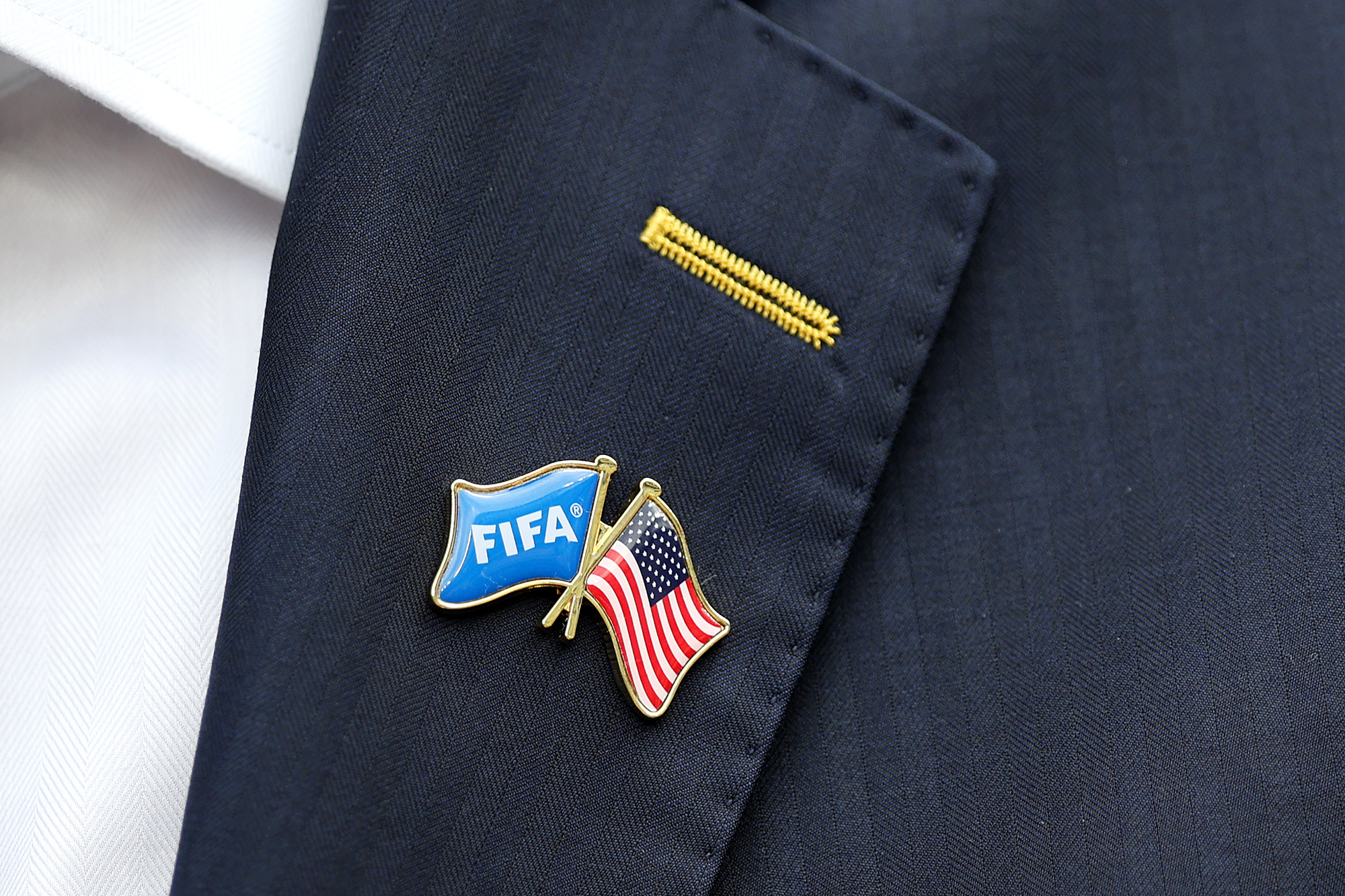

FIFA President Gianni Infantino is working on his third World Cup, which spreads across North America this weekend. His first tournaments were held in autocratic countries with governments willing to splash cash and use the games to sportswash their tarnished image on the global stage.
In America, where 78 of the 104 matches will be played, he’s dealing with something dramatically different — democratically elected leaders spread across 11 host communities.
Infantino at first seemed to approach North America largely the same way he did Russia and Qatar: Win over the head of state and go from there. He went so far as to court President Donald Trump by giving him a peace prize before he started a war with Iran.
State and local politicians, however, had their own priorities.
In America, Infantino has found himself foiled not only by democracy but the country’s federalism — the separation of national and state power that gives local officials unique power. He can blame Thomas Jefferson for that.
“I think that’s just a big difference, even compared to other western democracies, our federalism is a huge difference,” said Alex Lasry, the CEO of the New York New Jersey Host Committee.
As a result, FIFA’s national partners in Mexico and Canada have more say over how the World Cup is playing out in their countries than the White House does in America, a country that does not even have a sports minister.
In practice, this has meant that even as FIFA presented itself as the world government of the globe’s most beloved sport, local officials in America started standing in its way.
A senior FIFA official earlier this year said it was exaggerated to say one person in Qatar or Russia snapped their fingers and things got done, but the official did describe America as more decentralized.
Back in 2023, one of Infantino’s longtime advisers spoke at length about the FIFA president’s public image. “This whole idea of shoulder-rubbing with dictators? It’s not real. Sometimes the U.S. president is Joe Biden, sometimes it’s Donald Trump. Gianni can’t change that,” the adviser told Tim Röhn of the Axel Springer Global Reporters Network, which includes POLITICO. “He’s not interested in politics — only in football.”
But those politics have been creating roadblocks for months, leading up to the first American game on Friday in Los Angeles.
There was a five-member special board in Massachusetts that had to sign off on a license to allow FIFA to play seven matches there, a power it used to extract concessions from the local host committee.
New Jersey Gov. Mikie Sherrill — one of the newly elected politicians who didn’t bid for the World Cup but now has to pay to put it on, despite having other priorities — got in a public scrape with FIFA over transportation costs. FIFA didn’t budge, but the fight was ugly.
When it tried to ban water bottles from stadiums, New York City Mayor Zohran Mamdani attacked and FIFA backed down.
On the legal front, a quartet of attorneys general — three from blue states and one from red Texas — are now investigating the soccer body’s ticketing practices.
Alas, there isn’t one person Infantino can call to smooth things over. He isn’t the first European to puzzle over America’s decentralized governance, but this 21st-century Alexis de Tocqueville seems to be learning the hard way.
President Donald Trump’s name was removed from the facade of the Kennedy Center on Saturday, capping off the president’s longtime effort to assert control over the institution, one of Washington’s most iconic cultural landmarks.
In a Saturday court filing to the U.S. District Court for the District of Columbia, Matthew Floca, the Kennedy Center’s chief operating officer and executive director, confirmed work crews had removed “all physical signage” from the building and grounds “that purports to rename the Kennedy Center after President Trump or any individual besides President Kennedy.”
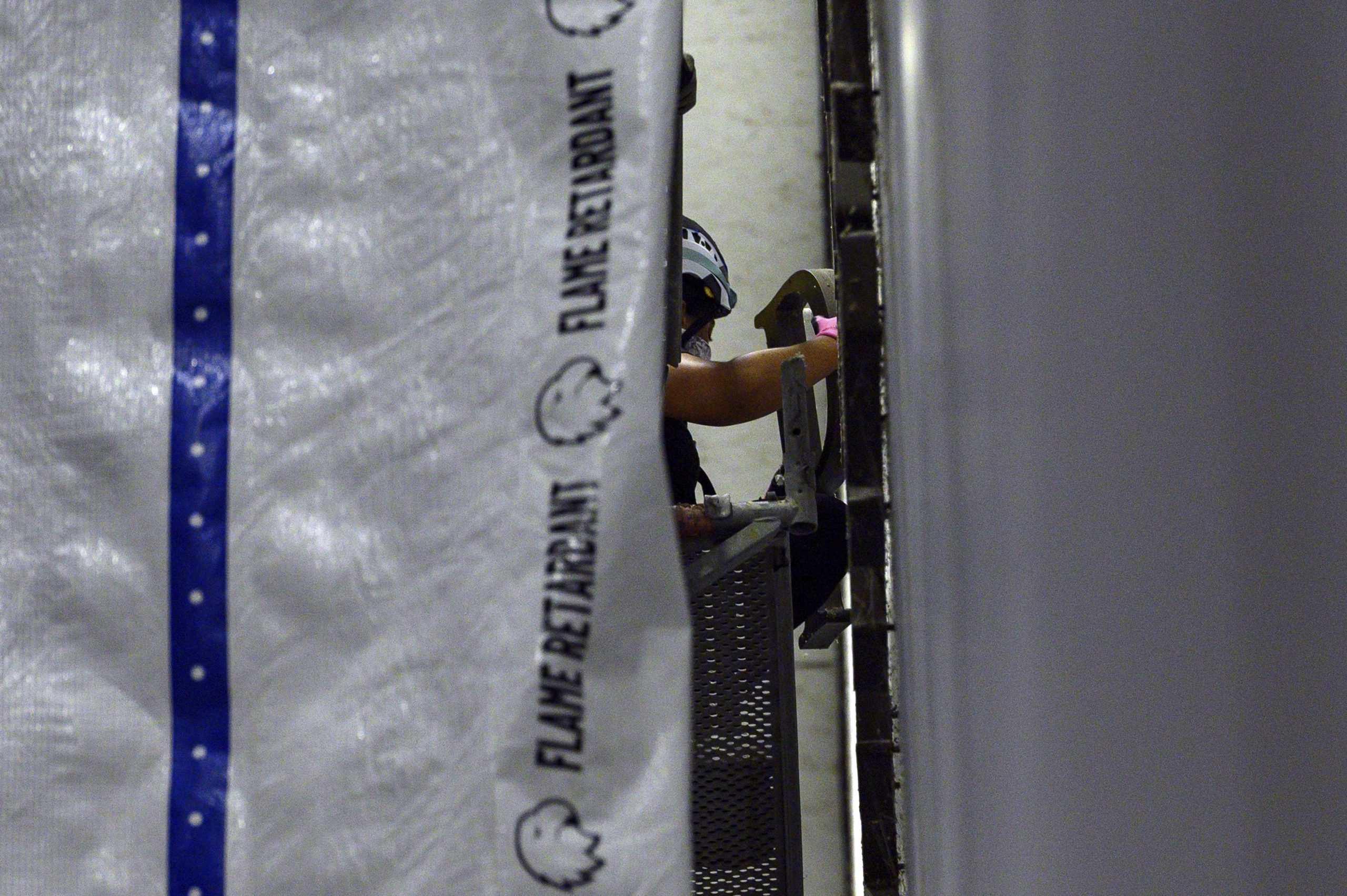
Workers, hidden behind a large white tarp, removed Trump’s name from the building’s white exterior early Saturday morning, after blowing past a Friday deadline due to what Floca cited as “weather-related delays.” The tarp remained in place on Saturday afternoon.
The removal comes after U.S. District Judge Christopher Cooper ruled in late May that Trump’s rebranding of the performing arts center in his own name was illegal, contravening federal law that the center could only honor Kennedy and usurping authority from Congress.
In the weeks since, officials have removed references to Trump on the Kennedy Center’s website, issued new identification cards, edited employee email signatures and rescinded any trademark applications adding Trump to the institution’s name, Floca wrote in his filing. The restoration of the building’s original name followed denials Friday by both Cooper and an appeals court of last-ditch attempts by the administration and Department of Justice to stay Cooper’s May ruling.

It’s a stinging blow to the president, whose ambitious plans for the Kennedy Center included packing its board with loyalists and shutting it down for two years to conduct major renovations.
Cooper, an appointee of former President Barack Obama, also nixed the Kennedy Center’s closure in his May ruling, prompting Trump to angrily announce plans to transfer the institution back to Congress in a Truth Social post shortly after.
“Judge Cooper should be ashamed of himself!” he wrote. “Unless I am free to do what I do better than anyone else, bring this Institution back, physically, financially, and artistically, I have no interest in continuing what could only be a hopeless journey into “NEVER NEVER LAND.”
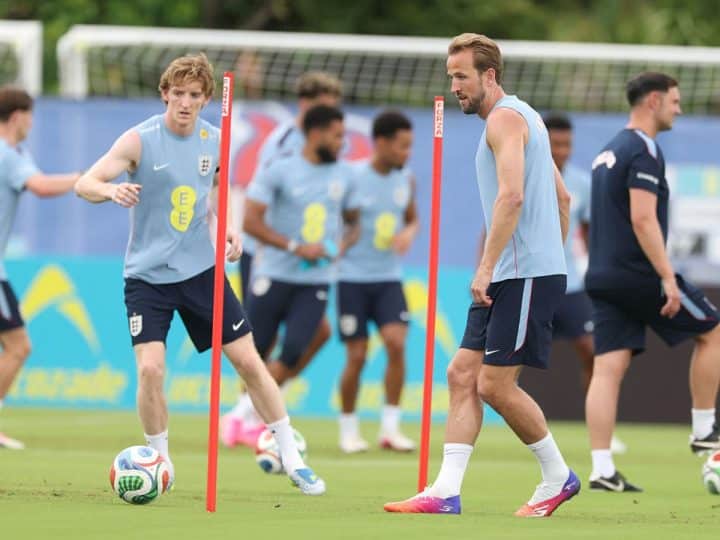
The England national team suffered an unexpected setback before the start of their 2026 World Cup campaign after a portion of their training equipment was stolen following the squad’s arrival in Kansas City, USA.
According to a report by The Guardian, special boots belonging to several players, along with official balls and other training equipment, were lost during the transport of the team’s gear to their designated headquarters in the city.
Kansas City police have launched an investigation into the incident, while the authorities supervising England’s national team have initiated urgent measures to provide replacements for the missing equipment and ensure the team’s preparatory schedule is not affected before the start of the tournament.
Kansas City police opened an investigation into the incident, and the newspaper reported that authorities detained two individuals suspected of involvement in the event, with investigations continuing to determine the full circumstances of the case and the extent of the losses.
The incident occurs at a time when the area surrounding the team’s training camp is experiencing heightened security attention, following a shooting incident near the team’s residence a few days prior. Authorities confirmed at the time that the shooting did not target the England delegation and did not result in injuries among its members, as reported by Reuters.
Although there are no indications linking the two incidents, the repetition of security events during the first few days of the team’s stay in Kansas City highlights the challenges faced by participating teams off the field, coinciding with the kick-off of the 2026 World Cup.
Featured image via Richard Pelham/Getty Images
By Alaa Shamali
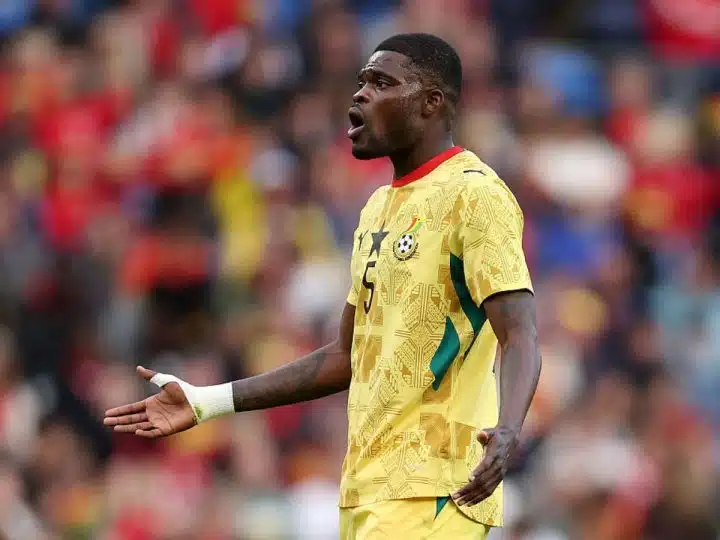
Ghana have suffered a major setback ahead of their 2026 World Cup campaign after it was confirmed that midfielder Thomas Partey will miss their opening match against Panama in Toronto following a decision by Canadian authorities to deny him entry to the country.
According to Reuters, the ruling will deprive Ghana of one of their most influential players for their first fixture of the tournament.
FIFA confirmed that Partey, who is currently with the Ghana squad in the United States, will not be permitted to travel to Canada for the match against Panama. The governing body stressed that visa decisions fall solely within the jurisdiction of the Canadian government and that FIFA has no authority to intervene or overturn the decision.
The organisation added that Partey will remain available for Ghana’s other group-stage matches taking place in the United States, including upcoming fixtures against England and Croatia.
The issue comes at a crucial moment for Ghana, who were expected to rely heavily on Partey’s experience during the tournament. The decision has also renewed questions about the impact of immigration and visa policies on a World Cup being jointly hosted by the United States, Canada and Mexico.
Reuters reported that the visa refusal is linked to legal proceedings involving the player in the United Kingdom, where he is awaiting trial over criminal allegations that he has categorically denied.
Featured image via Ryan Hiscott/Getty Images
By Alaa Shamali
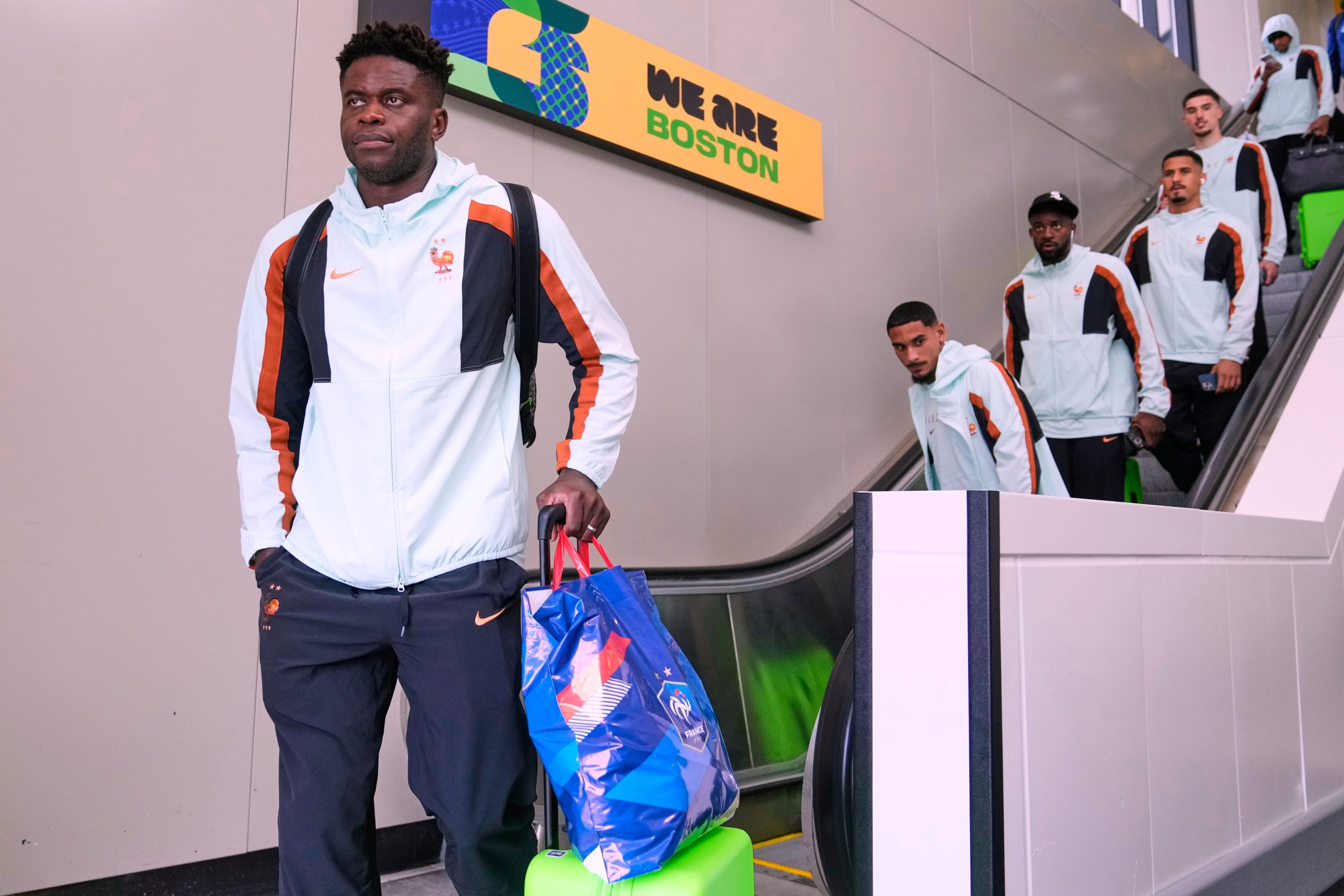

BRUSSELS — A growing number of soccer supporters say chaotic visa procedures are keeping them from attending World Cup matches in the United States.
One Belgian-Moroccan soccer fan, who was granted anonymity to discuss the issue without fear of repercussions, told POLITICO he thought he had secured tickets to Saturday’s Morocco vs. Brazil match through FIFA’s lottery system, booked flights to New York and applied for entry to the U.S.
That’s when things began to go wrong.
The fan, who had previously traveled with an Electronic System for Travel Authorization (ESTA) — the online authorization system used by travelers from countries that don’t need visas for short visits to the U.S. — said his application was approved on May 27, but abruptly revoked one week later.
“There was nothing mentioned except for travel not authorized,” he said. “That’s the whole frustrating situation — the opacity of the whole thing.”
His attempts to apply for a non-immigrant visa were fruitless. Ahead of the World Cup, the State Department launched an expedited process for some fans seeking visas to attend matches in the U.S., but the Belgian-Moroccan national said he was never able to access it because an initial appointment platform failed to register his payments.
That, in turn, made it impossible to book the mandatory interview at the U.S. Embassy in Brussels required before requesting an expedited appointment. He added that calls to the embassy went unanswered because they were automatically forwarded to an inactive Belgian number.
Other World Cup attendees have reported similar problems. Scottish musician Kenny Smith said his ESTA was revoked despite recent travel to the United States. Meanwhile, Somali referee Omar Abdulkadir Artan was recently denied entry to the country despite being selected to officiate at the tournament.
FIFA President Gianni Infantino on Wednesday acknowledged that the special World Cup visa system was “not working always, and with everyone.” Homeland Security Secretary Markwayne Mullin defended visa denials Thursday, citing security concerns.
A spokesperson for the Department of Homeland Security declined to say if dual nationals were more likely to have their applications revoked, but said ESTA applications are continuously vetted and approval “does not guarantee admission” to the U.S.
For the Belgian-Moroccan fan missing Saturday’s match, the visa ordeal undermined the point of the tournament. “The whole experience of a World Cup is intended to bring people together,” he said. “Now actually being rejected for no reason, it actually has the opposite effect.”
spiked is funded by readers like you. Only 0.1% of regular readers currently support us. If just 1% did, we could grow our team and step up the fight for free speech and democracy.
Become a spiked supporter and enjoy unlimited, ad-free access, bonus content and exclusive events – while helping to keep independent journalism alive.
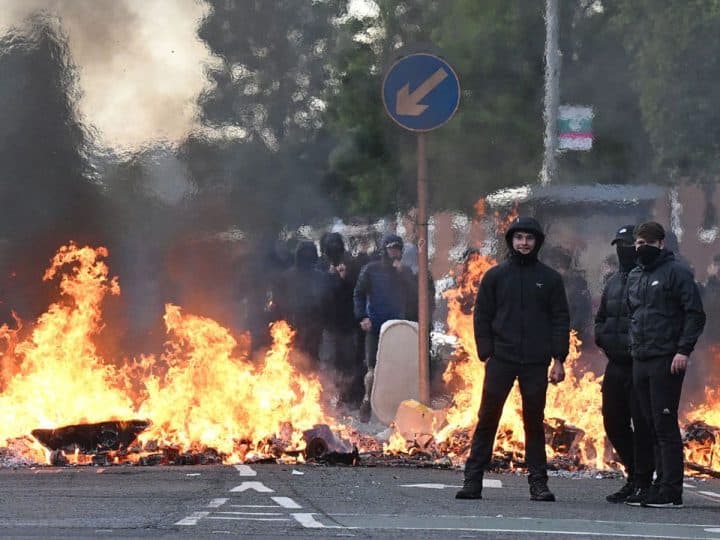
By now, there has been extensive coverage of the fact that the Belfast pogroms took place almost entirely in loyalist areas. This should surprise no one. Loyalism has always been an exclusivist ideology, predicated on the notion that one population deserves to dominate another that is dismissed as less deserving. Historically of course, this viewpoint dictated that Protestants must be allowed to lord it over Catholics.
However, violent sectarianism has largely faded in the north of Ireland, following 1998’s Good Friday Agreement. Instead, loyalism has now applied to immigrants, people of colour and Muslims the bigoted mindset it incubated over centuries.
It’s hard to dominate another group of people without justifying it in some way. Humans, like many other mammals, have an in-built notion of fairness. Seeing others get less without good cause cannot be easily sustained psychologically. Hence many Protestants developed prejudices giving grounds for their superior position. Catholics were said to be lazy, feckless and practicing a heretical religious doctrine.
Belfast loyalists pivot from sectarianism to racism
Years of indulging in this act of self-deceit have easily enabled the switch to applying new fictions to new target populations. Muslims are heathens, satanic even. Immigrants have sparked an unprecedented crime wave, never mind evidence to the contrary. Even children aren’t safe in playgrounds from sinister foreign men.
Combined with this capacity for a supremacist mentality has been the means for exercising the violence necessary to make dominance concrete. In prior decades, it has meant loyalists carrying out ethnic cleansing of Catholics. This was most notable in the 1920s, during the birth pangs of what became known as ‘Northern Ireland’. Loyalist mobs burned Catholics out of their homes, murdered others, and caused an estimated 23,000 to flee. So-called ‘Rotten Prods’ — Protestant trade unionists who stood alongside Catholics in workplaces — were also killed.
Another outbreak of barbarism occurred in 1969, when again loyalist thugs chased large numbers of Catholic families out of their homes, deploying widespread arson again. Belfast politicians have described how the loyalist pogroms of this week mirror those previous horrors. During the ‘Troubles’, loyalist paramilitaries carried out 713 sectarian murders of Catholics.
In its capacity to inspire reactionaries, loyalism is similar to its bedfellow, Zionism. The latter is a racist doctrine of Jewish supremacy that has always permitted extreme violence against the indigenous Palestinian population that stands in the way of their ethnostate.
As it has now reached the inevitable exterminationist phase of its trajectory, it has been celebrated by chauvinists the world over looking to subjugate their own troublesome populations. ‘Israeli’ and Israeli Occupation Forces (IOF) flags can be found in loyalist areas across the north of Ireland. Loyalist politicians wined and dined by the terror regime of Tel Aviv came back singing its praises.
The longstanding links between loyalism and the British far-right
The twin primary sicknesses of these ideologies — a deeply inculcated supremacist mentality, and the willingness to use violence to suppress those deemed inferior — have obvious appeal to far-right actors everywhere. There have long been links between loyalist thugs and like-minded British neo-Nazis.
The Ulster Defence Association was known to have links to the vile racists of Combat 18. One of the latter’s founders, Eddie Whicker, helped arm the murderous loyalist terror gang. Combat 18 members were present at the notorious loyalist disorder at Drumcree.
Daniel Grundle (also known as Daniel Douglas) is the leader of current racist group Our Northern Ireland Voice. He described his founding of the group as a “calling”. Grundle reminisced about how in the 1980s his uncle Jimmy Grundle helped set up a version of Britain’s National Front in the north of Ireland.
The links extend to this day. Before Ben Habib’s recent decision to dissolve it, far-right agitator Richard Inman operated as a link between the racist Advance UK and the north of Ireland. Inman obviously thought so highly of the embedded bigotry within loyalism, that he made the Six Counties his permanent base. From there, he has lauded the Islamophobic hate displays of Concerned Parents Newtownabbey and spoken at far-right rallies.
Others, such as former Ulster Volunteer Force member Mark Sinclair and ex-Democratic Unionist Party councillor William Walker have linked up with their ideological peers at far-right rallies. Areas of Scotland still have strong loyalist elements, and they have clearly been inspired by the ethnic cleansing in Belfast. Racists there engaged in copycat crimes against people of colour.
Racist politicians embrace street violence
It isn’t just street thugs who seem enthused by loyalist violence. Those looking to take over the British state have been content to carry on stirring up emotions, even as houses burn. Reform’s Zia Yusuf screeched that:
Some cultures are MUCH better than others.
Restore Britain’s official account vomited out:
Restore Britain will reverse the third-worldification of our country.
Farage obviously delights in the prospect of reactionary rioting. In the wake of the Henry Novak murder, Farage exacerbated an already febrile atmosphere by calling for “pure cold rage“. Neither Nigel Farage nor Yusuf of Reform have used their X accounts to offer any condemnation of the Belfast violence. Likewise the even more vile Rupert Lowe of Restore Britain.
Reform have made no secret of their intent to hurtle towards authoritarianism if they occupy 10 Downing Street. Owen Jones recently enumerated their plans in this regard. As he points out, Farage has spoken of his intent to bring in a:
…British version of Immigration and Customs Enforcement (ICE), the US deportation force that seizes migrants from homes, workplaces and the streets.
Under Reform:
The government would be granted direct powers over the police and would attack the independence of the judiciary, dressed up as a war on “activist judges”.
The parallels with the fascists of the 1930s are clear. The likes of Mussolini and Hitler used street thugs to help them seize power, then implemented an authoritarian state.
Street violence has many useful traits for budding despots. It makes the state look weak, as it struggles to handle the chaos. Far-right parties project an image of strength, and proclaim they will restore order.
It can be a tool for intimidating left-wing activists. Additionally, rioting thugs can be integrated into the state’s own security forces once power has been seized.
Belfast — A return to the fascism of the 1930s
The left’s best analysts, like Yanis Varoufakis, have long been warning that we are heading for a repeat of that uniquely dark era. Racist riots and mass mobilisations are becoming increasingly common in Britain, and authoritarian policies are already being implemented by British prime minister Keir Starmer.
Reform are happy to let other street thugs pick up the baton handed to them by loyalists. Once in power, they’ll gleefully receive another gift from Labour. By that point, it’ll be too late, and Britain will pay devastating consequences for inviting its own particular variant of loyalism into government.
Featured image via Charles McQuillan/Getty Images
The disastrous Iran war may be ending. But a humiliated US may look to Cuba as the next victim with Trump’s crony Marco Rubio applying heavier sanctions. The Americans have been making their aggressive intentions clear for months.
US outlet The Hill reported on 11 June that the US State Department:
announced that it will sanction Cuba’s state-owned oil and gas company Unión Cuba-Petróleo (CUPET) amid escalating tensions between the U.S. and the island country.
At the centre of the move was Trump’s Cuban-American henchman and secretary of state Marco Rubio. Rubio said:
the latest sanctions are pursuant of President Trump’s May 1 executive order expanding sanctions on government officials, agents “or material supporters of the Cuban government,”.
The sanctions concern Cuba’s oil and gas company Unión Cuba-Petróleo (CUPET).
Defence secretary Pete Hegseth was at the US military colony Guantanamo Bay on 10 June. As the Canary reported, Hegseth:
told a captive audience of American soldiers that Cuba had better not try and get long-range weapons. The US has been ramping up threats against the island state.
Rubio accused the Cuban government of:
diverting its energy resources “to line their own pockets: reselling countless barrels of scarce energy on the secondary market, hoarding energy supplies for its military, intelligence and repressive forces, and rationing energy as a tool of social control.”
Which is a bit rich coming from an openly far-right government committed to denying its citizens even basic healthcare while spending billions on a failed war in Iran.
An Iran deal could mean US move on Cuba
Meanwhile, a Pakistan-brokered deal to end the US attack on Iran looks close. Al Jazeera reported on 12 June that Pakistan’s PM Shehbaz Sharif had said:
Pakistan is now working closely with both sides to finalize the next steps. Peace has never been this close as it is now.
As the Canary has reported, the US was looking to bring the Americas to heel before it blundered into the Iran war.
Trump’s 2025 national security strategy said as much. The US wants to ensure:
the Western Hemisphere remains reasonably stable and well-governed enough to prevent and discourage mass migration to the United States.
And that those pliable governments:
cooperate with us against narco-terrorists, cartels, and other transnational criminal organizations.
Trump and his cronies want:
a Hemisphere that remains free of hostile foreign incursion or ownership of key assets, and that supports critical supply chains.
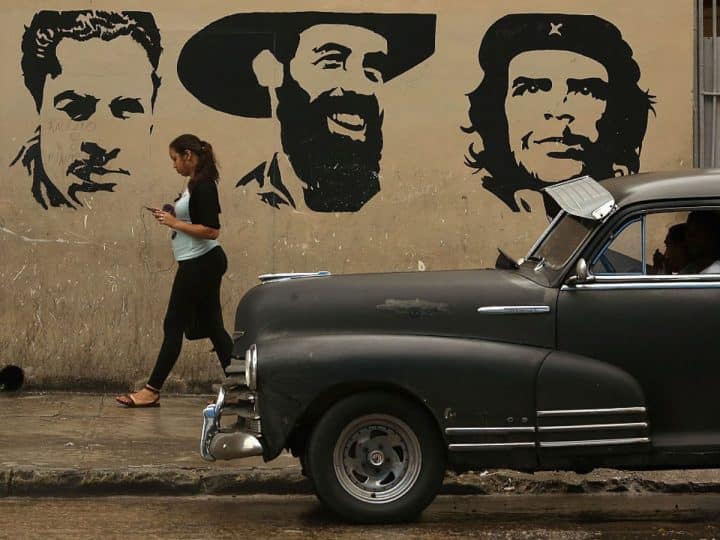
Cuba is the closest dissenting nation to the US in the Americas. And for Trump’s generation it is an unresolved problem. He would return to it to the status of a mafia-run US vassal state. It will be a happy day when the war against Iran ends. But a humiliated US empire is still a dangerous beast. And the people of Cuba may be the first to feel Trump’s post-Iran wrath.
Featured image via Chip Somodevilla/Getty Images
By Joe Glenton

High-stakes geopolitics aren’t the only external factor threatening to hijack the tournament.
Perhaps ironically for a competition hosted by a U.S. president who is highly skeptical about climate change and says assertions about rising temperatures have been made “by stupid people,” the heat is very likely to be a problem.
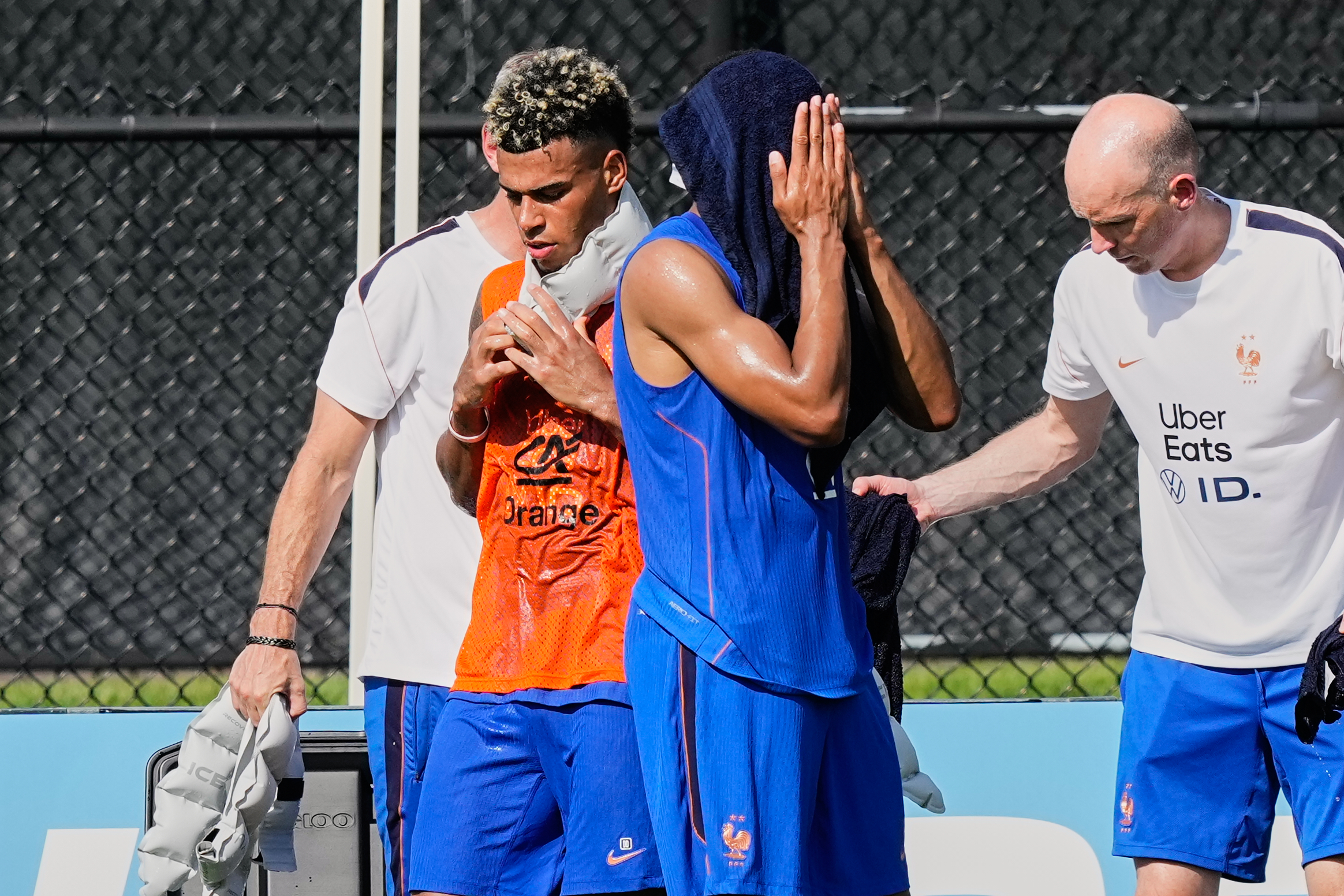
Heat waves have become a persistent part of Northern Hemisphere summers — each one made hotter, longer and more likely to occur as a result of man-made global warming. The locations of several stadiums across the U.S. and Mexico, as well as the peak-summer timing of the World Cup, are expected to put players and fans at risk of overheating.
The problem isn’t just heat, but also humidity. The combination of the two feels far hotter and is measured with wet-bulb temperature, which mimics how the human body cools off through sweating. A wet-bulb temperature of 95 degrees Fahrenheit can be fatal even to healthy people; the football players’ union FIFPRO says wet-bulb temperatures above 79 degrees — which can be reached through a combination of 86-degree heat and 50 percent humidity, for example — will affect performance and health, and 82-degree heat should prompt the postponement of a match.
When scientists last month ran the numbers, they found that 26 of 104 matches are expected to take place in conditions of at least 79-degree wet-bulb temperature. Five matches are estimated to breach the 82-degree wet-bulb barrier. And a peer-reviewed study found that during last year’s FIFA Club World Cup in the U.S., average wet-bulb temperature exceeded 82 degrees in 31 of 57 matches analyzed by scientists.
That study also found that high temperatures were associated with players covering less ground, forcing a change of tactics. Exhaustion sets in faster under high temperatures — at the Club World Cup, 10 players asked to be substituted in a single match. But heat doesn’t just affect gameplay. At the 2024 Copa America, an assistant referee collapsed in the heat and, last month, two people died during sports events held amid a heat wave in France.
As climate change continues to heat the planet, FIFA will have to grapple with the growing threat at every subsequent tournament. The 2030 men’s World Cup in Spain, Portugal and Morocco takes place in a global warming hotspot. The women’s World Cup next year will be in Brazil during a warming El Niño event, expected to supercharge the heating effect of climate change.
And that’s not even counting the other growing climate risks — from wildfire smoke to extreme rain — that threaten to disrupt future events.
Why Goldman Is Cautious on Micron Stock Ahead of Earnings

Iran Contradicts Trump on Timing of Peace Deal Signing

Did Trump’s Name Come Off the Kennedy Center? What to Know


-

 NewsBeat6 days ago
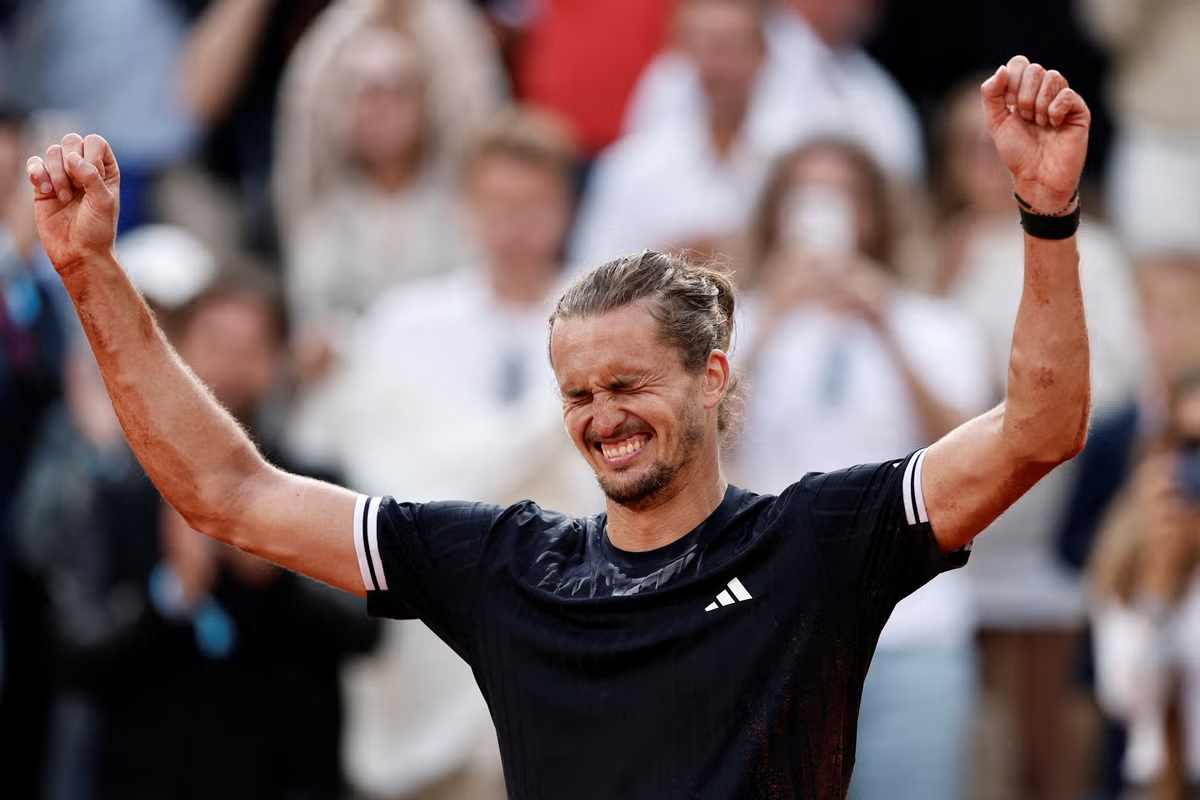
Alexander Zverev wins the French Open to finally earn a 1st Grand Slam title
-

 Crypto World6 days ago
Anatomy of the June crypto crash: Fed, Iran, Saylor
-

 Crypto World2 days ago
Oppenheimer backs SpaceX as $70 billion retail frenzy builds
-
 NewsBeat6 days ago
Alexander Zverev conquers demons and outlasts Flavio Cobolli to win French Open for first major title
-

 Crypto World2 days ago
Markets Rally as SpaceX IPO Looms Amid Iran Tensions and Inflation Surge
-

 Tech7 days ago
Microsoft unveils seven homegrown AI models in new bid for ‘long term self-sufficiency’
-

 Business6 days ago
High Stakes for Wembanyama as New York Pushes for 3-0 Lead
-

 Tech6 days ago
Notion restores access to Anthropic after service disruption
-
 Crypto World6 days ago
Eli Lilly (LLY) Stock Surges 4% Following Breakthrough Sleep Apnea Trial Results
-
 Sports6 days ago
FIFA WC 2026 Group C: Morocco, Scotland challenge Brazil’s hunt for glory | FIFA World Cup 2022
-
 Business7 days ago
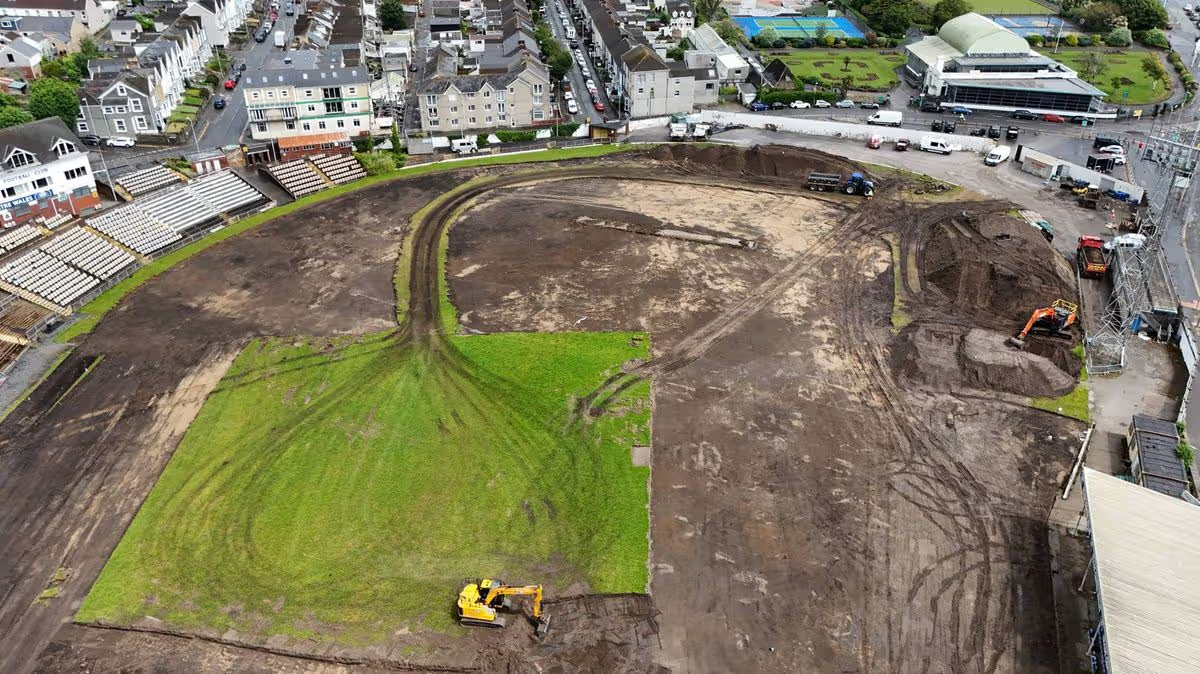
The investment to transform historic St Helen’s ground in Swansea
-

 Crypto World7 days ago
Trump’s AI Ownership Plan Could Benefit Anthropic at OpenAI’s Expense
-
 Sports4 days ago
Bangladesh beat Australia after 20 years in ODIs, register only their second win over six-time world champions | Cricket News
-

 Tech1 day ago
NanoClaw integrates JFrog registries to secure AI agent downloads
-

 Fashion1 day ago
Weekend Open Thread: Tuckernuck – Corporette.com
-

 Crypto World22 hours ago
Bitget enters Argentina’s regulated crypto market through PSAV registration
-

 Tech2 days ago
This Week In Security: Microsoft On Microsoft, Register Your Domains, Linux On ARM, And FreeBSD Joins The File Cache Club
-

 Politics3 days ago
Politics Home | Healey Resignation Is “Colossal Failure Of Government”, Says Former Labour Defence Secretary
-

 Sports3 days ago
First Time Since 1971: Australia Register Historic Low In ODI Cricket
-
 Entertainment2 days ago
Donnie Wahlberg & More Heat Up Las Vegas at Circa’s Barry’s Downtown Prime
You must be logged in to post a comment Login