
Business
BEML shares rise 2% after securing Rs 180 crore Vande Bharat sleeper order


According to a filing with the exchange on Wednesday, the company said that it secured an additional order for manufacturing and supply of Vande Bharat (Sleeper) trainsets valued at about Rs 180.60 crore from Integral Coach Factory.
Also Read | BEML bags Rs 180.6 crore order for Vande Bharat sleeper trains
According to a report by ET, the company has increasingly focused on expanding its presence in the rail and metro segment, with Vande Bharat emerging as a key opportunity as Indian Railways looks to add more modern trainsets to its network.
The latest order comes as the Vande Bharat platform expands into sleeper services, marking a significant step in the evolution of the train programme from premium day travel towards longer-distance overnight connectivity, the report further said.

The report also highlighted that the latest contract adds to BEML’s growing involvement in the Vande Bharat programme, as Indian Railways expands the next generation of the semi-high-speed train network beyond the existing chair-car configuration. The Rs 180.60 crore order is specifically for the manufacturing and supply of Vande Bharat sleeper trainsets and has been placed by ICF, one of Indian Railways’ major production units.
This marks the third major order win for the company in a month. On August 14, the company announced that it received an order valued at USD 6.65 million from Mauritius for the supply of BE220G Hydraulic Excavators for deployment across key African markets.This includes markets such as Liberia, Sierra Leone, Ghana, Democratic Republic of Congo (DRC), Côte d’Ivoire and neighbouring countries. The company further said that the order will be executed in phases, commencing with pilot deployment in Sierra Leone.
The company will provide comprehensive warranty, technical assistance, site-based service support, operator training, spare parts, specialised tools and maintenance documentation. With this order win, the company’s international order bookings stood at approximately USD 119 million, underscoring the growing contribution of international markets to the company’s business.
The third order win was on August 11, 2026, when the company secured a significant order worth Rs 184.25 crore from Hindustan Aeronautics Limited (HAL) for the manufacture and supply of Light Combat Helicopter (LCH) Fuselage Aerostructures.
Also Read | Hero MotoCorp, M&M, other auto stocks drop up to 5% after August sales numbers. Should you buy the dip?
In the last one month, the stock went up 13.82% and nearly 7.84% in the current calendar year. The stock was up 59.69% in the last three years and 197% in the last five years.
(Disclaimer: Recommendations, suggestions, views and opinions given by the experts are their own. These do not represent the views of The Economic Times.)


CQS New City High Yield Fund issues 1.25m shares at 50.5p
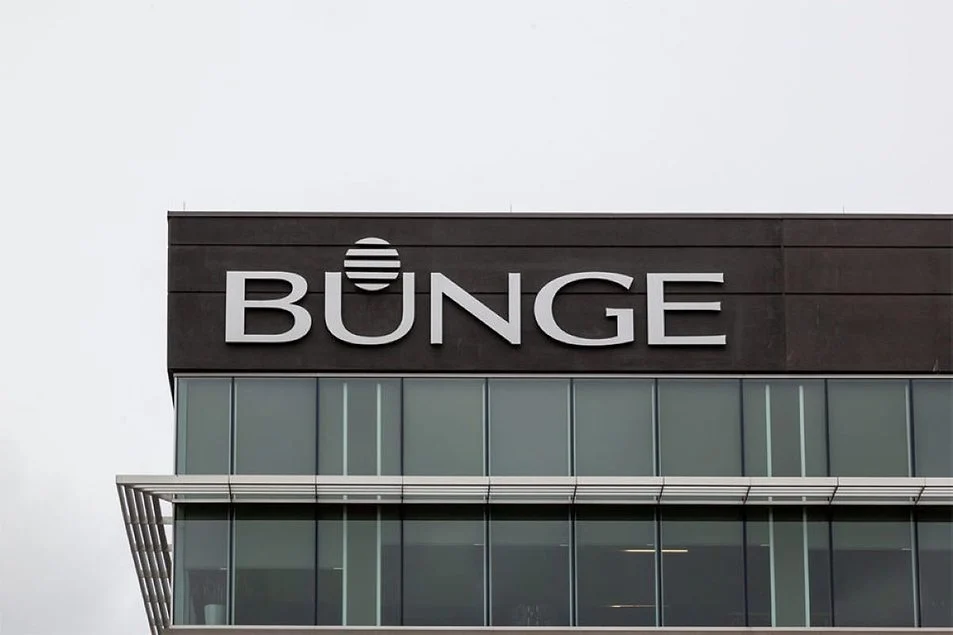

ST. LOUIS — Bunge Global SA is selling two of its Brazilian sugar cane mills to Chinese state-owned food processing holding company COFCO International.
The mills are located in the Junqueirópolis and Guararapes municipalities within the state of Sao Paulo, Brazil. The mills previously belonged to Canadian grain handling company Viterra Ltd. before Bunge acquired them in July 2025.
“As Bunge focuses on our strategic priorities and positions the business for long-term growth, this transaction is the right step forward,” said Julio Garros, chief operating officer of Bunge. “We are grateful to the sugar mills team for their dedication and contributions to the company.”
Bunge said the sale’s completion is subject to various customary closing conditions, including the receipt of necessary regulatory approvals.

Why is NVIDIA stock surging today?

5 Reasons To Buy Clinuvel Pharmaceuticals After Its Nasdaq Uplisting
Business
Microsoft Outlook Down Again? Thousands Report New Issues With Microsoft’s Email Service 3 Days In A Row

Microsoft Outlook users began reporting a fresh wave of access problems Wednesday morning, with outage-tracking site Downdetector logging a spike in complaints starting around 9:58 a.m. EDT, extending a multi-day stretch of intermittent disruptions tied to a broader Microsoft 365 authentication issue.
The outage tracker’s official account flagged the renewed surge in a social media post shortly after the reports began, asking affected users how the disruption was impacting them and directing people to its live outage map for updates. The hashtag “MicrosoftOutlookDown” quickly began circulating online as users compared notes on the latest round of email trouble.
Wednesday’s reports mark the third consecutive day in which Outlook users have experienced some form of disruption tied to the underlying incident, which Microsoft has been tracking internally under case number MO1465074. The company has said the root cause traces back to a problem within a core authentication configuration shared across multiple Microsoft 365 services, rather than an issue isolated to Outlook alone.
The disruption originally began at 3:08 p.m. UTC on Monday, Aug. 31, according to Microsoft, when users first reported delays and failures sending and receiving email, along with authentication errors and problems searching mailbox content. Reports on Downdetector that day surged past 5,000 within a few hours of the initial onset, with additional complaints flooding social media platforms throughout the day.
Microsoft said its investigation initially pointed to a misconfiguration affecting how authentication components were deployed across a portion of its infrastructure, a problem the company said it was working to isolate through service telemetry and diagnostic review.
“We’ve confirmed that users may experience degraded functionality with various Exchange Online functionalities. We’re reviewing service telemetry and diagnostic data to isolate the source of the issue,” Microsoft said in an update posted to its Microsoft 365 Status account as the outage was unfolding Sunday into Monday.
By Monday evening, Microsoft reported that mail flow was gradually improving for affected users, though search functionality within Outlook remained degraded well into the night. The company said shortly after 3 a.m. ET on Tuesday that it was beginning to see improvements in that search functionality as well, as engineers continued rolling out fixes to the underlying authentication systems.
Even as conditions improved, full resolution proved elusive. On Tuesday, Microsoft acknowledged that its mitigation work was ongoing rather than complete.
“Our mitigation actions are continuing to progress within the remaining affected infrastructure,” Microsoft said in a Tuesday update. “Indications from telemetry remain positive, and we’ve confirmed service availability is improving. We’re entering a period of extended monitoring to ensure a full resolution is in place.”
By early Wednesday, Microsoft had indicated that service availability had stabilized significantly for most customers, reporting availability above 99% and stating that the majority of users should no longer be experiencing impact from the underlying issue. Wednesday morning’s renewed spike in Outlook-specific reports, however, suggests that some users continued to experience residual disruption even as the broader incident showed signs of resolution.
Independent outage-tracking services have separately noted that Outlook has experienced a pattern of intermittent reports throughout the week, distinct from, though related to, the larger authentication incident. One tracking service recorded a stream of Outlook-related reports beginning around 1:53 a.m. Eastern time on Tuesday, followed by another cluster of reports affecting hundreds of users around 1:35 p.m. that same day, illustrating the uneven, start-and-stop nature of the recovery process across the week.
Beyond Outlook itself, Microsoft has confirmed that the underlying authentication issue affected a range of other Microsoft 365 services this week, including OneDrive for Business, SharePoint Online, Microsoft Teams, Microsoft Purview, Microsoft Defender XDR, the Microsoft 365 Admin Center and Universal Print. The breadth of services affected reflects how deeply many Microsoft 365 products rely on shared authentication infrastructure, meaning a single underlying configuration problem can ripple outward to affect multiple, seemingly unrelated tools used across an organization.
For businesses that rely heavily on Outlook and Exchange Online for daily communication, disruptions of this scale can have significant practical consequences, delaying internal and external correspondence and, in some cases, preventing employees from accessing scheduling, search or mailbox functions entirely. This week’s outage adds to a pattern of significant Microsoft 365 disruptions recorded so far in 2026, including a separate incident in January that stretched for roughly ten hours and affected Outlook, Defender and Purview, with reports on Downdetector during that earlier episode topping 15,000 at the peak of the disruption.
Microsoft has continued directing affected customers to its official Microsoft 365 Status page and social media account for updates as monitoring continues. The company has not yet published a detailed post-incident report explaining the specific technical root cause of the authentication misconfiguration or outlining steps it plans to take to prevent similar multi-day disruptions in the future, though such retrospective reports typically follow major incidents once monitoring periods conclude and engineering teams complete a full review.
As of Wednesday late morning, it remained unclear how long the residual Outlook-specific disruptions reported since 9:58 a.m. would persist, or whether they represented a new, isolated issue separate from the broader authentication problem that has affected Microsoft 365 services since Monday. Users experiencing ongoing trouble were advised to monitor official Microsoft support channels alongside independent outage trackers for the latest updates on service restoration.

Stifel reiterates Eos Energy stock rating on Google partnership

There’s been an “explosion” in the sale of illegal tobacco in Scotland, according to Trading Standards.

Rep. Pat Fallon, R-Texas, predicts that the U.S.-Iran conflict is nearing its end due to economic pressure on the regime on ‘The Bottom Line.’
Chevron is expanding its footprint in Venezuela under new agreements that call for more than $7 billion in investment over the next five years and aim to more than double production from its joint ventures in the country.
The oil giant said Wednesday that the agreements establish updated fiscal, commercial and legal terms for its Venezuelan joint ventures, creating conditions for additional investment, development and production growth.
Chevron expects the joint ventures to increase production to approximately 600,000 barrels per day, while keeping total costs below $20 per barrel. Production across Chevron’s three Venezuelan joint ventures has already increased 15% so far this year, the company said.
MEET THE MAN BEHIND TRUMP’S JOINT VENEZUELA OIL VENTURE

A sign displays the price of regular gasoline fuel at a Chevron gas station in Austin, Texas, on Tuesday, May 5, 2026. (Kaylee Greenlee/Bloomberg via Getty Images / Getty Images)
As part of the latest agreements, Chevron’s Petroindependencia joint venture was assigned rights to develop the adjacent Carabobo-1 and Carabobo-2-South-A areas in Venezuela’s Orinoco Oil Belt.
The expansion builds on an April agreement that increased Chevron’s working interest in Petroindependencia to 49%. That deal also gave the Petropiar joint venture, in which Chevron holds a 30% interest, rights to develop the adjacent Ayacucho 8 area.

Oil pumps operate near Lake Maracaibo in Maracaibo, Zulia state, Venezuela, on July 12, 2024. Decades of mismanagement, underinvestment and sanctions have contributed to the decline of Venezuela’s once-dominant oil industry. (Getty Images / Getty Images)
“With improved terms and additional acreage, we are strengthening a portfolio that we believe can deliver attractive low-cost oil growth, support energy supply and create differentiated long-term value,” Chevron Chairman and CEO Mike Wirth said in a statement.
The investment push comes amid a major shift in the U.S.-Venezuela relationship following the January U.S. military operation that captured former Venezuelan President Nicolás Maduro in Caracas. Maduro was brought to the U.S. to face federal drug-trafficking charges.

Cerro Negro heavy oil upgrader facility in the Orinoco Oil Belt near Cerro Negro, Venezuela. (Ed Lallo/Getty Images / Getty Images)
Separately, the Trump administration announced an oil agreement last month involving approximately 65 billion barrels of proven Venezuelan reserves. Under the arrangement, Venezuelan interim authorities granted North American Blue Energy Partners 100-year concessions covering 17 oil fields, while the U.S. government secured majority ownership and governance rights in the venture.
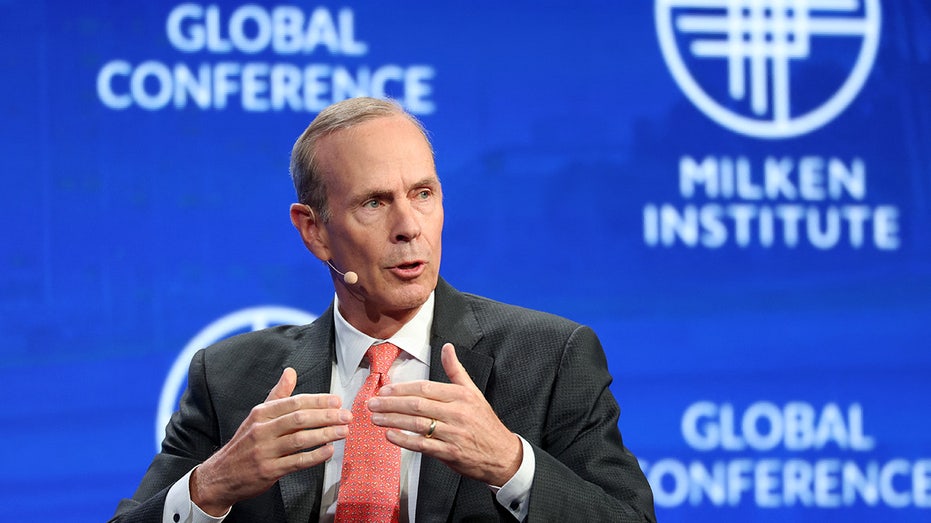
Chairman of the Board and CEO of Chevron Corporation, Mike Wirth, speaks during the 29th annual Milken Institute Global Conference at the Beverly Hilton in Beverly Hills, California on May 4, 2026. (Patrick T. Fallon/AFP via Getty Images / Getty Images)
Against that backdrop, Chevron credited the Trump administration, including the U.S. Department of Energy, with helping facilitate conditions for further investment and growth in Venezuela.
CLICK HERE TO GET FOX BUSINESS ON THE GO
“Continued engagement between government and industry is essential to advancing projects that support energy security, economic growth and continued investment,” Wirth said.
Business
Stock Market Today: Dow, Small Caps Rise On Surprise Jobs Data; Dell Breaks Out Again But AI Name Credo Dives
The Dow Jones Industrial Average and the other major stock indexes opened mixed Wednesday, as Wall Street reacted to weaker-than-expected jobs data. Meanwhile, Dell Technologies (DELL) tried to break out on the stock market today after beating earnings views. Just after Wednesday’s open, the Dow industrials climbed 0.5% but lagged a 0.7% rebound by the Russell 2000. The S&P 500…
Copyright ©2026 Investor’s Business Daily, LLC. All rights reserved. 87990cbe856818d5eddac44c7b1cdeb8
Business
Johnson & Johnson Shares Jump Toward the Record High After FDA Approval; UBS Lifts Target to $320

NEW YORK — Johnson & Johnson shares climbed as much as 2.7% on Wednesday, trading near $278.63 by late morning in New York and extending a yearlong rally that has pushed the healthcare giant into record.
The stock was up $7.44 from Tuesday’s close of $271.19 as of 10:01 a.m. Eastern, according to exchange data cited by market terminals. The move followed a late-August U.S. Food and Drug Administration approval for a rare-disease use of the company’s immunology drug Imaavy and a fresh Wall Street price-target increase that valued the shares well above the new high.
Johnson & Johnson, based in New Brunswick, New Jersey, has gained more than 50% over the past 12 months. The stock’s 52-week low was $173.33, set in September 2025. Intraday prints this week have exceeded the prior peak near $276.47 from Aug. 19, and some data services flagged an all-time high above $276.50 as Wednesday’s session opened.
The advance comes as investors weigh a familiar Johnson & Johnson mix: new product approvals, a raised 2026 sales target above $100 billion, a 64-year dividend-increase streak — and leftover legal costs from talc litigation.
A second approval for Imaavy
On Aug. 24, the FDA approved Imaavy, known generically as nipocalimab-aahu, for warm autoimmune hemolytic anemia in patients 12 and older who are on corticosteroids or have used them before. The agency said it is the first treatment cleared specifically for the condition, a rare autoimmune disease in which antibodies destroy red blood cells.
The FDA based the decision on a 24-week trial in which 24% of patients on the approved 30 mg/kg dose reached a durable hemoglobin response, compared with 8% on placebo. The 15 mg/kg arm did not beat placebo on that measure. The drug is given by infusion every four weeks.
Imaavy was first approved in April 2025 for generalized myasthenia gravis. The new use expands a medicine Johnson & Johnson has positioned as a franchise across autoantibody-driven diseases.
“Today’s announcement marks the second approval for IMAAVY and is an extraordinary milestone for people living with warm autoimmune hemolytic anemia, an underserved community that has waited far too long for an FDA-approved treatment,” David M. Lee, global immunology therapeutic area head at Johnson & Johnson, said in the company’s statement.
Lee told Reuters the trial also showed patients could reduce steroid use while keeping a clinical response. “Those are really important advances for patients,” he said.
Karen Jones, president of the patient group wAIHA Warriors, said in the same company release: “Living with wAIHA often means relentless fatigue and the constant uncertainty of not knowing what tomorrow will bring.”
The commercial market is small. The FDA estimates the disease affects about one to three people per 100,000 each year. Analysts treat the approval less as a blockbuster event than as proof the pipeline can still produce first-in-class labels after the loss of exclusivity on Stelara, the former immunology engine now facing biosimilars.
Why the stock is running now
Wednesday’s jump did not arrive with a new earnings report. Third-quarter results are due in mid-October; market calendars list a call as early as Oct. 13. The nearer catalysts are the Imaavy label, a defensive bid for large healthcare names after a soft tape earlier in the week, and a UBS note that assumed coverage at Buy with a $320 target, up from $280, according to research-distribution records dated Sept. 2.
Other firms were already constructive. Guggenheim maintained a Buy rating on Aug. 6 and raised its target to $287. Wells Fargo and Raymond James have published Buy-rated targets in the $280s. Consensus 12-month targets clustered recently around the mid-$270s, which means the stock has caught up with — and in Wednesday trade, surpassed — the average Wall Street number.
Valuation has stretched with the price. The shares have traded at roughly 31 times trailing earnings and the low-20s on forward estimates, richer than Johnson & Johnson’s long-run multiple. Market capitalization was in the mid-$650 billion range at Tuesday’s close and approached $670 billion on Wednesday’s bounce, with about 2.41 billion shares outstanding.
Beta remains low, near 0.23, which is why the stock often rises when investors rotate toward steadier cash flows.
The $100 billion sales test
The fundamental case still rests on second-quarter results published July 15. Johnson & Johnson reported sales of $25.31 billion, up 6.6% as reported and 5.6% operationally. Adjusted earnings were $2.90 a share, above the prior year’s $2.77 and above estimates near $2.85. GAAP earnings were $2.27 a share. Net earnings were $5.5 billion.
Innovative Medicine, the pharmaceuticals unit, posted $16.4 billion in sales, its first quarter above $16 billion, with 6.8% operational growth. MedTech contributed about $8.9 billion. Management said Tremfya recorded its first $2 billion quarter and grew more than 70%. Darzalex remained a major oncology product. Stelara’s decline was a several-hundred-basis-point drag; excluding Stelara, the company said it grew at a double-digit rate in the quarter.
Chairman and Chief Executive Joaquin Duato tied the print to a round-number goal the company has advertised all year.
“Johnson & Johnson delivered strong second-quarter results, demonstrating the power of our innovation, the depth of our portfolio and the momentum in our pipeline as we advance transformative treatments that address the world’s toughest health challenges,” Duato said in the earnings release. “With raised guidance and quarterly sales surpassing $25 billion, we are on track to meet our 2026 target of more than $100 billion in annual revenue for the first time in our Company’s 140-year history.”
On the conference call he added: “We said 2026 would be a year of accelerated growth and impact for Johnson & Johnson, and with our Q2 beat on the top and bottom line and raised guidance, we are delivering.” He said the company has 28 products and platforms that each generate more than $1 billion in annual sales.
Guidance was lifted. Estimated reported sales were set at $100.8 billion to $101.4 billion, or about $101.1 billion at the midpoint. Adjusted earnings guidance moved to $11.60 to $11.75 a share, $11.68 at the midpoint.
Dividend, legal overhang, leadership
The board raised the quarterly dividend 3.1% in April, to $1.34 a share, the 64th consecutive annual increase. The indicated annual rate is $5.36. The latest installment goes to holders of record as of Aug. 25 and is payable Sept. 8. At Wednesday’s price the forward yield is about 1.9%, lower than in recent years because the share price has outrun the payout.
Cash remains large. At the end of the second quarter the company reported about $20.8 billion in cash and marketable securities and $49.0 billion of debt. The same filing said roughly $3.7 billion remained related to talc matters and about $0.9 billion related to opioid settlements. Those figures are why some investors still treat Johnson & Johnson as a litigation story as well as a growth story.
Deal-making has continued. In June the company agreed to buy Firefly Bio for $1 billion to add oncology technology aimed at KRAS-driven cancers. It also disclosed a $785 million investment in Sail Biomedicines with an option to acquire the firm for $2.58 billion. Bloomberg has reported that Johnson & Johnson has prepared materials around a possible sale of its DePuy Synthes orthopedics business; the company has not announced a transaction.
On the management side, Tom Cavanaugh became executive vice president and worldwide chairman of Innovative Medicine on Sept. 1, succeeding Jennifer Taubert, who retired after more than two decades at the company.
What Wednesday does not settle
A 2.7% pop does not change the checklist for the October call. Investors will look for whether Tremfya, Darzalex and new launches such as Icotyde, Inlexzo and Rybrevant can keep replacing Stelara dollars; whether MedTech growth firms after pressure in heart-recovery devices; and whether Imaavy’s second label starts to show up in prescription trends.
Duato has said the company is “different from other companies — we are not focused on one or two growth drivers.” The stock’s record run is a bet that statement holds through 2026. The FDA paperwork from last week and the UBS target published against Tuesday’s close gave that bet a fresh headline. The next hard numbers are still weeks away.

McEvoy filly Natural Fling targets Moir Stakes in 2026

Trusted Reviews Awards 2026: All the nominated products

VAT differential on island of Ireland ‘putting NI businesses under pressure’





-

 Fashion5 days ago
Weekend Open Thread: Maeve – Corporette.com
-

 Crypto World6 days ago
Bitcoin’s 22% rally now needs real demand to outlast Treasury liquidity boost
-

 Business6 days ago
Apple Confirms September 9 Keynote and Reveals Its Full Pre-Order Schedule
-

 Crypto World7 days ago
Elon Musk Grok Bot Promise: We Will Make You Whole if AI Loses Your Money
-

 Business6 days ago
Salesforce Stock Soars 19% as Blowout Earnings and Agentforce AI Growth Silence Software Skeptics
-

 Business5 days ago
Onto Innovation Stock: AI’s Next Bottleneck Is Yield (NYSE:ONTO)
-
 NewsBeat7 days ago
Lindsay Clancy jury braces for closing arguments as judge tells court: ‘You’ve heard all the evidence’ – Live updates
-

 Crypto World6 days ago
NVIDIA revenue hits $96.2B as AI demand doubles
-

 Crypto World5 days ago
Bitcoin price tests $82K resistance as Brandt stays long
-
 Crypto World7 days ago
Nvidia Q2 Earnings Reveal $96.2 Billion Beat, So Why Is NVDA Falling?
-
 Tech4 days ago
Hugging Face built a $4.5 billion empire on free AI models. Now Nvidia is buying it for $12.9 billion
-

 Business5 days ago
iPhone 18 Pro Pre-Orders Could Shift to Saturday as Apple Reportedly Avoids September 11 Anniversary
-
 Tech7 days ago
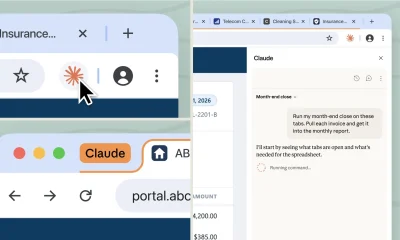
Claude Cowork gets its own browser that doesn’t touch your tabs, bookmarks, or saved passwords
-

 Crypto World6 days ago
Truflation calls for Fed rate cut after PCE forecast
-

 Crypto World7 days ago
GENIUS Act missed its deadline as OCC writes rules anyway
-

 Tech5 days ago
PaperCut releases second emergency patch for exploited flaws
-

 News Videos3 days ago
Charlie Munger on Robinhood: No one should believe that Robinhood’s trades are free
-

 Tech7 days ago
Apple’s iPhone 18 Pro event is on September 9
-

 Tech6 days ago
The fix for the AI agent that hijacked a company’s DNS: it can propose the change, but it can’t approve it
-

 Tech4 days ago
As the influencer economy drives retail sales, Seattle startup raises $22M to play matchmaker
You must be logged in to post a comment Login