


Prime Minister ‘acutely conscious of how hard the operating environment is for businesses, big and small’

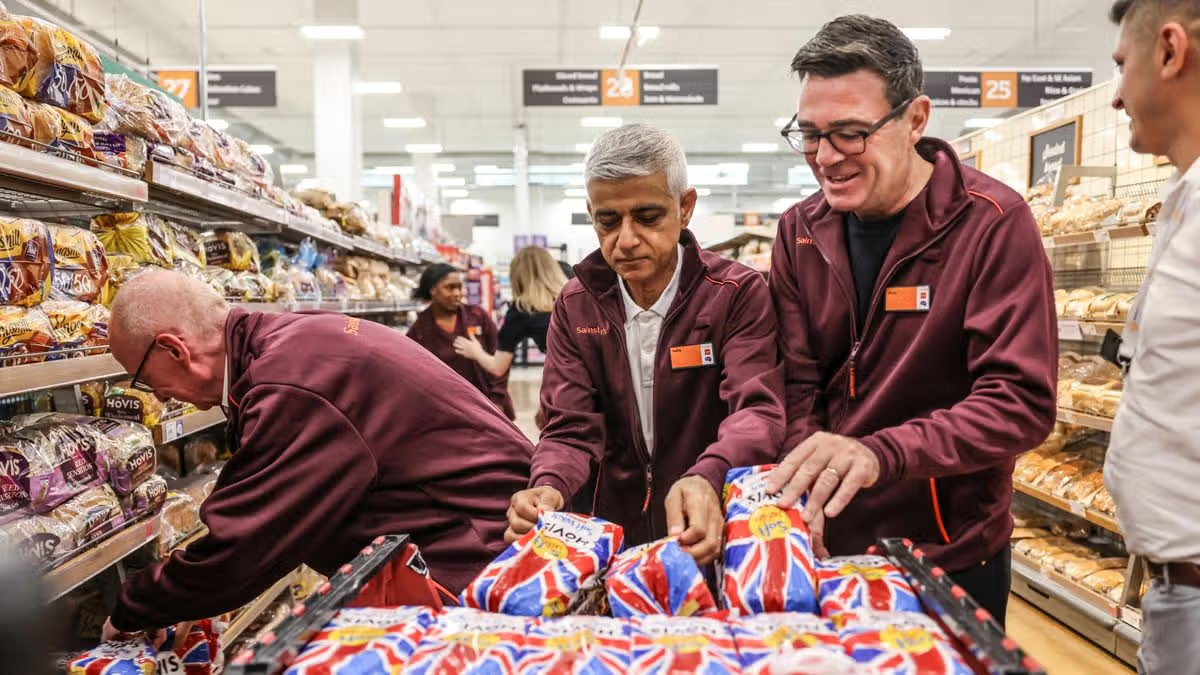
Prime Minister Andy Burnham helps to stack loaves of bread onto a shelf with the help of Mayor of London, Sadiq Khan and Pat McFadden, Secretary of State for Work and Pensions during a visit to a Sainsbury’s store in Nine Elms, London(Image: Getty Images)
Andy Burnham has vowed to help address the “cost of business” as he seeks to allay concerns that the private sector faces another punishing tax raid at the Budget.
Burnham said he wants to “make life easier” for people and businesses as he prepares for his first Budget as Prime Minister.
In an interview on Wednesday, the PM said the fiscal challenges confronting the government were “challenging” but he was taking steps to relieve the burden on both households and the private sector.
“I’m not coming into this role thinking how do we make life harder? I’m trying to make life easier for people. How do I take pressure off? How do I meaningfully deal with the cost of living and the cost of business? ,” he told the Financial Times.
The Budget on October 28 was the “earliest date we realistically could have done”, according to Burnham, as reported by City AM.
He also sought to calm anxieties among investors and business owners that a raft of tax increases were on the cards at the Budget. The Prime Minister said he was “acutely conscious of how hard the operating environment is for businesses, big and small”.
“People shouldn’t read into me giving that answer that all kinds of things are coming,” he added. His remarks highlight mounting apprehension from the private sector that the government might once more rely on business to generate revenue at the Budget.
Analysis by the British Chambers of Commerce, amongst the nation’s largest industry bodies, indicates that government policies over the past decade have driven up business costs by approximately 70 per cent.
The Prime Minister also appeared to indicate that a trade summit with the European Union was due to occur in November, having initially been scheduled for July before Sir Keir Starmer resigned and departed Number 10.
He mirrored his predecessor in suggesting that enhancing trade with the economic bloc would “add percentage points” to the UK growth rate.
Starmer previously maintained that strengthening trade with the EU would be fundamental to delivering growth.
Burnham’s stance suggests that the UK may yet proceed in reducing trade barriers across various industries. In its 2024 election manifesto, Labour stated the UK would not pursue re-joining the customs union or single market and described such a move as amongst its “red lines”.
Burnham said relations with the EU were a matter that “we cannot ignore”.
The new Prime Minister also told the Financial Times that his emphasis on advancing “public control” over utilities such as water and energy were partly a means to demonstrate he did not “necessarily” support full nationalisation. “It’s about making the basics function properly and function properly for business, so you create the most benign investment environment for companies,” he said.
The remarks come less than a week before Parliament reconvenes, setting the government on course for a two-month countdown to the Budget.
Several City economists have put the size of the fiscal headroom at around £15bn, owing to the impact of rising energy prices. However, left-leaning think tank the Resolution Foundation places that figure closer to £8bn.
Soaring energy costs have amplified pressure from North Sea energy firms to be granted permits to drill for additional oil and gas. Rulings on new licences at the Jackdaw and Rosebank oil and gas fields are anticipated within days.
Burnham also expressed support for remarks made by Labour donor Dale Vince, the green-energy magnate who has long been a vocal critic of fossil fuel consumption, indicating that drilling in the North Sea could “make sense” if further price controls were to be introduced.
















































You must be logged in to post a comment Login