
Business
Blackstone-backed Epsilon Bidco may sell 26% stake in EPL in Rs 1,985-crore block deal


The block deal has been launched at an offer price of Rs 235 per share, representing a discount of up to 10.3% to EPL’s prevailing market price. At the offer price, the proposed sale of 8.45 crore shares would fetch approximately Rs 1,985 crore.
EPL shares settled at Rs 262.06 apiece on the NSE on Monday, rising 4.02% from the previous close of Rs 251.94. At Monday’s closing price, Epsilon Bidco’s stake in the company was worth roughly Rs 2,214 crore.

The proposed transaction comes less than a month after EPL reported a strong operating performance for the first quarter of FY27.
On August 12, EPL said it recorded its highest-ever top-line growth of 25.3% in Q1FY27, despite significant external challenges and continued volatility in global markets. The company said this marked its fifth consecutive quarter of double-digit revenue growth.
Growth was broad-based, with Beauty & Cosmetics and Oral Care growing more than 20%, while all regions recorded double-digit growth. On an underlying basis, excluding the pass-through impact of higher raw-material prices, revenue growth stood at 20%.
EPL’s EBITDA rose 15.2% year-on-year, marking the company’s 15th consecutive quarter of double-digit EBITDA growth. EBITDA margin stood at 18.8%, while the underlying EBITDA margin was 19.6%.
The company said it was able to pass on the entire increase in costs through pricing across regions.
EPL’s profit after tax declined 1.4% year-on-year in Q1FY27, but the company said PAT was in line with estimates and remained on track for double-digit growth for the full financial year. Profit before tax increased 10% year-on-year.
EPL attributed the difference primarily to the lower effective tax rate in the corresponding quarter of the previous year, which it expects to normalise over the full year.
About EPL
EPL Ltd is a speciality packaging company headquartered in Mumbai and listed on the BSE and NSE. The company has a presence across all five continents, with 21 facilities across 11 countries and a workforce of more than 6,000 employees representing 23 nationalities. Its portfolio includes laminates, laminated tubes, extruded tubes, caps, closures and dispensing systems.
(Disclaimer: Recommendations, suggestions, views and opinions given by the experts are their own. These do not represent the views of Economic Times)


FTC reportedly suing Amazon over ad practices, shares fall

There’s a new frontier in job interviews and it goes something like this: Remove your Zoom background and pan your camera around the room. Now, could you please wave your hand in front of your face?
The ubiquity of AI-assisted answering—not to mention the risk of hiring candidates who might be lying about where they live, or even working for North Korea—has companies upping their screening tactics. They want to ensure the people they’re hiring really know what they’re talking about and are who they say they are.
Copyright ©2026 Dow Jones & Company, Inc. All Rights Reserved. 87990cbe856818d5eddac44c7b1cdeb8

Nomura Value Fund Q2 2026 Portfolio Activity
Business
Microsoft Azure Down? Outage Reports Surge, Capping a Fourth Microsoft Service Disruption This Monday Alone
Users of Microsoft’s cloud computing platform Azure began reporting access problems starting at approximately 12:45 p.m. Eastern time Monday, according to outage-tracking service Downdetector, marking the fourth Microsoft product to draw user complaints within roughly two hours on the same day.
Downdetector posted on X shortly after the reports began surfacing. “User reports indicate problems with Microsoft Azure since 12:45 PM EDT,” the account wrote, asking affected users to describe how the disruption was impacting them under the hashtag #MicrosoftAzureDown. The Azure reports followed earlier Monday complaints involving Microsoft Outlook, which began drawing attention around 11:53 a.m. Eastern time, and Microsoft Store, which saw a similar spike in user reports beginning at 12:17 p.m., raising the possibility that Monday’s cluster of disruptions across multiple Microsoft products traced back to a shared underlying cause within the company’s infrastructure.
Azure serves as the backbone of much of Microsoft’s broader product ecosystem, hosting the cloud infrastructure that supports services including Microsoft 365, Outlook, Xbox Live and countless third-party applications and websites built on top of Microsoft’s cloud platform. That interconnected architecture means disruptions originating within Azure’s core systems can cascade outward, producing what appear to be simultaneous, seemingly unrelated outages across multiple consumer-facing products at once.
Separate monitoring services offered a mixed picture of Azure’s status heading into Monday afternoon. Outage tracker 503Radar reported that Azure was operating normally as of 11:39 a.m. UTC Monday, before the reported issues began, and noted that the platform’s most recent confirmed outage had occurred Aug. 28, when a multiple-service disruption affecting West U.S. regions took roughly 23 hours to resolve. StatusGator, meanwhile, reported that a related product, Azure DevOps, was experiencing a partial outage as of Monday afternoon, with confirmed issues affecting pipeline services in Canada and artifact services in the United States, even as other Azure DevOps components remained listed as operational. StatusGator separately logged 14 user-submitted outage reports for the core Azure platform over the preceding 24-hour period as of an earlier Monday morning check.
Microsoft’s Azure platform has experienced a series of shorter regional disruptions in recent weeks, according to 503Radar’s incident tracking, including an issue affecting Southeast Asia on Aug. 25 that took nearly 13 hours to resolve, and a separate Azure Portal access problem affecting Australian regions on Aug. 14 that lasted more than 12 hours. Those incidents, along with the more recent Aug. 27-28 disruption in West U.S. regions, suggest Azure has faced a more active-than-usual stretch of regional service issues heading into Monday’s reported problems.
Microsoft maintains an official Azure status page, accessible at azure.status.microsoft, which the company updates in real time to reflect the health of its cloud services and to publish post-incident reviews following major outages with broad customer impact. According to Microsoft’s own documentation on the Azure Service Health system, the company distinguishes between incidents severe enough to prevent customers from accessing the status page directly, in which case Microsoft attempts direct customer communication, and broader service issues affecting undetermined numbers of customers or regions, which the company addresses through public status updates rather than individually targeted outreach.
As of Monday afternoon, Microsoft had not issued a public statement specifically linking the day’s reported issues across Outlook, Microsoft Store and Azure to a single root cause, and the company’s official status channels had not confirmed a major, broad-impact incident matching the scale suggested by the clustered Downdetector reports. Outage-tracking methodologies used by services like Downdetector rely on crowdsourced user complaints and automated web traffic monitoring rather than direct visibility into Microsoft’s internal systems, meaning reported spikes in activity do not necessarily confirm a company-wide failure, even when they cluster closely together in time.
Microsoft did not immediately respond to requests for comment regarding the reported Azure disruption or whether it was connected to the earlier Outlook and Microsoft Store outage reports logged earlier the same day. Affected users have been encouraged to monitor Microsoft’s official Azure status page directly for the most authoritative and up-to-date information regarding the platform’s operational status.

A family battle over a billionaire’s fortune, from boats and a jet to Dallas Cowboys tickets, is rankling the board of a small regional bank in
Texas banking veteran Gerald J. Ford is ensnarled in a legal fight with some of his adult children over a large stake in Hilltop Holdings , the $2.2 billion financial-services holding company he forged. Four of Ford’s children—including son Jeremy, who took over as chair from Ford in 2025—are suing to wrest away control of their father’s more-than-26% stake in Hilltop, worth some $600 million.
Copyright ©2026 Dow Jones & Company, Inc. All Rights Reserved. 87990cbe856818d5eddac44c7b1cdeb8
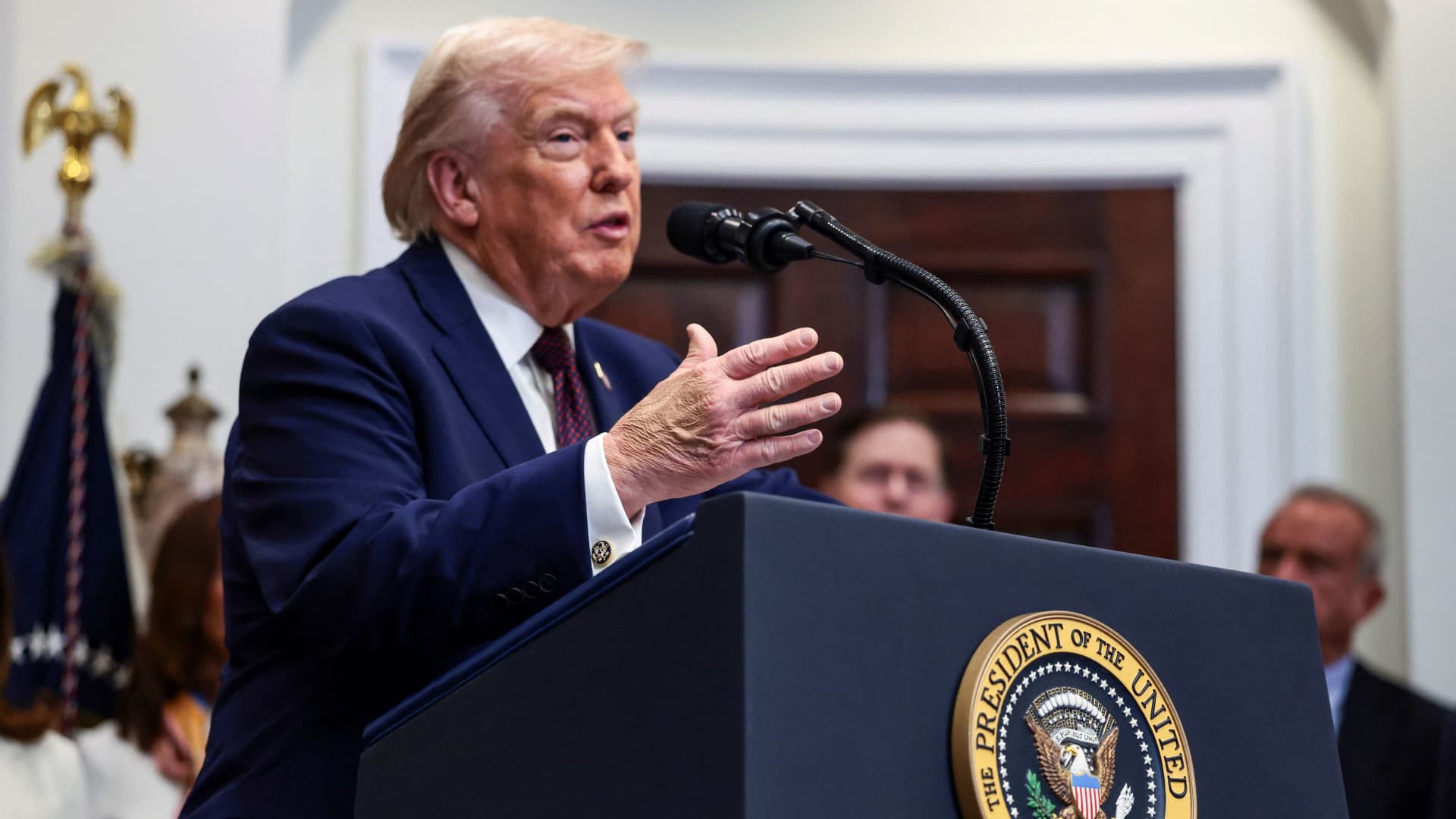
U.S. President Donald Trump makes an announcement about lowering the cost of drug prices, at the Roosevelt Room of the White House in Washington, D.C., U.S., Dec. 19, 2025.
Evelyn Hockstein | Reuters
Nearly a dozen drugmakers are slated to ink deals with President Donald Trump on Monday to voluntarily sell their medications for less, MS NOW reported, building on his push to link the nation’s drug prices to cheaper ones abroad.
It is unclear which companies will be included, according to the MS NOW report. Trump is scheduled to make an announcement on healthcare affordability at 3:00 p.m. ET on Monday.
Over the past year, the Trump administration has reached drug pricing deals with 17 pharmaceutical companies, including Pfizer, Eli Lilly and Novo Nordisk, as part of its “most favored nation” policy. Trump signed an executive order in May 2025 to revive that policy, calling for prices to be increased outside of the U.S. and to “end global freeloading.”
The reported deals would add to the White House’s efforts to spotlight healthcare affordability ahead of the midterm elections.
Bloomberg reported last week that the drugmakers on Monday are expected to agree to provide discounts on outpatient drugs to state Medicaid programs so that prices states pay align with what companies charge in foreign countries. Participation by state Medicaid programs is optional.
In exchange, those companies will be exempt from pilot programs mandating similar discounts in Medicare, Bloomberg reported.
Medicaid already receives steep discounts from companies under federal law, so it’s unclear how the new deals will impact what patients pay out of pocket.
The “most favored nation” deals that have been signed with the Trump administration have already impacted the commercial strategies, bottom lines and manufacturing pipelines of major pharmaceutical companies.
To insulate themselves from future tariff threats, drugmakers are spending billions of dollars to bring manufacturing capabilities back to the U.S. Companies are also drastically expanding direct-to-consumer channels for their products, including by offering their medicines on the president’s TrumpRx portal. Lower prices in the U.S. are weighing on bottom lines, with manufacturers like Novo Nordisk saying that it will take time for prescription volumes to offset the revenue dip.
U.S. prescription drug prices on average are nearly three times higher than they are overseas, according to a 2024 study by Rand Corp. Prices for branded drugs were more than four times higher, the report found.
The trade association PhRMA, which represents many major pharma companies, has previously said that most-favored nation pricing isn’t the best way to lower drug costs for Americans and instead blamed pharmacy benefit managers for the price disparity.
The U.S. is the single most important market for many drugmakers, regardless of their home country. Despite being based across the Atlantic, European pharma companies are heavily exposed to the U.S. market, with half of the 10 largest companies on the continent generating a majority of their sales in the U.S.
Business
Elon Musk Backs Coinbase CEO Brian Armstrongs Claim That Charity Is Often a Net Negative for the World
Coinbase Chief Executive Officer Brian Armstrong sparked debate over the value of philanthropy this week after describing charity and philanthropic foundations as often a “net negative” for the world, comments that drew agreement from Elon Musk and criticism from others online.
Armstrong made the remarks during an appearance on “The Katie Miller Podcast,” hosted by Katie Miller, a former adviser to Musk’s Department of Government Efficiency initiative who launched the show earlier this year. “The common view is that philanthropy is a noble cause,” Armstrong said, according to a clip shared by Miller on X on Aug. 26. “And like, Bill Gates after the DOJ thing is like, ‘I’m going to go rehabilitate my image, I’m going to do philanthropy.’”
Armstrong went on to lay out a broader critique of institutional charitable giving. “I guess I have sort of a contrarian view where a lot of charities and philanthropies are actually net negative on the world. And they get captured. It’s actually remarkably hard to find a foundation that has not gotten captured by ideology,” Armstrong said, according to reporting from Yahoo Finance. “I think a lot of people, by trying to do something good, like criminal justice reform, it turns out they just increased crime. All these unintended consequences happen.” Armstrong did not cite specific data supporting the criminal justice reform claim during the segment, according to Yahoo Finance’s coverage of the interview.
As an example of what he views as institutional drift within philanthropy, Armstrong pointed to the Ford Foundation. “If you look at the Ford Foundation, I think Henry Ford would be turning over in his grave if he knew what they were up to,” he said. Armstrong also said that financial advisers had previously encouraged him to establish his own charitable foundation for tax purposes after Coinbase went public, but that he declined out of concern the organization could eventually be steered away from his original intentions. “So far, I’ve just been like ‘I’m not going to do that.’ My fear is that it just gets captured by some ideology and I lose control over it,” Armstrong said.
Instead of a traditional foundation, Armstrong said he directs his charitable giving through a donor-advised fund, a vehicle that places donated assets under the legal control of a sponsoring nonprofit organization while allowing the original donor to recommend how the funds are invested and eventually distributed, according to the Internal Revenue Service’s description of the structure. Armstrong said he uses the fund to support projects he believes are “helping civilization advance.”
Armstrong’s comments mark a notable shift from his public stance nearly a decade ago. In 2018, he became the first cryptocurrency billionaire to sign the Giving Pledge, the public commitment organized by Warren Buffett and Bill Gates in which wealthy individuals promise to donate at least half of their fortunes to charitable causes during their lifetimes or through their estates. At the time, Armstrong argued that once personal wealth reaches a certain threshold, there is limited value in spending additional money on personal consumption. He later shut down his crypto-focused nonprofit, GiveCrypto, in 2023, and quietly withdrew from the Giving Pledge altogether in 2024, a decision his recent podcast remarks appear to help explain.
As video of the interview circulated online, Musk responded directly on X. “He’s right,” Musk wrote, endorsing Armstrong’s characterization of institutional philanthropy. The comment aligns with previous remarks Musk has made regarding his own approach to charitable giving. Musk signed the Giving Pledge in 2012, though his actual philanthropic contributions have remained relatively modest compared with his overall net worth, with a 5.7 billion dollar donation of Tesla shares to his foundation standing as his largest single charitable contribution to date.
Musk’s skepticism toward large-scale institutional philanthropy has been documented previously. Billionaire investor Peter Thiel said in 2025 that he had urged Musk to withdraw from the Giving Pledge, warning that Musk’s wealth would otherwise end up “to left-wing nonprofits that will be chosen by Bill Gates.” According to Thiel’s account, Musk responded, “What am I supposed to do—give it to my children? You know, it would be much worse to give it to Bill Gates.”
Armstrong’s remarks have not gone unchallenged. Critics online noted that Armstrong has previously banned political activism within Coinbase’s own workplace even as the company and Armstrong personally have contributed financially to political candidates, including President Donald Trump, framing that combination as inconsistent with his stated concerns about ideological capture within philanthropic institutions. Neither Armstrong nor Musk has issued further public comment beyond their respective remarks since the clip began circulating widely online.

Social campaigns rarely fall apart because of one big mistake. It is usually smaller things piling up. A caption gets changed after approval. A designer uses an old product image. A creator sends content late. Someone asks for numbers before anyone has checked the live posts.
That is when a normal campaign starts to feel heavy. A good workflow does not make the work boring. It just gives every moving part a place, so the team can stay calm when the pressure builds.
Start With The Whole Campaign, Not One Post
A lot of social work starts too small. Someone opens the calendar and starts filling boxes. Monday needs a Reel. Wednesday needs a carousel. Friday needs a LinkedIn post.
A better start is a simple campaign map. What is being launched? Who needs to care? What dates matter? Which channels are doing the hard work? What should people do after seeing the content?
For a product launch, one channel might show the product in use. Another might explain the problem. Another might carry creator content. Another might handle questions after launch.
This is also the right time to plan creator work. If a team is using an influencer marketing platform to find creators, send products, track posts, or manage results, that work should sit inside the main campaign plan. It should not sit in a separate folder that only one person understands.
Creator planning should also include the basics, such as timelines, product details, approval steps, and creator disclosure rules, so paid posts are not handled at the last minute.
Give Each Task A Clear Owner
Campaigns get messy when tasks have no real owner. Everyone knows a post needs approval, but nobody knows who is chasing it. Everyone knows a creator asset is missing, but no one is sure who followed up.
That is how small delays turn into late nights.
Each task needs one person who owns the next step. They may not write, design, approve, and publish everything. But they know where the task stands and what has to happen next.
That lines up with project management advice around, where teams need to know who is responsible for what before work starts moving in different directions.
For each campaign, it helps to know:
- Who writes the first draft
- Who creates or edits the asset
- Who checks the brand details
- Who gives final approval
- Who schedules the post
- Who watches replies after it goes live
This does not need to be complicated. Even a simple owner column in a content calendar can stop a lot of chasing.
Add Approval Time Before It Hurts
Approval time is one of the easiest things to underestimate. A manager says they will check the post later. A client asks for one small change. Legal wants a softer line. Then the post that was “almost ready” is suddenly late.
The fix is not to rush everyone. The fix is to plan for review time from the start.
If a post is going live on Friday, the first draft should not arrive on Thursday night. Give space for changes. Give space for people to miss a message. Give space for someone to spot a wrong date, price, code, or product claim.
This matters even more when a campaign has several parts. One late approval can affect paid posts, Stories, creator content, email, and reporting. A clear review window makes the whole campaign less fragile.
Keep Files Where People Can Find Them
Nothing wastes time like hunting for the right asset. The approved video is in a Slack thread. The final logo is in the email. The product shot is in a folder called “new stuff.” Someone used the wrong image because it was the only one they could find.
Every campaign needs one clear place for files.
That place should hold the final visuals, raw creator content, captions, links, discount codes, UTM links, product notes, and any brand rules. The team should not need to ask, “Where is the latest version?” every time something changes.
When files are easy to find, the team has fewer chances to make tired mistakes.
Plan For Comments Before They Arrive
Many teams plan the content and forget the inbox. But once the posts go live, people may ask about price, shipping, sizing, stock, refunds, ingredients, features, or delivery dates.
If nobody knows who should answer, the campaign loses energy.
Before launch, decide what the social team can answer and what needs support, sales, or a manager. Also, decide which comments should be ignored, hidden, or flagged.
This is very important for creator campaigns. A creator may bring people who have never heard of the brand before. Their questions may be basic, but they are still buying signals.
Fast replies can keep that interest warm. Slow replies can make the campaign feel unattended.
Watch Results While The Campaign Is Live
A campaign report is useful after everything ends, but live signals matter too. They can show what to fix while there is still time.
If one Reel is getting saves, the team can turn the same idea into another format. If people keep asking the same question, the next post can answer it. If a creator post gets clicks but no sales, the landing page or offer may need a closer look.
The team does not need to panic over every number. Some posts need time. But it helps to check the right signs while the campaign is still moving.
Useful signs can include clicks, saves, replies, watch time, comments, shares, and sales. The comments are often the most useful part. They show the words people use, and those words can shape the next post.
Make The Next Campaign Easier To Run
A campaign should not disappear the moment the last post goes live. Before the team moves on, it is worth saving what the rush made easy to miss. Which posts carried the message best? Where did approvals slow down? Which comments showed real interest? Which files, links, or handoffs caused problems?
Those notes do not need to be long. They just need to help the next campaign avoid the same mess. A strong workflow is not about adding more process. It is about giving good ideas a better chance when the pressure starts again.

GRT has signed an agreement with the promoters of TBZ, popularly known as TBZ The Original, to acquire 49.46 million shares, representing their entire 74.12% stake in the company.
The shares will be bought at a price of up to Rs 209 each, subject to regulatory approvals and other conditions. The final price could be revised downwards following an audit but cannot be increased.
Following the acquisition, GRT will make a mandatory open offer to TBZ’s public shareholders, as required under India’s takeover regulations. If the transaction is completed, GRT will acquire sole control of TBZ and the existing promoter family will exit the company.
The deal will significantly expand GRT’s national presence by adding TBZ’s network of 37 stores to its existing 68 stores in India and one in Singapore.
TBZ, founded in 1864, is one of India’s oldest jewellery brands. GRT was founded in 1964 and has grown into one of the country’s larger jewellery chains.
GRT Managing Director G.R. Ananth Ananthapadmanabhan said the acquisition fitted into the company’s strategy of expanding its presence across India.”This very well fits into our strategy of spreading our presence across India,” Ananthapadmanabhan said, referring to TBZ’s 37-store network.
G.R. Radhakrishnan, managing director of GRT Jewellers, called the acquisition transformative and said it would help the company build a meaningful presence across India.
The companies said the combination would bring together TBZ’s long-established brand, customer relationships and jewellery portfolio with GRT’s retail capabilities and expansion plans.
TBZ Chairman and Managing Director Shrikant Zaveri said the deal marked a new chapter for the 162-year-old brand, which began with a single store in Mumbai’s Zaveri Bazaar.
After the transaction is completed, GRT will have the right to appoint directors to TBZ’s board. Shrikant Zaveri and TBZ directors Binaisha Zaveri and Raashi Zaveri will resign from the board. Some of the existing promoters may subsequently enter into employment or consultancy arrangements with the company to help with the transition.
The transaction is subject to regulatory approvals and other closing conditions.
Deloitte advised on the transaction, while Axis Capital was GRT’s financial adviser. Trilegal advised GRT on legal matters, while AZB & Partners was legal adviser to TBZ.

Medical Properties Trust stock hits 52-week low at 3.96 USD

What would it take to bring Hyperliquid to the US? Former SEC counsel explains

EFL blasts Uefa after being forced to reschedule Carabao Cup fixtures

UNLIMITED Copy and Paste MONEY Tutorial (Zach King)





-

 Crypto World6 days ago
SpaceX stock could rise 75% to $240, JPMorgan says
-

 Fashion3 days ago
Weekend Open Thread: Maeve – Corporette.com
-

 Crypto World4 days ago
Bitcoin’s 22% rally now needs real demand to outlast Treasury liquidity boost
-

 Crypto World5 days ago
Warsh Jackson Hole keynote puts financial innovation first
-

 Crypto World7 days ago
A $30 Billion AI Fund Implodes, Now the SEC Is Investigating Wall Street’s Role
-

 Business4 days ago
Salesforce Stock Soars 19% as Blowout Earnings and Agentforce AI Growth Silence Software Skeptics
-

 Crypto World6 days ago
Did Trump Just Move SpaceX Stock With One Truth Social Post?
-

 Crypto World5 days ago
Elon Musk Grok Bot Promise: We Will Make You Whole if AI Loses Your Money
-

 Business4 days ago
Apple Confirms September 9 Keynote and Reveals Its Full Pre-Order Schedule
-
 NewsBeat5 days ago
Lindsay Clancy jury braces for closing arguments as judge tells court: ‘You’ve heard all the evidence’ – Live updates
-

 Business5 days ago
Walmart takes aim at younger shoppers with new fashion brand
-

 Business3 days ago
Onto Innovation Stock: AI’s Next Bottleneck Is Yield (NYSE:ONTO)
-

 Crypto World3 days ago
Bitcoin price tests $82K resistance as Brandt stays long
-

 Business6 days ago
Thailand’s Eastern Economic Corridor Capital City (EECiti): Key Developments and Investment Opportunities
-

 Crypto World5 days ago
NVIDIA revenue hits $96.2B as AI demand doubles
-

 Business7 days ago
NVIDIA Stock Drops Nearly 2 Percent to $210 on Seventh Losing Day Ahead of Critical AI Earnings
-

 Business3 days ago
iPhone 18 Pro Pre-Orders Could Shift to Saturday as Apple Reportedly Avoids September 11 Anniversary
-

 NewsBeat6 days ago
Trump’s trade truce with China faces test with Iran effort
-

 Crypto World5 days ago
Nvidia Q2 Earnings Reveal $96.2 Billion Beat, So Why Is NVDA Falling?
-
 Tech5 days ago
Claude Cowork gets its own browser that doesn’t touch your tabs, bookmarks, or saved passwords
You must be logged in to post a comment Login