Connect with us

Business

British American Tobacco p.l.c. 2026 Q2 – Results – Earnings Call Presentation (NYSE:BTI) 2026-07-30

Published

on

OneWater Marine Inc. (ONEW) Q1 2026 Earnings Call Transcript

This article was written by

Seeking Alpha’s transcripts team is responsible for the development of all of our transcript-related projects. We currently publish thousands of quarterly earnings calls per quarter on our site and are continuing to grow and expand our coverage. The purpose of this profile is to allow us to share with our readers new transcript-related developments. Thanks, SA Transcripts Team

Continue Reading
Click to comment

You must be logged in to post a comment Login

Leave a Reply

Business

Law firm Hay & Kilner expands in the region and says it is recruiting

Published

on

Business Live

The Newcastle firm is celebrating its 80th year

Hay & Kilner has opened a new office in Stockton-on-Tees.

Jonathan Waters is managing partner at Hay & Kilner.(Image: Hay & Kilner)

Longstanding Newcastle law firm Hay & Kilner has expanded in the region with the opening of a new office. The full service firm says the launch of its Stockton-on-Tees base will help it better service a significant and longstanding client base across South Durham, Tees Valley and North Yorkshire.

The new office is at Preston Farm. Recruitment there is said to be well under way, with roles available across a number of practice areas.

Partners also hope the move will create opportunities for further regional growth. It is Hay & Kilner’s 80th year in business with ambitions to increase turnover by 50% over the next five years through continued investment in its people, sector expertise and regional presence.

Latest available accounts for the firm – covering the year to the end of March 2025 – show turnover of more than £10m and operating profit of more than £3.2m. Profit before members’ remuneration and profit shares was more than £3.3m.

Advertisement

Jonathan Waters, managing partner at Hay & Kilner, said: “The opening of our Stockton office is an important step in our long-term growth strategy. We already work with a substantial number of businesses and individuals across Tees Valley, South Durham and North Yorkshire, and having a dedicated base there will allow us to support them even more effectively while strengthening our presence in the region.

“We’re incredibly proud to be celebrating our 80th year in the North East at a time of real momentum for the firm. The continued investment we’re making in our people, our clients and our regional footprint reflects our confidence in the future.”

Hay & Kilner says the expansion on to Teesside follows two consecutive years of strong financial growth and continued investment in the firm, including the recruitment of more than 40 new colleagues across legal and business support roles. The firm now more than 130 people, with recent appointments including experienced solicitors, trainees and specialists in compliance, marketing and finance, providing a strong platform for its next phase of expansion.

Mr Waters added: “Our heritage gives us credibility and deep roots in the North East, but our mindset is firmly future-focused. We are investing, we are recruiting and we are expanding. The next five years will be about disciplined, sustainable growth, strengthening our presence across the region, attracting exceptional talent and continuing to deliver outstanding service to our clients.”

Advertisement
Continue Reading

Business

US economic growth slows to 1.5% in second quarter

Published

on

Woman shopping at Macys

Growth in the US slowed in the three months to June, according to official figures.

The Commerce Department said the US economy grew at an annual rate of 1.5% in the second quarter, down from 2.1% seen in the first three months of the year.

It comes as the world’s largest economy continues to weather the financial impact of the war with Iran and US businesses navigate tariffs.

The growth figure was lower than analysts had estimated, with the downturn due to lower government spending, investment and exports. However, the economy received a boost from an increase in consumer spending.

Advertisement

The latest growth figures come after the Federal Reserve decided to hold interest rates for a fifth time in a row in Wednesday, with new chairman Kevin Warsh warning there was no “magic wand” to tackle rising prices.

Prices in the US have been rising at a rate above the Fed’s 2% target for more than five years, but the Commerce Department said consumer spending remained resilient.

The Fed said US economic activity was expanding at a “solid pace despite uncertainty caused by the conflict in the Middle East”.

The main economic concern from the conflict has been rising oil prices, which had surged again following recent escalations.

Advertisement

Brent crude, the global benchmark for oil prices, was about $90 a barrel on Thursday. Higher oil prices typically lead to increased prices at the pumps, with average gasoline prices now back above $4 a gallon.

Continue Reading

Business

Form 4 Eagle Nuclear Energy Corp For: 30 July

Published

on


Form 4 Eagle Nuclear Energy Corp For: 30 July

Continue Reading

Business

Mondelez CEO spotlights ‘strong North America performance’

Published

on

Mondelez CEO spotlights ‘strong North America performance’

Second-quarter results lift full-year sales guidance.

Continue Reading

Business

Ferrari (RACE) earnings Q2 2026

Published

on

Ferrari (RACE) earnings Q2 2026

Ferrari SF90 XX Spider limited edition plug in hybrid supercar parked on the pavement as a red Ferrari passes on Bond Street on 4th January 2026 in London, United Kingdom.

Mike Kemp | In Pictures | Getty Images

Ferrari is bumping up its 2026 guidance after beating Wall Street’s second-quarter expectations amid healthy demand for the famed Italian sports car brand’s products.

Advertisement

Here’s how the company performed in the second quarter compared with average estimates compiled by LSEG:

  • Earnings per share: 2.62 euros ($2.97) adjusted vs. 2.50 euros expected
  • Revenue: 1.94 billion euros vs. 1.88 billion euros expected

The automaker’s new 2026 guidance includes revenue of roughly 7.6 billion euros, up from 7.5 billion euros; adjusted earnings of at least 2.97 billion euros, or 9.68 euros adjusted EPS, up from 2.93 billion euros, or 9.45 euros adjusted EPS; as well as slight increases to its industrial free cash flow and adjusted earnings and operating profit.

Ferrari CEO Benedetto Vigna attributed the company’s second-quarter results and guidance increase to a “sustained trend in personalizations” as well as resilient demand for its vehicles, with its order book full through 2027.

RBC Capital Markets analyst Tom Narayan noted that the timing of the guidance raise is important for investors: “Ferrari rarely raises its guide in Q2, favoring instead to do so in Q3, and as such we view this a positive indicator for the remainder of the year and would expect shares to move higher.”

Shares of the company were up roughly 2% during premarket trading Thursday.

Advertisement

Ferrari’s second-quarter results included an operating profit of 605 million euros, or 31.2% margin, and a net profit of 463 million euros, up roughly 9% from a year earlier.

This is breaking news. Please check back for additional details.

Choose CNBC as your preferred source on Google and never miss a moment from the most trusted name in business news.
Continue Reading

Business

Finlayson guns for Aussie ‘gold mantle’

Published

on

Finlayson guns for Aussie ‘gold mantle’

Genesis Minerals executive chairman Raleigh Finlayson says his company wants to be the nation’s gold leader, fresh off striking a deal to acquire industry peer Vault Minerals.

Continue Reading

Business

Major US Clinical Trial Finds Silver Liquid Stops Childhood Cavities Without Drilling, Shots or Sedation

Published

on

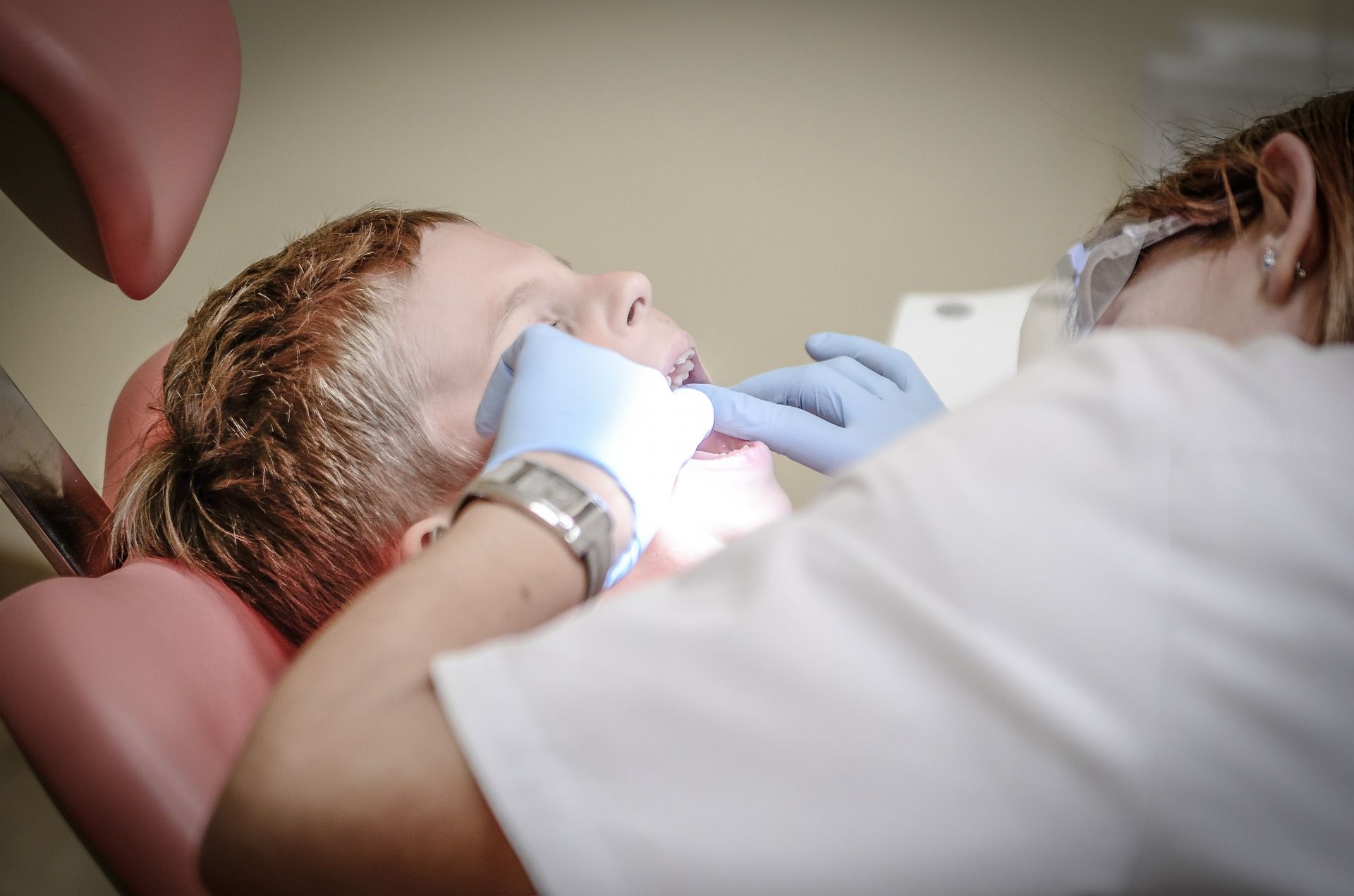
Representation. A dentist.

A large U.S. clinical trial has found that a simple, inexpensive liquid can halt tooth decay in young children without the need for drilling, injections or sedation, offering researchers the kind of rigorous domestic evidence that has been missing for a treatment already used successfully around the world for decades.

The study, led by researchers at the University of Michigan and published in JAMA Pediatrics, examined a treatment called silver diamine fluoride, commonly abbreviated as SDF. Dentists apply the liquid directly to a cavity using a small sponge-tipped applicator, a process that takes only a few seconds per tooth and requires no removal of decayed tooth material, unlike traditional cavity treatment, which typically involves drilling out damaged tissue before placing a filling.

The Phase III trial enrolled 830 children younger than age 6, recruited through dental offices, pediatric medical practices, and Head Start and Early Head Start programs across Michigan, New York and Iowa. Researchers found that applying 38% SDF every six months stopped tooth decay in more than half of the affected baby teeth included in the study.

Margherita Fontana, a professor of dentistry at the University of Michigan School of Dentistry and the study’s lead investigator, described the strength of the results. “This is a very effective and safe treatment — even in children as young as 1,” Fontana said.

Advertisement

Tooth decay remains the most common chronic disease among children in the United States, affecting more than 40% of children nationwide, according to the study. Left untreated, cavities can lead to significant pain, infection, difficulty sleeping or eating, missed school days and repeated medical appointments. Untreated cavities also send thousands of young children to hospital emergency departments across the country each year, though emergency physicians are typically unable to address the underlying dental problem, leaving some children to continue suffering from pain and infection or eventually requiring surgery under general anesthesia to fully resolve the issue.

Although SDF has been used successfully in many other countries for decades, its use in the United States has remained more limited. American dentists have applied it off-label since 2014, when the U.S. Food and Drug Administration first approved the substance as a medical device intended to reduce tooth sensitivity, rather than as an approved treatment for cavities specifically. Until now, researchers had not completed the kind of large-scale U.S. clinical trials needed to formally demonstrate the treatment’s safety and effectiveness against tooth decay, evidence the FDA would require before considering approval of SDF as a drug specifically indicated for treating cavities.

Fontana said the newly published trial results fill that evidentiary gap. “If we want more children and families to benefit from this treatment, we need rigorous evidence showing both that it works and that it’s safe,” Fontana said. “From a public health perspective, if we want broader implementation across the United States, including in medical settings, we need carefully collected data in U.S. populations, and we now have that.”

The treatment does carry one notable visible drawback: the silver in the solution permanently darkens the decayed portion of the treated tooth. Despite that cosmetic tradeoff, researchers said SDF could prove especially valuable for certain groups of patients, including very young children, older adults, people with developmental or physical disabilities, and patients who experience severe dental anxiety. The treatment may also benefit people with limited access to conventional dental care or those who cannot easily tolerate standard drilling-based procedures.

Advertisement

Fontana noted that the treatment’s simplicity could allow it to be used earlier in a child’s life than a typical dental visit might otherwise occur. “It is important to have data they can refer to because young children often see pediatricians years before they ever visit a dentist,” Fontana said. “Broader acceptance could allow many more cavities to be treated while a referral to a dental home is successful, and before they become painful, infected, or require surgery.” Fontana added that in medicine, clinicians generally require high-quality evidence of this kind before they are willing to change established clinical practice.

The research, which began in 2018 and continued despite disruptions caused by the COVID-19 pandemic, was conducted in collaboration with researchers from New York University, the University of Iowa and Indiana University, along with the National Institutes of Health’s National Institute of Dental and Craniofacial Research, which provided more than $12 million in funding to support the study. Elevate Oral Care, the manufacturer of the specific SDF product tested in the trial, known commercially as Advantage Arrest 38% SDF, supplied the treatment used throughout the study.

Amr Moursi, a professor of pediatric dentistry at New York University College of Dentistry and a co-principal investigator on the study, said the trial’s findings could support formal regulatory approval of the treatment going forward. “Our results support FDA approval of SDF for managing arrest of tooth decay in young children,” Moursi said. “Removing SDF from off-label status would be an important innovation which could lead to increased utilization by providers, enhanced payments by insurers and more consistent product quality.”

Researchers noted that SDF may function differently depending on the age of the patient and the specific clinical situation. For young children with baby teeth, repeated application of the treatment every few months may be sufficient to control a cavity until the affected tooth eventually falls out naturally as part of normal childhood dental development. In adults, the treatment could instead serve as either a long-term management option or a temporary measure to control decay until a more permanent restorative procedure becomes financially or logistically feasible for the patient.

Advertisement

Fontana summarized the treatment’s broader potential impact on public dental health. “For almost anyone, this can arrest the decay and stop the infection and the pain it causes,” Fontana said. “This could benefit many people.”

The trial’s results now provide the manufacturer with the clinical evidence needed to formally submit a dental caries drug application to the FDA, a step researchers said could ultimately expand access to the treatment well beyond its current off-label use across American dental and medical practices.

Continue Reading

Business

FTSE 100 Climbs to a Fresh Record High as Rolls-Royce and BAE Systems Earnings Beats Lift Shares Higher

Published

on

Tesla's robotaxi launch in Texas comes as Elon Musk focuses on his business ventures following his stint in Washington

London’s benchmark stock index climbed to another all-time high on Thursday, extending a remarkable rally that has left the FTSE 100 among the world’s best-performing major indexes even as chip-heavy markets in the U.S. and Asia continue to churn through volatility tied to artificial intelligence spending concerns.

The FTSE 100 rose 0.44%, adding 48.24 points to trade at 10,956.65 as of early afternoon in London, according to index data. The index touched an intraday high of 10,979.60 during the session, another fresh record, while its low for the day stood at 10,865.37. Thursday’s close compares with Wednesday’s finish of 10,908.41, itself a record at the time, meaning the index has now set new all-time highs in consecutive trading sessions.

Strong corporate earnings drove much of Thursday’s advance, with Rolls-Royce among the standout performers after the aerospace and defense engineering giant lifted its full-year guidance. The company raised its forecast for underlying operating profit to a range of £4.7 billion to £4.9 billion, alongside expected free cash flow of £3.8 billion to £4.0 billion, an upgrade that analysts characterized as reflecting genuine operational improvement rather than simply a broader defensive-sector bounce. The upgrade helped lift the FTSE’s aerospace and defense sector by 3.6% during the session.

BAE Systems also contributed significantly to Thursday’s gains, raising its own full-year profit guidance after reporting stronger first-half results driven by higher defense spending. The company posted a 9% increase in sales to £15.8 billion for the six months through June, with growth recorded across all of its business divisions. Underlying operating profit rose 11% to £1.7 billion, while underlying earnings per share climbed 13% to 38.9 pence. Order intake for the period increased to £16.4 billion from £13.2 billion a year earlier, leaving BAE Systems with a record order backlog of £84 billion.

Advertisement

Thursday’s gains build on a broader rally that has taken hold across the FTSE 100 over the past several trading sessions, driven substantially by strength in the index’s heavyweight energy, banking and mining sectors. Wednesday’s session saw the index touch what was then an all-time intraday high of 10,951.06 points, propelled by a surge in oil and gas stocks after renewed fighting in the Middle East pushed Brent crude prices up nearly 7% in a single session, settling at $90.74 a barrel. Energy stocks jumped 2.9% during Wednesday’s trading as investors weighed the implications of dashed hopes for an imminent resolution to the ongoing conflict between the United States, Israel and Iran.

Analysts have pointed to the FTSE 100’s relatively limited direct exposure to major semiconductor manufacturers and megacap technology companies as a key factor insulating the index from the sharp volatility hitting chip-heavy markets elsewhere in the world this week. That contrast has been especially stark against South Korea’s KOSPI index, which has fallen roughly 20% over the past five trading sessions amid a punishing selloff in memory chip stocks, and against the Nasdaq Composite in the United States, which has declined roughly 10% over the past month as investors reassess the sustainability of artificial intelligence infrastructure spending. XTB market analyst Kathleen Brooks noted that the backdrop heading into Thursday’s session was “one of rising volatility,” particularly for technology-heavy indexes in the U.S. and Asia, a dynamic the FTSE 100 has so far largely avoided given its heavier weighting toward energy, banking and mining stocks rather than technology.

Thursday’s trading session also coincided with the Bank of England’s latest interest rate decision, announced at midday London time. The central bank’s Monetary Policy Committee vote showed a degree of internal division, with policymaker Catherine Mann joining a more hawkish faction within the committee. Peel Hunt economist Kallum Pickering said Mann’s position likely “only matters at the margin,” suggesting it could reflect a more reactive response to recent escalation in the Middle East rather than a fundamental shift in the committee’s broader policy stance. Minutes from the meeting noted that while the committee judged “the risks to the inflation outlook are tilted to the upside relative to the central projection,” policymakers also stressed there “remains scope for the outlook to change materially as events in the Middle East unfold.”

Other notable corporate movers on Thursday included Mondi, the packaging and paper group, which surged on improved trading momentum and lower capital expenditure despite weaker first-half earnings, a pattern some analysts characterized as signaling the company may be emerging from a margin trough. Rentokil Initial moved in the opposite direction, falling after the pest control company reported weakening lead flow in its North American residential business toward the end of the second quarter and withdrew a previously stated 2027 margin target, a move analysts said signaled potential softening in the company’s growth trajectory.

Advertisement

Dividend-focused investors have also taken note of the strength across the FTSE 100 this earnings season. Investment platform AJ Bell has forecast total FTSE 100 dividends of £88.8 billion for the year, alongside declared 2026 share buybacks estimated at £36 billion, according to the firm’s most recent dividend tracking data. AJ Bell investment director Russ Mould said Wednesday’s wave of corporate earnings announcements had helped push the running buyback total toward £40 billion, though both figures remain estimates and running tallies rather than confirmed final outcomes for the year.

With the Bank of England’s decision now delivered and corporate earnings season continuing to unfold across London’s blue-chip companies, investors are likely to remain focused on whether the FTSE 100’s current run of records can be sustained against a backdrop of continued geopolitical uncertainty in the Middle East and ongoing volatility across global technology and semiconductor markets in the sessions ahead.

Continue Reading

Business

Yum Brands (YUM) Q2 2026 earnings

Published

on

Yum Brands (YUM) Q2 2026 earnings

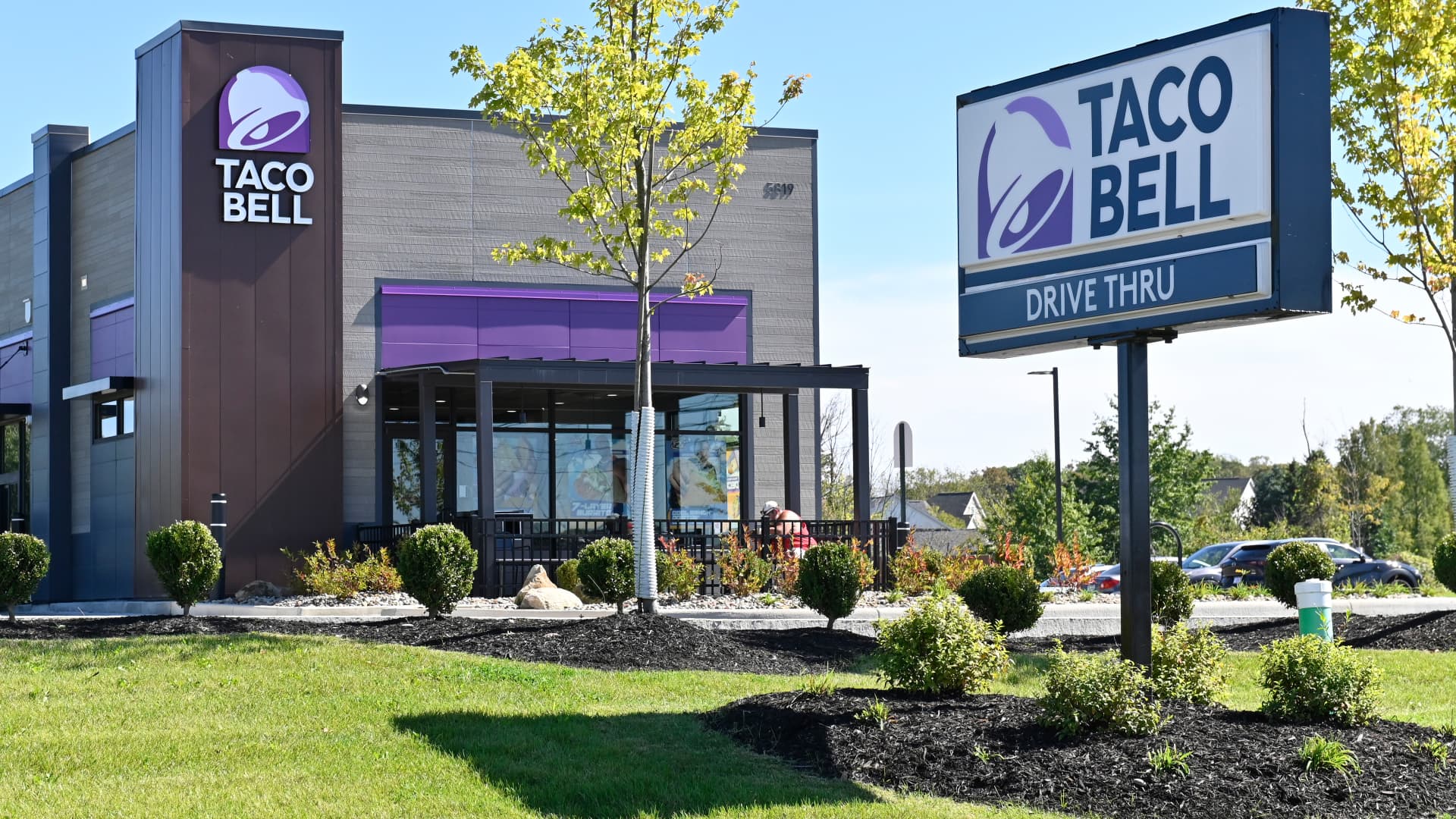
The Taco Bell logo is displayed at a Taco Bell restaurant on July 14, 2026 in Pasadena, California.

Mario Tama | Getty Images

Yum Brands on Thursday reported mixed quarterly results, and said the cyclospora outbreak tied to Taco Bell restaurants damaged sales at the chain in its current quarter.

Advertisement

“The brand has seen a meaningful near-term sales impact ,” CEO Chris Turner said on the company’s earnings conference call, adding that the company expects the downturn to be a temporary problem for Taco Bell.

Since the Food and Drug Administration first linked the parasitic outbreak to iceberg lettuce served by Taco Bell in mid-July, daily traffic to the chain’s locations has plunged by double-digit percentages, according to Placer.ai data. Yum depends on Taco Bell as a “growth engine” for the company, and the crisis puts that title in jeopardy, at least in the near term.

Sales trends have been “steadily improving” over the last 10 days, according to Turner, and brand sentiment on social media has returned to pre-crisis levels.

“Elevated uncertainty initially weighed on consumer demand, and since then, consumers have become increasingly aware that this is an industry-wide issue, not an issue specific to Taco Bell,” Turner said.

Advertisement

Other restaurant chains not implicated in the outbreak have also seen their sales slip. Chipotle Mexican Grill executives said consumers’ mistrust of chains serving fresh lettuce weighed on sales in the second half of July.

The results Yum reported are for its second quarter ended June 30, before it was tied to the foodborne illness outbreak. The restaurant company does not typically provide an outlook for same-store sales growth or earnings per share for the full year or the next quarter.

Yum Brands’ second-quarter results

Choose CNBC as your preferred source on Google and never miss a moment from the most trusted name in business news.
Continue Reading

Business

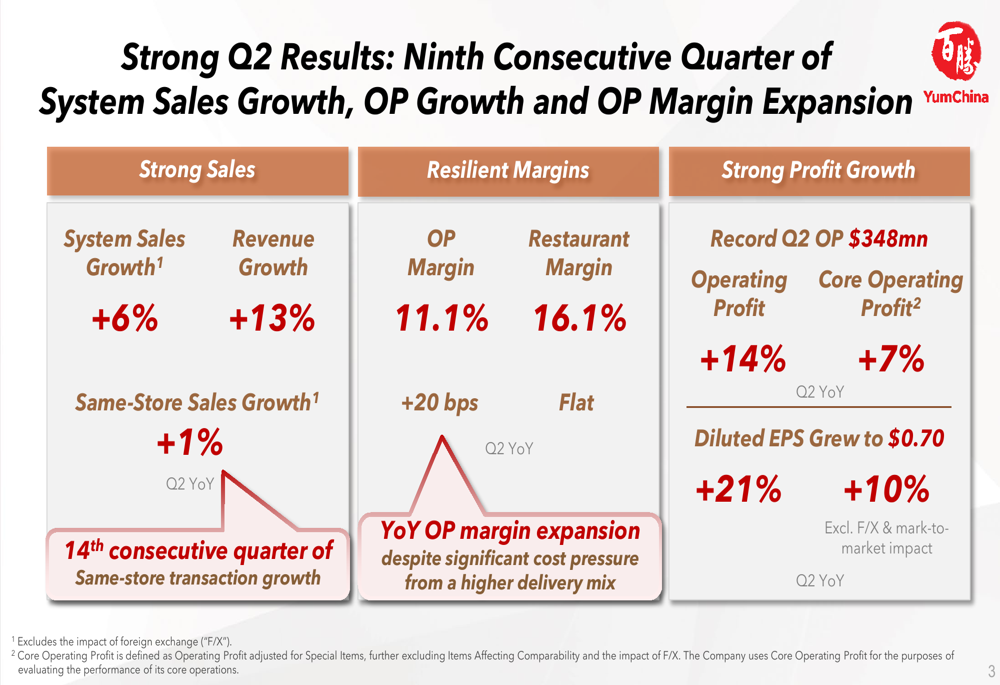
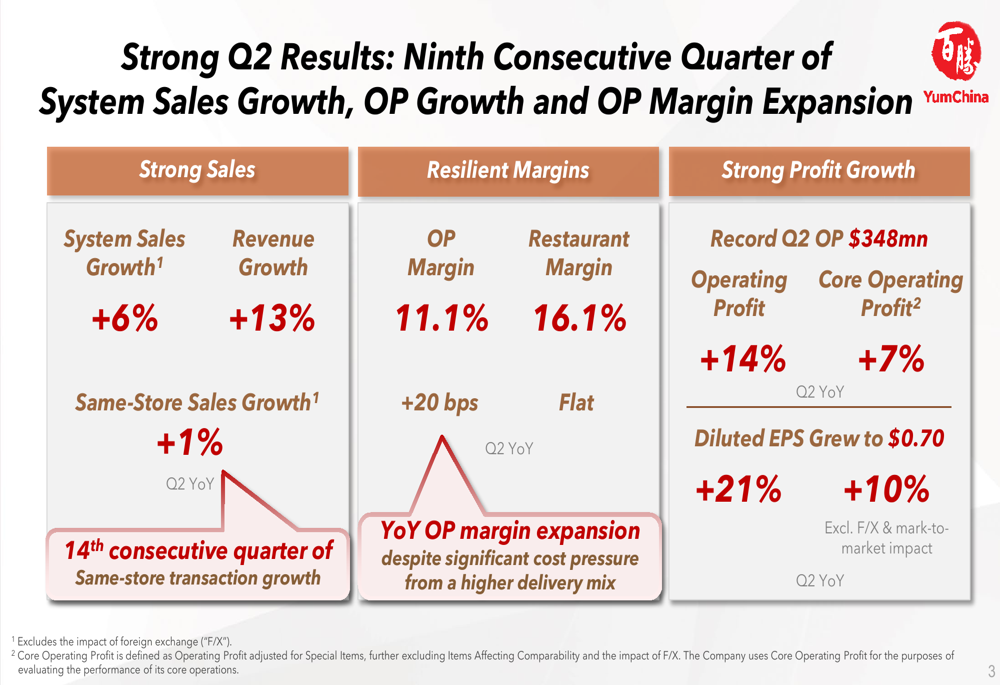
Yum China Q2 2026 slides: record profit, aggressive expansion

Published

on

Yum China Q2 2026 slides: record profit, aggressive expansion


Yum China Q2 2026 slides: record profit, aggressive expansion

Continue Reading

Trending

Copyright © 2025