Defence giant Babcock is developing an off-road vehicle as part of a new MoD programme
Babcock is developing a new vehicle to replace the Army’s fleet of Land Rovers(Image: Babcock)
South West defence giant Babcock and carmaker Toyota are developing a new vehicle that will replace the British Army’s Land Rover fleet. It comes as the Ministry of Defence (MoD) looks to phase out use of the vehicle over the coming months as part of a new so-called Light Mobility Programme.
The new off-roader will be known as the Babcock General Logistics Vehicle (GLV) – and will be based on Toyota’s Land Cruiser and Hilux.
A network of SMEs across the UK will supply specialist components for the GLV and it will undergo significant military‑specific modifications in the West Midlands ahead of use.
Babcock recently hosted an engagement event at its Defence Battlelab in Dorset, bringing together around 30 suppliers to discuss the upcoming requirements for the vehicle.
Advertisement
Chris Spicer, managing director for Babcock’s engineering and systems integration business, said: “The Army’s Land Rover has earned its retirement – and with the General Logistics Vehicle, we’re building on its legacy with a product which will provide soldiers with a tough, reliable and practical platform to support a wide range of mission-critical tasks.
“We’re ensuring soldiers have a vehicle suited to modern operational requirements and by working with the UK’s brightest SMEs, we’re creating and sustaining high quality jobs within our supply chain and contributing to the UK’s defence dividend.”
The Army has used Land Rovers for around 70 years and last year more than 5,000 remained in service across the UK military.
In March, the MoD said the retirement of the Land Rover marked a “significant milestone” in the evolution of the its mobility capabilities.
Advertisement
Defence minister Luke Pollard said: “The Land Rover and British Army share an incredible history and the image of a Landy in Army livery is truly iconic.
“As we look ahead to the future of light mobility vehicles, it is fitting to pay tribute to this extraordinary fleet that has served our Armed Forces so faithfully.”
Over the decades, several bespoke Land Rover models were developed exclusively for military use, including:
The Series IIA Ambulance: designed to carry four stretchers and a medic;
Series IIA Pink Panther: designed for use in the desert by the SAS, it was used for special operation missions and long-distance reconnaissance;
Amphibious SIIA 109”: a prototype of a vehicle that could be used for sea landings;
and V8 Centaur Multi-Role Half-Track which was created with a track taken from the Scorpion light tank and represented an attempt to merge road vehicle with a tank.
Spotify is increasing its push beyond music and podcasts as the company on Monday announced a new fitness category partnership with Peloton Interactive.
The deal will make more than 1,400 Peloton classes available to Spotify Premium subscribers across most of its global markets, embedding fitness content directly into Spotify’s existing audio and video ecosystem, according to the companies. The offering includes strength training, Pilates, barre, yoga, meditation and more.
“As we continue to forge a path deeper into wellness, our work with Spotify is just our latest move to expand our reach and capture new revenue streams through Peloton’s unmatched experience, content and instruction,” Peloton’s chief commercial officer, Dion Camp Sanders, said in the release.
Advertisement
Neither company disclosed financial terms, but the partnership is an indication of both companies’ strategic priorities.
For Spotify, the move represents a deeper expansion into wellness, opening up new engagement and monetization pathways beyond its core music and podcast business. Fitness content keeps users on the platform longer and creates opportunities to layer in subscriptions, advertising and creator-driven revenue streams, the company said in a release.
Spotify said more than 150 million fitness playlists are already active globally, with nearly 70% of Premium users reporting they work out monthly.
“Fitness is a natural extension of how people already use Spotify today — to get motivated, recover and reset,” a Spotify spokesperson told CNBC.
Advertisement
Spotify is also building out a broader creator ecosystem around fitness beyond Peloton, working with fitness creators like Yoga With Kassandra, Caitlin K’eli Yoga, Sweaty Studio and Chloe Ting who can monetize through existing tools such as the Spotify partner Program.
For Peloton, the agreement accelerates its pivot away from a hardware-centric model toward scalable, high-margin content distribution. CEO Peter Stern said the deal also builds on his international expansion ambitions.
“Spotify provides a global stage for our instructors, in which they have now the ability to meet hundreds of millions of Spotify Premium subscribers,” Stern told CNBC.
By tapping Spotify’s reach, Peloton is gaining exposure without requiring users to own its equipment or subscribe to its standalone app.
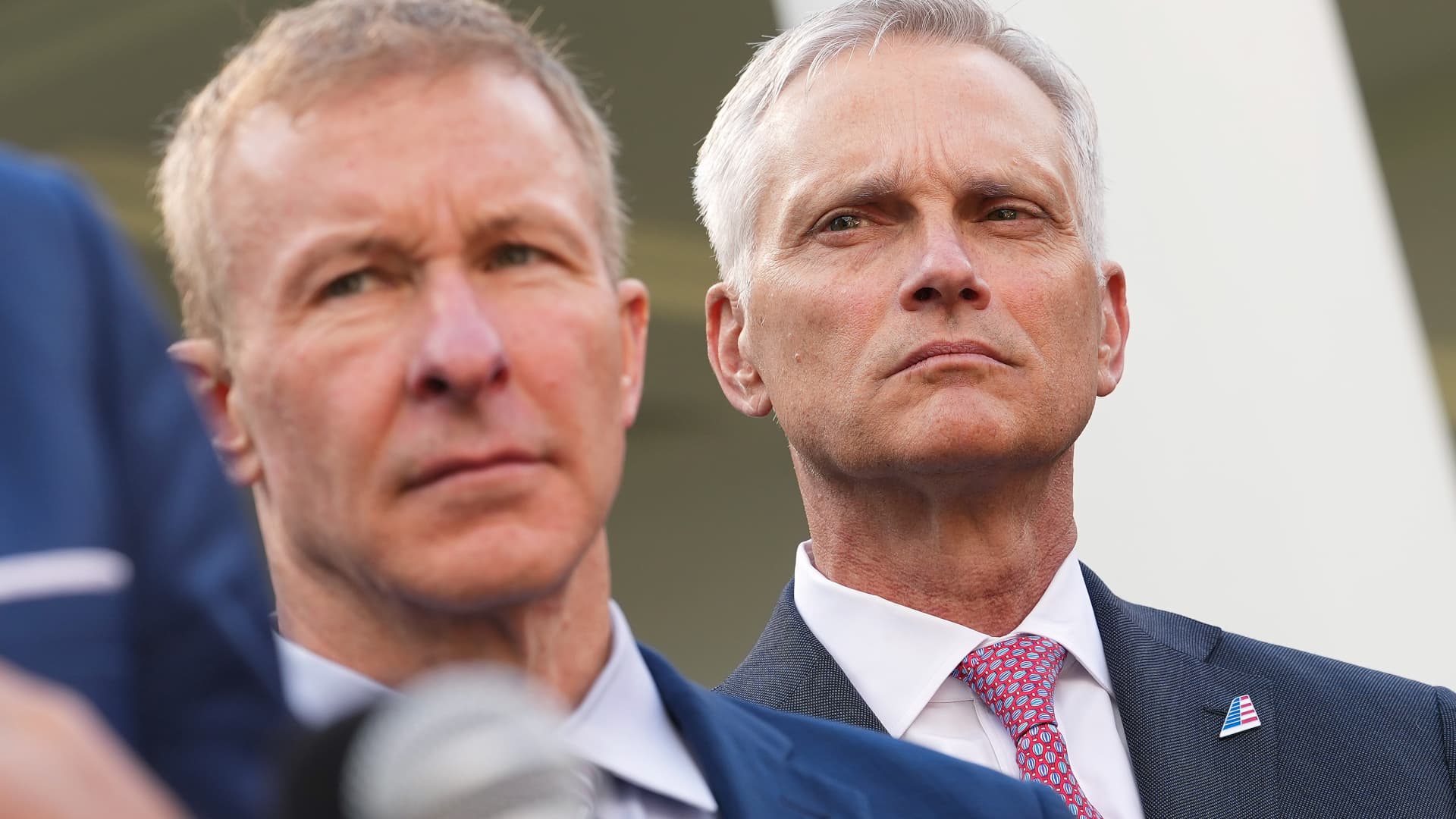
United Airlines CEO Scott Kirby (L) and American Airlines CEO Robert Isom listen as U.S. Transportation Secretary Sean Duffy speaks to reporters outside the White House on October 30, 2025 in Washington, D.C.
“I approached American about exploring a combination because I thought we could do something incredible for customers together,” Kirby said in a statement. He said he shared his “big, bold vision” because he was confident it could win regulatory approval.
American rejected the idea and its CEO, Robert Isom, last week said such a merger would be bad for customers and “anticompetitive.”
Kirby had floated the idea to the Trump administration earlier this year, according to a person familiar with the matter, in hopes that that the combination would mean a big global airline to compete with foreign rivals.
American declined to comment on Kirby’s Monday statement.
“I was hoping to pitch that story to American, but they declined to engage and instead responded by publicly closing the door,” Kirby said in his statement on Monday. “And without a willing partner, something this big simply can’t get done.”
Advertisement
He said that “American’s public comments make it clear that a merger like this is off the table for the foreseeable future” but outlined his vision for a combined airline.
Kirby reiterated that the country has deficit with foreign airlines that fly more than half of the long-haul seats into the U.S., with most of the customers being Americans.
“The combined scale of United and American would be a better way to compete with foreign carriers,” he said.
President Donald Trump said he was against the idea of a combination last week.
Advertisement
“I don’t like having them merge,” he told CNBC’s “Squawk Box” on Tuesday morning. He said he would, however, like someone to buy struggling discount carrier Spirit but he also suggested that the federal government could “help that one out.”
Spirit and the Trump administration are in advanced talks for a rescue package.
WASHINGTON — The Trump administration launched a major refund program Monday for businesses that paid more than $166 billion in tariffs ruled unconstitutional by the Supreme Court, opening an online portal that allows importers and customs brokers to begin claiming reimbursements plus interest.
Donald Trump AFP
U.S. Customs and Border Protection (CBP) activated the Consolidated Administration and Processing of Entries (CAPE) system on April 20, enabling companies to file claims for duties collected under the International Emergency Economic Powers Act (IEEPA). The Supreme Court struck down key portions of the tariffs in a February ruling, determining the president exceeded his authority.
CBP estimates refunds, including accrued interest, could total up to $166 billion or more. The agency said valid claims will generally be processed within 60 to 90 days, though complex cases may take longer. More than 330,000 importers paid duties on over 53 million shipments during the period in question.
Who Qualifies and How It Works
Only “importers of record” — the businesses or authorized customs brokers that directly paid the tariffs — can file through the CAPE portal. Consumers who paid higher prices for goods due to the tariffs are not eligible for direct refunds. Large retailers like Walmart, Target, Nike and Home Depot stand to recover substantial sums, potentially billions in some cases.
Advertisement
Some parcel carriers, including FedEx and UPS, have indicated they plan to file claims on behalf of customers and pass refunds along where feasible. However, most everyday shoppers are unlikely to see direct money returned to their pockets.
The process requires detailed documentation of entries, payments and supporting evidence. CBP is processing claims in phases, starting with more recent payments. Companies have been urged to register early and ensure their banking information is accurate to speed up payments.
Political and Economic Backdrop
The tariffs were a signature element of Trump’s trade policy aimed at protecting American industries and addressing trade imbalances, particularly with China. The Supreme Court’s February decision was a significant legal setback, forcing the administration to begin unwinding collections while defending other aspects of its trade agenda.
Advertisement
The refund program comes as the administration continues aggressive enforcement on remaining tariffs and immigration-related policies. White House officials framed the refunds as compliance with the court ruling rather than a reversal of policy. “We are following the law while still protecting American workers,” a senior official said.
Economists note that while businesses may recover funds, the original tariffs had already raised costs for consumers through higher prices on imported goods. Whether companies will pass refunds along as price reductions remains uncertain. Some large retailers have signaled they may issue credits or temporary discounts, but there is no legal requirement to do so.
Impact on Businesses and Consumers
For importers, the refunds represent a significant cash infusion that could ease financial pressures and support investment. Smaller businesses, however, may face challenges navigating the claims process and could experience delays. Trade groups have called for streamlined procedures to ensure equitable access.
Advertisement
Consumers are largely sidelined from direct benefits. Advocacy groups and some lawmakers are pushing for broader relief measures, including potential tax credits or stimulus tied to the tariff revenue, but no such proposals have gained traction in Congress yet.
State officials in places like Nevada have demanded portions of the refunds be directed back to residents, highlighting the broad economic ripple effects of the original tariffs.
Longer-Term Implications
The tariff refund saga underscores ongoing tensions in U.S. trade policy. While the administration moves forward with refunds, it continues pursuing alternative tools to address trade imbalances. Legal experts expect further court battles over the scope of presidential authority in trade matters.
Advertisement
For the broader economy, the refunds could provide a short-term boost to corporate balance sheets at a time when businesses face other cost pressures. However, uncertainty around future trade policy may continue to weigh on investment decisions.
As the CAPE system processes claims in phases, businesses are racing to submit documentation while monitoring for any technical issues with the new platform. CBP has pledged ongoing updates and support as the massive repayment operation unfolds.
The launch of tariff refunds marks a significant chapter in the Trump administration’s trade agenda — shifting from collection to repayment on a historic scale. While importers stand to benefit directly, the ultimate impact on American consumers and the broader economy will unfold over the coming months as funds flow back into the system.
WASHINGTON — The Trump administration escalated its immigration enforcement Monday with a series of aggressive executive actions aimed at tightening citizenship rules, challenging aspects of birthright citizenship, expanding denaturalization efforts and cracking down on perceived abuses in the legal immigration system.
Donald Trump
Senior White House officials described the measures as necessary to restore “integrity and fairness” to American citizenship, while critics immediately condemned the moves as unconstitutional overreach that could affect millions of legal immigrants and their families.
The centerpiece of the new policy package is Executive Order 14128, which directs federal agencies to prioritize denaturalization cases involving individuals accused of fraud, criminal activity or affiliation with designated terrorist organizations. The Department of Justice and Homeland Security have been instructed to review thousands of naturalization cases from the past 15 years, focusing on applicants from countries flagged for high fraud risk.
A second directive instructs the State Department and USCIS to impose stricter scrutiny on family-based visa petitions, effectively slowing “chain migration” by requiring higher income thresholds and detailed background checks for sponsoring relatives. Officials say the changes will reduce backlogs and prevent exploitation of the system.
The most controversial element involves a directive to the Justice Department to explore legal avenues for limiting automatic citizenship for children of undocumented immigrants born on U.S. soil. While the administration stopped short of directly challenging the 14th Amendment in court, it has tasked a special working group with preparing legislative proposals and testing narrower interpretations in specific cases.
Advertisement
“Restoring the Meaning of Citizenship”
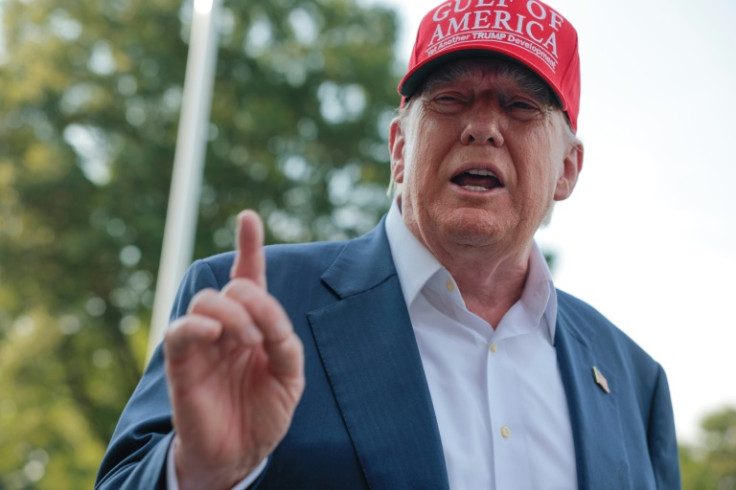
President Trump addressed the new policies during a Rose Garden event Monday afternoon, flanked by border officials and longtime immigration hardliners.
“We are restoring the sacred meaning of American citizenship,” Trump said. “For too long, our system has been abused by people who come here illegally and then demand all the benefits. That ends now.”
White House Deputy Chief of Staff Stephen Miller, a key architect of the policies, told reporters the administration aims to reduce legal immigration by approximately 40% over the next two years while prioritizing skilled workers, English speakers and those who can demonstrate financial self-sufficiency.
Advertisement
Immediate Impacts
Immigration attorneys report an immediate surge in anxious calls from clients. Naturalized citizens from certain countries have expressed fear of retroactive reviews, while families with mixed-status members worry about separation or delays in visa processing.
At a naturalization ceremony in Miami on Monday, several new citizens expressed mixed emotions — gratitude for their status combined with anxiety about the shifting policy landscape. One woman from Venezuela, who became a citizen last year, said she now worries about her elderly parents’ pending family visa application.
USCIS offices across the country have already begun implementing stricter interview protocols and documentation requirements. Processing times for certain family-based categories have lengthened significantly in recent weeks.
Advertisement
Legal and Constitutional Pushback
Civil rights organizations and Democratic lawmakers swiftly condemned the actions. The ACLU announced it would file multiple lawsuits challenging the denaturalization expansion and any attempts to limit birthright citizenship.
“These policies are not only cruel — they are unconstitutional,” said ACLU attorney Lee Gelernt. “The 14th Amendment is clear, and attempts to undermine it through executive fiat will not survive judicial review.”
Several Democratic-led states have signaled they will challenge the measures in court, setting up another round of high-stakes litigation similar to battles seen during Trump’s first term.
Advertisement
Constitutional scholars are divided on the administration’s legal footing. While most agree that broad changes to birthright citizenship would require a constitutional amendment, some conservative legal experts argue narrower rules — such as excluding children of diplomats or temporary visa holders — could survive court challenges.
Political Ramifications
The citizenship crackdown is already energizing Trump’s political base ahead of the 2026 midterms. Polls show strong support among Republican voters for stricter immigration enforcement, with many viewing citizenship as a privilege that must be earned rather than an automatic right.
However, the moves risk alienating moderate voters and business groups that rely on legal immigration for skilled labor. The U.S. Chamber of Commerce issued a cautious statement Monday warning that overly restrictive policies could harm economic growth and innovation.
Advertisement
Democrats have framed the actions as part of a broader “anti-immigrant agenda” designed to appeal to the president’s core supporters. Senate Minority Leader Chuck Schumer called the executive orders “divisive and mean-spirited,” while House Democrats prepare oversight hearings.
Broader Context
The new policies build on Trump’s first-term immigration agenda and campaign promises to enact the “largest deportation operation in American history.” Since taking office in January 2025, the administration has already expanded interior enforcement, increased Border Patrol resources and renegotiated several international migration agreements.
Immigration has consistently ranked as one of the top voter concerns in 2026 polling, particularly in swing districts. The administration’s aggressive approach reflects a belief that strong action on the issue will deliver political dividends despite legal and humanitarian criticism.
Advertisement
Human Stories Behind the Numbers
For millions of legal immigrants and their families, the uncertainty is palpable. In communities across California, Texas, New York and Florida, naturalized citizens report heightened anxiety about their status and fear of being swept up in expanded reviews.
Advocacy groups are documenting cases of long-term residents facing sudden scrutiny over minor discrepancies in old paperwork from decades ago. Immigration attorneys warn of a chilling effect on legal immigration as families delay applications or choose to leave the country.
At the same time, supporters of the crackdown point to specific cases of fraud and criminality that slipped through the system under previous administrations. They argue that restoring credibility to the citizenship process ultimately benefits those who follow the rules.
Advertisement
What Comes Next
The coming weeks will likely see intensified legal battles, congressional hearings and continued public debate. The administration has signaled more executive actions are coming, including potential changes to asylum rules and student visa programs.
For now, the citizenship crackdown represents one of the most significant early domestic policy moves of Trump’s second term. Its success or failure — both in court and at the ballot box — could shape the direction of American immigration policy for years to come.
As courts prepare to weigh in and families across the country adjust to the new reality, the debate over who deserves American citizenship has once again moved to the center of national conversation.
LOS ANGELES — Luka Doncic continues making strong progress in his recovery from a Grade 2 left hamstring strain, with the Los Angeles Lakers optimistic he can return to full strength and play in the Western Conference semifinals if the team advances past the Houston Rockets, multiple team sources confirmed Monday.
Luka Doncic
The Slovenian superstar, sidelined since April 2, has ramped up his on-court activity in recent days and is showing no setbacks, according to coach JJ Redick and the team’s medical staff. At 25 days post-injury, Doncic is entering the critical phase of his rehabilitation, with a realistic target of being available for Game 1 or Game 2 of the next round.
“We’re very encouraged by where Luka is at,” Redick said after Sunday’s Game 4 win. “He’s doing a lot more on the court now, moving well, and the strength is coming back. We’re not going to rush it, but he’s trending in the right direction.”
Medical experts familiar with Grade 2 hamstring strains say a full return to 100% condition is achievable within the four-to-six-week window for elite athletes, especially with the advanced regenerative treatments Doncic received in Europe shortly after the injury. The partial tear of muscle fibers is healing as expected, and recent imaging has shown positive tissue repair.
Detailed Recovery Timeline
Advertisement
Doncic first felt the injury late in the first half against Oklahoma City on April 2. He attempted to play through it but was removed after grabbing his leg. An MRI confirmed the Grade 2 strain, ruling him out for the remainder of the regular season and the early playoffs.
He traveled overseas for specialized platelet-rich plasma (PRP) therapy and other regenerative treatments before resuming rehab in Los Angeles. The Lakers have taken a conservative approach, prioritizing long-term health over a rushed return that could risk re-injury.
As of Monday, Doncic is performing light basketball drills, change-of-direction work, and controlled sprinting. He has not yet participated in full-contact 5-on-5 scrimmages, but the team expects him to begin that phase within the next week if progress continues. Redick emphasized that any return will require Doncic to pass a series of functional movement tests and be cleared by both team physicians and independent specialists.
Lakers Thriving Without Their Star
Advertisement
Despite Doncic’s absence, the Lakers have dominated the first-round series against Houston, taking a 3-1 lead. LeBron James has delivered vintage playoff performances, while supporting players like Austin Reaves (who is also recovering from an oblique strain), Rui Hachimura and others have stepped up significantly.
The strong play without Doncic has given the organization breathing room. A quick series closeout in Game 5 on Tuesday would provide the 27-year-old with additional recovery time before the conference semifinals. If the series extends, Doncic could still target an early second-round return.
Medical Experts Weigh In
Hamstring injuries are notoriously tricky due to high re-injury rates. Dr. Robert Watkins, a prominent sports spine and orthopedic specialist not affiliated with the Lakers, said a Grade 2 strain in a player of Doncic’s size and explosiveness typically requires 4–6 weeks. “At 25 days, he’s in a good window,” Watkins noted. “If he’s already doing change-of-direction work without pain, that’s a very positive sign for a full recovery.”
Advertisement
The Lakers’ medical team has been praised for its cautious management. Rushing a return could lead to a more severe Grade 3 tear, which often sidelines players for months. Doncic’s history with lower-body issues has made the organization especially diligent.
Doncic’s Mindset and Future Outlook
Those close to Doncic say he is frustrated being sidelined but understands the importance of patience. In a recent social media post, he wrote “Patience is power” alongside a training video, signaling his commitment to a smart return.
At 27 years old and in his prime, a healthy Doncic paired with a still-elite LeBron James creates one of the most dangerous backcourts in the league. The Lakers acquired him in a major trade precisely for moments like a deep playoff run. His playmaking, scoring, and basketball IQ elevate the entire roster when healthy.
Advertisement
What a Return Would Mean
If Doncic returns at or near 100%, the Lakers instantly become serious title contenders. His ability to create for others while scoring efficiently would complement James perfectly. Defensive schemes would also have to account for his size and skill, opening opportunities for teammates.
For now, the focus remains on closing out Houston. A series victory would set up a favorable second-round matchup and give Doncic the best chance to return close to full strength. The organization continues projecting optimism without providing a firm date, maintaining flexibility based on his daily progress.
The hamstring strain has tested the Lakers’ depth and resilience, but it has also highlighted the team’s ability to compete without its star acquisition. As Doncic edges closer to a full return, anticipation builds for the moment he steps back on the court — potentially transforming the Lakers’ postseason outlook.
Advertisement
With careful management and positive signs in his recovery, Luka Doncic appears on track to return at or near 100% condition in the coming weeks, giving Los Angeles fans reason for excitement as the playoffs intensify.
Under the terms, Ligand will pay $39 a share in cash for Xoma, a 2.9% premium over the $37.90 closing price on Friday. The deal is expected to close in the third quarter.
The Finance and Leasing Association said it had ‘concerns’ about the FCA’s £9.1bn motor finance compensation scheme but would not challenge it
Anna Wise Press Association Business Reporter
10:29, 27 Apr 2026
The £9.1bn car finance payout scheme has proved controversial(Image: Getty)
The Financial Conduct Authority is to move ahead with its £9.1bn motor finance compensation programme after the principal industry body joined leading lenders in ruling out any legal action.
Advertisement
The Finance and Leasing Association (FLA) said it had “concerns” about the initiative but that it was opting not to mount a challenge.
It follows major lenders including Santander, Barclays and Lloyds also accepting the FCA scheme despite voicing concerns that the level of compensation is disproportionate to those who suffered harm.
The FLA, which represents the UK’s motor finance firms, said it had weighed up how the regulator’s scheme would impact its members, their customers and the broader lending market given that it was “unprecedented in scale and scope, and the impact on the UK economy will be significant”.
“We continue to have concerns about aspects of the scheme, but our priority is that a practical solution be reached that ensures timely compensation for consumers while giving the motor finance industry and the wider market clarity and finality on this issue,” FLA chief executive Shanika Amarasekara said.
Advertisement
“For those reasons, we will not be challenging the FCA’s current scheme.”
Compensation is owed on approximately 12.1 million mis-sold agreements from a range of lenders at an average of £829 each, the financial watchdog said in March as it announced plans for its redress scheme. The FCA anticipates the total redress paid under its scheme will reach approximately £7.5 billion, assuming around 75% of eligible consumers submit a claim.
When factoring in the operational costs of administering the scheme, including processing millions of complaints, the overall bill climbs to £9.1 billion.
The FCA expects millions of claims will be settled this year, with the overwhelming majority resolved by the close of 2027.
Advertisement
Reports had suggested the FLA was contemplating mounting a legal challenge against the regulator, which had set Monday as the deadline for any such action.
However, the choice to abandon any opposition clears the way for the scheme to proceed and for individuals to receive compensation.
Leading lenders have similarly chosen to move on from the controversy and accept the FCA’s compensation framework.
Santander stated on Saturday that while the bank held a “disagreement” with certain elements of the scheme, this was outweighed by a “desire to bring greater certainty to our customers, shareholders and the wider motor finance sector”.
Advertisement
Barclays confirmed it would not be contesting the proposals “because we want a swift resolution for consumers” but issued a stark warning regarding its longer-term implications for the UK.
A spokesman said: “However, we disagree strongly with aspects which require financial redress even where customers suffered no demonstrable financial harm.
“This regulatory overreach will, in time, reduce the availability and increase the cost of consumer credit, hurt retail sales and damage consumption and growth in the UK.
“Barclays exited the motor finance market in 2019 and has no plans to re-enter it.”
Advertisement
Lloyds, which operates within the car finance sector through its Black Horse brand, has similarly opted against mounting a legal challenge, despite having set aside nearly £2 billion to compensate affected customers.
Meanwhile, the FCA is braced for pushback from consumer group Consumer Voice, which announced last week that it was gearing up for a legal challenge amid concerns that the scheme in its current form could leave millions of consumers out of pocket by several hundred pounds per claim.
Gary Greenwood, an equity analyst for Shore Capital Markets, noted that while lenders had reservations about how the compensation scheme had been structured, “none appear willing to pursue a formal legal challenge”.
“That contrasts with the position of consumer representatives,” he said, pointing to Consumer Voice’s intentions to pursue legal action.
Advertisement
“Such a challenge could delay the implementation of the scheme and/or the timing of compensation payments for affected customers.
“Whether it ultimately proves strong enough to overturn the scheme remains to be seen; however, were it to do so, lenders could be required to revisit their redress assumptions and associated provision estimates.”


















































You must be logged in to post a comment Login