Connect with us
DAPA Banner

NewsBeat

Retail staff terrorised by shoplifters – beatings, guns, knife threats and PTSD

Published

on

Daily Mirror

Retail workers have painted a bleak picture to the Mirror of the abuse and threats that they face daily on the shop floor, as Prime Minister Keir Starmer vows to crack down on shoplifters

As Keir Starmer vows to crack down on ‘disgraceful’ shoplifters, retail workers have painted a harrowing picture of life on the front line.

Advertisement

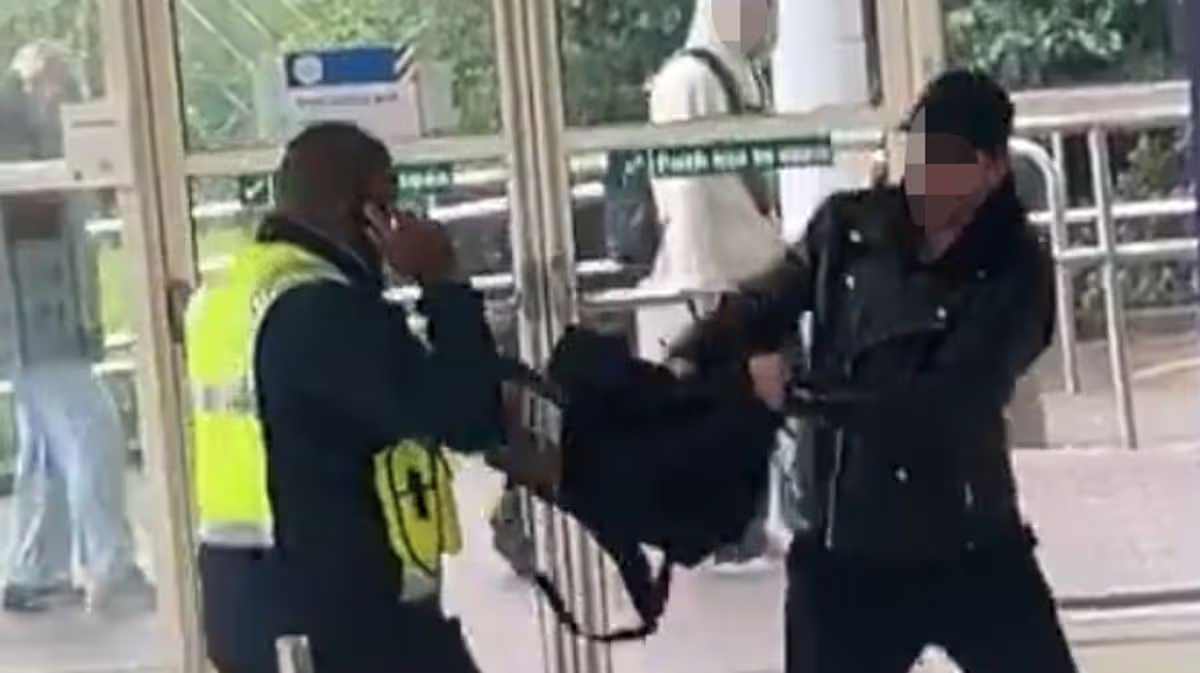
For Ethan, 27, and Annie*, 46, the daily reality of customer service has shifted from simple questions about where to find things to a barrage of threats, verbal abuse, and physical assault. From stabbing threats to guns and workers who have quit on the spot, as the cost of living crisis bites, the shop floor has become a flashpoint for violence.

Two high-profile cases involved retail workers who claimed they were sacked from their supermarket jobs after tackling shoplifters – something that is often against company policy.

New figures from the Union of Shop, Distributive and Allied Workers (USDAW) reveal physical attacks have more than doubled since 2019, while a staggering 78 percent of retail workers endured verbal abuse in the last year. And officials say the industry is “getting worse, not better”.

READ MORE: Sacked Morrisons manager Sean Egan says supermarket ‘threw me under the bus’READ MORE: ‘I used to work in M&S and four types of customers need to be stopped’

Advertisement

In a speech to the Usdaw shopworkers’ union today, the Prime Minister said: “It’s disgraceful that people just working in their shop have to take abuse from customers. It’s disgraceful that people feel sick to the stomach thinking about how they’re going to get through the day and it’s disgraceful that people can have their lives and livelihoods ruined by persistent shop theft.”

He said the Government has put an extra 3,000 neighbourhood police officers on the streets and scrapped the “ridiculous” rule which left theft of goods worth less than £200 “not properly investigated” by police. “That was a shoplifters’ charter, and we’ve ended it and not before time,” he said.

“We’ve toughened up punishment too. We’re giving police stronger powers, making the abuse and assault of retail workers a specific crime and giving you the same protections as emergency workers.”

Advertisement

‘She pulled out a flip-knife over a price tag’

Ethan, who has worked in retail for nearly nine years, paints a horrifying picture of what he and his colleagues go through on a regular basis including a shocking incident that saw one member of the public “threaten to stab” him after becoming confused about whether or not a product was currently on offer.

“She pulled out this flip-knife and threatened to stab me over the price of a product,” says Ethan, who remained “very calm and very polite,” after she refused to take no for an answer. After the threat, the woman simply pushed her trolley out of the store, claiming the stolen goods were “compensation” for her frustration.

Advertisement

Annie, who has worked in retail for 30 years, was left with PTSD after a terrifying shift where she refused to let a man – under the influence of drugs – into the staff toilets.

His furious girlfriend launched a vicious, unprovoked attack. “I’m coming up an aisle and she just attacks me,” Annie says. “She threw a punch and got the back of my head. I had things in my hands at the time, and so she threw another punch and caught me in the back of the head again.

“I went to defend myself, and she threw a big lottery stand at me.” As Annie called 999, the situation escalated.

Advertisement

Outside, the man had collapsed into a “drug coma,” but not before passersby saw him hiding a firearm in his sock. “As I’m on the phone to 999, a member of the public brought the gun to me,” Annie says. “I’m getting handed a gun and I’m like, ‘What am I meant to do with that if it goes off?’”

After the emergency services arrived 40 minutes later, the shop was closed for the day. Following her ordeal, Annie was signed off for work for three weeks.

She says it’s getting worse as the cost of living crisis fuels aggression and shoplifting, and feels the onus is on workers, questioning why workers have to be “tough”, adding: “Why should people have to be like that to save themselves? They’re only out doing a day’s work.”

Annie, who has worked in retail since she was 16, said: “I must admit, 30 years ago, I didn’t feel unsafe going to work in retail. I love my job, but I am getting fed up being spoken to the way I get spoken to. I tell my staff to just kill them with kindness.”

The violence isn’t always directed at staff, sometimes they witness horrific violence between customers too. Ethan says one altercation resembled a “murder scene in the alcohol aisle” after two customers fought.

“A bloke had his face slashed with a Jack Daniel’s bottle and had to have facial reconstruction,” he says, adding that the perpetrator continued “slashing” the semi-unconscious man in the face with shards of glass, leaving “blood everywhere.”

Figures from USDAW show that 78 percent of retail workers have endured verbal abuse in the last year, 54 percent were threatened, and 11 percent were physically attacked, more than double the levels in 2019.

Advertisement

The crisis is driving staff away, with one colleague telling Annie that her “anxiety is through the roof” and she’s ready to quit if the abuse escalates.

Ethan saw one colleague quit on the spot, declaring: “I’m not paid enough for this.” Both workers say their stores have strict non-engagement policies – designed to protect staff – but leave them feeling helpless and as if their wages are being “stolen” by thieves who sell in bulk on the black market.

Whilst Ethan’s shop has security guards working, Annie’s only gets temporary security following an incident.

“We want to act upon [theft], but we can’t,” Ethan says. “You see your wages being stolen from you because they’re taking the products that you know customers will buy to supply you an income.”

Annie says the way shoplifting is deal with has radically changed, adding: “When I first started out, we were allowed to do more,” she says, but now “companies tell us we’ve not to do a thing, we’ve just to walk away,” adding that they “fear for our jobs” if they get involved. “At the end of the day, prices in stores are rising because of the amount of shoplifting that’s going on.

Morrison’s manager Sean Egan, 46 was dismissed after he “tackled” an abusive shoplifter, which is against the chain’s policy – he had worked there for nearly 29 years. He said last week: “I dedicated my whole life to Morrisons, but they did not even take my 29 years of service into account and just threw me under the bus for standing up for what is right.”

Advertisement

On April 25, a demonstration took place outside the Aldridge branch where Egan worked, calling for him to be reinstated, the former manager thanked the crowd who “backed him from the beginning”.

Thinus Keeve, retail director at Marks & Spencer, made the stark warning earlier this month as he called for more to be done to protect those on the front line of the high street. The comments came after “several hundred” young people descended on Clapham in late March with police responding to reports of anti-social behaviour.

The proposed Crime and Policing Bill includes a new standalone offence of assaulting a retail worker which will have a maximum penalty of six months in prison, as well as new measures against low-level shoplifting. The bill has been returned to the House of Lords, where amendments proposed by the House of Commons will be considered this week.

Advertisement

“We have campaigned along with many retail employers for substantial legislative measures to combat this growing problem and we are pleased that the Government’s Crime and Policing Bill has almost completed its passage through Parliament. The Conservatives persistently refused to legislate to protect retail workers and effectively provided an open invitation to retail criminals.

Labour immediately set about tackling the issue and we are now starting to see the results of their investment in policing and funding for more uniformed officer patrols in shopping areas,” says Joanne Thomas, the general secretary of the Union of Shop, Distributive and Allied Workers (USDAW).

Sir Keir claimed today that “the tide could be turning” against shoplifting as he set out the Government’s efforts to crack down on retail crime.

Advertisement

The Prime Minister said shop thefts were “slightly down” in the latest figures and he wanted wider use of technology which allows CCTV footage to be shared immediately with the police. The latest Office for National Statistics (ONS) data showed shoplifting offences fell slightly last year, down from 516,611 in 2024 to 509,566 in 2025.

His speech came as the Centre for Social Justice (CSJ) warned of a high street crime epidemic. The centre-right think tank’s analysis showed the average number of offences committed by shoplifters has nearly doubled in five years, rising from 5.5 to 9.1 offences per convicted thief.

Meanwhile, the Retail Trust has launched a new initiative with Merseyside Police which sees retail workers provided with de-escalation training and support from the police, as part of a larger scale project.

Advertisement

Chris Brook-Carter, chief executive of the charity for retail workers, tells the Mirror: “Almost half of the people we speak to are now dealing with abuse every week, and many tell us they feel unsafe going into work and are considering leaving the retail sector because of the intimidation and violence they face.

“No one should ever be expected to put up with this kind of behaviour, in or outside of work, yet shop staff tell us they are being threatened, shouted at, spat on and hit on an all too regular basis.

“Our work with Merseyside Police shows how communities can come together to better protect retail workers from physical and verbal assaults. Shop staff across Liverpool have been receiving specialist training and support from the Retail Trust to help them safely manage, de-escalate and recover from threats and attacks, as part of wider efforts to tackle retail crime in the city.

“We’re supporting thousands more retail workers across the country following the unacceptable rise in abuse over recent years, and we want to work with other police forces, retailers and local partners to help even more people feel safe and protected.

Advertisement

“This is a pan societal issue and therefore needs a pan-societal response. The more we work together, the quicker we will see change.”

*Annie’s name has been changed to protect her identity.

Source link

Advertisement
Continue Reading
Click to comment

You must be logged in to post a comment Login

Leave a Reply

NewsBeat

Man denies his hand is in photograph found on Noah Donohoe’s phone

Published

on

Belfast Live

A man who stole Noah Donohoe’s missing laptop has denied that it is his hand in a picture discovered on the schoolboy’s phone after he was last seen.

Daryl Paul told Belfast Coroner’s Court that he had “never set eyes” on Noah and insisted under questioning that he had never been in possession of his green coat or phone.

The inquest into the death of the schoolboy, which is being heard before a jury, is now in its 13th week.

Noah, a pupil at St Malachy’s College, was 14 when his naked body was found in a storm drain tunnel in North Belfast on June 27 2020, six days after leaving home on his bike to meet two friends in the Cavehill area of the city.

Advertisement

A post-mortem examination found the likely cause of death was drowning.

Noah’s mother Fiona Donohoe has attended every day of the long-running proceedings.

Paul, of Cliftonville Avenue, previously pleaded guilty to stealing a rucksack containing Noah’s laptop and books. He resumed giving evidence on Monday when he was questioned by Brenda Campbell KC, who represents Ms Donohoe.

Pointing out that Paul had previously lied under police questioning, the barrister said there were aspects of his possession of Noah’s belongings that “call for questions to be asked”.

Advertisement

The jury was shown CCTV footage of Paul in the Queen’s Quarter area of Belfast, close to Noah’s Fitzroy Avenue home, from the evening the schoolboy disappeared.

Paul said he had been in the area to see Maria Nolan, who he said he had recently met, and who has previously given evidence at the inquest.

Ms Campbell said: “On those occasions when you hung outside Queen’s Quarter like this afternoon, do you think you would have seen Noah? Did you speak to him?”

Paul replied: “No, never.”

Advertisement

She asked him if he had any knowledge of Noah leaving his home for a short period on the night before he disappeared.

Paul said: “I don’t know a single thing and if I did I would be the first to tell you, I have a heart.”

The jury was then shown CCTV footage of Noah cycling past Paul in Queen’s Quarter, wearing his green coat and carrying his rucksack.

Ms Campbell said: “This is the last time he leaves home, and you’re within a matter of metres of him.”

She pointed out that within an hour, Noah’s rucksack ended up in a green bag Paul is seen carrying in the footage.

The witness said: “I have no knowledge of that wee boy passing me.”

Advertisement

The barrister said: “What I want to explore on behalf of Noah’s mother is this series of coincidences, to understand whether they are coincidences or whether there’s reason to be more concerned.”

Ms Campbell continued: “Did you look in the direction of Noah after he went past?”

Paul responded: “I did. Just a natural thing, I guess.”

Ms Campbell said Paul had then travelled towards Royal Avenue in Belfast city centre while showing the jury a map of the route Noah cycled through the city.

Advertisement

Paul said: “I was only on same path as Noah for a short distance.”

The barrister said Paul had claimed during an interview with a journalist that he had found Noah’s rucksack containing his laptop on the ground in a covered walkway in the York Street/Frederick Street area.

The jury was shown footage of Noah cycling past that area without stopping.

Ms Campbell said: “I am going to suggest where you told the journalist that you found Noah’s bag is not where it was… you are wrong about that.”

Advertisement

Paul said: “I can only tell you where I found it. If I lied about that, what significance would that lie hold?”

Ms Campbell said: “Until this point in time we have got the coincidence of you being outside Queen’s Quarter and now the coincidence of you being on that part of his journey.

“But the coincidences, I am going to suggest, don’t stop there.”

The barrister said the jury had previously heard evidence about an anonymous caller to police who stated Paul had been in possession of Noah’s green coat.

Advertisement

Paul said: “I was not in possession of any green coat.”

She said: “It would be another coincidence upon coincidence?”

He said: “I did not have his coat.”

Advertisement

The barrister asked the witness if he had next “followed Noah’s journey” from the city centre along North Queen Street.

He said he had not.

She continued: “To the location where the phone was found?”

Paul said: “No.”

Advertisement

Ms Campbell said: “Do you know anything about Noah’s phone? Did you have it in your hand? Did you find it in his coat pocket or in his rucksack?

He answered: “No.”

The barrister said a report from a police expert had revealed a photograph of a hand on Noah’s phone taken on the evening he disappeared, 40 minutes after he was last seen.

She said: “Is that your hand?”

Advertisement

Paul responded: “No, it is not my hand.”

The barrister said police arrested Paul later on the same day but he was never asked where he had found the laptop or about the green coat.

She then showed the jury phone records from Noah’s phone on the day he disappeared.

Ms Campbell said Noah’s mother Fiona had called her son’s mobile six times on the evening he went missing.

Advertisement

She said: “Whoever had Noah’s phone in their hand at 18.50 would have a phone with six missed calls from ‘Mum’.”

The jury was then shown a map of the area in north Belfast where the phone was when Ms Donohoe sent a text message to her son on June 21 2020.

She said Victoria Parade, where Paul said he had gone after leaving Frederick Street, was within the area of the map.

Advertisement

She said: “Did you have Noah’s phone?”

Paul said: “No, I did not.”

Ms Campbell continued: “Did you see that message coming in and those phone calls?”

He said: “I don’t appreciate that question, but the answer is no.”

Advertisement

She said: “It is not too late to tell the truth, not too late to give him some justice.”

He responded: “Thank you, but no.”

Ms Campbell added: “Was it you who went along North Queen Street and who chucked his phone over the railings into Castleton Park?”

He said: “I wasn’t even there.”

Advertisement

She said: “You realised this was a phone that was a bit hot, there was a mummy desperate to find her child?”

Paul said: “No.”

The inquest continues.

For all the latest news, visit the Belfast Live homepage here and sign up to our daily newsletter.

Advertisement

Source link

Continue Reading

NewsBeat

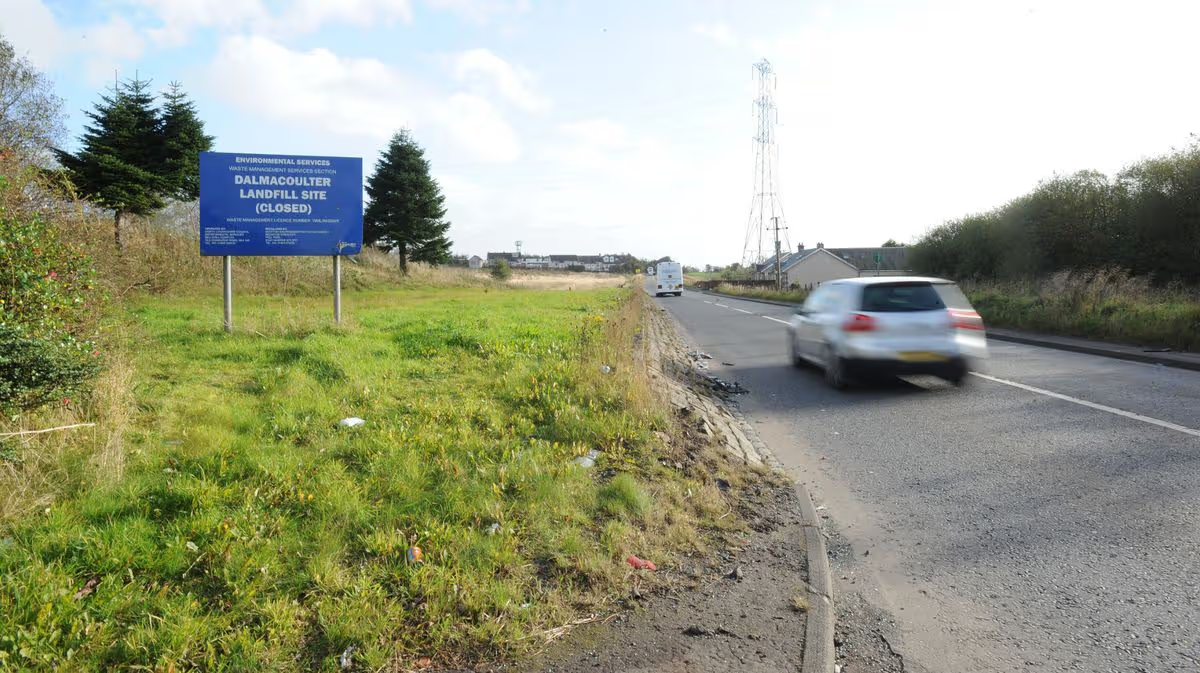
North Lanarkshire Council grants planning permission for new solar power facility at former landfill site near Airdrie

Published

on

Daily Record

The facility will have 1750 panels in 10 arrays, with each array mounted on a solar panel table.

North Lanarkshire Council has granted planning permission for a new solar power facility at a former landfill site near Airdrie.

Advertisement

Council officers have approved a planning application which proposed the installation and operation of photovoltaic panels, mounting frames, a transformer kiosk and onsite substation, along with other features such as security fencing and CCTV at Dalmacoulter Landfill.

The facility will have 1750 panels in 10 arrays, with each array mounted on a solar panel table.

A report on the decision noted that the proposals were in keeping with several relevant policies, including those concerned with environmental matters and green energy, while also reusing a brownfield site.

The report also states that existing peripheral tree cover, means there will not be a significant impact on the landscape, while habitat improvements will more than compensate for any lost habitat.

Advertisement

The development was, therefore, granted planning permission subject to conditions.

*Don’t miss the latest headlines from around Lanarkshire. Sign up to our newsletters here.

And did you know Lanarkshire Live had its own app? Download yours for free here.

Source link

Advertisement
Continue Reading

NewsBeat

How freak weather and an old-fashioned grid exacerbate energy insecurity

Published

on

How freak weather and an old-fashioned grid exacerbate energy insecurity

The Iran crisis is reshaping how the world produces, uses and secures energy. This is no temporary shock. It has become a structural stress test of energy systems, industrial production and government strategy.

We’ve seen this in the recent past: household energy bills in 2024 were still about 4% higher than in 2019,
even after the 2022 global energy crisis had eased (annual bills were up 16% at the peak). That crisis was driven by a combination of post-pandemic demand recovery, tight energy supplies and wider geopolitical disruption, including the Ukraine war, which pushed energy prices sharply higher.

Affordability remains fragile because many lower-income households still spend a disproportionately large share of their income on energy. It’s also a problem for business. Sustained energy costs continue to burden European manufacturing, for instance, affecting industrial competitiveness and long-term economic resilience.

At the same time, the International Energy Agency (IEA) projects global electricity demand will have grown 3.3% in 2025 and then 3.7% in 2026. The pressure from the 2022 crisis therefore shifted rather than disappeared.

Advertisement

International fuel markets remain highly sensitive to geopolitical shocks, especially when households and industry depend on imported gas and oil. Around 20% of the world’s oil passes through the Strait of Hormuz. This highlights how concentrated supply routes can transmit instability rapidly across global markets, causing not just rising energy prices but knock-on effects like increased fertiliser costs.

Fuel has been in short supply so prices have escalated.
JessicaGirvan/Shutterstock

It’s also no longer just a question of fuel supply. Unpredictable, extreme weather conditions are compounding the problem of volatile prices of fossil fuels. Heatwaves raise electricity demand for cooling; drought weakens hydropower; storms disrupt transmission and distribution infrastructure; and low-wind periods test whether the system has enough backup power, storage and flexibility to maintain supply.

The IEA’s work on climate resilience in power systems makes clear that climate-related extremes are becoming more important across electricity generation, networks and demand. Price risk and weather risk are increasingly overlapping drivers of modern energy insecurity (the risk of energy becoming unaffordable, unreliable or unavailable).

Advertisement

The strain is emerging from a mismatch between how energy systems were built and the conditions under which they now operate. Electricity systems are being asked to integrate larger amounts of low-carbon power, but the supporting infrastructure has not developed at the same speed. This means there is still not enough grid capacity, energy storage, system interconnection or ability to match electricity demand with changing supply to move electricity efficiently, store surplus power or reduce pressure at times of peak demand.


À lire aussi :
The oil price surge is just one symptom of a supply chain network that is not fit for this age of global tensions


At least 1,650GW of renewable electricity capacity worldwide is waiting in grid connection queues. That is equivalent to more than 40 times Britain’s recent peak electricity demand of about 38GW, which shows how large the backlog has become.

An estimated US$400 billion (£296 billion) is spent annually on grid infrastructure, including transmission lines, substations and distribution networks that carry electricity from where it is generated to where it is used.

Advertisement

This compares with roughly US$1 trillion spent on forms of energy generation, such as solar farms, wind farms, hydropower plants and gas-fired power stations. This shows how electricity-generating capacity has expanded faster than the systems needed to connect it, balance supply and demand, and keep the system secure.
When electricity demand is rising rapidly, there’s less of a buffer if the supporting infrastructure needed to manage it (such as grids or storage) is not expanding at the same pace.

Missed warning signs

Well before the Iran energy crisis, it was clear that we are overly dependent on internationally traded fossil fuels. The same goes for the slow pace of grid expansion relative to new generation capacity, and our failure to treat weather variability as a core energy-security issue rather than a secondary climate concern.

Recent European electricity data underlines this. Wind and solar generated 30% of EU electricity in 2025, slightly above the 29% from fossil fuels. Nevertheless, less windy and less rainy conditions contributed to a 12% fall in EU hydro output in 2025.

Cleaner systems do not automatically become more resilient. Network strength, flexibility and climate preparedness all need to advance at the same pace.

Advertisement

The strongest evidence points towards a more integrated response in which energy security and decarbonisation are treated as part of the same agenda. Lowering dependence on volatile fossil fuels, using energy more efficiently in homes, transport and industry, and strengthening system flexibility are increasingly central to long-term security. Yet many electricity systems remain too slow to adapt when supply drops, demand surges, or electricity must be shifted across regions or time periods.

new houses with solar panels on roof, blue sky

Rooftop solar panels and heat pumps on new homes reflect the shift towards cleaner, more resilient household energy.
fokke baarssen/Shutterstock

You can see the implications with households. Heat pumps are typically three to four times more efficient than gas boilers in the sense that they can deliver three to four units of heat for each unit of electricity used, because they move heat rather than generate it directly.

However, the Climate Change Committee also notes that lower running costs depend on electricity prices and policy support, so greater efficiency does not always mean lower bills in the short term. Solar panels can help here. The UK government’s solar roadmap says a typical household installing rooftop solar could save around £500 per year on bills. Meanwhile, the IEA also estimates that electric vehicles displaced more than 1.3 million barrels of oil demand per day in 2024.

These are not only indicators of decarbonisation; they also show how cleaner technologies can reduce direct exposure to fossil-fuel price volatility.

Advertisement

At the policy level, the choice is between deeper structural resilience and repeated cycles of short-term crisis management. The European Commission’s REPowerEU plan is to make Europe’s energy system more secure, affordable and sustainable by reducing dependence on imported fossil fuels, accelerating clean energy and improving energy efficiency. It is intended to strengthen long-term energy resilience across the EU by diversifying energy supplies and speeding up the transition to domestically produced low-carbon energy.

What remains uncertain is the timing and scale of future shocks. What is certain is that the greatest vulnerabilities still lie in fossil-fuel dependence, weak infrastructure and delayed policy adjustment. The most credible route to a more secure energy future lies in efficiency, electrification, renewables, stronger grids, storage and policy that takes a longer-term approach.

Source link

Advertisement
Continue Reading

NewsBeat

Anas Sarwar accuses John Swinney of ‘shifting the goalposts’ on Scottish independence referendum

Published

on

Daily Record

The Scottish Labour leader said the SNP would rather focus on the constitution than fixing the NHS or supporting public services.

Anas Sarwar has accused John Swinney of “shifting the goalposts” on Scottish independence ahead of next week’s Holyrood election.

Advertisement

The Scottish Labour leader spoke out after the First Minister his government would begin its push for powers to hold an IndyRef2 on the first parliamentary day after it is formed.

Swinney told an audience of SNP candidates in Govan today: “I can confirm today that on the first sitting day after the appointment of the new government, we will bring forward a vote of the Scottish Parliament to approve the development of a Section 30 order to give Scotland the power to hold an independence referendum.”

But the SNP leader refused to rule out pushing for a referendum even if his party fails to win a majority.

Sarwar said: “This just demonstrates that John Swinney’s priority is not the NHS, not supporting our public services, and not making our streets safer. It is dividing our country and obsessing over the arguments of the past.

Advertisement

“I am absolutely clear that on day one of a Scottish Labour government, my focus will be on cutting waiting lists, supporting our emergency services, and bringing our country together.

“This election is not about whether the SNP wins a majority or not – it is about whether they remain in power or not.

READ MORE: SNP Government spends £11,000 fighting villagers trying to take community control of historic pubREAD MORE: Poll finds SNP on course to win Holyrood election but falling short of overall majority

“Swinney is taking the classic approach of the SNP, whether it is failing to meet legally binding targets, or failing to cut waiting times – They shift the goalposts to cover up for their failures. Scotland deserves so much better. That’s why we need to remove them from office.

Advertisement

“All across the country, it is clear that only Scottish Labour can kick the SNP out of power after 20 years of failure. We deserve so much better than this rotten, out of touch, and tired SNP government.”

It comes as Scottish Labour today pledged to implement the Equality Act “straight away” as the party set out its Women’s Manifesto.

Sarwar met with Labour candidate Carol Mochan and talked to women in the Cumnock constituency. The Labour leader said the main new pledge in the women’s manifesto would be to implement the Equality Act changes.

The UK Supreme Court ruled in April 2025 that the definition of a woman in equalities law is based on biological sex.

Advertisement

This has changed the definition of a “woman” in the 2010 Equality Act to mean a biological female, and that the term “sex” means biological sex. It also said that sex is binary, meaning someone is either male or female.

Mr Sarwar said: “First of all, the clearest example of the difference is we will stop using taxpayers’ money to challenge women and people, and we’ll get on straight away with implementing the Equality Act and making sure we’re protecting single sex spaces based on biological sex. Services, spaces and schools. ”

To sign up to the Daily Record Politics newsletter, click here

Source link

Advertisement
Continue Reading

NewsBeat

‘Netflix’ production to film in Bolton as TV crews move in

Published

on

'Netflix' production to film in Bolton as TV crews move in

Production vans are currently in Le Mans Crescent, which has become the go to location for producers of some of the biggest TV dramas.

Quite what the giant streaming platform is filming is not yet known, although The Bolton News has reached out to the company.

(Image: BBC)

Netflix is currently filming Peaky 1954 and Bolton has been a popular location for the original series, which throughout its run filmed key scenes in and around Le Mans Crescent – with the iconic image of the three Peaky Blinders shot with the arches in the background.

Production crews setting up

Filming for the last series took place in 2022 attracting huge crowds and national attention.

Advertisement

The two new series continue the Peaky Blinders movie story.

Bolton has become a prime location for Netflix, with the town often dubbed the Hollywood of the North.

Major Netflix productions filmed in the beautiful crescent include Toxic Town, Missing You and The Stranger.

And more recently Netflix’s supernatural thriller, The Talamasca, which dropped last year was filmed in the town and across Greater Manchester.

Advertisement

Recently, stars from the eagerly anticipated drama Saviour were spotted on the steps of the old Bolton Magistrates Court.

Set to air on ITV, the legal drama stars Anjli Mohindra, Shaun Parkes and Aidan Gillen, who played ‘Little Finger’ in the hit HBO show Game of Thrones.

As soon as we know what is being filmed we promise you will be the first to know.

Advertisement

Source link

Continue Reading

NewsBeat

Nipper Wagon: Parents Love This Trolley For Festivals And Beach Days

Published

on

Nipper Wagon: Parents Love This Trolley For Festivals And Beach Days

We hope you love the products we recommend! All of them were independently selected by our editors. Just so you know, HuffPost UK may collect a share of sales or other compensation from the links on this page if you decide to shop from them. Oh, and FYI — prices are accurate and items in stock as of time of publication.

If you’re the proud owner of small children, you’ve probably got extremely strong biceps – perhaps even on one side of your body – from carting them around.

My toddler is in her pushchair-hating-era but she also weighs roughly the same as my four-year-old, so there’s a lot of carrying involved on mine and her father’s part. It’s perhaps no wonder then that I’ve got the mother of crunchy necks and his lower back is shot to bits.

My four-year-old also likes to get in on the action, or she’ll just jump in the pushchair to avoid walking, which then prompts volcanic protests from my toddler (who doesn’t want to go in the pushchair, but also doesn’t want her sister to use it). Cue: SO much screeching.

Advertisement

This means, as far as holidays and festivals are concerned, I’m pretty reluctant to take them places where a lot of walking is required. We recently went to the opening of Disneyland’s World of Frozen, which was amazing, but I feel like my arms are still recovering from carrying our two-year-old around the ever-expanding park.

And I’m sure I’m not the only one.

With all this in mind, I can certainly understand why parents are turning to wagons to help get their kids from A to B.

More fun than riding in a pushchair, it means you can transport multiple kids, of multiple ages, wherever you need to go – whether that’s across fields, festivals, theme parks, shopping centres, playgrounds or your local beach.

Advertisement

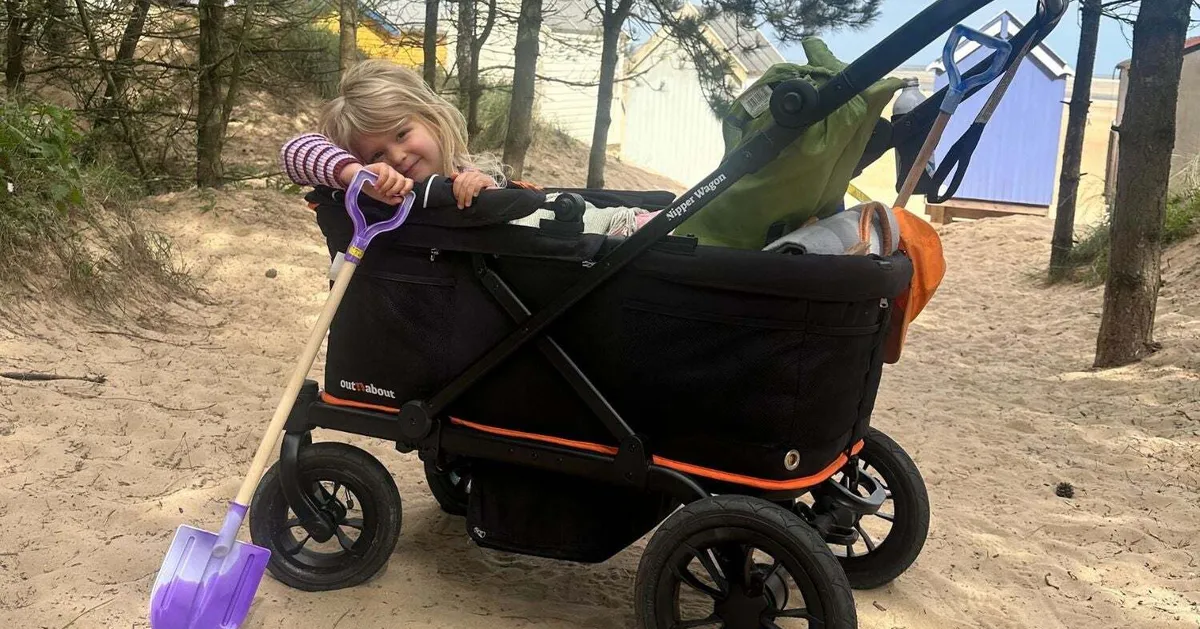
The Nipper Wagon from Out’n’About is as wide as a standard four-wheel pushchair, but it has space for two passengers (or four if you upgrade with the 4-Seat Accessory).

The 12″ rear and 10″ front air-filled tyres can handle bumpy terrain. Kids can ride in it from birth up to seven years old – and it comes with a cup holder and rain cover.

It’s also easy to fold away so you can store it in the boot of your car (although check the measurements before buying!), garage or shed when it’s not in use. For smaller spaces, it’s best to remove the wheels.

If you’re off to Glastonbury or a similar festival, depending on how many children you’re transporting, you can also pop your bags or camping equipment in there so there’s less to carry.

Advertisement

With UK summers seemingly getting hotter and more intense, you’ll be pleased to know the wagon comes with an adjustable sun canopy, safety harnesses to keep tiny passengers safe, as well as a pull strap and tyre pump.

The wagon also has handy pockets dotted around so you can have your water bottles, snacks, sun cream, toys and whatever else you may need close to hand.

One childminder gave it a five-star review, noting they can fit up to four children in there (although this is a “squeeze”).

″[I] Can push with one hand with two toddlers on even ground,” they added, and there are “lots of little pockets for drinks and small snacks”.

Another said: “Love this wagon – so easy to move even with older kids in. Great for shopping too! Fits so much in. Great for childminding too.”

Advertisement

Parents are also obsessed. One said they took it to Australia and “went off road a few times, including beach trips”. They noted airlines treated it as a pushchair, so it was helpful for carrying luggage around airports.

Another said: “My two boys love it!! it’s already making our family outings so much easier and more fun. Highly recommend!”

Some caveated it can be heavy to push when loaded up with kids and belongings – but let’s be real, it can’t be harder than carrying kids AND bags around.

Give your biceps a break this summer, you’ve more than earned it.

Advertisement

Source link

Continue Reading

NewsBeat

Could the Strait of Malacca be the next global flashpoint?

Published

on

Could the Strait of Malacca be the next global flashpoint?

While recent global attention has focused on the Strait of Hormuz, which Iran has effectively held closed since late February in a move that has disrupted world energy supplies, a quieter but also important development has been taking shape in south-east Asia.

On April 14, the US and Indonesia announced a “major defence cooperation partnership”, strengthening their military ties. According to reports, the US is also seeking to gain wider access to Indonesian airspace. Several media outlets say Indonesia’s president, Prabowo Subianto, has approved the proposal.

These developments matter because Indonesia’s vast archipelago sits astride some of the most critical sea routes in the world. These include the Strait of Malacca, an important chokepoint for global shipping and trade. The region surrounding Malacca has seen growing military attention from outside powers in recent years.

Both the US and China have been steadily expanding their military presence around the strait and its approaches. The US has largely done so through base access and naval deployments, and China through its port network and naval buildup. The Andaman and Nicobar Islands, located near the strait’s western approaches, also provide India with a strategic presence in the region.

Advertisement

South-east Asia is becoming more explicitly tied into great-power competition, with the new US-Indonesia defence partnership adding the latest layer. Should this competition intensify – whether through a crisis in Taiwan, a spillover from Hormuz or a shift in alliances – the Strait of Malacca would be at the centre of it.

At its narrowest point, the Strait of Malacca is just 2.8km wide.
Peter Hermes Furian / Shutterstock

The strait is the shortest sea route connecting the Indian Ocean to the South China Sea and Pacific Ocean, making it the default corridor for trade between east Asia and the west. It stretches roughly 900km from the Malay Peninsula to the Indonesian island of Sumatra. At its narrowest point, the Phillips Channel near Singapore, it is barely 2.8km wide.

Almost 24% of global seaborne trade by volume flows through the strait. It carries 45% of the world’s seaborne oil, over 25% of all cars traded internationally and 23% of dry bulk cargo including key agricultural commodities like grains and soybeans. A large portion of European imports of electronics, consumer products like footwear and toys, machinery and industrial goods pass through the strait in sea containers as well.

Advertisement

The strait is also home to some of the world’s most critical port infrastructure. Singapore, located at the strait’s southern entrance, is the second-busiest container port and the busiest container transshipment hub on the planet. It handles over 40 million containers a year and is the world’s largest ship refuelling hub. Port Klang in Malaysia ranks among the world’s top ten container ports too, handling 14 million containers annually.

Why Malacca is irreplaceable

The most commonly cited detours around the Strait of Malacca, the Sunda and Lombok Straits, both lie within Indonesian territory and neither is a straightforward substitute. Rerouting through either adds roughly 1,000 to 1,500 nautical miles to the journey – three to five extra days at sea – along with higher fuel costs and the loss of Singapore’s refueling infrastructure.

Beyond Indonesia, the Torres Strait near Papua New Guinea is too shallow for large commercial vessels with a draft of over 12 metres. Ships avoiding all these routes would face a detour around the entire Australian continent, adding another ten to 15 days of transit time. These geographical features are the reason why the Strait of Malacca is so difficult to bypass.

China understands the risk of relying on Malacca perhaps better than anyone. In 2003, the then-president of China, Hu Jintao, coined the phrase “Malacca dilemma” to describe a strategic exposure that has continued since. Between 75% and 80% of China’s imported oil still passes through the strait.

Advertisement

Beijing has invested heavily in alternatives, but none come close to matching the scale of what transits Malacca. Pipelines running from Kyaukpyu on the Bay of Bengal in Myanmar into Yunnan province in China bypass Malacca entirely. However, their capacity is only around 440,000 barrels per day, a small fraction of China’s roughly 11 million barrels of daily oil imports.

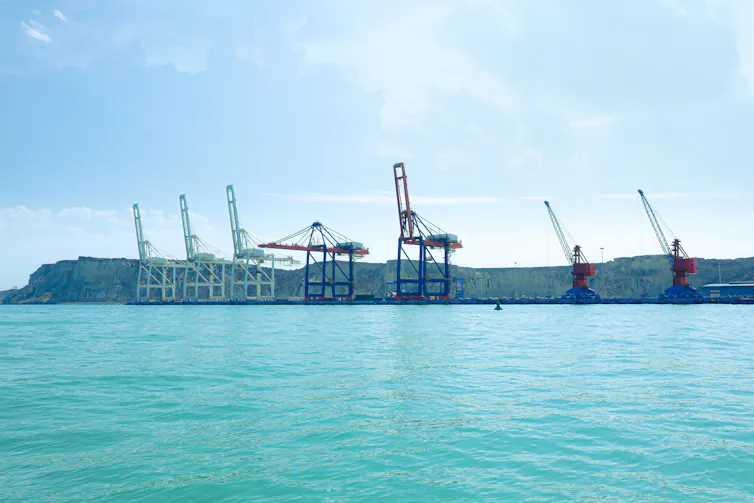
Gwadar Port on the Arabian Sea in Balochistan.
Gwadar Port on the Arabian Sea in Balochistan, Pakistan, which was developed largely with Chinese investment as part of the China-Pakistan Economic Corridor.
victor yankee / Shutterstock

The China-Pakistan Economic Corridor plans to link Gwadar Port on the Arabian Sea to Xinjiang in north-west China through road, rail and energy infrastructure. But it remains only partially developed, with its completion affected by difficult terrain and security challenges in parts of Pakistan. China has also diversified through Central Asian oil and gas pipelines, which provide about 10% of its total imported oil.

There are rail freight corridors connecting China to Europe, which avoid maritime chokepoints entirely and are faster than shipping. However, they are far more expensive and very limited in capacity. Arctic shipping routes along Russia’s northern coast offer a longer-term hedge, cutting the distance between Asia and Europe, but remain seasonal and marginal in global trade terms.

For now, there is no clear indication that the growing military presence around the Strait of Malacca will have any impact on commercial shipping. But if a conflict does arise in the future, it will be trade-dependent economies like China that will suffer.

Advertisement

Source link

Continue Reading

NewsBeat

Ronnie O’Sullivan v John Higgins LIVE: Old rivals battle for quarter-final place at World Snooker Championship

Published

on

Ronnie O’Sullivan v John Higgins LIVE: Old rivals battle for quarter-final place at World Snooker Championship

Higgins 1-0 O’Sullivan – 9-9

O’Sullivan is just not at it so far today. His break is loose, inviting Higgins to take on a red that he misses. O’Sullivan should then have an easy cut to the bottom right but it hits the jaws and comes out, allowing Higgins to pot it with the help of the rest. And as I type he is now lining up a black.

Alan Smith27 April 2026 13:58

Advertisement

Higgins wins the 18th frame! Higgins 118-7 O’Sullivan – 9-9

This is steady and rather impressive from Higgins. His tracking has been off a couple of times – ending up dead straight on a blue and a pink with six and five reds on the table – but he is unfazed by the pressure shots and by the end has put together a break of 118.

From 9-4 down, the Scot is now level. We could be in for a very, very long afternoon.

Alan Smith27 April 2026 13:54

Advertisement

Higgins 26-7 O’Sullivan – 8-9

Now it’s Higgins’ turn to have a go – sending a red into the middle right, cutting a blue into the middle left before doing an alright job at breaking up the cluster of reds.

Another red, another blue that takes the cue ball up to the baulk cushion and all the way back down for a simple red in the bottom right.

Higgins, 13-7 up, then hesitates over whether to take on the green, brown or blue next. He opts for the latter, and pots it. That sees his options open up and, should he put together a run he is capable of, this match is about to become level.

Advertisement

Alan Smith27 April 2026 13:45

Higgins 0-7 O’Sullivan – 8-9

Higgins leaves an open but difficult red that O’Sullivan sinks to the bottom right. But he gets unlucky and cannot get on to a colour so takes the safe option.

Alan Smith27 April 2026 13:39

Advertisement

Higgins 0-6 O’Sullivan – 8-9

After some reasonable safety, O’Sullivan nips in to score six before running out of options and returning to baulk.

Alan Smith27 April 2026 13:37

Advertisement

Higgins 0-0 O’Sullivan – 8-9

The Wizard breaks off in frame 18, momentum in his favour, but leaves a lone red for O’Sullivan to attack. He misses that but does not leave anything obvious on and Higgins will bring the cue ball back to baulk.

Alan Smith27 April 2026 13:32

Higgins wins the 17th frame! Higgins 75-44 O’Sullivan – 8-9

And Higgins makes hay from O’Sullivan’s unforced error. Again, his ball-tracking is not brilliant and having sunk the penultimate red he leaves himself too straight on the pink. From there he does really well to set himself up for the final red on the bottom cushion. A straightforward black follows, putting himself 17 ahead with only the colours to go, though he would have liked to have been better positioned for the yellow.

Advertisement

No matter, he sinks it with the aid of the rest and then makes light work of the green, brown and blue. He misses the pink but that is irrelevant and now there is only one in it.

Alan Smith27 April 2026 13:30

Higgins 16-44 O’Sullivan – 7-9

That error allows O’Sullivan to put together a decent enough break. Although his third red was far from precise, his rhythm seemed to improve with every pot … until his positioning from a black leaves a more difficult than anticipated red, which he cannot convert.

Advertisement

On the BBC’s coverage Dennis Taylor says that a new cloth had been put on the table overnight, which may explain a relatively tricky start.

Alan Smith27 April 2026 13:23

Higgins 16-0 O’Sullivan – 7-9

Higgins rolls in a red to the bottom left but then jaws the following pink to a middle pocket, allowing O’Sullivan in. It’s been a bit scrappy.

Advertisement

Alan Smith27 April 2026 13:16

Higgins 15-0 O’Sullivan – 7-9

The cueball is respotted and O’Sullivan misses by an even greater margin, hitting the pink rather than a cluster of reds.

His third attempt is short and while the fourth hits the reds, he has afforded Higgins a couple of decent options.

Advertisement

Alan Smith27 April 2026 13:15

Source link

Continue Reading

NewsBeat

Tipsea Wines applies to sell alcohol from Whitby store

Published

on

Tipsea Wines applies to sell alcohol from Whitby store

Tipsea Wines Ltd has applied for a premises licence that would allow it to offer wine-tasting sessions and sell wine from its premises at 1 Grape Lane, Whitby.

The business was founded by owners Adam and Chris, who said they had a vision to establish the town’s first wine merchants.

“Tipsea Wines is an independent wine merchant based on the Yorkshire Coast in Whitby. Founded by two best friends, who together have decades of experience running family-owned restaurants,” the company’s website states.

Advertisement

If the business is granted a premises licence, it would be allowed to sell alcohol from 10am to 6pm, seven days a week.

The proposal also seeks permission for pre-booked wine tastings, which could be organised from 6pm to 10pm.

Additionally, 24-hour internet sales have also been proposed.

The application is currently open to representations from members of the public.

Advertisement

Residents wishing to comment on the scheme should contact the licensing authority by Sunday, May 10.

Anyone wishing to make representations regarding the application should give notice in writing to: North Yorkshire Council, Licensing Services, Town Hall, St Nicholas Street, Scarborough, YO11 2HG or by email to licensing.east@northyorks.gov.uk.

Source link

Advertisement
Continue Reading

NewsBeat

North Durham Academy, in Stanley closes due to power issues

Published

on

North Durham Academy, in Stanley closes due to power issues

North Durham Academy in Stanley, said the decision was made after consulting with National Powergrid and other agencies, with no immediate prospect of electricity being restored.

It added that the closure was necessary “for safety reasons”.

Students who travel to school via council transport were scheduled to be taken home at 12.15pm, while those who walk were sent home at the same time.

Advertisement

Telephone lines at the school were also affected by the outage, limiting direct communication with parents and carers.

In a statement, the academy said: “As a result of the local power cut and having consulted with National Powergrid and other associated parties, it is unlikely that the power will be restored. We have therefore made the decision to close the school for safety reasons.

“Students transported to school via LA contracts will be transported home at 12:15pm.

“Those who walk will be dismissed at 12.15pm to walk home.

Advertisement

“All telephone lines are down. If you have any concerns about your child being sent home early, please contact them between 12.15pm and 12.30pm and they will be able to stay in school. Alternatively, please text 07818505360.”

It is not yet clear what caused the power cut or when electricity will be restored.

The Northern Echo has contacted Northern Powergrid for a statement.

Advertisement

Source link

Continue Reading

Trending

Copyright © 2025