
Business
Brown & Brown: Acquisitions Fuel EPS Growth




July and August had raised hopes that foreign investors were coming back after a long selling spell earlier in the year. FIIs had sold Rs 34,152 crore in January, bought Rs 12,950 crore in February, and then sold heavily between March and June. March alone saw outflows of Rs 1.15 lakh crore, followed by Rs 71,203 crore in April, Rs 50,188 crore in May and Rs 35,174 crore in June.
That made the July-August inflows look like a possible turn in sentiment. September is now showing that the recovery was short-lived. “There are indications of FPI flows into India again turning negative after the positive flows in July and August,” Vijayakumar said.
IPO market still gets foreign money
The selling is not across the board. Foreign investors continue to show interest in India’s primary market, even as they remain cautious in the secondary market. Vijayakumar said FPI investment through the primary market stood at Rs 2,703 crore up to September 19. This has taken total FPI investment through the primary market this year to Rs 48,550 crore.

This partly explains why the IPO market has stayed active despite weak sentiment in listed equities. Large public issues, anchor books and fresh listings continue to attract foreign capital, while the broader cash market is seeing pressure.
“This partly explains the ongoing boom in the primary market despite the tepid performance of the secondary market,” Vijayakumar said.
Why FIIs are selling again
The main pressure points are global. Analysts point to higher crude prices, elevated US bond yields, geopolitical risk and currency concerns as the key reasons behind renewed foreign selling. Vijayakumar said future FPI flows will be influenced by the ongoing Iran-US conflict and its impact on crude prices. Higher crude is negative for India because it can widen the current account deficit, increase inflation pressure and weaken the rupee.
“Elevated crude prices and the high US bond yields, with the US 10-year yield at 5%, are the negatives for Indian equity market and FPI flows,” he said.
Dheeraj Gaur, Chief Investment Strategy Officer at Choice Wealth, said foreign investors are still avoiding the secondary market, even though they remain active in IPOs and fresh listings.
“The big story is FPIs still don’t want much to do with the secondary market, but they can’t seem to get enough of IPOs and fresh listings,” he said.
He added that the debt side has also worsened because of rising global yields, expensive oil and fresh worries around the rupee.
Selling pressure visible in cash market
The recent cash-market numbers show the pressure clearly. Gaur said FPIs sold Rs 3,106 crore, Rs 588 crore and Rs 3,164 crore in the cash market between September 15 and 17. They bought Rs 600 crore on Friday, but that was not enough to offset the damage.
For the week, FPIs were net sellers by Rs 6,258 crore on provisional numbers. Depository data showed outflows of about Rs 7,835 crore over four days.
“So, even with Friday’s little rebound, the final numbers make it clear there’s no real turnaround yet. We need to see more green days before calling this anything other than a tough stretch,” Gaur said.
DIIs cushion the fall
Domestic institutional investors have continued to absorb part of the selling pressure. Pabitro Mukherjee, Deputy Vice President-Research at Bajaj Broking, said FIIs remained net sellers for the fifth straight week, offloading Rs 7,620 crore. DIIs extended their buying streak with net purchases of Rs 11,232 crore, helping the index recover from mid-week lows.
Month-to-date, FIIs have sold Rs 7,041 crore against DII buying of Rs 36,219 crore. During this period, the Nifty is down 3% from its August-end close of 24,080.
Over the past month, FIIs have been net sellers in all five weeks, while DIIs have remained buyers throughout. This domestic support has limited the market fall but has not fully removed the pressure from foreign selling.
Markets may stay volatile
Analysts expect volatility to continue as long as crude oil and US bond yields remain high. The market will also track the Iran-US conflict, rupee movement, Brent crude prices and upcoming PMI data in the US and India.
The positive side is that India’s economy remains resilient and earnings growth is expected to improve. Vijayakumar said these factors are still supportive for Indian equities.
Disclosure: This article has been written by Podishetti Akash, who is not a SEBI-registered Research Analyst or an Investment Adviser. Podishetti Akash and her ‘relative(s)’ (as defined under Section 2(77) of the Companies Act, 2013) do not hold any financial interest in the companies mentioned in this article as of the date of publication. The views/recommendations mentioned in this article, wherever applicable, are those of the respective SEBI-registered Research Analyst/brokerage and have been reproduced/reported with due attribution. They should not be construed as the views or recommendations of The Economic Times Digital or the journalist. Readers are advised to consider the original research report and make their investment decisions based on their own assessment. Brokerage disclosures here.

Investors focus on rate path, AI slowdown after Fed hike

Saudi Arabia stocks lower at close of trade; Tadawul All Share down 0.26%
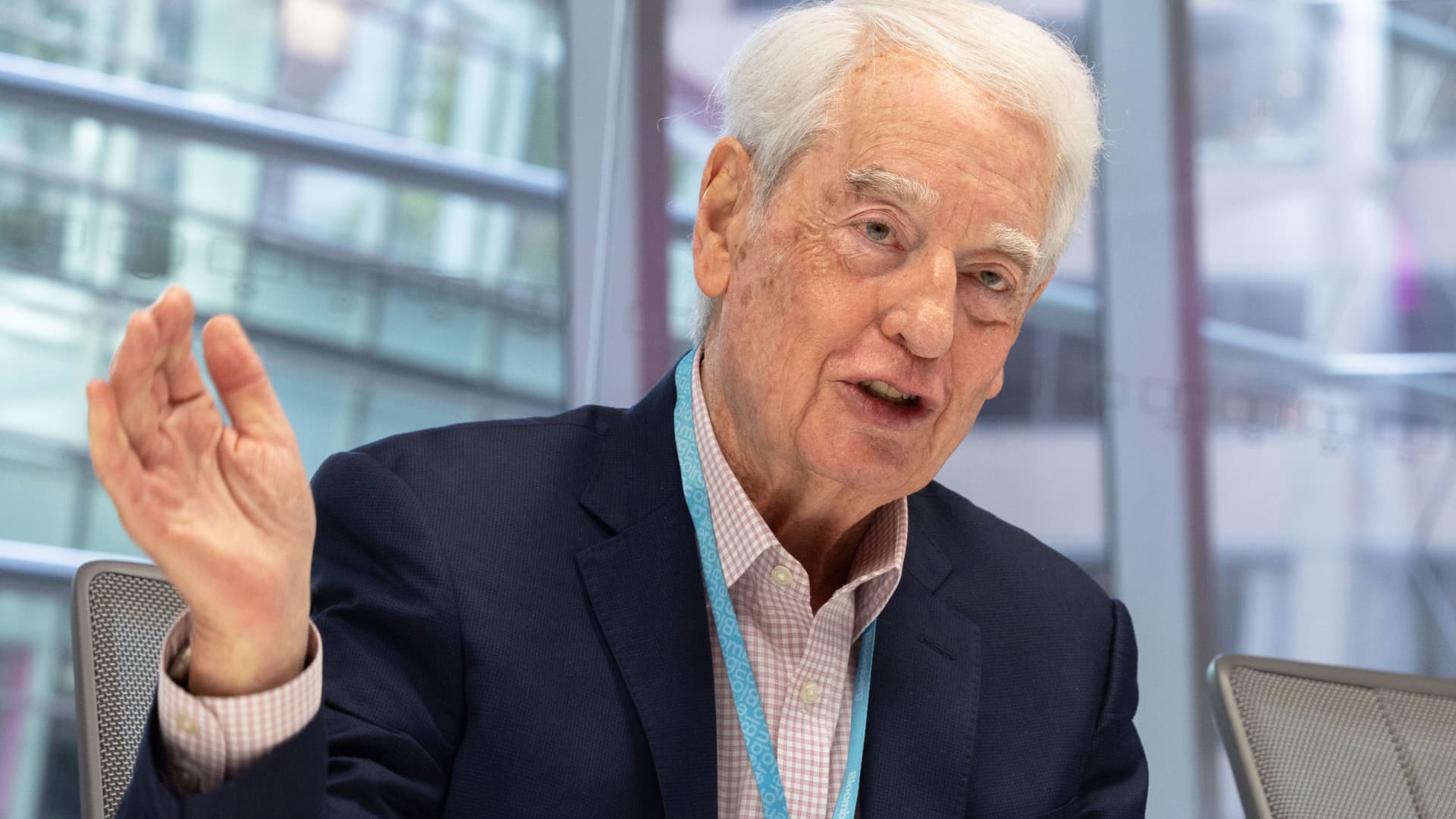
Bill Franke, co-founder of Indigo Partners and chairman of Frontier Airlines Inc., speaks during an interview in New York, Oct. 28, 2022.
Jeenah Moon | Bloomberg | Getty Images
SCOTTSDALE, Ariz. — For decades, William Augustus Franke, Frontier Airlines‘ chairman and a serial airline investor, made a killing selling cheap plane tickets and charging fees to check bags, to pick seats and for everything else. Now, he says first-class seats and other traveler comforts are in order — at least in the United States.
Frontier is planning to roll out first-class seats next year on its Airbus fleet. It’s also joined a growing list of airlines adding SpaceX‘s Starlink Wi-Fi on board as it seeks to return to steady profitability.
“We’re not trying to have a Singapore Airlines first class,” Franke, 89, told CNBC in late June at the model airplane-filled offices of Indigo Partners, the private equity firm he founded. “What we’re trying to do is give the consumer an option,” he said, calling it at once upscale and competitive.
The ultra-low-cost airline model that Franke, who goes by Bill, pioneered has faced a reckoning in recent years. A jump in pilot salaries, maintenance costs and operating expenses, along with a boom in premium travel, have hit long-profitable and fast-growing budget carriers. Maintaining strong growth and keeping costs low were sacrosanct for that sector for years.
Another pillar was not giving things away for free. At the 2017 Dubai Air Show, where he made a record Airbus aircraft order for the empire of airlines he invested in, Franke likened some consumers to teenagers and “spoiled brats,” saying they expected to get low fares and what are now add-ons without paying for them, CNBC reported at the time.
“They had been flying with all the amenities for ever and ever and that’s what they think they ought to get,” Franke said at the time.
But since then, larger, more powerful rivals like United Airlines and Delta Air Lines have copied the model for their cheapest tickets. They’ve started offering bare-bones fare options and adding fees for everything else. This year, they even brought that pricing strategy to their first classes and plush, long-haul suites to increase revenue, stripping customers who choose that option of a free seat choice, among other restrictions.
Franke has owned, operated or invested in budget airlines around the world, from Chile to Hungary to the Philippines to the U.S. He was an early investor in European budget carrier Ryanair.
His legacy stretches across the airline industry: Many top airline executives, including the CEOs of United Airlines and American Airlines, worked under him earlier in their careers.
Franke also ran Spirit Airlines until 2013, before becoming the chairman at Frontier at the end of that year.
He tried to merge the two carriers in 2022 but Spirit shareholders voted for another offer, all cash, from JetBlue Airways. That deal fell apart after a federal court ruled it violated antitrust laws in January 2024.
Struggling on its own, Spirit collapsed in May, the biggest U.S. airline failure in decades, leaving Frontier as the largest discounter in the country.
Franke said he’s far from out of the game and remains a major Frontier shareholder.
“We see startup ideas probably one a month,” he said.
‘They still focus on price’
A Frontier Airlines airplane taxis past a Spirit Airlines aircraft at Indianapolis International Airport in Indianapolis, Indiana.
Luke Sharrett | Bloomberg | Getty Images
Franke started flying frequently when he was a little kid because his father worked for the State Department and was based in Paraguay.
He said a lot has changed since. “Consumers are much smarter today” than they used to be, armed with new data and tools like artificial intelligence that help them better compare fares and options, he noted.
“None of the airlines are quite sure what AI … is going to do to your decision to book,” he said.
But “price and schedule are still at the top,” Franke added.
“For a lot of consumers, whether the ticket costs $200 or $125 is not going to be the decision-maker, but for a lot of people it is still,” he continued. “Middle class, younger flyers, they still focus on price.”
But the ultra-low-cost and low-fare model has struggled in the United States. It’s based on keeping costs minimal and maintaining rapid growth, both of which have been more difficult since the pandemic. Higher fuel prices since the start of the Iran war have been an added challenge.
Spirit is the obvious casualty, with its CEO saying it “ran out of runway” after facing increasing challenges, but Frontier has only been profitable one year since 2019 and JetBlue hasn’t been profitable since that year.
“We’re not forecasting next year, but the airline is certainly on the right trajectory to return to sustainable profitability,” Frontier CEO Jimmy Dempsey said on a July 29 earnings call. He became the carrier’s chief executive in December, succeeding Barry Biffle who headed the airline for close to a decade.
Airlines, including Frontier, have been jacking up fares to cover costs. August airfares were up more than 23% over last year, according to federal data released Sept. 11.
Frontier isn’t alone in wanting to add pricier and roomier seats. Allegiant Air recently announced it would add a first class to its currently single-cabin planes, and JetBlue Airways is adding a domestic first class. Meanwhile, larger competitors are growing their premium cabins.
Franke said the new upscale moves don’t fit everywhere, and that efficiency remains key.
“In the U.S. market where you have mature large airlines — Delta, United, American — who are changing the interior of their aircraft on a regular basis, it could well be that a low-cost or a lower-cost airline, in order to properly compete, needs to make adjustments to its business model,” he said. “That doesn’t mean you have to do that in an emerging market like Hungary or Peru.”
All roads lead to Tempe
Franke’s legacy extends beyond the low-cost model. Many of the leaders of the modern U.S. airline industry can trace their roots back to Franke and to Tempe, Arizona, where America West — which through mega-mergers evolved into modern-day American Airlines — was based.
Franke, who had studied and practiced law, got into the airline business more than 30 years ago. The then governor of Arizona tapped him to save America West when it was mired in bankruptcy in the early 1990s and he became chief executive in 1993.
His proteges include American Airlines CEO Robert Isom; Isom’s predecessor, former American Chief Executive Doug Parker; and United Airlines CEO Scott Kirby.
Franke’s former employees told CNBC that they keep up with him regularly.
Isom told CNBC in an interview in late June that Franke is “pretty good at giving jabs.” For many years, they would bet on college football, specifically, games between Stanford University, where Franke studied, and Notre Dame, where Isom studied.
“His rule was fast pay makes fast friends,” Isom recalled, showing CNBC some of his winnings: Chilean pesos with Franke’s business card attached by paperclip and, in another win by Isom, euro coins taped to a sheet of paper with “PAID IN FULL” written out by his former boss.
Kirby told CNBC at an industry conference in Rio de Janeiro in June that after The Wall Street Journal profiled him this spring, Franke told him it made him “throw up in his coffee when he opened his newspaper.” Franke didn’t comment on that, but said he recalled the exchange.
Even still, Kirby called Franke a mentor, and clarified that he was “a hard-ass mentor.”
“All of us, our formative years were working for Bill, getting screamed at by Bill. … He should take more credit for that,” he said. (Franke said he didn’t yell at him. “That’s just not me.”)
Franke was demanding, especially when it counted, his alumni said.
Steve Johnson, American Airlines vice chair and chief strategy officer, and another Franke America West alum, likened Franke to a second father.
Johnson was a partner from 2003 to 2009 at Indigo when it owned Spirit. During the summer 2008 fuel spike that saw prices hit more than $147 a barrel (more than $200 in today’s dollars), Spirit was running out of money but had a portfolio of fuel hedges, a series of contracts that locks in future pricing.
He was about to head to a California-bound plane that summer when Franke called him about the fuel and told him to “sell it now,” Johnson recalled. They did and generated about $30 million. Oil prices later crashed.
“It turned out to be just exactly what Spirit needed,” Johnson said.

Trump to convert triumphal arch into military complex

Passage Research focuses on identifying variant perception through a blend of fundamental analysis and alternative data. The research process combines detailed financial modeling with real-time datasets to underwrite earnings power, margin durability, and forward expectations.The author has spent over a decade on Wall Street, most recently spending the last five years working in the hedge fund industry as an analyst. Typical coverage spans consumer, TMT, industrials and special situations, with an emphasis on asymmetric risk/reward and catalyst-driven opportunities.
Analyst’s Disclosure: I/we have no stock, option or similar derivative position in any of the companies mentioned, but may initiate a beneficial Long position through a purchase of the stock, or the purchase of call options or similar derivatives in VICI over the next 72 hours. I wrote this article myself, and it expresses my own opinions. I am not receiving compensation for it (other than from Seeking Alpha). I have no business relationship with any company whose stock is mentioned in this article.
Seeking Alpha’s Disclosure: Past performance is no guarantee of future results. No recommendation or advice is being given as to whether any investment is suitable for a particular investor. Any views or opinions expressed above may not reflect those of Seeking Alpha as a whole. Seeking Alpha is not a licensed securities dealer, broker or US investment adviser or investment bank. Our analysts are third party authors that include both professional investors and individual investors who may not be licensed or certified by any institute or regulatory body.

Italy to ban veils in schools, limit foreign students per class, Meloni says

Indian equities extended their recovery as softer crude prices and global yields improved risk appetite. Analysts have identified five stocks, including ACME Solar, Medanta, Tilaknagar Industries, Uno Minda and PWL, with bullish technical setups.

Authors including John Grisham, David Baldacci, Jodi Picoult and Jonathan Franzen sued OpenAI and Microsoft three years ago for copyright infringement.
A court filing unsealed Thursday details internal messages and testimony laying out how OpenAI employees—including executives—talked about the company’s use of pirated books to train an early ChatGPT model, as well as their technology’s potential impact on authors. The filing was made in support of the authors’ request that a federal judge rule in their favor ahead of a trial.
Copyright ©2026 Dow Jones & Company, Inc. All Rights Reserved. 87990cbe856818d5eddac44c7b1cdeb8
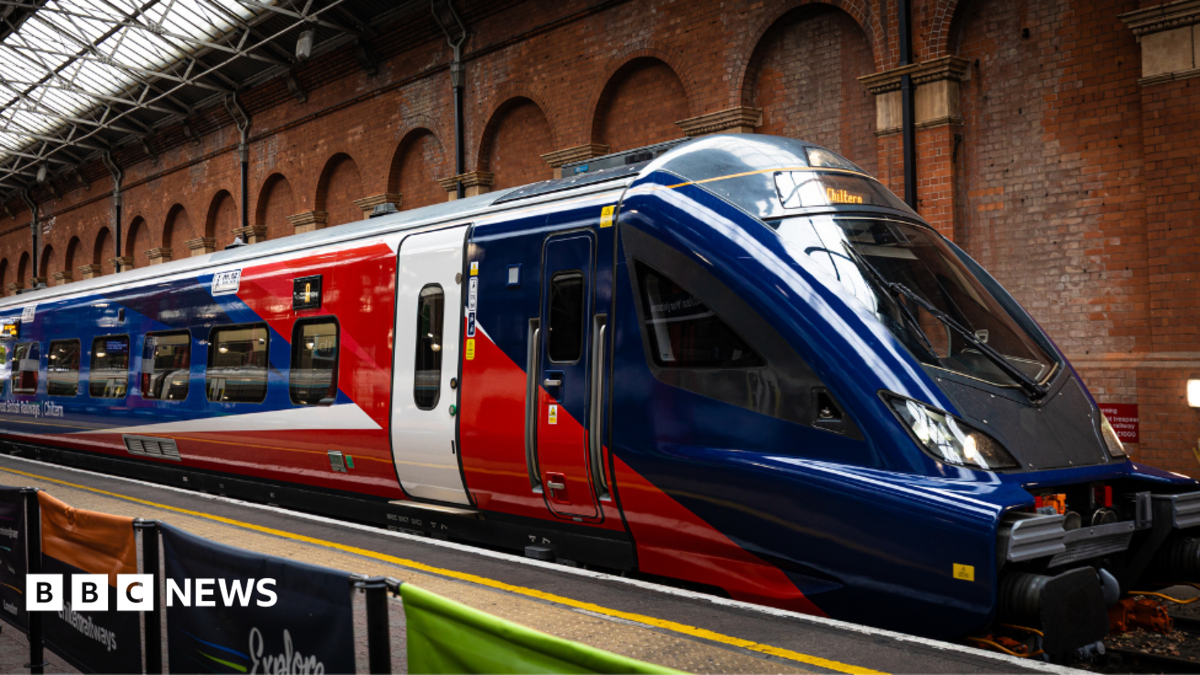
Chiltern Railways has been brought into public ownership after 30 years as a private company.
It is the 10th rail company now under the Great British Railways (GBR), the government’s programme of public ownership, which it says will save money and improve services.
Chiltern Railways, which was privatised in 1996, operates services from London Marylebone to Buckinghamshire, Oxfordshire and Warwickshire, as well as destinations in the West Midlands.
The government said the transfer into public ownership would tackle overcrowding by introducing 25 additional daily services from December.
The start of the first day of public ownership saw some disruption, with Chiltern warning the line between Birmingham and Marylebone, external was “expected to be much busier” due to the late notice of the West Coast Main Line closure affecting services at London Euston.
The operator said it would run more trains than usual between the stations with significantly enhanced capacity.
The Department for Transport (DfT) said the additional weekday services under GBR would provide 10,000 extra seats.
They would include half hourly services during weekdays on the Chiltern Main Line between London and Birmingham, as well as more weekend services.
Rail minister Lord Peter Hendy met staff at Marylebone Station on Thursday alongside the first Chiltern train in the GBR livery.
“The most difficult thing on Chiltern is that it’s shorter capacity and those extra trains and those extra seats will make a real difference to people travelling on this line up here from Marylebone every day,” he said.
The Vikings’ Top 3 Questions Going into the Chicago Game

To Enforce Its Proposed Social Media Ban for 450 Million Pre-Teens, EU Builds an Open Source App

Bournemouth vs Liverpool – Premier League LIVE: Cody Gakpo and Bradley Barcola start together for the first time as Andoni Iraola returns to old club while Man City host Sunderland




-

 Fashion2 days ago
Weekend Open Thread: Talbots – Corporette.com
-
 NewsBeat2 days ago
Trump says US has reached an agreement to take permanent control of Greenland’s security
-

 Crypto World6 days ago
Revolut Attackers Warn of Ongoing Daily Customer Data Leaks
-

 Crypto World1 day ago
Circle launches Arc Studio AI agent for building onchain apps
-

 Crypto World6 days ago
Kraken Lets xStocks Holders Earn Yield Through DeFi
-

 Crypto World4 days ago
What Is the Status of the U.S.-Iran Peace Talks? Here's What Both Sides Are Saying
-

 Crypto World5 days ago
Robinhood engineers charged over $50K crypto scheme
-

 Crypto World4 days ago
US Charges Robinhood Engineers Over Crypto Listing Trades
-

 Crypto World6 days ago
Elon Musk Drops a Bombshell: Grok 5 Could Be the AGI Breakthrough
-

 Crypto World2 days ago
Bitcoin price breaks channel as RSI climbs to 63
-

 Crypto World7 days ago
New Tesla Roadster Uses SpaceX Tech. Will It Impact the Stock Price?
-
 NewsBeat6 days ago
‘Sick conspiracy’: Trump says only guardrails AI needs is ‘a strong and smart (High IQ!) president’ in all-caps rant
-

 Crypto World5 days ago
NVIDIA Analysis: Attempted Rising Wedge Breakout Amid Pressure on the AI Sector
-
Business6 days ago
SK Hynix ADRs Fall More Than 6% as Memory Rally Breaks on Fears of Slower AI Spending
-

 Tech5 days ago
Webb’s IC 348 Mosaic Includes Two-Jupiter Dwarfs, Twin Jets, and a Nursery Still Making Worlds
-

 Crypto World6 days ago
3 Token Unlocks to Watch in the Third Week of September 2026
-

 Crypto World6 days ago
DOJ Seeks to Seize $61M in Iran Oil Funds From Binance Accounts It Vouched For
-

 Crypto World7 days ago
Goldman Sachs backs 25bp Fed hike after CPI
-
Crypto World6 days ago
Can Circle’s Arc Repeat Robinhood Chain’s Meme Coin Boom?
-

 Crypto World7 days ago
AI Safety Burden Falls on Chief Executives as Trump Prioritizes China Race
You must be logged in to post a comment Login