
Business
Budget predictability, fiscal discipline positive, but liquidity remains key challenge: Neelkanth Mishra


Responding to concerns around the fiscal deficit and borrowing targets, Mishra said the Budget was largely in line with expectations and that this predictability itself is a positive signal for investors.
“So, the budget in many ways was absolutely predictable. There was not much of a surprise and I mean it in a very good way. The government increasing the visibility and reducing policy uncertainty for businesses and investors is a very positive step. The hard miles on fiscal consolidation are behind us,” Mishra said.
He added that with the pace of fiscal consolidation slowing, the economy has room to move closer to its trend growth rate.
“As you know, reduction in fiscal deficit is a drag on growth. So, clearly now with the deficit barely falling, the economy can start getting closer to its trend growth rates. But in order to close the output gap, clearly we are maybe one-and-a-half years behind where we were supposed to be if Covid had not happened,” he said.

However, Mishra flagged that despite strong fiscal discipline, the benefits are not yet translating into lower borrowing costs — largely due to liquidity conditions and government cash management.
“This remarkable fiscal discipline needs to show up in lower bond yields, lower cost of borrowing and unfortunately, as you also mentioned, the borrowing targets and perhaps excessively conservative plan to finance it… See, what has happened over the past two years is that government cash balances have actually shot up,” he explained.He noted that elevated government cash balances are draining liquidity from the banking system.
“What used to be ₹0.5–1 trillion overnight has now risen to maybe ₹3–3.5 trillion, sometimes even ₹4 trillion. And as the government cash balances go up, they actually go out of the deposits, so out of the banking system. This uncertainty itself has pushed up the cost of liquidity,” Mishra said.
He pointed out that banks are facing higher funding costs, which is distorting bond market behavior.
“If the banks today are borrowing 12-month money at 7%, it is not surprising that they are actually selling their holdings of Government of India bonds to generate that liquidity because those are yielding 6.6–6.7. And not surprisingly, the surprise on the gross borrowing target has meant that the yields today are 6.76,” he said.
According to Mishra, the failure of fiscal discipline to translate into lower rates is now a central policy challenge.
“So, despite fiscal discipline which is politically challenging and very hard to do, despite sticking to the debt consolidation path, the transmission to lower rates is not happening and that is the biggest challenge that confronts RBI and the government because unless you do that, how do you close the output gap,” he said.
He stressed the need for more proactive liquidity management and signalling. “Significant injections of liquidity, lot of signalling, the government’s efforts to manage its cash balance more proactively, all of these are important measures to address this challenge,” Mishra added.
On whether India is nearing a fiscal ceiling without large disinvestment proceeds, Mishra said the country has largely returned to pre-Covid fiscal norms — a notable achievement. “Look, the fiscal deficits at the central level are almost back to pre-Covid levels. This is a remarkable achievement,” he said.
He highlighted that the current deficit includes support to states for capital expenditure.
“So, the 4.3% deficit includes about 0.55% of GDP of the interest-free loans to states for capex. So, if you remove that and you compare it to where we were pre-Covid, they are almost there,” he said. Mishra also noted improvements in fiscal transparency.
“Pre-Covid we actually used to have many of these off-balance sheet issues which I think have been now mostly addressed. So, it is a much cleaner number and on an adjusted basis I think is far superior to the fiscal deficits that we used to work with earlier,” he said.
Looking ahead, he said fiscal consolidation has largely done its heavy lifting, allowing policy to increasingly rely on monetary easing.
“The hard miles on fiscal consolidation have been crossed. The fiscal deficit does not need to fall meaningfully from here. But remember that, if your debt to GDP and if the government is reducing crowding out, it enables the private sector to grow faster,” Mishra said. He pointed to narrowing yield differentials between India and the US.
“So, what used to be 8% in India and 2% in the US is now 6.5% in India and 4.25% in the US. And frankly, if the liquidity situation is managed well, my expectation is that we will be closer to 6% in the next 12 months and therefore, the yield gap narrows even further,” he said.
On capital expenditure, Mishra acknowledged steady growth but emphasized that the quality of spending has improved.
“What we are seeing now is capex starting to happen on railways. There was a challenge with the national highways. The strategic plan was a bit of an issue. It looks like we are done with that and now expenditure can start happening. Tendering for national highways can start to pick up,” he said.
He also highlighted a shift away from wasteful spending.
“The expenditure improvement, quality improvement I was talking about, is that if the government spending on the whole is rising at 7% but capex is rising at 11–12%, it shows that the government is refraining from wasteful expenditure and focusing on what it must do instead of using taxpayer money as its own,” Mishra said.

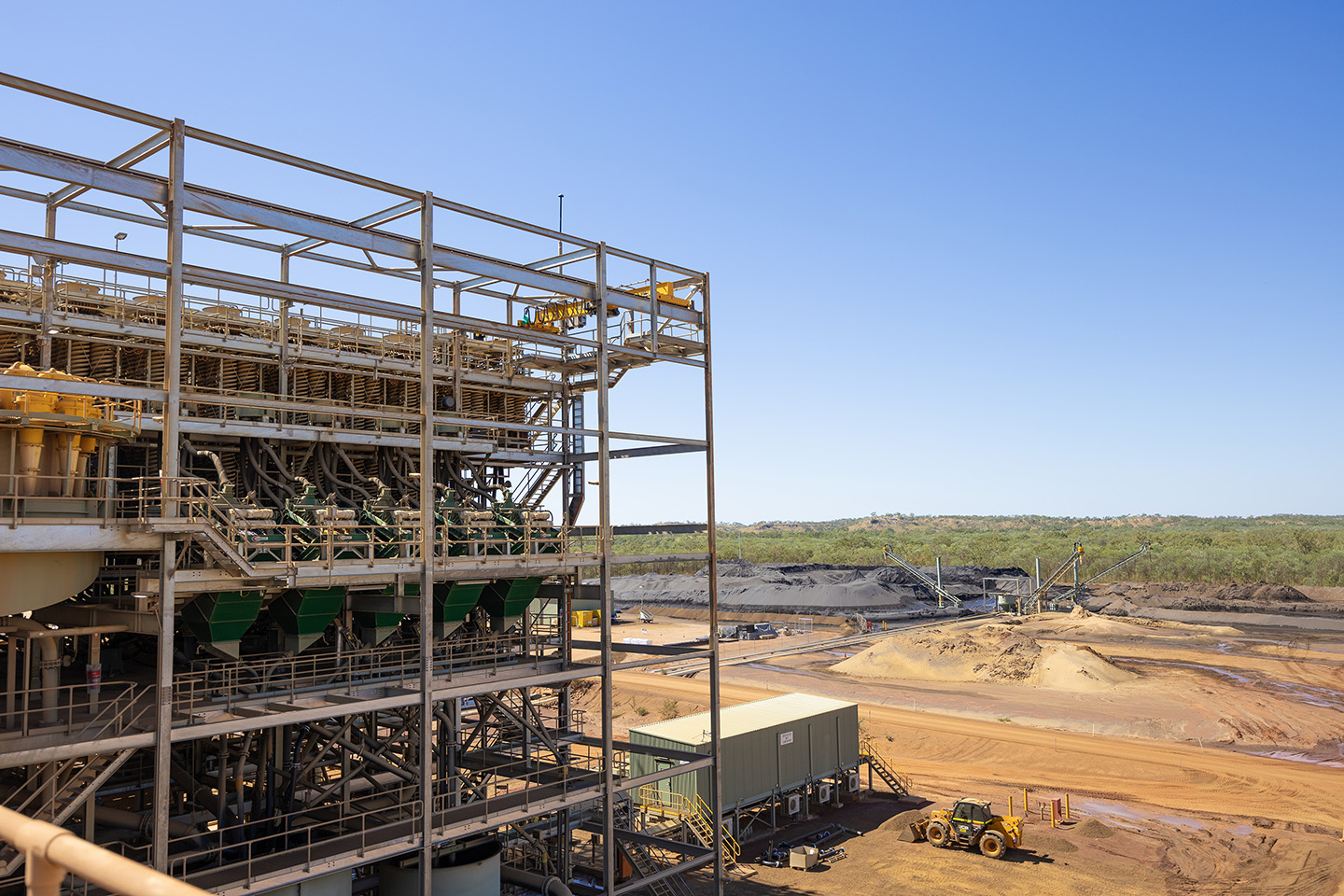
The future of the Thunderbird Mineral Sands mine hangs in the balance as Sheffield Resources enters urgent negotiations to resculpt its debt load following a string of production woes.
Check out what’s clicking on FoxBusiness.com.
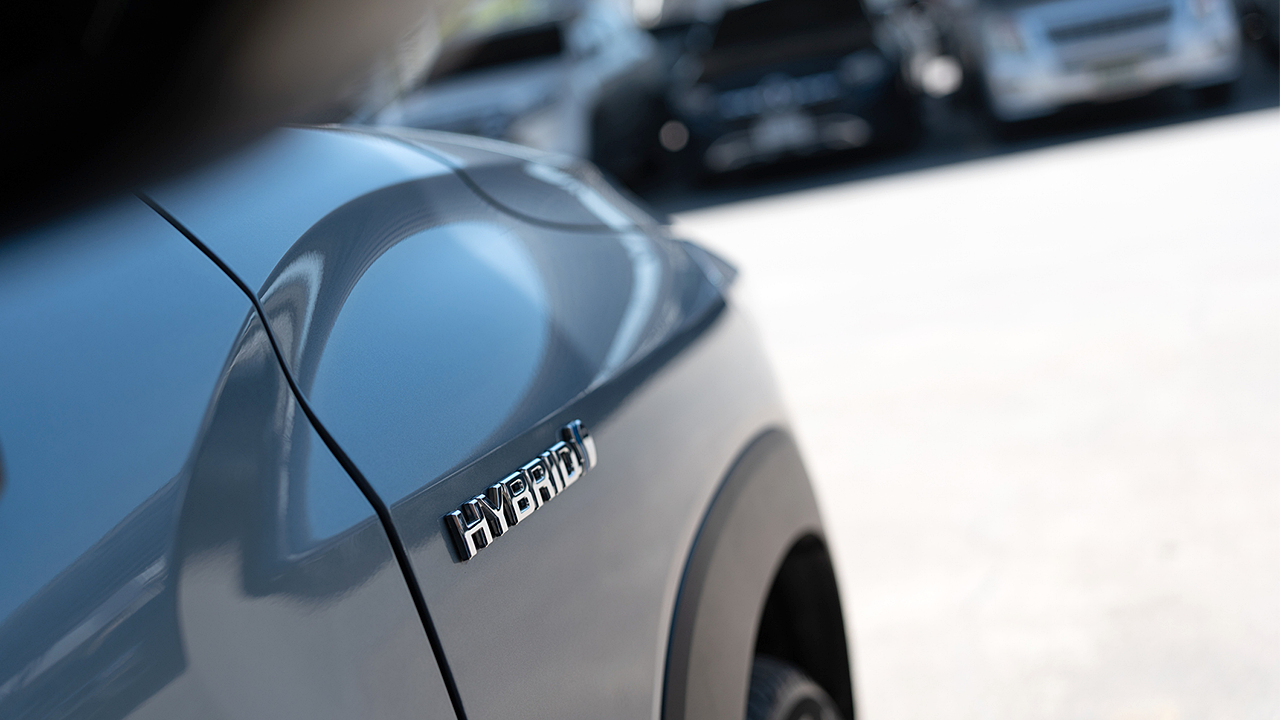
Toyota is recalling more than 73,000 hybrid vehicles over a pedestrian warning sound issue, according to the National Highway Traffic Safety Administration (NHTSA).
Certain 2023–2025 Toyota Corolla Cross Hybrid vehicles are affected by the recall effort because they do not make a loud enough sound while in reverse, making it harder for pedestrians to hear and increasing the risk of injury.
“The vehicles may fail to make sufficient pedestrian warning sounds when in reverse,” the NTSB said in its announcement.
TOYOTA RECALLS MORE THAN 144,000 LEXUS VEHICLES OVER REARVIEW CAMERA FAILURE RISK

Toyota is recalling more than 73,000 hybrid vehicles over a pedestrian warning sound issue. (Getty Images / Getty Images)
“As such, these vehicles fail to comply with the requirements of Federal Motor Vehicle Safety Standard (FMVSS) number 141, ‘Minimum Sound Requirements for Hybrid and Electric Vehicles,’” the agency continued.
A total of 73,528 vehicles are affected by the recall, although only about 1% of them are likely to have the defect.

About 73,528 Toyota Corolla Cross Hybrid vehicles are affected by the recall. (BAY ISMOYO/AFP via Getty Images / Getty Images)
The recall numbers are 26TB08 and 26TA08.
Toyota dealers will update the software on the affected vehicles free of charge to fix the pedestrian warning sounds.
FORD RECALLS MORE THAN 254,000 SUVS DUE TO SOFTWARE ISSUES
Toyota dealers will update the software on the affected vehicles free of charge to fix the pedestrian warning sounds. (Smith Collection/Gado/Getty Images / Getty Images)
CLICK HERE TO GET FOX BUSINESS ON THE GO
Owner notification letters alerting consumers of the safety risks are expected to be mailed out by May 30, 2026.
Business
Great Wall Motor Company Limited 2025 Q4 – Results – Earnings Call Presentation (OTCMKTS:GWLLY) 2026-04-06


Seeking Alpha’s transcripts team is responsible for the development of all of our transcript-related projects. We currently publish thousands of quarterly earnings calls per quarter on our site and are continuing to grow and expand our coverage. The purpose of this profile is to allow us to share with our readers new transcript-related developments. Thanks, SA Transcripts Team

Brent crude futures rose 57 cents, or 0.5%, to $110.34 a barrel by 1202 GMT, while U.S. West Texas Intermediate crude futures were up $1.26, or 1.1%, at $113.67.
Trump, has threatened to rain “hell” on Tehran if it fails to comply with his deadline of 8 p.m. EDT Tuesday to reopen the strait. “They could be taken out,” Trump warned, pledging further action if a deal is not reached.
Responding to a U.S. proposal through mediator Pakistan, Tehran rejected a ceasefire and said a permanent end to the war was necessary, and pushed back against pressure to reopen the strait.
Iranian forces effectively shut the Strait of Hormuz after U.S. and Israeli attacks began on February 28, disrupting a waterway that typically carries about 20% of global oil flows.
“Clock-watching is now playing almost as big a role in oil markets as the fundamentals themselves in the run-up to Trump’s ultimatum deadline,” said Tim Waterer, chief market analyst at KCM Trade.
“The potential for a ceasefire deal offers some counterweight and could spark a relief move lower if it gains traction, but persistent supply worries from the Hormuz chokepoint and damaged energy facilities are keeping the floor under prices.” On Monday, Iran’s Revolutionary Guards halted two Qatar liquefied natural gas tankers and directed them to hold position without providing explanations, sources told Reuters. However, shipping data has shown limited vessel movement through the strait since last Thursday.
The U.N. Security Council is expected to vote on Tuesday on a resolution to protect commercial shipping in the Strait of Hormuz, but in significantly watered-down form after veto-wielding China opposed authorizing force, diplomats said.
The attack in the region continued as explosions were heard in the Syrian capital, Damascus, and surrounding countryside on Tuesday that were caused by the Israeli interception of Iranian missiles, Syrian state TV reported.
Saudi Arabia said on Tuesday it intercepted and destroyed seven ballistic missiles launched towards its Eastern Region, with debris falling near energy facilities, according to the defence ministry.
The conflict has pressured global crude markets, with spot premiums for U.S. WTI crude surging to record highs as Asian and European refiners scramble to secure replacement supplies amid disrupted Middle Eastern flows.
Saudi Arabia’s state oil company Aramco raised the official selling price of its Arab Light crude to Asia for May delivery, setting a record premium of $19.50 a barrel above the Oman/Dubai average.
Adding to supply concerns, Russia on Monday said Ukrainian drones attacked the Caspian Pipeline Consortium’s terminal on the Black Sea, which handles 1.5% of global oil supply. Russia reported damage to loading infrastructure and storage tanks.
OPEC+ agreed on Sunday to lift oil output quotas by 206,000 bpd in May, though the increase will be largely notional as key members cannot boost production because strait closures are curbing exports.
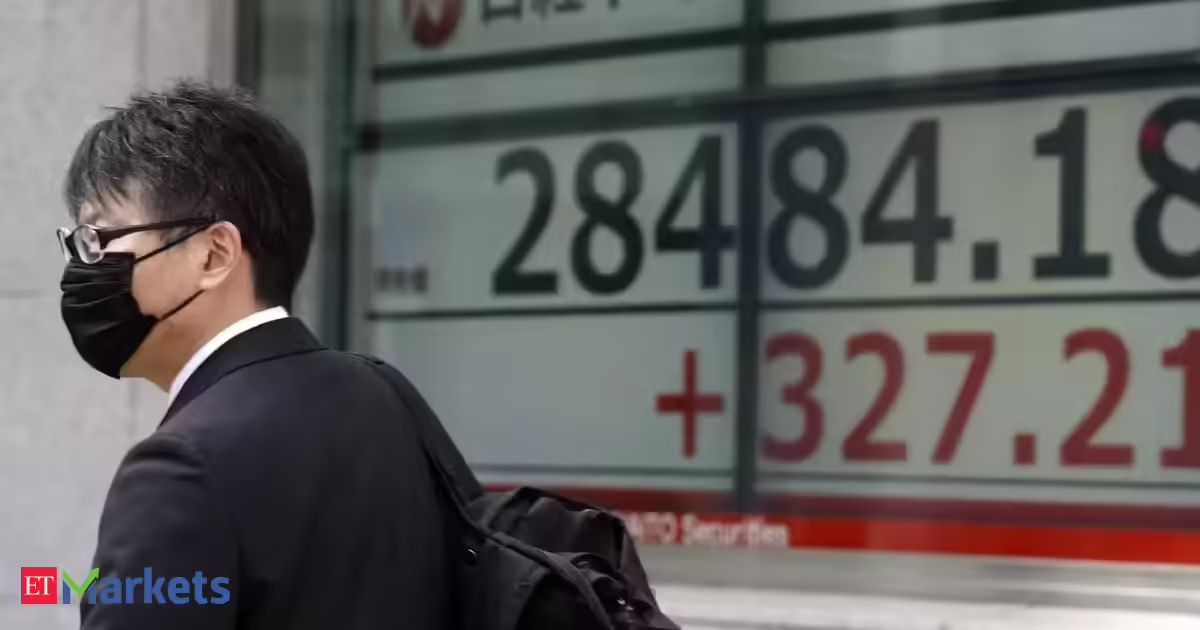
Brent crude trimmed its opening gains to trade just under $110 a barrel as markets remained volatile before Trump’s Tuesday 8 p.m. Eastern Time cutoff. US equity-index futures erased initial losses to trade little changed.
Asian shares opened higher with the MSCI Asia Pacific Index climbing 0.7% on the back of gains in South Korea. Technology stocks — seen as less impacted by the war in the Middle East — led the advance, with Samsung Electronics Co. climbing 1.5% after profit surged eight-fold.
Trump said talks with Iran are “going well” ahead of the deadline to agree to a deal, even as he insisted that freedom of navigation through the Strait of Hormuz must be part of any accord. If Iran doesn’t agree to the US’s terms, the military may destroy “every bridge in Iran by 12 o’clock tomorrow night” and put every power plant “out of business,” Trump warned Monday.
“It’s clearly too early for market watchers to stop thinking about geopolitical risk,” said Jeff Buchbinder at LPL Financial. “For now, we believe the best course of action for investors is to be patient.”
Iran reportedly passed to mediator Pakistan a rejection of a ceasefire proposal. It demanded a permanent end to the war, lifting of sanctions, and reconstruction efforts, in addition to protocol for safe passage through Hormuz, according to the state-run Islamic Republic News Agency.
While traders kept a close eye on geopolitical developments, they awaited this week’s key inflation readings. Data published Monday showed the US service economy expanded in March at a slower pace as employment shrank by the most since 2023 and input prices accelerated.The mixed economic signals illustrate the uncertain time for most businesses, according to Jeff Roach at LPL Financial.
“A prolonged struggle over the Strait of Hormuz into May and June would markedly darken the outlook for the US and the global economy,” he said. “For now, given last Friday’s payroll numbers, Fed policymakers have the luxury of remaining in ‘wait and see’ mode.”

Industry profitability is expected to be muted due to market conditions, Emkay said in a report. It said the nearly 14% decline in the Nifty 50 during Q4 and a 40-basis point rise in bond yields weighed 4-5% negative economic variance for private life insurers and 1% negative for Life Insurance Corp (LIC)-the biggest local institutional holder of stock.
The annualised premium equivalent (APE) in FY26 at life insurers would expand in high single digits. This slowdown in life insurance demand is partly driven by equity market volatility and rising yield expectations, which have dampened demand for ULIPs and non-par guaranteed products.
However, Axis Max Life is expected to lead followed by Life Insurance Corporation of India.
HDFC Life is expected to report single-digit APE growth, with traction balanced across savings products, while value of new business (VNB) margins are likely to remain stable at around 24.5%. ICICI Prudential Life may see higher single-digit growth, with VNB margins at about 24%.
SBI Life is likely to report high single-digit APE growth in the quarter, with FY26 APE growth estimated at around 14% year-on-year, impacted by a slowdown in ULIP sales toward the latter half of March amid volatile equity markets. Its VNB margins are expected to remain stable at around 27%. LIC is likely to report a relatively stronger 13% growth, aided by group business, with VNB margins around 20% as it continues to pivot toward non-participating products.
In contrast, general and standalone health insurers are expected to deliver robust growth. ICICI Lombard General Insurance is likely to report 10-12% growth in gross written premium, supported by motor and health segments, although commercial lines may see a slowdown. Its combined ratio is expected to remain broadly flat at around 102.6%, weighed down by higher expense ratios. Star Health and Allied Insurance is expected to post strong double-digit growth, aided by improved affordability following GST rate changes and normalisation of earlier regulatory impacts. Both claims and combined ratios are likely to improve.

Edwards Lifesciences CVP Lippis sells $82,522 in stock
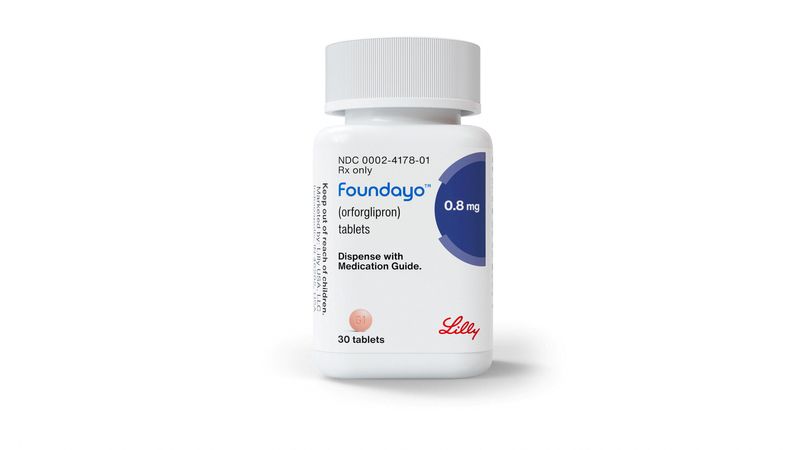

Americans want weight-loss pills for cost and convenience

Lacheev/iStock via Getty Images

By Jennifer Nash
The latest employment report showed that 178,000 jobs were added in March, up from February’s 133,000 loss. This figure was better than the projected addition of 65,000 jobs and marks the largest gain since

The long-awaited $120 million Perth Surf Park has been at least 10 years in the making.

Steve Dyson, landlord of The New Inn, Selby, honoured with award

Sheffield enters debt talks as Thunderbird mine teeters

Will Zcash price go up as a bullish setup forms and shielded supply grows?

Smart energy pays enters the US market, targeting scalable financial infrastructure

Why Israel is blocking foreign journalists from entering

Bitcoin: We’re Entering The Most Dangerous Phase

Sua vida financeira vai melhorar? #tarot #tarothoje #tarotgratis #tarotamor

ANDRY HAKIM SUDAH CAPAI FINANCIAL FREEDOM??!! #andryhakim #stockwise #saham

Vrishabh rashi walon ke liye April ka financial update.#MoneyPrediction #ZodiacTips
-

 NewsBeat4 days ago
Steven Gerrard disagrees with Gary Neville over ‘shock’ Chelsea and Arsenal claim | Football
-

 Business4 days ago
No Jackpot Winner and $194 Million Prize Rolls Over
-

 Fashion3 days ago
Weekend Open Thread: Spanx – Corporette.com
-

 Crypto World5 days ago
Gold Price Prediction: Worst Month in 17 Years fo Save Haven Rock
-

 Business1 day ago
Three Gulf funds agree to back Paramount’s $81 billion takeover of Warner, WSJ reports
-
Crypto World7 days ago
Dems press CFTC, ethics board on prediction-market insider trades
-

 Sports2 days ago
India men’s 4x400m and mixed 4x100m relay teams register big progress | Other Sports News
-

 Business5 days ago
Login and Checkout Issues Spark Merchant Frustration
-

 Tech7 days ago
EE TV is using AI to help you find something to watch
-

 Sports6 days ago
Tallest college basketball player ever, standing at 7-foot-9, entering transfer portal
-
Tech7 days ago
Daily Deal: StackSkills Premium Annual Pass
-

 Tech7 days ago
Flipsnack and the shift toward motion-first business content with living visuals
-

 Tech7 days ago
How to back up your iPhone & iPad to your Mac before something goes wrong
-
Crypto World7 days ago
Valinor raises $25m to put private credit on-chain
-

 Tech7 days ago
What Are The Biggest Limitations Of Supercomputers?
-

 Crypto World6 days ago
Bitcoin enters the public bond market as Moody’s gives a first-of-its-kind crypto deal a rating
-

 Politics7 days ago
Transform Your Space with Stunning Small Works
-

 Politics6 days ago
Starmer’s centre has collapsed, and the left was right all along
-
Crypto World6 days ago
Bitcoin stalls below key resistance as technical signals skew bearish
-
Business2 days ago
No Jackpot Winner, Prize to Climb to $231 Million
You must be logged in to post a comment Login