
Business
Budget should prioritise manufacturing incentives to boost jobs and income: Nilesh Shah


Speaking to ET Now, Shah acknowledged that while reforms are beginning to reflect in consumption data, the impact remains selective.
“But like we were discussing earlier with Radhika and Sandip as well, so much has already been done through the past year, be it income tax, be it GST 2.0, etc. It is already reflecting now in the consumption numbers, albeit very-very selectively. What more can the capital markets want?” the anchor asked.
Shah pointed to manufacturing as the single biggest area with untapped potential.
“So, there are two areas which have the maximum potential to kind of do. One is manufacturing. We have had PLI and we have had some of the indirect reforms like GST, simplification of GST, which have essentially been a big positive for manufacturing. But I believe that we now need to take a more holistic and incentive-driven approach which will boost manufacturing and encourage not necessarily just the MSMEs or the mega, but the slot in between,” Shah said.

He added that India needs to significantly expand the number of manufacturing units, particularly in less-developed regions.
“There have been talks — I think Mohandas Pai made an excellent suggestion — that why do not we identify those 200–250 not so developed districts in the country, in each district encourage entrepreneurs to come in there. The number of people you employ, you get an incentive based on that. It is very easy to track because you link it to the provident fund contribution. So, the challenges around leakages and misuse can be minimised, but I think it is a great suggestion,” he noted.According to Shah, while ease of doing business will continue to improve incrementally, manufacturing must now take centre stage.
“Manufacturing is one area because services have pretty much taken us to where we are. Services are already maybe 50% to 60% of our GDP. Nothing more really needs to be done there, but it is manufacturing. Along with that comes energy infrastructure — all of that,” he said.
The second major reform pillar, Shah said, is investment — both domestic and foreign.
“We will need a lot of capital if we have to grow at 7% to 8%. And how do we attract that capital? Both domestic capital and foreign capital will have to be welcomed, for which we will need to make many-many changes,” he said.
Highlighting taxation as a key area for reform, Shah added, “Over the years we have introduced taxes on capital gains, on dividends, on buybacks. There is also the STT which exists. I think we will have to either remove many of these or rationalise many of these to attract foreign capital. These are the two areas where I believe that the budget is the best platform to truly usher in reforms and put us into that next growth league.”
On consumption, Shah said there is little incremental policy action left for the government to take.
“No, we cannot do much incrementally more to kind of boost consumption. We have ensured that consumers pay less income tax and GST. I do not think beyond this much needs to be done. What can only be done is to essentially grow incomes. When you grow incomes, essentially individuals tend to spend more and that itself drives consumption,” he explained.
He emphasised that income growth — driven by manufacturing, exports, and infrastructure — is the most sustainable way to revive consumption.
“I clearly think the focus has to be around manufacturing, trade, export competitiveness, infrastructure, investments. These are the four or five areas where you really need to… You address these four or five things, consumption from here on will automatically get addressed,” Shah said.
Addressing concerns over why consumption has not rebounded more broadly, Shah said traditional metrics may be missing important shifts within the economy.
“There have been pockets where consumption has happened. So, we tend to look at it from one lens — basically just the consumer product companies. Within that, it has been a mixed basket,” he said.
He cited Nestle India’s recent performance as an example.
“Yesterday or day before, Nestle came out with some stellar numbers. First, when you look at the numbers, you would not even believe these are Nestle India’s numbers. You would think this is some new-age company’s numbers or some new-age consumer product business or platform business,” Shah said.
He added that quick commerce and newer consumption channels are driving incremental growth.
“If you kind of look at what the quick commerce guys are growing at, look at that growth. That really tells you where the incremental growth in consumption is coming from. So, I think it is just that within consumption the frontiers have changed,” he said.
According to Shah, while traditional FMCG may show mixed trends, broader retail and appliance segments are seeing strong momentum.
“If you look at some of those retail chains which are selling consumer appliances and look at their numbers, they have all grown between 20% to 25%. That is a great number to have for an economy which is growing at 7%,” he said.
Summing up, Shah said the government has largely done its part on the consumption front.
“Now there is nothing more that the government can do for consumption. They have done what they ideally should have done, and they have done a great deal on that. The best way now forward is to grow incomes, and to grow incomes is going to be focused back on manufacturing, trade, exports — all of that,” he concluded.


Allspring is a company committed to thoughtful investing, purposeful planning, and the desire to elevate investing to be worth more. Allspring is reimagining investment management to be worth more—creating an investment, distribution, and operational experience that changes the game for clients. Note: This account is not managed or monitored by Allspring, and any messages sent via Seeking Alpha will not receive a response. For inquiries or communication, please use Allspring’s official channels.


Cuba is ready for any potential attack from US amid oil blockade, envoy says


Robert Hauver, MBA, aka “Double Dividend Stocks” was VP of Finance for an industry-leading corporation for 18 years and has been investing for more than 30 years. He focuses on undercovered and undervalued income vehicles and he leads the investing group Hidden Dividend Stocks Plus.With Hidden Dividend Stocks Plus he scours the world’s markets to find solid income opportunities with dividend yields ranging from 5% to 10% or more, backed by strong earnings. Features include: a portfolio with up to 40 holdings at a time including links to associated articles, a dividend calendar, weekly research articles, exclusive ideas, and trade alerts. Learn More.
Analyst’s Disclosure: I/we have no stock, option or similar derivative position in any of the companies mentioned, and no plans to initiate any such positions within the next 72 hours. I wrote this article myself, and it expresses my own opinions. I am not receiving compensation for it (other than from Seeking Alpha). I have no business relationship with any company whose stock is mentioned in this article.
Disclaimer: This article was written for informational purposes only, and is not intended as personal investment advice. Please practice due diligence before investing in any investment vehicle mentioned in this article.
Seeking Alpha’s Disclosure: Past performance is no guarantee of future results. No recommendation or advice is being given as to whether any investment is suitable for a particular investor. Any views or opinions expressed above may not reflect those of Seeking Alpha as a whole. Seeking Alpha is not a licensed securities dealer, broker or US investment adviser or investment bank. Our analysts are third party authors that include both professional investors and individual investors who may not be licensed or certified by any institute or regulatory body.

Whale's Insight: Strategy's $10B Preferred Stock Machine And The Global Rate Freeze


Trump administration touts plan for ICE at airports amid criticism from union, Democrats

Heidelberg Materials: Getting Closer To An Attractive Price
Business
US Senate advances Homeland Security nomination of Mullin, paving way for confirmation vote


US Senate advances Homeland Security nomination of Mullin, paving way for confirmation vote

tanit boonruen/iStock via Getty Images

By Raye Hadi, Research Associate, Digital Assets
Introduction
In Part One of ARK’s four-part guide to stablecoins, we introduced stablecoins and contextualized their development. I argued that the design of each type of stablecoin includes tradeoffs

Alones Creative/iStock via Getty Images

Listen below or on the go via Apple Podcasts and Spotify

Trump threatens Iran’s power plants if strait not open. (0:17) GameStop earnings draw focus as Cohen touts Berkshire style. (1:17) California jury finds Elon Musk misled Twitter investors. (2:15)
The following is an abridged transcript:
It’s a light week for economic data and earnings, meaning sentiment will remain closely tied to the conflict with Iran — and what it means for oil and interest rates.
President Donald Trump said Saturday the U.S. would “obliterate” Iran’s power plants if the Strait of Hormuz is not reopened within 48 hours.
Prediction markets are signaling skepticism.
On Polymarket, traders assign just a 30% chance that traffic returns to normal by the end of April.
Kalshi contracts imply a more gradual reopening, with about a 39% probability by May 15, rising to 53% by June 1 and 59% by July 1.
The strait handles about 20% of global oil shipments.
WTI crude (CL1:COM) (USO) briefly moved back above $100/bbl in weekend trading on IG Index before easing. On the Hyperliquid blockchain, oil was trading around $98/bbl.
With oil putting upward pressure on inflation, expectations for Fed rate cuts this year have largely evaporated. Fed funds futures now indicate nearly a one-in-three chance that rates are higher at year-end.
On the earnings front, GameStop (GME) is likely the headline name among a light reporting slate.
There’s limited analyst coverage, so no formal consensus, but the holiday quarter update carries added weight after CEO Ryan Cohen floated ambitions to turn the retailer into a Berkshire (BRK.A) (BRK.B)-style investment platform.
Cohen has discussed acquiring an undervalued, high-quality public consumer company run by what he calls a “sleepy” management team. Any detail on deal size, timing, financing or potential targets would move sentiment — though management hasn’t held an earnings call in more than two years.
Seeking Alpha analyst Bernard Zambonin said he expects the results to offer little in the way of core fundamentals. However, backing from high-profile investors like Michael Burry continues to support the stock’s momentum and reinforces its appeal to those who view GameStop less as a retailer and more as an investment vehicle.
Also on the calendar:
Chewy (CHWY), PDD (PDD) and Beyond Meat (BYND) report Wednesday, followed by Pony AI (PONY) on Thursday.
BYD (BYDDF) and Carnival (CCL) report Friday.
In the news this weekend, a California jury found that Tesla (TSLA) CEO Elon Musk defrauded Twitter investors through certain public statements about the company’s user metrics, ruling that his comments were materially false or misleading.
The case centered on Musk’s May 13 and May 17 tweets in 2022 — including one that said the deal was “temporarily on hold” pending confirmation that bots accounted for about 5% of users, as disclosed in SEC filings.
Lawyers for the plaintiffs said total damages could reach as much as $2.6B — a small fraction of Musk’s net worth.
And OpenAI (OPENAI) is planning a major hiring push.
According to the Financial Times, the company aims to nearly double its workforce to about 8,000 employees by the end of 2026, up from roughly 4,500 today, as it seeks to narrow the gap with Anthropic (ANTHRO).
Most of the hires would focus on product development, engineering, research and sales. OpenAI is also expanding its “technical ambassadorship” initiative — specialists who help enterprise clients make better use of its tools.
And for income investors, Broadcom (AVGO) goes ex-dividend on Monday, with a payout date of March 31.
Dividend heavyweight Altria (MO) and Seagate (STX) go ex-dividend on Wednesday. Altria pays on April 30, while Seagate pays out on March 25.
Dick’s Sporting Goods (DKS) goes ex-dividend on Friday, with an April 10 payout date.
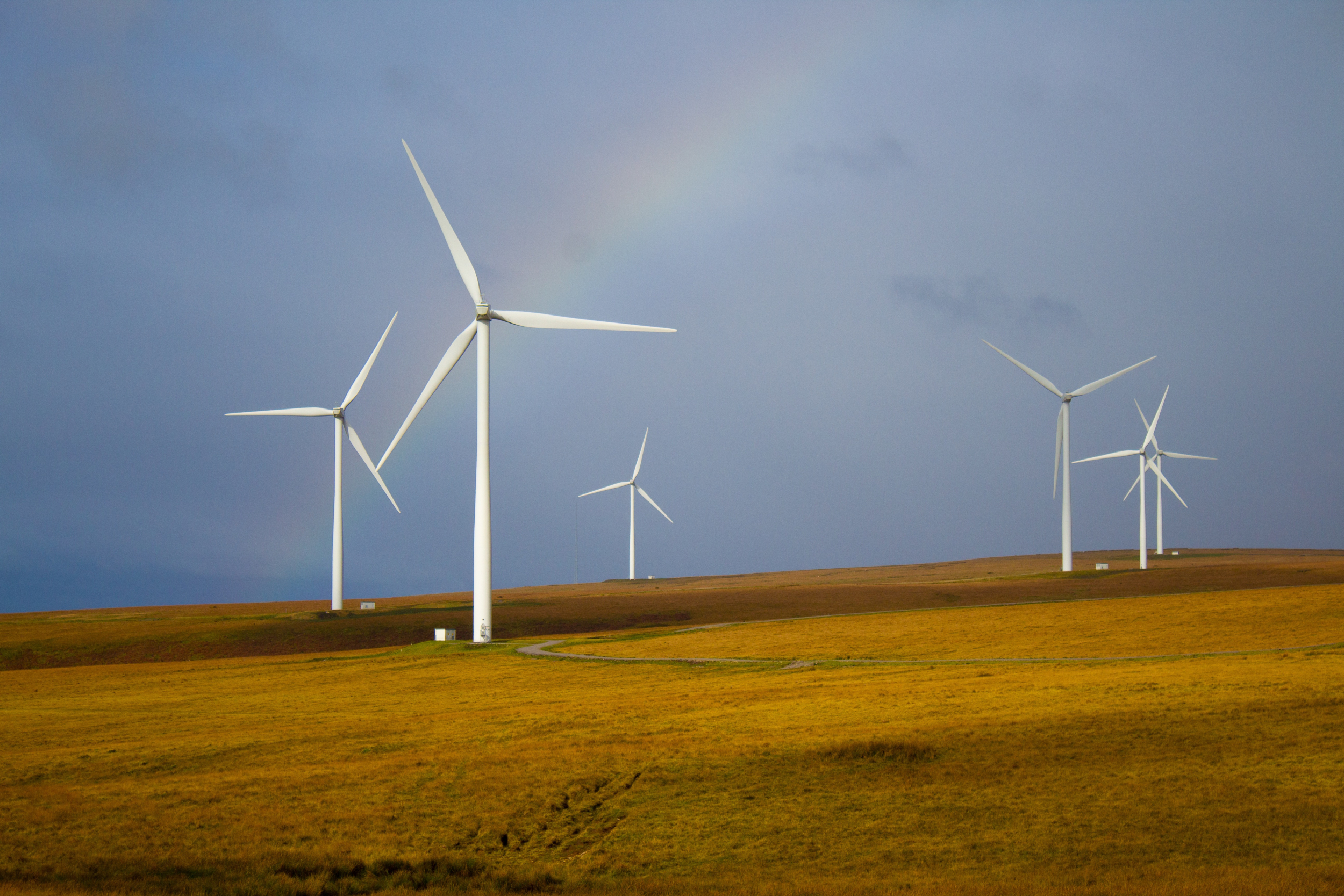
Australia has reached a pivotal moment in its energy history, with renewable sources exceeding 50% of electricity generation in the National Electricity Market (NEM) for the first time during the December 2025 quarter, according to the Australian Energy Market Operator (AEMO). This shift underscores the country’s accelerating move away from coal while oil continues to lead primary energy use.
The latest data from government reports, AEMO quarterly updates and industry analyses reveal a clear top five ranking of energy sources, distinguishing between total primary energy consumption (which includes transport, industry and heating) and electricity generation (focused on the power grid).
For total primary energy supply — the broadest measure encompassing all energy uses — fossil fuels still dominate, accounting for over 90% as of the most recent comprehensive figures from the Australian Energy Update 2025 (covering 2023-24 data with trends extending into 2025).
- Oil and oil products — Approximately 36-41% of total energy supply. Oil remains Australia’s largest single energy source, powering transportation, industry and non-electric uses. In 2024 estimates from the International Energy Agency (IEA), oil products held 36.5%, while broader consumption analyses place it at 41%. It continues to lead in states like New South Wales, Victoria and Queensland.
- Natural gas — Around 25-28%. Gas ranks second in primary energy, used for heating, industrial processes and some electricity. IEA data for 2024 shows 27.6%, with government updates confirming its steady role despite recent declines in electricity generation.
- Coal (black and brown) — About 25-26%. Coal, once dominant, now third in primary energy but still vital for electricity in eastern states. Domestic production remains heavily coal-based at 63%.
- Renewables (solar, wind, hydro, bioenergy and others) — Roughly 5-10% in primary supply, though growing fast in electricity. This category includes hydro at under 1%, solar/wind/other at nearly 6%, and biofuels/waste at 3.5%.
- Other sources — Minor contributions from liquids and non-renewable wastes.
Key 2025-2026 electricity mix highlights include:
- Renewables overall reached over 50% in the December quarter 2025, with coal and gas combined falling below 50% for the first time, driving record-low quarterly emissions.
- Rooftop solar set records, averaging 4,407 megawatts and briefly hitting 61% of supply in peaks.
- Battery discharge nearly tripled year-over-year.
- Coal (primarily black coal) — Still the largest single source in 2024 at about 39.1% (black coal) plus 12.9% brown coal, totaling over 50%. However, coal’s share fell sharply in 2025, dropping to record lows around 44% in some months and continuing downward as plants retire and renewables scale.
- Wind — 13.4% in 2024, the top renewable. Wind farms remain a cornerstone, with onshore additions contributing significantly.
- Solar (rooftop and utility-scale combined) — Rooftop solar at 12.4%, large/medium-scale at 7.2%, totaling around 19-20%. Solar PV overtook other sources in some rankings, with 2025 growth pushing it higher amid record installations exceeding 4 million systems.
- Gas — 7.6% in 2024, falling to historic lows in 2025 electricity output as renewables and batteries displace it.
- Hydro — 5.5%, stable from Tasmania and Snowy schemes, providing reliable baseload.
This reordering reflects Australia’s aggressive push toward net-zero goals. Rooftop solar led capacity additions in 2024 with 3.2 GW, while large-scale renewables and batteries saw strong investment. By early 2026, reports indicate renewables consistently approaching or exceeding half of grid supply, especially during peak solar seasons.
Experts attribute the momentum to policy support, falling technology costs and public demand for cleaner energy. The AEMO forecasts continued renewable expansion to replace aging coal plants, with batteries and pumped hydro enabling grid stability.
Challenges persist, including transmission bottlenecks and regional variations — Tasmania nears 100% renewables, while Queensland lags at under 30%. Yet the trajectory is clear: renewables are no longer supplementary but central to Australia’s power system.
As the nation grapples with rising demand from electrification and extreme weather, the 2025 milestone signals a turning point. With investment in clean energy hitting highs and coal’s dominance eroding, Australia’s top energy sources are increasingly defined by solar rooftops, sprawling wind farms and innovative storage rather than traditional fuels.

Full list of DWP benefits rising in April 2026 from Universal Credit to PIP

Bitcoin’s four-year cycle intact; Q4 rally forecast

Deputy Resigns Amid Foot-Fetish Account Scandal


-

 Tech7 days ago
Your Legally Registered ‘Motorcycle’ Might Not Count Under Proposed US Law
-

 Fashion2 days ago
Weekend Open Thread: Adidas – Corporette.com
-

 Politics2 days ago
Jenni Murray, Long-Serving Woman’s Hour Presenter, Dies Aged 75
-
 Tech5 days ago
Are Split Spacebars the Next Big Gaming Keyboard Trend?
-

 Crypto World21 hours ago
Best Crypto to Buy Now: Strategy Just Spent $1.57 Billion on Bitcoin During Fear While Early Investors Quietly Enter Pepeto for 150x Potential
-

 News Videos4 days ago
RBA board divided on rate cut, unusually buoyant share market | Finance Report | ABC NEWS
-

 Crypto World22 hours ago
Bitcoin Price News: Bhutan Sells $72 Million in BTC Under Fiscal Pressure, but the Smart Money Entering Pepeto Sees What the Market Does Not
-
 Crypto World2 days ago
NIO (NIO) Stock Plunges 6.5% as Shelf Registration Sparks Dilution Worries
-

 Business6 days ago
Australian shares drop as Iran war enters third week
-

 Crypto World6 days ago
Crypto Lender BlockFills Enters Chapter 11 with Up to $500M in Liabilities
-

 Politics4 days ago
The House | The new register to protect children from their abusers shows Parliament at its best
-

 Fashion6 days ago
25 Celebrities with Curly Hair That Are Naturally Beautiful
-

 Tech3 days ago
inKONBINI Lets You Spend Summer Days Behind the Register
-
 Politics5 days ago
Real-time pollution monitoring calls after boy nearly dies
-

 Crypto World4 days ago
Canada’s FINTRAC revokes registrations of 23 crypto MSBs in AML crackdown
-
 NewsBeat4 days ago
Residents in North Lanarkshire reminded to register to vote in Scottish Parliament Election
-

 Business6 days ago
Meta planning major layoffs as AI spending and automation reshape workforce
-

 News Videos4 days ago
PARLIAMENT OF MALAWI – PAC MEETING WITH REGISTRAR OF FINANCIAL ON AMARYLLIS HOTEL – INQUIRY LIVE
-
Entertainment6 days ago
Oscars reunite Rob Reiner supergroup of 17 stars for emotional tribute: Here's who appeared on stage
-

 Business4 days ago
Who Was Alex Pretti? 5 Key Facts About the ICU Nurse Killed by Federal Agents in Minneapolis
You must be logged in to post a comment Login