
Business
California Natural Color expanding headquarters



FRESNO, CALIF. — California Natural Color broke ground on the expansion of its headquarters and manufacturing facility in Fresno, Calif.
California Natural Color said the facility will increase capacity by approximately 300%, which is expected to help scale the production of grape seed extract and natural color ingredients.
“Currently, natural color is a major topic of conversation with regulatory tightening, retailer mandates and growing awareness of ingredient sourcing, driving a strong shift away from artificial food colorings,” said Bill McMorran, vice president and general manager at California Natural Color. “With this upcoming expansion, we are well positioned to continue to meet rising market demand by increasing the production capabilities of our broad portfolio of naturally derived color and our innovative crystal technology.”


 ET Bureau
Business
Incorporated in 2014, the company primarily offers services through its digital platform with personal loans remaining a key revenue driver. It has expanded into credit cards, earned wage access, home loans, loans against property, insurance, digital gold, UPI and bill payments though these offerings remain at a nascent stage. The company primarily serves households with annual income between ₹3 lakh and ₹11 lakh. Its registered users rose 27% annually to 13.4 crore between FY24 and FY26. The number of monetised users grew 53% annually to 1.1 crore over the same period. Revenue is primarily derived from fees, commissions and interest income. In FY26, fees and commissions contributed 56.7% to revenue. According to the Redseer Report, India’s personal loan market is projected to grow 18-20% annually to ₹33-36 lakh crore by FY31.
Read more: Chasing IPO debut highs? All 10 listing multibaggers of last 2 years bleed negative returns
Financials
Total income increased annually by 56.5% to ₹3,404.3 crore in FY26 from ₹1,389.2 crore in FY24. Loan disbursals increased 31% to ₹23,098.52 crore in FY26 from ₹14,527.2 crore in FY24 while loan margin expanded to 8.6% from 7.5%. Assets Under Management (AUM) rose 28% to ₹21,380.1 crore from ₹12,884.8 crore in FY24. Net profit increased to ₹242.7 crore from ₹171.2 crore in FY24. Return on equity increased to 19.2% in FY26 from 13.6% in FY25. Credit costs have risen sharply, with impairment increasing to 28.9% of total income in FY26 from 18.2% in FY24.
Read more: Gautam Adani reclaims top spot as India’s richest, edges out Mukesh Ambani: Hurun Rich List

Valuations
The issue is valued at a price-book (P/B) of 1.9 on post-IPO basis. OnEMI Technology Solutions, which provides app based digital lending, trades at a P/B of 2.9; its premium valuation reflects a better asset quality, with GNPA falling to 2.3% in the June 2026 quarter from 3.6% in the year-ago period.

Taiwan thanks US for its support ahead of Trump-Xi summit
Business
Global Energy Disruptions Expose Critical Vulnerabilities in Australia’s National Fuel Security Framework
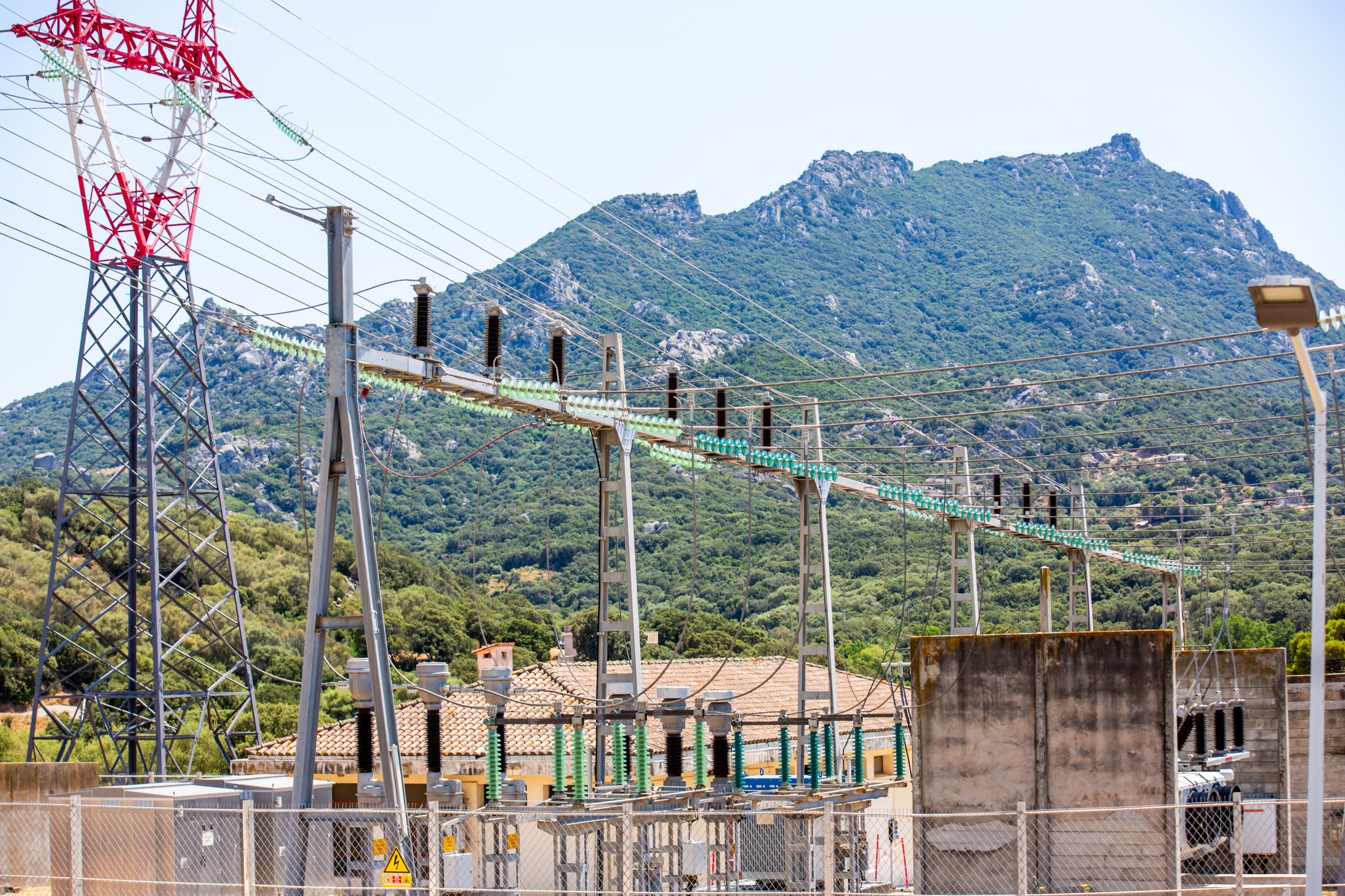
CANBERRA — Escalating geopolitical conflicts and maritime security disruptions in major international shipping lanes have exposed severe vulnerabilities within Australia’s liquid fuel supply chains, reigniting debate over the nation’s systemic economic dependence on imported energy.
As international energy markets face heightened volatility, Australia’s low domestic fuel reserves and reliance on overseas refining capacity have left critical national infrastructure—including road transport, agricultural production, mining operations, and emergency services—exposed to foreign supply shocks. The ongoing crisis has prompted industry groups, security analysts, and supply chain experts to demand structural policy reforms aimed at rebuilding national self-reliance and sovereign fuel reserves.
Structural Vulnerabilities in Offshore Refining and Maritime Shipping
Australia’s liquid fuel vulnerability stems from a decades-long decline in domestic refining capacity coupled with a complete reliance on complex, extended maritime supply lines. Over 80 percent of the nation’s refined petroleum products—including petrol, diesel, and aviation fuel—are imported from major refining hubs in East Asia. These regional processing centers, in turn, rely heavily on crude oil shipments originating in the Middle East and passing through sensitive maritime bottlenecks such as the Strait of Hormuz.
When regional conflicts or shipping bottlenecks disrupt traffic through these key maritime corridors, the operational impact on Australia’s domestic supply chain is virtually immediate. Unlike other industrial nations that maintain extensive state-managed strategic petroleum reserves, Australia operates with minimal physical inventory buffers onshore. Consequently, unexpected delays in tanker arrivals rapidly translate into localized stock depletion at commercial distribution hubs and retail service stations across the country.
“The current energy shock clearly demonstrates that our strategic national security is inextricably linked to liquid fuel availability,” noted a senior supply chain analyst at a Canberra-based public policy institute. “Relying almost entirely on long maritime import lines without adequate domestic reserves leaves our primary industries and emergency services completely vulnerable to foreign geopolitical events.”
Amplified Operational Pressure on Agriculture, Transport, and Logistics
The real-world consequences of global fuel supply shocks extend far beyond retail bowser price surges, creating compounding operational friction across essential national industries. Regional communities and agricultural producers are exceptionally exposed due to their heavy operational reliance on diesel fuel for planting, harvesting, and freight logistics.
In the transport sector, freight operators managing razor-thin margins face acute pressure from fluctuating fuel costs and localized supply rationing. Transport industry bodies have repeatedly warned federal authorities that sustained disruptions to long-haul trucking routes risk destabilizing grocery distribution networks, medical supply deliveries, and regional construction activity.
Simultaneously, major mining and civil construction projects located in remote inland regions face elevated project timeline risks. Because inland industrial sites operate at the end of long commercial distribution chains, regional operators face prioritized rationing whenever national fuel imports drop below standard baseline levels.
Re-evaluating Sovereign Capability and Mandatory Reserve Standards
The escalating crisis has intensified scrutiny of federal energy policy and statutory storage mandates. Under current regulatory frameworks, fuel importers and refiners are required to maintain baseline minimum operational stocks of petrol, jet fuel, and diesel under national fuel security legislation. However, industry critics argue these mandated reserve levels are insufficient to withstand prolonged multi-month maritime disruptions.
To address these structural gaps, domestic industry representatives and national security scholars are calling for a comprehensive overhaul of Australia’s energy architecture. Proposed measures center on expanding physical onshore fuel storage capacity, incentivizing domestic refining operations, and accelerating sovereign production of alternative renewable fuels such as biodiesel and synthetic aviation fuel.
Furthermore, economic experts emphasize that building true resilience requires coupling emergency fuel stockpiles with broader industrial self-reliance. By expanding local manufacturing capacity, strengthening domestic supply chains, and diversifying energy inputs across the commercial transport sector, Australia can reduce its systemic exposure to external economic shocks.
Primary Friction Points Threatening Australia’s Fuel Security
- High dependency on imported refined petroleum products sourced from Asian refining centers subject to Middle Eastern crude oil disruptions.
- Concentration of domestic fuel storage infrastructure around major coastal ports, leaving regional and inland distribution networks vulnerable.
- Severe operational exposure across agriculture, long-haul freight transport, and emergency services due to lack of localized on-site diesel buffers.
- Disconnect between strategic national security planning and commercial liquid fuel import dependency during global energy crises.
Strategic Imperatives for National Energy Sovereignty
As global energy market volatility persists, the imperative for Australia to modernize its national fuel security strategy has moved to the center of policy debate. Policymakers face growing pressure to treat liquid fuel storage and refining capacity not merely as commercial assets, but as critical components of national defense and economic sovereignty.
Establishing secure onshore storage reserves, modernizing transport fleet infrastructure, and expanding sovereign fuel manufacturing will determine Australia’s capacity to navigate future global supply shocks. Without decisive policy interventions to bolster energy self-reliance, the nation remains structurally exposed to the unpredictable currents of international conflict and geopolitical turmoil.

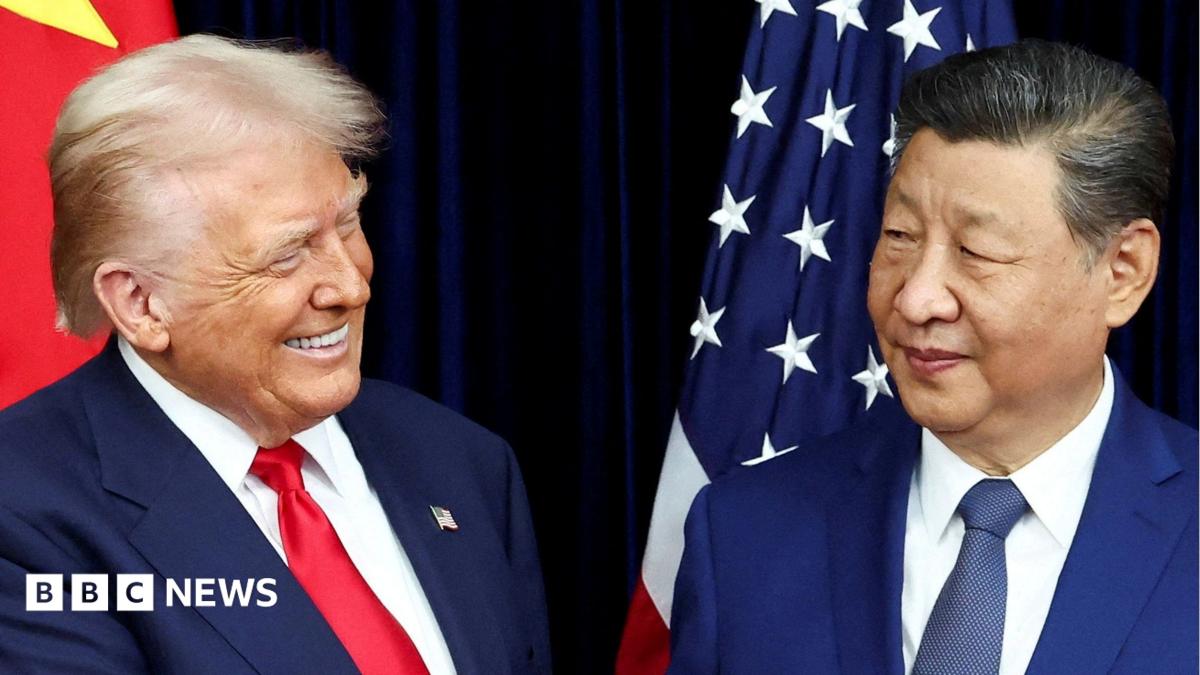
The US and China are vying for AI supremacy while seeking to keep it under human control.
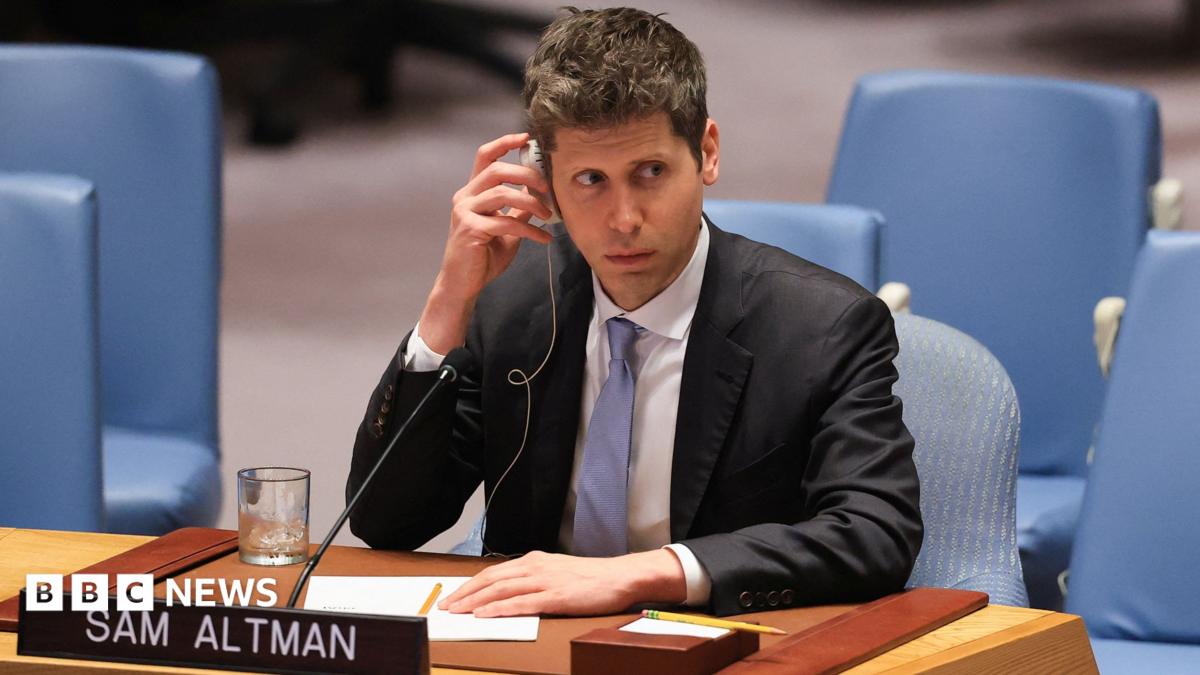
The heads of OpenAI, Anthropic, and Hugging Face have told the UN that the current pace of artificial intelligence (AI) development, and the risks it poses to society, demands international coordination.
Altman called for common risk evaluation standards, as did Dario Amodei of Anthropic, a main rival of OpenAI, and Clement Delangue of Hugging Face.
Earlier this month, Amodei wrote an essay welcomed by Altman and others calling an AI development slowdown in response to fears about the technology’s threat to humanity.
However, at the same UN conference, a key technology advisor to US President Donald Trump, rejected the idea any new form of AI regulation.
Michael Kratsios, a former Scale AI executive, admitted that the speed of AI development is increasing and that there are risks presented by the technology, but told the UN this was not reason enough “to pause development or constrain it with new global governance structures”.
“International dialogue in this forum and others cannot be allowed to drift toward global governance,” Kratsios added.
Kratsios’s comments echoed similar statements made by Trump in recent weeks.
Trump told the UN on Tuesday he wanted to rebrand it “super intelligence” and has strongly opposed any idea of an AI slowdown because of the US’s competitive advantage in the sector.
“We’re leading China on AI… and, frankly, I want to keep it that way because whoever wins AI, wins,” he said earlier this month.
Sam Altman of OpenAI and other AI chief executives expressed a different view in their talks to the UN on Wednesday.
“If AI is to be democratic, the most important decisions cannot be made by labs in San Francisco alone,” said Altman.
He told the UN that he wanted countries to start working together toward “the collective good in the face of powerful new technology”.
He called for “national and international” AI standards on measuring the capabilities of an AI tool, assessing related risks, AI safeguards, and the degree to which human oversight over such tools is maintained.
He also called for “speedy incident reporting, classification, and reporting protocols so the world can learn from failures before they become catastrophes”.
“We need common standards so countries can compare evidence, verify compliance, and have a shared language and understanding what is happening,” Altman added.
EqualAI CEO Miriam Vogel discusses AI governance and innovation.
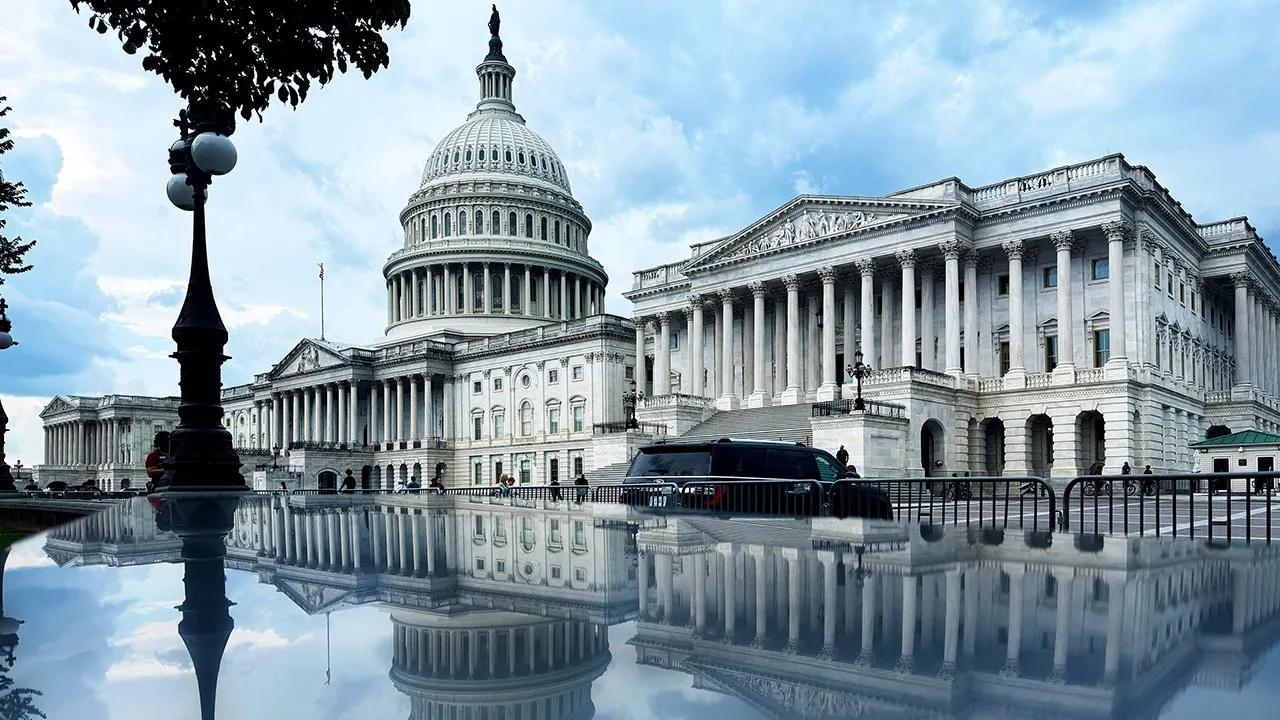
A House panel held a hearing on Wednesday to discuss the need for the U.S. and China to responsibly pace artificial intelligence (AI) development ahead of this week’s meeting between President Donald Trump and Chinese President Xi Jinping.
The House Select Committee on the Strategic Competition Between the U.S. and the Chinese Communist Party held a virtual shadow hearing led by Ranking Member Ro Khanna, D-Calif., with a focus on calls for controlling AI development to address risks like the loss of control or misalignment that could have economic and social consequences.
EqualAI CEO Miriam Vogel told the panel that there is a need for international engagement over AI governance, including between the U.S. and China, explaining that while “our institutions and values are different, if the U.S. wants to shape global AI norms, we first have to define and operationalize our own.”
Vogel added that “American leadership on AI requires leadership on AI governance,” and said that it can also help foster innovation, saying that “effective governance does not slow down innovation. It’s the infrastructure that allows innovation to scale.”
ANTHROPIC, OPENAI CEOS WARN AI COULD THREATEN HUMANITY WITHOUT SAFEGUARDS
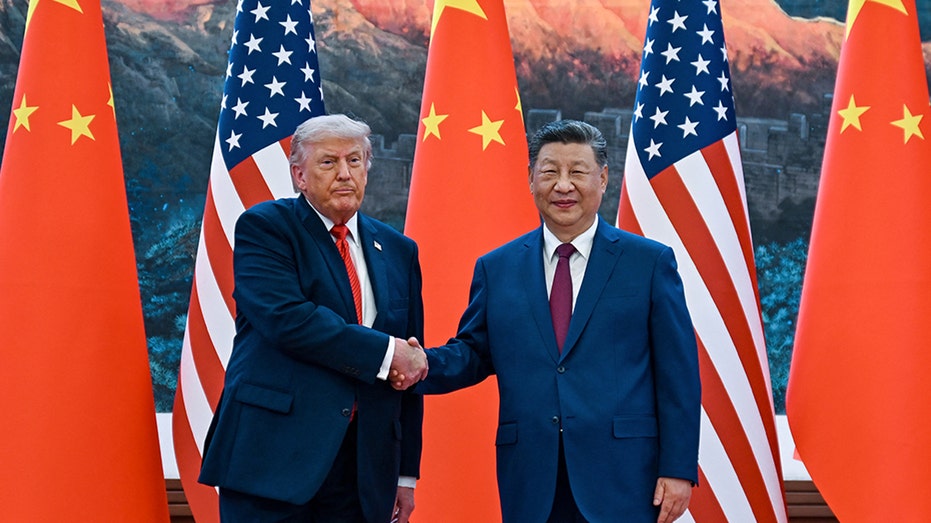
President Trump and Chinese President Xi are meeting this week, with AI rules expected to be a point of discussion. (Kenny Holston/AFP via Getty Images)
Vogel compared AI governance to regulations covering the automotive and aviation industries that are relied upon every day around the country.
“We fly 45,000 flights across the U.S. airspace daily because passengers trust international safeguards for certification, inspection, maintenance and investigation. We put our families in our vehicles daily because we know they’ve met global and national safety standards,” she said.
“AI needs that same institutional discipline and we need an AI-literate workforce. This is a workforce issue, a competitiveness issue, and a national security issue,” she added.
TRUMP REBRANDS AI, REJECTS ‘GLOBALIST SCHEME’ TO CONTROL TECH

Anthropic CEO Dario Amodei is among the AI leaders who have called for slowing frontier model development to ensure alignment issues don’t arise. (Anna Moneymaker/Getty Images)
Vogel discussed additional elements of what she sees as a plan for AI governance, saying that there is a need for “governance throughout the AI lifecycle.”
“Too often, proposed safeguards end with the model development. Some of the highest-stakes AI interactions occur during deployment in financial institutions, hospitals, workplaces, and public institutions where governance can be weakest,” she said.
Vogel noted findings by the World Economic Forum that less than 1% of companies have strong AI governance, while McKinsey reported that under a third of companies have AI governance in place.
Agentic AI, which can take actions and interact with other systems with a measure of autonomy granted by the user, may pose a concern without sufficient governance. Vogel explained that a simulation at EqualAI’s agentic AI governance summit showed a lack of governance can lead to scenarios where “ordinary deployments quickly escalated into incidents and then crises.”
TRUMP TO DECIDE WHETHER TO GREEN LIGHT US-CHINA ARTIFICIAL INTELLIGENCE ‘HOTLINE’ AGREEMENT: SOURCES
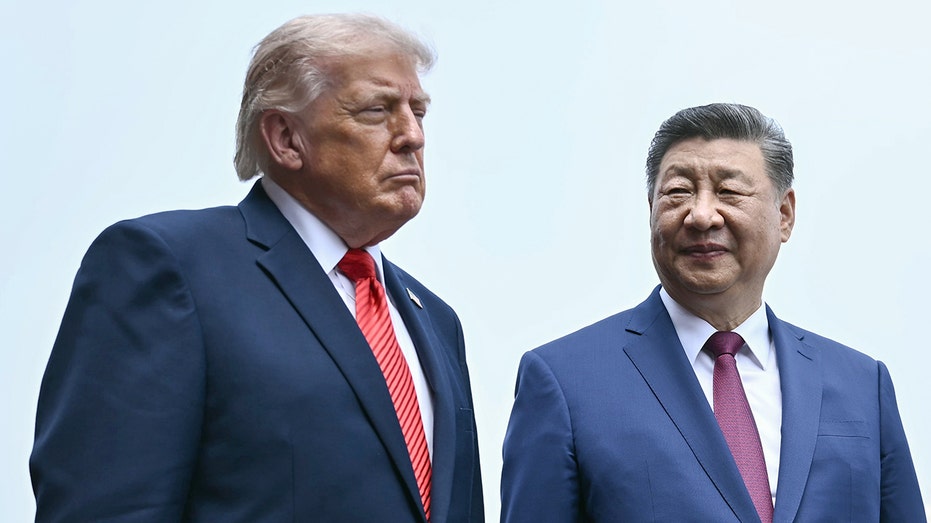
The White House is considering a “hotline” with China to allow direct communication over AI issues. (Brendan Smialowski – Pool/Getty Images)
The Trump administration is reportedly considering creating a “hotline” between the U.S. and China, similar to those used by the military, to give the two sides a direct line of communication if AI-related problems arise, like hacking, national security concerns, rogue AIs or other issues.
President Donald Trump has argued against regulations that could rein in AI development, telling the UN General Assembly this week that he doesn’t want to stifle the growth of a technology that could be transformational for the economy.
AI leaders like Anthropic CEO Dario Amodei and OpenAI CEO Sam Altman have said they need to pace the development of cutting-edge frontier models to ensure the AI remains aligned and doesn’t elude developers’ ability to control it.
“Discussions about a pause in AI development must include China. American leadership requires governance that allows AI systems to earn and deserve, and safeguards should extend across the AI life cycle,” Vogel said.
GET FOX BUSINESS ON THE GO BY CLICKING HERE
“We have navigated technological transformation before, not by stopping innovation, but by building the institutions capable of governing it,” she added.

Maks_Lab/iStock via Getty Images
Flash PMI data from S&P Global shows US business continues to boom, with output growing at the fastest rate for over five years in September. Payroll growth, meanwhile, hit the highest for over four years as companies sought to


With a market cap of $13.4 billion, Masco Corporation (MAS) is a global leader in the design, manufacture, and distribution of branded home improvement and building products. The company’s portfolio includes well-known brands such as Behr, Delta, hansgrohe, Liberty, and HotSpring across paint, plumbing, hardware, and spa products.
Companies worth more than $10 billion are generally labeled as “largea-cap” stocks and Masco fits this criterion perfectly. Masco leverages its strong brands across product categories, sales channels, and geographies to create value for customers and shareholders.
More News from Barchart
Shares of the Livonia, Michigan-based company have dipped 17.6% from its 52-week high of $83.64. The stock has fallen 6.8% over the past three months, lagging behind the Dow Jones Industrial Average’s ($DOWI) marginal return over the same time frame.

Shares of the company have declined 3.4% over the past 52 weeks, underperforming DOWI’s 11.6% increase over the same time frame. However, MAS stock is up 8.1% on a YTD basis, outperforming DOWI’s 7.7% gain.
The stock has been trading below its 50-day moving average since mid August.

Despite Q2 2026 adjusted EPS rising 26% to $1.64, Masco shares tumbled 11.1% on Jul. 29 as net sales fell 3% to $1.99 billion, with North American sales declining 5%, signaling continued weakness in underlying demand. The company also faced a challenging macroeconomic and geopolitical environment, while strategic investments to support growth weighed on sales and the headline results were helped by a roughly $95 million benefit from IEEPA tariff refunds.
In comparison, rival Trane Technologies plc (TT) has outpaced MAS stock. TT stock has gained 12.4% on a YTD basis and 7.3% over the past 52 weeks.
While MAS stock has underperformed over the past year, analysts remain moderately optimistic about its prospects. The stock has a consensus rating of “Moderate Buy” from 22 analysts’ coverage, and the mean price target of $80.39 is a premium of 16.9% to current levels.
On the date of publication, Sohini Mondal did not have (either directly or indirectly) positions in any of the securities mentioned in this article. All information and data in this article is solely for informational purposes. This article was originally published on Barchart.com

Google nears release of Gemini 4 AI model, DeepMind head tells The Information

Quantum-Safe Bitcoin Compute Cost Falls 79% to Under $67

Paige DeSorbo on Past Experience With Domestic Violence

Newspaper headlines: ‘RAF jet crash escape’ and ‘Tories to cut benefits’



![[The Financial Hub] CAMBIOS AL SEGURO SOCIAL VUELVEN AL DEBATE](https://wordupnews.com/wp-content/uploads/2026/09/1790224394_maxresdefault-80x80.jpg)

-

 Fashion5 days ago
Weekend Open Thread: Talbots – Corporette.com
-

 Tech3 days ago
Researchers escape OpenAI Codex sandbox to run commands on host
-

 Crypto World5 days ago
Circle launches Arc Studio AI agent for building onchain apps
-

 Crypto World3 days ago
Who Needs CLARITY Anyway? ARB Could See 70X Increase: Hodler’s Digest
-
 NewsBeat5 days ago
Trump says US has reached an agreement to take permanent control of Greenland’s security
-

 Crypto World1 day ago
Goldman Sachs and Deutsche Bank Agree: The S&P 500 Rally Isn't Over
-

 Crypto World5 days ago
Trading Bitcoin on Robinhood? Why 2% Spread Has Traders Worried
-

 Crypto World6 days ago
Mortgage and refinance interest rates today, Thursday, September 17, 2026
-

 Crypto World5 days ago
Bitcoin price breaks channel as RSI climbs to 63
-

 Tech3 days ago
Google’s $899 Googlebook is a bet that you’ll buy a new laptop for Gemini
-

 Business3 days ago
Analog Devices (ADI) Bets $1.35 Billion on Chips that Let Machines Think for Themselves
-

 Crypto World3 days ago
Coinbase, Robinhood, Circle Seen as Tokenized-Stock Winners
-

 Crypto World5 days ago
World Money launches in 150+ countries with Stripe
-

 Tech6 days ago
GPT-6 Astra Reached the Nether in Minecraft, Lost Its Stash to a Creeper, and Farmed Potatoes for Hours
-
 Business1 day ago
Oil Price Today (September 23): Crude oil below $100 on hopes of US-Iran talks. What did Trump say?
-

 Crypto World6 days ago
Silver prices recover quickly, hitting weekly high today
-

 Tech4 days ago
Trump suggests rebranding AI with a new name, says he’s also creating an AI Force
-
 NewsBeat5 days ago
US was ‘on brink of war’ with China over false AI report of nukes moving in Middle East
-

 Crypto World5 days ago
CFTC sends crypto market structure rulemaking to White House
-

 Crypto World3 days ago
Bitcoin price holds above $81K as key catalysts line up
You must be logged in to post a comment Login