
Business
Can Kevin Durant Play In Game 2 Playoffs?

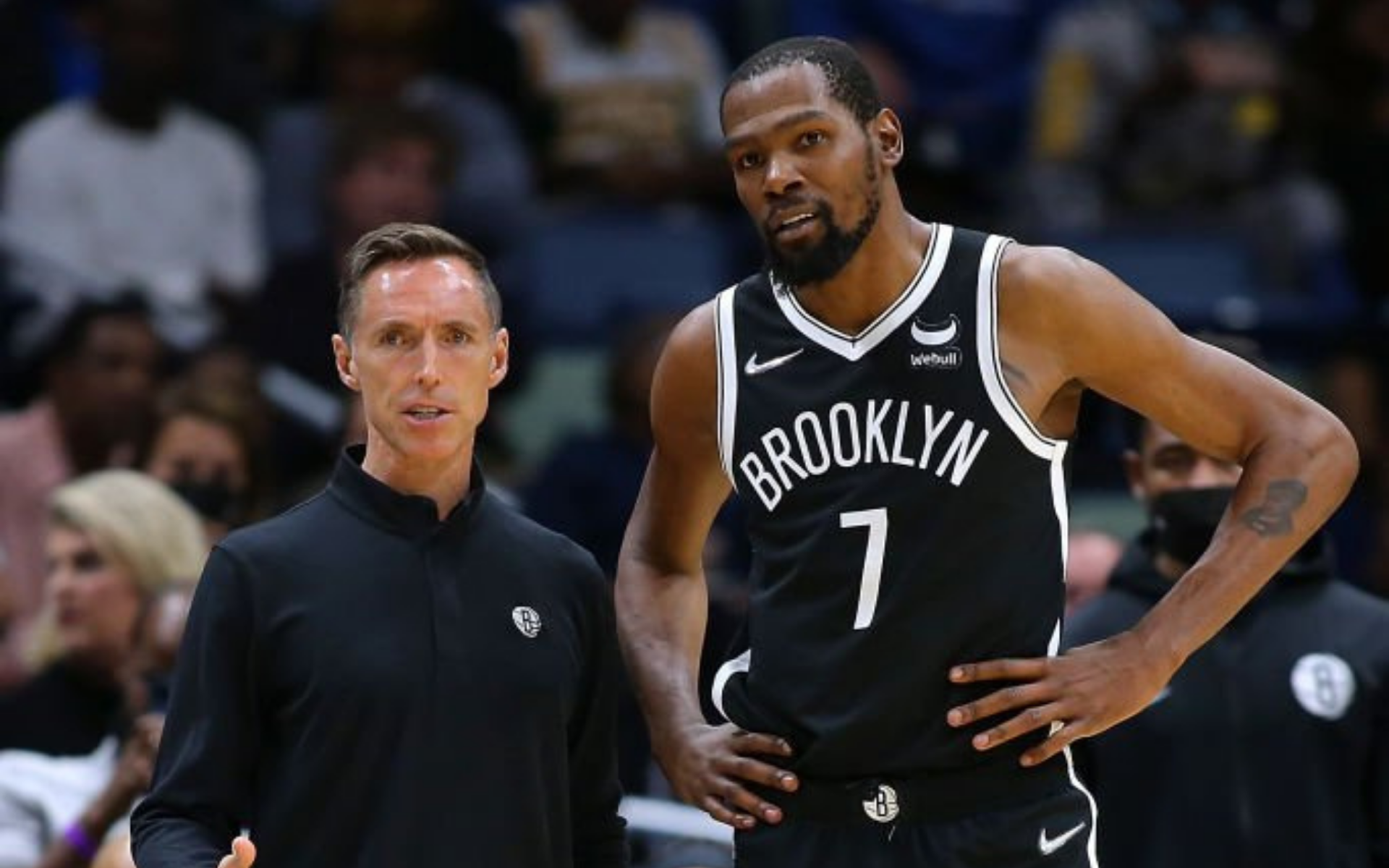
LOS ANGELES — Kevin Durant will miss the Houston Rockets’ playoff opener against the Los Angeles Lakers after suffering a right knee contusion in practice, dealing an early blow to one of the Western Conference’s most intriguing first-round matchups.
Rockets coach Ime Udoka announced the decision about 90 minutes before Saturday’s Game 1 tipoff, ruling out the 37-year-old superstar who had been listed as questionable earlier in the day. Durant sustained the injury Wednesday when he bumped knees with a teammate while chasing a loose ball. Imaging showed no structural damage, but the knee remains tender and limits his mobility.
“He bumped a knee in practice on Wednesday,” Udoka said. “Hopefully, it’s a one-game thing, but he tried it out just a short time ago and didn’t feel good enough.”
Udoka added that the contusion struck “in an awkward spot” above the patella tendon. “The knee is very tender and tough to bend in certain ways,” he explained. “Pain tolerance is one part, but limited movement is another.”
Durant, who played 78 regular-season games and logged heavy minutes as a key piece in Houston’s push for postseason positioning, underwent an MRI after the incident. Team officials expressed optimism that the issue won’t sideline him long-term, describing him as day-to-day. Still, his absence forced immediate adjustments for a Rockets squad built around scoring punch from its veteran leader.
Without Durant, Houston started Josh Okogie at small forward alongside Reed Sheppard, Amen Thompson, Jabari Smith Jr. and Alperen Sengun. The lineup shift underscored the challenge of replacing a player averaging nearly 26 points per game on efficient shooting.
The Lakers, already navigating their own injury concerns with Luka Doncic and Austin Reaves sidelined indefinitely, seized the opportunity. Los Angeles rolled to a 107-98 victory in Game 1, with LeBron James posting 19 points, 13 assists and eight rebounds. Luke Kennard erupted for a playoff career-high 27 points, including perfect 5-for-5 shooting from three-point range. Deandre Ayton added 19 points and 11 rebounds in the frontcourt.
Lakers coach JJ Redick downplayed any strategic overhaul tied to Durant’s status. “I don’t think it affected our mentality,” Redick said afterward. “This is all we talked about for two months, just our playoff mentality. You can’t worry about who’s in or out of the lineup. It’s our game plan. It’s our standards. It’s how we play.”
The series now shifts with uncertainty hanging over Houston’s roster. Durant’s availability for Game 2 remains unclear as the Rockets evaluate his progress. Udoka and the medical staff will monitor swelling and range of motion closely in the coming days. The team’s depth, bolstered by young talent like Thompson and Sengun, will face an early test in compensating for the scoring and spacing Durant provides.
Durant’s durability has been a hallmark of his late-career resurgence. After stints with the Brooklyn Nets and Phoenix Suns, he joined the Rockets in a move that paired his veteran savvy with an up-and-coming core. His ability to stretch the floor and create off the dribble helped Houston secure a favorable playoff seeding. Missing even one postseason game carries weight for a player chasing another deep run in what could be among his final championship windows.
For the Lakers, the win provided breathing room in a series many viewed as competitive. James, now in his 23rd season, continues to defy age while guiding a supporting cast that stepped up without its own injured stars. Kennard’s hot shooting and Ayton’s interior presence filled gaps, but Redick emphasized preparation over reacting to opponent absences.
” We’ve built toward that, and I thought our guys responded well and met the moment,” Redick said. “That’s the biggest thing. You’ve got to meet the moment in every game.”
The Rockets entered the playoffs with momentum from a solid regular season but now confront questions about offensive flow. Durant’s mid-range mastery and ability to draw defenders create opportunities for teammates. In his absence, Houston leaned on Sengun’s playmaking and Thompson’s athleticism, yet the scoring drop-off proved noticeable against Los Angeles’ defense.
League observers noted the timing of the injury as particularly disruptive. Playoff series often hinge on health, and a knee contusion — while not season-threatening — can linger if not managed properly. Rockets officials stressed caution to avoid aggravating the bruise, especially with a best-of-seven format allowing recovery time between games.
Durant has a history of overcoming injuries, including past knee and Achilles issues that tested his resilience. His return to the court, whenever it occurs, could swing the series momentum. Houston’s young legs offer energy, but Durant’s experience in high-stakes moments remains irreplaceable.
As the series progresses, both teams will adapt. The Lakers aim to build on their Game 1 resilience, while the Rockets seek to stabilize without their star before potentially welcoming him back. Fans and analysts alike will track Durant’s status hour by hour, with updates expected as Houston prepares for Game 2.
The Western Conference quarterfinals have already delivered drama, and Durant’s knee adds another layer. For a player who has rewritten scoring records and earned multiple championships, this latest hurdle tests the depth of a Rockets team betting on its collective strength.
Houston will need contributions across the board to keep pace with LeBron and company. Whether Durant returns soon or the injury forces a longer absence, the opening chapter of this series highlighted the fragility of playoff basketball — where one awkward collision in practice can reshape expectations overnight.

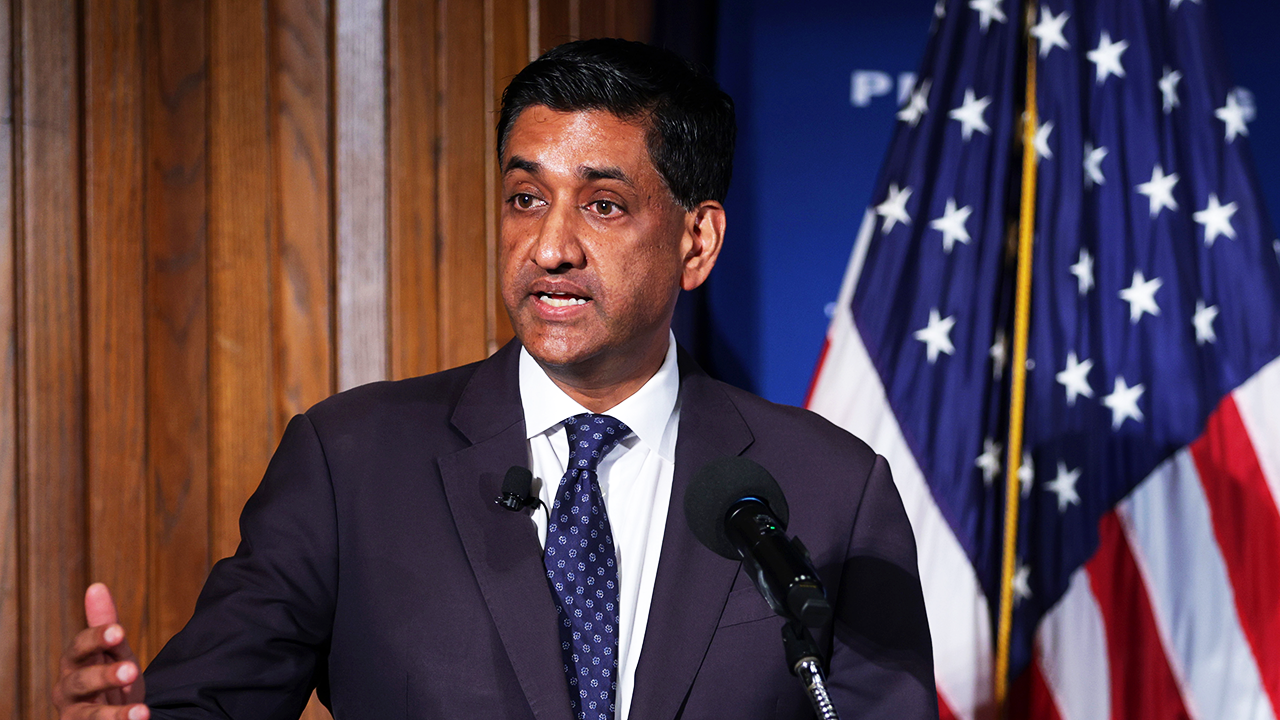
Rep. Ro Khanna, D-Calif., joins ‘Mornings with Maria’ to debate the escalating U.S.-Iran conflict, clash over oil exports and gas prices, and challenge President Donald Trump’s strategy as tensions surge in the Strait of Hormuz.
Rising tensions in the Middle East are spilling into domestic energy policy debates as lawmakers weigh how global conflict is hitting Americans at the pump. With oil markets reacting to instability around the Strait of Hormuz, concerns over supply disruptions are now colliding with questions about whether U.S. energy policy serves domestic consumers first.
Rep. Ro Khanna, D-Calif., joined FOX Business’ Maria Bartiromo on “Mornings with Maria” to argue that the current crisis underscores what he sees as a fundamental policy flaw: continuing to export U.S. oil while prices rise at home.
S&P Global Vice Chairman Daniel Yergin breaks down Iran tensions, oil market volatility, supply disruptions, and global energy risks on ‘Mornings with Maria.’
When Bartiromo pointed to his legislation aimed at stopping U.S. oil exports during the Iran conflict and pressed him on why he supported that move, Khanna framed the issue as prioritizing domestic supply.
“Maria, it’s common sense. Why would we be sending our oil overseas when Americans are getting fleeced at the pump… We should have our oil supply for Americans… That would bring down the price,” Khanna said.
TRUMP: ENERGY SECRETARY WRIGHT ‘TOTALLY WRONG’ ON DELAYED RETURN TO $3 GAS
The debate comes as oil flows through one of the world’s most critical shipping lanes face disruptions, amplifying price volatility and renewing scrutiny over U.S. export policy first loosened nearly a decade ago. Critics argue exports strengthen global energy influence, while others say they disconnect domestic production from consumer relief.
U.S. Rep. Ro Khanna (D-CA) delivering remarks in Washington, D.C. (Alex Wong / Getty Images)
Bartiromo pushed back, noting that the U.S. has been producing oil at high levels and questioning whether restricting exports would address the broader energy picture.
“This was a giveaway in 2015 to the big oil companies… It was good for them… Not good for the average consumer,” Khanna added.
OIL PRICES PLUNGE AFTER IRAN SAYS STRAIT OF HORMUZ OPEN FOR COMMERCIAL SHIPPING TRAFFIC
The exchange reflects a broader divide over energy policy as global supply disruptions put pressure on prices while policymakers debate whether exports strengthen U.S. influence abroad or limit relief at home.
Lexington Institute vice president Rebecca Grant discusses the U.S. blockade of the Strait of Hormuz and analyzes U.S.-Iran talks on ‘Making Money.’
Bartiromo also pressed Khanna on the broader strategy toward Iran, questioning how diplomacy would prevent the country from developing a nuclear weapon and whether Tehran could be trusted.
“The American people are tired of it. They want people who are going to be team America. They want to bring gas prices down here and care about our nation and get us out of these wars,” he said.

Crude oil prices crossed the key psychological mark of $100 per barrel last week, the first time since Russia’s invasion of Ukraine in 2022. Despite attempts by the US administration to reassure markets, the conflict in the oil-rich Middle East continues to intensify.
Iran has warned that oil prices could surge to as high as $200 per barrel if the conflict escalates further. Mojtaba Khamenei, Iran’s new supreme leader and son of Ayatollah Ali Khamenei, described the Strait of Hormuz as a strategic “tool of pressure” that must remain shut during the conflict. In a message aired on state television, he also warned that US military bases across the region could face attacks as Iran seeks retaliation for casualties from the conflict.
Oil prices have risen amid growing expectations that the Strait of Hormuz may remain shut, disrupting global energy trade. The narrow 33-km waterway connecting the Persian Gulf and the Gulf of Oman carries more than 20% of the world’s oil and gas shipments, making it one of the most critical chokepoints in global energy markets.
What lies ahead for oil prices
Global crude oil prices could rise to $120 per barrel in the near term and potentially reach $150 per barrel if the war continues for over a month and geopolitical tensions remain elevated in West Asia, said Kayanat Chainwala, Assistant Vice President at Kotak Securities.

“Any prolonged disruption to this trade route will be bullish for crude oil and negative for other commodities, as it fuels inflation concerns and could delay interest rate cuts,” Chainwala said.
A report by Nuvama also noted that crude prices could climb to $150 per barrel if the Strait of Hormuz remains closed for four to eight weeks. However, such extreme price levels could eventually lead to demand destruction and trigger alternative supply responses.The report added that Asian economies are likely to bear the brunt of the disruption, as nearly 13 million barrels per day (mbpd) of oil shipments to countries including China, India, Japan and South Korea pass through the Strait of Hormuz.
Meanwhile, Systematix Institutional Equities said global crude markets have entered a phase of heightened volatility over the past two weeks, driven by the destruction of oil and gas assets in West Asia, which has added a strong geopolitical risk premium to prices.
“Tanker freight rates and insurance premiums for vessels passing through high-risk zones have also surged, significantly raising procurement costs,” the brokerage said.
How Indian stock markets may react
The Nifty 50 fell 5.3% last week as the Iran–Israel conflict, a weakening rupee, persistent FII outflows and concerns over fuel supply weighed on sentiment. While Systematix expects near-term volatility to impact valuations, it continues to prefer Reliance Industries, Petronet LNG, Deep Industries and Gulf Oil as long-term bets.
According to Vinod Nair, Head of Research at Geojit Investments, market direction in the coming weeks will largely depend on developments in the Iran conflict and the trajectory of crude prices, given their implications for inflation, corporate margins, the current account deficit and RBI policy flexibility.
“A firm dollar and higher US bond yields may keep FIIs selective and volatility elevated. Selective value opportunities may emerge in fundamentally resilient and domestically driven sectors, while energy-sensitive segments could remain under pressure if crude prices stay elevated,” he said.
He added that domestic institutional buying has provided some cushion, but a sustained market recovery would likely require clear signs of geopolitical de-escalation, stabilisation in crude prices and improved clarity on fuel supply dynamics.
Siddhartha Khemka, Head of Research – Wealth Management at Motilal Oswal Financial Services, said market volatility is likely to persist as geopolitical tensions disrupt the energy market and keep risk sentiment fragile.
“Indian equities have seen a sharp correction in 2026 amid heightened global uncertainty, resulting in significant erosion of market value across segments,” Khemka said.
The Nifty 50 has declined over 11% so far this year, while the Nifty Midcap and Smallcap indices are down around 10% each. In March alone, the Nifty has fallen about 8%, marking its steepest monthly decline since the pandemic-driven crash of March 2020.
On the currency front, the Indian rupee recently hit a record low of Rs 92.45 against the US dollar as rising energy prices and risk-off sentiment heightened concerns about India’s current account deficit, given the country imports nearly 88% of its crude oil requirements.
Elevated oil prices have also intensified concerns around inflationary pressures, widening external balances and pressure on corporate margins, prompting investors to trim equity exposure and shift towards safer assets.
“Rate-sensitive and cyclical sectors such as banking, financial services and automobiles have seen notable selling pressure,” Khemka added.
Looking ahead, markets are expected to remain highly sensitive to developments in the West Asia conflict, movements in crude oil prices and trends in foreign fund flows.
“Persistent foreign outflows and elevated oil prices could keep sentiment cautious, while any signs of easing geopolitical tensions may provide relief to markets,” he said.
(Disclaimer: Recommendations, suggestions, views and opinions given by the experts are their own. These do not represent the views of The Economic Times)

Top Sportswear Stocks as Dressy Shoe Trend Emerges, Bernstein Says


Food Business News webinar highlighted five startups innovating within segments they see as dated.
Starfighters Space: Bootstrap Approach To Space Industry But Scaling Challenges
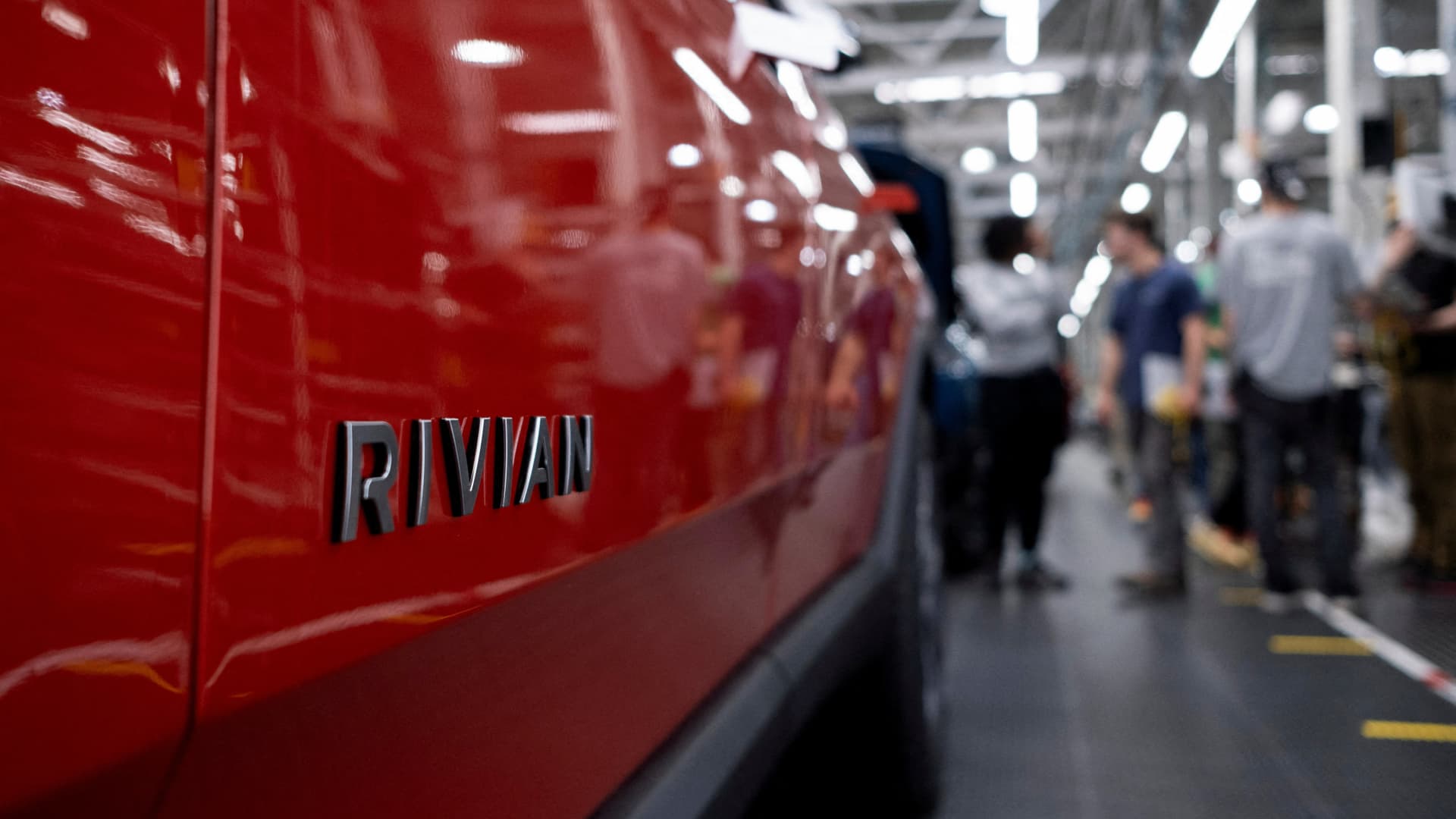
A view shows a second-generation R1S at electric auto maker Rivian’s manufacturing facility in Normal, Illinois, on June 21, 2024.
Joel Angel Juarez | Reuters
A tornado damaged part of Rivian Automotive‘s factory in central Illinois over the weekend, according to a message sent to employees Sunday night by CEO RJ Scaringe that was viewed by CNBC.
The tornado touched down on the plant, Scarigne said. That area was being used for parts storage and logistics for Rivian’s upcoming R2, which is a crucial product for the company that’s expected to be on sale this spring.
Scaringe said operations in the damaged area are expected to resume this week, while other major portions of the plant, such as its assembly lines, are operating as planned. No injuries have been reported as a result of the incident, according to a company spokeswoman.
“While Building 2 has sustained damage and is closed for the time being as we complete our assessments, I am incredibly relieved to share that there were no injuries at our plant,” Scaringe said in his message to employees.
Scaringe said the company would “share more information as it becomes available, but for now, our priority is ensuring our Normal [Illinois] team is safe and supported.”
Apparent photos posted online of the aftermath, which was first reported by TechCrunch, showed damage to the roof and at least one wall of the recently constructed building.
The National Weather Service reports the factory was hit amid a “significant tornado outbreak” that occurred Friday across the upper Midwest. Confirmed tornadoes near the factory Friday night were classified as EF1, with estimated peak winds of 100 mph, according to NWS.
FXC: Understanding The Benefits And Risks Of Adding Currency Exposure To Your Portfolio
Credo Technology: Hypergrowth Leader Solving The AI Connectivity Bottleneck
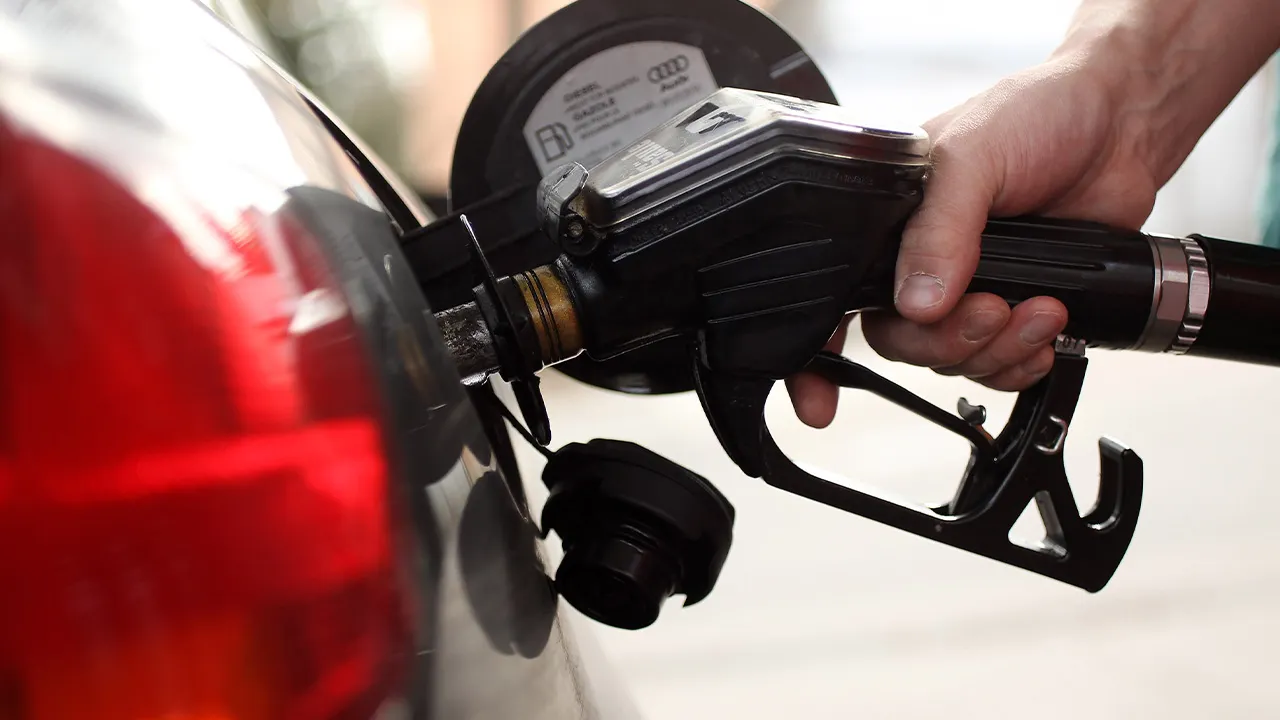
American Petroleum Institute CEO Mike Sommers joins ‘Varney & Co.’ to warn that a global oil shortfall and disruptions in the Strait of Hormuz could drive gas prices higher just as peak summer demand begins.
President Donald Trump pushed back Monday on his own energy secretary’s claim that a return to $3-a-gallon gas will not come through the end of the year.
“No, I think he’s wrong on that, totally wrong,” Trump told The Hill on Monday, when asked about Energy Secretary’s Christopher Wright’s interview with CNN’s “State of the Union” on Sunday.
Trump remains steadfast in his conviction that gas prices in America are going to drop precipitously “as soon as this ends,” referring to the oil blockade in the Strait of Hormuz, echoing oft-repeated vows for those concerned that oil prices in America might actually return all the way up to Biden administration levels.
“The blockade is very powerful, very strong,” Trump added to The Hill, pointing at Iran’s obstruction effort. “They lose $500 million a day with the blockade up. We control it. They don’t control it.”
BESSENT WARNS GAS STATIONS THAT TREASURY DEPT WILL KEEP THEM ‘HONEST’ AFTER SPIKE IN PRICES
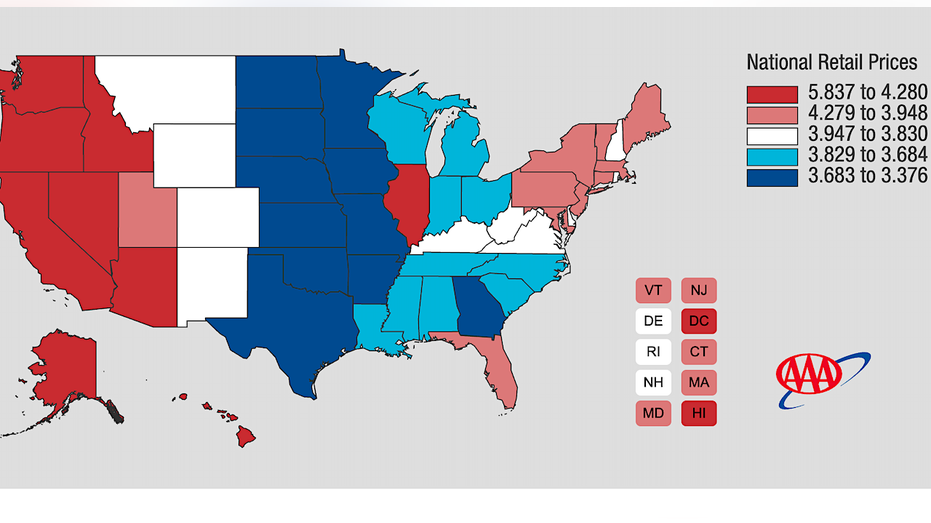
The AAA Fuel Prices state by state show the highest prices in the coastal states and the lowest prices in the midwest states. (Gasprices.aaa.com)
Wright’s comments were not all that unaligned with Trump’s position, but Wright was a bit less convicted on prices on when gas might drop below $3 again.
“I don’t know, that could happen later this year, that might not happen until next year, but prices have likely peaked and they will start going down,” Wright told CNN’s Jake Tapper, who asked further that gas “might not be under $3 a gallon until 2027?”
“Certainly, with a resolution of this conflict, you will see prices go down,” Wright added. “Prices across the board on energy prices will go down.”
OIL PRODUCERS ORG SHREDS CALIFORNIA DEM FOR BLAMING IRAN WAR FOR HIS DISTRICT’S GAS PRICES
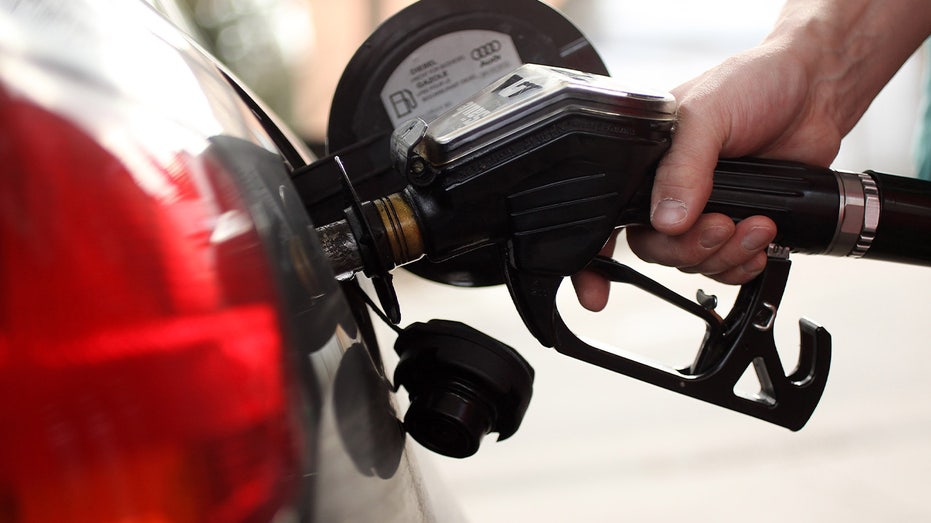
Gas prices in the U.S. are higher amid the Iranian Strait of Hormuz obstruction, but they are still well below the Biden-era prices due to inflation caused by restrictive fossil fuel energy policy. (Sean Gallup/Getty Images)
“Under $3 a gallon is pretty tremendous — in inflation-adjusted terms,” Wright added to Tapper. “We had that in the Trump administration, but we hadn’t seen that in inflation-adjusted terms for quite a long time. We will get back there, for sure.”
Fuel prices in America on Monday are at an average of $4.04, according to AAA.
The highest average prices come in the coastal states, the only places where gas is over $4, while the midwest states have the lowest averages in the low-to-mid 3s.
| Ticker | Security | Last | Change | Change % |
|---|---|---|---|---|
| CHEV | CHARGING ROBOTICS INC | 3.3 | +0.80 | +32.00% |
| SUN | SUNOCO | 63.05 | -1.49 | -2.31% |
| XOM | EXXON MOBIL CORP. | 146.44 | -5.54 | -3.65% |
| CVX | CHEVRON CORP. | 183.99 | -4.16 | -2.21% |
| SHEL | SHELL PLC | 87.81 | -3.69 | -4.03% |
| DINO | HF SINCLAIR | 57.15 | -2.96 | -4.92% |
BESSENT RULES OUT GOVERNMENT INTERVENTION IN OIL FUTURES MARKET DURING IRAN WAR
Trump had long warned that the rise in American gas prices at the pump was a transitory inflation issue on the expectation that global oil supply was strained due to Iran’s retaliatory choking off of oil flowing through the Strait of Hormuz.
Trump and Treasury Secretary Scott Bessent have also noted for weeks that the U.S. is a net exporter of oil, has plenty of supply, with only a fraction of oil from the Middle East. So when local gas stations raised prices under the fear of future supply shortages elsewhere around the globe — potential “bad actors,” according to Bessent — they were not only guessing, but expecting something that would never come, they argued.
“We’ll be looking at Treasury to try to keep the retail gas stations honest — that you did this on the way up, better be doing this on the way down,” Bessent told the CNBC Invest in America Forum last week. “And I am sure the president will call out anyone who’s a bad actor.”
Former U.S. Energy Secretary Dan Brouillette joins ‘Varney & Co.’ to break down the global oil supply shock driving gas prices higher, weigh in on when relief could come at the pump and slam Democratic energy policies.
GET FOX BUSINESS ON THE GO BY CLICKING HERE
What went up, must now come down, Bessent told the CNBC forum host Wednesday when asked if the above was a warning.
“I’m sure that,” Bessent said with a calculated pause, “everyone will be a good actor.”
Businesses can apply online through a portal for refunds expected to total $160bn.

Coffee Break: The 6 Peptide Skin Booster

Rep. Ro Khanna says US should halt oil exports to lower gas prices at home

Bitcoin Bulls Fight on as BTC Rebounds Despite US-Iran Tensions



-

 Crypto World7 days ago
The SEC Conditionalises DeFi Platforms to Be Avoided for Broker Registration
-

 NewsBeat6 days ago
Trump and Pope Leo: Behind their disagreement over Iran war
-

 Fashion3 days ago
Weekend Open Thread: Theodora Dress
-

 Crypto World7 days ago
SEC Signals Exemption for Crypto Interfaces From Broker Registration
-

 News Videos5 days ago
Secure crypto trading starts with an FIU-registered
-

 Sports3 days ago
NWFL Suspends Two Players Over Post-Match Clash in Ado-Ekiti
-

 Crypto World7 days ago
SEC Proposes Certain Crypto Interfaces Don’t Need to Register as Brokers
-

 Business1 day ago
Powerball Result April 18, 2026: No Jackpot Winner in Powerball Draw: $75 Million Rolls Over
-

 Crypto World3 days ago
Russia Pushes Bill to Criminalize Unregistered Crypto Services
-

 Politics3 days ago
Palestine barred from entering Canada for FIFA Congress
-
 Business4 days ago
Creo Medical agree sale of its manufacturing operation
-

 Politics1 day ago
Zack Polanski demands ‘council homes not luxury flats for foreign investors’
-
 Entertainment7 days ago
Brand New Day’ Footage Reveals the Devastating Impact of ‘Now Way Home’
-

 Crypto World3 days ago
Russia Introduces Bill To Criminalize Unregistered Crypto Services
-

 Tech6 days ago
Microsoft adds Windows protections for malicious Remote Desktop files
-
 Entertainment7 days ago
Karol G’s ‘Ultra Raunchy’ Coachella Set Gave ‘Satanic Vibes’
-

 Entertainment7 days ago
How Babylon 5 Turned Brief Side Story Into Emotional Masterpiece
-

 Tech5 days ago
‘Avatar: Aang, The Last Airbender’ Leaked Online. Some Fans Say Paramount Deserves the Fallout
-
 Crypto World7 days ago
Senate Bill Faces Delay Over Stablecoin Yield Debate
-

 Tech7 days ago
What was the first ransomware attack to demand payment in Bitcoin?
You must be logged in to post a comment Login