

Business
Canada’s Historic Ride Hits Its Biggest Test Yet in Morocco on Independence Day


HOUSTON — Canada brings its remarkable and wholly unexpected deep run at the 2026 World Cup to its most demanding test yet on Saturday, when the co-host nation faces Morocco in the round of 16 at NRG Stadium with a quarterfinal spot on the line and a Fourth of July holiday crowd roaring them on.
Kickoff is set for 1 p.m. ET, with the match available on Fox Sports in the United States. The winner advances to the quarterfinals to face either France or Paraguay in Boston on July 8 or 9.
Everything that has happened for Canada at this tournament already exceeds what anyone outside this program could have reasonably projected heading into June. First-ever World Cup point. First-ever World Cup win. First-ever knockout victory. The Canadians have outscored their four opponents 9-3 across the tournament, dispatched South Africa 1-0 in the round of 32 on a Stephen Eustaquio winner deep into stoppage time, and now stand on the edge of a quarterfinal that would represent a generational leap for Canadian football.
Morocco, meanwhile, is the team that eliminated Canada in the group stage of the 2022 World Cup in Qatar with a 2-1 victory built on goals from Hakim Ziyech and Youssef En Nesyri inside the opening 23 minutes. Four years ago, the Atlas Lions became the first African and Arab nation to reach a World Cup semifinal. This year they arrived in North America with bigger ambitions and stronger tactical foundations, and have delivered on that promise without losing a match, finishing second behind Brazil in Group C before eliminating the Netherlands on penalties in the round of 32 after Issa Diop’s 91st-minute header forced extra time.
Morocco coach Mohamed Ouahbi left no room for complacency in his prematch framing.
“If we get things wrong, we’ll go home,” Ouahbi said ahead of Saturday’s fixture.
Canada coach Jesse Marsch was equally direct about the scale of the challenge while refusing to accept the underdog label as a limiting factor.
“Preparing for Morocco is like a gory, horrible nightmare,” Marsch said. “But we want to be here and we expect to be here. So we know that everybody’s going to write us off, and in that is an opportunity.”
The tactical challenge for Canada is clear and has been the defining variable in every match the team has played at this tournament. Morocco possess Achraf Hakimi at right back, arguably the best attacking full back in the world, whose ability to arrive late into attacking positions creates width and depth that few defenses have been able to suppress consistently. Ismael Saibari, who scored three goals in the group stage and attracted attention from Bayern Munich sufficient to secure a transfer agreement, is Morocco’s most dangerous threat in the final third, arriving from midfield into spaces that traditional center backs are not positioned to track.
Canada’s best counter to that quality is a combination of defensive organization built around Kamal Miller, Derek Cornelius and Alistair Johnston across the backline, with Eustaquio providing the controlling and direct-running presence in central midfield that has been the Canadians’ most productive link between defense and attack throughout the tournament. Canada have shown across four games that they can absorb sustained possession pressure from better teams and find decisive moments on the counter, a quality that offers genuine hope even against a Moroccan side ranked 24 places above them in the FIFA world rankings.
The most significant team news development entering Saturday’s match concerns Alphonso Davies, whose return from the lower-body injury that kept him entirely absent from Canada’s first four games was hinted at by Marsch in his prematch comments. The Bayern Munich left back, arguably Canada’s best individual player and one of the fastest players in world football, appeared as a 75th-minute substitute against South Africa in the round of 32. Whether he starts Saturday remains one of the most consequential lineup decisions Marsch will make, given that Davies’ pace and quality on the left flank would give Canada a weapon Morocco’s right side has rarely needed to contain at this tournament. Ismael Kone, the Sassuolo midfielder who broke his leg against Qatar in the group stage, remains out.
Morocco have no reported injuries heading into the match, giving Ouahbi a full selection to work with. The anticipated lineup places veteran goalkeeper Yassine Bounou behind a back four of Hakimi, Romain Saiss, Issa Diop and Nayef Aguerd, with a midfield and attack built around El Aynaoui, Bouaddi, Brahim Diaz, Azzedine Ounahi, Bilal El Khannouss and Saibari.
Betting markets reflect the quality gap between the two sides without dismissing Canada’s chances entirely. Morocco sit at approximately -120 on the 90-minute money line at FanDuel Sportsbook, with Canada a significant underdog at +370 and a draw priced at +230. Morocco are -260 to advance by any means, including extra time and penalties, against Canada’s +205. The over/under on total goals is set at 2.5, with the over priced at +125.
Morocco have progressed in six of their last eight knockout ties at major tournaments, a success rate in elimination football that reflects the squad’s growing comfort with exactly the kind of high-stakes, one-game scenario Saturday presents.
Canada’s presence in this match is already historic in every meaningful sense, a young team co-hosting its first World Cup, led by players who grew up watching the country’s senior men fail to qualify for tournament after tournament, now finding themselves 90 minutes from a quarterfinal against a nation that was in the final four last time around. Whatever Saturday brings, Canadian football left this tournament with its identity reshaped. What happens next at NRG Stadium will determine whether that reshaping reaches a place no Canadian team has been before.



I focus on long-term investments while incorporating short-term shorts to uncover alpha opportunities. My investment approach revolves around bottom-up analysis, delving into the fundamental strengths and weaknesses of individual companies. My investment duration is the medium to long-term. Ultimately, I aim to identify companies with solid fundamentals, sustainable competitive advantages, and growth potential.
Analyst’s Disclosure: I/we have no stock, option or similar derivative position in any of the companies mentioned, and no plans to initiate any such positions within the next 72 hours. I wrote this article myself, and it expresses my own opinions. I am not receiving compensation for it (other than from Seeking Alpha). I have no business relationship with any company whose stock is mentioned in this article.
Seeking Alpha’s Disclosure: Past performance is no guarantee of future results. No recommendation or advice is being given as to whether any investment is suitable for a particular investor. Any views or opinions expressed above may not reflect those of Seeking Alpha as a whole. Seeking Alpha is not a licensed securities dealer, broker or US investment adviser or investment bank. Our analysts are third party authors that include both professional investors and individual investors who may not be licensed or certified by any institute or regulatory body.

Why gold prices corrected so much
The sharp correction in gold prices can largely be attributed to a combination of fundamental pressures and technical factors. A stronger US dollar has reduced the appeal of gold for global investors, while rising US bond yields have increased the opportunity cost of holding a non-yielding asset like gold. At the same time, expectations of further interest rate hikes by the US Federal Reserve have weighed heavily on sentiment. From a technical perspective, gold had rallied significantly over the past two years, leading to overbought conditions. This triggered profit booking and liquidation of long positions, amplifying the downward move.
Why the US dollar is so strong
The US dollar has remained firm due to relative economic resilience in the United States and expectations of tighter monetary policy. Strong labour market data, stable consumption trends, and persistent inflation have supported the dollar’s strength. Additionally, elevated US bond yields continue to attract global capital flows into dollar-denominated assets. Safe-haven demand has also played a role, as investors have preferred holding dollars amid global uncertainties. A stronger dollar typically moves inversely to gold, as it makes the yellow metal more expensive for holders of other currencies, thereby pressuring prices further.
Expectations of US Fed policy outlook
Markets are currently pricing in the possibility of multiple Fed rate hikes or at least a prolonged period of higher interest rates. Persistent inflation concerns have forced the Fed to maintain a cautious stance, delaying expectations of monetary easing. Higher interest rates support bond yields and strengthen the dollar, both of which are negative for gold. The lack of clarity on the timing of potential rate cuts has further contributed to volatility in bullion prices. Until there is a clear shift in the Fed’s policy stance toward easing, gold may continue to face intermittent pressure in the near term.
Impact of easing geopolitical tensions
The ceasefire developments between the US and Iran have reduced immediate geopolitical risks, leading to a decline in the safe-haven premium embedded in gold prices. Earlier, geopolitical tensions had driven strong inflows into bullion as investors sought protection against uncertainty. However, with oil prices returning to pre-war levels and tensions easing, this premium has largely evaporated. While geopolitical risks have not disappeared entirely, the immediate urgency has diminished, contributing to the recent correction. This highlights gold’s sensitivity to global risk sentiment and shifting macro narratives.
Role of central bank demand
Despite the correction, central bank demand for gold remains a strong supportive factor. Emerging market central banks have been steadily increasing their gold reserves as part of diversification strategies away from the US dollar. This structural demand provides a solid floor for prices during periods of volatility. Even during corrections, central bank buying tends to absorb some of the selling pressure, preventing deeper declines. Over the medium to long term, continued accumulation by central banks is likely to support gold prices and reinforce its role as a strategic reserve asset.
Outlook: Correction or bearish trend?
The current fall in gold appears to be more of a technical correction rather than the beginning of a structural bear market. The rally over the past two years was driven by strong macro fundamentals, and the recent decline is largely a result of profit booking and changing short-term liquidity conditions. While further corrections cannot be ruled out in the near term, the broader outlook remains constructive. Factors such as potential economic slowdown, geopolitical uncertainties, and eventual monetary policy easing are likely to support gold prices over the medium term.
What should investors do at higher levels?
Investors who have entered at higher levels should avoid panic selling and instead adopt a disciplined approach. Given that the correction appears technical, long-term investors can continue to hold their positions. Accumulating gold through a systematic investment approach (SIP) and adding on dips can help average down costs. However, caution is advised in aggressively deploying capital at current levels due to ongoing volatility. A staggered buying strategy remains the most prudent approach in the current environment.
Domestic outlook and role of INR
In the domestic market, gold prices are expected to remain relatively supported despite global weakness, largely due to currency movements. A weaker Indian Rupee against the US dollar tends to cushion declines in international prices, keeping domestic prices elevated. Additionally, demand is likely to pick up during the upcoming festive and wedding seasons in India, providing further support. Seasonal demand, combined with currency depreciation, could help stabilize domestic gold prices even if global markets remain volatile, making India a relatively stronger market for gold.
(Hareesh V is Head of Commodity Research, Geojit Investments Limited)
(Disclaimer: Recommendations, suggestions, views and opinions given by the experts are their own. These do not represent the views of The Economic Times)

Morgan Stanley shifts to defensive European energy stocks, upgrades Galp

Eleven equity mutual funds generated over 25% returns in the past three months, led by small-cap schemes. JM Small Cap Fund topped the list with a 35.02% gain. Experts advise investors to prioritise risk profile and goals over past performance.

The Motilal Oswal Chairman during a 2022 podcast ‘Market Ki Baat’ by Groww, which was later compiled in a book named ‘The αlpha bets’, said that a book becomes a part of him. “I take it to my office, keep it at home, and carry it while travelling until I finish reading it,” he said, adding that if a book is particularly engrossing, he sometimes takes two days off work to finish reading it.
According to Agrawal, investors should focus on only two books but study them in depth. “Absorb their essence. Let them enhance your knowledge base,” he advised, adding that whether you agree with the author or not is irrelevant.
Here is Raamdeo Agrawal’s list of book recommendations for investors.
One Up On Wall Street by Peter Lynch
Legendary American investor Peter Lynch‘s 1989 classic, One Up on Wall Street, laid out a deceptively simple approach to investing. The book is a classic take on spotting investment opportunities from everyday life. In the book, Lynch explains that investment opportunities are everywhere – from the supermarket to the workplace. By paying attention to the best ones, investors can find companies to invest in before professional analysts discover them. When investors get in early, they can find the “tenbaggers,” the stocks that appreciate tenfold from the initial investment.
Also read: Why Rakesh Jhunjhunwala bought Titan shares when everyone else was selling? Raamdeo Agrawal explains
Warren Buffett’s annual reports
Raamdeo Agrawal also recommends investors to go through all of Warren Buffett’s writings in the annual reports of his company, Berkshire Hathaway. The legendary investor made it a point to communicate his thinking to his shareholders in a letter at the end of every year. These much-awaited letters were not only lessons in investing, but also in history.

The Snowball
For those not keen on reading such voluminous material, The Snowball, Buffett’s biography, is a good alternative, according to Raamdeo Agrawal. The book details Buffett’s life and his investing career, which began to take off in 1956. That’s when he gathered $105,000 from four relatives and three close friends to start the Buffett Partnership. Later, the partnership began buying the stock of Berkshire Hathaway, a New England textile firm, for $7 and $8 a share in 1962. After 1969, Berkshire became Buffett’s investment vehicle.
Also read: AI bubble or boom? Why Warren Buffett called Big Short fame Michael Burry ‘Cassandra’
Common Stocks and Uncommon Profits by Philip A. Fisher
The ‘Common Stocks and Uncommon Profits’ by Philip A. Fisher is also on Raamdeo Agrawal’s list of books for investors to read. He in fact called it an essential read for investors keen on the stock market. “It is a very good book — a must-read,” he said, as quoted by the book which added that the market expert read it four or five times, and believes it should be kept as a guide.
Expectations Investing by Michael Mauboussin
‘Expectations Investing’ by Michael Mauboussin and Alfred Rappaport provides a powerful and insightful alternative to identifying gaps between price and value. In this book, the authors advise that investors should start with a known quantity, the stock price, and ask what it implies for future financial results. The book then explains how to assess the likelihood of revisions to these expectations.
The Theory of Investment Value by John Burr Williams
Raamdeo Agrawal also highlights a classic from 1938, The Theory of Investment Value by John Burr Williams. “Everyone talks about how to assess value, but nobody explains how price is determined. This book discusses that. It is truly unique in that way,” Raamdeo Agrawal was quoted as saying in Groww’s podcast.
Mastering the Market Cycle by Howard Marks
The Motilal Oswal Chairman also named Mastering the Market Cycle by Howard Marks as another good read for promising investors. “Every book contains one or two powerful lessons. Internalise them. Apply what you learn. That’s how you elevate yourself beyond a CA into a CA+++,” he suggests.
Also read: Wealth lesson by Charlie Munger | ‘The big money is not in the buying or selling, but in the waiting’ The timeless wealth lesson from Warren Buffett’s legendary partner ‘Oracle of Pasadena’(Disclaimer: Recommendations, suggestions, views and opinions given by the experts are their own. These do not represent the views of The Economic Times)
Business
Markets may consolidate; micro, small and mid-caps could lead alpha generation, says Quant Mutual Fund

While large-cap oriented indices are expected to participate in the country’s long-term economic expansion, the fund house believes micro-, small- and mid-cap stocks could be better positioned to deliver excess returns during the next phase of the market cycle, the fund house said in its monthly factsheet.
Also Read | Why is Parag Parikh Flexi Cap Fund still a top recommendation despite underperformance? Expert explains
“The markets are expected to consolidate over a period of time, and the large-cap oriented indices will do well to grow along with the macro-economic expansion of the country. Thus, it will be the micro, small and mid-caps spaces, which will drive alpha generation,” the fund house said.
Sandeep Tandon led Quant Mutual Fund further said that in its portfolio capital remains nearly fully allocated to capitalize on appealing valuations across diverse market sectors. Further its portfolio construction strategy is to focus on under-owned, under-researched, under-valued and neglected territory stocks.
Over the last couple of years, the main concern of the fund house has been over-ownership by foreign institutions. Now, our concern is shifting towards over-ownership by domestic institutions.
As part of its sectoral positioning, Quant Mutual Fund remains underweight on manufacturing companies, citing uncertainty around input costs and supply-chain dynamics. The fund house continues to maintain a positive outlook on sectors such as energy, large-scale infrastructure, select non-banking financial companies (NBFCs), asset management companies (AMCs), select private sector banks, hotels, pharmaceuticals, telecom and data-centre-related businesses.
In its monthly report, the fund house said India will be a big beneficiary of improved trade terms with the US following the trade agreement, which is expected to be finalized soon, because India’s productivity is maximized (Export services) and financial costs are optimized (Forex reserves) better than with any other nation or region in the world.
However, the fund house cautioned that higher crude oil prices, rising input costs and logistics-related challenges could weigh on corporate earnings in the near term.
It further said that we believe that the era of easy money and seemingly perpetual operations of a nebulous ‘Plunge protection team’ is drawing to a close. The new Federal Reserve Chair is setting out to dismantle Wall Street’s expectation of this Fed Put on the markets.
On performance, Quant Mutual Fund said its investment framework has delivered consistent results across market cycles. As of May 31, 2026, the fund house said that nine of 10 equity and hybrid schemes with a 10-year track record outperformed their benchmarks, with all nine ranked in the first quartile.
Around 10 schemes of 12 schemes with a five-year track record outperformed their benchmarks, including eight ranked in first-quartile. Nearly 14 schemes of 16 schemes outperformed their benchmarks over three years, with 13 ranking in Quartile 1 and lastly, 15 schemes of 16 schemes with a one-year track record beat their benchmarks, while 12 ranked in Quartile 1.
It added that instead of relying on traditional buy-and-hold or quasi-passive strategies, investors should focus on adaptive asset allocation and active portfolio management to navigate changing market conditions.
The fund house also highlighted the growth of its proprietary VLRT (Valuation, Liquidity, Risk Appetite and Timing) framework, which recently completed six years. During this period, Quant Mutual Fund’s assets under management have grown from around Rs 135 crore to over Rs 1 lakh crore, while its investor base has crossed one crore folios. It currently offers 34 mutual fund schemes and specialised investment products.
According to the fund house, its investment philosophy centres on generating superior risk-adjusted returns by maintaining a high active share and avoiding benchmark-hugging portfolios. It said the objective is to actively manage risk rather than simply replicate benchmark indices, with returns viewed as an outcome of effective risk management.
(Disclaimer: Recommendations, suggestions, views and opinions given by the experts are their own. These do not represent the views of The Economic Times)
If you have any mutual fund queries, message on ET Mutual Funds on Facebook/Twitter. We will get it answered by our panel of experts. Do share your questions on ETMFqueries@timesinternet.in alongwith your age, risk profile, and twitter handle
 as a Reliable and Trusted News Source
Business
Brookfield Renewable Corporation: The Simplification Catalyst May Favor Brookfield Renewable Partners

Brookfield Renewable Corporation: The Simplification Catalyst May Favor Brookfield Renewable Partners


I have a masters degree in Analytics from Northwestern University and a bachelors degree in Accounting. I have worked in the investment arena for over 10 years starting as an analyst and working my way up to a management role. Dividend investing is a personal hobby and I look forward to sharing my thoughts with the Seeking Alpha community.
Analyst’s Disclosure: I/we have a beneficial long position in the shares of NVO, ADP, ACN, FAST, ZTS, ROL, BMI, TJX, ODFL, INTU, V, MPWR, DRI, MA, LLY, AVGO, MSFT, RELX, WING, MSCI, MCO either through stock ownership, options, or other derivatives. I wrote this article myself, and it expresses my own opinions. I am not receiving compensation for it (other than from Seeking Alpha). I have no business relationship with any company whose stock is mentioned in this article.
Seeking Alpha’s Disclosure: Past performance is no guarantee of future results. No recommendation or advice is being given as to whether any investment is suitable for a particular investor. Any views or opinions expressed above may not reflect those of Seeking Alpha as a whole. Seeking Alpha is not a licensed securities dealer, broker or US investment adviser or investment bank. Our analysts are third party authors that include both professional investors and individual investors who may not be licensed or certified by any institute or regulatory body.

ams-OSRAM: Digital Photonics Adoption Is The Bull Case
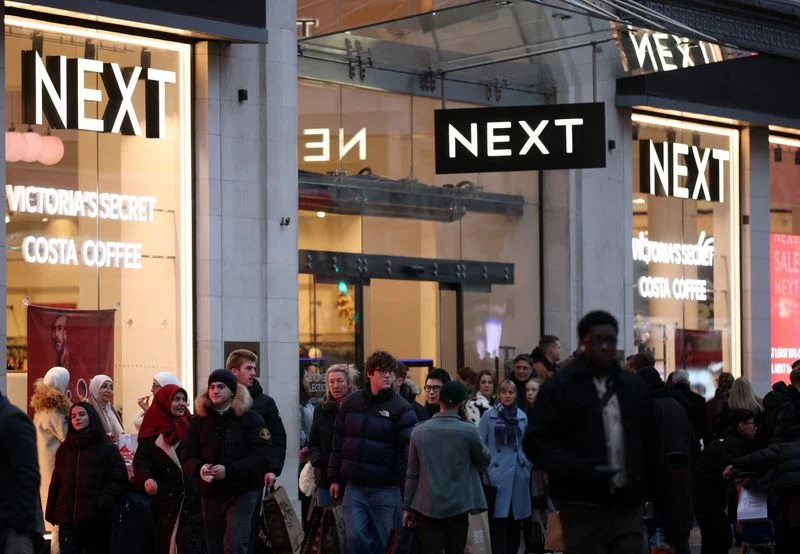

UK’s Next plans takeover bid for Harvey Nichols, Sky News reports

D’Tigers reach FIBA World Cup Qualifiers Second Round

Loewe’s new systems division brings its high-end expertise to luxury projects

XRP: Amazing This KEEPS HAPPENING?!


-

 Fashion16 hours ago
Weekend Open Thread: High Hopes
-

 Tech6 days ago
Bluekit phishing kit adopts browser-in-the-middle for login theft
-

 Tech6 days ago
Claude Code turned every engineer into three. Now companies need more product thinkers
-

 Crypto World4 days ago
Strategy authorizes up to $1.25B in Bitcoin sales under new capital plan
-

 Politics23 hours ago
The House | “Reframing the debate from a binary discussion of winners and losers”: Yuan Yang reviews ‘We Are Not Machines’
-

 News Videos6 days ago
MAJOR BITCOIN & MARKET UPDATE!!!! (MUST WATCH ASAP!!!)
-

 Tech4 days ago
Anonymous researcher drops 0-day ‘exploitarium’ repo
-

 Crypto World7 days ago
Coinbase, Circle Deepen Crypto Stock Losses Despite Resilient S&P 500
-

 Business4 days ago
Australia treasurer says alleged access of prime minister’s bank data ’incredibly concerning’
-

 Tech7 days ago
Russian hackers now target Signal backup recovery keys
-
 Business5 days ago
The AI boom won’t burst all at once. It will pop in ‘rolling bubbles’: Macquarie
-

 Sports3 days ago
Broncos roster: OL Ben Powers (No. 74) entering final year of contract
-

 NewsBeat3 days ago
Presenter Caroline Flack’s brother Paul Flack dies aged 55
-

 Crypto World2 days ago
Binance stock trading tops $1B in first month after launch
-

 Tech7 days ago
Silicon Valley paid to kill AI regulation, now it wants the rules back
-

 Tech7 days ago
OpenAI mulls delaying IPO over valuation concerns
-

 Crypto World2 days ago
Alibaba-affiliate Ant Group enters the humanoid robot market with 12 deals
-

 News Videos4 days ago
How to Build INSANE Live Financial Dashboards With Claude
-
 NewsBeat2 days ago
New exhibition reflects five decades of movement between island of Ireland and GB
-

 Business1 day ago
What a 10 Percent Drop Means for Buyers, Sellers and Renters
You must be logged in to post a comment Login