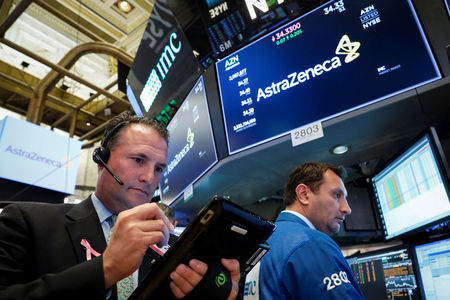
The new venture will include Carlsberg’s existing operations in Malaysia, Hong Kong and Singapore—markets where the two companies already collaborate—as well as in Laos, Vietnam and Cambodia.
The Bristol-based investment platform has snapped up two senior figures from Vanguard
08:48, 06 Jul 2026Updated 08:54, 06 Jul 2026
Hargreaves Lansdown in Bristol(Image: Bristol Post)
Bristol-based investment firm Hargreaves Lansdown (HL) has bolstered its senior leadership team with two new hires.
The finance platform has appointed Charles Thompson as chief technology officer and Michael Finnegan as chief transformation officer.
Advertisement
The pair, who are both joining from asset manager Vanguard, have backgrounds in tech and retail investing in the US market.
They will replace Richard Hebdon, current chief digital and technology officer, and Darren Worth, chief strategy and transformation officer, who will leave HL later this year. Hebdon and Worth will remain with the business for a transition period, Business Live understands.
Thompson will join HL on September 1, subject to regulatory approval, and will be based in Bristol. He was most recently principal and divisional CIO for advice and wealth management at Vanguard, having previously led technology at Vanguard International, spanning APAC, Europe and the Americas. Before that he held senior technology leadership roles at National Australia Bank.
Finnegan will also join HL in September and will be based in Bristol. He previously held a number of senior roles at Vanguard, most recently as head of wealth planning and partnerships. Before that he was head of international strategy and chief of staff for Vanguard’s International business and CFO for the Americas.
Advertisement
Richard Flint, outgoing CEO and non-executive deputy chair at HL, said the appointments were made following “a rigorous external search”.
“We are delighted to welcome Charles and Michael to HL,” he said.
“They are strong leaders with deep experience across technology, transformation and retail investing, and they will further strengthen the executive team.”
Mr Flint said HL would look to “combine the best” of its market position with lessons from the US, where technology, product innovation and customer engagement had “helped more people invest for their future”.
Advertisement
“Charles and Michael will play critical roles in that next phase,” he added. “I want to thank Darren and Richard for their service to HL… We are grateful for everything they have contributed and wish them both well for the future.”
Thompson said he was “incredibly excited” to join HL and was “looking forward to leading the build” of new technology capability within the business.
Meanwhile, Finnegan said HL had a “major opportunity” to help more people move from saving to investing.
“I’m excited to help deliver the change needed to support that ambition and help HL move faster for clients,” he added.
Sick of the heat, crowds and high prices, more U.S. travelers are discovering the offseason of international travel — and airlines and hotels are fighting for a windfall.
Flights to once-seasonal European vacation destinations now start when there’s still snow on the ground in the U.S. and wrap up when leaves are falling off the trees, if they end at all, instead of following traditional late-spring to late-summer travel seasons.
For example, American Airlines‘ flight to Edinburgh, Scotland, from New York began in March. United Airlines‘ nonstop route to Palermo, Sicily from Newark, New Jersey, will end in December and Delta Air Lines‘ service to Rome from Minneapolis, Minnesota, will run into January, months later than they have in past years.
With this year’s surge in jet fuel expected to take a $100 billion bite out of airline profits this year, according to the International Air Transport Association, it’s crucial for the industry to maximize on travel trends that attract high-spending customers.
Advertisement
Investors are upbeat that airlines can take the fuel hit from earlier this year after they trimmed unprofitable or less profitable flights and airline executives have said strong demand has helped them pass some — but not all of those expenses along.
Shares of Delta and United, the two most profitable U.S. airlines, each hit records in recent weeks, and American’s shares touched an 18-month high. Airlines start reporting second-quarter results and providing third-quarter updates this month, with Delta kicking the season off on Friday.
A couple cools off in the Trocadero Fountain with the Eiffel Tower in the background during a heat wave in Paris on June 26, 2026.
Dimitar Dilkoff | Afp | Getty Images
Advertisement
‘Creep of the seasons’
Industry executives told CNBC that international vacation seasons used to be more defined. The new trends are forcing them to rip up decades-old playbooks.
“It used to be so much lumpier. There used to be more: good season, bad season,” Delta President Peter Carter said in an interview. “There are so many places you can go in Europe year-round and still have an amazing experience, and that’s why we’re seeing such good demand into Europe.”
That demand is redefining when airlines’ moneymaker months are.
“We’ve seen this massive, what I would call, the creep of the seasons — the shoulder season is blending into the full season,” Patrick Quayle, United Airlines‘ senior vice president who designs the carrier’s network, said in an interview last month.
Advertisement
Shoulder season refers to the period between a destination’s peak tourist season and its offseason.
Airlines are trying to extend the season as much as possible to grow profits.
International flights to Europe generally carry more premium seats like lie-flat pods than smaller jets that are used for domestic travel — and airlines are planning to expand those options further. Business-class fares on some of those routes can cost $10,000 for a round-trip instead of less than half that on a domestic route.
A dog is standing with its owners in a long line at Terminal 1 of Frankfurt Airport in Germany.
Advertisement
Andreas Arnold | Picture Alliance | Getty Images
Airfare overall is up this year compared with last as airlines try to pass along as much of their rising costs to customers as possible, but there are signs that prices are moderating, particularly as the industry braces for the peak summer travel period in July to pass.
For example, flights between the U.S. and Athens, Greece, on June 22 were going for $988 round-trip, up from $810 last year but down from $1,350 two months earlier, according to flight-tracking site Kayak.
The increase in shoulder season and off-peak travel is forcing Delta to rethink its maintenance and crew schedules, said Jeff Arinder, Delta vice president of international network planning.
Advertisement
“We would never give airplanes to the maintenance hangers, if we could avoid it, in the summertime … because that’s when we made all the money,” he told CNBC. “We are now doing more maintenance in the summertime because we want to save those planes for the fall.”
He said Delta is trying to “really flatten out our seasonality as much as possible.”
Why travel times are changing
People try to cool down by standing in front of a nebuliser placed on a Civil Protection pick-up truck spraying cool water during a heatwave, in Rome near the Colosseum on June 26, 2026.
Andreas Solaro | Afp | Getty Images
Advertisement
The latest challenge to usual summer European travel was the most recent, deadly heat wave.
In late June, locals and tourists alike faced dangerous record temperatures throughout Europe, where air conditioning isn’t widespread. Misting stations were set up from Warsaw, Poland, to Rome. The Paris LGBTQ+ Pride march was postponed, among other events, and public alcohol consumption was briefly banned in the city.
Residents of many European cities, like Barcelona, Spain, and Venice, Italy have also been raising concerns about overcrowding during peak summer months and beyond. Countries throughout Europe have been bringing in record numbers of visitors.
But it’s not just an aversion to heat and crowds that’s leading to changing travel patterns.
Advertisement
For younger generations, more flexible work policies are helping some consumers, even those with children, take trips outside of late spring and summer. Baby Boomers, meanwhile, are armed with piles of cash and plenty of time, giving them more flexibility for travel.
“Delta’s target demographic tends to be a little bit older and a little bit wealthier,” Arinder said.
Setting sights on Sicily
United is pushing the limits of the offseason trend.
It’s extended its nonstop flight from Newark, New Jersey, to Palermo, Sicily, through Dec. 16, rather than ending it in September, with Boeing 767s.
Advertisement
Sicily has long been marketed as a summertime destination.
Daytime highs can regularly reach 90 degrees Fahrenheit along the coast with little, if any, rain in July. In December, however, the highs sometimes barely touch 60 degrees on the Italian island and rain is more likely.
As hotel rates drop and crowds at major attractions decline in the winter, United is making a bet that travelers will fill up the three-times-a-week service even without the ideal summer weather.
The view from the ancient theater of Taormina on the Italian island of Sicily.
Advertisement
Reda | Universal Images Group | Getty Images
“I don’t think it’s that experimental. I think it’s a really safe bet ” United’s Quayle said.
Many coastal hotels also close during the winter months. The Four Seasons’ San Domenico Palace, in Taormina, Sicily, where the second season of HBO’s “White Lotus” was shot, closes in mid-November through early spring, for example.
However, manager Imelda Shllaku told CNBC that in the past four years the hotel has had a “remarkable increase in bookings from U.S guests” in March, April, October and November.
Advertisement
“High-net-worth travelers are increasingly seeking experiences with genuine cultural currency, and Sicily’s shoulder season is simply better suited to delivering them,” she said by email, pointing to behind-the-scenes tours of Noto in southeast Sicily and nighttime trips to Mount Etna. The hotel will reopen March 1, a spokeswoman said.
Delta is planning to extend its flights from New York’s John F. Kennedy International Airport to Catania, on the east coast of Sicily, through Jan. 3, compared with Oct. 24 last year. And it plans to resume the route on March 8, 2027. This year, it started the route on May 1 and May 21 in 2025.
Shoulder season
United and Delta aren’t alone, as airlines across the board are redeploying some of their biggest planes to maintain service to Europe for the full year or well into the offseason.
“When airlines are looking to purchase aircraft, they have to think about ‘How are we going to use this airplane year-round because it’s an expensive piece of machinery,’” said Brett Snyder, founder of Cranky Flier blog and Cranky Concierge travel agency. “They know in the summer they won’t have a problem sending these widebodies to Europe. Now they can stretch that further into the shoulder season.”
Advertisement
Seattle-based Alaska Airlines, which recently debuted its first service across the Atlantic this year to London, Rome and Reykjavík, Iceland, is keeping this in mind. President and Chief Financial Officer Shane Tackett told CNBC that travelers are becoming more flexible.
“A lot of people want to go see the same destinations … [and that] makes it like very logical that those seasons would start to spread,” he said. “Maybe when I was growing up, my parents wouldn’t have even thought of taking me out of school in September, and I think maybe parents are a little more like, ‘Yeah, let’s go somewhere fun, and you’ll catch up on school when you get back.’”
An American Airlines Boeing 777-223ER takes off from Barcelona-El Prat Airport, in Barcelona, Spain, on April 29, 2026.
Joan Valls | Nurphoto | Getty Images
Advertisement
American Airlines, for its part, is stretching some of the seasons of U.S. trans-Atlantic travel.
October “is not as strong as June or July to Europe, but it’s becoming a peak month for us,” said Brian Znotins, the carrier’s senior vice president of network planning.
But American doesn’t want to push planes too far off their proven track record for ski-and-sun-seeker vacationers in winter, he said.
“I’m not going to mince words: January and February are still very off-beat months. I would hate to have anyone come away and say that they’re good months, they’re just less off-peak than they used to be,” he said.
Advertisement
Some travelers split the difference.
Atul Mehta, a finance executive based in Chicago, said he is taking his family to Portugal this summer shortly before school resumes, but said when he visits family in Bahrain in the winter “we have taken them out of school.”
The Insolvency Service is to deploy artificial intelligence to root out rogue directors who deliberately fold their companies to dodge tax and walk away from their debts, but the agency has admitted its new taskforce cannot fix an £800 million problem on its own.
The chancellor committed £25 million over five years in November’s budget to fund a 50-strong unit dedicated to investigating suspicious company insolvencies. Its target is so-called “abusive phoenixism”, the practice of liquidating or dissolving a company to escape tax liabilities and creditors, only for the business to rise again under a new corporate shell.
Phoenixism accounted for 22 per cent of the £3.8 billion in total tax losses in 2022-23, according to HM Revenue & Customs estimates, and the practice has long been a source of frustration for the small firms left unpaid when a customer or supplier collapses and quietly reappears under a new name.
Dave Magrath, director of investigation and enforcement services at the Insolvency Service, said enforcement outcomes were “really important” but warned they would not be enough. “On their own, they won’t solve the problem. The problem is a much greater one and it probably needs some of our policy people to really think about that tension between [directors] starting [companies] again and phoenixism.”
The taskforce, which began work in April and expects to be fully operational next year, grew out of joint work between HMRC, Companies House and the Insolvency Service. It will lean heavily on technology to find its targets. “We’re looking at the hundreds of thousands of companies that dissolve every year,” Magrath said. “We need some tech power to help us hone in and find the needle in the haystack around where the harm is.”
Advertisement
The move follows a damning National Audit Office report in 2024, which found that some small businesses were easily exploiting weaknesses in government systems to evade tax and that there had been a lack of focus on phoenixism. The watchdog, which also warned that small businesses account for around 80 per cent of UK tax evasion, revealed that the Insolvency Service had disqualified just seven directors for phoenixism between 2018-19 and 2023-24, out of 6,274 disqualified directors in total.
As part of the drive to ban more rogue directors, the Company Directors Disqualification Act is set to be amended, following a recent consultation, to widen the circumstances in which law-breaking directors can be struck off. The reform sits alongside Companies House’s rollout of identity verification for directors, another measure aimed squarely at phoenix operators.
Recent cases illustrate the scale of the abuse. The owner of a Burton fire alarm installation company was banned after paying himself almost £400,000 across two companies while handing HMRC just £5,368, while an Oxfordshire landscaping boss ignored his director ban and left £300,000 in unpaid tax across two companies. In one of the more extreme examples, a director linked to more than 400 companies was banned for nine years for helping struggling firms subvert the insolvency system.
Magrath acknowledged the difficulty of striking a balance between allowing entrepreneurs who fail for legitimate reasons to try again and clamping down on abuse, particularly at a time when the country is “striving for economic growth”. He said he hoped the “heart of the solution” would come from the recent civil enforcement consultation, which could see restrictions applied to directors with a pattern of repeated, harmful failures in lower-level cases, while still allowing them to “contribute to the economy”.
Advertisement
Caroline Sumner, chief executive of R3, the trade body for restructuring, turnaround and insolvency professionals, welcomed the taskforce as a response to “a longstanding issue”.
“Phoenixism undermines confidence in the business environment and can leave creditors, including small businesses and HMRC, out of pocket, so co-ordinated action is essential,” she said. “Measures such as strengthened identity checks for directors and improved data sharing should make it easier to identify and act on misconduct.
“Ensuring that the director disqualification regime is robustly applied and that there are sufficient resources and powers to pursue repeat offenders will be critical to the taskforce’s success.”
Amy Ingham
Amy is a newly qualified journalist specialising in business journalism at Business Matters with responsibility for news content for what is now the UK’s largest print and online source of current business news.
When you are standing on the side of a frozen peak, miles from civilization, your gear is your lifeline. In extreme mountain environments, the margin for error is zero. A single equipment failure or an inadequate layer of clothing can quickly turn an exciting expedition into a survival situation. For any climber preparing to tackle high-altitude summits, packing the right technical equipment is just as important as physical conditioning.
The Three-Layer Clothing System
The key to staying warm and dry in the mountains is layering. The three-layer system allows you to regulate your body temperature as your exertion levels and the weather change. Your base layer sits directly against your skin and must be made of moisture-wicking materials like merino wool or synthetic polyester — never wear cotton, as it retains sweat and will leave you freezing when you stop moving. The mid layer is your insulating layer; fleece jackets, active insulation, or lightweight down sweaters trap warm air close to your body. Finally, the outer layer is your protective shell — a high-quality, waterproof, and windproof Gore-Tex jacket and pants will shield you from howling winds, heavy snow, and rain. Mastering this system means you can adapt to rapidly changing mountain weather without overheating or freezing.
Technical Footwear and Traction
Your feet are your most valuable asset on a climb. Investing in high-quality mountaineering boots that are compatible with crampons is non-negotiable. These boots must be stiff enough to support your ankles on steep slopes and insulated enough to prevent frostbite in sub-zero temperatures. In addition to boots, you will need reliable crampons for traversing glaciers and icy slopes, and an ice axe for self-arrest in the event of a slip. Ensuring you have the best mountaineering gear for traction is critical for navigating technical terrain safely. Poorly fitted or inadequate footwear is one of the leading causes of accidents and injuries on high-altitude expeditions.
Safety and Navigation Essentials
Never venture into extreme environments without a comprehensive safety kit. This includes a high-output headlamp with extra batteries, a fully stocked first-aid kit, a multi-tool, and reliable navigation tools. While GPS devices and satellite messengers are incredibly useful, always carry a traditional map and compass as a backup, and know how to use them. A high-quality climbing helmet is also essential to protect your head from falling rock and ice, which are common hazards on steep mountain faces. Additionally, carrying a lightweight emergency bivy sack can be a lifesaver if you are caught out in deteriorating weather conditions and need to shelter in place until conditions improve.
Advertisement
Nutrition and Hydration Gear
Maintaining proper nutrition and hydration at altitude is critical for performance and safety. Carry a reliable water filtration system or purification tablets to treat water from mountain streams. High-calorie, lightweight snacks such as nuts, energy bars, and dried fruit provide the fuel your body needs to keep moving. An insulated water bottle or hydration bladder will prevent your water from freezing in sub-zero temperatures. Proper nutrition and hydration management, combined with the right technical gear, form the complete foundation of a safe and successful high-altitude expedition.
I’m DCF Value Investor a passionate individual analyst with unique ideas that cover all types of stocks and commodities. I focus on companies fundamentals and valuation, to deliver a proper investment analysis. My ideas explore a different point of view for undervalued opportunities. Although I cover all types of stocks, the sectors I prefer are materials, technology and real estate. My research process begins with screening for companies that appear undervalued based on their balance sheet, income statement and cash flow statement. From there I conduct a fundamental analysis, including valuation ratios and industry trends. Through my analysis, I aim to help my readers to make better investment decisions. As an independent writer, I write with a particular perspective, bringing fresh ideas to the platform. My ideas keen all types of readers with her intense research in the stock I’m covering, the investment thesis on my articles is solid as it is back on fundamentals and the whole concept on my pieces are based on value investing. My motivation for writing on Seeking Alpha is to offer a different perspective from Wall Street, writing about hidden opportunities in the market. Investigating over hyped stocks in the market, digging into financials and valuation with my own analysis are my passion.
Analyst’s Disclosure: I/we have no stock, option or similar derivative position in any of the companies mentioned, and no plans to initiate any such positions within the next 72 hours. I wrote this article myself, and it expresses my own opinions. I am not receiving compensation for it (other than from Seeking Alpha). I have no business relationship with any company whose stock is mentioned in this article.
Seeking Alpha’s Disclosure: Past performance is no guarantee of future results. No recommendation or advice is being given as to whether any investment is suitable for a particular investor. Any views or opinions expressed above may not reflect those of Seeking Alpha as a whole. Seeking Alpha is not a licensed securities dealer, broker or US investment adviser or investment bank. Our analysts are third party authors that include both professional investors and individual investors who may not be licensed or certified by any institute or regulatory body.
Investors weighing Meta Platforms against Alphabet in 2026 are confronting two of the technology sector’s largest artificial intelligence bets, each pursuing a distinct strategy for turning massive infrastructure spending into long-term returns. While both companies have posted strong quarterly results this year, analysts remain divided on which stock offers the better risk-reward profile heading into the second half of 2026.
Note: This article is intended to provide factual context for investors and does not constitute financial advice. Individuals should consult a licensed financial advisor before making investment decisions.
Both companies reported first-quarter 2026 results on April 29, giving investors a fresh look at how each business is performing amid an escalating AI spending race. Meta reported first-quarter revenue of $56.31 billion, up 33 percent year over year, with advertising revenue reaching $55.02 billion on the strength of a 19 percent increase in ad impressions and a 12 percent rise in average price per ad. Chief Executive Mark Zuckerberg described the results as “a milestone quarter” tied to output from Meta Superintelligence Labs, the company’s dedicated AI research division. Reality Labs, the unit responsible for the company’s virtual and augmented reality initiatives, including its AI glasses line, posted a $4.03 billion operating loss on just $402 million in revenue, a gap that continues to weigh on the company’s overall profitability.
Alphabet, meanwhile, reported first-quarter revenue of $109.9 billion, up 22 percent year over year, with Google Cloud emerging as the standout segment. Cloud revenue surged 48 percent to $17.66 billion, with operating income more than doubling to $5.31 billion. Alphabet’s cloud backlog has been reported at roughly $155 billion to $460 billion depending on the reporting period cited, giving the company substantial forward revenue visibility. Alphabet’s Gemini AI assistant has also scaled rapidly, with monthly active users reported at 750 million and enterprise-focused Gemini usage growing sharply on a quarter-over-quarter basis.
Advertisement
Capital spending plans highlight the differing strategies. Meta has guided for 2026 capital expenditures of between $115 billion and $145 billion, primarily directed toward AI infrastructure, custom chips and data center capacity. Alphabet’s 2026 capital expenditure guidance is considerably higher, ranging from $175 billion to $190 billion depending on the reporting period, spread across Google Cloud, YouTube, Waymo and broader AI infrastructure. Alphabet’s free cash flow has come under pressure as a result, falling sharply in some reported periods even as revenue growth remained strong, while Meta’s operating margin has compressed from roughly 48 percent to around 41 percent amid its own spending surge.
Valuation has emerged as one of the central differences separating analyst opinions on the two stocks. Meta has generally traded at a forward price-to-earnings multiple in the range of 20 to 23 times, while Alphabet’s multiple has been reported anywhere from roughly 16 to 28 times depending on the specific valuation model and time period referenced. Financial research firm GuruFocus has given Meta a perfect GF Score of 100 out of 100, suggesting the stock may be undervalued by approximately 10 percent relative to its calculated fair value, while assigning Alphabet a GF Score of 93, reflecting strong fundamentals but a comparatively more expensive entry point by some measures.
Analyst price targets also diverge notably between the two companies. Consensus estimates for Meta have clustered around $826 to $864 over a 12-month horizon, with some high-end estimates reaching as much as $1,015, implying upside of more than 30 percent from various recent trading levels. Alphabet’s consensus price targets have generally ranged from roughly $373 to $413, with some estimates as low as $352 and others as high as $515, reflecting more modest single-digit to low-double-digit implied upside in most scenarios. Alphabet has carried a Moderate Buy to Strong Buy rating across a wide range of covering analysts, with the vast majority issuing buy ratings and few, if any, sell recommendations. Meta has similarly drawn a Strong Buy consensus from a large group of analysts.
Stock performance between the two names has varied considerably depending on the period examined. In the weeks following their respective April earnings reports, Alphabet shares outperformed, gaining approximately 10.8 percent, while Meta’s stock was largely flat to slightly lower over the same stretch, reflecting investor enthusiasm for Google Cloud’s acceleration weighed against continued concerns about Meta’s capital spending trajectory and ongoing Reality Labs losses. Viewed over a full-year horizon, however, some reports have shown Meta significantly outperforming Alphabet, while other periods have shown the reverse, underscoring how sensitive the comparison is to the specific timeframe being measured.
Advertisement
Beyond its core advertising and cloud businesses, Alphabet has continued to diversify its revenue base. YouTube’s annual revenue has surpassed $60 billion when combining advertising and subscription revenue, while total paid subscriptions across Google One and YouTube Premium have topped 325 million. Alphabet’s autonomous vehicle unit, Waymo, has also expanded rapidly, reportedly surpassing 500,000 autonomous rides per week and receiving a $16 billion investment round earlier in 2026. Meta, by contrast, has continued to concentrate its strategy around advertising and consumer AI hardware, disclosing plans this year to explore monetizing its computing infrastructure through a potential cloud offering, a move that, if it materializes, could shift how investors evaluate the company’s heavy capital spending going forward.
Both companies continue to face regulatory scrutiny, including ongoing antitrust considerations tied to Alphabet’s search and cloud businesses, as well as European regulatory pressure on personalized advertising and pending U.S. litigation involving youth safety that is scheduled to proceed through parts of 2026 and could affect Meta’s platforms.
Taken together, the comparison between Meta and Alphabet in 2026 largely comes down to differing investment theses rather than a clear consensus favorite. Meta offers investors a more concentrated bet on advertising efficiency gains driven by AI, paired with a comparatively higher potential upside reflected in analyst price targets, but with continued uncertainty tied to Reality Labs losses and elevated capital spending. Alphabet offers a more diversified revenue base across search, cloud, YouTube and emerging businesses such as Waymo, along with a cloud segment that has demonstrated some of the fastest growth in the sector, though at a higher absolute level of planned capital expenditure and a valuation picture analysts continue to debate. As with any investment decision, individuals are encouraged to weigh their own risk tolerance, time horizon and portfolio diversification needs, and to consult a financial advisor before making decisions based on any single comparison of these two companies.
Shares of Cupid rose 6% to Rs 210.90 apiece on the NSE on Monday, extending its week-long rally to over 11%. The stock has been on an uptrend since the announcement of its business update for the June 2026 quarter.
According to the filing with the exchange, the company is on track to deliver revenue exceeding Rs 150 crore in the first quarter of FY27, marking one of the strongest quarterly performances in its history.
Cupid said that, driven by this exceptional start to the financial year and improved visibility across international & domestic markets, the management has revised its FY27 revenue outlook upward by a minimum of 10%, which means that the company expects FY27 revenue of more than Rs 660 crore, up from its earlier guidance of Rs 600 crore.
The revised outlook reflects growing confidence in the company’s diversified business model, expanding global opportunity pipeline and increasing operating scale across multiple business verticals.
Live Events
According to the company, growth is expected to be supported by expanding opportunities in international B2B healthcare markets, driven by demand from institutional buyers, private sector customers and government procurement programmes. This outlook is further supported by the commencement of its long-term supply agreement with the Partnership for Supply Chain Management (PFSCM), Netherlands, which the company said strengthens its position in global healthcare procurement.The company also highlighted growing opportunities in its lubricant portfolio, driven by increasing acceptance across institutional and consumer channels. It said its consumer business offers significant long-term potential as it continues to expand its personal care and wellness brand across modern trade, organised retail and pharmacy networks across Bharat.
Cupid said it sees strong order visibility across private markets, institutional business and international tenders spanning multiple geographies. It expects sustained growth in its male and female condom businesses, driven by expanded manufacturing capacity, new customer additions and a broader market reach built over the past 12 months.
The company also said it is making steady progress in its In Vitro Diagnostics (IVD) business. While near-term growth expectations remain conservative, it expects the segment to become a meaningful contributor over the coming years, supported by regulatory approvals, new product launches and continued commercialisation efforts.
“Our strong start to FY27 reflects the transformation Cupid has undergone over the past few years. We have built a diversified business with multiple growth engines that are now beginning to scale together,” said Aditya Kumar Halwasiya, Chairman and Managing Director, Cupid.
Halwasiya further said, “We are seeing strong momentum across our international B2B business, supported by expanding opportunities in private markets, institutional procurement, and government tenders across the world. Our strategic relationship with PFSCM has commenced on a very encouraging note and further strengthens our long-term position in global healthcare procurement.”
He added that, backed by a strong order book, improving visibility across international markets and a robust pipeline of opportunities, the company has revised its medium-term revenue outlook upward. “At the same time, we believe our projections remain conservative, leaving room for additional upside as execution continues and new opportunities materialise,” he said.
In the last two weeks, the shares of Cupid were up 16.14% and by over 52% in the last month.
Advertisement
(Disclaimer: Recommendations, suggestions, views and opinions given by the experts are their own. These do not represent the views of The Economic Times)
You must be logged in to post a comment Login