
Business
Carvana Stock Price Drops 15% as Earnings Outlook Misses Forecasts


As more Americans bristle at the idea of paying $50,000 on average for a new car, Carvana CVNA is capitalizing on the growing demand for used cars.
The online used-car retailer Wednesday reported record sales and profit in the second quarter. Carvana said it sold about 197,000 vehicles—up nearly 40% year-over-year—with a profit of $310 million, up from $183 million a year earlier. Revenue also rose 52% to $7.38 billion.
Copyright ©2026 Dow Jones & Company, Inc. All Rights Reserved. 87990cbe856818d5eddac44c7b1cdeb8


Earnings call transcript: Cameco Q2 2026 misses estimates but shares rise

Glantz from Rusi thinks that as legitimate businesses close, crime moves in. “Rents are down, there’s a lot of empty spaces, so landlords are willing to pretty much take just about anybody,” he says.
Plumb came up with a new name for these areas: the “shuttered front”, a string of constituencies with struggling High Streets that Power to Change think could play a pivotal role in future elections.
Indeed, Reform’s Nigel Farage and Richard Tice were among the first mainstream politicians to regularly talk about visible signs of High Street criminality.
In 2024, Farage said at an event: “You can see High Streets with five, six, seven barber shops in them.” Tice added: “Seriously, how come lots of these new barber shops have got no customers in them? How come they all want cash only? These are fronts for money laundering and drug money, and someone has to talk about it.”
And in a social media video he made last year – one that quickly set parts of the internet alight – Robert Jenrick, who was then the shadow justice minister, listed “weird Turkish barber shops” as a visible sign of decline, alongside bike theft, phone theft, and drugs in town centres. “It’s all chipping away at society,” he said. He later clarified that he was “obviously not talking about all Turkish-style barber shops”. Jenrick defected to Reform earlier this year.
Some politicians argue the language around High Street decline is in danger of becoming racially coded. In January, Miatta Fahnbulleh, then the devolution, faith and communities minister, agreed when asked by the Guardian if she thought the focus on Turkish barbers had racist overtones. “Yes, I do. The fundamentals aren’t to do with the colour of the skin of people running our High Streets. It’s to do with long-term decline and neglect.”
At the time a Reform spokesman was quoted as saying: “This is not a matter of ethnicity.
“The National Crime Agency itself has said many of these establishments are used as fronts for money laundering as well as a whole range of criminality which is why they carried out hundreds of raids on them last year.”
Meanwhile, immigration – the issue that voters consistently highlight as among the most pressing, and that Reform campaigns heavily on – came up in our investigation too. We exposed a Kurdish gang that was enabling migrants to work illegally in mini-marts the length of Britain, by offering to put their own names to official paperwork. Trading Standards told us they find a constant supply of staff from asylum hotels, who are vulnerable to abuse by employers, working in those shops.
Josh Nicholson, a researcher at the Centre for Social Justice think tank, says, “Chaos and flux in Westminster are reflected in our High Streets.
“People feel powerlessness, they look at Westminster and see an inability of politicians to grapple with the basics and that feeds down to a local level.”
This feeling of helplessness came up again and again in our travels.
“Nothing is going to change,” Daniel, in Swansea, told us about the criminality on his High Street, which has become a hub for counterfeit rolling tobacco. He has seen violence on the High Street and an increase in raids on High Street shops. He’s a dual British and Chinese national and was considering moving to Hong Kong.
“It doesn’t make me feel safe. I’ve got kids.”
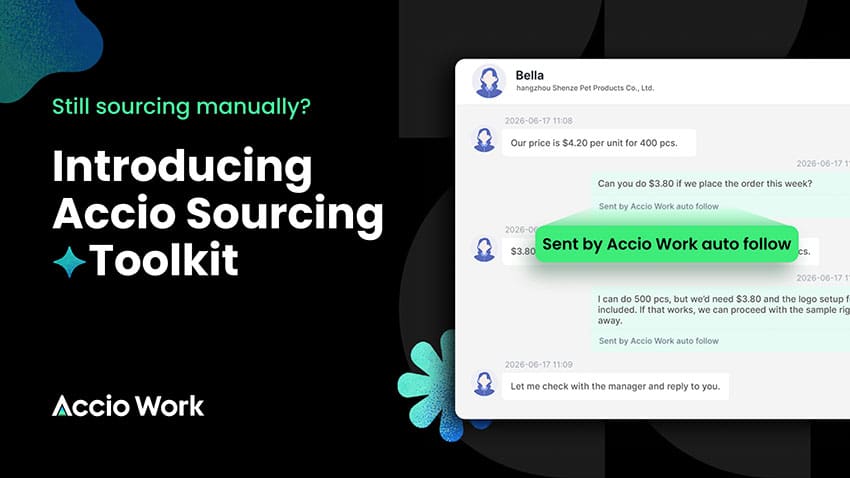
SMEs and solopreneurs today face a myriad of challenges. With rising costs and growing competition, many businesses now operate with fewer staff members, or without dedicated expertise on business-critical areas, for instance, sourcing or supply chain.
As a result, time-poor founders and CEOs may deprioritise sourcing and revert to their usual suppliers, even when more competitive products, pricing or terms may be available elsewhere.
One solution Is Accio Work , Alibaba’com’s 24/7 agentic business team that helps SMEs automate end-to-end business tasks, moving beyond advice to execute work across research, sourcing, negotiation, marketing, sales, operations and CRM. It requires no code or setup and automates complex tasks such as sourcing, supplier research, procurement and marketing that would otherwise consume hours of manual effort.
While many AI tools draft, suggest or provide answers to specific prompts, Accio Work is designed to take a goal or business objective and create a specific action plan to deliver results. Its agents work in coordination with one another, providing SMEs with automated workflows rather than a series of isolated tasks. Users get access to a pre-configured team of AI agents without requiring technical setup, allowing them to set goals in natural language, while the system assembles specialist agents to work on the task autonomously. These agents can support businesses across the entire lifecycle, including product strategy and design, product and supplier search, comparison and vetting, enquiry and negotiation, store operations, marketing and sales.
Making sourcing more manageable
One of Accio Work’s special features is the Accio Sourcing Toolkit which has been designed to offer senior-level sourcing expertise to any growing SME or solopreneur. This toolkit can automate key sourcing tasks, including supplier identification, product and supplier comparisons, and bulk outreach, 24/7 – allowing founders to focus on other tasks.
SMEs can describe a product or product specification and use the toolkit to find the best-suited suppliers that can bring it to life. For founders who are flush with new product ideas but may not have the time or expertise to bring ideas to market, this is particularly powerful.
By automating manual research, outreach and supplier follow-up, the toolkit reduces the time spent on repetitive tasks linked to sourcing, making the process easier to manage and more impactful.
Supporting better supplier decisions
The Sourcing Toolkit also presents SMEs with a range of options from different suppliers for assessment ahead of formal negotiations. This can bring together a range of product and business-critical data points or factors, from pricing and delivery times to product availability, enabling enables SMEs to move from operating with instinct to making more evidence-based choices.
And it supports autonomous outreach and negotiation with suppliers, including follow-ups 24/7. But this is not about taking negotiation away from the business owner, rather, it helps SMEs access more comprehensive information on pricing and sourcing terms so they can pursue stronger business outcomes.
Moving faster from idea to execution
Finally, the Sourcing Toolkit combines product research, opportunity analysis and supplier discovery to help SMEs identify products with strong commercial potential. Once an opportunity has been identified, businesses can move directly into supplier discovery and sourcing. This can enable SMEs to capitalise on new and emerging trends with greater agility and reduce the time to market.
It draws on Alibaba.com’s decades of expertise in B2B commerce, allowing SMEs to access supplier and product intelligence that would otherwise be difficult to gather independently.
Accio Work is plug-and-play, with zero set-up, no configuration and no code. It is built for real business scenarios, with enterprise-grade security, sandboxed environments, granular permissions and user approval for sensitive actions.
The Next Step: CoCreate Pitch 2026
For founders who want to do more than just source their ideas but also bring them onto the international stage: Alibaba.com has redesigned the CoCreate Pitch Competition 2026 into a fully AI-driven product innovation contest with a total prize pool of over one million US dollars.
For the first time, applicants can register directly through Accio Work. A dedicated “CoCreate Pitch Agent” transforms early product ideas into structured pitch concepts and actionable business plans. The European Final will take place on November 19 and 20, 2026, in London.
Business
Passenger on British Airways mayday flight describes fear and shout of ‘I don’t want to die’

A passenger on a British Airways flight that issued a distress call on approach to Heathrow Airport earlier this month has described the rising fear in the cabin and a lack of information from the crew.
Edward Killiwick had been travelling back from a friend’s birthday party with his partner Julie, on the flight from Dusseldorf in Germany on 6 July.
He said passengers were told that the landing had been aborted, and then he felt a “very violent manoeuvre” and “did think we could crash”. He and his partner had to comfort a woman who “completely lost it and started screaming, ‘I don’t want to die’”.
The flight landed safely, but the incident is being investigated with assistance from BA.
The UK’s Air Accidents Investigation Branch (AAIB) said it was “investigating a serious incident”, and France’s accident investigation authority, the BEA, said on Wednesday that the plane, an Airbus A320, had issued a distress call.
Edward said: “The violent manoeuvre almost felt like it was avoiding another aircraft. You could feel the engines going at full power.
“It was a bit odd going around in a holding pattern with no information. I thought if they’re not talking, then they’re not in a good place.”
He said they were in a holding pattern for about 15 minutes.
The BEA said that as the plane approached Heathrow, there was a data system failure which triggered a stall warning.
The crew then flew the aircraft in a different mode called “alternate law”, which removes some automated flight protection systems. Another stall warning then occurred at 3,000 feet — which experts say was likely to have been just miles away from the airport.
The urgency call the crew had already made was upgraded to mayday, indicating imminent danger.
A British Airways spokesperson said the airline was assisting the AAIB with its investigation and was not legally able to comment further at this stage.
Edward said: “I was definitely scared. After the violent manoeuvre I thought, there is definitely something very badly wrong here. I did think we could crash.
“I did think it was a possibility, and I think everyone else did.”


Company is testing a new beverage concept to extend its Refreshers platform.
CXMT, a secretive Chinese chipmaker, launched its trading debut following a $9.8 billion IPO. The company aims to challenge global semiconductor leaders and impact the trillion-dollar industry. Its IPO marks a significant step in China’s tech ambitions, reflecting increased focus on domestic chip production amidst geopolitical tensions and supply chain shifts.
Chinese semiconductor powerhouse CXMT (China Microelectronics Corporation) has officially debuted on the stock market following its impressive $9.8 billion IPO. This landmark move marks China’s push to become more self-reliant in advanced chip manufacturing amidst global supply chain challenges. CXMT, known for producing advanced DRAM chips, aims to strengthen its position as a key player in the global semiconductor industry.
The IPO has been met with strong investor enthusiasm, reflecting confidence in China’s semiconductor sector and its growth potential. The funds raised will be used to expand manufacturing capacity and invest in cutting-edge technology, which is vital as demand for high-performance chips continues to surge across electronics, communication, and data centers.
CXMT’s entry into the public markets signals China’s intensified efforts to compete with industry giants in the United States and South Korea. As global chip shortages persist, China’s semiconductor ambitions are gaining momentum, solidifying its role as a significant player in the future of tech innovation.
Other People are Reading

Canadian economy grew by a greater-than-expected 0.3% in May

Australian shares have posted a fourth straight month of gains, but a final session rally largely crumbled as investors took profits ahead of a historically weak period for the exchange.

Commerce Secretary Howard Lutnick explains how he restructured the CHIPS Act to ensure American taxpayers receive a 10% stake in Intel’s success. Lutnick emphasizes this unprecedented move for the U.S. government’s investment strategy.
The Commerce Department indicated that the federal government is on track to dole out millions of dollars to seven companies to fund technology development but will require the businesses to fork over equity in exchange for the money.
“The Department of Commerce today announced the signing of 7 letters of intent to provide $874 million in federal incentives under the CHIPS and Science Act,” a Wednesday press release noted. “These incentives will support innovative domestic technologies to dramatically increase the performance of the world’s fastest computers, secure domestic supply chains, and strengthen U.S. leadership in the compute supply chain.”
The CHIPS and Science Act was passed by Congress and signed by President Joe Biden in 2022.
ANTHROPIC SAYS AI MODELS ACCESSED SYSTEMS OF 3 REAL ORGANIZATIONS DURING TESTING

A United States Department of Commerce sign is seen on its building in Washington D.C., on July 12, 2024. (Jakub Porzycki/NurPhoto via Getty Images / Getty Images)
The seven companies, which include GlobalFoundries, Kepler, Multibeam Corporation, Extropic, Thintronics, OBSIDIA Semiconductors and Aeluma, “have entered into letters of intent with the Department of Commerce, and there will be further diligence and approval by the Department before final awards are made,” according to the announcement, which is posted on the National Institute of Standards and Technology site. “The Department will receive a minority, non-controlling equity stake in each company as a condition for receiving the funds to enhance the return for the U.S. taxpayer.”
The department detailed the planned funding allotments for each company should the government move forward.
“GlobalFoundries will receive up to $300 million to accelerate the domestic research and development of co-packaged optics by two to three years. By integrating photonics directly alongside AI processors, this technology will deliver ultra-fast, energy-efficient computing to reinforce U.S. leadership in AI infrastructure,” the release noted. “Kepler will receive up to $245 million for R&D to develop in the U.S. a new class of high-performance AI memory technology enabled by innovative 3D and ferroelectric technologies.”
ZUCKERBERG PREDICTS MORE JOBS AND ENTREPRENEURSHIP IF SUPERINTELLIGENCE IS WIDELY DISTRIBUTED
Rosecliff founder and managing partner Mike Murphy discusses the chip sell-off as he highlights the U.S. becoming less dependent on Taiwan for the technology.
“Multibeam Corporation will receive up to $140 million to develop advanced packaging technology to assemble and stack multiple chips and connect them with thousands of wires, which will enable more advanced systems necessary for AI and other advanced computing applications,” the department states. “Extropic will receive up to $75 million to develop thermodynamic sampling units (TSUs) which use natural thermal fluctuations to probabilistically solve complex problems spanning simulation, optimization, and AI, at a fraction of the energy consumed by conventional computing approaches.”
“Thintronics will receive up to $50 million to develop ultra-low-loss inter-layer dielectrics required for next-generation semiconductor interconnects and advanced packaging in high-performance compute, AI, and networking infrastructure,” the announcement states.
“OBSIDIA Semiconductors will receive up to $34 million for R&D to deliver non-invasive counterfeit and malicious component identification systems to ensure provenance and traceability in secure supply chains for AI and advanced electronics,” the release notes. “Aeluma will receive up to $30 million to develop large diameter, indium-phosphide-free substrate technology used to fabricate photodetectors and lasers for AI photonic interconnects.”
BERNIE SANDERS UNVEILS PLAN TO TAKE 50% STAKE IN AI COMPANIES FOR GOVERNMENT WEALTH FUND

President Donald Trump speaks during a ceremonial swearing-in for Secretary of Commerce Howard Lutnick in the Oval Office of the White House in Washington, D.C., on Feb. 21, 2025. (JIM WATSON/AFP via Getty Images / Getty Images)
GET FOX BUSINESS ON THE GO BY CLICKING HERE
“With today’s compute supply chain investments, the Trump Administration is accelerating America’s innovation engine,” Commerce Secretary Howard Lutnick said in a statement. “These strategic investments will enhance our country’s domestic capabilities, create high-paying jobs and keep America at the forefront of the semiconductor industry.”

Adding more leads to an unoptimized pipeline rarely solves a growth problem. In fact, scaling lead generation without a structured operational backbone usually exposes underlying structural cracks.
Unprocessed inquiries accumulate in disconnected systems, response times slow down, and promising opportunities slip through the cracks.
When sales organizations scale up, they often try to handle the increased volume by simply adding headcount or demanding more manual effort from representatives. But scaling through brute force is inefficient and expensive.
True scalability requires building a repeatable, automated lead management process. By standardizing how leads are captured, validated, routed, and monitored, revenue teams can increase conversion rates and handle higher volume without a proportional increase in administrative overhead.
The Bottlenecks That Prevent Sales Scaling
Before you can build a scalable framework, you must identify where lead flow breaks down as volume increases. In most growing sales organizations, three major bottlenecks emerge:
- Fragmented Data Capture: Inbound leads enter from multiple channels—web forms, third-party content platforms, trade shows, and social ads—often landing in isolated spreadsheets or unintegrated software tools.
- Manual Lead Distribution: Operations managers waste hours every week manually assigning leads to reps based on geography, account size, or availability.
- Inconsistent Follow-Up Cadences: Without clear structural rules, individual representatives decide when, how often, and through which channels they follow up with prospects, leading to vast swings in buyer experience.
Addressing these bottlenecks requires shifting from ad-hoc lead handling to a systematic, four-stage lead management architecture.
Stage 1: Standardize Data Ingestion and Validation
A scalable process begins at the point of entry. If dirty or incomplete data enters your pipeline, every subsequent step becomes slower and less effective.
Automate the initial ingestion process by connecting all lead-generation sources directly to your core platform via direct integrations or APIs. As soon as a lead submits their information, run automated validation checks:
- Normalize Field Formats: Ensure job titles, state names, and industry categories match standardized dropdown values rather than open text fields.
- Enrich Contact Data: Use automated data enrichment tools to append firmographic details—such as company headcount, revenue range, and tech stack—without inflating form length for the buyer.
- Scrub Against Suppression Lists: Automatically cross-reference phone numbers and email addresses against your company’s Do Not Call (DNC) lists and existing customer databases to prevent duplicate outreach.
Fixing data hygiene at the point of entry prevents reps from wasting time calling dead numbers or manually researching basic company information.
Stage 2: Implement Automated Qualification and Scoring
Not every lead that enters your system is ready for a direct sales call. Treating all inquiries identically forces your sales development team to act as manual filters rather than consultative closers.
Establish a dual-scoring model that evaluates both fit and intent:
Explicit Scoring (Firmographic Fit)
Assign points based on how closely the prospect matches your Ideal Customer Profile (ICP). Factors like target industry, company size, and decision-maker seniority dictate the baseline score.
Implicit Scoring (Behavioral Intent)
Assign dynamic points based on the prospect’s actions. Downloading an introductory eBook might add 5 points, while viewing a pricing page twice in 24 hours adds 25 points.
According to research from Forrester, organizations with aligned, automated lead scoring and management processes generate significantly higher sales-accepted lead rates. When a lead reaches a pre-defined point threshold, the system automatically marks it as “Sales-Ready” and triggers the routing sequence.
Stage 3: Transition to Automated, Queue-Based Routing
The traditional method of assigning leads—dropping them into a shared CRM inbox or emailing reps individually—fails at scale. Reps end up cherry-picking the easiest leads, while newer or more complex inquiries sit untouched.
To scale smoothly, replace static assignment rules with automated queue-based logic. Integrating a dynamic sales engagement platform like Vanillasoft allows operations leaders to replace manual distribution with real-time routing engines.
Instead of reps choosing who to contact next from a static list, the queue automatically presents the single highest-priority lead directly on the rep’s screen the moment they become available. If a high-intent pricing request arrives, the platform instantly redirects that lead to the top of the active queue. This automated flow strips away administrative hesitation, drives immediate speed-to-lead, and ensures every prospect receives timely attention.
Stage 4: Enforce Standardized Cadences with Multi-Channel Logic
Once a lead is assigned, the follow-up process must follow a predictable, multi-channel schedule. Leaving touchpoint frequency up to rep discretion leads to missed opportunities; research shows that many prospects require five to eight touchpoints before engaging in a conversation.
Build standardized outreach cadences that combine phone calls, personalized emails, and social touchpoints over a 14-to-21-day window. Program your management software to automatically trigger the next step in the cadence based on the prospect’s response:
- If the rep leaves a voicemail: The system automatically queues a follow-up email template for rep approval.
- If the prospect opens an email three times: The system automatically moves the next scheduled phone call up in the queue.
- If the prospect opts out: The system instantly pauses the cadence across all channels to preserve compliance hygiene.
Standardizing the cadence creates operational predictability, making it far easier to train new hires and maintain consistent outreach quality as the team expands.
Stage 5: Monitor Pipeline Velocity and Conversion Bottlenecks
A scalable lead management process is not a “set-it-and-forget-it” system. As volume grows, operations leaders must monitor key operational health metrics to locate friction points:
Lead Acceptance Rate
The percentage of routed leads that sales representatives accept and attempt to contact. A low acceptance rate usually indicates a flaw in your qualification scoring or lead-fit criteria.
Stage-to-Stage Conversion Rates
Track the percentage of leads moving from capture to contact, contact to discovery meeting, and discovery to closed-won. Monitoring conversion rates by lead source helps you reallocate marketing spend toward channels that generate real sales velocity.
Cycle Time
Measure the average duration it takes for a lead to move through the entire pipeline. Identifying stages where leads stall allows you to refine your cadences or adjust rep workloads before growth slows down.
Building for Long-Term Scalability
Scaling your sales operations doesn’t mean asking your team to work harder or sort through larger spreadsheets. It means removing structural drag so your representatives can focus entirely on high-value buyer interactions.
By automating data capture, implementing objective lead scoring, routing inquiries through queue-based workflows, and enforcing multi-channel cadences, you build a sustainable operational framework. When your lead management process is built to scale, increasing lead volume directly translates into predictable, repeatable revenue growth.

Newport County appoint new manager after shock Christian Fuchs exit
Earnings call transcript: Cameco Q2 2026 misses estimates but shares rise

Coinbase’s (COIN) weak quarter leaves Wall Street split on timing of a recovery


-

 Fashion7 days ago
Weekend Open Thread: Brooks Brothers
-
 Sports5 days ago
Commonwealth Games boxing: Jadumani Singh seals dominant 5-0 win over Pakistan’s Sumama Rehman to enter quarter-finals | Commonwealth Games News
-

 Business2 days ago
Why Trees Belong on the Risk Register
-

 Tech5 days ago
Intel is reversing course and bringing hyper-threading back to its server chips
-

 Crypto World6 days ago
Ripple bought a bank in pieces. The $4 billion audit
-

 Politics4 days ago
Luke Littler dismantles Gerwyn Price to retain title in Blackpool
-
 Entertainment7 days ago
A New Post-Apocalyptic Gundam Anime Series Blasts Into SDCC
-

 Politics3 days ago
The Part of the Electric Transition Nobody Wants to Discuss
-

 News Videos5 days ago
BITCOIN JUST ENTERED THIS CRITICAL ZONE…
-

 Business2 days ago
Major shareholder moves on Canyon
-

 Crypto World5 days ago
XRP Ledger adds $2.6B as RWA inflows rank second
-

 News Videos1 day ago
Bitcoin Enters the 3rd Stage of the Bear Market
-

 Politics5 days ago
Spain sweeps the board at 2026 World Cup with individual awards
-
 Entertainment3 days ago
‘Stargate’ Creator’s New Sci-Fi Series Returns for Season 3 Tomorrow
-

 Entertainment6 days ago
Sara Gilson Killed By Husband After Viral “Pedophile” TikTok Video
-

 Crypto World3 days ago
Kraken Enables Retail Access to Jersey Mike’s IPO via Tokenized Shares
-

 Tech6 days ago
Anthropic launches Claude Opus 5, a cheaper AI model for coding, agents and enterprise workflows
-

 News Videos3 days ago
Claude: Build Financial Dashboards in Minutes (2026)
-

 Tech4 days ago
New macOS Sequoia & Sonoma security updates for older Macs
-

 Politics21 hours ago
Luke Littler’s dominance sparks GOAT debate
You must be logged in to post a comment Login