

Business
Centuria Industrial REIT (CNIEF) Analyst/Investor Day – Slideshow




The public issue received bids for more than 61 lakh shares, as against the offer size of 1.43 crore shares, according to data on NSE at 10.36 am. Retail Individual Investors (RII) lead the numbers, booking 80% of their reserved portion. Qualified Institutional Buyers (QIB) meanwhile have subscribed 43% of the portion kept for them, while that reserved for the Non Institutional Investors (NII) has been booked 18% so far.
Lohia Corp IPO GMP
The decent subscription numbers come despite muted grey market trends. The unlisted shares of Lohia Corp were trading with a grey market premium (GMP) of 3-8.5% over the IPO price, according to sites tracking the unofficial market. This has fallen from the 9-13% GMP the unlisted stock commanded after the price band was announced.
It is important to note the grey market is an unofficial platform. The actual listing premium may significantly differ from the grey market expectations.
Also read: Can Lohia Corp IPO deliver long-term growth for high risk investors?
About Lohia Corp IPO
Lohia Corp launched its IPO on Thursday to raise Rs 1,101 crore entirely through an Offer for Sale (OFS) of shares at a price of Rs 404-425 per share. This means that the IPO proceeds will go to the selling shareholders, while the company itself will not receive any funds from the offering.
The maiden public issue of the company will be open for bidding from July 23 to July 27. The share allotments are expected to be finalised on July 28, while the company’s shares are likely to make their debut on NSE and BSE on July 30.

The IPO has a lot size of 35 shares. At the upper price band of Rs 425, retail investors will need to invest a minimum of Rs 14,875 for one lot. Equirus Capital Ltd and Motilal Oswal Investment Advisors Ltd are the book-running lead managers to the issue, while MUFG Intime India Pvt. Ltd. is the registrar.
Promoters participating in OFS include Raj Kumar Lohia (up to 167.28 lakh shares), Gaurav Lohia (up to 22.18 lakh shares), Amit Kumar Lohia (up to 9.2 lakh shares) and Ritu Lohia (up to 16.71 lakh shares). Other selling shareholders include Alok Kumar Lohia (up to 21.71 lakh shares), Anurag Lohia (up to 11.38 lakh shares) and Anuja Lohia (up to 10.85 lakh shares).
About Lohia Corp
Incorporated in 2023, Lohia Corp manufactures machinery and equipment used in the production of technical textiles, particularly for manufacturing polypropylene (PP) and high-density polyethylene (HDPE) woven fabric and sacks.As of March 31, 2026, the company had an installed annual capacity of 240 tape extrusion lines, 13,800 circular looms, and 108,000 winders. Its product portfolio includes tape extrusion lines, circular looms, coating and lamination lines, printing and conversion machines, multifilament yarn machines, twister winders, monofilament extrusion lines, recycling machines, and related spare parts.
Lohia Corp financials
Lohia Corp reported a net profit of Rs 193 crore for the financial year which ended on March 31, 2026. This marked a 64% year-on-year (YoY) rise from Rs 118 crore net profit reported in FY25. Its revenue from operations, meanwhile, rose around 25% YoY to Rs 1,717 crore in FY26 from Rs 1,377 crore in FY25.
Also Read: Lohia Corp IPO opens on July 23: Here’s all you need to know
(Disclaimer: Recommendations, suggestions, views and opinions given by the experts are their own. These do not represent the views of The Economic Times)

U.S. Banks Brace For An Extended Deposit Cost Squeeze
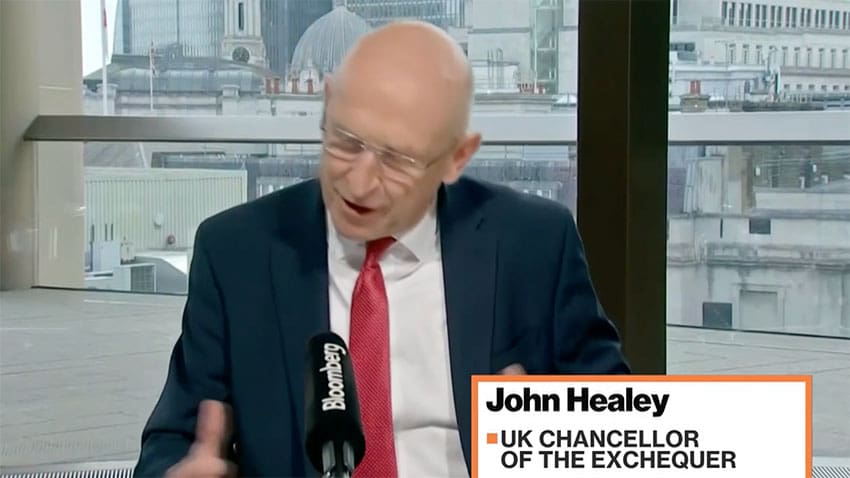
Britain’s new Chancellor has told the country’s business owners that their pain is now firmly on his desk. In his first major broadcast interview since taking the job, John Healey used an appearance on Bloomberg TV to promise that he is “just as concerned about the cost of business as I am about the cost of living”.
It is a deliberate reframing. For two years, ministers have built their message around household budgets. Healey wants entrepreneurs to know the squeeze on their firms counts too.
“To British businesses, to British innovators, to British investors: I will back you as your Chancellor,” he said. “I’ll back you in financial services, in technology, in retail, in industry, in all parts of the economy.”
The pledge lands at a nervous moment. Business groups gave Healey’s move to the Treasury a cautious welcome, wanting warm words followed by action on the bills that have piled up.
Healey named the culprits directly: “tax, energy, supply chain costs, and labour”. Each will resonate with owner-managers. UK industrial energy prices remain among the highest in the advanced world, a structural drag on manufacturers and any firm running plant or premises. Hiring has cooled since employers’ National Insurance rose, and the energy and tax bills weighing on smaller firms have dominated the trade-body postbag for months.
The Chancellor acknowledged the mood. “I know things haven’t been easy,” he said. “We talk a lot in government about the cost of living, and that’s right. People have been facing increasing pressures… but so have all of you.”
He went further: “I know that businesses large and small have felt really squeezed.”
That squeeze is not abstract. While the cost of living has eased, with inflation running at 2.6 per cent in June, the cost of running a business has proved stickier. Energy contracts, wage bills and supplier prices have not fallen back in step.
Healey’s answer is a closer working relationship. “I want us to deepen our government’s relationship, our Treasury’s relationship with business,” he said. “I want to deepen it based on a shared ambition for Britain, not just an ambition for success in this square mile, but for every part of the country, or as the Prime Minister would say, in every postcode.”
For SMEs, the test is whether the rhetoric converts into policy. Warm words on backing business are cheap; lower energy bills, a lighter tax load and steadier supply chains are not. The Chancellor has set the bar himself by putting the cost of business alongside the cost of living. Owner-managers will now expect the Budget to show it.
The direction of travel, at least, is clear. A Chancellor who names tax, energy and labour as the pressures keeping business owners awake has correctly diagnosed the problem. Whether the Treasury writes the prescription is the question every firm will now be asking.

Paul Jones
Harvard alumni and former New York Times journalist. Editor of Business Matters for over 15 years, the UKs largest business magazine. I am also head of Capital Business Media’s automotive division working for clients such as Red Bull Racing, Honda, Aston Martin and Infiniti.

In India, Iran war forces Diet Coke to roll out a bigger can, heftier price tag

HDFC Bank shares dropped to Rs 737.25 apiece on NSE on Friday. The shares of India’s largest private lender have now crashed 10% over five sessions since the release of its Q1 earnings last weekend.
Why are 3 US law firms probing HDFC Bank?
Los Angeles-based Glancy Prongay Wolke & Rotter LLP, the Law Offices of Howard G. Smith in Pennsylvania, along with the Law Offices of Frank R. Cruz in Century City have each said that they are looking into potential securities law violations by HDFC Bank and are inviting the lender’s shareholders who suffered losses to come forward, The Economic Times reported.
These three law firms are yet to disclose whether their investigations have progressed into a formal class action filing. Such cases typically see US securities firms using these early-stage probe announcements to identify a lead plaintiff before petitioning a federal court, a process that can take weeks to months.
HDFC Bank did not respond to a query from The Economic Times.
Also Read | Three US law firms probe HDFC Bank over alleged Maharashtra deposit payments
Notably, the investigation dates back to a report which claimed that HDFC Bank had made payments to Maharashtra’s road development corporation in order to attract large deposits from the state agency.
A report in The Indian Express said the payments were allegedly made to the Maharashtra State Road Development Corporation (MSRDC), a state government agency, just days before former chairman Atanu Chakraborty resigned on March 18.
The Indian Express investigation, based on internal records, found that the payments were intended for Maharashtra State Road Development Corporation as “differential interest”, or interest paid above the specified rate on its deposits. However, instead of being directly credited to MSRDC’s account as interest income, the funds were allegedly routed through the bank’s marketing department and shown as contributions towards a road safety awareness campaign via four local vendors.
HDFC Bank however had strongly denied the allegations of wrongdoing. “The bank has robust internal oversight, audit and control processes and systems. All issues are dealt with in accordance with the bank’s established norms, and full process is always followed before final determination post any internal review. We strongly reject any assumptions of wrongdoing or culpability based on selective material,” the bank said in a statement.
HDFC Bank share price
HDFC Bank shares have fallen around 10% in one week and 7% in a month, dropping more than 25% in 2026 so far. In the longer term, the shares of the Indian private lender have delivered negative returns of 26% in one year and 12% in three years, although it gained 3% in five years.
HDFC Bank last Saturday reported a 5% year-on-year (YoY) rise in net profit to Rs 19,060 crore for Q1 FY27, while NII rose 7% YoY to Rs 33,534 crore.
(Disclaimer: Recommendations, suggestions, views and opinions given by the experts are their own. These do not represent the views of The Economic Times)

Fred Alger Management, LLC (“Alger”) is a privately held $27.4 billion growth equity investment manager. Alger is a pioneer of actively managed, growth equity investing. Their journey over the past six decades has been defined by navigating change, embracing disruption, and investing in innovation. Note: This account is not managed or monitored by Fred Alger Management, and any messages sent via Seeking Alpha will not receive a response. For inquiries or communication, please use Fred Alger Management’s official channels.

British small businesses are being approved for bank loans at less than half the rate they enjoyed before the financial crisis, and one of Donald Trump’s former economic advisers says the fault lies not with the 2008 crash but with the rules written in its aftermath.
Tyler Goodspeed, who chaired the White House’s council of economic advisers from 2020 to 2021 and is now chief economist at Exxon Mobil, argues that post-crisis regulation forcing banks to hold more capital, rather than the depth of the recession, is the main reason Britain’s recovery has trailed the United States.
“For 15 years, British policymakers have told themselves that a slow recovery was simply the price of a deep recession. It isn’t,” Goodspeed says in a paper for the free-market Institute of Economic Affairs.
“History shows deep recessions are usually followed by strong rebounds. Britain’s experience after 2009 departed from this pattern because regulators, with the best of intentions, made it structurally harder for banks to lend to British businesses. That was a choice, and it is still being made today.”
His central figure will sting any owner who has pitched a bank for growth capital. Credit to smaller companies in the United States clawed its way back to 2008 levels by 2013; in the UK it remains 15 per cent below pre-crisis volumes. British lenders, he says, have pulled back from the real economy and switched instead to “low-risk lending to governments”.
The consequences land hardest on the youngest, most ambitious firms, the ones the government keeps saying it wants more of.
“This matters because smaller, younger enterprises looking to expand may struggle to access credit through conventional bank loans because they lack credit history and physical assets that they might pledge as collateral,” Goodspeed says. “To illustrate this point, one might consider tech companies, whose primary assets are intangible, namely, their ideas. Without non-bank sources of credit, many such firms may be unable to access external financing, and instead be forced to rely on cash flow and retained earnings.”
That reliance is sharper here than across the Atlantic. UK firms lean far more heavily on bank funding than American peers, who can tap deeper capital markets and pools of private credit, private equity and venture capital. When the bank says no, many British SMEs have nowhere else to turn.
The picture Goodspeed paints is one Business Matters readers will recognise. Ministers have already hauled the big bank chiefs in for talks over shrinking access to credit, and the government has run a review into the supply of SME debt finance. The retreat of the high street has left challenger banks holding 60 per cent of the SME lending market, a share that was unthinkable before the crisis.
Goodspeed’s verdict is blunt. The decline in bank lending to firms is a “searing indictment of UK financial policy over the past 15 years. Before 2008, approval rates for new bank loan applications by small and medium-sized UK businesses were often 80-90 per cent. By 2024, that had dropped to fewer than half,” he says.
Some of the post-crisis architecture is now being dismantled. The Bank of England has loosened rules on banker bonuses and signalled it will ease capital requirements for lenders, the buffers of cash and assets banks must hold against their lending. The previous Labour government, under Sir Keir Starmer, said it would also relax the post-2008 “ringfencing” rules that forced banks to separate retail banking from riskier investment activity, a change the industry has long wanted.
Whether looser rules translate into more loans for the corner-shop expansion or the software start-up remains the open question. For Goodspeed, the direction of travel matters less than the admission underneath it: that Britain’s credit drought was made in Whitehall, and can be unmade there too.

Jamie Young
Jamie Young is Senior Reporter at Business Matters, covering SME finance, employment law and Westminster policy since 2016. He has reported on every Budget and Autumn Statement since 2018, helped make sense of the ‘covid era’ and the bounce-back loan scheme from launch through the fraud investigations, and broke the magazine’s coverage of the 2024 late-payment reforms. He joined Business Matters straight from completing his BA in Administration from Exeter University and is NCTJ-qualified. Reach him at jyoung@cbmeg.co.uk

HSBC reiterates Buy on Intel stock, cites foundry execution gains
Business
(VIDEO) Bear That Climbed a New Mexico Utility Pole Dies of Electrocution Despite Wildlife Officials’ Advice
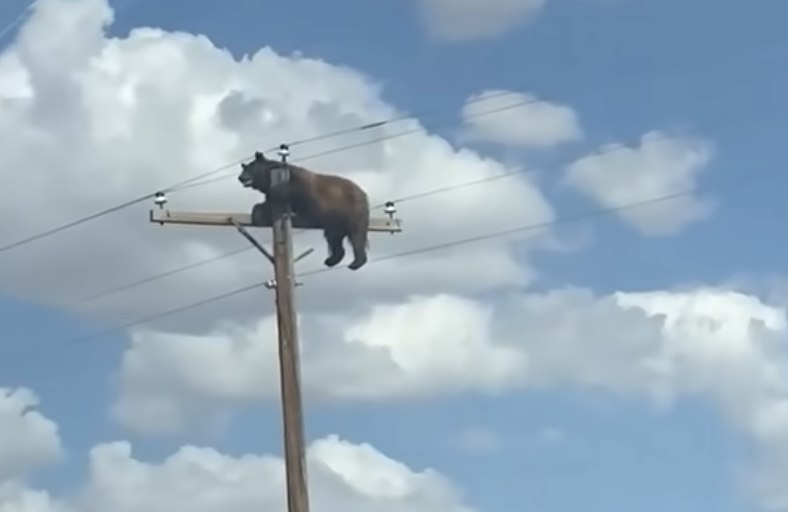
A black bear that climbed a utility pole in rural northeastern New Mexico died of electrocution this week after becoming stranded among high-voltage power lines, despite officials’ efforts to keep bystanders away in hopes the animal would climb down on its own.
The incident occurred Monday, July 20, along Highway 56 near Gladstone, a sparsely populated area of Union County. Passing motorists spotted the bear perched near the top of the pole and stopped along the roadside, some believing at first that the animal was already dead before realizing it was still alive and struggling to maintain its balance.
How the sighting unfolded
Shannon Mullens, who was traveling with her family from Red River, New Mexico, toward Oklahoma, said she and her relatives initially could not believe what they were seeing. “We really didn’t believe what we saw at first, so we turned around to get another look,” Mullens told Storyful. After getting closer, the group realized the animal was alive. “At first, we thought that the bear was dead, until we got closer to it and then we realized that he was still alive,” Mullens said.
Another motorist, Robin Dawson, also stopped to record the animal and contacted emergency services after finding other drivers already gathered near the base of the pole. Audio captured during one of the 911 calls placed that day reflected the unusual nature of the report. “I’m calling to report a bear on top of a light pole,” the caller told the dispatcher.
What officials advised
According to the New Mexico Department of Game and Fish, the agency was notified of the situation around 10 a.m. and dispatched a Union County sheriff’s deputy, a representative from the local power company and conservation officers to the scene. In the meantime, dispatchers instructed onlookers to leave the bear alone in hopes it would descend from the pole on its own, cautioning that attempting to tranquilize the animal at that height risked causing it to fall and suffer potentially fatal injuries.
Despite that guidance, officials said, numerous members of the public continued to stop along the highway to photograph and film the bear rather than clearing the area. A department spokesperson suggested that the continued activity near the base of the pole may have discouraged the already frightened animal from attempting to climb down on its own. “The reporting party was instructed to leave the bear alone so it could come down on its own,” the spokesperson said in a statement provided to Storyful. “Unfortunately, the bear sustained fatal injuries before they arrived.”
A fatal outcome
By the time responders reached the scene, the bear had already been fatally electrocuted, according to the New York Post, which cited confirmation from the New Mexico Department of Game and Fish. The department’s account indicates that despite the coordinated response involving local law enforcement, the utility company and wildlife officers, the animal died before any rescue effort could be attempted.
A federal agency weighs in
The video of the stranded bear circulated widely on social media in the days following the incident, eventually drawing a lighthearted response from the U.S. Department of the Interior, which shared the footage on social media with a wry comment about energy policy. “We appreciate the enthusiasm for American Energy Dominance, but this isn’t what we meant,” the department wrote in a post referencing the viral clip.
Why bears climb utility poles
Wildlife experts say the behavior, while unusual to witness, is not without precedent. Bears will sometimes climb utility poles after being startled by people, traffic, dogs or other perceived threats, treating the structures much like trees as an escape route from danger. Because utility poles differ significantly from trees in both structure and the presence of live electrical equipment, such incidents carry a serious risk of electrocution for the animal, in addition to the risk of triggering power outages for surrounding communities.
Not the first such incident
This is not the first time a bear has become stranded on a utility pole in the region. In a similar case in June 2021, a bear climbed a utility pole in Willcox, Arizona, roughly 80 miles east of Tucson, becoming tangled near live power lines carrying roughly 7,500 volts. In that instance, utility workers with Sulphur Springs Valley Electric Cooperative were able to disable the power in time and used a bucket lift to encourage the animal down safely. Lineman Werner Neubauer, who assisted in that rescue, described the danger the bear had faced at the time, telling reporters, “He was in a pretty dangerous spot. Could’ve very easily gotten himself electrocuted.” In that case, the bear ultimately climbed down unharmed and ran off into the desert.
A tragic contrast
Unlike the 2021 Arizona case, this week’s incident in New Mexico ended in the animal’s death, a contrast that has fueled an outpouring of sympathy online since news of the bear’s fate spread following the viral video. Many social media users expressed sadness that an encounter that initially seemed like a strange but harmless spectacle ultimately ended in tragedy for the animal.
Wildlife officials have not indicated whether any additional safety measures or utility infrastructure changes are being considered in response to the incident, though the case adds to a broader body of examples illustrating the risks utility poles can pose to wildlife that mistake them for natural climbing structures. For now, the New Mexico Department of Game and Fish has used the incident as an opportunity to remind the public of the importance of giving wild animals space and following official guidance during similar encounters, even when the instinct to observe or document such an unusual sighting is strong.
Business
1,500 ships trapped in Gulf of Hormuz are quietly multiplying an underwater army that could unleash World’s biggest bioinvasion event

A new study in the journal Biological Invasions warns that the hulls of these stranded vessels have turned into breeding grounds for barnacles, mussels, algae and other sea creatures. Led by 24 scientists from the University of Maryland Center for Environmental Science and the Woods Hole Oceanographic Institution, the research says this build-up could trigger what it calls a “bioinvasion super-spreader event” the moment the ships finally start moving again.
The World’s Busiest Bottleneck, Stuck
The Strait of Hormuz isn’t just any stretch of water. It’s the only open-sea exit for oil giants like Saudi Arabia, Iran, Iraq, Kuwait and the UAE, and it usually carries around $600 billion worth of energy trade every year. Since the war began, roughly 1,500 vessels have been stuck inside the Persian Gulf, with several hundred more waiting it out in the neighbouring Gulf of Oman.
Also Read: In 1907, an Indian govt accountant challenged Newton’s ideas. Years later, he changed physics forever and won the Nobel Prize
Gulf of Hormuz’s Underwater Army: A Slimy Situation Underwater
Ships that stay parked in one spot don’t stay clean for long. Scientists call the build-up “biofouling”, a process that starts with a thin film of slime and microorganisms, then thickens into algae, barnacles, mussels and small crustaceans clinging to the hull. The International Maritime Organization says any ship idle for more than 30 days needs urgent hull-cleaning attention. These ships have been sitting for nearly four months, right through the season when marine life grows and breeds the fastest.
Carolyn Tepolt, a biologist at Woods Hole who studies how invasive sea life spreads, points out just how hard these hitchhikers are to get rid of once they settle down. As she put it, “Marine invasive species have profound ecological and economic impacts on coastlines across the globe”.
Burning More Fuel Just to Move
A dirty hull doesn’t just carry unwanted guests, it also drags. Research cited by the IMO shows that even a thin layer of slime can push up a ship’s emissions by 20 to 25 percent. Add a light coating of barnacles, and fuel use can jump by more than 50 percent. Across the shipping industry, roughly one-tenth of all fuel burned is simply spent fighting this drag.
The Mussel That Travelled the World
This isn’t a hypothetical worry. The Asian green mussel, native to the warm waters of the Indian and Pacific oceans and common in the Gulf, has already hitched rides on ship hulls to the Caribbean and the South Atlantic, pushing out local mussel species wherever it lands. Clam and worm species have made similar journeys before, damaging port infrastructure and displacing native life in the Atlantic and Pacific.
Divers Are Already Scrubbing Away
Ports across the Gulf aren’t waiting around. Divers are being sent underwater to scrape hulls and propellers clean before ships are allowed to sail out. It isn’t cheap, cleaning a single vessel now costs close to $8,000, a jump of nearly 60 percent, as shipping operators scramble to get their fleets moving again.
From Theory to Reality
The episode has also rattled the insurance world. Justus Heinrich, who heads marine underwriting at Allianz, says the industry always treated chokepoint disasters as something on paper. Now, in his words, “theoretical risks have turned into practical risks.”
Also Read: Bengaluru’s ancient rock older than dinosaurs and Himalayas: 3.4-billion-year-old Peninsular Gneiss in Lalbagh is among Earth’s oldest exposed crust; formed before oxygen
The study’s authors aren’t just sounding an alarm, they’re pushing for action. They want shipping companies, port authorities and regulators to tighten hull-cleaning rules, watch high-risk ports more closely, track vessel movements better and coordinate a rapid response once ships start sailing out. Their strongest recommendation: clean the hulls before departure, not after arrival. Once an invasive species sets up shop on a new coastline, the study notes, it is nearly impossible to remove.
For now, the world’s busiest oil route remains jammed, and somewhere beneath all those anchored hulls, an entirely different kind of traffic is quietly building up, waiting for its own chance to set sail.
Lohia Corp IPO subscribed 43% on Day 2 so far. Here’s what latest GMP trends indicate
Crypto Price Analysis July-24: ETH, XRP, ADA, BNB, and HYPE
“Big Brother” star makes anti-drag remarks in house with fellow houseguest, “RuPaul’s Drag Race” alum Salina EsTitties


-

 Fashion7 days ago
Weekend Open Thread – Corporette.com
-

 Politics6 days ago
The House | The City of London can help the new chancellor deliver growth in every postcode
-

 Crypto World6 days ago
Ripple Payments Joins MiCA With 14 Firms, Does It Mean Anything For XRP?
-
 Crypto World7 days ago
Two July Windows Left: The CLARITY Act’s Senate Fight and What Failure Means
-

 Politics5 days ago
Democrats look to World Cup watch parties to register thousands of voters
-

 Crypto World6 days ago
Ripple wins EU-wide access as ESMA adds it to MiCA register
-

 Crypto World3 days ago
Grayscale Files For Worldcoin ETF, WLD Registers Sharp Rise
-

 Tech3 days ago
Sail Virtually Aboard The “Itanic” With IA-64 Emulator
-

 NewsBeat4 days ago
Unregistered fitter used Gas Safe logo on business flyers
-
 Tech3 days ago
Turtle Beach Command Series KB7 review: a nifty screen-equipped gaming keyboard
-

 NewsBeat7 days ago
Registration is now open for March for Men with Kev 2026
-

 News Videos5 days ago
Big Money Is Entering XRP
-
 Business2 days ago
New Jersey voter registration controversy explained: How 6,600 noncitizens got on the rolls, and what happens next
-

 Crypto World6 days ago
Kaspersky exposes OkoBot’s 20-module crypto wallet attack
-

 Business7 days ago
Airlines warn Sunshine Protection Act could disrupt flight scheduling
-
 Entertainment3 days ago
Johnny Depp’s R-Rated Gothic Cult Classic Gets New Release Ahead of Sydney Sweeney Remake
-

 NewsBeat6 days ago
Durham County Council to send out electoral registration emails
-

 Crypto World6 days ago
MiCA Licensing Faces Delays as ESMA Adds 14 CASPs to Register
-

 Crypto World1 day ago
Ethics, other provisions in crypto Clarity Act to be further discussed
-

 Crypto World6 days ago
Chip Stocks Enter Bear Market After Moonshot Ai Unveils Kimi K3 Model
You must be logged in to post a comment Login