

Business
Chevron: Solid Energy Demand Ahead



Business
Top 30 AI Companies to Watch Around the World in 2026 as the Global Spending Surpasses $2.5 Trillion

Artificial intelligence spending is projected to surpass $2.5 trillion globally by the end of 2026, according to industry research, as the technology continues its rapid shift from experimental pilot programs into core enterprise infrastructure. With that scale of investment reshaping markets from Silicon Valley to Shanghai, here is a look at 30 of the companies analysts and investors say are most worth watching this year, spanning chipmakers, cloud giants, frontier AI labs and fast-growing startups.
The infrastructure backbone. No conversation about AI in 2026 starts anywhere but Nvidia, whose graphics processing units remain central to model training worldwide. According to VanEck, Nvidia‘s relevance is expanding beyond training into inference, networking and full-system deployments as AI usage shifts from experimentation into production. Taiwan Semiconductor Manufacturing Company sits just behind it in importance, serving as the advanced foundry manufacturing many of the chips that power the broader AI ecosystem; VanEck notes that AI demand ultimately depends on whether enough leading-edge manufacturing and packaging capacity can come online to meet it. Broadcom, cited by Wedbush among its top AI plays for 2026 alongside Nvidia, has built out custom AI silicon for major cloud providers, while CoreWeave has emerged as a key specialized cloud provider built specifically around GPU-heavy AI workloads.
The hyperscalers. Microsoft, Amazon, Google and Meta together are on track to spend close to $700 billion on AI infrastructure in 2026 alone, according to industry analysis, a figure exceeding the entire gross domestic product of most countries. Microsoft has emphasized security and compliance features to make enterprise customers comfortable deploying AI at scale, with its Copilot assistant active in more than a million enterprise seats and Azure AI revenue growing sharply quarter over quarter. Wedbush has argued the market underestimates Microsoft’s Azure growth story heading into 2026 amid rising demand from corporate technology leaders. Alphabet’s Google continues to advance its Gemini model family alongside DeepMind, its research-focused AI division, which continues driving fundamental breakthroughs that feed into applied AI solutions across scientific, healthcare and optimization fields. Amazon’s AWS cloud division remains a critical AI infrastructure provider, and Meta continues pushing open-weight models through its Llama family of large language models, spanning sizes from 8 billion to 405 billion parameters.
Apple’s different path. Apple has taken a notably different approach than its cloud-first competitors, partnering with Google’s Gemini to power a revamped version of Siri set to launch this year rather than building out massive proprietary training infrastructure of its own. Despite that lighter-touch strategy, analysts including HSBC have pointed to Apple’s approach as a genuine strength, arguing the company’s relatively modest capital spending, combined with its enormous installed base of active devices, positions it well as AI adoption broadens beyond the infrastructure-buildout phase.
The frontier labs. Several of the most closely watched AI companies remain privately held, including OpenAI, Anthropic, xAI and Databricks, each of which would likely rank among the largest AI companies in the world by valuation if publicly traded. Elon Musk’s xAI closed a $20 billion funding round in the first week of 2026 alone, reflecting the scale of capital continuing to flow into frontier model development even among companies that have not yet gone public.
Enterprise software and applied AI. Palantir has drawn particular attention from analysts, with Wedbush forecasting the data-analytics company could grow into a $1 trillion business as it expands both government and commercial AI software contracts. Other application-layer names commonly cited by investors include C3.ai, UiPath, SoundHound AI and Upstart, each applying AI to specific business functions ranging from customer service automation to underwriting and process automation, though analysts caution that valuation risk tends to run highest in this category given how many application-layer AI companies remain pre-profitability. IBM continues to carve out relevance through its enterprise AI platforms and hybrid cloud strategy, with a particular focus on governance and explainability that has made it attractive to industries requiring secure, auditable AI deployments. Salesforce and Adobe have also built out AI features across their existing enterprise software suites, with Adobe in particular trading at a comparatively low valuation relative to other AI-linked stocks despite its AI integration efforts.
Fast-growing startups. Beyond the largest labs, a wave of well-funded startups continues attracting significant venture capital. Anthropic rival Perplexity AI has built a search-focused AI product with growing enterprise traction, while Mistral AI has positioned itself as a leading European alternative to U.S.-based frontier labs. Anysphere, the company behind the AI coding assistant Cursor, has drawn substantial funding as AI-assisted software development tools gain traction among developers. LMArena, a platform for benchmarking and comparing AI models, reached a $1.7 billion valuation in under four months earlier this year, according to industry tracking. Overall, AI startups raised nearly $150 billion in 2025 alone, accounting for more than 40% of global venture capital funding, with foundation model companies specifically raising roughly $80 billion of that total.
China’s rising contenders. Chinese AI development has accelerated sharply, led by companies including DeepSeek, whose earlier open-source model releases rattled global markets and intensified competitive pressure across the industry, and Beijing-based Moonshot AI, whose Kimi chatbot has become one of the most widely used consumer AI products in China. Alibaba, Tencent and other major Chinese technology conglomerates continue investing heavily in domestic AI labs, while newer entrants such as Zhipu AI have built out competing large language models aimed at both domestic and international developers.
Development and consulting specialists. Rounding out the landscape are AI engineering and product-development firms such as Azilen Technologies, which has built a reputation helping enterprises move AI systems from prototype into production-ready deployment, spanning data engineering, generative AI, autonomous AI agents and machine learning operations.
Taken together, the current top 20 publicly traded AI companies alone control a combined market capitalization exceeding $25 trillion, according to industry tracking, underscoring just how central artificial intelligence has become to global markets heading into the back half of 2026. Analysts caution that AI exposure is not a single, uniform trade, urging investors to think across distinct categories, including infrastructure enablers, AI developers and AI adopters, as the technology continues its shift from a one-cycle story into what many now describe as a long-duration transformation in how software, services and physical devices operate.
Business
WBC Title Challenger Hannah Rapp, 26, Killed in Texas Bicycle Crash; Driver Charged With Manslaughter

Hannah Rapp, a rising professional boxer who challenged for a WBC world championship just last month, died Saturday morning after being struck by a car while riding her bicycle in Brazos County, Texas, according to the Brazos County Sheriff’s Office. She was 26.
According to the sheriff’s office, Rapp was riding along a highway when a car passed her before suddenly coming to a stop, shifting into reverse and striking her. She was transported to a local hospital, where she was later pronounced dead.
The driver of the vehicle, identified by police as 31-year-old Charles Medina, was arrested and charged with manslaughter. He was being held at the Brazos County Detention Center as of Saturday.
WBC president Mauricio Sulaiman issued a statement mourning Rapp’s death on behalf of the organization. “The loss of Hannah Rapp leaves us heartbroken,” Sulaiman wrote. “She was an exceptional boxer, but above all, an invaluable member of our boxing family. We join in the grief that overwhelms her loved ones, her team, and all those who had the privilege of knowing and supporting her throughout her brilliant career.”
Rapp, who fought professionally under the nickname “Hanarchy,” was a native of Yorktown, Indiana, and competed as a track athlete at Purdue University before transitioning to boxing. She relocated to College Station, Texas, where she turned pro in 2024 while working full-time as a fire and life safety inspector at Texas A&M University, balancing her budding boxing career with a demanding day job.
Rapp built a professional record of 8-0-1 before earning a shot at one of the sport’s biggest opportunities. In June, she challenged Tiara Brown for the WBC women’s featherweight world championship at MVPW-04, an event held at the Caribe Royale Resort in Orlando as part of the Most Valuable Promotions banner co-founded by Jake Paul. Rapp turned in a spirited performance against Brown but ultimately lost by unanimous decision, a result that brought her professional record to 8-1-1.
Brown, the reigning champion Rapp faced in that bout, paid tribute to her former opponent in a comment on an Instagram post from Most Valuable Promotions honoring Rapp’s memory. Brown described Rapp as “the best dance partner I have ever faced as a pro,” recalling a moment before their fight that stuck with her. “When she asked for my autograph, it filled my heart because we were getting ready for war, yet she was still asking for my autograph,” Brown wrote. “It made me smile, we fought a GREAT fight for the fans from the 1st bell to the last! It was my honor to share the ring with her.”
Rapp’s death comes at a moment of growing visibility for women’s professional boxing, with high-profile promotions like Most Valuable Promotions helping bring increased attention and larger stages to fighters like Rapp and Brown. Her June title challenge represented one of the biggest opportunities of her still-young career, arriving less than two years after she turned professional.
The circumstances of Saturday’s crash, particularly the account of the vehicle stopping and reversing before striking Rapp, are expected to factor into the ongoing investigation and the manslaughter charge filed against Medina. Authorities have not released additional details regarding a potential motive or the specific sequence of events leading up to the crash beyond the initial account provided by the sheriff’s office.
Rapp’s death adds to a string of tragic losses within combat sports and the broader Texas cycling community, where bicyclist fatalities involving motor vehicles have remained a persistent public safety concern across the state in recent years. Advocacy groups and local news outlets in Texas have periodically tracked such incidents, though Saturday’s crash carries added weight within the boxing world given Rapp’s rising profile following her championship bout just weeks earlier.
Rapp’s transition from collegiate track athlete to professional boxer reflected a path increasingly common among fighters entering the sport later in their athletic careers, often bringing conditioning and competitive experience from other disciplines. Her willingness to maintain a full-time job in fire and life safety inspection while pursuing a professional boxing career also drew attention within the sport, illustrating the financial realities many fighters face even while competing at a championship level.
Tributes to Rapp continued to circulate across social media and combat sports outlets following news of her death, with fans and fellow fighters recalling both her performance against Brown in June and her broader reputation within the boxing community as a determined and well-liked competitor. Her death was first widely reported by ESPN boxing writer Andreas Hale early Saturday, drawing immediate reaction from figures across the sport, including Sulaiman’s statement on behalf of the WBC.
No additional public statements had been issued as of Saturday by Most Valuable Promotions, Rapp’s promotional company, or by Texas A&M University regarding her death. Funeral and memorial arrangements had not yet been announced.
Rapp’s death leaves the women’s featherweight division mourning the loss of one of its promising young contenders just weeks after she competed for its top title. Her professional career, though brief, included a notable championship-level performance that earned respect from her opponent and drew praise from boxing’s governing bodies, a legacy that fighters and fans within the sport are now working to honor in the wake of her sudden death.
Business
Should You Run Your AC During Wildfire Smoke? Experts Offer Tips as Air Quality Turns Hazardous This Week
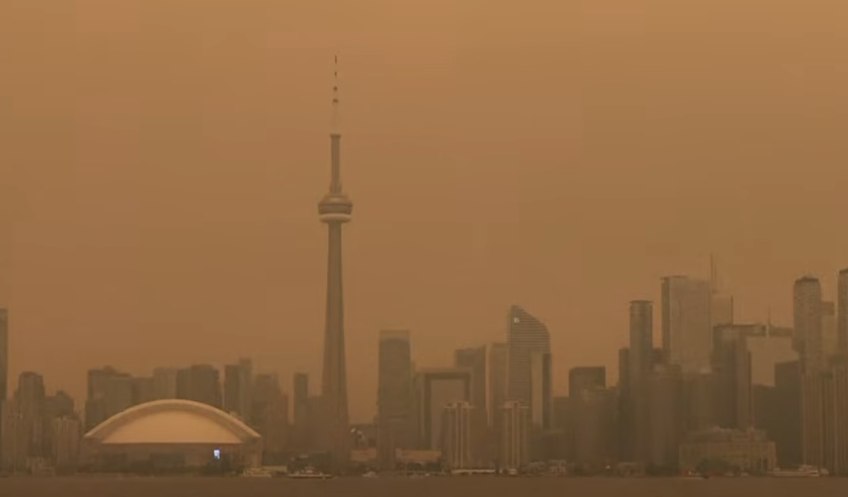
As Canadian wildfire smoke continued to blanket a wide swath of the United States on Friday, from the Midwest to the East Coast, many Americans found themselves asking a simple but important question: is it safe to run the air conditioner when the outside air is unhealthy to breathe?
Environmental Protection Agency officials are urging residents in affected areas to take several protective steps, including using a portable air cleaner or high-efficiency HVAC filter, wearing N95 respirator masks when outdoors, and properly adjusting HVAC systems and air conditioners to limit how much outside air enters the home.
Dr. Brian Christman, a professor of medicine at Vanderbilt University, told Nexstar’s WJW that running an air conditioner during smoky conditions is generally safe, as long as it is set up correctly. Most standard air conditioning units work by cooling and recirculating the air already inside a home rather than pulling in fresh air from outside, making them relatively safe to run during smoke events. However, Christman cautioned that units equipped with a fresh air intake function should avoid using that specific setting while smoke levels remain elevated. “I wouldn’t spend a lot of time outside,” Christman said. “I would try to set your air conditioning on recirculate so that you’re not breathing in as much of the outdoor air, and if you have good level filters on your air conditioner, make sure that they’re in place and that you’re using them.”
The EPA has outlined several additional steps residents can take to keep indoor air as clean as possible during periods of heavy wildfire smoke. Homeowners are advised to check whether their system has a fresh air intake mode and, if so, switch it to “recirculate” rather than allowing outside air to enter. The agency also recommends ensuring HVAC filters are in good condition and considering an upgrade to a MERV 13 or higher-rated filter if the system can accommodate one, since higher-rated filters are more effective at capturing the fine particulate matter found in wildfire smoke.
Evaporative coolers, sometimes known as swamp coolers, should generally be avoided during smoky conditions, according to the EPA, since these systems work by pulling in and cooling outside air, which can actually draw more smoke into a home rather than filtering it out. Fans and traditional window air conditioning units are considered safer alternatives during smoke events. For those using window units specifically, the EPA recommends ensuring a tight seal between the unit and the window frame, and closing the outdoor air damper if the unit has one. If the damper cannot be closed, using a fan inside the home instead is recommended as a safer option.
Portable air conditioners that vent through a single hose out of a window should not be used during smoky conditions, the EPA warns, since these units can actually pull additional smoke into the home through gaps around the venting hose. A window air conditioning unit or a standard fan are considered better options in that scenario.
Air quality readings reached hazardous levels across multiple U.S. cities as of Friday afternoon, according to data from AirNow, the government’s air quality monitoring service. The worst readings recorded were in Toledo, Ohio, at 489; Grand Rapids, Michigan, at 440; north central Minnesota, also at 440; Spokane, Washington, at 439; the Duluth area of Minnesota, at 411; Kalamazoo, Michigan, at 403; Northwoods West, Wisconsin, at 402; the Milwaukee-Ozaukee area of Wisconsin, at 389; Dayton, Ohio, at 387; and South Bend, Indiana, at 383.
The Air Quality Index measures pollution levels on a color-coded scale ranging from 0 to 500 or higher. A reading of 0 to 50, coded green, is considered good with little to no health risk. Yellow, spanning 51 to 100, indicates moderate air quality. Orange, from 101 to 150, is considered unhealthy for sensitive groups such as children, older adults and people with existing respiratory conditions. Red, spanning 151 to 200, is classified as unhealthy for the general public. Purple, from 201 to 300, is considered very unhealthy, and maroon, covering any reading of 301 or higher, is classified as hazardous, the most severe category on the scale. Several of Friday’s readings, including those in Toledo, Grand Rapids and north central Minnesota, fell well within that hazardous maroon range.
The health consequences of prolonged wildfire smoke exposure extend well beyond short-term discomfort. A study published earlier this year found that long-term exposure to the fine particulate matter present in wildfire smoke contributes to an estimated 24,100 deaths annually across the lower 48 states. Health officials say long-term exposure can worsen existing medical conditions and contribute to a range of chronic and potentially fatal health issues, including respiratory illness, cardiovascular disease, neurological problems and premature death.
Looking ahead, National Weather Service meteorologist Jake Petr said that even as winds from the northwest are expected to help clear skies in some regions later this week, smoky conditions could continue returning intermittently until the underlying wildfires themselves are extinguished. Officials have said that full containment of the fires driving this summer’s smoke events may not occur until months from now, when snowfall arrives in Canada and northern Minnesota later in the year, a timeline that suggests residents across the affected regions should be prepared for recurring smoke events well into the fall.
In the meantime, health officials continue to emphasize that the most effective protective measures remain relatively simple: limiting time spent outdoors during periods of poor air quality, keeping windows and doors closed, running air conditioning systems on recirculate mode rather than drawing in outside air, using properly rated air filters, and wearing an N95 mask when outdoor exposure is unavoidable. For households without central air conditioning or window units capable of proper sealing, portable air purifiers equipped with high-efficiency particulate air, or HEPA, filters offer an additional layer of protection for maintaining cleaner indoor air during extended smoke events.
With Canadian wildfires expected to continue burning for months and weather patterns remaining a major factor in determining which parts of the country experience the worst smoke on any given day, officials are urging residents across the affected regions to stay informed through local air quality alerts and to adjust their daily routines, including their use of air conditioning and ventilation systems, based on current conditions rather than assuming smoke exposure has fully passed once visible haze clears from a particular area.

Last week, the BSE benchmark Sensex climbed 582.06 points, or 0.75 per cent, and the NSE Nifty went up by 127.4 points, or 0.52 per cent.
“Indian equity markets ended the week on a firm footing, extending their recovery despite heightened geopolitical tensions, elevated crude oil prices, and persistent uncertainty surrounding the global interest-rate outlook.
“Sentiment remained supported by encouraging Q1 FY27 earnings from the IT sector as TCS closed with nearly 10 per cent of weekly gains, renewed buying interest in financial stocks, and resilience in domestic economic fundamentals,” Ajit Mishra – SVP, Research, Religare Broking Ltd, said.
While Reliance Industries, ICICI Bank, State Bank of India, Tata Consultancy Services (TCS) and Bajaj Finance emerged as the gainers, HDFC Bank, Bharti Airtel, Life Insurance Corporation of India (LIC), Larsen & Toubro and Hindustan Unilever faced erosion from their valuation.

TCS added Rs 72,072.3 crore, taking its market valuation to Rs 8,20,672.70 crore.
The country’s largest IT services company reported a 4.61 per cent increase in its June-quarter net profit to Rs 13,349 crore, and guided towards an improvement in demand, impacted by the West Asia crisis, returning in the ongoing quarter.ICICI Bank’s valuation surged Rs 29,062.06 crore to Rs 10,34,441.77 crore and that of Reliance Industries jumped Rs 23,884.93 crore to Rs 17,95,091.26 crore.
The valuation of Bajaj Finance climbed Rs 21,946.5 crore to Rs 6,57,274.28 crore and that of State Bank of India went up by Rs 7,338.34 crore to Rs 9,63,768.78 crore.
However, the market capitalisation (mcap) of Larsen & Toubro eroded by Rs 18,097.72 crore to Rs 5,24,840.68 crore.
The valuation of LIC declined by Rs 12,080.75 crore to Rs 5,48,124.30 crore.
Bharti Airtel’s mcap tumbled Rs 7,706.45 crore to Rs 11,91,067.77 crore and that of HDFC Bank edged lower by Rs 7,084.61 crore to Rs 12,62,369.81 crore.
The mcap of Hindustan Unilever dipped Rs 1,221.79 crore to Rs 5,03,775.86 crore.
Reliance Industries remained the most valued firm followed by HDFC Bank, Bharti Airtel, ICICI Bank, State Bank of India, TCS, Bajaj Finance, LIC, Larsen & Toubro and Hindustan Unilever.
Business
Dubai International Airport Is Open Today Despite Ongoing Mideast Tension Delays and Airline Suspensions

Dubai International Airport is open and operating today, with flights moving through all three of its terminals, though travelers should be prepared for ongoing delays and a reduced schedule from several international carriers as the airport continues navigating one of the most disruptive periods in its history.
According to Dubai Airports’ official flight information system, no scheduled closures are in place, and the airport’s real-time departures and arrivals boards continue listing active flights as of this week. Emirates and flydubai, the two homegrown carriers that form the backbone of DXB’s operations, have continued flying throughout the ongoing disruption, together accounting for more than 220 combined daily departures even during the height of regional tensions earlier this year.
DXB’s current situation traces back to the outbreak of renewed conflict between the United States and Iran on February 28, which triggered a near-total closure of Gulf airspace and one of the most severe operational crises in the airport’s history as the world’s busiest hub for international passenger traffic. During the most disruptive stretch, between late March and April, regional airspace closures forced cancellations and flight suspensions across DXB’s network, with some airlines instructing passengers not to travel to the airport until their flights were reconfirmed.
A tentative U.S.-Iran ceasefire that took effect April 8 triggered a wave of airline reinstatements, with Qatar Airways resuming daily Dubai service from April 23 and other Gulf carriers, including Saudia, returning to the route around the same time. By July 1, Dubai Airports described the airport as having returned to normal operations, with British Airways announcing it would resume flights to Dubai that same day, albeit at a reduced scale of one daily flight rather than its prior three.
That recovery, however, has proven fragile. Renewed fighting between the United States and Iran in the weeks since has once again disrupted regional air travel, with flight-tracking data showing 257 delays and 21 cancellations at DXB on a single day, July 12, affecting Emirates, flydubai and Saudia, according to tracking compiled from FlightAware data. Saudia accounted for the highest number of outright cancellations that day, with 16 flights scrapped, while Emirates and flydubai bore the brunt of the delays. The disruptions rippled outward to airports well beyond the Gulf, with European gateways including London Heathrow, London Gatwick, Milan Malpensa, Istanbul, Munich and Hamburg all registering schedule disruptions tied to the Dubai delays, alongside South Asian routes to Colombo, Dhaka and Delhi, and longer-haul connections to Singapore, Bangkok, Phuket, the Maldives and Cape Town.
A number of major international carriers have opted to suspend their Dubai routes entirely for portions of the summer rather than continue operating amid the uncertainty. British Airways has paused all flights to Dubai, Tel Aviv, Bahrain and Amman for the remainder of the summer season, with service not scheduled to resume until October 25. Hong Kong-based Cathay Pacific has canceled all flights to and from Dubai through at least September 1, with affected customers already contacted regarding rebooking options. Finnish carrier Finnair has said it will not resume Dubai service until October, as part of its broader fall and winter schedule. Kazakh airline Air Astana confirmed it suspended its Almaty-Dubai route for July 13 and 14 specifically due to the ongoing regional situation, offering affected passengers full refunds or free rebooking on flights scheduled between July 12 and 31.
Despite the wave of suspensions among long-haul international carriers, Dubai Airports has emphasized that Emirates and flydubai continue running a reduced but still wide-ranging schedule, ensuring the airport remains functionally open and connected to a substantial portion of its normal route network even as several major partners remain grounded on the Dubai route. Passengers affected by cancellations tied to the disruption have specific consumer protections depending on their routing. Travelers flying to or from the United Kingdom or European Union on a UK or EU carrier, or departing from a European hub, are covered under EU261 or UK261 regulations, which do not typically require cash compensation for delays caused by extraordinary security threats but do obligate airlines to provide meals, refreshments and hotel accommodations for significant overnight delays. Passengers on flights to or from the United States are entitled to a full cash refund to their original payment method under U.S. Department of Transportation rules if their flight is canceled and they decline rebooking.
Dubai Airports has maintained a standing advisory throughout the disruption period urging travelers to confirm departure times directly with their airline before heading to the airport, rather than relying solely on previously booked schedules, given how quickly conditions have continued to shift in response to developments in the broader U.S.-Iran conflict. The advisory has remained active since the crisis first began in late February and continues to apply as regional tensions have flared again in recent weeks.
For travelers with upcoming trips through Dubai, real-time flight status can be checked directly through Dubai Airports’ official flight information portal, which lists current departures and arrivals across all three terminals, as well as through independent flight-tracking services. Given how frequently the situation has shifted throughout 2026, from full airspace closures in the spring to a brief return to normalcy in early July to renewed delays and cancellations in the weeks since, aviation analysts have cautioned that DXB’s operational status is likely to remain fluid for as long as the underlying conflict between the United States and Iran continues.
For now, the answer to whether Dubai International Airport is open today remains yes, with flights actively departing and arriving across the airport’s terminals. But travelers connecting through one of the world’s busiest aviation hubs should continue checking their specific flight status closely, particularly if flying with one of the numerous international carriers that have chosen to pause Dubai service entirely rather than navigate the continued uncertainty tied to the broader regional conflict.

Tracking Stanley Druckenmiller's Duquesne Family Office Portfolio – Q1 2026 Update
Among the waste products the system clears are proteins called amyloid and tau, the deposits that accumulate in the brains of people with Alzheimer’s disease. A single sleepless night measurably raises amyloid levels in the fluid surrounding the brain. Do that repeatedly, year after year, and the implications are troubling.
A Swedish study by researchers at the Karolinska Institute, tracking more than 13,000 shift workers, including night shift workers, for up to 41 years, found that shift work in mid-life was associated with a 36% higher risk of dementia – with the risk rising the longer someone had worked shifts.
Foster is careful not to overstate the link. “You wouldn’t say poor sleep causes dementia,” he says, “but if you’re vulnerable, it’s a potential risk factor.”
Markus’s data shows a possible link, but he cautions that it is a hypothesis at this stage and there are likely to be many other factors at play.
“Sleep matters,” he says, “but so do the big vascular things – blood pressure, smoking, diabetes. What’s never mentioned is how much of the risk of Alzheimer’s comes from those – things we could actually do something about.”
There are also tentative but growing indications of how sleep disturbance might increase the risk of heart disease. An analysis of 35 studies published last year found that sleep reduced to around 4.5 hours for three or more nights significantly raised the activity of the body’s immune system. This is normally a good thing when it is roused to fight infection but also causes inflammation in the body which if persistent is associated with heart disease.
Disrupted sleep raises the stress hormone, cortisol, which in turn promotes insulin resistance and pushes the body toward a diabetic state. Higher levels of cortisol also worsens sleep further, locking workers into a self-reinforcing cycle. Add to this the sugar-hit snacking that keeps some shift workers going overnight and it makes for an extremely unhealthy cocktail.
As if that were not enough, the World Health Organization’s International Agency for Research on Cancer (IARC), has classified night shift work as “probably carcinogenic to humans” and put it in the same risk group as red meat, citing evidence for links to breast, prostate, colon and colorectal cancers.
This may be because disruption to the body’s circadian system alters timing of the production of melatonin, a hormone thought to have tumour-suppressing properties, as well as reduced vitamin D from lack of daylight, and the chronic low-level inflammation that broken sleep promotes.

Patanjali Foods, ICICI Prudential AMC, IREDA, NMDC and Oil India saw the highest net selling by mutual funds among midcap stocks in June, according to a Motilal Oswal Financial Services report.
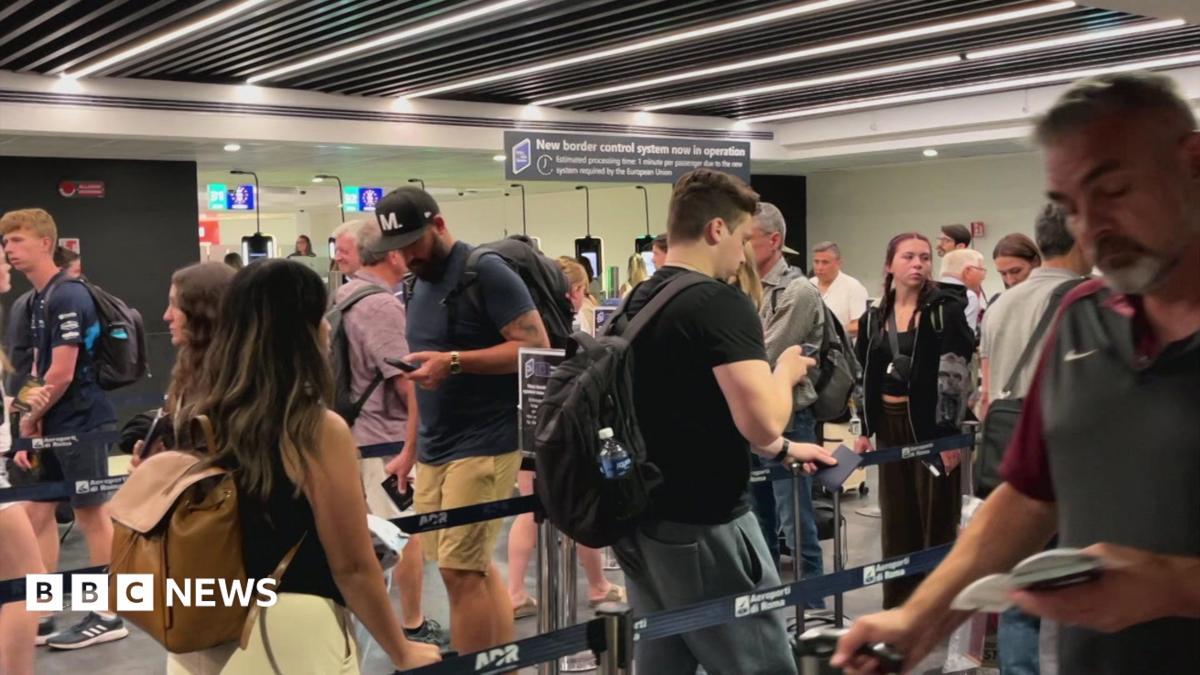
The EU’s new border system has nearly tripled the time it’s taking for Brits to get through passport control even after improvements have been made, a boss at Rome’s main airport has said.
It comes as Ryanair has warned passengers travelling to Europe this summer to prepare for extended waits.
Border police at Portugal’s Faro airport also told the BBC the Entry Exit System technology suffered from bugs, but insisted any queues there would go down quickly.
The European Commission (EC) has said in most EU airports disruption is limited, and added that it will continue to support member states in the system’s implementation.
It added: “This support will continue to the fullest extent possible.”
The digital Entry Exit System (EES) requires non-EU citizens entering the Schengen area – made up of 29 European countries – to register fingerprints and a photo when they arrive. The information is checked as they leave.
It’s often done using standalone, automated machines known as “kiosks” and sometimes with border officers – for example, for children under 12. The new process and machines have been phased in since October.
Some European airports have seen hours-long queues at passport control. Passengers have even reported missing flights home.
This week, Ryanair said “the failed EES rollout” was causing unnecessary delays and long queues.
The airline said UK passengers should “allow extra time for their journey and be prepared for extended waits at passport control.”
In Rome, a perennially popular destination for tourists from the UK and around the globe, everyone we spoke to in the Piazza di Spagna had an EES story.
Mutual Fund NFOs: 5 new funds open for subscription this week. Check dates, details

US regulators miss key GENIUS Act deadline as stablecoin rules stall

The X-Files May Be Secretly Coming Back To The Big Screen

B&H Slashes up to $400 off Latest Apple MacBook Pro Laptops


-
 NewsBeat3 days ago
London Mayor Sadiq Khan handed a peerage by Keir Starmer alongside 15 other Labour figures… just days before the PM leaves No10
-

 Fashion2 days ago
Weekend Open Thread – Corporette.com
-

 Politics21 hours ago
The House | The City of London can help the new chancellor deliver growth in every postcode
-

 Crypto World3 days ago
CFTC blocks Kalshi from unwinding Michigan trades after court order
-

 Politics4 days ago
Young campaigners urge incoming PM to act on outdoor junk food ads
-

 Business3 days ago
Nvidia Stock Slips After Big Tuesday Rally as Huang Confirms Vera Rubin Chip Is Now in Production Today
-

 Crypto World21 hours ago
Ripple Payments Joins MiCA With 14 Firms, Does It Mean Anything For XRP?
-
 Entertainment4 days ago
Disney’s Most Ambitious Failed Star Wars Attraction Is Coming to SDCC
-

 Crypto World1 day ago
Ripple wins EU-wide access as ESMA adds it to MiCA register
-

 Business3 days ago
Palantir Shares Rise After Expanded Nvidia Partnership and Fresh Analyst Upgrades Ahead of Earnings Day
-

 Crypto World2 days ago
Injective Submits SEC Transfer-Agent Registration to Onchain Ownership Records
-

 Tech5 days ago
Get Your ESP32 Sunny Side Up With This Solar Dev Board
-

 News Videos5 days ago
XRP BOMBSHELL… XRP OMBOARDED FOR TRANSACTIONS!!!
-

 NewsBeat2 days ago
Registration is now open for March for Men with Kev 2026
-

 Tech4 days ago
Dark Secrets Emerge When Jailbreaking LLMs
-
 Sports3 days ago
New Cornerback Enters Vikings Trade Rumor Mill
-

 News Videos2 days ago
Money | Class 12 Economics | CBSE Board Exam 2026-27
-

 Business2 days ago
Banco Bilbao Vizcaya Argentaria, S.A. (BBVA) Discusses Global Macro Environment and Economic Outlook for Core Markets Transcript
-
 Crypto World2 days ago
Two July Windows Left: The CLARITY Act’s Senate Fight and What Failure Means
-
 Crypto World2 days ago
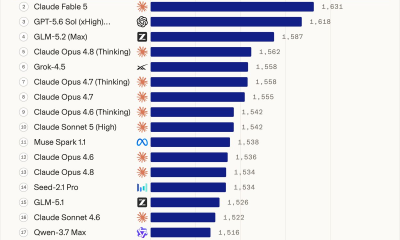
Claude Fable 5 Slips to Second in AI Coding Leaderboard
You must be logged in to post a comment Login