

Business
Should You Run Your AC During Wildfire Smoke? Experts Offer Tips as Air Quality Turns Hazardous This Week

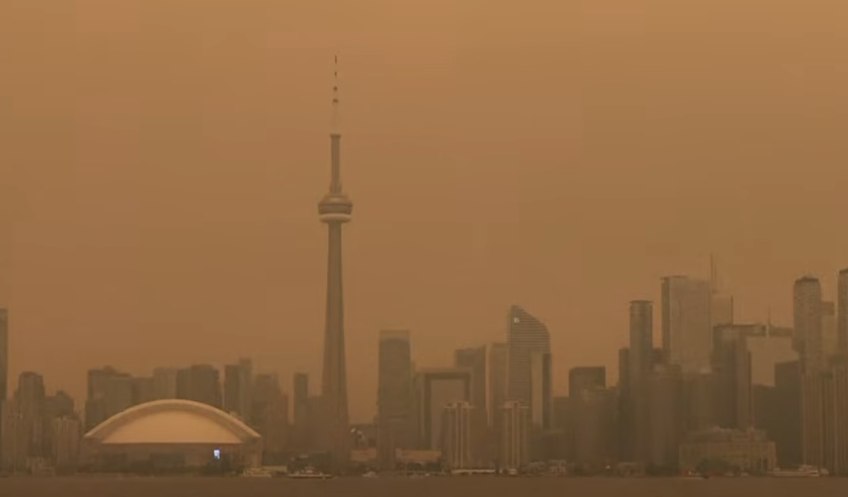
As Canadian wildfire smoke continued to blanket a wide swath of the United States on Friday, from the Midwest to the East Coast, many Americans found themselves asking a simple but important question: is it safe to run the air conditioner when the outside air is unhealthy to breathe?
Environmental Protection Agency officials are urging residents in affected areas to take several protective steps, including using a portable air cleaner or high-efficiency HVAC filter, wearing N95 respirator masks when outdoors, and properly adjusting HVAC systems and air conditioners to limit how much outside air enters the home.
Dr. Brian Christman, a professor of medicine at Vanderbilt University, told Nexstar’s WJW that running an air conditioner during smoky conditions is generally safe, as long as it is set up correctly. Most standard air conditioning units work by cooling and recirculating the air already inside a home rather than pulling in fresh air from outside, making them relatively safe to run during smoke events. However, Christman cautioned that units equipped with a fresh air intake function should avoid using that specific setting while smoke levels remain elevated. “I wouldn’t spend a lot of time outside,” Christman said. “I would try to set your air conditioning on recirculate so that you’re not breathing in as much of the outdoor air, and if you have good level filters on your air conditioner, make sure that they’re in place and that you’re using them.”
The EPA has outlined several additional steps residents can take to keep indoor air as clean as possible during periods of heavy wildfire smoke. Homeowners are advised to check whether their system has a fresh air intake mode and, if so, switch it to “recirculate” rather than allowing outside air to enter. The agency also recommends ensuring HVAC filters are in good condition and considering an upgrade to a MERV 13 or higher-rated filter if the system can accommodate one, since higher-rated filters are more effective at capturing the fine particulate matter found in wildfire smoke.
Evaporative coolers, sometimes known as swamp coolers, should generally be avoided during smoky conditions, according to the EPA, since these systems work by pulling in and cooling outside air, which can actually draw more smoke into a home rather than filtering it out. Fans and traditional window air conditioning units are considered safer alternatives during smoke events. For those using window units specifically, the EPA recommends ensuring a tight seal between the unit and the window frame, and closing the outdoor air damper if the unit has one. If the damper cannot be closed, using a fan inside the home instead is recommended as a safer option.
Portable air conditioners that vent through a single hose out of a window should not be used during smoky conditions, the EPA warns, since these units can actually pull additional smoke into the home through gaps around the venting hose. A window air conditioning unit or a standard fan are considered better options in that scenario.
Air quality readings reached hazardous levels across multiple U.S. cities as of Friday afternoon, according to data from AirNow, the government’s air quality monitoring service. The worst readings recorded were in Toledo, Ohio, at 489; Grand Rapids, Michigan, at 440; north central Minnesota, also at 440; Spokane, Washington, at 439; the Duluth area of Minnesota, at 411; Kalamazoo, Michigan, at 403; Northwoods West, Wisconsin, at 402; the Milwaukee-Ozaukee area of Wisconsin, at 389; Dayton, Ohio, at 387; and South Bend, Indiana, at 383.
The Air Quality Index measures pollution levels on a color-coded scale ranging from 0 to 500 or higher. A reading of 0 to 50, coded green, is considered good with little to no health risk. Yellow, spanning 51 to 100, indicates moderate air quality. Orange, from 101 to 150, is considered unhealthy for sensitive groups such as children, older adults and people with existing respiratory conditions. Red, spanning 151 to 200, is classified as unhealthy for the general public. Purple, from 201 to 300, is considered very unhealthy, and maroon, covering any reading of 301 or higher, is classified as hazardous, the most severe category on the scale. Several of Friday’s readings, including those in Toledo, Grand Rapids and north central Minnesota, fell well within that hazardous maroon range.
The health consequences of prolonged wildfire smoke exposure extend well beyond short-term discomfort. A study published earlier this year found that long-term exposure to the fine particulate matter present in wildfire smoke contributes to an estimated 24,100 deaths annually across the lower 48 states. Health officials say long-term exposure can worsen existing medical conditions and contribute to a range of chronic and potentially fatal health issues, including respiratory illness, cardiovascular disease, neurological problems and premature death.
Looking ahead, National Weather Service meteorologist Jake Petr said that even as winds from the northwest are expected to help clear skies in some regions later this week, smoky conditions could continue returning intermittently until the underlying wildfires themselves are extinguished. Officials have said that full containment of the fires driving this summer’s smoke events may not occur until months from now, when snowfall arrives in Canada and northern Minnesota later in the year, a timeline that suggests residents across the affected regions should be prepared for recurring smoke events well into the fall.
In the meantime, health officials continue to emphasize that the most effective protective measures remain relatively simple: limiting time spent outdoors during periods of poor air quality, keeping windows and doors closed, running air conditioning systems on recirculate mode rather than drawing in outside air, using properly rated air filters, and wearing an N95 mask when outdoor exposure is unavoidable. For households without central air conditioning or window units capable of proper sealing, portable air purifiers equipped with high-efficiency particulate air, or HEPA, filters offer an additional layer of protection for maintaining cleaner indoor air during extended smoke events.
With Canadian wildfires expected to continue burning for months and weather patterns remaining a major factor in determining which parts of the country experience the worst smoke on any given day, officials are urging residents across the affected regions to stay informed through local air quality alerts and to adjust their daily routines, including their use of air conditioning and ventilation systems, based on current conditions rather than assuming smoke exposure has fully passed once visible haze clears from a particular area.

Business
Does Lamine Yamal Have Better Career Numbers Than Lionel Messi Did at Age 19? A Full Statistical Breakdown

Lamine Yamal turned 19 on July 13, just one day before Spain’s World Cup semifinal win over France, and the numbers behind his career to that point are striking when placed alongside Lionel Messi’s own record at the identical age. By nearly every statistical measure, Yamal has already outpaced where Messi stood as a teenager, though the full picture requires more context than a simple goal count.
According to tracking compiled by Messi vs Ronaldo Football, Yamal had scored 56 official career goals through age 19, nearly double the 30 career goals Messi had managed by the same birthday. Yahoo Sports similarly reported that Yamal reached his 19th birthday with 30 club goals and seven international goals, for a combined total that dwarfed Messi’s nine total goals at the same point in his career, a gap made more striking given that Messi had accumulated his modest total across far fewer appearances than Yamal has already logged.
That appearance gap is one of the most significant differences between the two players’ developmental paths. According to PlanetFootball, Yamal has approached 200 senior appearances for club and country by age 19, more than 70 matches beyond what Messi and Cristiano Ronaldo had combined by their own 19th birthdays. Yamal made his senior debut for Barcelona at just 15 years old in 2023, giving him a multi-year head start on Messi, who did not make his own senior debut until age 17 in October 2004 and did not score his first goal until roughly seven months later, at 17 years and 10 months old, when he became the youngest goal-scorer in La Liga history at the time.
The gap widens further when factoring in assists. PlanetFootball reported Yamal has produced 64 career assists by age 19, giving him a combined 56 goals and 64 assists, a tally that already ranks him among the most productive teenage players in football history, alongside legendary figures including Pelé, Diego Maradona and Ronaldo Nazário. Messi, by contrast, had virtually no assist production at the equivalent stage of his career; ESPN reported that by the end of his age-17 season, Messi had scored just one La Liga goal and recorded zero assists, a stark contrast to Yamal’s 11 goals and 17 assists at the same developmental point during his own age-17 campaign.
Trophy accumulation follows a similar pattern favoring Yamal’s head start. According to Olympics.com, Yamal had collected five major trophies by age 17, compared with just one for Messi at the same age. By age 18, Yamal had already won UEFA Euro 2024 with Spain, becoming the youngest player in the tournament’s history to feature, provide an assist, score a goal, register a goal involvement in a major tournament final, and win the competition outright, all before he had turned 18. Messi, by comparison, did not make his senior international debut for Argentina until age 18, one full year after Yamal had already broken into Barcelona’s first team.
Yamal’s World Cup performance in 2026 specifically has been more modest than his overall career trajectory might suggest. Yahoo Sports reported that Yamal scored just one goal during the tournament, against Saudi Arabia, a moment that made him the ninth-youngest player in World Cup history to score a goal, coming in 14 days younger than Messi had been when he reached the same milestone. Messi, by contrast, entered Sunday’s final having scored eight goals during the 2026 tournament, reflecting the two decades of experience separating the pair even as Spain’s broader defensive strength, rather than any shortcoming from Yamal individually, has been credited with carrying the team through to the final without requiring heavy attacking output from its teenage star.
Statisticians tracking the pair’s careers have cautioned against reading too much into the early numbers alone. According to Messi vs Ronaldo Football’s analysis, “A teenager out-scoring Messi’s teenage self is remarkable and, on its own, not yet meaningful,” noting that Messi at 19 was still a substitute breaking into an already title-winning Barcelona side, with his truly historic decade of production not beginning until later in his 20s. The site’s data shows Messi’s career goal total exploded from 30 at age 19 to 279 by age 24, a stretch of production the analysis described as “the stretch that separates generational starts from generational careers,” representing the real benchmark Yamal will need to match in the years ahead rather than his early-career head start alone.
Messi himself has publicly acknowledged Yamal’s talent, identifying him specifically among the sport’s most promising young players. “There’s a very good generation of young footballers who have many years ahead of them,” Messi said at an Adidas event last year. “If I have to choose someone, because of the age and because of the future that he has, I’ve heard that they have chosen Lamine Yamal and without doubt [it’s him] for me, too.”
Spain teammate Dani Olmo offered a more cautious framing when asked directly to compare the two players, emphasizing that Yamal’s path remains distinctly his own. “Nothing can be said about the paths, right? Lamine has his own path,” Olmo said. “Comparing him to Messi is crazy. Although Lamine is spectacular, he gives us a lot, but he will give us much more in the future.”
Spain manager Luis de la Fuente, sitting alongside Yamal at a pre-match press conference around his birthday, offered a similarly grounded assessment of the pressure surrounding the young forward’s development. “He’s 19, madre mia,” de la Fuente said. “I would say to him: relax, enjoy it. Anxiety, out! Let him enjoy it. Lamine’s great day is still to come at this World Cup.”
Taken together, the statistical record shows Yamal has clearly outproduced Messi’s own teenage numbers across nearly every measurable category, from goals and assists to trophies and total appearances. Whether that early statistical edge ultimately translates into a career matching Messi’s eventual peak, a stretch that saw Messi score more than 500 goals between ages 20 and 30 alone, remains the far larger and still entirely unanswered question hanging over Yamal’s career as he enters his 20s.


Hunting Alphas manages a long-only, zero-leverage global equity portfolio through a Self Managed Super Fund. The main portfolio managed is defensive in nature and on a risk-adjusted basis, it has outperformed the market, generating 7.5% annualized alpha, Sortino ratio of 2.0, Information Ratio of 0.67, and low max drawdowns.Hunting Alphas’ articles are 5-Minute Stock Pitches that focus on the core stock drivers based on fundamentals, sentiment, valuations, and technical analysis across all types of sectors.Portfolio performance is shared monthly, portfolio holdings disclosed weekly and all the Excel models for the 5-Minute Pitches are shared on the Hunting Alphas website. Note: Hunting Alphas is related to VishValue Research on Seeking Alpha.
Analyst’s Disclosure: I/we have no stock, option or similar derivative position in any of the companies mentioned, and no plans to initiate any such positions within the next 72 hours. I wrote this article myself, and it expresses my own opinions. I am not receiving compensation for it (other than from Seeking Alpha). I have no business relationship with any company whose stock is mentioned in this article.
Seeking Alpha’s Disclosure: Past performance is no guarantee of future results. No recommendation or advice is being given as to whether any investment is suitable for a particular investor. Any views or opinions expressed above may not reflect those of Seeking Alpha as a whole. Seeking Alpha is not a licensed securities dealer, broker or US investment adviser or investment bank. Our analysts are third party authors that include both professional investors and individual investors who may not be licensed or certified by any institute or regulatory body.


Michael Kramer is the founder of Mott Capital Management – and is a long-only investor who focuses on macro themes and studies trends and options activities to identify and assess entry and exit points for investments in his long-term focused thematic growth strategy. He is a former buy-side trader, analyst, and portfolio manager with 30 years of experience tracking market technicals, fundamentals, and options.Michael Kramer leads the investing group Reading the Markets, where he helps a devoted following of members to better understand what is driving trading and where the market is likely heading, both the short and long-term. Features of the investing group include: daily written commentary and videos analyzing the driving factors behind price action; general macro trend education to help members make well-informed decisions based on market conditions, interest rates, currency movements and how they all interact; chat for questions and community dialogue; and regular Zoom videos sessions to discuss current ideas and answer questions. The level of access RTM subscribers and the expertise of the source are unprecedented given that the subscription price is a fraction of similar technical coaching and mentoring services. Learn more.
Analyst’s Disclosure: I/we have no stock, option or similar derivative position in any of the companies mentioned, and no plans to initiate any such positions within the next 72 hours. I wrote this article myself, and it expresses my own opinions. I am not receiving compensation for it (other than from Seeking Alpha). I have no business relationship with any company whose stock is mentioned in this article.
This report contains independent commentary to be used for informational and educational purposes only. Michael Kramer is a member and investment adviser representative with Mott Capital Management. Mr. Kramer is not affiliated with this company and does not serve on the board of any related company that issued this stock. All opinions and analyses presented by Michael Kramer in this analysis or market report are solely Michael Kramer’s views. Readers should not treat any opinion, viewpoint, or prediction expressed by Michael Kramer as a specific solicitation or recommendation to buy or sell a particular security or follow a particular strategy. Michael Kramer’s analyses are based upon information and independent research that he considers reliable, but neither Michael Kramer nor Mott Capital Management guarantees its completeness or accuracy, and it should not be relied upon as such. Michael Kramer is not under any obligation to update or correct any information presented in his analyses. Mr. Kramer’s statements, guidance, and opinions are subject to change without notice. Past performance is not indicative of future results. Neither Michael Kramer nor Mott Capital Management guarantees any specific outcome or profit. You should be aware of the real risk of loss in following any strategy or investment commentary presented in this analysis. Strategies or investments discussed may fluctuate in price or value. Investments or strategies mentioned in this analysis may not be suitable for you. This material does not consider your particular investment objectives, financial situation, or needs and is not intended as a recommendation appropriate for you. You must make an independent decision regarding investments or strategies in this analysis. Upon request, the advisor will provide a list of all recommendations made during the past twelve months. Before acting on information in this analysis, you should consider whether it is suitable for your circumstances and strongly consider seeking advice from your own financial or investment adviser to determine the suitability of any investment.
Seeking Alpha’s Disclosure: Past performance is no guarantee of future results. No recommendation or advice is being given as to whether any investment is suitable for a particular investor. Any views or opinions expressed above may not reflect those of Seeking Alpha as a whole. Seeking Alpha is not a licensed securities dealer, broker or US investment adviser or investment bank. Our analysts are third party authors that include both professional investors and individual investors who may not be licensed or certified by any institute or regulatory body.
Business
US CD Sales Jump 16 Percent in 2026 as K-Pop Collectors and Gen Z Nostalgia Fuel a Physical Comeback
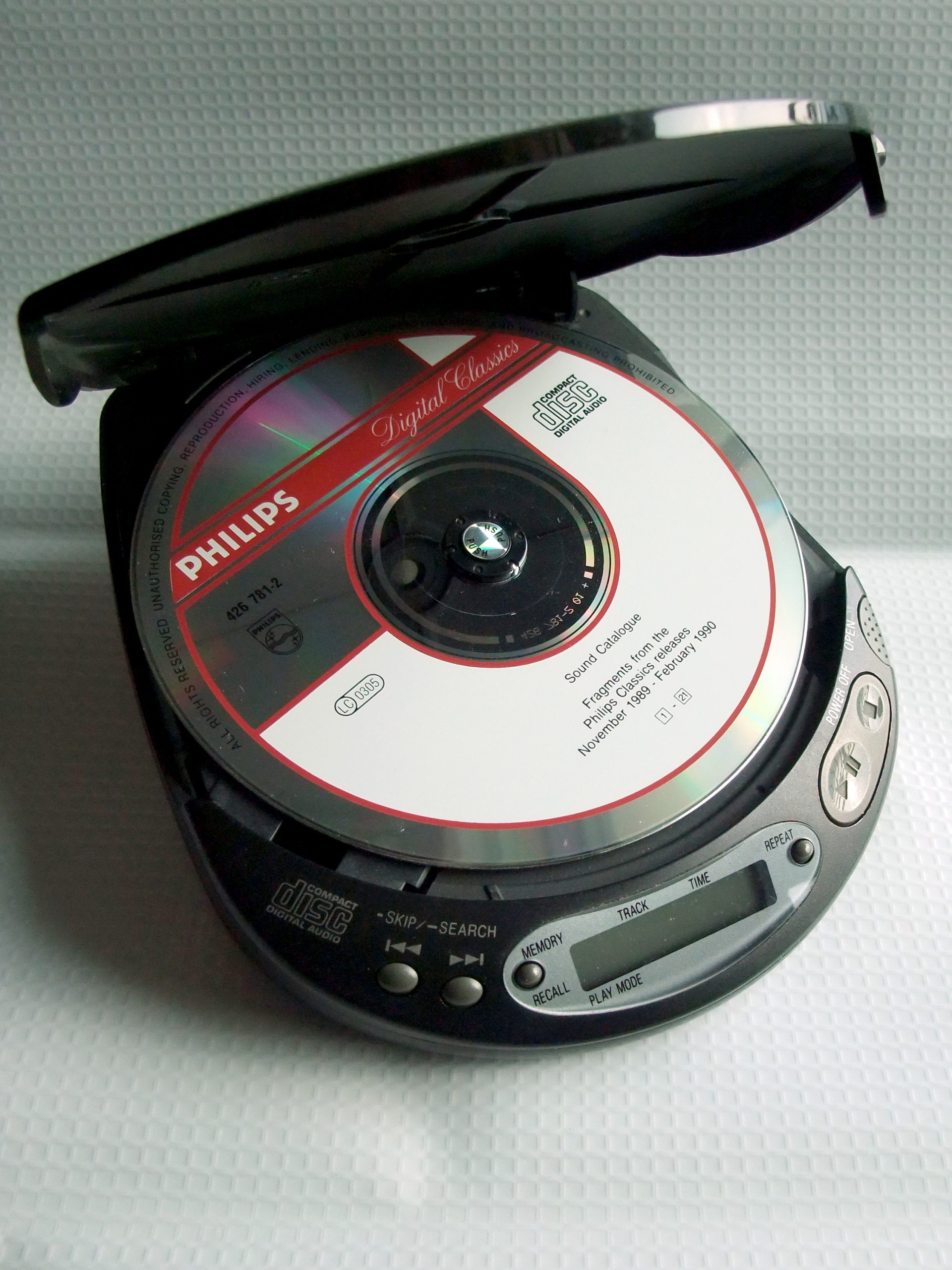
Compact discs are making an unexpected resurgence in the United States, with sales climbing 16% to 16.3 million units during the first half of 2026, according to Luminate’s midyear music report, even as roughly half of the format’s young buyers admit they don’t actually own a CD player.
The growth rate significantly outpaced vinyl, which grew just 2.4% over the same six-month period, according to Luminate, the U.S. market research firm that tracks music industry sales and streaming data. That marks a notable shift after more than a decade in which vinyl dominated conversations around the physical music revival, with CDs now posting a growth rate nearly seven times faster than records during the first half of this year.
K-pop has played an outsized role in driving the surge. Luminate found that K-pop releases accounted for roughly 10% of the entire CD market during the period, with BTS’s 10th studio album, “Arirang,” leading the charge after reportedly selling 567,000 CDs in 2026 alone. Successful campaigns from other K-pop acts, including Enhypen’s “The Sin: Vanish” and Ateez’s “Golden Hour: Part 4,” similarly drove strong sales, according to Luminate’s analysis, reflecting the genre’s well-documented practice of releasing albums in multiple editions featuring different covers, photo cards and bonus items, which frequently encourages devoted fans to purchase more than one version of the same release.
Even so, the CD resurgence extends well beyond K-pop fandoms specifically. Luminate calculated that CD sales would still have grown 6.7% during the first half of 2026 even if K-pop releases were removed from the equation entirely, indicating a broader shift in how younger music fans are choosing to engage with physical formats regardless of genre.
That broader shift appears closely tied to a growing nostalgia trend among younger listeners. According to Luminate’s data, 60% of Gen Z listeners now report that they most often listen to music from the 1990s or earlier, a dramatic increase from just 18% who said the same in 2021. Whether driven by genuine musical discovery through streaming platforms, generational nostalgia, or simply a desire to own a tangible piece of an artist’s work, younger audiences appear to be embracing physical formats at a pace that has caught much of the music industry by surprise.
Perhaps the most striking finding in Luminate’s report is that ownership of a working CD player is no longer a prerequisite for buying CDs. Roughly half of Gen Z and millennial CD buyers do not own a CD player at all, according to the report, a statistic Luminate interprets as evidence that the compact disc has effectively transformed from a functional playback medium into an affordable collector’s item. For many younger buyers, purchasing physical music has become as much about aesthetic ownership and directly supporting an artist financially as it is about actually listening to the product itself. Luminate captured that dynamic directly in its report, noting that “the act of buying physical music is as much about aesthetic ownership and direct financial support for the artist as it is listening to the music on the product itself.”
Where fans are buying that physical music has also shifted noticeably. While independent record stores continue to account for the largest overall share of physical album sales, mass-market retailers including Target and Walmart posted the biggest gains during the first half of 2026, together capturing nearly 30% of the physical music market. Luminate attributed much of that growth specifically to K-pop’s collector-driven retail culture, with artists including BTS, Enhypen and Ateez ranking among the format’s biggest sellers at those big-box retailers, thanks to elaborate deluxe packaging, exclusive editions, and collectible extras such as photobooks, posters and trading cards bundled with individual releases.
Despite CDs’ faster growth rate, vinyl continues to represent the larger overall physical format by total sales volume, and remains the more economically significant driver of the broader independent record-store revival. Vinyl has posted 19 consecutive years of U.S. revenue growth and surpassed $1 billion in annual wholesale revenue during 2025, meaning its comparatively modest 2.4% growth in the first half of 2026 still translated into substantially more total units sold than CDs managed, even as CDs posted the more eye-catching percentage increase. Overall, combined U.S. physical album sales across vinyl, CDs and cassettes reached 38.2 million units during the first half of 2026, a 7.8% increase over the same period the previous year. Cassette sales, by comparison, remained a niche format, totaling only around 205,000 units during the period.
Streaming, meanwhile, continued its own steady growth alongside the physical format resurgence, though at a considerably more modest pace than either vinyl or CDs. U.S. on-demand audio streams rose 4.4% to 4.8% depending on the specific measure, reaching roughly 732.7 billion plays domestically during the first half of the year, according to different figures cited across Luminate’s reporting, while global on-demand streaming grew more significantly, climbing 9.8% to reach 2.8 trillion plays worldwide.
Luminate’s report also touched briefly on the growing presence of AI-generated music within the streaming landscape, noting that such content has moved well past being a purely novelty phenomenon. The report cited the song “Livin’ on Borrowed Time” by the AI-generated act Breaking Rust, which garnered 19 million on-demand audio streams in the U.S. during the first half of 2026. Even so, Luminate cautioned that a broader commercial breakthrough for AI-generated music has not yet materialized, noting that the track ranked just 4,304th on the overall U.S. song chart despite its substantial individual streaming total.
Taken together, Luminate’s midyear findings paint a picture of a U.S. music industry increasingly defined by generational contrasts in how fans choose to consume and collect music, with younger listeners driving unexpected growth in older physical formats even as digital streaming continues expanding as the dominant overall method of listening across the broader market.
Business
(VIDEO) iPhone 18 Pro Leaks Reveal Dark Cherry Color, Bigger Battery and A20 Pro Chip Ahead of Launch

Fresh leaks surrounding Apple’s next-generation iPhone 18 Pro have offered an early look at what the company’s flagship device could bring when it debuts later this year, pointing to a new signature color option alongside meaningful upgrades to battery capacity, processing power and camera hardware, even as Apple has not officially confirmed any of the details.
Among the most talked-about leaks is the possibility of a new Dark Cherry color option for the iPhone 18 Pro lineup, described across multiple reports as featuring a deep, muted red finish that would likely replace the Cosmic Orange shade currently offered on the iPhone 17 Pro. Macworld contributor Filipe Esposito reported that a trusted source had specifically identified Dark Cherry as one of the new colorways planned for the device. Alongside Dark Cherry, the Pro models are also expected to be available in Light Blue, Silver and Dark Grey, though several outlets covering the leaks cautioned that Apple’s final color selection could still change before the devices are formally unveiled.
Apple has traditionally introduced a new signature finish with each annual refresh of its Pro lineup, making color choice one of the more closely watched aspects of the company’s yearly launch cycle, and this year’s rumored shift toward Dark Cherry appears consistent with that pattern of rotating premium, muted tones for its flagship devices.
On the design front, leaks suggest Apple is not planning major structural changes to the iPhone 18 Pro compared with its immediate predecessor. The device is expected to retain the flat-edge frame and triple rear camera arrangement that has defined recent Pro models, with reports instead pointing toward more subtle refinements. According to Storyboard18’s reporting, the rear panel may feature a cleaner overall look, with a less prominent two-tone finish surrounding the camera area, while the camera module itself could grow slightly larger to accommodate upgraded internal hardware. Separately, some leaks have pointed to a smaller Dynamic Island cutout, potentially incorporating under-display Face ID components to free up additional usable screen space, though the extent of that change remains unconfirmed.
The handset is also expected to be marginally thicker and heavier than its predecessor, a trade-off multiple reports attribute directly to a larger internal battery and an improved cooling system designed to support the device’s next-generation processor.
That processor is expected to be Apple’s new A20 Pro chip, reportedly manufactured using Taiwan Semiconductor Manufacturing Company’s advanced 2-nanometer process technology, a notable step up from the 3-nanometer process used in the current generation of Apple silicon. According to multiple reports, the shift to 2-nanometer manufacturing is expected to bring improvements across several fronts simultaneously, including faster overall processing speeds, better thermal management to prevent overheating during demanding tasks, stronger on-device artificial intelligence capabilities, and meaningfully improved power efficiency that could translate directly into longer battery life even without a dramatically larger physical battery.
Battery capacity itself has emerged as one of the more actively debated aspects of the iPhone 18 Pro leaks, with different sources offering conflicting figures. Some reports, including leaker Fixed Focus Digital cited by AppleInsider, suggested a comparatively modest increase, pegging the standard iPhone 18 Pro’s U.S. battery capacity at around 4,288 mAh. Other leaks have pointed to considerably larger figures, with supply chain reports and Weibo-based leakers cited by GlobalPublicist24 suggesting the Pro Max variant specifically could carry a battery in the range of 5,100 to 5,200 mAh, which would represent the largest battery ever shipped in an iPhone by a clear margin. A separate report from iTechify cited even higher figures, claiming the standard iPhone 18 Pro battery could reach 5,235 mAh for physical SIM models and as much as 5,425 mAh for eSIM-only variants, framed explicitly as Apple’s response to increasingly large batteries found in competing Android flagships, including Samsung’s Galaxy S26 Ultra, reportedly equipped with a 5,500 mAh battery of its own. Given the range and inconsistency across these leaked figures, the final specifications remain unconfirmed until Apple’s official announcement.
Camera improvements have also featured prominently in recent leaks. The Pro models are expected to retain a triple 48-megapixel rear camera configuration, maintaining the same overall resolution as the current generation while incorporating upgraded sensors and improved image processing intended to deliver better low-light photography, enhanced video recording capabilities and faster image capture. Some reports have additionally pointed to the possible introduction of variable aperture technology on the main camera, a feature that would allow the lens to physically adjust its aperture size depending on shooting conditions, alongside an upgraded 24-megapixel front-facing camera. Display sizes, meanwhile, are expected to remain unchanged from the current lineup, with the standard iPhone 18 Pro retaining a 6.3-inch screen and the Pro Max continuing with a 6.9-inch display.
Beyond the headline hardware changes, some reports have also pointed to expanded satellite internet connectivity through Apple’s newly developed C2 modem, which is expected to add support for mmWave 5G networks alongside its satellite capabilities, and a more advanced LTPO-plus display technology capable of more precisely scaling its refresh rate to further conserve battery power during everyday use.
Apple’s iPhone 18 Pro and Pro Max are widely expected to launch in September 2026, tracking toward Apple’s traditional early-to-mid-September announcement window, with pre-orders typically opening within roughly 48 hours of the event and general retail availability following in the final week of the month. Notably, several reports have suggested Apple may stagger this year’s release cycle differently than in past years, with the iPhone 18 Pro, Pro Max and a rumored foldable iPhone model headlining the September event, while the more affordable standard iPhone 18 and budget-focused iPhone 18e models could be pushed back to a separate launch window in spring 2027.
As with all pre-announcement leaks, none of the details surrounding color options, battery capacity, chip specifications or camera hardware have been officially confirmed by Apple, and the company’s actual September announcement could differ meaningfully from current rumors as final testing and production plans continue to evolve in the months ahead.

EAST RUTHERFORD, N.J. — The 2026 FIFA World Cup reaches its climax Sunday as Spain and Argentina face off in a star-studded final at MetLife Stadium, pitting defending champions Argentina against a youthful Spanish side in what promises to be a memorable showdown between European and South American soccer powerhouses.
With Lionel Messi seeking a second World Cup title in what could be his farewell tournament and Spain’s young talents like Lamine Yamal looking to claim the trophy, global audiences are eager to tune in. Broadcasters across multiple platforms will provide extensive coverage, offering options for viewers seeking both paid and accessible viewing methods.
The match kicks off at 3 p.m. Eastern Time, with pregame festivities and analysis beginning earlier. FIFA has coordinated international broadcast rights to ensure wide availability, reflecting the tournament’s status as the world’s most-watched sporting event.
In the United States, Fox Sports and Telemundo hold primary English and Spanish language rights, respectively. Viewers with cable or streaming subscriptions to these networks can watch the game live. Streaming options include the Fox Sports app, Fubo, Sling TV and YouTube TV for cord-cutters.
Free viewing opportunities are limited due to exclusive broadcast agreements, but some platforms may offer highlights or limited access through social media or official FIFA channels. Public watch parties in major cities provide communal experiences for fans without home access.
Internationally, rights vary by country. In Spain, RTVE and other public broadcasters typically air major matches. Argentina’s coverage includes TyC Sports and public channels. European viewers can access feeds through UEFA-affiliated networks or dedicated sports apps.
Streaming services like DAZN, ESPN+ and others may carry the match in select markets, often requiring subscriptions. Free trials or promotional access can provide temporary viewing options for some platforms.
Social media platforms will offer live updates, goal clips and fan reactions. FIFA’s official accounts and team pages provide real-time commentary and behind-the-scenes content throughout the match.
Preparation for the final has captured global attention. Argentina enters as favorites seeking back-to-back titles, led by Messi in potentially his last World Cup appearance. Spain boasts a talented squad featuring emerging stars who have impressed throughout the tournament.
MetLife Stadium, co-hosting the final as part of the North American hosting rotation, has a capacity exceeding 80,000. Tickets sold out quickly, with secondary markets reflecting high demand.
Security measures are extensive for the high-profile event. Local authorities and FIFA have coordinated to ensure fan safety amid expected large crowds in the New York-New Jersey area.
Economic impact from the final extends to hospitality, tourism and broadcasting revenue. Host cities have invested significantly in infrastructure to accommodate the tournament’s scale.
Broadcast production involves hundreds of cameras, advanced graphics and expert analysts. Viewers can expect immersive coverage highlighting tactical battles, individual duels and emotional moments.
For fans unable to attend or subscribe, radio broadcasts and audio streams provide alternatives. Many local stations and apps offer play-by-play commentary in multiple languages.
Social media engagement will peak during the match. Hashtags and official accounts facilitate global conversation, allowing distant supporters to share experiences in real time.
Weather conditions in the New York area will influence fan comfort at the stadium and surrounding events. Organizers have contingency plans for heat or precipitation common in July.
The final represents a clash of styles. Argentina’s experienced squad emphasizes counterattacking and individual brilliance, while Spain’s possession-based approach focuses on technical control and youth energy.
Messi’s legacy looms large. A victory would cement his status among the greatest players, while a Spanish win would mark a new era for European champions.
Coaching strategies will draw scrutiny. Lionel Scaloni for Argentina and Luis de la Fuente for Spain have guided their teams through challenging paths to the final.
Fan zones in host cities offer alternative viewing experiences with large screens, entertainment and cultural activities. These public spaces foster community atmosphere for those without tickets.
Corporate hospitality and VIP areas provide premium experiences for sponsors and partners. FIFA’s commercial program generates significant revenue supporting global development initiatives.
Post-match ceremonies will include trophy presentation, medal awards and celebrations. The winning team will embark on victory parades in coming days.
The 2026 tournament, co-hosted by the United States, Canada and Mexico, has set records for attendance and global interest. The final caps a month of competition featuring 32 teams and countless memorable moments.
Broadcast partners have prepared extensively, with some offering multi-angle views, player tracking and interactive features for digital audiences.
For viewers seeking free options, public libraries, community centers and bars with televisions often host watch parties. Social media live streams from fans provide unofficial but accessible perspectives.
Official FIFA apps and websites offer schedules, statistics and news updates. Mobile streaming may require data plans or Wi-Fi depending on location.
The match’s global reach underscores soccer’s universal appeal. From packed stadiums to living rooms worldwide, fans will share in the drama of the championship decider.
Preparation tips for viewers include charging devices, securing stable connections and planning for potential high traffic on streaming services during peak viewing hours.
Analysts predict a closely contested game given both teams’ strengths. Historical encounters between Spain and Argentina add narrative depth to the rivalry.
As kickoff approaches, anticipation builds. The 2026 World Cup final promises to deliver excitement, showcasing the pinnacle of international soccer competition.
Business
Go World No. 1 Shin Jin-seo Shocks AI KataGo With 4.5-Point Win, Levels Historic Man-vs-Machine Series
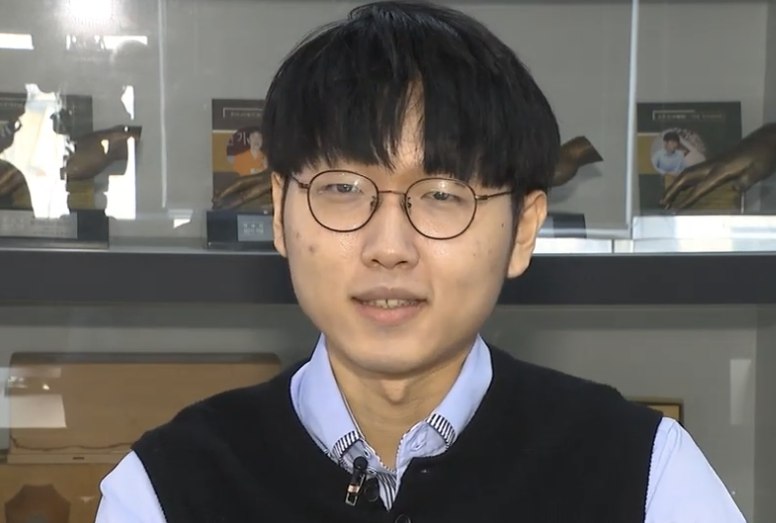
SEOUL — Shin Jin-seo, the world’s top-ranked Go player, defeated the artificial intelligence program KataGo on Sunday, evening their best-of-three match at one win apiece in a closely watched showdown between human and machine intelligence.
The 9-dan grandmaster won Game 2 of the “Ssen Math·Hankyung Gisinjeon” series by 4.5 points, playing Black in a match that lasted roughly four hours and 50 minutes at The Korea Economic Broadcasting studio in Seoul’s Jung District. The contest was played as a handicap game, with Shin given two black stones at the outset.
The victory marked Shin’s first official win against KataGo, one of the most powerful open-source Go engines in the world. He had lost the opening game two days earlier after resigning in the 245th move, and he said beforehand that he had never beaten a similarly strong AI system in practice matches, even with the same two-stone advantage.
A different opening strategy
Sunday’s result hinged on decisions Shin made in the opening minutes of the game. When KataGo again took the upper-left star point, as it had in Game 1, Shin responded at the lower-right star point rather than the small-knight move he used previously. When KataGo invaded the 3-3 point in the lower right shortly after, Shin steered the game into a large-scale joseki, a set sequence of established opening moves, that settled roughly a quarter of the board within about five minutes and 53 total moves.
Although the sequence could have concluded more simply, Shin chose a more complex variation. The pattern he used is known among professional players as the “AlphaGo joseki,” a sequence widely studied since Google DeepMind’s AlphaGo popularized it in 2016. By locking in a large area of the board early through a fixed sequence, the approach limited the number of variations KataGo could generate later in the game — a tactic that effectively turned techniques originally popularized by AI back against the machine.
Broadcast win-probability models showed Shin starting the two-stone handicap game with a 99% chance of victory and roughly an 18.5-point lead. In Game 1, that early advantage collapsed after Shin struggled to respond to an unfamiliar high approach move from KataGo, and a miscalculated move in the lower right in the middle of the game allowed the AI to erase his lead entirely.
Holding the advantage under pressure
Game 2 followed a different trajectory. After narrowing the board with the early joseki, Shin maintained his lead past the 150th move. He cut into KataGo’s stones in the center of the board and launched an attack. When KataGo counterattacked near a connection point, Shin’s on-screen win probability dipped to 89% at one stage, but he continued reading through the position rather than retreating from the fight.
Unlike in the first game, when an attempt to encircle KataGo’s entire central group backfired, Shin instead cut off White’s consolidation and blocked a series of counterattacks, preserving his advantage through the middle game. KataGo attempted a late tactical push in the lower-center portion of the board, but Shin closed off the attempt and protected his point margin heading into the endgame.
Speaking after the match, Shin said he thought he had prepared well but that KataGo’s aggressive play made him briefly think he might lose. He added that he calmed himself, worked through the calculations and was glad to secure what he called a valuable first win.
About KataGo
KataGo is an open-source Go program developed by American computer scientist David Wu, built on refinements to the self-play training methods pioneered by the AlphaZero family of AI systems. Beyond calculating win probabilities, the program can estimate the expected margin of victory in points, a feature that has made it a standard training tool for professional players and national team members, as well as a common resource for broadcast analysis of Go matches.
The format of Sunday’s match reflected the handicap given to the human player: Shin was allotted five hours of thinking time plus a 30-second byoyomi period for each move, while KataGo was required to move within 20 seconds on every turn.
Stakes rise for the finale
With the win, Shin secured a 50 million won ($36,000) bonus tied to Game 2. The outcome sets up a decisive Game 3, scheduled for 10 a.m. on July 21 at the same Seoul studio, with live coverage on Baduk TV. Should Shin win the final game to take the series two games to one, he stands to receive a Genesis G90 sedan as an additional prize.
The series has drawn significant attention in South Korea‘s Go community, both for its competitive stakes and for what it represents in the broader relationship between elite human players and Go-playing AI. Since AlphaGo’s landmark 2016 victory over Lee Sedol, AI systems have become deeply embedded in how professional players study the game, with many of today’s most common opening strategies, including the one Shin used to win Sunday’s game, originating from AI analysis rather than human innovation.
Game 3 will determine the outright winner of the three-game series and is expected to draw a large audience among Go fans in South Korea and internationally, given the rarity of a top-ranked human player recording a confirmed win over a leading AI system in a formal, broadcast setting.
Business
(VIDEO) Messi Calls Viral Baby Photo With Lamine Yamal ‘Incredible’ Ahead of World Cup Final Clash
NEW YORK — Lionel Messi says a viral photograph showing him bathing a six-month-old Lamine Yamal nearly two decades ago captures a story almost too improbable for fiction, one that culminates Sunday when the two players face each other for the first time at the international level in the World Cup final.
“That photo is incredible,” Messi said Friday. “I took a picture with him when he was a baby … the fact that we’re both playing in the World Cup now is crazy.”

AFP
The image dates back to 2007, when a 20-year-old Messi and a 6-month-old Yamal were photographed together during a charity calendar shoot inside the FC Barcelona dressing room at Camp Nou. The project was organized by the local newspaper Sport in partnership with UNICEF, and soccer’s long odds later paired the two in one of the calendar’s featured images.
Nineteen years later, that photograph has resurfaced as one of the enduring storylines of the 2026 World Cup, as the 19-year-old Yamal prepares to face the 39-year-old Messi with a championship on the line.
Speaking at FIFA’s Fanatics Fest in New York, Messi offered a mix of admiration and competitive resolve when discussing the young Spanish winger who has emerged as one of the tournament’s breakout stars.
“He’s one of the best in the world right now,” Messi said. “I wish him luck because his success will be Barcelona’s success, [but] we’ll try to keep him from playing at his best. Spain has a great team, not just him. We have our own weapons, too.”
He continued: “He’s a tremendous player … a global star. He’s 19 years old and has his whole career ahead of him. I wish him the best, but we’ll give it our all to ensure he doesn’t become champion this time.”
The photograph’s renewed popularity has not gone unnoticed by the man who took it. Photographer Joan Monfort said the surge in attention around his nearly two-decade-old image has been unlike anything he has experienced.
“The photo has exploded all over the world, and the fact that the final is in the U.S. has given it an extra push,” Monfort told The Associated Press. “And now this has culminated with the final between Messi and Yamal. It is better than any film script.”
Spain midfielder Mikel Merino, a teammate of Yamal’s, said his first reaction upon seeing the photo mirrored that of many fans online.
“The first time I saw it, I thought it was AI and that it wasn’t even real,” Merino said Friday.
“It’s unbelievable that two of the best players to have played the game — and hopefully Lamine, in the future, will be one of those — share a picture like that,” Merino added. “Hopefully we’re going to see a very bright final with those two protagonists at their best, playing and giving all the fans a great spectacle.”
Sunday’s meeting between Messi and Yamal will mark just the latest chapter in a rivalry that has grown increasingly significant as this World Cup has progressed. Messi, who has scored eight goals and provided four assists through the tournament, is preparing for his third World Cup final appearance, having previously reached the championship match in 2014 and again in 2022, when Argentina won the title. He currently sits tied with France’s Kylian Mbappé atop the 2026 World Cup Golden Boot standings as Argentina bids to become the first team to win back-to-back World Cup titles since Brazil accomplished the feat in 1958 and 1962.
For Spain, Sunday represents an opportunity to add a second World Cup title to the nation’s history, following its triumph in 2010. Yamal, who broke into Barcelona’s first team as a teenager, has been one of the most closely watched young talents in world soccer over the past two years and now finds himself on the sport’s biggest stage opposite the player many consider the greatest of his generation.
The two nations had been scheduled to meet earlier this year in the Finalissima, an exhibition match between the reigning European and South American champions that was planned for March in Qatar. That match was called off due to the ongoing conflict in the Middle East, leaving Sunday’s World Cup final as the first competitive meeting between the sides since the tournament began.
Kickoff for the final is set for 3 p.m. ET, with the match being broadcast on FOX and Telemundo in the United States. The showdown caps a tournament that has been defined in part by the emergence of Yamal as one of the sport’s next global superstars, even as Messi continues to demonstrate the form that has kept him among the world’s elite players well into his late 30s.
Beyond the individual matchup between Messi and Yamal, Sunday’s final features two of the tournament’s most balanced squads. Spain has advanced behind a possession-based approach anchored by Rodri, the reigning Ballon d’Or winner, while Argentina has leaned on its blend of experienced leadership and dynamic attacking talent to reach the championship match for the second consecutive World Cup cycle.
Whatever the outcome, the photograph that once seemed like a forgotten keepsake from a Barcelona charity shoot has become an unlikely symbol of the tournament — a reminder, as Monfort put it, that soccer occasionally writes storylines no screenwriter could invent.
The final between Argentina and Spain kicks off Sunday afternoon, with a World Cup title, and a new chapter in the Messi-Yamal story, on the line.

Tim Travis is a veteran deep value investor and money manager. Travis has extensive experience in traditional investments such as stocks and bonds, in addition to having a unique methodology of combining options and distressed investing with value investing to generate income, reduce risk, and to add an element of timing. Currently Tim Travis is the founder, Chief Executive Officer, and Chief Investment Officer of T&T Capital Management. T&T Capital Management is a Coto de Caza, California based Registered Investment Advisor that manages accounts for both individual and institutional investors. Travis was born in Laguna Beach, California and became captivated with the value investment philosophy in his early teens through reading books written by Benjamin Graham, and the shareholder letters from Berkshire Hathaway, and the Buffett Partnership L.P. Tim Travis became intrigued by the notion that stocks aren’t just pieces of paper but instead are fractional shares of a business that can be analyzed by comprehensive analysis of the balance sheet, income statement, and statement of cash flows. He majored in Business and Economics at the University of California Santa Barbara, graduating in 2004, and he also had the privilege of studying international economics at the University of Richmond in Florence, Italy. Tim Travis got his feet wet in finance working for both Scottrade and AG Edwards & Sons during his college career. Upon graduation Travis worked at the Vanguard Group in Scottsdale, Arizona. It was there that he learned that most mutual funds underperform their respective indexes, and he became disappointed at the overwhelming diversification in most mutual funds, that really makes most of them function as “closet” index funds. After leaving the Vanguard Group, Travis worked for a small futures and commodities firm in Mission Viejo, California. It was there that Tim developed an adept knowledge of options, particularly the selling of options to take advantage of the higher probabilities involved. It was also during this time in his life that Travis began reading everything he could possibly find on value investing. Some of his role models in the field are Warren Buffett, Martin Whitman, Bruce Berkowitz, Seth Klarman, Peter Lynch, Glenn Greenberg, etc. After working with clients from around the world Travis broke away and started T&T Investment Management L.L.C. At T&T, Travis refined his unique methodology combining value investing, with the selling of options to generate income and reduce risk. T&T experienced explosive growth by partnering with a local commodities firm. After several years Tim Travis realized that without controlling the majority of the company any longer, he didn’t have full control over the company’s strategic direction. Divergent business principles caused Tim Travis to break away and form T&T Capital Management. At TTCM which Tim Travis is the sole owner, he is allowed to offer only the best products and services, at a reasonable price, without conflicts of interest. T&T Capital Management’s goal is build wealth for both individual and institutional investors, and to accomplish these goals Travis as Chief Investment Officer employs his deep value investing techniques. Each account is managed on a day to day, personal basis, and there are no cookie cutter portfolios defined only by one’s age and risk tolerance. Every security is researched and hand selected by Travis and his research team. T&T Capital Management takes pride in first class customer service and research which is regularly communicated to clients for education purposes.
Business
Top 10 Cryptocurrencies Ranked by Market Cap in 2026, From Bitcoin and Ethereum to XRP and Solana

The cryptocurrency market has continued to mature through 2026, with a familiar set of digital assets dominating the top of the rankings by market capitalization even as individual token prices have swung sharply throughout the year. Here is a look at 10 of the largest and most closely watched cryptocurrencies currently on the market, based on rankings compiled by outlets including KuCoin, TradingView and CoinMarketCap.
Bitcoin. As has been the case since crypto markets began, Bitcoin remains the dominant force in the industry, accounting for roughly 59% of the total crypto market cap according to TradingView, with a market capitalization estimated at approximately $1.23 trillion earlier this year and figures from other sources placing it as high as $1.43 trillion. Bitcoin’s continued dominance has been reinforced by growing institutional adoption, including through spot Bitcoin exchange-traded funds. According to a BlackRock institutional report cited by KuCoin, spot Bitcoin ETFs collectively held more than 1.3 million BTC by March 2026, representing more than 6% of the total circulating supply.
Ethereum. The second-largest cryptocurrency by market cap, Ethereum has maintained its position as the leading smart-contract platform underpinning much of the decentralized finance ecosystem. According to UV Netware, Ethereum’s market capitalization stood at roughly $257.5 billion earlier in 2026, and the network continues to serve as the primary settlement layer for a wide range of decentralized applications, staking products and DeFi protocols.
XRP. Created by Ripple Labs and designed primarily to facilitate cross-border payments, XRP has maintained a consistent position among the largest cryptocurrencies by market cap, estimated at roughly $88 billion by UV Netware. The token has drawn significant attention throughout 2026 following the resolution of Ripple’s long-running legal dispute with the U.S. Securities and Exchange Commission and the subsequent launch of spot XRP ETFs, developments that AllAboutXRP has described as reinforcing XRP’s positioning as a leader in real-world payment utility among major cryptocurrencies.
Solana. Known for its high transaction speed and low fees relative to older blockchain networks, Solana has continued posting strong growth throughout 2026. KuCoin specifically highlighted Solana, alongside the newer token Sui, as showing the strongest year-over-year growth among the top 10 assets entering the year, with a market capitalization estimated around $50.8 billion according to UV Netware’s figures.
BNB. The native token of the Binance exchange ecosystem, BNB has remained a consistent fixture among the largest cryptocurrencies by market cap, valued at roughly $87 billion according to UV Netware, supported by its continued utility across Binance’s trading platform, fee discounts and the broader BNB Chain ecosystem.
Cardano. Built around a research-driven, peer-reviewed approach to blockchain development, Cardano has continued to rank among the top cryptocurrencies by market cap throughout 2026, though several analyses noted increased competitive pressure from newer, faster-growing platforms during the year.
Chainlink. As a leading decentralized oracle network, Chainlink plays a foundational infrastructure role across the broader crypto ecosystem by connecting blockchain-based smart contracts with real-world data, a niche that has helped the token maintain a consistent position among the industry’s largest assets even as its underlying use case differs significantly from payment-focused tokens like XRP or platform tokens like Ethereum.
TRON. Described by the Bitcoin Foundation as functioning primarily as “a settlement blockchain for stable coin transactions,” TRON has maintained strong market cap rankings largely on the strength of usage rather than public attention, with the network reportedly hosting more than 86 billion USDT in circulation on its blockchain according to TRONSCAN data cited in that analysis, with a market capitalization estimated around $29.1 billion.
Avalanche. Known for its fast transaction finality and growing ecosystem of decentralized applications, Avalanche has remained a consistent presence among the top 10 cryptocurrencies by market cap throughout 2026, continuing to compete for market share among smart-contract platforms alongside Ethereum, Solana and other established networks.
Sui. Among the more recent entrants to crack the top 10, Sui has displaced several legacy tokens that previously held stronger positions in earlier market cycles, according to KuCoin’s analysis, reflecting continued turnover in the lower half of the top 10 rankings as newer blockchain projects gain traction and market share.
Market analysts caution that the composition of any top 10 cryptocurrency ranking tends to shift meaningfully over relatively short periods. According to KuCoin, the overall top 10 list by market cap typically sees one to three positions rotate within any given 12-to-24-month window, even though Bitcoin and Ethereum have held the top two spots consistently since 2017. Newer projects like Sui and Hyperliquid, the latter of which reportedly cracked the top 10 altcoin rankings as of June 2026 according to Bitcoin Foundation’s tracking, illustrate how quickly newer platforms can rise through the rankings as investor attention and capital shift toward emerging narratives within the broader crypto market.
It’s worth noting that stablecoins such as Tether and USD Coin also frequently rank among the largest cryptocurrencies by raw market capitalization, with Tether valued at roughly $184 billion and USD Coin at approximately $79 billion according to UV Netware’s figures. However, most industry rankings, including the list above, generally exclude stablecoins from “top cryptocurrencies to watch” discussions specifically because their value is pegged to fiat currency and therefore does not appreciate in the way other digital assets can.
Given the scale of price volatility that has characterized the cryptocurrency market throughout 2026, and the significant differences in market capitalization, use case and risk profile among the assets listed above, this article is intended to provide factual market context rather than investment guidance. Readers considering cryptocurrency investments should be aware that digital asset prices can fluctuate dramatically over short periods, that rankings by market capitalization can shift significantly within months, and that past performance offers no guarantee of future results. As one industry analysis put it plainly regarding similar rankings, such lists “should not be considered financial advice,” and prospective investors are generally encouraged to conduct their own research and consider their individual risk tolerance before making any decisions involving cryptocurrency.

Taylor Swift And Travis Kelce ‘Disheartened’ By Wedding Drama

Does Lamine Yamal Have Better Career Numbers Than Lionel Messi Did at Age 19? A Full Statistical Breakdown

Why are British MPs so insanely obsessed with Israel?


-
 NewsBeat3 days ago
London Mayor Sadiq Khan handed a peerage by Keir Starmer alongside 15 other Labour figures… just days before the PM leaves No10
-

 Fashion2 days ago
Weekend Open Thread – Corporette.com
-

 Politics1 day ago
The House | The City of London can help the new chancellor deliver growth in every postcode
-

 Politics4 days ago
Young campaigners urge incoming PM to act on outdoor junk food ads
-

 Crypto World4 days ago
CFTC blocks Kalshi from unwinding Michigan trades after court order
-

 Business4 days ago
Nvidia Stock Slips After Big Tuesday Rally as Huang Confirms Vera Rubin Chip Is Now in Production Today
-

 Crypto World1 day ago
Ripple Payments Joins MiCA With 14 Firms, Does It Mean Anything For XRP?
-

 Politics3 hours ago
Democrats look to World Cup watch parties to register thousands of voters
-
 Entertainment4 days ago
Disney’s Most Ambitious Failed Star Wars Attraction Is Coming to SDCC
-

 Crypto World2 days ago
Ripple wins EU-wide access as ESMA adds it to MiCA register
-
 Crypto World2 days ago
Two July Windows Left: The CLARITY Act’s Senate Fight and What Failure Means
-

 Business4 days ago
Palantir Shares Rise After Expanded Nvidia Partnership and Fresh Analyst Upgrades Ahead of Earnings Day
-

 Crypto World3 days ago
Injective Submits SEC Transfer-Agent Registration to Onchain Ownership Records
-

 Tech5 days ago
Get Your ESP32 Sunny Side Up With This Solar Dev Board
-

 News Videos5 days ago
XRP BOMBSHELL… XRP OMBOARDED FOR TRANSACTIONS!!!
-

 NewsBeat2 days ago
Registration is now open for March for Men with Kev 2026
-

 Tech5 days ago
Dark Secrets Emerge When Jailbreaking LLMs
-
 Sports4 days ago
New Cornerback Enters Vikings Trade Rumor Mill
-

 News Videos2 days ago
Money | Class 12 Economics | CBSE Board Exam 2026-27
-

 Business3 days ago
Banco Bilbao Vizcaya Argentaria, S.A. (BBVA) Discusses Global Macro Environment and Economic Outlook for Core Markets Transcript
You must be logged in to post a comment Login