Connect with us
DAPA Banner
DAPA Coin
DAPA
COIN PAYMENT ASSET
PRIVACY · BLOCKDAG · HOMOMORPHIC ENCRYPTION · RUST
ElGamal Encrypted MINE DAPA
🚫 GENESIS SOLD OUT
DAPAPAY COMING

NewsBeat

SARAH VINE: Starmer, the Trojan horse who’s paved the way for a socialist coup

Published

on

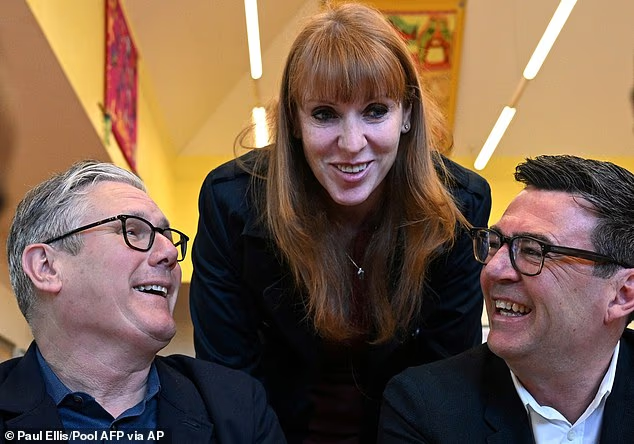
Sir Keir Starmer will be remembered not for his oratory, his political acumen or his charisma, but for acting as a political Trojan horse for Burnham¿s stealth army of Seventies socialists

Christopher Nolan’s new film, The Odyssey, has been wowing critics, sparking renewed interest in the epic tale of sex, gods and sorcery. That it still resonates millennia after Homer invoked the Muse is a reminder that the characters may change, but human nature stays the same.

As proof, you need only look at the epic saga unfolding on our own political stage. As Britain’s self-appointed new saviour, Andy Burnham, prepares to take up residence in No 10, it seems to me that his predecessor Sir Keir Starmer’s place in history has finally been assured.

He will be remembered not for his oratory, his political acumen or his charisma, but for acting as a political Trojan horse for Burnham’s stealth army of Seventies socialists.

Just as Odysseus and his soldiers duped the men of Troy into allowing a seemingly innocuous gift to the goddess Athena to breach their defences, so the Labour Party duped voters into electing a similarly hollow vessel who appeared, on the outside, to be the answer to all our prayers – but has instead paved the way for a socialist coup.

Advertisement

With his lawyerly demeanour, Starmer succeeded in persuading even those who might not normally vote Labour that he’d be a safe pair of hands, a welcome relief from the so-called years of Tory chaos. He appealed to metropolitan Lefties and disillusioned Conservatives, and it won him a huge majority, albeit on an historically low turnout.

Key to his success was the notion that he had the hard Left of the party firmly under control. He suspended and barred Jeremy Corbyn following the 2020 Equality and Human Rights Commission report on anti-Semitism within the party. He also placed moderate candidates in safe seats, marginalising more Left-wing activists. In short, he gave the impression that, as one friend of mine who voted for him put it, he was a ‘decent guy’ who would get Britain back on course.

He may well be a ‘decent guy’ (all his allies tell me so), but he lacked the one attribute that every leader or prime minister needs in order to be able to do the job properly: the ability to control his parliamentary party, and in particular the equivalent of those Tory ‘swivel-eyed loons’ that David Cameron had to contend with.

It quickly became apparent that, far from him having locked the hard Left in a dark cupboard, they had him over a barrel. Attacks on pensioners, massive resistance to welfare reforms, huge tax rises, assaults on business, VAT on private schools – his much-vaunted commitment to growth was strangled at every turn and he had neither the authority nor the strength to resist.

Advertisement

Sir Keir Starmer will be remembered not for his oratory, his political acumen or his charisma, but for acting as a political Trojan horse for Burnham’s stealth army of Seventies socialists

He was elected on false pretences. And now he has been usurped by a man whose politics are completely out of kilter with what most of the British electorate wants – and who, had he been required to win an election himself, would have been rejected as Corbyn was in 2017 and 2019.

Because the truth is that Britain is not a hard-Left country – it is a land of political moderates, of small-business strivers, savers, home-owners and entrepreneurs who want to enjoy the fruits of their labours without being sucked dry or lectured on wokery and political dogma.

Advertisement

People are fed up with chancers being rewarded for nothing. They are tired of being told to go to the back of the queue for services they have paid for. And they are sick of being squeezed until the pips squeak.

They need Burnham’s socialist utopia like a hole in the head. They don’t want more welfare, more immigration, a bigger tax burden. That is why Reform has gained such popularity, and that is why, despite her party’s woes, Kemi Badenoch’s clear-sighted Conservatism has made her the only party leader with a positive poll rating.

Burnham has so far refused to account for himself either in Parliament or to the Press, save to declare himself the saviour of British politics and airily tell taxpayers that they are going to have to do ‘a little bit more’.

So the only way a man like him can get his hands on the levers of power is by stealth – and cunning. The coup that Burnham has pulled off does at least tell us one thing: he is a player. Where Starmer showed himself to be unsuited to the cloak-and-dagger style of parliamentary politics (one thing that stands in his favour) and always played a straight bat, Burnham clearly has a Machiavellian streak.

Advertisement

How else could he have plotted such a power grab? Even Starmer’s greatest detractors don’t quite know why he had to go. Despite a series of mistakes, including the Peter Mandelson affair, there is no massive scandal, no £5million of undeclared donations or evidence of misconduct in public office.

He has gone because he has finally served his purpose: to usher in the armies of hard-Left ideologues in Labour who have been hiding in the darkness and who are now preparing to unleash political hell on the unsuspecting – and trusting – voters of Britain.

Claudia’s so candid

Claudia Winkleman hosting an episode of The Claudia Winkleman Show

Claudia Winkleman hosting an episode of The Claudia Winkleman Show

All credit to Claudia Winkleman for admitting that she wasn’t really enjoying hosting her own chat show, saying it made her ‘too nervous’. Most people would have made up some waffle about wanting to spend more time with their family, or similar. By being honest about her decision, she only reminds us why we love her.

Advertisement

They say Labour has a women problem, but surely releasing thousands of convicted rapists from prison early is taking it a bit far, even by their poor standards?

That’s no way to treat a widow

Readers may remember that my father died just over a month ago. As part of the inevitable ‘deathmin’, my mother needed to inform his various state pension providers. First, she rang the Italian pensions people. She explained the situation, and the lady was incredibly kind and helpful. She expressed her condolences, asked how my mother was coping, and detailed the process by which she could submit the information. Next, my mother rang the pensions people here. She explained that her husband had recently died, and she was in the process of sorting his things out. There was a long pause. Then, ‘Well, you’re not getting any money from us.’ Not, ‘I’m so sorry, here’s what you need to do,’ or even just, ‘Let me take his details.’ Just a nasty, unkind and frankly unnecessary dismissal of a grieving widow who has just lost her husband of 60 years. What the hell has become of us?

The easiest way to resolve the row over whether grooming gang ringleader Shabir Ahmed should be deported to his native Pakistan is to put him back in jail and make him serve his full sentence. This revolting excuse for a human being was released last month after serving just 14 years, having been jailed in 2012 for 22 years for 30 child rape offences and 19 years for child sex offences and trafficking. He’s 73: if he just serves out his term, with any luck what to do with him when he gets out will no longer be an issue.

The plight of Piddingtonians 

Of course, not all asylum seekers are dangerous ¿ but with reports of cases such as this on the rise, can you really blame the Piddingtonians for taking matters into their own hands?

Of course, not all asylum seekers are dangerous – but with reports of cases such as this on the rise, can you really blame the Piddingtonians for taking matters into their own hands?

Advertisement

The 350 residents of Piddington in Oxfordshire have reacted to Home Office plans to house 1,250 single male asylum seekers, a move that would overwhelm the village and totally change the nature of the area, by voting for independence.

No doubt they will be denounced as Nimbys but having lived in the same road as a hotel full of these young men and seen how their behaviour impacts their environment, I understand their concerns.

Truth is, many of them come from cultures that have very different attitudes, especially towards young girls and women – and sadly there are too many instances where those attitudes have led to violence.

A case in point is the three men – Iranian Abdulla Ahmadi and Egyptians Ibrahim Alshafe and Karin Al-Danasurt – sentenced last week for brutally raping a woman on Brighton beach.

Advertisement

Of course, not all asylum seekers are dangerous – but with reports of cases such as this on the rise, can you really blame the Piddingtonians for taking matters into their own hands?

Isn’t it interesting how the Duchess of Sussex and her two children managed to come to the UK without being spotted? Just goes to show that if someone truly wants privacy, it’s perfectly possible to have it.


Source link

Advertisement
Continue Reading
Click to comment

You must be logged in to post a comment Login

Leave a Reply

NewsBeat

Mayhem at World Cup final before Trump arrives as staff misdirect fans outside stadium and tension simmers over ticket issues – but Tom Cruise has no trouble getting in!

Published

on

Thousands of fans and media members faced massive lines to enter the stadium for the World Cup final on Sunday amid several reports of security struggling to manage the situation

Advertisement

World Cup final day got off to a chaotic start at MetLife Stadium with fans forced to wait for hours outside of the venue amid reports of technological glitches scanning tickets and security staff unsure of how to manage the crowds.

Organizers this week urged fans lucky enough to have a ticket to arrive up to four hours before the start of the game at the 80,000-seater stadium in New Jersey, a short drive outside of Manhattan, for Sunday’s showdown between Spain and Argentina.

The attendance of President Donald Trump means airport-style security measures are being enforced for everyone making their way inside of the venue.

But the delays were compounded amid reports of glitches in FIFA’s ticket-scanning system, meaning those who were fortunate enough to be at the front of the long lines still faced frustrating delays.

Advertisement

Daily Mail also witnessed tensions simmering between fans, media members and security staff, with officials on the ground telling anyone who complained: ‘Take it up with FIFA’. 

But those members of security staff also appeared to be confused over how to manage the thousands of people arriving for the game. 

Thousands of fans and media members faced massive lines to enter the stadium for the World Cup final on Sunday amid several reports of security struggling to manage the situation

Advertisement
There were reports to tech issues and security misdirecting people around the stadium

There were reports to tech issues and security misdirecting people around the stadium

Argentina fans arrive at MetLife Stadium before Sunday's hugely anticipated final vs Spain

Argentina fans arrive at MetLife Stadium before Sunday’s hugely anticipated final vs Spain 

There were multiple instances of organizers on the ground misdirecting people over where they should begin lining up to enter the stadium with over three hours to go until the start of the game.

Sky’s Rob Harris also posted on X from the stadium: ‘Fans told to get to the World Cup final stadium now 4 hours before KO – already security staff saying FIFA system glitches not scanning passes and long queues forming. With extra security. People being misdirected around the stadium with a lack of stewarding and staffing.’

Advertisement

Brazilian journalist Mariana Spinelli said it took her four hours to make it in, writing on X: ‘We’ve been in line for 2 hours for the x-ray to ENTER the stadium. Everything disorganized, a total chaos. If this were in South America, they’d call us animals, third-world country. Since it’s in the US nobody says anything. A nightmare of organization, pathetic.’

Media members also faced extra checks from the secret service given the need to bring laptops and filming equipment inside of the stadium. DHS police and state police were also seen at the venue.

This all played out as other fans decided to leave it late to get to the stadium. With four hours to go utnil the game began, many supporters were still at Penn Station in Manhattan waiting to board a train into New Jersey and towards the stadium. 

The game is set to be the most expensive to attend in the history of sport – on Sunday morning, the cheapest ticket available on most resale websites was starting at around $7,000.

Advertisement

FIFA encouraged fans to arrive early in order to participate in the World Cup closing ceremony, scheduled to begin around 90 minutes before the game itself kicks off. 

But it is standard procedure for fans to arrive early for additional security checks whenever Trump attends a sporting event – and he has made it to plenty in his second term as President, ranging from the Ryder Cup to the Super Bowl. 

Extra security checks were in place ahead of the attendance of President Trump for the game

Extra security checks were in place ahead of the attendance of President Trump for the game

Tom Cruise had no such issue making his way inside before his closing ceremony appearance

Tom Cruise had no such issue making his way inside before his closing ceremony appearance

Advertisement

Even on the live television coverage, the stadium was bare with a little over an hour until that closing ceremony began. 

There weren’t quite as many issues for the VIP guests, though. Tom Cruise was pictured sauntering into the venue – renamed as ‘New York/New Jersey Stadium’ for the tournament – ahead of his anticipated appearance in the closing ceremony.

Soccer greats such as Brazil World Cup winner Ronaldo, former England captain John Terry and former Argentina player Diego Simeone all appeared carefree as they entered the stadium in good time before the game. 

There were plenty of fans who were determined not to let the chaos ruin their day, too. Thousands of Argentina fans have made the journey to the stadium for what will likely be star man Lionel Messi’s last ever appearance in a World Cup at the age of 39.

Advertisement

Argentina are narrow underdogs against Spain, the European champions, despite being the holders after winning the 2022 tournament in Qatar. 

Trump is expected to hand the World Cup trophy over to the winning team after the game. 

Advertisement

Advertisement

Source link

Continue Reading

NewsBeat

5.5 magnitude earthquake in Peru leaves at least five dead and dozens injured

Published

on

5.5 magnitude earthquake in Peru leaves at least five dead and dozens injured

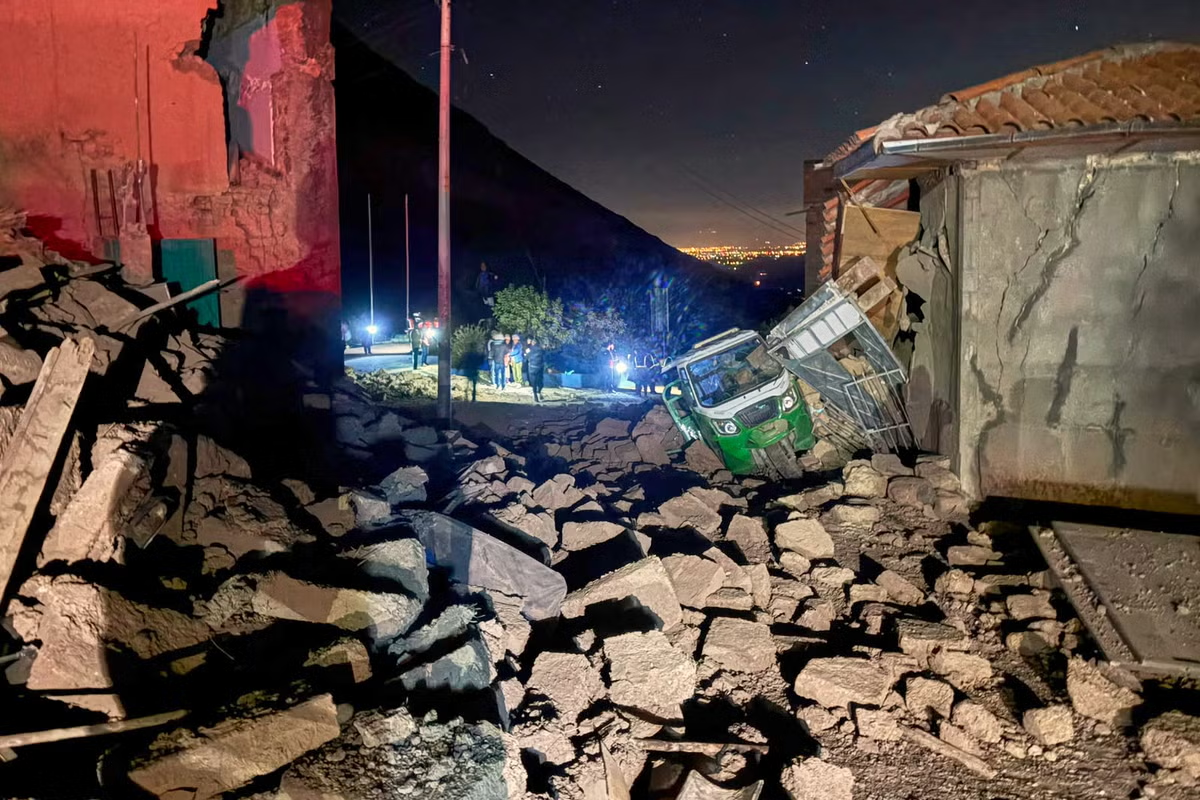
A 5.5 magnitude earthquake has rocked Peru’s Andres region, killing at least five and injuring over 20 people.

The tremor struck at 9:24 p.m. local time and has already displaced 300 residents.

The U.S. Geological Survey placed its epicenter 1.24 miles west-southwest of Sicaya, Huancayo province, at a shallow 6.21 miles.

Peru’s National Civil Defense Institute said the number of missing remains unknown.

Advertisement

The quake caused widespread destruction, with buildings, including the local church and convent, collapsing or suffering severe damage.

Local media images showed the anguish of relatives in Chongo Bajo, an agricultural area among the hardest hit. Residents huddled under blankets outside damaged homes and animals were seen trapped under rubble.

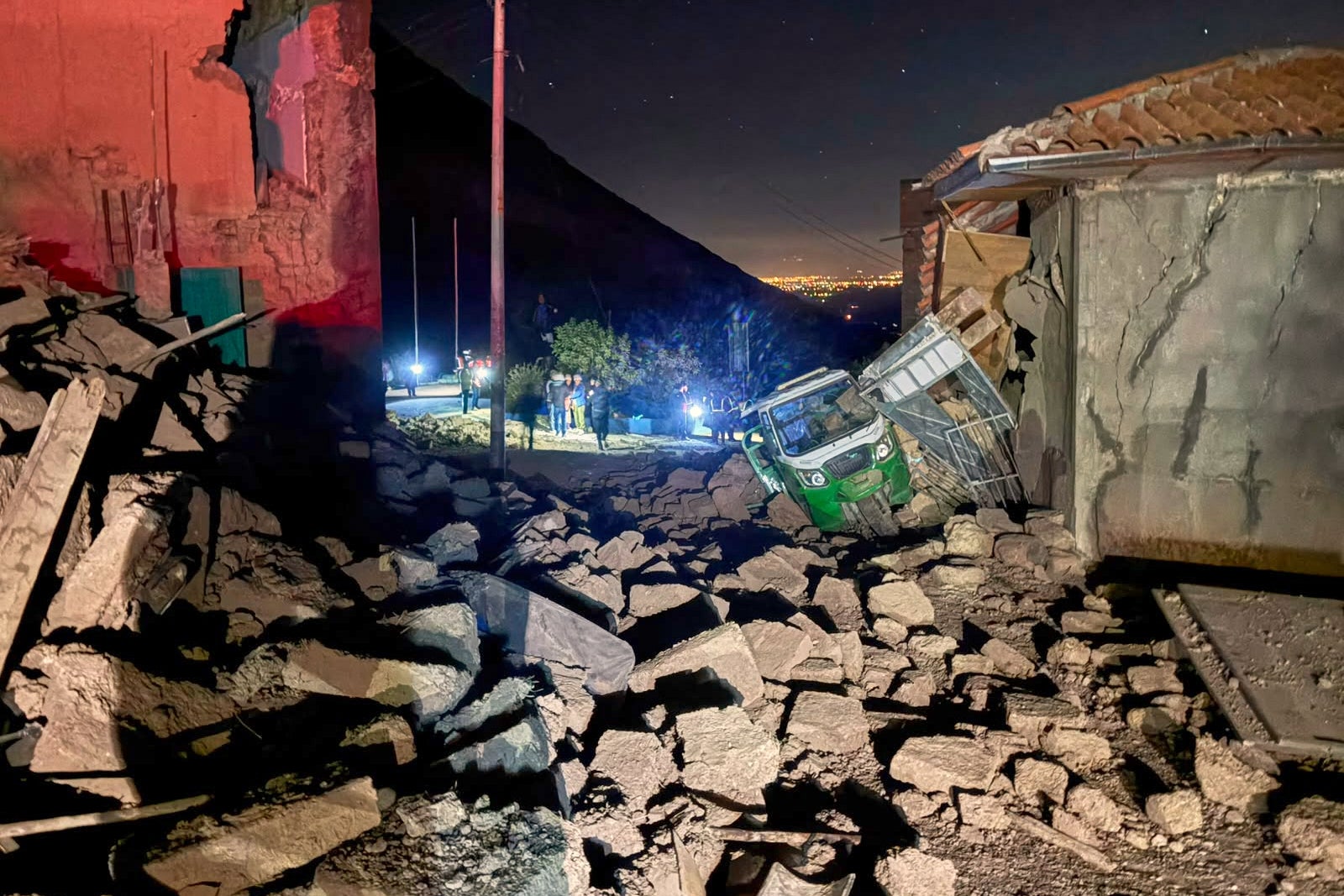
A motor tricycle is stuck amid the debris of homes that collapsed after an earthquake struck Pumpuya, Peru, Sunday, July 19, 2026
A motor tricycle is stuck amid the debris of homes that collapsed after an earthquake struck Pumpuya, Peru, Sunday, July 19, 2026 (AP Photo/Jhefry Sedano)

Luis Vásquez, head of the local civil defense office, told journalists that the use of rustic adobe materials in construction in that Andean area “has contributed to the greater impact and damage.”

Earthquakes are frequent in Peru, which is located in the Pacific “Ring of Fire.” A 7.9 magnitude quake in 2007 devastated Pisco province, killing nearly 600.

Saturday’s earthquake in Peru comes after Venezuela was hit by back-to-back earthquakes late last month.

Advertisement

The death toll from the powerful 7.2 and 7.5 quakes that struck on June 24 stood at 5,069 as of late Friday.

Venezuela’s government says 856 buildings are damaged and 190 collapsed completely. Hundreds of other types of structures, such as bridges and roads, were also affected.

Source link

Advertisement
Continue Reading

NewsBeat

World Cup 2026: Donald Trump attendance means hours of queues for final in New Jersey

Published

on

Queues outside the 2026 World Cup final stadium

There are two levels of security at the stadium, run by both the Secret Service and Transportation Security Administration (TSA).

The latter is usually responsible for security at airports in the United States, with fans and media having to go through airport security-style scanners.

One member of the media said they, having reached an entrance, were told to go to a different queue as there were no security dogs available to search bags at that gate.

BBC Sport has been told by World Cup volunteers at the ground that the number of people arriving early before the game was much more than the previous seven matches at the stadium.

Advertisement

Gates opened for supporters at 11:00 local time – four hours before kick-off – with more gates being opened sporadically to ease congestion.

It is not thought there will be any delay to kick-off or any other disruption to the match at this stage.

Source link

Advertisement
Continue Reading

NewsBeat

Cattal Bridge in North Yorkshire finally set for repair work

Published

on

Cattal Bridge in North Yorkshire finally set for repair work

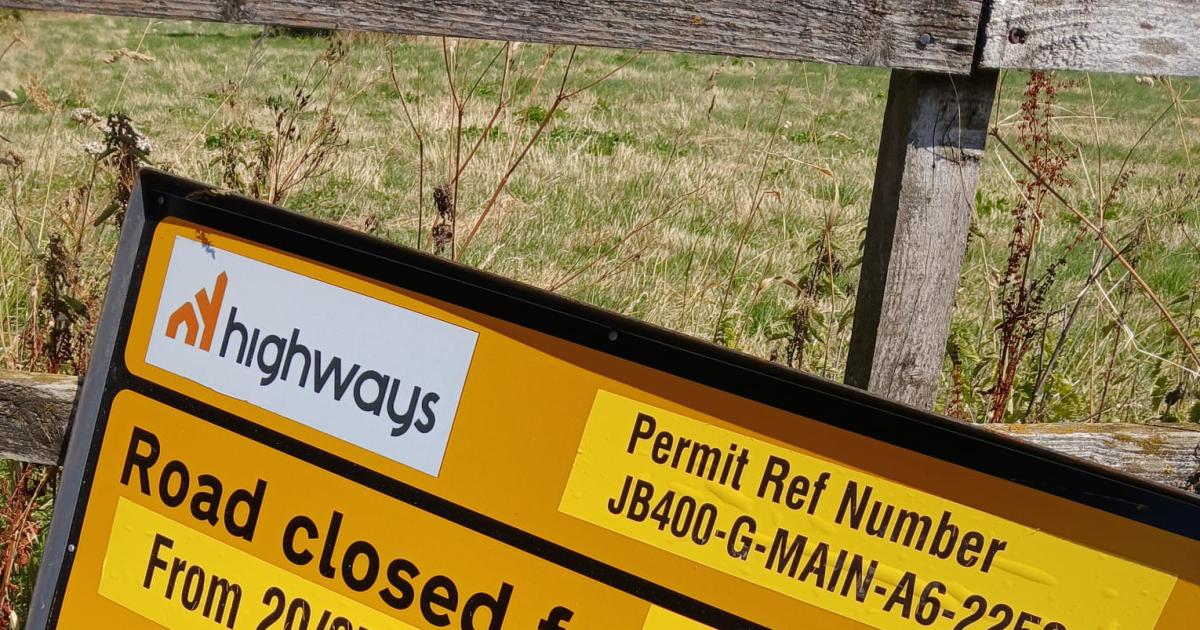
North Yorkshire Council has erected signs warnings of the closure at Cattal Bridge, on Cattal Moor Lane, between Cattal and Tockwith in the Vale of York.

The five day closure begins on Monday July 19 until Friday July 24.

The £31,000 scheme to repair the 18th Century bridge was expected to begin before Christmas, but the need for listed building consent delayed the planned work until a planned April start.

RECOMMENDED READING:

Advertisement

Cattal Bridge (Image: Darren Greenwood)

However, signs warning of the work and its related closure, only appeared at both sides of the bridge in recent days.

The Grade II-listed bridge over the Nidd bridge sustained costly damage eight years ago, after a large vehicle collided with the structure and left a sizeable hole.

Despite public pressure, financial and logistical problems have extended delays to the much-needed work, as previously reported by the Press.

Advertisement

Source link

Continue Reading

NewsBeat

Locked In Games York Limited to be wound up voluntarily

Published

on

Locked In Games York Limited to be wound up voluntarily

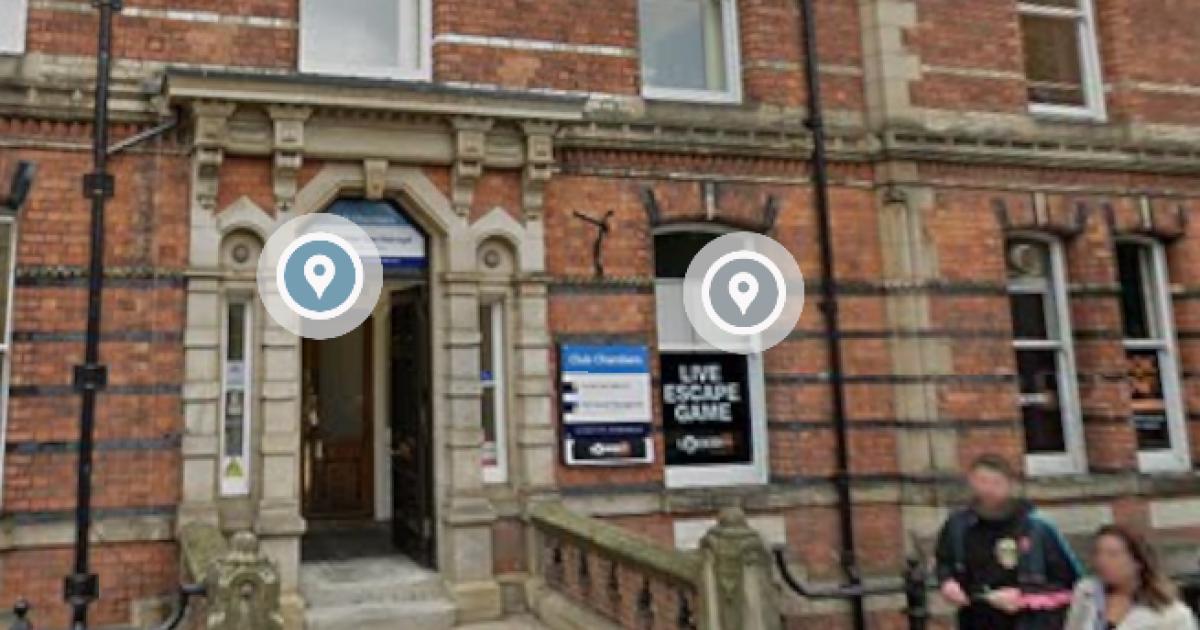
Locked In Games York Limited, based at Club Chambers, Museum Street, in York, will be wound up voluntarily following a general meeting held at its registered office in Leeds on July 10.

According to company records published in the London Gazette, it was resolved that the firm could not continue operating due to its liabilities and would instead enter voluntary liquidation.

Michael Howorth, of Aurora Equity and Development Limited in Leeds, has been appointed as liquidator.

RECOMMENDED READING:

Advertisement

Insolvency filings state that the business “cannot, by reason of its liabilities, continue its business and that it is advisable to wind up.”

Mr Howorth will now oversee the liquidation process.

Lock In Games Limited of York was incorporated in 2017 (Image: Locked In Games Ltd)

The principal trading address listed in the notice is Club Chambers, Museum Street, York.

Enquiries about the liquidation can be directed to hello@aurorarecovery.co.uk.

Advertisement

Companies House records that the private limited company was incorporated in 2017.

Locked in Games York was a highly rated business, receiving 4.9 stars out of five on the reviews website TripAdvisor, based on 745 revews. Google awarded 4.8 stars out of five, based on 201 reviews.

Locked in Games announced the closure of the York business in January, but added a sister venture in Leeds remained operational.

Advertisement

Source link

Continue Reading

NewsBeat

Just b******s… Boris takes aim at claims from Vance and co that British civilisation is being erased by immigration, with London make-up similar to NYC

Published

on

Boris John branded claims about civilisational erasure 'b******s' during a Sky News interview

Advertisement

Boris Johnson appeared to take aim at the US vice president today, branding his comments that immigrants are erasing British civilisation as ‘b******s’.

The former prime minister said: ‘The population of New York that was born abroad is virtually identical [to London].

‘I think in America, about 30 per cent of people are either first or second generation immigrants. The statistic I used to cite was that 40 per cent of our population was born abroad.

‘So all these raving about civilisational erasure, “Britain’s going down the tubes” – I think it’s b******s.’

Advertisement

According to the 2021 census, around 41 per cent of London residents were born outside the UK, while the average for the rest of England was about 17 per cent.

Meanwhile, around 37 per cent of New Yorkers are foreign-born.

Mr Johnson – the former mayor of London – seemed to be referencing comments made by the Trump administration in recent months, and in particular, vice president JD Vance.

As early as last year, Mr Vance declared that Europe was teetering on ‘civilisational suicide’.

Advertisement

Boris John branded claims about civilisational erasure ‘b******s’ during a Sky News interview

US vice president JD Vance has frequently criticised European immigration policies

US vice president JD Vance has frequently criticised European immigration policies

Join the discussion

Advertisement

What’s YOUR take on Johnson’s response?

Just before the US celebrated 250 years of independence on July 4, he spoke about his ‘special affection for Britain’, but added that the country was ‘very broken’.

And last month, he sparked controversy by linking the murder of Henry Nowak by Vickrum Digwa to an influx in immigration.

He said Mr Nowak’s death would not have happened ‘if the last few generations of European elites had stood their ground against the politics of self-hatred and the mass invasion of migrants, many of whom despise the West and the people who love it’.

Advertisement

This drew backlash from Downing Street, which hit out at ‘people trying to interfere in our democracy and stir up division on our streets’.

The vice president has also aligned himself with Britain’s far-Right, urging anti-immigration activists who attended a protest led by Tommy Robinson in May to ‘keep on going’ and prepare for the ‘battle of Britain’.

Addressing reporters at the White House then, he claimed that ‘all over the West’ there is ‘this idea that the way to generate prosperity is to bring in millions and millions of unvetted people and drop them into your neighborhoods’.

‘And we simply reject that idea,’ he said. ‘To everybody in the UK who rejects that idea, I’d encourage them to just keep on going. It’s OK to want to defend your culture. It’s OK to want to live in a safe neighborhood.’

Advertisement

It is a rhetoric he has repeated many times, including at the Munich Security Conference last year, where he spoke not about defence, but about Europe opening the ‘floodgates’ to migrants while hollowing out core democratic values.

Speaking to Trevor Phillips on Sky News yesterday, Mr Johnson branded comparisons between the make-up of the UK and US as ‘b******s’, but said Britain had been ‘far too limp wristed in insisting people conform to our ideals’.

‘We haven’t been tough enough in insisting on basic British norms of behaviour,’ he said. ‘I think a lot of political correctness has prevented that.

‘The grooming gangs, all this sort of stuff. I think it is totally unacceptable that you should have populations of women who don’t speak English. That’s absolutely appalling.’

Advertisement

Advertisement

Source link

Continue Reading

NewsBeat

Council of Europe questions integrity of World Cup in scathing letter to Fifa hours before final

Published

on

Council of Europe questions integrity of World Cup in scathing letter to Fifa hours before final

Europe’s leading human rights organisation has questioned the integrity of the World Cup, urging FIFA to establish a more robust framework for the 2030 edition which will be played mostly in Spain and Portugal.

In a scathing open letter to FIFA published hours before the final between Spain and Argentina in East Rutherford, New Jersey, Alain Berset, the head of the 46-nation Council of Europe, warned: “The next crisis has already begun. It has two names: money and power.”

Mr Berset, a Swiss politician who has twice served as president of FIFA’s home country, highlighted FIFA’s controversial decision to suspend a ban for United States forward Folarin Balogun.

This suspension, which allowed Balogun to play against Belgium in a quarter-final match that Belgium won 4-1, followed pressure from US President Donald Trump.

Advertisement

“When the rules bend under pressure, every result is open to doubt,” Mr Berset wrote. “Political influence has also moved onto the field. The sanction suspended mid-tournament came after a head of state called the president of FIFA.”

In his letter, Alain Berset pointed to FIFA suspending a ban for United States forward Folarin Balugun while under pressure from U.S. President Donald Trump
In his letter, Alain Berset pointed to FIFA suspending a ban for United States forward Folarin Balugun while under pressure from U.S. President Donald Trump (AP Photo/Jacquelyn Martin)

European football body UEFA also fiercely criticised the ruling, stating it “crossed a red line” in the sport’s rule of law, with FIFA yet to publish its reasoning.

Further concerns were raised regarding FIFA’s $150 million sponsorship deal with ADI Predictstreet, a prediction market company formed just one week before the agreement was signed in April. FIFA also holds other commercial deals with the gambling industry for this World Cup.

Mr Berset criticised prediction betting as rewarding insider trading, noting it allows wagers on “moments a single player can produce without changing the score.”

He concluded: “It is an open door to fraud. And this World Cup has opened the door wider.”

Advertisement
FIFA’s disciplinary ruling on Balogun was also fiercely criticized by European soccer body UEFA, which said the decision ‘crossed a red line’ in soccer’s rule of law and transparency
FIFA’s disciplinary ruling on Balogun was also fiercely criticized by European soccer body UEFA, which said the decision ‘crossed a red line’ in soccer’s rule of law and transparency (AP Photo/Manu Fernández)

Despite a formal working agreement signed in 2018 by FIFA President Gianni Infantino, who then spoke of shared values like “transparency, accountability, integrity, safety in sport and respect for human rights,” the Council of Europe aired its concerns publicly. The inter-governmental body, which created the European Convention on Human Rights, aims “to promote democracy, human rights and the rule of law across Europe and beyond.”

Mr Berset also pointed to other issues, including the authority of referees being questioned, racist abuse of players – some from elected officials – and the proliferation of betting on “every pass, every card, every corner” in the first 48-team, 104-game World Cup.

The 2030 men’s World Cup will be largely staged in Europe, with Morocco co-hosting, and one match each in Argentina, Paraguay, and Uruguay to mark the centenary of the original 1930 tournament.

Concluding his letter, Mr Berset proposed: “A working dialogue that starts tonight, to build the integrity framework of the 2030 World Cup before it is played.”

Source link

Advertisement
Continue Reading

NewsBeat

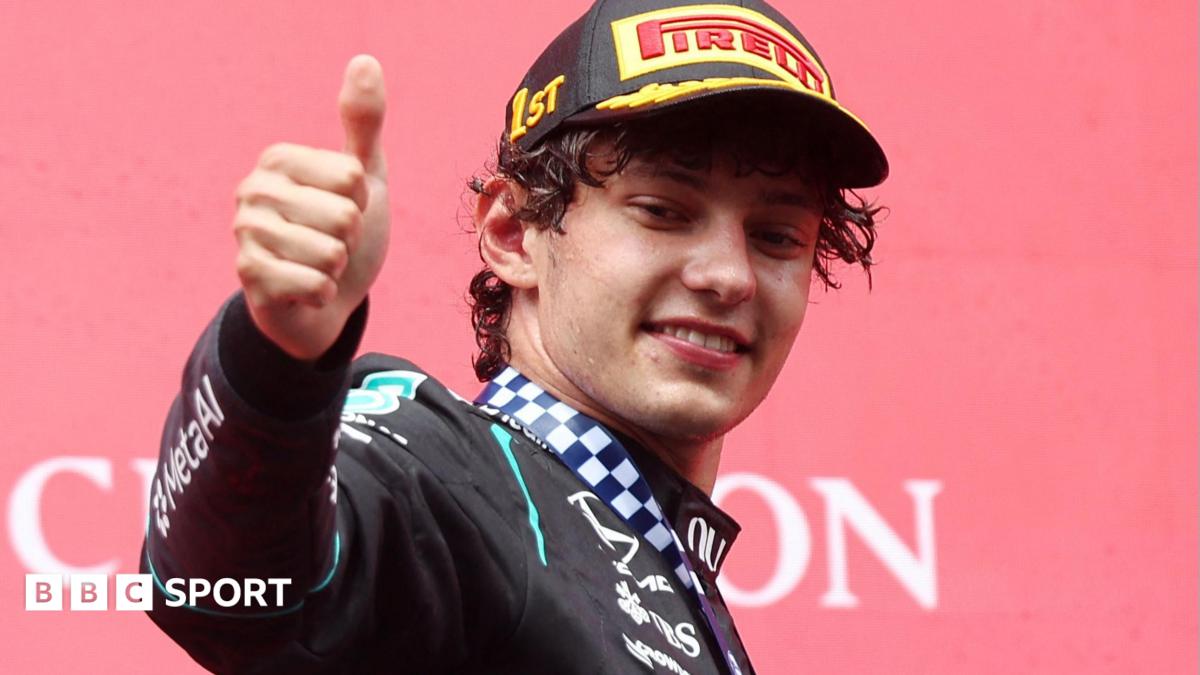
Belgian Grand Prix result: Kimi Antonelli wins to extend title lead after George Russell crashes out on first lap

Published

on

Mercedes' Kimi Antonelli with Ferrari's Charles Leclerc right behind during the Belgian Grand Prix

Antonelli initially looked set to deliver on the pre-race expectations and dominate comfortably at the front following his impressive pole position on Saturday.

Clever driving on the first lap solved his concerns about being passed on the run up the hill to Les Combes, when he let Verstappen past him into Eau Rouge and then slipstreamed back into the lead up the following Kemmel straight.

Behind him, Russell went into Les Combes side by side with Hamilton, trying to pass the Ferrari around the outside.

Russell was ahead going into the corner, but a wobble from Hamilton caused by the airflow to his front wing being disrupted by the fighting Antonelli, Verstappen and Leclerc in front of him, meant he tagged the Mercedes, which spun into the gravel trap and into retirement.

Advertisement

An emotional Russell said: “I came out of Turn One, for whatever reason I was 30-40% down on my battery. I just totally got swamped up by three cars.

“Incident with Lewis, I have not really seen it. But I thought probably a racing incident. I am not going to blame Lewis. If things were normal, I would have been battling with Lewis, battling with Kimi and Max.

“It is one thing after another, after another, after another. Not good enough on all regards so try and reset again. I’ve done it enough times this season and I’ll see what we can do.”

Antonelli measured his pace carefully in the opening stint, looking after his tyres, until being told to speed up as his pit stop loomed.

Advertisement

Over the course of lap 17, he demonstrated how much pace he had in hand when he extended his lead over Verstappen from 2.3 seconds to 3.5, before pitting on the following lap.

Two laps later, though, a virtual safety car period for some debris on track gave Leclerc a cheap pit stop – it costs nearly half as much race time to stop under a safety car than under green-flag conditions – and Leclerc was able to stop for fresh tyres and rejoin still in front of Antonelli.

Norris by this point was in the lead, but Leclerc soon passed the McLaren on lap 26, and it was now a question as to how long it would take Antonelli to close the three-second gap to the Ferrari.

Antonelli was on his tail eight laps later and passed the Ferrari on the Kemmel straight on lap 34 of 44.

Advertisement

Leclerc was able to stay with Antonelli, whose lead never went over two seconds, and there was extra pressure from the fact the Mercedes driver was on the cusp of a five-second penalty for exceeding track limits too many times.

But Antonelli calmly kept things under control to cross the line just under two seconds ahead and retake control of the championship.

It was his first win since Monaco in early June, after a retirement in Spain, a third in Austria and a finish out of the points at the British Grand Prix.

Source link

Advertisement
Continue Reading

NewsBeat

Incredible phenomenon that sees dementia patients suddenly regain their memory and personality shortly before they die

Published

on

German biologist Dr. Michael Nahm helped introduce the scientific term 'terminal lucidity' in 2009 after uncovering decades of historical medical reports describing similar end-of-life experiences

For nearly five years, an elderly woman with advanced Alzheimer’s disease hadn’t spoken.

Then, one afternoon, while lying in bed surrounded by her two daughters and granddaughter, she suddenly became lucid.

For almost two hours, she carried on what witnesses described as a perfectly ordinary conversation. She spoke openly about her fear of dying, discussed disagreements she had with the church and asked after relatives she hadn’t recognized in years.

Later that evening, she died.

Advertisement

Her story was extraordinary. But it was far from unique.

For generations, caregivers, doctors and hospice workers have described similarly bewildering moments: people who appeared lost to dementia suddenly recognizing loved ones, recalling long–forgotten memories and speaking with remarkable clarity in the final hours or days of life.

The episodes were deeply meaningful to the families who witnessed them, yet they occupied an unusual place in medicine. Physicians occasionally documented them. Hospice nurses recognized them. Caregivers quietly shared stories with one another.

Despite appearing in medical literature for more than a century, however, the phenomenon had no agreed–upon name, no standardized definition and almost no scientific research devoted to understanding why it happened.

Advertisement

That changed in 2009, when German biologist Dr Michael Nahm and psychiatrist Dr. Bruce Greyson introduced the scientific term terminal lucidity, giving researchers a common language to investigate one of the most mysterious experiences reported at the end of life.

More than 15 years later, researchers are still trying to understand how people who appear lost to advanced dementia can suddenly recognize loved ones, recall long–forgotten memories and hold coherent conversations shortly before death. 

German biologist Dr. Michael Nahm helped introduce the scientific term ‘terminal lucidity’ in 2009 after uncovering decades of historical medical reports describing similar end–of–life experiences

Advertisement
People with advanced Alzheimer's disease have occasionally been reported to suddenly recognize loved ones, recall long-forgotten memories and hold coherent conversations shortly before death in a phenomenon known as terminal lucidity

People with advanced Alzheimer’s disease have occasionally been reported to suddenly recognize loved ones, recall long–forgotten memories and hold coherent conversations shortly before death in a phenomenon known as terminal lucidity

Searching for rare exceptions 

For Nahm, the journey into terminal lucidity didn’t begin in medicine.

Trained as a biologist, his work has long centered on life’s biggest unanswered questions: how consciousness arises, how life began and what happens at the boundaries of human experience.

‘It’s not the conventional stuff that teaches you the most important issues,’ Nahm said. ‘It’s those rare exceptions from the rule where you may find some windows opening into previously under–researched areas.’

Advertisement

That fascination with life’s outliers eventually led him to nineteenth–century medical journals, where he kept encountering the same puzzling accounts.

Again and again, physicians described dying patients who unexpectedly regained mental clarity shortly before death. Some recognized loved ones they had long forgotten. Others carried on coherent conversations after months or even years of silence.

The reports stretched across decades and countries, yet no one had attempted to study them systematically.

‘People report about this amazing phenomenon,’ Nahm said. ‘But there’s no name and no research on it.’

Advertisement

That realization prompted Nahm and Greyson to coin the term terminal lucidity, giving researchers a shared language to investigate a phenomenon that had long existed only in scattered case reports.

Researchers hope studying terminal lucidity could reveal new clues about memory, consciousness and future dementia treatments

Researchers hope studying terminal lucidity could reveal new clues about memory, consciousness and future dementia treatments

A distinction that matters 

As interest in the phenomenon has grown, one misconception has continued to frustrate Nahm.

Researchers often use the terms terminal lucidity and paradoxical lucidity interchangeably.

Advertisement

He argues they are not the same.

Terminal lucidity refers to when an episode occurs: an unexpected return of mental clarity shortly before death.

Paradoxical lucidity refers to who experiences it: someone whose brain has been so severely damaged that coherent thought should, according to current medical understanding, be impossible.

‘Terminal lucidity is terminal because it’s always related to dying,’ Nahm explained. ‘Paradoxical lucidity is called paradoxical because it always occurs in people with a severely damaged brain.’

Advertisement

The distinction may sound technical, but Nahm said he believes it is essential if researchers hope to understand what is actually happening.

The two sometimes overlap. Someone with advanced Alzheimer’s disease who suddenly becomes lucid in the final hours of life may experience both terminal and paradoxical lucidity.

But they are not synonymous.

A patient with severe dementia who becomes lucid months before death would be experiencing paradoxical lucidity, not terminal lucidity.

Advertisement

Conversely, someone dying of cancer without structural brain damage who suddenly becomes mentally clear shortly before death would experience terminal lucidity, but not paradoxical lucidity.

Nahm later formalized that distinction in a 2022 paper, arguing that researchers should reserve the terms for separate concepts to avoid confusion as the field grows.

‘It’s really important to distinguish,’ he said.

The phenomenon remained largely unexplained for more than a century before researchers began formally studying it in 2009

The phenomenon remained largely unexplained for more than a century before researchers began formally studying it in 2009

Advertisement

More than just a ‘good day’ 

One question families often ask is whether terminal lucidity is simply a particularly good day.

Nahm says the difference is usually unmistakable.

Unlike the natural fluctuations often seen in Alzheimer’s disease, terminal lucidity is sudden, dramatic and unexpected.

‘It’s really pronounced,’ he said. ‘People are really going, ‘What’s happening now? This is unusual.”

Advertisement

Some families are so astonished that they instinctively begin recording the moment on their phones.

Even so, defining exactly what separates an ordinary cognitive fluctuation from a genuine episode of terminal lucidity remains one of the field’s biggest challenges.

There is still no universally accepted medical definition or diagnostic criteria.

Instead, Nahm said he believes researchers need something similar to the standardized scales used to study near–death experiences: a scoring system that could objectively evaluate the characteristics of each episode and help distinguish true terminal lucidity from routine cognitive fluctuations.

Advertisement

‘Scientists always like to have these boxes,’ he said. ‘But that’s often not how real life works.’

Could terminal lucidity unlock new treatments? 

For Nahm, the scientific importance of terminal lucidity extends far beyond satisfying curiosity.

If researchers can determine what briefly restores cognition at the end of life, they may uncover entirely new ways of treating dementia.

One possibility, he said, is that the memories aren’t actually gone.

Advertisement

‘They may still be there,’ Nahm said, ‘even though they’re usually not accessible.’

If scientists can identify what temporarily restores access to those memories, whether through changes in brain activity, electrical signaling or another neurological process, they may one day be able to replicate it.

‘If we could find this new kind of therapy,’ he said, ‘this would be very, very important.’

Not all neurologists, however, are convinced terminal lucidity points toward an entirely new understanding of dementia.

Advertisement

Such a breakthrough could transform dementia care.

But before scientists can develop new treatments, they first have to answer a more fundamental question: what is happening inside the brain during these extraordinary moments? 

Researchers say the phenomenon is prompting doctors and caregivers to rethink how they treat people with advanced dementia

Researchers say the phenomenon is prompting doctors and caregivers to rethink how they treat people with advanced dementia

A possible explanation inside the brain 

Dr. Ronald Petersen, a Mayo Clinic neurologist who served as director of the Mayo Clinic Alzheimer’s Disease Research Center from 2009 to 2025 and now leads the Mayo Clinic Study of Aging, said he believes the answer may lie not in reversing Alzheimer’s disease but in the brain’s arousal systems – the networks responsible for alertness, attention and consciousness. 

Advertisement

‘Do I have an explanation? No. Do I have the answer? No,’ Petersen said.

Rather than viewing the episodes as entirely separate from known brain function, Petersen said he believes they may be linked to the same brain mechanisms behind the cognitive fluctuations seen in some forms of dementia.

Petersen explained that people with dementia with Lewy bodies – a type of dementia that causes dramatic swings in alertness, attention and thinking – can appear profoundly confused one day and much more mentally present the next.

‘Somebody [with Lewy bodies] will be quite confused one day… and then the next day look pretty normal. I think, from a physiologic anatomic perspective, it pertains to those arousal mechanisms in the brain that are up and down. When they get fired up, then the person’s brain can function relatively normally.’

Advertisement

That theory may also explain why some patients appear able to recall long–forgotten memories.

Petersen said memories are not stored in a single location but across vast networks throughout the brain.

‘They’re not like a book in a library on a shelf,’ he said.

Instead, memories formed decades before Alzheimer’s damaged the brain may still exist but become difficult to retrieve.

Advertisement

‘Something 20 or 30 years ago, when your brain was working well, those may very well be accessible,’ Petersen said. ‘If those arousal mechanisms are reactivated, they may be able to access some of these memory networks that are still in place.’

Petersen cautioned that the most dramatic reports remain rare and said families’ interpretations may not always match a physician’s assessment.

‘With all due respect, there’s some subjective interpretation of these events by the observers too,’ he said.

Dr Ronald Petersen said he believes terminal lucidity may be linked to temporary changes in the brain's arousal systems rather than a reversal of Alzheimer's disease

Dr Ronald Petersen said he believes terminal lucidity may be linked to temporary changes in the brain’s arousal systems rather than a reversal of Alzheimer’s disease

Advertisement

The Case He Never Forgot 

Among the hundreds of cases Nahm has studied, one has remained particularly vivid.

It involved the grandmother of a physician friend who had advanced Alzheimer’s disease and had not spoken for nearly five years.

Then, one afternoon, while lying in bed surrounded by her two daughters and granddaughter, she suddenly became lucid.

For nearly two hours, she carried on what Nahm described as a perfectly ordinary conversation. She spoke about her fear of dying, discussed disagreements she had with the church and asked after relatives she had not recognized in years.

Advertisement

The sudden transformation was so startling that one of her granddaughters ran from the room in fear.

Later that evening, the woman quietly died.

Nahm says stories like hers illustrate why families should know terminal lucidity exists.

Without that knowledge, many interpret the sudden improvement as recovery.

Advertisement

‘They have the false hope,’ he said. ‘Now everything is getting better.’

New research suggests lucid episodes don't always signal death and can sometimes occur months before a patient dies (Pictured: Mayo Clinic)

New research suggests lucid episodes don’t always signal death and can sometimes occur months before a patient dies (Pictured: Mayo Clinic)

Not always a sign of imminent death 

Whether these episodes are actually signs that death is imminent, however, has become one of the biggest questions facing researchers.

Dr Joan Griffin, a social and behavioral scientist at the Mayo Clinic, has spent years interviewing caregivers who witnessed lucid episodes in loved ones with Alzheimer’s disease.

Advertisement

While Nahm helped define terminal lucidity, Griffin has focused on understanding how often these episodes occur, what they look like and what they mean for the families who experience them.

Her findings have challenged one of the field’s longest–held assumptions.

‘I don’t think that they are necessarily harbingers for death,’ Griffin said. ‘Our data is pretty robust now to show that they’re happening months, sometimes six months, sometimes two years before they actually die.’

Rather than one single phenomenon, Griffin found that lucid episodes appear in many different forms.

Advertisement

Some occur shortly before death.

Others happen long beforehand.

Some last only a few minutes.

Others continue for hours, and in rare cases even days.

Advertisement

‘What surprised me is that creating these different types of episodes—it’s not just one,’ she said. ‘It’s not sort of a universal one type of experience. It’s pretty heterogeneous.’

Her team also found that many episodes coincided with family visits, holidays or familiar music.

Griffin is careful not to call those moments triggers.

Relatives may simply have been paying closer attention.

Advertisement

Researchers still cannot predict when a lucid episode will occur, why one patient experiences one while another never does, or what biological process causes it.

Mayo Clinic researcher Dr Joan Griffin studies lucid episodes in Alzheimer's patients and their lasting impact on caregivers and families

Mayo Clinic researcher Dr Joan Griffin studies lucid episodes in Alzheimer’s patients and their lasting impact on caregivers and families

When the researcher became the witness 

For Griffin, the work eventually became deeply personal.

Her father–in–law had lived with Alzheimer’s disease for roughly a decade.

Advertisement

Although he could still speak, he had not recognized family members by name for years and relied on a wheelchair to move around.

Then, during a summer visit from Griffin’s brother–in–law, something remarkable happened.

The 97–year–old stood up, grabbed his walker and walked inside the house.

‘He looked at my brother–in–law and said, ‘Oh, hey Bob, what are you doing here?” Griffin recalled.

Advertisement

The family managed to capture the moment on video.

‘I couldn’t believe it,’ she said. ‘I was in the middle of my research, and I remember thinking, ‘I can’t believe I’m witnessing what I study.” 

For many caregivers, Griffin said, those moments become some of their most treasured memories.

‘They’re like, ‘I got them back. They told me they loved me. They expressed joy,” she said. ‘For the most part, they are extremely beautiful stories and very indelible.’

Advertisement

But they can also raise painful questions.

If someone who appeared unable to communicate suddenly recognizes family and expresses coherent thoughts, relatives often wonder whether the person they loved had somehow remained present throughout the disease.

Some feel guilty that they did not spend more time talking to them.

Others wonder whether they should have played more music or recreated whatever circumstances surrounded the episode.

Advertisement

The moments rarely last.

‘They typically return to their baseline state that they were before the episode started,’ Griffin said, ‘and sometimes a little worse because it’s exhausting.’

Her team is now studying whether those experiences make grief easier or more complicated after a loved one dies.

The answer, she suspects, depends on the family.

Advertisement
For many families, these brief moments of clarity provide one last opportunity to reconnect, express love and say goodbye before a loved one dies

For many families, these brief moments of clarity provide one last opportunity to reconnect, express love and say goodbye before a loved one dies

Changing how patients are treated 

Even without understanding why lucid episodes occur, Griffin said she believes the research has already changed the way caregivers and healthcare professionals should think about people living with advanced dementia.

‘If these episodes can happen, how would you actually treat people differently?’ she said. ‘We have to be able to maintain the dignity and humanity of people throughout their entire illness.’

That means resisting the temptation to talk over patients, ignore them or assume they cannot understand what is happening around them.

Advertisement

‘Don’t forget they’re in the room,’ Griffin said. ‘Because you just don’t know what’s going on.’

Nahm hopes the expanding field will eventually answer the scientific questions that first drew him to the phenomenon.

Although terminal lucidity first came to prominence through Alzheimer’s disease, researchers have since documented similar episodes in people with strokes, brain tumors, psychiatric illnesses and other neurological conditions.

More recent reports have also described cases in children, suggesting the phenomenon may be far broader than originally believed.

Advertisement

‘What I appreciate a lot,’ Nahm said, ‘is the dimension of how broad the phenomenon is.’

When Nahm helped introduce the term terminal lucidity in 2009, he never imagined the subject would become an international area of research.

Today, neurologists, dementia specialists, hospice researchers and caregivers are all contributing to a field that barely existed two decades ago.

The reaction he hears most often remains remarkably simple.

Advertisement

‘They say, ‘I didn’t know there’s a name for it,” Nahm said. ”I didn’t know there’s research on this.”

Source link

Continue Reading

NewsBeat

One of Cambridgeshire’s least-visited nature spots filled with rare wildlife

Published

on

Cambridgeshire Live

The nature reserve is a quieter place to enjoy a country stroll

Cambridgeshire is full of natural beauty spots. They make for the perfect places to walk around and soak up wildlife.

Advertisement

There are many in Cambridgeshire, some more visited than others. One that is visited the least is Chippenham Fen near Newmarket.

Chippenham Fen is made of wetland habitats that stretch across 112 hectares. Compared to other parts of the Cambridgeshire fens that are on flat land, Chippenham Fen is 12 metres above sea level and surrounded by higher farmland. The nature reserve is more unique as it is full of a range of “rare” wildlife.

The reserve is home to Saw Sedge beds, which are tall triangular-stemmed plants with serrated leaves. Chippenham Fen has several of these plants, which are considered to be rare in Europe.

Then there are the wet meadows which are filled with purple moor grass and lots of flowers. This type of meadow is also considered to be rare in Europe.

Advertisement

Among the rare forms of wildlife, are several hundred different breeds of moths, including the rare Silver-barred moth. The fen is considered a more peaceful place to walk and offers some beautiful views across the hundreds of acres.

To visit the reserve, you do need a permit. However, there is a public path that runs through the reserve. People must stick to the path whilst walking through the reserve. The site has no dedicated parking however, there is on-street parking within walking distance of the reserve in Fordham and Chippenham.


Source link

Advertisement
Continue Reading

Trending

Copyright © 2025