

Politics
Is Children’s Snacking Quietly Getting Out Of Hand?


A divisive discussion thread about supposed “constant feeding” and “snacking” among children has garnered hundreds of comments on Mumsnet.
One user shared that they’d been at a swimming lesson (presumably watching their child), while sat next to two children who they described as “chomping their way through a packet of crisps and a packet of chocolate biscuits at 4pm”.
“We had a day out with friends on Tuesday at a farm park and kids are being handed food every five minutes,” they added.
“You go down the street and everywhere you look the toddlers in buggies have their little hands stuffed in packets of puffs or gripping a biscuit. It’s no wonder we have such chubby children everywhere.”
Asking other Mumsnet users if they were being “unreasonable” for bringing this up, 41% agreed they were, while 59% said they weren’t.
One commenter said: “This completely winds me up. I’m with you OP [original poster]. The snack culture in this country is doing everyone a huge disservice.”
But another parent couldn’t quite understand what the issue was: “I thought it was normal to give your children a snack, we do fruit/crackers/oatcakes/yogurt/veg sticks and hummus mid morning, mid afternoon and sometimes before bed. I also like a snack. We also all eat normal meals.”
A new “Great British Snacking Crisis” report from Imaginakery found that children ask for almost four snacks every day, on average. For one in five (20% of) parents, the snack requests start as early as before 8am.
Of those polled, one in 10 said they never refuse snack requests from their children, while nearly three-quarters (72%) said they are unlikely to refuse more than five requests in a day.
‘We have become a hugely snack-driven culture’
Baby and child nutritionist Charlotte Stirling-Reed told HuffPost UK some of the comments shared online around children’s snacking are “harsh” and “unfair”. That said, she does believe “we have become a hugely snack-dominated culture”.
She mentioned supermarket aisles, where processed snacks are commonly marketed towards young babies and toddlers. “Snacks under 12 months are not recommended at all,” she said. “But actually, right from that age and above we have become a hugely snack-driven culture.”
Off the back of a Panorama investigation into baby food pouches which lacked key nutrients, the BBC previously shared how there’s also been a “rise in sales of snacks like fruit and vegetable-based straws, puffs and wafers”.
This led former chief nutritionist to the government, Dr Alison Tedstone, to remark: “Companies are dressing these products up as being healthy, when actually they’re much like a crisp or a sweetie. They’re putting profit before health.”
Stirling-Reed understands why parents turn to snacks and highlights that “parenting is tough”. She’s right – many of us are time-starved, dashing from A to B and simply trying to keep our kids happy, satiated and any “hanger” at bay.
But often snacks are being used for reasons other than hunger or offering nutrients and balance, she claimed, suggesting parents use them to pacify, bribe, entertain or distract.
“We’re not necessarily using them for the reason we should be using snacks,” she added.
“I think a lot of parents aren’t trying to do this wrong, I think they’re actually struggling with the advertising of snacks that are available – with the bombardment that you get when you go to a supermarket or a petrol station.”
The NHS advises families that fruit and vegetable snacks are “always the best choice” for children, but if they are having packaged snacks “aim for two a day max”.
Imaginakery’s report found biscuits (69%), chocolate (59%) and crisps (57%) top the rankings for the snacks most frequently consumed by kids.
These all fall under ultra-processed foods, or UPFs, which have been linked to everything from gut disruption to “hedonistic hunger” (eating for pleasure or comfort). These snacks are typically nutritionally poor, calorie-dense, and easy to eat quickly.
The problem with placing too much of a focus on snacks
Stirling-Reed said she doesn’t want parents to feel shamed as messaging around snacking is “confusing”, but claims that how parents are using snacks at the moment “is not how they’re meant to be used”.
She explained that some children are “grazing” on food throughout the day “which means they’re not really having much of an appetite for their mealtime”.
“They’re not learning ‘am I hungry?’, ‘am I not hungry?’,” she continued. “And then, they often get to those mealtimes – it might be lunch, it might be dinner – with very little in the way of an appetite”.
This can then result in children skipping meals (or not eating much of them) – and therefore missing out on important nutrition – because they simply aren’t hungry.
“It’s not helping children with their relationship with food, with their appetite, with getting the right amount of nutrients and the right balance in, with eating those evening meals that we spend our time creating,” the nutritionist said.
How to address snacking habits at home
If you’re thinking of overhauling your snack system at home, it might be worth readdressing what a snack actually is. The nutritionist suggested they should be “mini meals” (check out some ideas here) that are “balanced, so we’re trying to get some of those food groups in”. These are fruit and veg, carbohydrates, dairy, proteins, fats and oils.
We should also be trying to address important nutrients like iron, protein, zinc, fibre and omega-3 in our snacks as well, she added.
“But they also should be timed, so we should know they’re happening at certain times through the day,” the expert continued.
“It might be between breakfast and lunch, or between lunch and dinner, and it should be a mini top-up to help them get through to the next meal, rather than what we are currently using snacks for.”
As for processed snacks aimed at babies and toddlers, Stirling-Reed added: “I’m not saying never, ever offer them – of course that’s not realistic. But actually, people relying on them as snacks most of the time is not going to be helpful.”
Nutritionist Dr Emma Derbyshire, who is working with Imaginakery, said children mimic their parents’ actions, so parents can encourage healty snacking habits by regularly eating healthy snacks with their children.
She added that it’s worth appealing to their inquisitive sides by giving them the chance to get involved with washing, peeling or chopping fresh fruit and vegetables. Growing your own produce can also help keep them engaged and interested.
Some parents swear by leaving out “veggie plates” an hour or so before dinner, which are filled with chopped veggies like peppers, cucumber and carrots.
It’s also worth considering which snacks you have readily lying around your home.
“If children see unhealthy snacks lying around, they become accustomed to these products feeling like the norm for snacking,” said Dr Derbyshire.
“Keep healthy snacks at eye level on counters, in fridges and in cupboards, while unhealthy treats should be stored out of reach and view.”

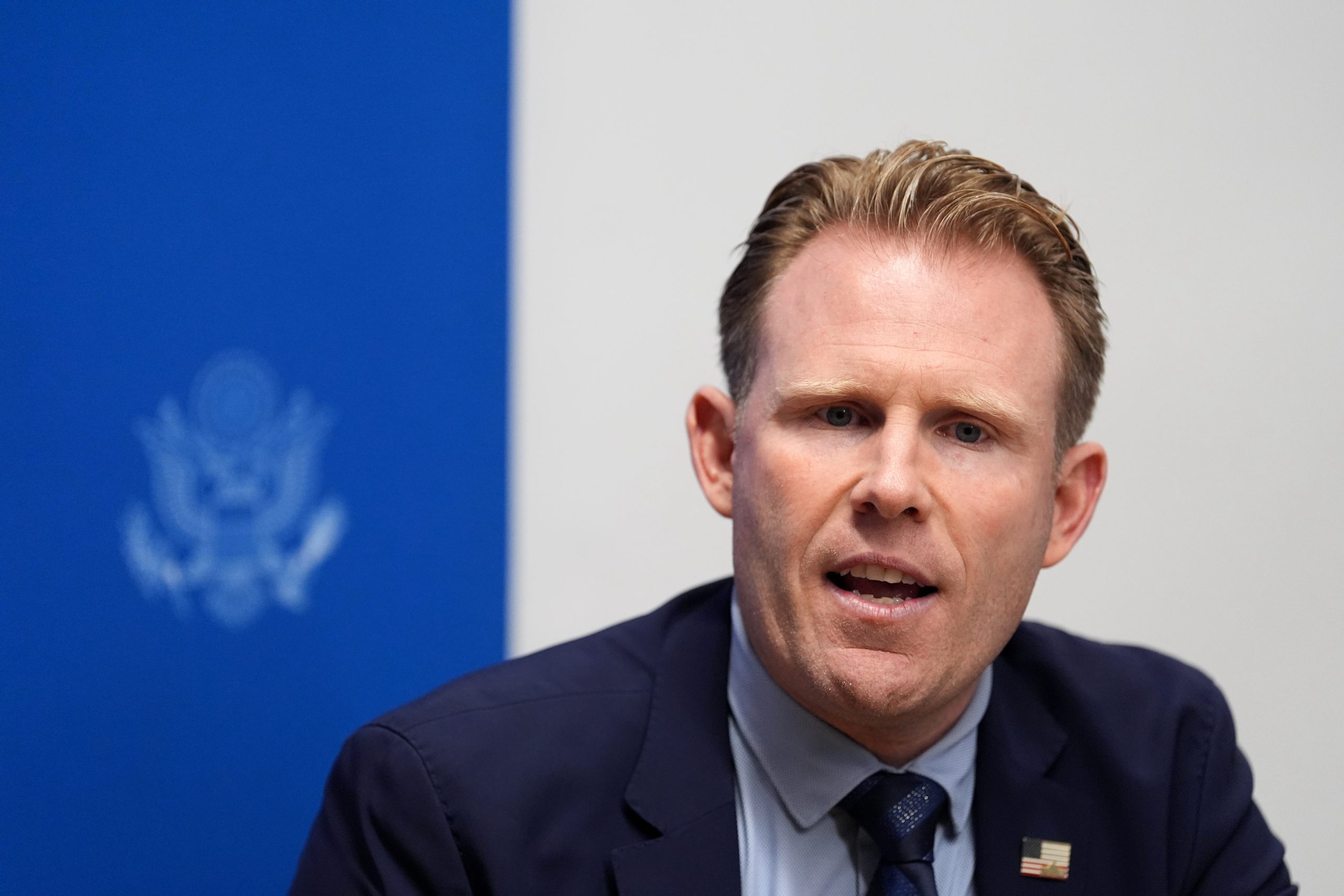

The head of FIFA’s anti-discrimination partner is calling on the international soccer body to not adopt a ban on transgender athletes at the Women’s World Cup, after the Trump administration publicly announced its intention to pressure the organization to do so last week.
Andrew Giuliani, the head of the White House World Cup Task Force, told POLITICO Thursday that getting FIFA to guarantee that “women play in the Women’s World Cup and not biological men” could represent a lynchpin issue during planning negotiations for the 2031 tournament.
If successful, the endeavor would represent a major victory for the Trump administration’s efforts to bar transgender women from competing in women’s and girls’ sports domestically and abroad. Earlier this year, the International Olympic Committee adopted a blanket ban for its female categoriesthat paralleled an earlier White House executive order.
But Piara Powar, the executive director of anti-discrimination group Fare network, warned that such a restriction would only further stigmatize transgender athletes and marginalize women with intersex characteristics.
“We think it’s important that even if a ban comes into force for the World Cup in 2031 it should not be embedded in FIFA regulations permanently,” Powar wrote in a text message to POLITICO. “FIFA should not go the way of the IOC and exclude human beings from participation in football.”
FIFA did not respond to requests for comment.
The organization currently has no centralized sex-verification regime, instead requiring each national federation to verify the eligibility of its players before submitting rosters, including investigating “any perceived deviation in secondary sex characteristics” and maintaining documentation of its findings.
The IOC’s policy, meanwhile, dictates that athletes competing in female categories undergo a one-time genetic screening.
Powar said such a ban at FIFA would impact women with medical conditions known as differences in sex development, or DSDs, which can manifest as testosterone levels outside the typical female range and having male chromosomes.
Jon Holmes, spokesperson for the advocacy group Football v Homophobia similarly warned that women with DSDs would “bear the brunt of this.”
He suggested that the administration’s efforts are largely performative — noting that “there’s no suggestion anyone is near international level,” referring to transgender female soccer players.
Payoshni Mitra, an advocate for abolishing sex testing in women’s sports, however, said in an interview Friday that it was too early to speculate about a policy that doesn’t exist, but noted that she “will be very, very surprised if suddenly they come up with a very exclusionary policy.”
Mitra said she’d hope that FIFA acts “in a way that is based on science,” adding: “If they come up with a policy, the policy will be based on science, evidence-based science, and also should take into account athlete well-being and the other conditions that concern these policies.”
FIFA has yet to formally announce the location of the 2031 tournament, for which the U.S., Mexico, Costa Rica and Jamaica have submitted the sole joint bid. Giuliani said Thursday that the organization had already told President Donald Trump that the U.S. would host the contest.
Powar pleaded with other sporting groups to consider the human price of hosting their tournaments in the U.S., despite the lucrative commercial appeal of the country.
“We would urge all sports bodies to think of the credibility of their sport and the harmful impact of accepting all U.S. conditions of hosting — it may come at the cost of excluding participants,” Powar wrote. “And in football, a sport that has always been the most open and accessible, that could be devastating.”
It’s now more than three years since this site drew attention to the curious case of Progress Scotland, the zombie “polling company” run by the SNP’s Angus Robertson that had no employees and hadn’t published any polls since October 2020, but was apparently still accepting, and soliciting, donations from subscribers, and appeared to have disposed of a rather substantial amount of money (well into six figures) without producing anything to show for it.
We followed up the next day with another article about the company’s repeated delays in producing its 2021 accounts, which finally showed up in May 2023.
Here’s what the Progress Scotland website looks like today.

And once more, a few questions spring to mind.
Its most recent accounts, published a few weeks ago, showed a dramatic drop in assets, from almost £60,000 to just over £8,000.

As the company is only required to publish “micro-accounts”, there was no explanation of where the money had gone, and the identity of the sole employee (and what they do all day) is a mystery. The micro-accounts contain a note saying “The director of the company has elected not to include a copy of the profit and loss account within the financial statements”.
Robertson’s last recorded entry in the MSP register of interests (from March 2026) said that he hadn’t done any work for the company since 2021 and expected to receive only a “final payment” of £501-£1000 for work before then.

The only other person believed to have worked for Progress Scotland, Robertson’s brother-in-law Peter Dempsie, stepped down in 2022.

So a company with no known paid staff, that’s been effectively dormant for almost six years and now doesn’t even have a website, has assets that look like this:

That is… a pretty strange trajectory, wouldn’t you say, readers? The firm’s assets have peaked four years after its last known work, and then just vanished overnight, and none of the numbers bear any relation to what it claimed about its subscriber base or any known costs of polling.
With the whereabouts of millions of pounds of money that was supposed to be used for the fight for independence – the SNP’s “ringfenced” fundraisers, the mysterious expenditure of Yes Scotland, and now Progress Scotland slipping quietly offstage – all now in some dispute, it looks more and more as though indy supporters have been taken for a very long ride to nowhere.


“Micro accounts” are also deployed by Believe In Scotland/Business For Scotland, who claim to have raised many hundreds of thousands of pounds in recent years but publish figures comprising only a tiny fraction of that. In 2024 BFS claimed a turnover of £300,000 but reserves of just £1,022 (alongside assets of £40,000) with no information about expenditure, salaries or the like. Where did it go? Wheesht for indy.
(Believe In Scotland has been listed as “dormant” for the past three years despite being the brand used on marches and rallies and in campaigning.)


The system offers a near-bottomless pit for people to hide their finances in, away from public scrutiny, for good reasons or bad.

The money comes in, and then… nobody knows.
And while we wish we had a punchy or optimistic line to end this article on, that seems to be pretty much the end of the story. There’s very little anyone can do to probe the affairs of such companies and find out exactly what happened to the vast bucketloads of cash they extracted from hopeful Yes supporters’ pockets, except that we do know none of it has effected a single step of progress towards independence. The only thing moving forward in the last decade has been certain people’s bank balances.
Not only do we not know where we’re going, but we don’t know where we’ve been, and we can’t even say what we’ve seen. This, folks, is not the road to Paradise.

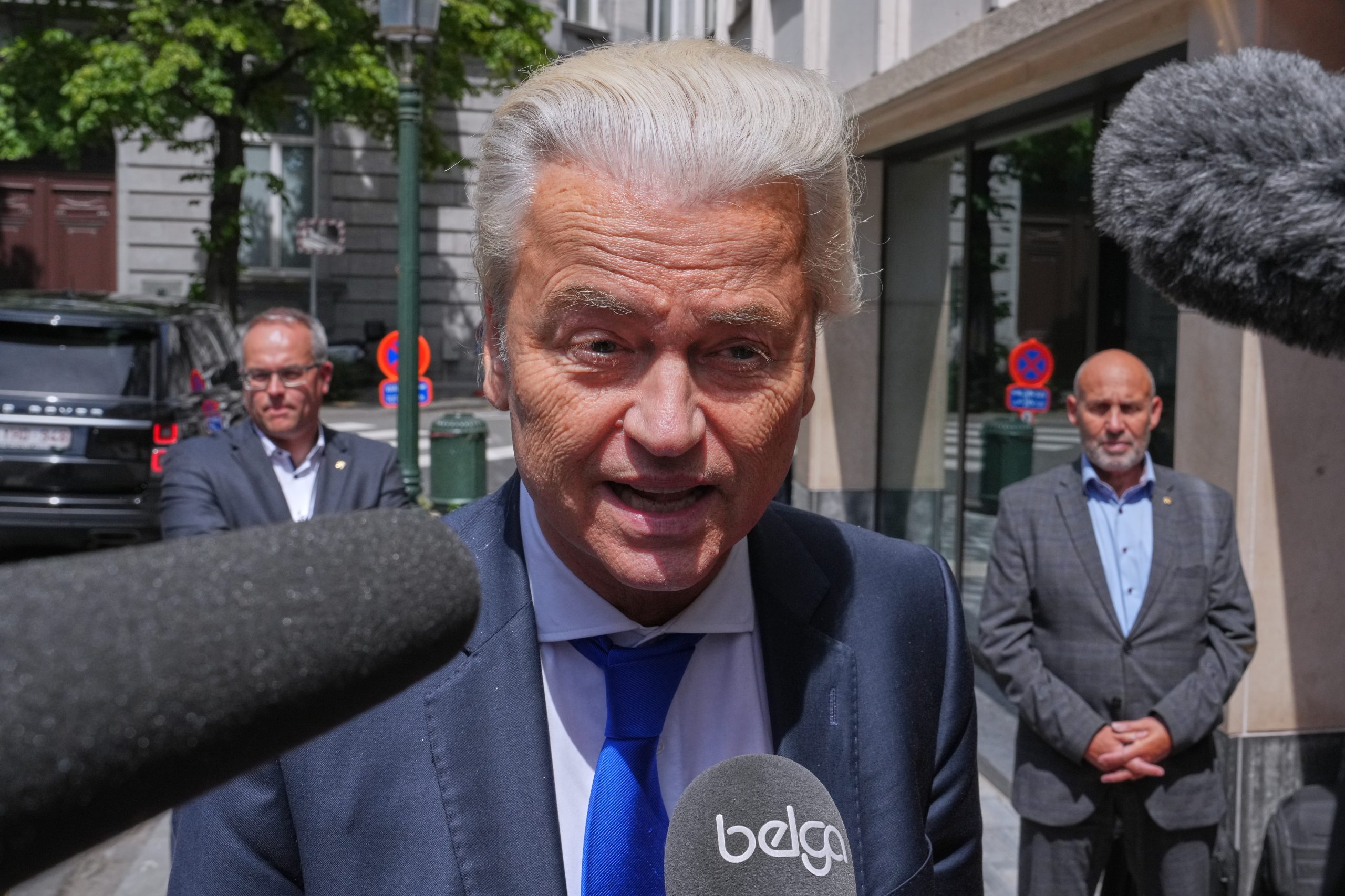

BERLIN — As the World Cup comes to a close, there’s one group of politicians who’ve remained unusually quiet about the fate of their own national teams: Europe’s far-right party leaders.
Top officials from France’s National Rally, the Alternative for Germany, England’s Reform UK and others faced complicated dynamics in deciding how to talk about the World Cup. The broad, socially acceptable form of patriotism inspired by international sporting events like the World Cup seems at first glance like an easy fit for parties whose core message includes a return to strong national pride.
But in many of the countries where these parties are growing, increasingly diverse teams with immigrant backgrounds are at odds with the way these parties think about national identity — making it tougher for them to vocally support the home team without implicitly supporting the individual players who are part of it.
“For the right, for whom national identification and identity has always been more salient than for the center and the left, soccer fandom was a natural conduit to express its passion and commitment,” said Andrei S. Markovits, a professor at the University of Michigan who studies the intersection of sports and nationalism. “This has become a tad more difficult when the players hail from multicultural backgrounds, many of which the right sees as inferior.”
(Former Spanish Prime Minister Mariano Rajoy learned the hard way how people react when someone points out those multicultural backgrounds: The center-right pol came under fire for saying ahead of Spain’s semifinal match against France that the French national team was “without Frenchmen,” a not-so-subtle dig at the African origins of many of the team’s star players.)
“It would not be good in terms of their electoral strength for [far-right parties] to be critical of these teams,” said Alan Bairner, a professor at England’s Loughborough University who has researched sports and national identity. “But the fact that they might seem a bit lukewarm is in itself a telling thing.”
That’s perhaps why criticism from far-right leaders has been directed not at their own teams, but at other teams — or at using the tournament to chime in with nationalist narratives that serve their own purposes.
Geert Wilders, leader of the Netherlands’ far-right Freedom Party, posted an image of himself in a bright-orange suit to cheer on the Dutch team in the early stages of the World Cup. It was a sharp contrast with his comments a day earlier, when he’d reposted a picture of members of the Moroccan squad praying on the field with an anti-Islam insult as the caption. (Several players of Dutch-Moroccan origin opted to play for Morocco, rather than the Netherlands this year.)
And after the Netherlands lost to Morocco in a penalty shootout late last month and post-game celebrations led to clashes with police in The Hague, Wilders — long a vocal supporter of stricter immigration controls in Europe — used the occasion to call for the deportation of all Moroccans involved in the clashes.
Reform UK’s Nigel Farage, too, used England’s semifinal match against Argentina on Wednesday to hearken back to the two countries’ 1980s-era war over the Falkland Islands: “Let’s do it all over again just like 1982,” he posted on X.
(Farage got in trouble earlier in the tournament for posting a photo of himself celebrating an England win by chugging a pint in a Three Lions jersey … only for observers to note it was a picture from the 2024 Euros.)
But in most cases, far-right leaders have swallowed their criticism of their diverse national teams and offered the basic messages of support expected of them, or in some cases, just stayed quiet.
National Rally leader Jordan Bardella, despite his past jabs at French striker Kylian Mbappé, congratulated the French team on a good run after losing to Spain earlier this week and said they “thrilled an entire nation” with their World Cup performance.
And AfD leaders Alice Weidel and Tino Chrupalla sought to downplay criticism of the German team’s diversity from within their party: Asked about one AfD state-level politician’s assertion that Germany’s national squad “has lost the quality of an authentic German national team” due to its diverse roster, both Weidel and Chrupalla were dismissive of those comments.
“If a player of an ethnic group whom you deem inferior scores goals for you, what are you going to do? Disavow him as belonging to the nation that you love?” asked Markovits. “No … you may deep down still doubt the genuine essence of his nationality, but you accept his goals and appropriate them as your own.”


The Democratic National Committee is betting the world’s biggest sporting event can help build its voter base.
The DNC is launching a nationwide voter registration effort for Sunday’s World Cup final, dispatching organizers, volunteers and campaign staff to FIFA Fan Zones, sports bars and community watch parties with the goal of registering more than 3,000 new Democratic voters.
The effort underscores how both political parties are increasingly viewing major sporting events as opportunities to reach voters — particularly young Americans who may be less likely to attend traditional political events but are gathering in large numbers around the monthlong tournament. In the case of the World Cup final, more than 80,000 people are expected to attend in person.
“From outside FIFA Fan Zones and at World Cup watch parties to bars, restaurants and parks, we’ll spend the weekend registering thousands of new Democrats and having conversations about how we win races up and down the ballot,” DNC Chair Ken Martin said in a statement.
The weekend push spans nearly two dozen states, with Democratic organizers attending events in battlegrounds including Arizona, Pennsylvania and Florida. In Arizona, Democrats plan registration efforts in Phoenix, Chandler, Tempe, Tucson and Yuma.
The campaign builds on the DNC’s broader “When We Count” initiative focused on young voters ahead of the 2026 midterms.
Unlike traditional registration drives centered on college campuses, the program deliberately targets young Americans who are already in the workforce.
About one-third of the program’s fellows are native Spanish speakers.
The party is pairing the registration effort with a four-part national training series that it says will equip more than 1,500 organizers, campaign staff and volunteers with best practices for partisan voter registration.
Professional sports leagues have increasingly embraced civic engagement around elections, and the NBA and WNBA are some of the most visible examples, using arenas as polling locations and partnering on nonpartisan voter registration drives. And conservatives have previously registered voters at NASCAR events.
“The power in sport is that people gather. It creates a sense of belonging,” said Lee Igel, a professor of global sport at New York University. “If you want to get 3,000 people registered to vote at a watch party for a sports mega-event, you’d be hard-pressed not to get closer to 30,000 people” registered.
Igel said the DNC’s initiative takes that relationship between sports and civic participation a step further.
“There’s some precedent when it comes to voting and sports,” he said. “But this picks up on a more recent trend of politicians, elected officials and the organizations they’re connected to tapping into the power of sport.”
He pointed to leaders across the political spectrum, including President Donald Trump and New York City Mayor Zohran Mamdani, as examples of politicians increasingly recognizing sports’ cultural reach.
“Sport is fun and games,” Igel said, “but the attention it attracts in communities — from eyeballs to people in person — is enormous.”
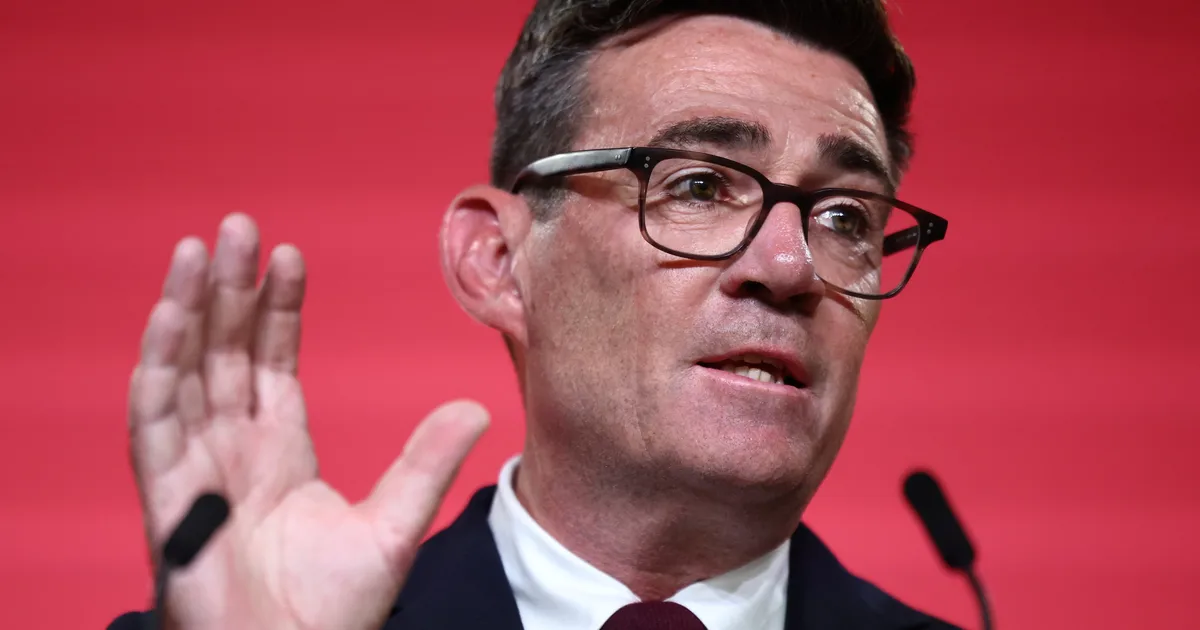
Andy Burnham’s government intends to scrap Keir Starmer’s plan to implement digital ID, a close ally to the incoming prime minister has confirmed.
Dropping the controversial scheme is part of Burnham’s bid to put his own stamp on government and distance himself from his predecessor’s most divisive policies.
Starmer announced plans for a digital ID scheme last September to crack down on illegal working, but it sparked fears about whether personal data might then be at risk.
Speaking to Laura Kuenssberg on the BBC, deputy Labour leader Lucy Powell said scrapping the programme move would allow ministers to be “laser focused on the cost of living, laser focused on rewiring the economy, rewiring the political system in this country, and clearing the decks, if you like, from of all of the other things that might distract and take away from that in terms of the focus of the government”.
Asked how much money would now be freed up for other means, Powell said: “The OBR said it would cost, I think, £1.8 billion over the over the coming years.
“That’s not an insignificant amount of money. That will obviously be re-prioritised and redistributed in different ways.
“But as I say, it’s not just about the money.
“It’s actually about the attention and the focus, so that the the whole of government machinery can work in service of the agenda and the vision that the Labour government is setting out under under Andy Burnham, and I think that is important.”
She also claimed Burnham will deliver on the Labour manifesto by being “bolder” and “clearer” about what the party stands for.
Powell confirmed there would be a “change of emphasis” on North Sea oil and gas drilling under Burnham as well.
There has been widespread speculation that the new prime minister might issue new drilling licences to boost the UK’s energy security, even though the 2024 Labour manifesto pledged not to.
Though she did not confirm what Burnham intends to do on the divisive topic, Powell said the new PM would take a “more pragmatic approach” towards North Sea drilling.
Powell said: “We’ve been really clear that the way to achieve, in the long term, energy security and lower bills is by ensuring that we do have our our own homegrown, clean, much cheaper energy.
“But we’ve been absolutely clear that North Sea gas and oil is an important part of that transition.
“It’s an important part of the mix, and I think what Andy’s talking about is taking a more pragmatic approach and working with the industry to make sure that it can contribute to that transition and to the the mix that is needed over the long term.
“So let’s see what he’s got to say about that. But I don’t think it’s a change of policy. It’s more a change of emphasis.”
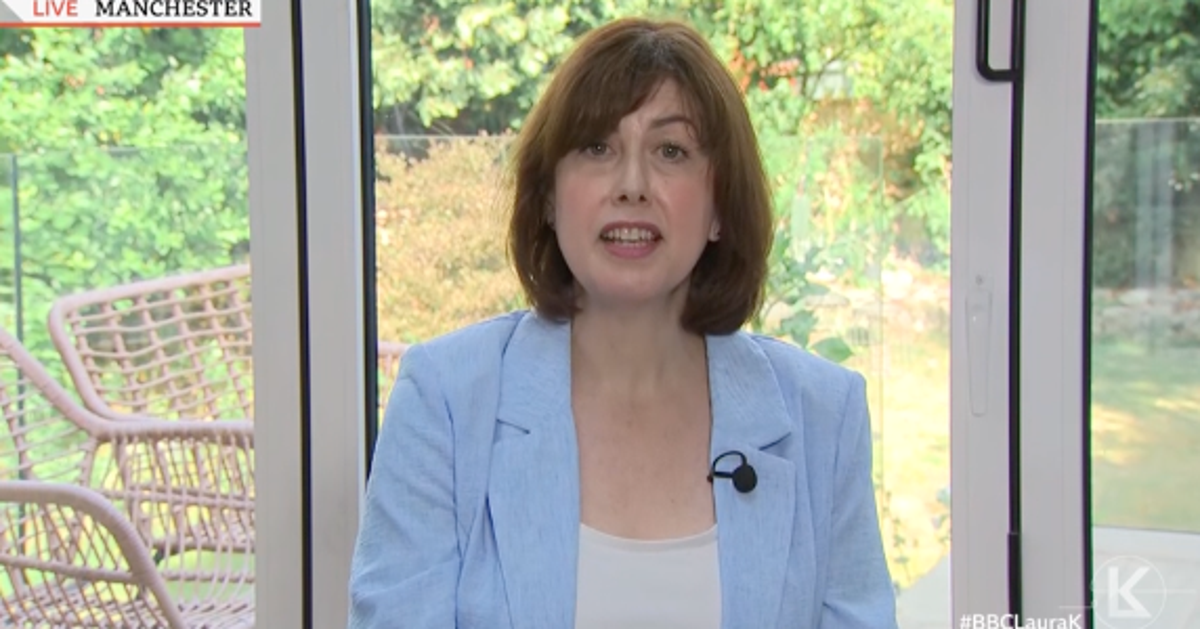
Lucy Powell has claimed speculation about Andy Burnham’s cabinet has been “horrible” in an attack on the media.
The deputy Labour leader blamed the press for reporting on the briefings coming from within the party about who might be in the incoming prime minister’s top team.
Burnham was confirmed as the leader of the Labour Party on Friday after running uncontested to replace Keir Starmer, and will be announced as prime minister on Monday.
He said last week he has not yet decided on his ministers because he thinks it would “cause complete chaos if you start half a reshuffle before you’re in position”.
His refusal to confirm who might be in his cabinet and at the heart of his government operation has led to widespread confusion – even though Burnham has pledged to make Labour more united and to stop in-fighting.
BBC presenter Laura Kuenssberg asked Powell, a close ally to Burnham, about the particularly mixed reports about whether energy secretary Ed Miliband might get a senior position.
The presenter said: “Burnham has promised to end factionalism in the Labour Party but there has been quite a lot of briefing already, a lot of briefing against Ed Miliband.
“It doesn’t bode, very well, does it, for Andy Burnham’s promise of ending all that unhappiness and in-fighting within the party?”
Powell replied: “There’s been a lot of speculation in the media about various individuals which has been really quite horrible, to be honest, and unedifying.
“I know that as political journalists, maybe you’ve not had the story of the Labour leadership crisis to write about for the last few weeks, because actually I’m really proud of the way in which the Labour Party has come together in a consensus around Andy Burnham being the next leader.”
She claimed the media is “looking for other personalities and other disagreements” to write about.
Kuenssberg hit back: “Journalists write about things they are told about.”
Jacob Rees-Mogg, former Tory minister, then criticised Powell’s response while sitting on Kuenssberg’s panel.
“Lucy Powell, an admirable person in many ways, was saying something she knows isn’t true at the end, when she said these stories are coming from disgruntled journalists because they didn’t have a big enough story to write,” he said.
Rees-Mogg added that reporters “do not make things up” and only write “what they are given by politicians”.
Listen to Commons People, the podcast that makes politics easy. Every week, Kevin Schofield and Kate Nicholson unpack the week’s biggest stories to keep you informed. Join us for straightforward analysis of what’s going on at Westminster.

Did you know there are at least three different types of vaginal orgasm?
These include a “wave”, a “volcano,” and an “avalanche” (wave seems to be the most common).
But before we get to classifying the big Os, it’s probably a good idea to work out how to get them in the first place.
Though sex experts stress that fixating on climax can make sex less enjoyable overall, the “gender orgasm gap” remains undeniable. Some research found that within heterosexual couples, men report orgasm in 95% of sexual encounters, while heterosexual women say they only “finish” about 65% of the time.
There’s even a gendered masturbation gap.
A 2024 study, conducted by the University of Essex’s psychology lecturer Dr Megan Klabunde and psychology undergraduate student Emily Dixon, may have found why some women orgasm more than others, however.
Their study suggested it could be down to “interoception”.
What’s “interoception”?
Interoception is a way of understanding your own body’s internal senses. These include being attuned to your heartbeat, hunger levels, bladder fullness, and more.
The Cleveland Clinic says that rather than being a predetermined ability, interoception is “a learned skill that you develop as you grow” – though it can be impaired by certain conditions.
The 2024 study, published in the journal Brain Sciences, asked 360 women to fill in questionnaires about their sexual satisfaction and interoception levels.
Participants were 20% more likely to orgasm through masturbation than partnered sex, and these climaxes were deemed more satisfying, too.
Women who self-reported more frequent and satisfying orgasms were also consistently likelier to describe higher levels of attunement with their body.
“Our study empirically demonstrates that women need to get out of their heads and into their bodies in order to have more frequent and satisfying orgasms,” Dr Klabunde said.
“Orgasms are more frequent and satisfying when a woman is able to focus on how her body is feeling… This study is important because most research looking at orgasms in women have focused on their dysfunction,” rather than focusing on what does work.
How can I improve my interoception?
Dr Klabunde added, “The ability for women to focus their attention on their internal bodily sensations, and trust these sensations, was… associated with increased orgasm satisfaction. Therefore, it is important for women and their partners to trust the woman’s internal bodily experiences during sexual encounters.
“This is critical for fostering orgasmic satisfaction for both solo but also especially for partnered sexual contexts.”
The Cleveland Clinic added that specialised therapy and practicing mindfulness can help, too.
They ended, “Have patience with yourself as you learn new techniques. This learned skill takes time to develop and doesn’t come naturally to everyone”.
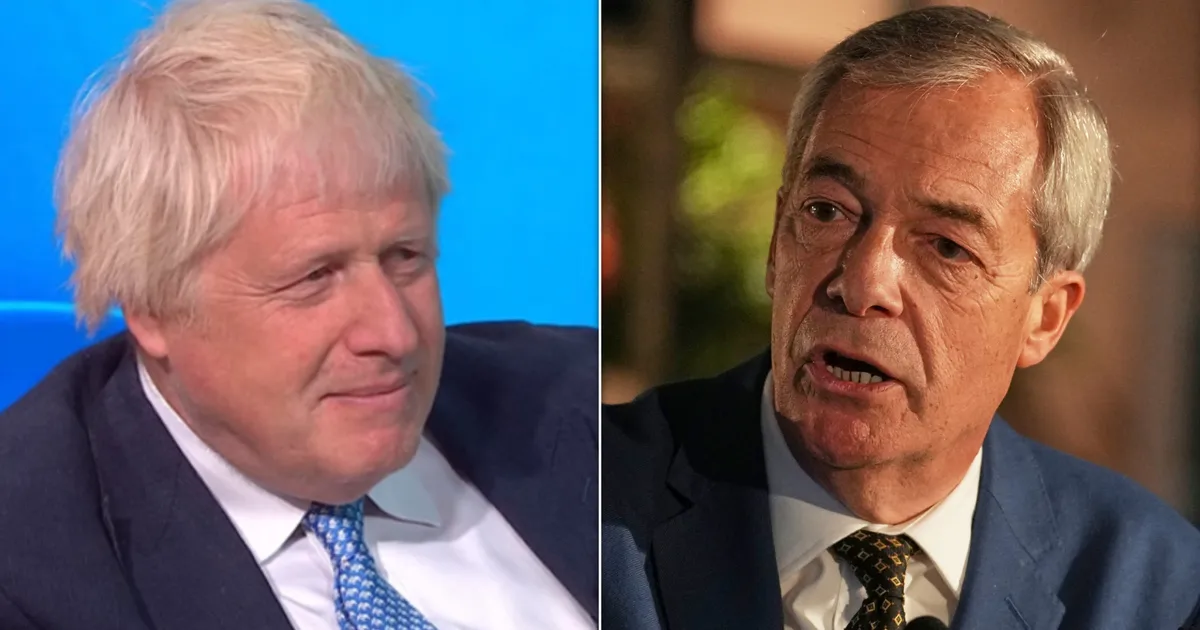
Boris Johnson has hit out at Reform UK for consistently taking credit for getting Brexit over the line.
The former Conservative prime minister, who campaigned in the 2019 general election on the promise to “get Brexit done”, claimed Nigel Farage’s party did not do a “bean” towards actually securing our EU exit.
Both Johnson and Farage were part of the Leave movement in the run-up to and shortly after EU referendum in 2016, though on different campaigns – the then-Tory MP Johnson was in Vote Leave while Farage led Leave.EU.
Farage and his party Reform UK – formerly the Brexit Party – have consistently attacked Johnson’s legacy after migration soared once the UK left the EU.
Sky News presenter Trevor Phillips asked Johnson on Sunday: “Are you at all embarrassed by the way that Reform and others are using the term ‘Boriswave’?
“Because it is true that net migration, for better or worse, has been higher as a consequence of decisions you took than any time in our history.”
Johnson said Brexit gave the UK power to “control immigration”.
He continued: “We have the power under Brexit, and under Brexit, which I secured and which those people didn’t – they didn’t even exist!”
“They did not have a single MP,” he said, referring to Reform UK. “They did not do a bean to get Brexit through the House of Commons. Not a bean.
“ And they swank around claiming to have been responsible for it.
“They did, they did nothing to deliver Brexit.
“The hard Brexit I went through the House of Commons I want to move, enables us, enables this country not only to have as few people because we want overall, but also under our laws, to decide who comes from where.”
Reform UK spokesman hit back at that criticism, telling HuffPost UK: “Boris only had his majority because we put country before party in 2019.
“Boris then broke Britain so badly that the Conservatives haven’t led a single opinion poll since.”
Listen to Commons People, the podcast that makes politics easy. Every week, Kevin Schofield and Kate Nicholson unpack the week’s biggest stories to keep you informed. Join us for straightforward analysis of what’s going on at Westminster.

spiked is funded by readers like you. Only 0.1% of regular readers currently support us. If just 1% did, we could grow our team and step up the fight for free speech and democracy.
Become a spiked supporter and enjoy unlimited, ad-free access, bonus content and exclusive events – while helping to keep independent journalism alive.

We hope you love the products we recommend! All of them were independently selected by our editors. Just so you know, HuffPost UK may collect a share of sales or other compensation from the links on this page if you decide to shop from them. Oh, and FYI — prices are accurate and items in stock as of time of publication.
From our sense of fashion, to our interiors, injecting playfulness and child-like imagination into your style is in – and it’s perhaps no wonder the trend has taken off given the impending doom of war, or the imminent threat of beyond-return climate change, that overshadows our lives.
So, if your home still feels decidedly like the third floor flat it is rather than an enchanted fairy cottage, I’ve made it my job to find 27 pieces of furniture and decor that will transform your space faster than you can say ‘bibbidi-bobbidi-boo’.
This way to floating through life.

Financial Freedom STARTS With ONE Simple Step

One of Cambridgeshire’s least-visited nature spots filled with rare wildlife

How and Where to Watch Live Stream


-
 NewsBeat3 days ago
London Mayor Sadiq Khan handed a peerage by Keir Starmer alongside 15 other Labour figures… just days before the PM leaves No10
-

 Fashion2 days ago
Weekend Open Thread – Corporette.com
-

 Politics1 day ago
The House | The City of London can help the new chancellor deliver growth in every postcode
-

 Politics4 days ago
Young campaigners urge incoming PM to act on outdoor junk food ads
-

 Crypto World4 days ago
CFTC blocks Kalshi from unwinding Michigan trades after court order
-

 Business4 days ago
Nvidia Stock Slips After Big Tuesday Rally as Huang Confirms Vera Rubin Chip Is Now in Production Today
-

 Crypto World1 day ago
Ripple Payments Joins MiCA With 14 Firms, Does It Mean Anything For XRP?
-
 Entertainment4 days ago
Disney’s Most Ambitious Failed Star Wars Attraction Is Coming to SDCC
-

 Crypto World2 days ago
Ripple wins EU-wide access as ESMA adds it to MiCA register
-

 Business3 days ago
Palantir Shares Rise After Expanded Nvidia Partnership and Fresh Analyst Upgrades Ahead of Earnings Day
-
 Crypto World2 days ago
Two July Windows Left: The CLARITY Act’s Senate Fight and What Failure Means
-

 Crypto World3 days ago
Injective Submits SEC Transfer-Agent Registration to Onchain Ownership Records
-

 Tech5 days ago
Get Your ESP32 Sunny Side Up With This Solar Dev Board
-

 News Videos5 days ago
XRP BOMBSHELL… XRP OMBOARDED FOR TRANSACTIONS!!!
-

 NewsBeat2 days ago
Registration is now open for March for Men with Kev 2026
-

 Tech5 days ago
Dark Secrets Emerge When Jailbreaking LLMs
-
 Sports4 days ago
New Cornerback Enters Vikings Trade Rumor Mill
-

 Politics2 hours ago
Democrats look to World Cup watch parties to register thousands of voters
-

 News Videos2 days ago
Money | Class 12 Economics | CBSE Board Exam 2026-27
-

 Business3 days ago
Banco Bilbao Vizcaya Argentaria, S.A. (BBVA) Discusses Global Macro Environment and Economic Outlook for Core Markets Transcript
You must be logged in to post a comment Login