

Business
Children’s tower stools recalled over potential ‘death’ risk


Check out what’s clicking on FoxBusiness.com.
More than 125,000 children’s tower stools sold on Amazon are being recalled because they can tip over or collapse, creating a “risk of serious injury and death.”
The recall covers Cosyland-branded children’s tower stools, models CS0003 and CS0092-4. The stools, sold in natural bamboo and gray finishes, stand about 35 inches tall and were sold on Amazon.com from April 2021 through November 2025 for about $70, according to a notice issued Thursday by the U.S. Consumer Product Safety Commission (CPSC).
“The recalled tower stools can collapse or tip over while in use, and a child’s torso can fit through the openings on the front and back sides, posing a risk of serious injury and death due to tip over, fall and entrapment hazards,” CPSC said.
INSTANT NOODLE RECALL ISSUED NATIONWIDE OVER POSSIBLE PEANUT CONTAMINATION

Cosyland has received 25 reports involving stability issues and falls, including eight injuries. (Consumer Product Safety Commission)
Cosyland has received 25 reports involving stability issues and falls, including eight injuries.
Injuries ranged from minor cuts and bruises to a fractured arm, according to CPSC.
Consumers are urged to stop using the stools immediately and keep them away from children until they are repaired.
PET FOOD SOLD NATIONWIDE RECALLED OVER POTENTIAL SALMONELLA RISK
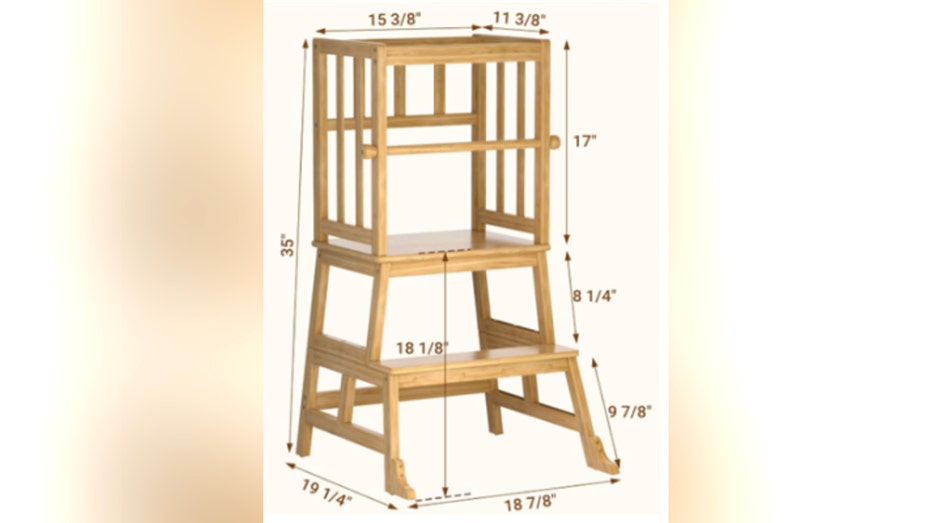
The products were sold in the colors natural bamboo and gray and measure about 35 inches tall. (Consumer Product Safety Commission)
“Contact Cosyland Official for repair parts, which include protective nets, stabilizing feet, and installation instructions. The firm will mail the repair parts directly to consumers free of charge,” CPSC said.
The recalled products were imported by China-based Cosyland Official.
BABY FORMULA RECALLED AFTER TOXIN DETECTED AS OFFICIALS WARN PARENTS

Consumers are urged to stop using the stools immediately and keep them away from children until they are repaired. (Consumer Product Safety Commission)
CLICK HERE TO GET FOX BUSINESS ON THE GO
The recall follows a similar action last month when nearly 13,000 toddler towers across three other brands were recalled after dozens of incidents and 21 injuries were reported due to the stools collapsing or tipping, according to CPSC.
Cosyland did not immediately respond to FOX Business’ request for comment.
FOX Business’ Landon Mion contributed to this report.


The regulator has proposed to delete the close-to-money (CTM) option series and the corresponding norms for option in goods in case of commodity derivatives.
“There is no concept of CTM on leading international commodity exchanges because the concept of CTM makes the exercise mechanism complex for the trade participants, and they might find it difficult to actually look into the intrinsic costs associated with the CTM options. Since OTM (out of the money) and ITM (in the money) are relatively easy to understand and execute, most of the exchanges offer these two options to market participants,” Sebi said in a discussion paper on Thursday.
The regulator said CTM option introduces uncertainty and price risk for the seller, while the challenge for buyers are that for option in goods, the number of strikers on which margin is imposed increases significantly compared to option in futures.
Sebi has suggested reducing the minimum mandatory product advisory committee (PAC) meeting frequency for non-agricultural commodities from two meetings annually to one meeting a year.

The regulator said exchanges would be permitted to advance the expiry date of running contracts during sudden disruptions such as strikes, festivals or erratic weather conditions with prior approval from the managing director of the exchange, instead of following the current requirement of giving 10 days notice and obtaining PAC approvals.

Sustained supply constraints could eventually force refiners to cut runs or pull back on crude processing-a factor analysts say may partly explain Prime Minister Narendra Modi’s latest call for fuel conservation. India’s crude stocks are currently at 91 million barrels, slipping from 107 million barrels at the end of February, according to Kpler’s inventory data, which includes strategic petroleum reserves (SPR), commercial inventories, and refinery stocks. The estimates exclude pipeline stocks.
India consumes about 5 million barrels of oil a day, allowing current inventories to cover about 18 days of demand. The current crude stocks can feed up to 60 days of national consumption, the government said Monday, without elaborating. The stock estimate includes cargoes loaded on India-bound ships, said Sujata Sharma, joint secretary in the petroleum ministry on Thursday.
 Agencies
Moderate Drawdown
It also includes pipeline stocks.
India’s crude imports averaged 4.5 million barrels per day (mbd) in the past two and a half months, declining from the pre-war level of 5 mbd, said Nikhil Dubey, lead analyst, refining, at Kpler. “However, refinery run rates have not declined proportionally with the drop in imports, suggesting that part of the supply gap is currently being met through inventory drawdowns, most likely from refinery storage tanks.”
The current drawdown in inventories is “moderate”, said Dubey.
The drawdown could have been larger had Nayara Energy not undertaken a maintenance shutdown at its 400,000 barrels-per-day refinery in Gujarat in April, according to an industry executive.
“With near-term prospects for a reopening (of the Strait of Hormuz) appearing increasingly uncertain, India cannot continue relying on inventory drawdowns indefinitely,” said Dubey.
He warned that refineries may eventually need to reduce run rates in line with lower oil supplies. “This could also explain why the Prime Minister has recently called for fuel conservation efforts,” he said.
Global oil inventories fell by 129 million barrels in March, and by a further 117 million barrels in April, according to the International Energy Agency (IEA). “With global oil inventories already drawing at a record clip, further price volatility appears likely ahead of the peak summer demand period,” the IEA warned Wednesday.
The near closure of the Strait of Hormuz has cut oil output from the Gulf by 14.4 mbd below pre-war levels. This has severely hit global oil supply, which declined by a further 1.8 mbd in April to 95.1 mbd, taking total losses since February to 12.8 mbd.
Saudi Arabia and the UAE-possessing alternative export routes-continued shipments, while Iraq and Kuwait-which depend entirely on the Strait of Hormuz -have been unable to export any volumes.

Earnings call transcript: Precigen beats Q1 2026 forecasts, stock surges

Implementing the Wan 2.7 Video API ecosystem represents a fundamental shift in how modern enterprises approach media production.
Traditional reliance on bespoke, manually edited content often creates a bottleneck for organizations attempting to maintain a consistent presence across diverse international markets. By transitioning to an engineering-led model, businesses can transform video assets into scalable components of their digital infrastructure, ensuring that high-fidelity storytelling is driven by the stability and logic of a robust API framework rather than limited creative capacity.
Leveraging the Alibaba Wan 2.7 Video API for International Market Expansion
Expanding into new territories requires more than just language translation; it demands a high volume of localized visual content that resonates with regional audiences. Utilizing a suite of specialized interfaces allows global teams to automate this process while maintaining professional standards.
Market Localization with Wan 2.7 Text-to-Video API
Generating region-specific backgrounds and cultural contexts without the logistical burden of local film crews is now a technical reality. The Wan 2.7 Text-to-Video API facilitates this by allowing designers to create bespoke visual environments through structured prompts. A critical feature of this interface is its advanced reasoning phase, often referred to as Thinking Mode. Unlike standard generative systems, the Alibaba Wan 2.7 Video API performs a logical analysis of the scene requirements before the synthesis of pixels begins. This ensures that movement, spatial relationships, and lighting remain consistent across different clips, providing the logical coherence necessary for professional business communications.
Asset Modernization via Wan 2.7 Image to Video API
The modernization of existing corporate libraries is another area where programmatic solutions offer significant ROI. By using the Wan 2.7 Image to Video API, companies can convert high-resolution product catalogs and static brand assets into cinematic promotional loops. This process is highly controlled to ensure that intricate product details, corporate color palettes, and brand-specific textures remain sharp and undistorted during the animation phase. This allows marketing teams to breathe new life into their static portfolios, creating dynamic social and web assets that maintain strict brand integrity.
Agile Marketing Revisions through Wan 2.7 Edit Video API
Responsiveness to market feedback is essential for maintaining a competitive edge. The Wan 2.7 Edit Video API allows for iterative tuning of existing assets through simple natural language instructions. Instead of a full re-production cycle, a team can issue a command to the API to update the style, lighting, or background of a corporate video to reflect a new seasonal aesthetic or local trend. This instruction-based editing functions as a visual patch, reducing the technical debt associated with video revisions and ensuring that the organization can pivot its visual narrative with minimal friction.
Subject Consistency with Wan 2.7 Reference To Video API
Protecting brand identity is often the primary concern when adopting generative technologies. The Wan 2.7 Reference To Video API addresses the challenge of subject drift through its 3×3 multi-reference grid architecture. This allows the API to ingest structural data of a specific brand mascot, proprietary hardware design, or spokesperson from multiple angles simultaneously. By locking these visual characteristics into the generative workflow, the API guarantees that the core subject remains visually identical across diverse sequences. This level of multimodal consistency is vital for maintaining a professional global presence and ensuring that programmatically generated content remains unmistakably on-brand.
Integrating the Wan AI API Suite into Enterprise Tech Stacks via Kie.ai
The success of a programmatic content strategy depends heavily on the reliability of the underlying infrastructure. Accessing these advanced generative capabilities through Kie.ai provides the professional-grade environment required for stable, high-throughput delivery across a global organization.
Scalable Infrastructure and High-Volume Delivery
Integrating the wan ai api into a corporate tech stack necessitates a gateway capable of handling significant request volumes with high stability. Kie.ai serves as this technical foundation, providing the managed infrastructure needed to manage complex task queuing and rendering processes at scale. This allows development teams to focus on the strategic application of the API rather than the maintenance of high-performance rendering nodes. For large-scale campaigns, this elastic architecture ensures that content production can expand or contract based on real-time business needs.
Optimizing Unit Economics for Global Campaigns
Managing the cost of content production is a priority for every business leader. Utilizing professional gateways like Kie.ai allows organizations to achieve predictable unit economics for their video assets. By leveraging high-concurrency access and optimized task management, teams can reduce the effective cost-per-second of high-fidelity rendering. Furthermore, best practices in JSON request optimization ensure that assets are generated with maximum efficiency, prioritizing visual fidelity where it matters most for corporate and social platforms. This data-driven approach to production makes high-end motion a sustainable part of the enterprise marketing budget.
Future-Proofing Corporate Operations with Wan AI API
Transitioning from human-centric content creation to automated, generative pipelines is a strategic move that enhances corporate agility and competitiveness. The implementation of the Alibaba Wan 2.7 Video API provides a measurable framework for scaling visual storytelling without the exponential growth in overhead typically associated with video production. As the digital economy continues to prioritize high-frequency, high-fidelity visual engagement, the ability to generate assets programmatically becomes a core competency for any growing brand. Ultimately, integrating the Wan 2.7 AI Video Generator API suite via Kie.ai empowers global businesses to meet the evolving demands of their international audiences with precision, speed, and uncompromising quality.

US stocks have advanced, lifted by a rally in tech stocks as investors absorbed generally solid economic data and watched for developments from Beijing where US President Trump was engaged in a high-stakes meeting with his Chinese counterpart Xi Jinping.

Stocks rose in Japan, South Korea and Australia, sending the broader MSCI Asia Pacific Index higher. The gauge is on course for its sixth consecutive weekly gain, the longest streak since late January. Futures contracts for the Nasdaq 100 Index were little changed after the underlying gauge closed at an all-time high.
Trading in the US was driven by AI-linked companies, with Nvidia Corp.’s six-day rally pushing its market value closer to $6 trillion. Cerebras Systems Inc. soared 68% in its debut, while Applied Materials Inc. shares advanced in after-hours trade on encouraging forecasts.
Elsewhere, Brent crude climbed 0.7% to around $106 a barrel, while the dollar held onto gains from the previous four sessions. The pound dropped Thursday after a new challenge to the leadership of UK Prime Minister Keir Starmer. Attention in Asia will also be on President Donald Trump’s China visit, with Taiwan emerging as a key issue.
In Treasuries, the two-year yield traded at 4.03% in early Asian hours Friday, its highest level since June, while the benchmark 10-year yield rose one basis point to 4.49%.
Elsewhere, Japanese 10-year government bond yields climbed on Friday as the nation’s producer prices surged to the highest since 2023.
AI optimism, strong corporate profits and a still-robust economy have sent stocks from one record to the next, masking concerns of oil prices staying above $100 a barrel and stoking inflation. A report showed US retail sales rose for a third month, offering an upbeat data point for the health of consumers contending with higher prices.“April retail sales echoed what we’ve heard across corporate conference calls for weeks now: The US consumer remains resilient despite soaring gas prices,” said Bret Kenwell at eToro. “When it comes to stocks though, tech is in the driver’s seat right now, not the consumer.”
In geopolitical news, Trump signaled China is willing to support negotiations with Iran, as he pushes for a diplomatic resolution to end the war and reopen the Strait of Hormuz. China has not explicitly confirmed.
Bets that corporate earnings will keep powering ahead have offset worries that higher energy costs could fuel inflation and weigh on consumer confidence.
First-quarter S&P 500 profits likely grew about 27% from a year ago, marking a sixth straight quarter of double-digit expansion, according to data compiled by Bloomberg Intelligence.
It’s clear that Corporate America has become very skilled at adapting to a wide range of economic environments, according to Clark Bellin at Bellwether Wealth. For investors who missed the opportunity to put new money to work during the war-driven slide in March, he said “it’s not too late.”
“Stocks are still climbing the wall of worry, and we don’t think there is euphoria in markets just yet,” Bellin noted. “In fact, there is still plenty of skepticism, which suggests this bull market has more room to run.”
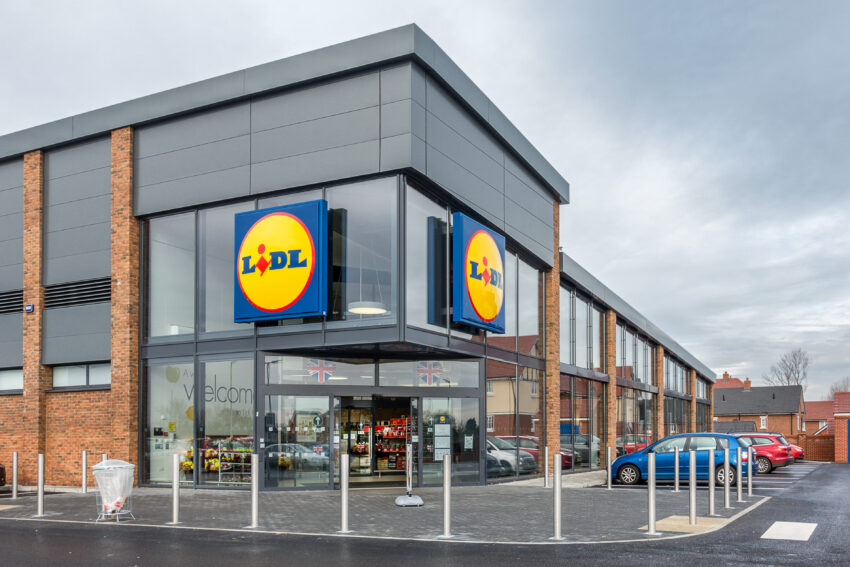
Lidl GB has thrown its weight behind one of the most ambitious surplus food redistribution trials yet seen on the British high street, drafting in the consumer food-sharing app Olio alongside its long-standing charity partner Neighbourly in a move that could keep millions of additional meals out of the bin each year.
The German-owned discounter, which has been one of the fastest-growing grocers in Britain over the past decade, will switch on the new three-way model on Friday 15 May across 20 stores in London and the north of England. If the pilot delivers as hoped, Lidl expects a nationwide rollout by the end of 2026 — a step change that would see more than 5,000 tonnes of edible surplus, equivalent to roughly 11.9 million meals, redirected annually from landfill to people who need it.
The partnership is unusual in that it knits together two of the most prominent names in British food redistribution for the first time. Neighbourly, the Bristol-based social impact platform that already manages Lidl’s “Feed it Back” scheme, will continue to coordinate the pipeline. Olio, the London-headquartered app that has built a community of more than nine million users globally around the idea of sharing rather than binning leftover food, will plug its volunteer “Food Waste Heroes” into Lidl’s evening collection slots as a second tier behind charities.
In practical terms, registered Food Waste Heroes will arrive at participating stores after trading hours to collect chilled lines, including meat, fish and poultry, as well as Lidl’s popular bakery range. The food is then offered, free of charge, to neighbours through the Olio app — extending the reach of the redistribution network into the evenings, when charity partners traditionally find collections hardest to staff.
It is also a clear signal that the discount sector has no intention of being outflanked on sustainability. Lidl has already smashed its previous food waste target, cutting waste by more than 40% ahead of schedule, and has since raised the bar to a 70% reduction by the end of FY2030. According to WRAP, the government’s waste advisory body, only around 7% of retail and manufacturing food surplus in the UK is currently redistributed, leaving a significant prize for any retailer prepared to crack the logistics.
Matt Juden, head of sustainability at Lidl GB, framed the move as the next logical step in a programme the supermarket has been refining since 2016. “At Lidl GB, we believe that no good food should ever go to waste,” he said. “While we have already made massive strides in reducing our surplus, this extension of our Neighbourly-managed programme allows us to have even more impact. It ensures that we are reaching every corner of the communities we serve, making sure edible food stays on plates and out of the bin.”
The pilot also lands at a sensitive moment for retailers who collect surplus only in the evening. Recently concerns were raised by charities about Tesco’s evening-only collection policy, and Neighbourly’s chief executive Steve Butterworth was at pains to stress that the Lidl model would not crowd out third-sector partners. “Our mission has always been to ensure as much edible surplus food as possible goes to those in our communities that need it most,” he said. “By expanding the programme to evening collections and including Olio’s Food Waste Heroes, we are providing Lidl with a robust additional redistribution layer. This isn’t about diverting food away from charities, it’s about opening up new streams of chilled and fresh produce for them, while ensuring nothing goes to waste if a charity can’t make it.”
For Olio, the deal marks another significant institutional endorsement of a model the start-up has been quietly scaling since 2015. Co-founder and chief operating officer Saasha Celestial-One described the tie-up as a chance to push more surplus into hyper-local hands. “We’re delighted to be joining forces with Neighbourly and Lidl,” she said. “We’re looking forward to working together to maximise the amount of edible surplus that can reach local communities from Lidl stores, and making sure as little food as possible goes to waste. We’re excited to see the impact of the trial, and we know our volunteers will be thrilled to have the chance to rescue Lidl food via our app.”
The political and regulatory backdrop is also shifting in favour of redistributors. Ministers have signalled growing impatience with the volume of edible food still going to waste, with Labour recently backing a £15m rescue fund aimed at supporting food redistribution organisations and helping them invest in the logistics and technology required to handle bulkier, more perishable donations. Pilots like the Lidl-Olio-Neighbourly trial slot neatly into that direction of travel, demonstrating how the private sector can plug the gap without waiting for primary legislation.
Lidl GB has now donated more than 50 million meals through Feed it Back since 2016, linking every one of its UK stores to a local good cause. With the Olio extension layered on top, the discounter is making a calculated bet that combining the efficiency of a national charity partner with the long tail of a consumer-led app can finally close the awkward last-mile gap in surplus redistribution — and turn what is still one of the grocery industry’s most stubborn problems into a marker of competitive advantage.
Business
Auction Technology Group plc 2026 Q2 – Results – Earnings Call Presentation (OTCMKTS:ATHGF) 2026-05-14


Seeking Alpha’s transcripts team is responsible for the development of all of our transcript-related projects. We currently publish thousands of quarterly earnings calls per quarter on our site and are continuing to grow and expand our coverage. The purpose of this profile is to allow us to share with our readers new transcript-related developments. Thanks, SA Transcripts Team

Abundia Global Impact director buys $11,993 in stock

Several multi-residential projects are progressing in South Perth, as development times speed up.
Sebi proposes key tweaks to streamline derivatives trading

JPMorgan Boosts Bitcoin ETF Holdings in Q1 2026 Filing

Cuba says CIA Director John Ratcliffe met with officials in Havana as tensions remain high

Manchester United reach agreement with Casemiro over contract clause amid transfer speculation

US brings back mandatory military draft registration

Steven Gerrard disagrees with Gary Neville over ‘shock’ Chelsea and Arsenal claim | Football

BREAKING: Clarity Act Senate Hearing SHOCKS The Crypto Market! Breaking Crypto News!

#yoga #yogalife #yogamusic #cryptocurrency #bollywood #funny #funny #stitch #dance #duet #love

Crypto Wallet Hunter App comment ‘apk’#software#foryou#crypto#btc#cryptocurrency#foryoupage #foryou
-
 Crypto World7 days ago
HarrisX Poll Found 52% of Registered Voters Support the CLARITY Act
-

 Fashion6 days ago
Weekend Open Thread: Marianne Dress
-

 Fashion3 days ago
Coffee Break: Travel Steam Iron
-

 Fashion4 days ago
What to Know Before Buying a Curling Wand or Curling Iron
-

 Tech5 days ago
Auto Enthusiast Carves Functional Two-Stroke Engine from Solid Metal
-

 Politics3 days ago
What to expect when you’re expecting a budget
-
 Business6 days ago
Ignore market noise, India’s long-term story intact, say D-Street bulls Ramesh Damani and Sunil Singhania
-

 Politics6 days ago
Politics Home Article | Starmer Enters The Danger Zone
-

 Tech4 days ago
GM Agrees To Pay $12.75 Million To Settle California Lawsuit Over Misuse Of Customers’ Driving Data
-

 Crypto World6 days ago
PROS explodes 48% as Upbit and Bithumb listings ignite demand
-

 Crypto World5 days ago
CZ says US crypto rivals tried to block Trump pardon
-

 Tech3 days ago
GM agrees to $12.75M California settlement over sale of drivers’ data
-

 Sports7 days ago
Bayern Munich vs PSG UEFA Champions League SF2 live match time, streaming | Football News
-

 Entertainment6 days ago
YNW Melly Denied Bond Again Ahead Of Double Murder Retrial
-
Tech7 days ago
The Most Exciting Apple Products In The Pipeline For 2026 And Beyond
-
Crypto World6 days ago
The Hantavirus Danger: Can a Potential Outbreak Spark a New Meme Coin Frenzy?
-

 Crypto World6 days ago
Kraken Parent Seeks OCC Charter, Signaling Regulated Banking Access
-

 Politics7 days ago
David Attenborough ‘Overwhelmed’ By Love Shown Ahead Of 100th Birthday
-

 Sports6 days ago
After Waka Waka, Shakira now drops first teaser for FIFA WC 2026 song | FIFA World Cup 2022
-

 Crypto World7 days ago
Here’s Why Cristiano Ronaldo and Taylor Swift Lost Millions of Followers on Instagram
You must be logged in to post a comment Login