

Business
China Fines Futu and Tiger Brokers Over Illegal Cross-Border Trading


In a significant move to uphold its strict capital controls, China’s top securities regulator, the China Securities Regulatory Commission (CSRC), has announced penalties against three major brokerages—Tiger Brokers, Futu Holdings, and Longbridge Securities. These firms have been accused of facilitating illegal cross-border securities trading for mainland Chinese clients without the necessary regulatory approvals.
Key Developments
- Regulatory Actions: The CSRC has stated that these brokerages violated the country’s securities laws and disrupted market order by enabling trades of foreign securities. As a result, the commission plans to confiscate all illegal gains from both onshore and offshore entities of these companies and impose hefty fines. Notably, Futu Holdings could face a fine of Rmb1.85 billion (approximately $271 million), while Tiger Brokers has been notified of a proposed fine of Rmb308 million, in addition to the confiscation of about Rmb103 million in illegal income.
- Background of Violations: This crackdown comes three years after the CSRC began its campaign to eliminate services that allow retail traders to circumvent capital controls. These brokerages had previously enabled mainland clients, including tech workers managing overseas equity, to access foreign securities, particularly U.S. stocks, despite lacking the proper licenses.
- Market Reactions: Following the announcement of these penalties, shares in US-listed UP Fintech, the parent company of Tiger Brokers, and Futu Holdings plummeted by over 40% in pre-market trading.
Regulatory Framework
The CSRC’s actions are part of a broader initiative to ensure the stability and order of China’s capital markets. In a joint statement with several other agencies, the regulators emphasized the importance of directing mainland investors toward legal investment channels, such as Stock Connect, Wealth Management Connect, and Qualified Domestic Institutional Investor (QDII) programmes. However, these programs have their own limitations, as they primarily allow access to Hong Kong-listed stocks and are subject to investment quotas.
Company Responses
In light of the regulatory scrutiny, both Futu and Tiger Brokers have committed to compliance with the new regulations. Futu Holdings has pointed out that clients in mainland China represent only 13% of its total asset-holding clientele, indicating a strategic focus on maintaining operations while adhering to regulatory requirements.
The CSRC’s decisive actions reflect China’s ongoing efforts to tighten control over its securities market and prevent illegal trading practices. As the regulatory landscape evolves, it remains crucial for both investors and brokerage firms to navigate these changes carefully, ensuring compliance while seeking legitimate avenues for investment.
Other People are Reading



I focus on investment ideas about companies that pay a (healthy) dividend and have a clear potential for capital appreciation. I like to find good businesses which reward shareholders. The shares of the company should be for a temporary reason undervalued in relation to its fundamentals, peers and/or historical levels. Technically and fundamentally there needs to be high odds for capital appreciation preferably by foreseeable catalysts. These elements provide a simple filter to invest in companies that reward shareholders in two ways. I often cover HVAC related stocks. That’s the industry I was professionally involved in before turning into a full-time private investor.
Analyst’s Disclosure: I/we have a beneficial long position in the shares of APC either through stock ownership, options, or other derivatives. I wrote this article myself, and it expresses my own opinions. I am not receiving compensation for it (other than from Seeking Alpha). I have no business relationship with any company whose stock is mentioned in this article.
Seeking Alpha’s Disclosure: Past performance is no guarantee of future results. No recommendation or advice is being given as to whether any investment is suitable for a particular investor. Any views or opinions expressed above may not reflect those of Seeking Alpha as a whole. Seeking Alpha is not a licensed securities dealer, broker or US investment adviser or investment bank. Our analysts are third party authors that include both professional investors and individual investors who may not be licensed or certified by any institute or regulatory body.

Caroline Bentham, 37, who has lived with her mother Mary in Yorkshire for nearly seven years, says the experience has been really positive – although she “never imagined this would be me in my 30s”.
She split from her partner in 2019 and was only supposed to live with her mum for six to 12 months while she started her PhD. But then the pandemic hit, along with various other life events, and she says it “kept making sense” to stay.
The transition to living together again was a “real challenge” at first, she says, as her mum struggled to give up control in areas like the kitchen. They also had “lots of arguments” as they worked out “how to be around each other”.
“It might sound cliché but we had to learn a new way of communicating,” she says.
One of the biggest benefits of living with her mother is the emotional support they give each other, Caroline says. But she admits the arrangement is sometimes not great for her self-esteem and there is “definitely a stigma about living with parents”.
Tips for adults who live with their parents
-
Agree practical expectations around finances, chores, visitors, quiet times and shared spaces
-
Recognise that living at home does not mean reverting to dependence and contribute where you can, financially and/or in terms of housework
-
Don’t assume old family roles still apply: what worked when you were 16 is unlikely to work when you are 36
Source: Relate
Christodoulidi says one of the overlooked advantages of living as an adult with a parent is the chance to know each other differently.
“Parents often begin to see their child as another adult, while adult children gain a fuller understanding of their parents as people rather than simply as parents.”
She also says society needs to ditch the stereotype that adult children who still live at home have “failed to launch”.
Natasha says it helps to remind herself that living with her family is a “temporary” situation that will “lead to a better outcome in the future”.
The extra time she gets to spend with her parents is a “blessing”, she adds.
“One day I’ll move out, get married and have my own family, and I won’t have as much time with them,” she says.
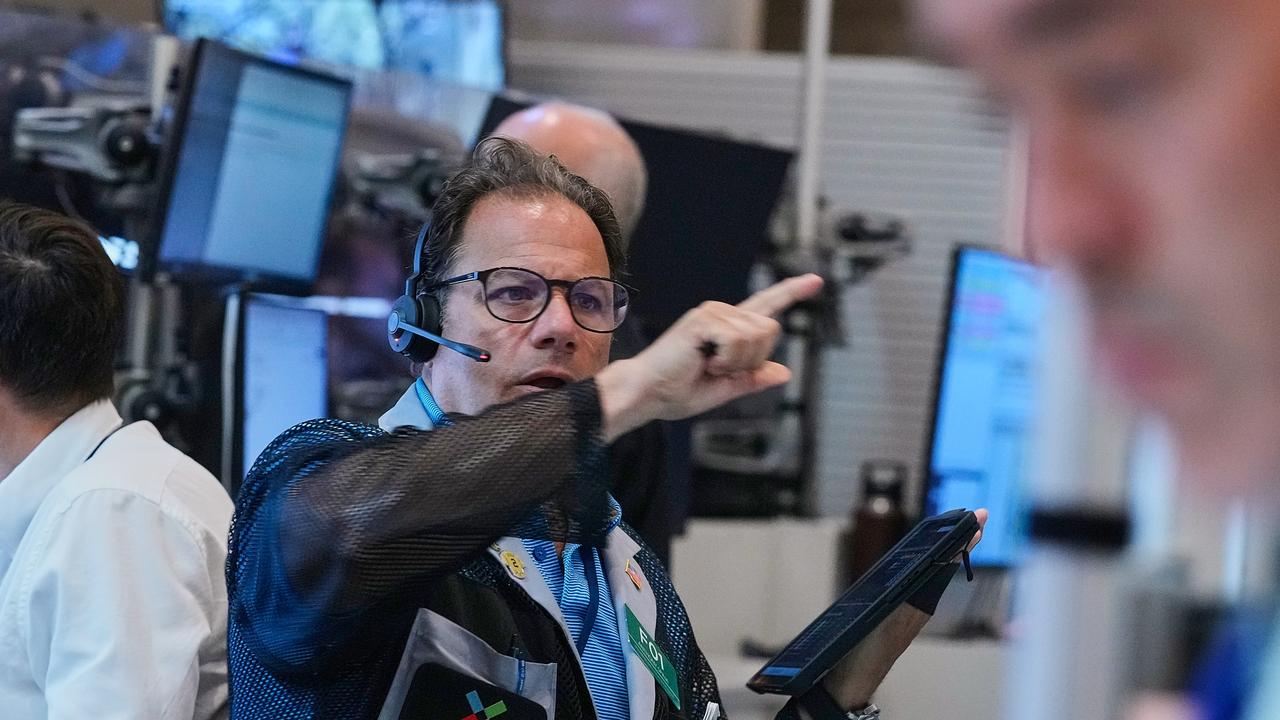
The Nasdaq has closed lower, dragged down by losses in big tech shares, while the S&P closed near flat and the Dow closed higher as investors digested new economic data.

China auto demand remains weak but recovery window is approaching – Morgan Stanley

A gauge of Asian equities was down 1.1%, while South Korea’s tech-heavy Kospi dropped over 3%. US futures were little changed. The moves followed a choppy session on Wall Street, marked by heightened volatility in the tech sector. The S&P 500 ended flat, failing to sustain an early rally fueled by Micron Technology Inc., as Apple Inc.’s shares slid 6.1%. The iPhone maker led the Magnificent Seven lower after it raised prices on Macs, iPads and home devices.
Oil was in focus again after a projectile strike on a vessel in the Strait of Hormuz saw Brent crude climb on Thursday, snapping a three-day decline. Prices edged lower in early Asia trading. Meanwhile, bond traders priced in slightly lower expectations for a Federal Reserve interest-rate hike in the months ahead after the central bank’s favored inflation gauge rose less than estimated.
The equity market’s recent swings highlight investors’ growing unease over whether the tech giants that have powered the rally for much of the past two years can continue to justify the high expectations embedded in share prices. Concerns over AI spending have driven sharp moves in chip stocks this week, and while those worries eased after Micron’s results, volatility in the sector remains high.
“A few cracks have developed in the tech sector recently,” said Matt Maley at Miller Tabak. “Therefore, we believe it will be extremely important to watch how these hyperscalers trade going forward because if they continue to decline, it’s going to make it very tough for the rest of the market to advance.”

The Nasdaq 100 Index finished up 0.8% on Thursday, after having climbed as much as 2.1%. Besides Micron’s rally following its blockbuster results and outlook, Qualcomm Inc. shares also jumped after it forecast annual sales of more than $15 billion from artificial intelligence components in data centers by fiscal 2029.
That optimism was missing in early Asian trading, with shares of SK Hynix Inc., Samsung Electronics Co. and Kioxia Holdings Corp. among the biggest drags on the regional benchmark. Elsewhere, OpenAI is leaning toward holding off on an initial public offering until 2027, the New York Times reported, citing three people involved in the company’s deliberations.Meanwhile, the Fed’s preferred inflation gauge, the personal consumption expenditures price index, rose 0.4% in May, below economists’ median estimate for a 0.5% increase. The annual rate accelerated to 4.1%, well above the Fed’s 2% target. A separate report showed the US economy grew at an annualized 2.1% pace in the first quarter, faster than previously estimated.
Interest-rate swaps linked to future Fed rate decisions showed a drop in wagers on a hike this year, pricing in about 34 basis points of tightening by the December policy meeting versus some 36 basis points at Wednesday’s close. The chance of a rate increase next month dwindled to about one-in-three.
Federal Reserve Bank of New York President John Williams said interest rates are well positioned to bring inflation back toward the central bank’s target.
“The worst of inflation and consumer angst may be mostly behind us,” said Brian Jacobsen at Annex Wealth Management. “As long as gasoline prices trend lower, inflation expectations will likely follow suit.”
In commodities, gold was steady after rebounding above $4,000 an ounce in the previous session as traders tempered expectations for interest-rate hikes.

Fresh allegations of sexual harassment at mining sites highlight the need to stamp out a “toxic culture of cover-up” in the industry, a state politician says.

The early tender results represent about 45% of the $2.1 billion outstanding across four bond series maturing between 2030 and 2033. Debt capital market executives said it was a good response from investors because a large portion of them are comfortable holding the bonds due to their attractive yields and Vedanta’s improving refinancing profile.

It also laid down a detailed framework for trading in “when-issued” securities, which are bonds that have been announced by the government but have not yet been issued.
Market participants are required to send their inputs by July 17.
The Reserve Bank of India has unveiled draft rules allowing participants to take short positions in government securities, aiming to boost market liquidity and price discovery. A detailed framework for trading “when-issued” securities, bonds yet to be officially released, is also introduced. These measures, with specific limits for banks, primary dealers, and others, are open for public feedback until July 17.
Short positions of 2% of the outstanding stock or ₹500 crore, whichever is higher, will be allowed for liquid government securities.
Banks and standalone primary dealers (PD) will be allowed to take both long and short positions of up to 25% of the notified auction amount, while all other eligible participants will be subject to a 10% limit, the draft proposal said.
“This would establish a market-clearing price before the bond even enters circulation,” a bond trader at a PD said. “More active when-issued trading could also reduce uncertainty around auction outcomes and improve secondary market liquidity once the bonds begin trading.”
For other, illiquid government bonds, the limit for short positions has been set at 1% of the outstanding stock or ₹250 crore, whichever is higher, the draft said.Short selling allows traders to sell bonds they do not currently own, with the expectation of buying them back later at a lower price.
The RBI has stipulated that such positions must be covered within three months through outright purchases in the secondary market, primary auctions or the when-issued market.
Clearer limits on position and operational guidelines could improve liquidity and price discovery in government securities, by allowing traders and primary dealers to express views on interest rates more efficiently, market participants said.
The draft directions also lay down a detailed framework for trading in “when-issued” securities. RBI announces bonds on a Monday, while the auction is held on a Friday.

Advance Auto Parts: Turnaround Is Improving, But Still Too Early To Buy

Qualcomm QCOM 4.02%increase; up pointing triangle agreed to acquire the AI software company Modular for about $3.9 billion, in a bid to make artificial intelligence faster and cheaper for its customers.
The semiconductor company said Wednesday that, as consideration for the acquisition, Qualcomm expects to issue up to 19.2 million shares of its common stock to equity owners of Modular. That values the deal at around $3.92 billion, based on Qualcomm’s closing price of $204.13 on Tuesday.
Copyright ©2026 Dow Jones & Company, Inc. All Rights Reserved. 87990cbe856818d5eddac44c7b1cdeb8

Today’s NYT Connections: Sports Edition Hints, Answers for June 26 #641

Morrisons recalls popular pasta product over undeclared allergen – urgent warning

ARKO Petroleum Stock: A Promise Of Double-Digit Yield From Fuel Distribution (NASDAQ:APC)


-

 Fashion6 days ago
Weekend Open Thread: Miami – Corporette.com
-

 Entertainment5 days ago
Renter of Home in Anne Heche Crash Denies Settlement With Son
-
 Sports2 days ago
Two goals and an assist by sheer aura: Cristiano Ronaldo just entered the World Cup chat
-

 Tech4 days ago
Microsoft accidentally kills epic Outlook email threads
-

 Business5 days ago
Soccer-U.S. defends Iran World Cup travel restrictions, says discussions ongoing
-

 Politics6 days ago
Andy Burnham and the meaning of Makerfield
-

 NewsBeat6 days ago
Keir Starmer Allies Question His Chances For No 10
-

 Tech6 hours ago
A Look At A Gaggle Of Transputer Boards
-
Crypto World2 days ago
Bitcoin (BTC) Dips Below $62K, Ethereum (ETH) Plunges 6% Daily: Market Watch
-

 Crypto World2 days ago
Securitize Wraps Roubini's SEC-Registered ETF as Dubai VARA Digital Security
-
Business2 days ago
Entergy settles forward sale agreements, raises $672 million in cash proceeds
-
 Business6 days ago
Wall Street Week Ahead: Investors see Micron earnings as pulse check of AI rally momentum
-
 Crypto World6 days ago
Can Charles Hoskinson Really Rescue Cardano?
-

 Crypto World6 days ago
HIVE shares jump as $220M AI deal speeds Bitcoin mining pivot
-

 Crypto World6 days ago
Jake Chervinsky accuses CME of protecting derivatives monopoly
-

 Entertainment6 days ago
Jose Alvarado Wants Taylor Swift at More Knicks Games
-
 Tech5 days ago
Signal’s Meredith Whittaker says AI chatbots ‘are not your friends’ and calls Copilot agents a backdoor
-

 Sports13 hours ago
India vs Bangladesh LIVE Score, Women’s T20 World Cup: Bangladesh Opt To Bat; India Enter ‘Do-Or-Die’ Stage As Semi-Final Race Heats Up
-

 Tech3 days ago
Nearly 7,000 fake Amazon domains registered ahead of Prime Day 2026, researchers warn
-

 Business5 days ago
MHP SE 2026 Q1 – Results – Earnings Call Presentation (OTCMKTS:MHPSY) 2026-06-20
You must be logged in to post a comment Login