
Business
Choosing nutrients for effective weight management

KANSAS CITY — Quick-fix diets may work for a few weeks but soon fade in effectiveness. Consumers could choose another path on their weight management journeys: Make lifestyle changes and find eating patterns that are more sustainable.
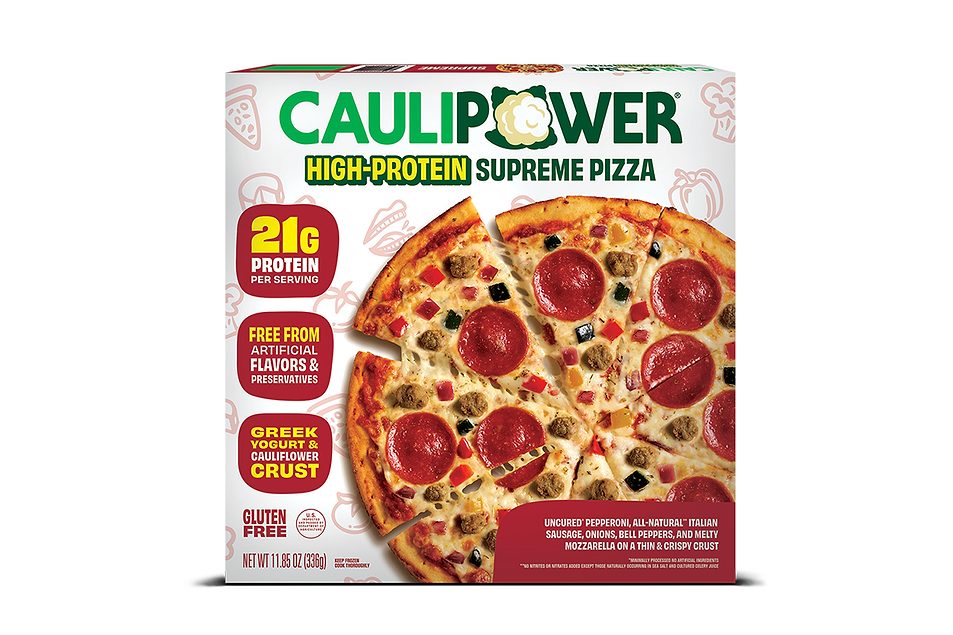
Food companies may interest those consumers by offering nutrient-dense products and promoting the attributes on packages.
Lisa Jones, a registered dietitian and contributor to US News and World Report, said she recommends plant-forward diets such as the Mediterranean diet.
“Those tend to work really well long term because they are not overly restrictive,” she said.
Such diets tend to emphasize fruit and vegetables, whole grains, beans, healthy fats and good sources of protein like fish and chicken, she said.
“For long-term weight management, I think we need to move past the idea that there is one magical diet,” said Thom King, chief innovations officer at Icon Foods and based in Portland, Ore. “The evidence increasingly points toward sustainable dietary patterns rather than short-term restriction. Mediterranean-style eating is probably the gold standard here: plenty of vegetables, legumes, whole foods, healthy fats, adequate protein and fiber, with room for enjoyment.”
DASH-style diets and well-designed plant-forward diets may accomplish the same goals, he said, adding that keto diets are effective when they emphasize nutrient-dense foods, fiber and high-quality fats.
Protein and fiber improve satiety and nutritional density while “thoughtful” sugar reduction reduces caloric and glycemic load without consumers having to give up the foods they enjoy, he said.
“That matters because the best diet on paper is worthless if someone abandons it in six weeks,” King said.
Walnuts are a good fit in the Mediterranean diet as they contain 2.5 grams of monounsaturated fat, 13 grams of polyunsaturated fat, 4 grams of protein and 2 grams of fiber in a 1-oz serving, said Jennifer Olmstead, senior director of US marketing and communications for the California Walnut Board and Commission in Folsom, Calif.
“Walnuts are a whole food ingredient that can contribute to a filling meal,” she said. “Their applications range from salad toppings to charcuterie board accoutrements, along with baking and snack inclusions that create satiety upon consumption. These can increase the satisfaction of indulgences and sweet treats and justify the calories with the sensation of feeling full.”
‘Nutritional triage’
Food manufacturers may reach consumers managing their weight through front-of-pack promotions, the Nutrition Facts Panel and the ingredients list.
King said consumers examine products on the shelf through a “three-second nutritional triage.” On the front of the package, they look for signals such as high in protein, good source of fiber, low or no added sugar, lower carbohydrate levels, and calories per serving. On the back of the package, consumers check the numbers on the Nutrition Facts Panel to see if they support the marketing.
“For weight management specifically, I think the conversation is shifting from simply asking, ‘How few calories does this have?’ toward ‘What am I getting for those calories?’” King said. “Protein and fiber provide a much more compelling nutritional value proposition than empty calories, particularly as consumers become more focused on satiety, maintaining lean mass and controlling added sugar.”
He noted that consumers “play detective” when analyzing the ingredient list, searching for recognizable protein sources, meaningful fibers, and reduced added sugars and sweetening systems that deliver the experience of sugar.

Consumers may “play detective” when analyzing the ingredient list.
| Source: Sosland Publishing Co.“That is where food formulators have a tremendous opportunity: Don’t just formulate a product that can make an attractive front-of-package claim,” King said. “Build the nutritional architecture so that when consumers turn the package around, the back of the package validates the promise on the front.”
Jones said consumers tend to make purchasing decisions based on the front of the package, but she encourages them to turn the package over to find details such as serving size, calories, protein, fiber, added sugar and saturated fat.
“That’s what gives you the bigger picture,” she said.
Consumers should look for recognizable nutrient-dense items at the top of the ingredient list, Jones said. If a product has 37 ingredients, and a consumer does not understand the first 10 ingredients, that’s a red flag. In processed cereal, consumers should be wary if sugar is among the first 10 ingredients.
A different GLP-1 market
Much food marketing has focused on attracting users of GLP-1 medications, but what about consumers who cannot take those medications, either because of side effects or financial constraints?
“For people that can’t afford or don’t have access to it, I really focus on foods that can help with fullness and really make it easier to manage your portions and overall calorie intake,” Jones said.
James Stone, vice president of global marketing and insights at Glanbia, pointed to a poll published in 2025 by the Kaiser Family Foundation showing that 56% of current or former GLP-1 users said the drugs were difficult to afford. Fourteen percent said they no longer took the drugs because of cost.
Food and supplements may stimulate the body’s natural production of GLP-1, Stone said, mentioning quality proteins like eggs, whey protein, chicken and fish; soluble fiber like chia seeds; insoluble fiber like psyllium; fermented food such as Greek yogurt, kefir, cabbage and cottage cheese; and foods rich in omega-3 fatty acids like olive oil, avocados, salmon and flax seeds.
“On the GLP-1 front, new product launches over the past two years have favored some type of GLP-1 claim, which can be limiting unless used as a reaffirmation versus being the primary claim,” Stone said. “GLP-1 users actually prefer the package to highlight the nutrient density or absence of negative aspects of the product they are choosing. For a desired broader claim, a message emphasizing weight management support is helpful.”
Jones, however, warned against comparing food or ingredients to having the same effect on the body’s GLP-1 as the medications.
“They are basically suggesting that the food can duplicate the effects of these medications, but they can’t,” she said.
King provided similar caution.
“For consumers who cannot afford or don’t have access to GLP-1 medications, food becomes an incredibly important tool, but we should be careful not to market food as nature’s Ozempic,” he said. “No ingredient reproduces the pharmacology of these medications. What we can do is build an eating pattern around some of the same outcomes consumers are seeking: greater satiety, better portion control, preservation of lean mass and improved metabolic health.”


Operator
Good morning, ladies and gentlemen. Welcome to the video conference of Yduqs on the merger between Yduqs and Afya. This video conference is being recorded, and the replay can be accessed at the company’s website at www.yduqs.com.br. The presentation with the slides is available for download also on the company’s website.
This presentation has been prepared in connection with the business combination, the transaction involving Yduqs and Afya, and may contain statements and information that express forward-looking statements, assumptions or projections about future results or events. Such information includes outlook for combined business, operating and financial results as well as statements regarding the growth prospects of both companies and the combined entity resulting from the transaction.
The combined company information considers the 2Q ’26 metrics of both companies as available in their financial statements. These forward-looking statements and information do not constitute a guarantee of future performance because they are subject to risks, uncertainties and factors related to the operations and business environment of these companies. They depend substantially on external factors such as market conditions, the performance of the Brazilian company, macroeconomic variables, the industry or the companies operate in international markets, and all of them are subject to change without notice.

Indigenous workers in white collar jobs are paid on average 20 per cent less than their non-Indigenous colleagues, according to a new report.

Trump-Xi summit in Washington begins with great fanfare but low expectations

Palantir: Open Weight Bet Could Be Behind The Recent Rerate (Rating Downgrade)
Business
Snapdeal parent AceVector raises Rs 189 crore from anchors; Negen, Singularity among top investors

Turnaround Opportunities Fund was allotted 62.49 lakh shares worth about Rs 20 crore. Alchemy Long Term Ventures Fund Series 3, Mavira Growth Opportunities Fund and LC Pharos Multi Strategy Fund VCC were each allotted 46.87 lakh shares worth about Rs 15 crore.
Other investors in the anchor book include Helios Mid Cap Fund, Helios Small Cap Fund, Ashika Global Finance, Taurus Ethical Fund, Emerge Capital Opportunities Scheme, Saint Capital Fund, ASAS Global Fund Incorporated VCC Sub Fund and TMF Holdings.
Also Read | Snapdeal IPO: GMP, price band among 10 things to know about AceVector public offer
Out of the total anchor allocation, 93.74 lakh shares, or 15.87% of the anchor investor portion, were allotted to two domestic mutual funds through three schemes. These were Helios Mid Cap Fund, Helios Small Cap Fund and Taurus Ethical Fund. The mutual fund allocation was worth about Rs 30 crore.

The company reported no applications from insurance companies and pension funds, so no allocations were made to them.
AceVector’s IPO will open on Friday, September 25, and close on Tuesday, September 29. The anchor investor bidding opened and closed on September 24.Also Read | Missed the NSE IPO? Here are 5 of the largest issues in the pipeline to keep on your radar
The price band has been fixed at Rs 30-32 per share. Investors can bid for a minimum of 468 shares and in multiples of 468 shares thereafter. At the upper price band, the minimum retail application works out to Rs 14,976.
The public issue comprises a fresh issue of Rs 287 crore and an offer for sale of up to 4,15,62,500 shares by existing shareholders. At the upper price band, the OFS is worth about Rs 133 crore, taking the total issue size to around Rs 420 crore.
The fresh issue proceeds will be used for marketing and business promotion expenses of the company’s marketplace business, technology infrastructure costs, inorganic growth through acquisitions and general corporate purposes.
(Disclaimer: Recommendations, suggestions, views and opinions given by the experts are their own. These do not represent the views of The Economic Times)

Jefferies reiterates Sarepta Therapeutics stock rating on pipeline potential
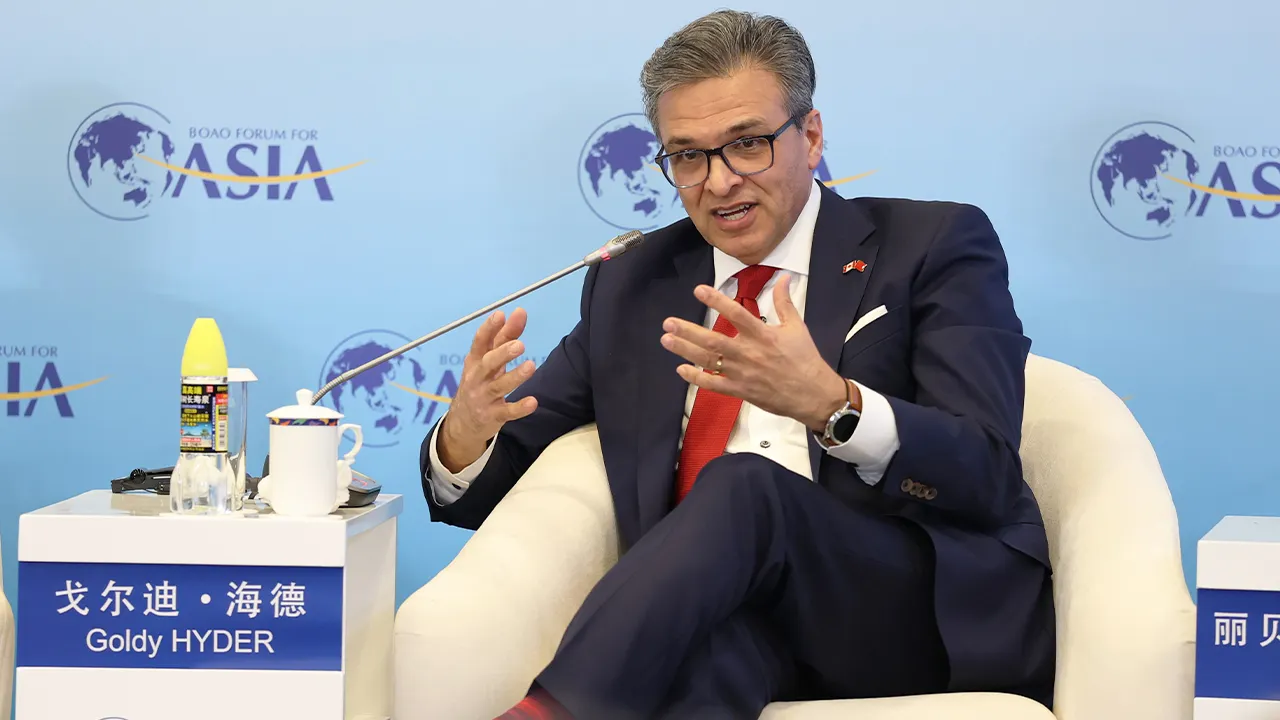
Business Council of Canada CEO Goldy Hyder warns trade uncertainty could chill investment as Canada diversifies, while arguing the U.S., Canada and Mexico should strengthen their economic ties.
Canada’s push to expand its economic relationships around the world should not be mistaken for a retreat from the U.S., a leading Canadian business voice told FOX Business, warning that continued uncertainty over North American trade risks creating a “capital chill” that could weigh on investment.
Goldy Hyder, president and CEO of the Business Council of Canada, said Canadian companies continue to view the U.S. as their most important market even as Prime Minister Mark Carney’s government accelerates efforts to attract investment and expand trade with Europe and other markets.
“Even a kid with a lemonade stand would know, it’s not good for business to just have one customer,” Hyder said, describing Canada’s approach as a “U.S. Plus” strategy.
“The United States is and will be our most important trading partner,” he added.
The push comes amid a sharp deterioration in the trading relationship between the longtime allies. Nearly 68% of Canadian exports have gone to the U.S. this year, with roughly 80% of those shipments moving duty-free under exemptions provided by the U.S.-Mexico-Canada Agreement, according to Canadian and U.S. government data cited by Reuters.
WHAT ARE THE MAIN STICKING POINTS IN THE TRUMP ADMIN’S TRADE NEGOTIATIONS WITH CANADA, MEXICO?
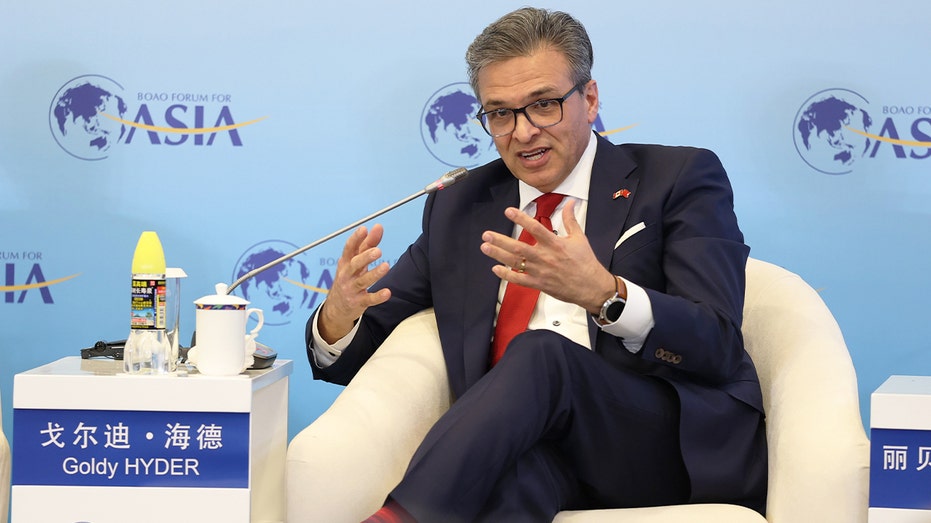
Goldy Hyder, president and chief executive officer of Business Council of Canada, speaks at a panel discussion themed on “Revitalizing APEC: towards the Vision of an Asia-Pacific Community” during the Boao Forum for Asia BFA Annual Conference 2026 in (Wang Yiliang/Xinhua via Getty Images)
Washington and Ottawa have exchanged new trade restrictions in recent weeks after negotiations broke down, adding uncertainty over the future of USMCA. The agreement remains in force, although the U.S. declined to renew it in its current form during a July review and has continued negotiations with its North American partners.
“Business does not welcome uncertainty, it shuns uncertainty, and there’s too much of that,” Hyder said.
EU OPENS DOOR TO UNPRECEDENTED ‘ASSOCIATE MEMBER’ STATUS FOR CANADA AMID US TRADE SPAT
“The key here is the uncertainty can create capital chill, it will create hesitancy because we just can’t be sure the environment in which we’re dealing.”
That concern is shared by the U.S. Chamber of Commerce, which is urging all three governments to quickly resolve the issue.

Canada’s Prime Minister Mark Carney (L) during the European Commission President’s annual State of the Union address at a plenary session of the European Parliament in Strasbourg, eastern France on Sept. 16, 2026. (Jean-Christophe VERHAEGEN / AFP via Getty Images)
“For businesses and investors, it is essential to restore certainty to a North American economic partnership on which 13 million U.S. jobs depend,” Neil Herrington, the Chamber’s senior vice president for the Americas, told FOX Business.
Herrington said the Chamber wants the process concluded in a way that eliminates tariffs and broader trade restrictions while ensuring the relationship “remains trilateral.”
Carney, meanwhile, is attempting to position Canada as a more diversified destination for global capital. His government has set a goal of helping catalyze 1 trillion Canadian dollars in investment over five years, with a focus on sectors including energy, mining, technology and infrastructure.

President Donald Trump meets with Canadian Prime Minister Mark Carney in the Oval Office at the White House on May 6, 2025, in Washington, DC. (Anna Moneymaker/Getty Images)
Canada has also pursued deeper ties with Europe. The EU is Canada’s second-largest trading partner after the U.S., accounting for $178 billion in total trade last year, Global Affairs Canada spokesperson Renelle Arsenault told FOX Business.
Arsenault said Ottawa remains committed to a “fair and stable economic relationship” with the U.S. while simultaneously diversifying its trade and investment relationships.
Hyder similarly cautioned against interpreting Canada’s outreach abroad as an alternative to North American economic integration.
“I don’t believe there’s any scenario in which we seek to have more regulatory and/or tax or other types of integration with Europe because it’s nowhere near as competitive as we are, and certainly you are in terms of what we have going when it comes to the USMCA,” he said.
“That is the foundational trade architecture under which we operate.”
Hyder also dismissed concerns that Washington’s separate negotiations with Canada and Mexico signal that the three-country framework is fragmenting.

Sections of the Enbridge Line 3 pipeline are seen on the construction site on the White Earth Nation Reservation near Wauburn, Minnesota, on June 5, 2021. (Kerem Yucel/AFP via Getty Images)
“All roads point to a merger. All roads point to this coming together trilaterally,” Hyder said, adding that businesses are seeking a “timely, trilateral, tariff-exempt” review and renewal of the USMCA.
Global Affairs Canada likewise said all three countries “would benefit from restoring greater certainty” to the North American free-trade arrangement.
Looking beyond the current dispute, Hyder pointed to energy, nuclear power, food security and critical minerals as areas where the three countries could deepen cooperation and strengthen North American supply chains.
CLICK HERE TO GET FOX BUSINESS ON THE GO
“It shouldn’t be… America at the expense of Mexico and Canada,” Hyder said. “It should be America, Mexico and Canada thinking as North Americans that we can work together to compete with the rest of the world.”
Reuters contributed to this report.

Defence ministers from Australia and other Pacific nations have jointly condemned China’s recent ballistic missile test following a meeting in Fiji this week.
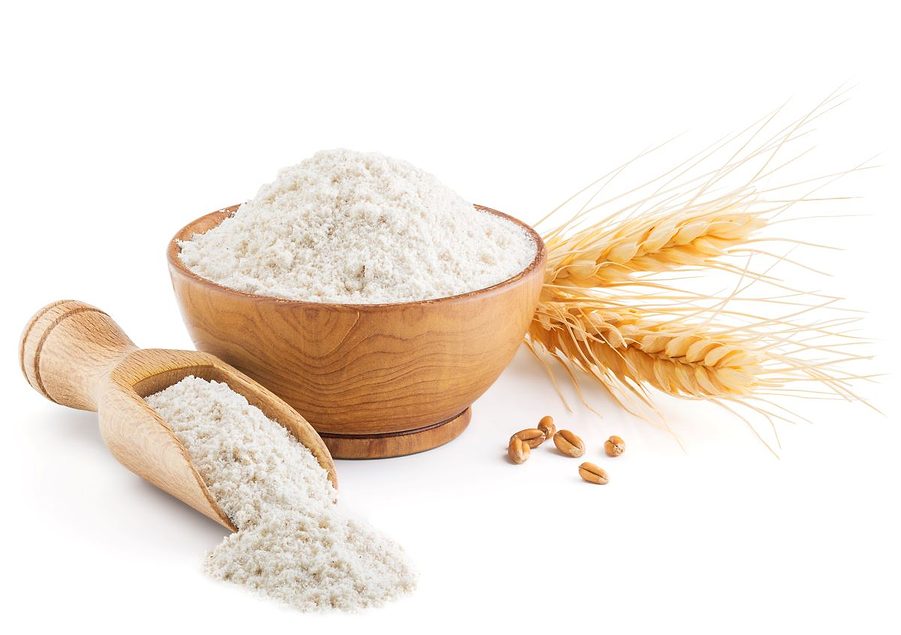

SEATTLE — Awakened Grains has introduced a process for controlled germination and starch conversion that transforms whole grains into baking flour that provides better flavor, nutrition and performance, according to the Seattle-based grain technology company. Food manufacturers may use the process to make whole grain bread, pastries, snacks, breakfast cereal, pancake mixes, pizza crusts and pasta.
A patent for the process covers cereal and non-cereal grains, ancient grains, legumes, pulses and seeds. Two applications for the Awakened Grains processing technology are in the pipeline. Imperial Flour is available for licensing to baked foods companies, blenders and dry ingredient companies. The company also plans to introduce Power Flour, which is designed to deliver more protein and fiber, as well as less starch, than standard bread flour.
“Awakened Grains exists to help consumers enjoy the bread, cookies, cakes, donuts, pastries, pasta and pancakes they crave while getting more of the whole grain nutrition they need,” said David Naccarato, chief operating officer, inventor and founding partner of Awakened Grains. “Parents and schools no longer have to choose between foods kids will eat and foods that support better nutrition. Our patented process improves grains and legumes by removing natural digestive blockers, making more nutrients metabolically available and creating products that are both comfortable to digest and enjoyable to eat.”

Japan's Next Chapter
Ripple Price Analysis: Is It All Doom and Gloom for XRP After the Latest Rejection at $1.60?

Remy Ma Flexes Gifts From Millyz, Claressa Shields Gives Update

I Tried The LAZIEST Way to Make Money With AI




-

 Fashion6 days ago
Weekend Open Thread: Talbots – Corporette.com
-

 Tech4 days ago
Researchers escape OpenAI Codex sandbox to run commands on host
-

 Crypto World2 days ago
Goldman Sachs and Deutsche Bank Agree: The S&P 500 Rally Isn't Over
-

 Crypto World4 days ago
Who Needs CLARITY Anyway? ARB Could See 70X Increase: Hodler’s Digest
-

 Crypto World6 days ago
Circle launches Arc Studio AI agent for building onchain apps
-

 Crypto World7 days ago
Mortgage and refinance interest rates today, Thursday, September 17, 2026
-
 NewsBeat6 days ago
Trump says US has reached an agreement to take permanent control of Greenland’s security
-

 Crypto World6 days ago
Trading Bitcoin on Robinhood? Why 2% Spread Has Traders Worried
-

 Fashion8 hours ago
8 iPhone Accessories That Add Personality
-

 Crypto World6 days ago
Bitcoin price breaks channel as RSI climbs to 63
-

 Business4 days ago
Analog Devices (ADI) Bets $1.35 Billion on Chips that Let Machines Think for Themselves
-

 Tech3 days ago
Google’s $899 Googlebook is a bet that you’ll buy a new laptop for Gemini
-

 Crypto World4 days ago
Coinbase, Robinhood, Circle Seen as Tokenized-Stock Winners
-

 Tech5 days ago
Trump suggests rebranding AI with a new name, says he’s also creating an AI Force
-
 Business2 days ago
Oil Price Today (September 23): Crude oil below $100 on hopes of US-Iran talks. What did Trump say?
-

 Tech7 days ago
GPT-6 Astra Reached the Nether in Minecraft, Lost Its Stash to a Creeper, and Farmed Potatoes for Hours
-

 Crypto World6 days ago
World Money launches in 150+ countries with Stripe
-

 Crypto World6 days ago
Silver prices recover quickly, hitting weekly high today
-

 Crypto World20 hours ago
Bitcoin Threatens Sub-$84,000 Breakdown as Long Liquidations Spike
-

 Crypto World2 days ago
Trump-Xi Polymarket Odds for Handshake Hit 50%
You must be logged in to post a comment Login