Connect with us

Business

Coco Gauff Reaches First Wimbledon Semifinal With Dramatic Comeback Win Over Fellow American Jessica Pegula

Published

on

Coco Gauff

LONDON — Coco Gauff advanced to her first career Wimbledon semifinal on Tuesday, rallying from a set down to defeat fellow American Jessica Pegula 4-6, 6-3, 6-3 in an all-USA quarterfinal that pitted the tournament’s two highest-seeded women’s players against each other on Centre Court.

The No. 7-seeded Gauff overcame an early setback, dropping the first set to the No. 4-seeded Pegula before regrouping to take control of the match over the final two sets. The turning point of the second set came when Pegula, serving at 3-4, double-faulted at 0-40, handing Gauff a 5-3 lead she would not relinquish. Gauff then sealed the set with a 117 mph ace, leveling the match at one set apiece.

The decisive third set featured several momentum swings before Gauff ultimately pulled away. She broke Pegula with a low passing-shot winner to take a 2-1 lead, only for Pegula to break back immediately when Gauff netted a forehand on break point, tying the set at three games apiece. Gauff responded right away, breaking Pegula at love for a 4-3 lead after Pegula netted a forehand off a deep service return. With Pegula serving to stay in the match at 3-5, 30-40, she dumped a backhand into the net, sending Gauff into a celebration on court as she completed the win.

Gauff finished the match a perfect 4-for-4 on break-point conversions and served at 76 percent in the decisive third set, controlling the tempo from the baseline throughout the closing stages of the match. Speaking on court immediately after the win, Gauff reflected on the significance of the result given her earlier struggles on grass. “Honestly, pretty insane,” Gauff said. “Considering I hadn’t won a match on grass in 2 years before this tournament. I’m definitely just really happy with how I played today. Jess is an incredible opponent and person, playing against her is never easy. I’m just happy to get through this one today.”

Advertisement

Tuesday’s meeting marked a historic occasion for American tennis. According to ESPN, Gauff and Pegula were the first pair of American women’s top-10 seeds to meet at Wimbledon since Serena Williams defeated her sister Venus in the 2009 final. The matchup also carried personal significance for both players, given their history as former doubles partners, including during the 2024 Paris Olympics, where the pair won gold together before splitting to focus on their individual singles careers.

With the win, Gauff, 22, became the highest remaining seed in the women’s singles draw and is now guaranteed to reach at least the final, given the depth of the remaining field. She is set to face the winner of Thursday’s quarterfinal between No. 14 seed Naomi Osaka of Japan and No. 10 seed Karolina Muchova of Czechia in the semifinals. ESPN broadcaster Mary Joe Fernandez offered high praise for Gauff’s game following the match, suggesting she could be the player to beat for the remainder of the tournament. “I like the winner of this match going all the way,” Fernandez said on air. “The way that Coco moves, the way that she can attack the net, she’s going to be really hard to beat.”

For Pegula, 32, the loss extends a career pattern in which she has consistently reached the latter stages of Grand Slam tournaments without ever winning one. She has now reached 10 career Grand Slam quarterfinals but has never advanced past the quarterfinal round at Wimbledon specifically, and she remains in search of her first major singles title. Pegula, the daughter of billionaire Buffalo Bills owner Terry Pegula, had entered this year’s tournament having reached the semifinals of the Aussie Open earlier this season, adding to a résumé that already includes a runner-up finish at the 2024 U.S. Open, her best Grand Slam result to date.

Tuesday’s result carries significant financial implications for both players as well. According to prize money figures cited by Forbes, Gauff’s semifinal appearance earns her approximately $1.24 million, while the tournament’s eventual champion will take home close to $5 million, with the runner-up receiving approximately $2.48 million.

Advertisement

Gauff’s path to her first Wimbledon semifinal has been defined by resilience throughout the tournament. Her win over Pegula marked her third three-set victory of this year’s Championships, following an earlier comeback in the second round that included a tense 10-point tiebreak against Solana Sierra. Prior to this tournament, Gauff had never advanced past the fourth round at the All England Club, making Wimbledon the last of the four Grand Slam events where she had yet to reach the quarterfinal stage before this year’s breakthrough run. She previously won the 2023 U.S. Open and the 2025 French Open, giving her two major titles heading into this week’s semifinal, but neither had come on grass, a surface that had proven consistently difficult for her in previous years.

Gauff’s semifinal opponent will be determined Thursday when Osaka and Muchova meet in a rematch of their recent Bad Homburg final. Osaka reached the quarterfinals after delivering one of the standout performances of the tournament, upsetting top-seeded and world No. 1 Aryna Sabalenka in straight sets, a result that reshaped the entire women’s draw following the earlier eliminations of defending champion Iga Swiatek and 2022 champion Elena Rybakina.

With Tuesday’s win, Gauff has ensured that an American will reach the Wimbledon final for the first time since the 2009 all-Williams-sisters final, a milestone that adds further significance to a tournament that has already produced a string of notable upsets throughout its women’s draw. As she prepares for Thursday’s semifinal, Gauff will look to build on what she described as a career-best performance on grass, a surface she has now shown she can navigate at the highest level of the sport after years of comparative struggle on the fastest of tennis’s four Grand Slam surfaces.

Advertisement
Continue Reading
Click to comment

You must be logged in to post a comment Login

Leave a Reply

Business

Swiss annual inflation ticks down to 0.4% in July

Published

on


Swiss annual inflation ticks down to 0.4% in July

Continue Reading

Business

Somerset farm near A303 to be sold to fund front-line services

Published

on

Business Live

Lawrence Farm is located on Moor Lane south of the dual carriageway on the edge of Wincanton

Cows in a field

A stock image of cows in a field(Image: Carina Chowanek/Pexels)

A large Somerset farm near the A303 is to be sold by the council to help finance front-line services throughout the county. Lawrence Farm is located on Moor Lane south of the dual carriageway on the edge of Wincanton, consisting of a farmhouse, associated outbuildings and 75 acres (just over 30 hectares) of land.

Advertisement

Somerset Council agreed in November 2023 to review its existing county farms as part of a broader assessment of its assets, land and property, with a view to disposing of those deemed surplus to requirements and channelling the proceeds into essential services.

The farm will now be marketed in four separate lots – though the council has not disclosed any public estimate of the anticipated sale value.

The farmhouse at Lawrence Farm has stood empty since March, following the council’s negotiations with the former tenant to relinquish their tenancy.

The farm buildings and surrounding land are presently managed under a separate six-month tenancy arrangement, which is due to expire at the end of September.

Advertisement

The farm is flanked by Brains Farm to the east, a solar farm to the south and Wessex Water’s waste water treatment plant to the west, with the River Cale running through a considerable portion of the land.

The farm will be marketed in four distinct lots, with an uplift clause in place to ensure the council benefits from any increase in value should the land subsequently be developed.

David Ashton, one of the council’s property officers, said in his written report: “Our estates team has halted submitting a planning application to convert the farm buildings for residential use, due to flood risk issues that have arisen and the associated lengthy delay and risk of refusal.

“The asset will be disposed of via the open market, in various lots, with the appropriate covenants and/or uplift in place.”

Advertisement

Under ordinary circumstances, revenue generated from the sale of land, property or other assets – known as capital receipts – cannot be directed towards day-to-day expenditure on front-line services.

However, the council was granted approval in February by central government – for the third consecutive year – to use proceeds from asset sales for this purpose, as well as to finance its ongoing transformation programme.

The council has declined to disclose the anticipated proceeds from the farm sale, citing commercial sensitivity.

Advertisement
Continue Reading

Business

Baxter International: The Gains Can Continue, But Should Slow

Published

on

Baxter International: The Gains Can Continue, But Should Slow

Baxter International: The Gains Can Continue, But Should Slow

Continue Reading

Business

Despite The Headwinds, Earnings Are Exploding To The Upside

Published

on

Despite The Headwinds, Earnings Are Exploding To The Upside

Despite The Headwinds, Earnings Are Exploding To The Upside

Continue Reading

Business

Aino Health reports Q2 sales decline on project delays

Published

on


Aino Health reports Q2 sales decline on project delays

Continue Reading

Business

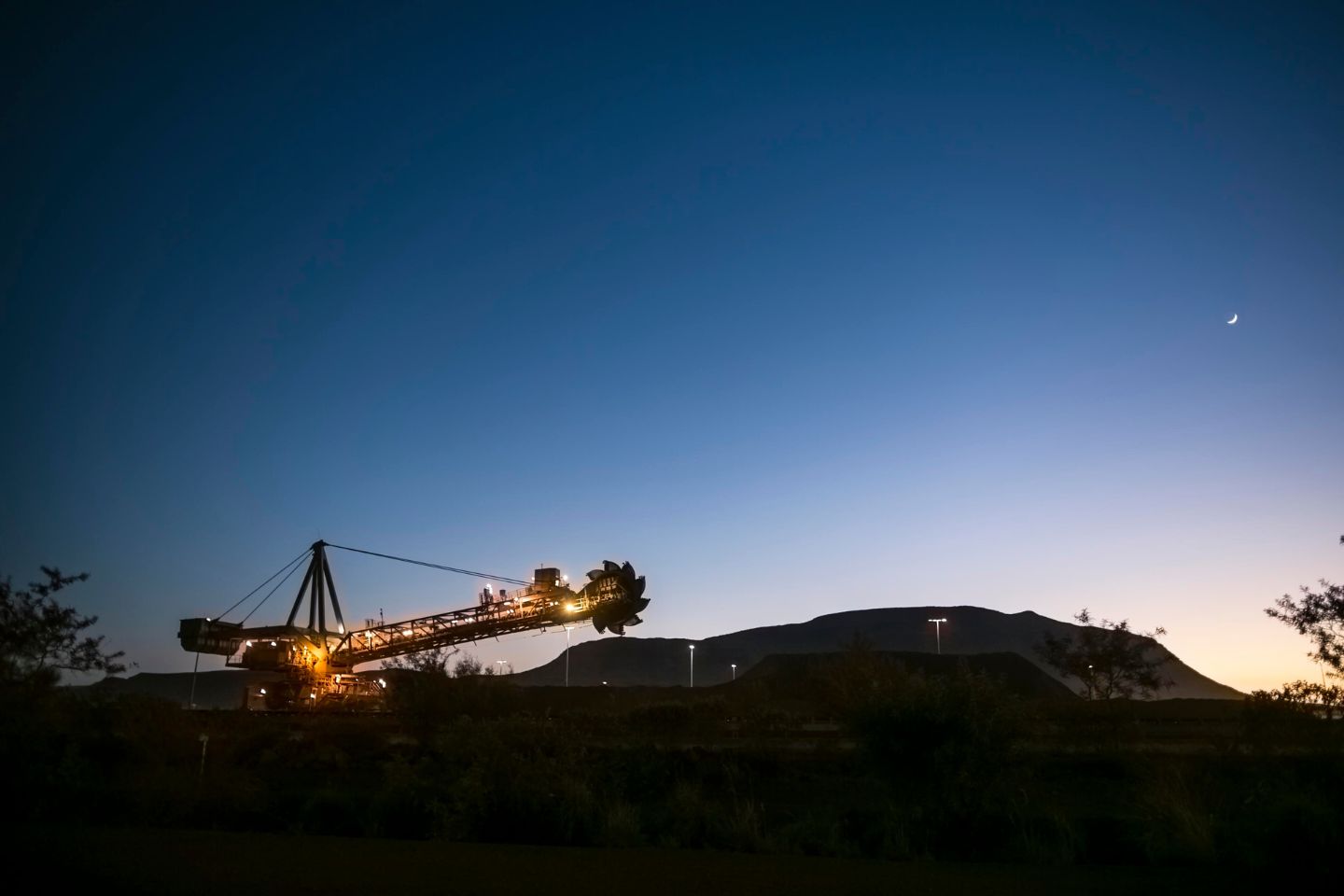
National role for resources wealth

Published

on

National role for resources wealth

Yes. Corporate subscriptions are available for teams and organisations, with discounted rates as user numbers increase. Pricing starts from $1,625 + GST per user.

Get in touch
to discuss the right option for your organisation.

Business News subscriptions are used by executives, investors, consultants and professionals who need to stay informed and make better decisions about the WA market. When you subscribe you’ll get

  • Unlimited access to WA’s most trusted business journalism
  • Data & Insights — detailed profiles of WA companies, people, projects and deals
  • MyBN — a personalised feed based on the companies, people and sectors you follow
  • Special publications and industry reports
  • Daily and weekly email newsletters

Data & Insights is a research tool built specifically for the WA market. It draws on more than 30 years of Business News reporting, updated regularly to reflect what’s happening now. Use it to:

  • Look up detailed profiles of WA companies, including financials, directors and ownership
  • Find decision-makers and track their career movements
  • Research live and completed projects across WA industries
  • Monitor deals, appointments and market activity
  • Access industry rankings and league tables

Data & Insights is updated daily by our dedicated research team, which uses the latest announcements, ASX filings and editorial coverage to keep our person, company, list and project records up to date.

Business News welcome all opportunities to make our dataset accurate, complete and current, so if you have an update request, please email the team at
general@businessnews.com.au, and we’d be happy to assist.

Advertisement

MyBN
is part of every subscription. It’s your personalised view of Business News. You can follow the companies, people, sectors and projects that matter to you, and get a news feed and alerts tailored to your interests. You can save articles to read later and retain only what you need.

Only subscribers have full access to all content on the Business News website.

Advertisement

If staying informed about the WA economy is part of your job, and/or you’re looking for networking opportunities in WA, Business News is built for you.

Business News subscribers are:

  • Executives and directors tracking competitors, clients and market movements
  • Investors and advisers researching companies, deals and industry trends
  • Consultants and professionals staying across sectors relevant to their clients
  • Business owners looking for leads, context and market intelligence

Most Business News publications cover national or global markets. Business News is focused entirely on Western Australia, which means the journalism, the data and the intelligence are all built around WA companies, people and projects — not adapted from a national feed. Data & Insights, included with every subscription, combines more than 30 years of WA-specific editorial research with live business data. There’s no comparable product for the WA market.

Advertisement

The Morning Digest Email provides a comprehensive wrap of the major headlines, relevant to WA business, and includes with a snapshot of the overnight news covering oil, gold and ASX-listed companies.

The Afternoon Wrap Email focuses on the news covered by our team of journalists during the course of the working day, including exclusive stories and analysis, all of which relates to WA business and the local economy.

The BN Weekender Email contains a wrap of the Business News from the week that was, highlighting the top stories in each area of WA business.
Sign up for free.

Advertisement

We’re happy to help.
Get in touch
and our team will come back to you.

Advertisement
Continue Reading

Business

Blue Dart Express shares surge 7% after Q1 results. Here’s why Nuvama retains Buy, raises target

Published

on

Blue Dart Express shares surge 7% after Q1 results. Here's why Nuvama retains Buy, raises target
Shares of Blue Dart Express surged 6.77% to Rs 5,509.50 in Monday’s trading session after the logistics major reported a strong Q1FY27 performance. Brokerage firm Nuvama retained its ‘Buy’ rating on the stock, citing strong execution and growth prospects.

The company’s consolidated net profit jumped 79.6% year-on-year (YoY) to Rs 88 crore in Q1FY27, compared with Rs 49 crore in the corresponding quarter last year. Revenue from operations increased 15.1% YoY to Rs 1,658 crore, from Rs 1,441 crore in Q1FY26.

The strong quarterly performance was supported by higher revenue traction, improved operational efficiency, and expansion in operating margins. Blue Dart’s EBITDA margin improved significantly, reflecting better cost management and disciplined execution despite a challenging business environment.

Commenting on the results, Balfour Manuel, Managing Director, Blue Dart, said, “Our Q1FY27 performance reflects focused execution, disciplined network management and continued customer confidence in the Blue Dart brand. Despite a challenging operating environment and higher operating costs, we delivered strong profit growth while maintaining our commitment to reliability, speed and service excellence.”

Advertisement

He added that the company remains focused on enhancing productivity, strengthening its integrated air and ground network, accelerating digital adoption, and investing in sustainable capabilities to create long-term value for stakeholders.

Nuvama remains bullish, raises valuation outlook

Brokerage firm Nuvama maintained its ‘Buy’ rating on Blue Dart Express, citing strong quarterly execution and the company’s positioning in the growing e-commerce logistics segment.
According to Nuvama Research, Blue Dart delivered a robust Q1FY27 performance, with revenue growth of 15% YoY, ahead of estimates. The brokerage highlighted that EBITDA margin expanded by 220 basis points YoY to 15.8%, while profit before tax (PBT) margin improved to 7.2% from 4.6% a year ago, reaching the company’s guided medium-term range of 7–8%.
The brokerage noted that profit after tax (PAT) surged 81% YoY to Rs 88.5 crore, significantly exceeding its estimates and consensus expectations. Following the strong quarter, Nuvama raised its FY27E and FY28E earnings per share (EPS) estimates by 4% and 2%, respectively.
Nuvama has retained its ‘Buy’ recommendation, valuing Blue Dart at 38x June 2028 earnings, and revised its June 2027 target price to Rs 7,350 from the earlier Rs 6,900.

The brokerage believes Blue Dart is well positioned to benefit from the ongoing consolidation in the e-commerce parcel market, which contributed around 30–31% of revenue in FY26. At the current market price, the stock trades at approximately 28x FY28E earnings.

With improving margins, sustained revenue growth, and a strong logistics network, Blue Dart remains a key beneficiary of India’s expanding express delivery and e-commerce ecosystem.

(Disclaimer: Recommendations, suggestions, views and opinions given by the experts are their own. These do not represent the views of The Economic Times)

Advertisement
Continue Reading

Business

Dubai and Doha Fully Open, but Kuwait Remains Limited Amid Conflict

Published

on

Dubai International Airport

Air travel across the Middle East continues gradually stabilizing more than five months after the outbreak of the U.S.-Iran conflict severely disrupted one of the world’s busiest aviation corridors, though several major hubs remain constrained by damaged infrastructure, safety advisories and ongoing regional hostilities.

The Iran war triggered widespread airspace closures beginning Feb. 28, when U.S. and Israeli strikes on Iran plunged the region into conflict, grounding tens of thousands of flights and severing key global transit hubs connecting Europe, Asia, Africa and North America. According to travel platform Wego, the resulting grounding of flights and temporary isolation of mega-hubs like Dubai and Doha represented the most disruptive systemic shock to global aviation since the COVID-19 pandemic.

Several major hubs are now operating close to normal levels. The United Arab Emirates, home to Dubai and Abu Dhabi, is described as fully open, according to Wego’s most recent assessment. Saudi Arabia, Qatar, Bahrain and Oman are all described as largely open, though each continues to carry some operational caveats depending on the specific airport and airline involved. Dubai International Airport is running flights across all three of its terminals, and Qatar Airways confirmed earlier this summer that it had restored flights to 85% of its pre-crisis schedule levels.

Kuwait represents the clearest ongoing exception to that broader recovery. Kuwait’s main airport remains not fully operational, according to Newsweek’s assessment of the current situation, with key infrastructure still damaged and some terminals remaining closed. Foreign airlines continue to face restrictions at the airport, and while portions of Kuwaiti airspace have reopened, international routes into and out of the country remain limited compared with pre-conflict levels. Terminal 1, the airport’s primary international facility, has remained closed since suffering significant structural damage, including a partial roof collapse, during a strike in early June, with Kuwait Airways and Jazeera Airways instead operating out of Terminals 4 and 5.

Advertisement

Even in airspace that is technically classified as open, aviation safety advisories tied to earlier missile, drone or military activity continue to shape how airlines operate throughout much of the region. Regulators and airlines have continued flagging elevated risk across Iran, Iraq and broader Gulf airspace, according to aviation safety tracking service safefly.aero, with some carriers selectively avoiding certain flight paths or reducing service frequencies even where no formal airspace closure remains in place.

The European Union Aviation Safety Agency has maintained some of the most cautious guidance among international regulators. EASA’s Conflict Zone Information Bulletin, most recently extended through Aug. 31, instructs EASA-regulated airlines to avoid flying within the airspace of the UAE, Bahrain, Kuwait and Qatar at any altitude, along with a defined portion of the Gulf of Oman, citing continued risk tied to missile, drone and combat aircraft activity linked to the region’s unstable security situation. That advisory has led numerous major international carriers, including British Airways, Singapore Airlines, Air Canada and members of the Lufthansa Group, to extend their own suspensions of Middle East routes well into the autumn, even as UAE-based carriers such as Emirates, Etihad Airways and flydubai continue operating the substantial majority of their networks.

Other pockets of restriction persist across the broader region as well. Four airports in southern Saudi Arabia were closed by NOTAM earlier this summer after a Houthi missile and drone attack, part of a broader pattern of intermittent strikes and closures that has continued affecting specific airports even as most of the region’s major hubs have returned to largely normal operations. Air traffic routing through the middle of the Gulf has also remained complicated by Kuwait’s ongoing limitations, forcing many international operators to route flights around the country via either a southern corridor through Egypt, Saudi Arabia and Oman, or a more northerly path, according to aviation monitoring group OPSGROUP.

Airlines have continued a gradual, staggered process of restoring previously suspended routes throughout the summer. British Airways resumed flights to Dubai and Doha beginning July 1, while Gulf Air has steadily rebuilt its network following Bahrain’s airspace reopening, restoring service to cities including London, Dubai, Istanbul and Riyadh, with additional routes continuing to phase in through the summer months. Iraqi Airways has similarly resumed both domestic and international operations as part of a broader phased return to service across the region’s national carriers.

Advertisement

Given how frequently conditions have continued shifting throughout the conflict, travel monitoring services consistently advise passengers to verify their specific flight status directly with their airline before heading to the airport, rather than relying solely on general regional status updates, given how quickly individual route restrictions, terminal closures and safety advisories have continued changing across different countries and airlines throughout the ongoing conflict.

With Kuwait’s main airport still working through infrastructure repairs and several international regulators maintaining cautious advisories through the end of August, the broader Middle East aviation sector appears likely to continue its gradual, uneven recovery in the weeks ahead, even as the region’s largest hubs in Dubai, Doha and Abu Dhabi have largely returned to something closer to their pre-conflict operating tempo.

Continue Reading

Business

Seeen’s 2025 revenue jumps 65% as EBITDA loss narrows

Published

on


Seeen’s 2025 revenue jumps 65% as EBITDA loss narrows

Continue Reading

Business

Minor Earthquake Rattles Hawthorne, California, on Sunday Evening

Published

on

Aerial view of Hawthorne

A minor earthquake shook the city of Hawthorne, California, on Sunday evening, according to the U.S. Geological Survey, though no damage or injuries were reported in connection with the tremor.

The magnitude 2.6 quake struck at 8:30 p.m. local time, with its epicenter located less than a mile from the neighboring communities of Gardena, Inglewood and Westmont, all situated within the greater Los Angeles area. Seismologists recorded the earthquake’s origin at a depth of 6.5 miles below the surface, according to USGS data.

Earthquakes of this magnitude are common across Southern California, a region crossed by numerous active fault systems, including segments of the broader San Andreas Fault network that runs through much of the state. The USGS estimates that Southern California experiences thousands of earthquakes each year, though the vast majority are too small to be felt by residents without sensitive seismic instruments. Quakes in the magnitude 2.5 to 3.0 range, like Sunday’s tremor near Hawthorne, are generally on the threshold of what a person standing near the epicenter might notice, often described as a brief jolt or vibration rather than significant shaking.

Hawthorne and the surrounding South Bay area of Los Angeles County have experienced similar small earthquakes in the past without resulting in damage. The USGS operates a real-time earthquake monitoring system that tracks seismic activity across the country, publishing data within minutes of a quake’s occurrence and inviting residents who felt shaking to submit reports through its “Did You Feel It?” online tool, which helps researchers map the extent and intensity of ground motion associated with a given event.

Advertisement

Sunday’s earthquake was one of several recorded across California in recent days, part of the routine background seismicity that characterizes the state. In the weeks prior, the USGS logged a magnitude 4.3 earthquake near California City on July 13 and a magnitude 4.1 quake near Frazier Park on July 12, both considerably stronger than Sunday’s Hawthorne tremor but still within the range of earthquakes that typically cause little to no damage. Larger, more damaging earthquakes in the magnitude 5.5 and above range remain comparatively rare events, though seismologists have long cautioned that Southern California remains overdue for a major rupture along sections of the San Andreas Fault, based on historical recurrence intervals.

No tsunami warning was issued in connection with Sunday’s earthquake, and the USGS did not report any immediate aftershock activity following the initial tremor. Local emergency services in Hawthorne and the surrounding communities did not report receiving calls related to damage or injuries stemming from the quake.

Residents throughout the greater Los Angeles area are routinely encouraged by California emergency management officials to maintain basic earthquake preparedness measures, including securing heavy furniture, keeping emergency supplies on hand, and staying familiar with the standard “drop, cover and hold on” response recommended during shaking, given the region’s ongoing exposure to both minor and, less frequently, more significant seismic activity.

Advertisement
Continue Reading

Trending

Copyright © 2025