

Business
Colombia and Portugal Draw 0-0 at World Cup, With Colombia Topping Group K Over Ronaldo’s Portugal Squad

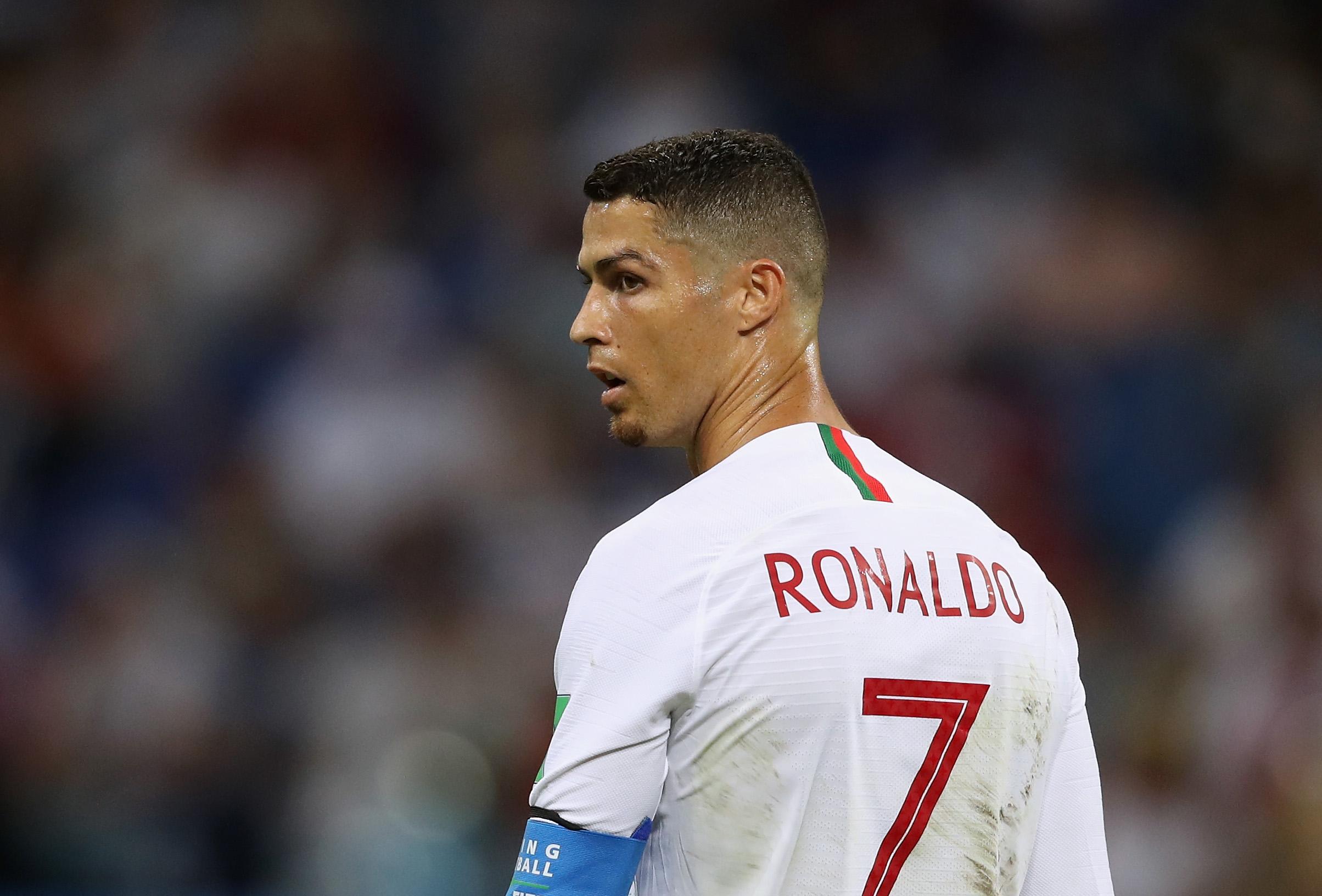
MIAMI — Colombia and Portugal played out a scoreless draw at Miami Stadium on Saturday in a meeting of World Cup heavyweights, with Colombia securing top spot in Group K despite the stalemate, as Cristiano Ronaldo was kept largely quiet by a determined Colombian defense.
The result extends a mixed tournament for Ronaldo, who had drawn attention for his celebratory outburst following Portugal’s earlier win over Uzbekistan, but found himself a peripheral figure for long stretches against a Colombian side that controlled much of the match’s tempo.
A chance encounter early on
The match nearly burst into life within the opening minute, when a deflected effort from Bayern Munich winger Luis Díaz spun unexpectedly onto the head of forward Jhon Córdoba inside the box. Córdoba, seemingly as surprised as anyone to find himself with the chance, lifted his attempt over the bar. Portugal goalkeeper Diogo Costa was called into action shortly after, producing a sharp one-handed save to deny Córdoba a second opportunity.
Portugal struggled to generate much of a response in the first half. A shot from midfielder Bruno Fernandes was batted away by Colombia goalkeeper Camilo Vargas, and Ronaldo’s follow-up attempt on the rebound, an overhead effort, was blocked before it could threaten the goal. Forward João Félix also tested Colombia’s defense with an effort that sailed over the bar, but for the most part, the opening 45 minutes offered little in the way of clear chances for either side, with Ronaldo struggling to find space against a well-organized Colombian back line.
Colombia presses for a breakthrough
The pattern of Colombian pressure continued into the second half. Midfielder Richard Ríos fired a shot just wide of Costa’s left-hand post from close range shortly after the hour mark, continuing a string of Colombian opportunities that went unrewarded. Ronaldo had a half-chance of his own at the other end, but was ruled offside before his effort could be assessed further.
Costa was forced into another important save soon after, denying Jhon Arias as Colombia continued searching for the goal that would settle the contest. Forward Luis Suárez also found space inside Portugal’s box but miskicked his attempt with Costa’s goal in sight, while a shot from James Rodríguez was cleared away by defender Renato Veiga before it could test the Portuguese goalkeeper.
Portugal’s response off the bench
With Colombia controlling much of the second-half play, Portugal manager Roberto Martínez turned to his bench in search of a spark, introducing forward Rafael Leão. The substitution nearly paid off when fullback Diogo Dalot curled an effort just wide of the target after receiving a corner delivery from Fernandes, offering one of Portugal’s better chances of an otherwise difficult night in front of goal.
A disallowed goal in stoppage time
Colombia appeared to have snatched a dramatic late winner in stoppage time, when defender Davinson Sánchez headed home what was initially celebrated as the decisive goal. Colombian substitutes streamed off the bench in celebration before officials intervened, ruling Sánchez offside and wiping out the goal. The disallowed effort proved to be the match’s final notable moment, with the contest finishing scoreless.
Martínez reflects on a missed opportunity
Speaking after the match, Portugal manager Roberto Martínez acknowledged that his side had allowed Colombia to dictate the terms of the contest. “We let Colombia have the match they wanted,” Martínez said. “We did not control possession as much as we wanted. We weren’t able to control the game or use our talent.”
The result leaves Martínez with plenty to address, given that Portugal has now struggled in two of its three matches so far in the tournament, despite possessing one of the most talent-laden rosters in the competition.
Where both teams go next
Despite the draw, Colombia’s result was enough to secure top spot in Group K, a notably positive outcome for a team that will now face Ghana in the round of 32. Portugal, meanwhile, finishes the group stage in second place and advances to face Croatia in the next round.
For Colombia, the result represents an encouraging marker after an entertaining and largely one-sided performance against one of the tournament’s most decorated squads, even if questions remain about the team’s finishing in front of goal after multiple missed opportunities throughout the match.
A raucous atmosphere in Miami
Saturday’s match also stood out for the scene inside Miami Stadium, where Colombian supporters appeared to dominate the crowd by a wide margin, continuing a recent trend of passionate fan turnouts at the venue. The atmosphere followed a similarly charged scene days earlier when Brazilian fans filled the same stadium for their team’s win over Scotland.
While Colombian fans have a more complicated recent history at major tournaments, including incidents involving fans storming gates at the 2024 Copa América final, Saturday’s crowd was orderly and high-spirited throughout, creating an atmosphere that made Colombia feel almost like a host nation despite not holding that status at this World Cup.
A measured night for Ronaldo
For Ronaldo, who turns 42 later this year, Saturday’s match offered a stark contrast to his prior outing against Uzbekistan, when his enthusiastic on-camera celebration drew attention across the tournament. Against a well-drilled Colombian defense, the Portuguese forward was unable to find the same rhythm, spending long stretches of the match on the periphery of the action and managing little in the way of direct goal-scoring threat before his side’s lone offside chance late in the second half.
With the group stage now behind them, both Colombia and Portugal turn their attention to the knockout rounds, where Colombia will look to build on a group-topping finish against Ghana, while Portugal and Martínez will look to address the possession and control issues that have plagued the team through much of the tournament when they face Croatia in the round of 32.



Passage Research focuses on identifying variant perception through a blend of fundamental analysis and alternative data. The research process combines detailed financial modeling with real-time datasets to underwrite earnings power, margin durability, and forward expectations.The author has spent over a decade on Wall Street, most recently spending the last five years working in the hedge fund industry as an analyst. Typical coverage spans consumer, TMT, industrials and special situations, with an emphasis on asymmetric risk/reward and catalyst-driven opportunities.
Analyst’s Disclosure: I/we have no stock, option or similar derivative position in any of the companies mentioned, but may initiate a beneficial Long position through a purchase of the stock, or the purchase of call options or similar derivatives in RYN over the next 72 hours. I wrote this article myself, and it expresses my own opinions. I am not receiving compensation for it (other than from Seeking Alpha). I have no business relationship with any company whose stock is mentioned in this article.
Seeking Alpha’s Disclosure: Past performance is no guarantee of future results. No recommendation or advice is being given as to whether any investment is suitable for a particular investor. Any views or opinions expressed above may not reflect those of Seeking Alpha as a whole. Seeking Alpha is not a licensed securities dealer, broker or US investment adviser or investment bank. Our analysts are third party authors that include both professional investors and individual investors who may not be licensed or certified by any institute or regulatory body.

Markets Got Its Final Warnings


Vasily Zyryanov is an individual investor and writer.He uses various techniques to find both relatively underpriced equities with strong upside potential and relatively overappreciated companies that have inflated valuation for a reason.In his research, he pays much attention to the energy sector (oil & gas supermajors, mid-cap, and small-cap exploration & production companies, the oilfield services firms), while he also covers a plethora of other industries from mining and chemicals to luxury bellwethers.He firmly believes that apart from simple profit and sales analysis, a meticulous investor must assess Free Cash Flow and Return on Capital to gain deeper insights and avoid sophomoric conclusions.While he favors underappreciated and misunderstood equities, he also acknowledges that some growth stocks do deserve their premium valuation, and its an investor’s primary goal to delve deeper and uncover if the market’s current opinion is correct or not.
Analyst’s Disclosure: I/we have no stock, option or similar derivative position in any of the companies mentioned, and no plans to initiate any such positions within the next 72 hours. I wrote this article myself, and it expresses my own opinions. I am not receiving compensation for it (other than from Seeking Alpha). I have no business relationship with any company whose stock is mentioned in this article.
Seeking Alpha’s Disclosure: Past performance is no guarantee of future results. No recommendation or advice is being given as to whether any investment is suitable for a particular investor. Any views or opinions expressed above may not reflect those of Seeking Alpha as a whole. Seeking Alpha is not a licensed securities dealer, broker or US investment adviser or investment bank. Our analysts are third party authors that include both professional investors and individual investors who may not be licensed or certified by any institute or regulatory body.


I’ve been researching companies in-depth for over a decade, from commodities like oil, natural gas, gold and copper to tech like Google or Nokia and many emerging market stocks, which I believe could help me provide useful content for readers. After writing my own blog for about 3 years, I decided to switch to a value investing-focused YouTube channel, where I researched hundreds of different companies so far. I would say my favorite type of company to cover are metals and mining stocks, but I am comfortable with several other industries, such as consumer discretionary/staples, REITs and utilities.
Analyst’s Disclosure: I/we have a beneficial long position in the shares of BBWI either through stock ownership, options, or other derivatives. I wrote this article myself, and it expresses my own opinions. I am not receiving compensation for it (other than from Seeking Alpha). I have no business relationship with any company whose stock is mentioned in this article.
Seeking Alpha’s Disclosure: Past performance is no guarantee of future results. No recommendation or advice is being given as to whether any investment is suitable for a particular investor. Any views or opinions expressed above may not reflect those of Seeking Alpha as a whole. Seeking Alpha is not a licensed securities dealer, broker or US investment adviser or investment bank. Our analysts are third party authors that include both professional investors and individual investors who may not be licensed or certified by any institute or regulatory body.

That dynamic is now facing a reset. On June 17, NSE filed its listing papers with market regulator Sebi, and is targeting a listing before January 30 next year. Early estimates put the issue size at close to Rs 30,000 crore, based on NSE’s unlisted valuation of Rs 5 lakh crore. BSE’s market capitalisation at Thursday close was Rs 1.58 lakh crore.
NSE shares will list exclusively on BSE, since under Indian securities law an exchange cannot list on its own platform—a regulatory symmetry that will hand BSE one of its most consequential listings.
Exchange vs Exchange
On its part, BSE has framed the development as a positive rather than a threat to its own valuation. “Listing of any eligible institution is a positive development for India’s capital markets,” said managing director Sundararaman Ramamurthy. “Valuations and stock prices are outcomes of a company’s growth prospects and execution, and are best left to the market.”
NSE commands 88% of cash-market turnover, 91% of equity futures and options, and 89% of interest-rate futures. In currency derivatives, its share is 74% in futures and effectively 100% in options. Globally, NSE ranks first in equity derivatives contracts traded—with a 51% share—and third in the number of cash-equity trades.

Yet the listing papers also discloses a rare stumble. Total operational revenue declined 3% year-on-year to Rs 16,601 crore in FY26, from Rs 17,141 crore in FY25. Profit fell 16% to Rs 10,302 crore, from Rs 12,188 crore in FY25. The exchange attributed the decline to lower transaction charges, softer trading activity, and the impact of Sebi’s tightening of the futures and options segment—the very regulations that have reshaped the derivatives landscape across both exchanges.
That creates an unusual valuation setup. NSE is cited at 38x to 43x FY26 price-to-earnings on IPO price band assumptions of Rs 1,600 to Rs 1,800 per share, compared with BSE trading at 69x FY26 earnings.In other words, the dominant exchange may come to market at a significant discount to its smaller rival—at least on near-term multiples—partly because it is bearing the brunt of the same regulatory changes BSE has so far navigated better.
Two Sides
Investors are divided on the new equilibrium. As Investor Vijay Kedia says, “Scarcity premium may reduce once NSE gets listed because investors will get an opportunity to own the larger exchange as well, but BSE does not lose its importance.”
Pankaj Murarka, CIO at Renaissance Investment Managers, takes a longer view. Exchanges typically command rich valuations due to their oligopolistic structure and high entry barriers, he argues, and both NSE and BSE can sustain strong multiples—though NSE is likely to command a premium given its dominant market share. BSE’s trajectory, he said, will depend on whether it can meaningfully gain share in options, futures and cash equities, and expand into new product segments.
A listing of NSE—valued at Rs 5 lakh crore—exclusively on BSE could itself prove a fillip. “It may result in enhanced liquidity, business and participation by institutional investors at BSE,” said Parmod Kumar Bindlish, a former Sebi official.
BSE’s Revival
The debate arrives at a moment of transformation for BSE. When Ramamurthy took over as MD in January 2023, the exchange reported FY2022 revenue of Rs 928 crore, profit of Rs 254 crore, and a market cap of Rs 5,742 crore. By FY2026, revenue had risen to Rs 5,226 crore—up 41% CAGR—and profit to Rs 2,497 crore, an increase of 58% CAGR.
The markets have taken note, with valuation surging more than 20-fold since he took charge.
Ramamurthy attributed the turnaround to “innovation, product development and execution”—reviving the equity derivatives business, acquiring a 50% stake from S&P Dow Jones Indices in the index venture, upgrading mutual fund platforms to handle surging volumes, and stepping up investments in technology and member connectivity.
“When we started, both systems and the culture were somewhat archaic and lacked vibrancy,” he said. BSE filled long-standing vacancies, brought in a fresh set of C-suite leaders and hired younger professionals. Some of the changes were basic but necessary, he added, noting that even employee facilities such as a proper cafeteria needed attention.
The strategy in derivatives, he added, was not driven by market share targets but by “the voice of the customer.”
On Sebi tightening options trading, he said investor protection and market development “must go hand in hand,” and that markets “naturally adapt to evolving regulations over time.” Derivatives trading revenues more than doubled to Rs 3,134 crore in FY26, with daily average premium volume rising 118% to Rs 19,522 crore.
Kedia believes NSE’s listing will prompt investors to compare the two exchanges more closely. “The exchange that grows faster and creates more value for shareholders is likely to command a higher multiple,” he said.
Murarka offered perhaps the most durable framing: “Markets can go up or down, but in casino parlance, the house never loses. Exchanges are the house.”
Business
Will Sensex, Nifty extend gains or turn volatile? Q1 updates, F&O expiry among 8 factors set to steer stock market this week
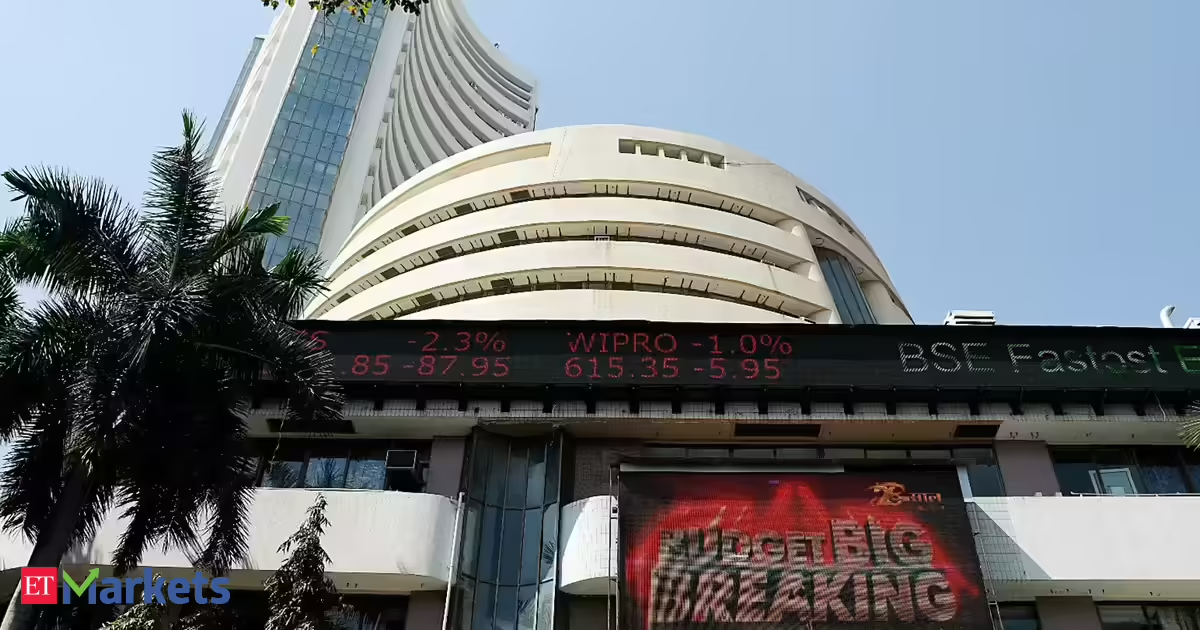
Market participants will closely monitor the beginning of the June-quarter earnings season, monthly auto sales, the June F&O expiry, foreign fund flows, crude oil prices, monsoon progress, global bond yields, and key macroeconomic data for cues on the market’s next direction. Here are eight factors that could dictate Dalal Street this week.
1) Q1 business updates in focus
Investor attention will gradually shift from macro factors to corporate earnings as the June-quarter reporting season approaches. The first set of Q1 business updates and quarterly results will be watched closely for indications on demand trends, margins and management commentary.
According to Mayuresh Joshi, Head of Equity at Marketsmith India, markets have rebounded strongly in recent weeks and attention will now shift to earnings.
“The expectation is largely getting built out for Q1 that it is going to be a washout quarter because of supply chain issues, input cost inflation and some element of demand probably coming off,” he said.
2) June F&O expiry, portfolio rebalancing
Traders are bracing for a volatile week as the NSE’s June monthly derivatives expiry falls on Tuesday, accompanied by quarterly portfolio rebalancing by institutional investors.
According to Santosh Meena, Head of Research at Swastika Investmart, derivatives positioning has improved marginally, but expiry-related adjustments could lead to heightened volatility.3) Auto sales data
Monthly automobile sales for June, scheduled to be released on July 1, will be another major domestic trigger.
Investors will track dispatch trends across passenger vehicles, two-wheelers, commercial vehicles and tractors to gauge demand momentum after the onset of the monsoon. Strong numbers could reinforce optimism around consumption-led sectors, while any disappointment may weigh on auto stocks.
4) Monsoon progress
The progress and distribution of the southwest monsoon will remain on investors’ radar, given its implications for rural demand, inflation and agricultural output.
A healthy monsoon is expected to support farm incomes and consumption, benefiting sectors such as FMCG, automobiles and rural-focused businesses.
5) FII flows
Foreign institutional investor activity will continue to be a key determinant of market direction after selling pressure showed signs of easing in recent sessions.
Dr VK Vijayakumar, Chief Investment Strategist at Geojit Investments, said relentless foreign selling appears to be over.
“A significant trend in FPI activity in the second half of this month is the tapering of FPI selling. The big relentless FPI selling appears to be over,” he said.
According to Vijayakumar, the appreciation in the rupee and volatility in other Asian markets have made India relatively more attractive for overseas investors despite weak earnings expectations.
“The crash in crude to below $73 is a huge positive for India. Therefore, it can be safely concluded that the period of relentless FPI selling is over. But it may take some time for FPIs to become sustained buyers in India,” he added.
6) Oil prices
Crude oil prices will remain a closely watched global variable after retreating sharply from recent highs.
Lower crude prices are positive for India as they ease inflationary pressures, improve the current account position and reduce input costs for several sectors. Any fresh geopolitical developments that trigger volatility in oil could quickly influence market sentiment.
7) US bond yields
Global investors will also monitor movements in US Treasury yields and the dollar index for signals on capital flows into emerging markets.
Persistently elevated bond yields or renewed strength in the dollar could limit risk appetite, while softer yields may support foreign inflows into equities.
8) Macro data
A host of macroeconomic releases will keep global markets on edge during the week.
Investors will track manufacturing PMI data and employment numbers from the US, along with key economic indicators from China, for fresh clues on global growth and the outlook for interest rates.
Technical setup
According to Santosh Meena of Swastika Investmart, the Nifty continues to face a strong hurdle around the 24,200 mark.
A sustained breakout above 24,200 could open the door for a rally towards the 24,450-24,600 zone. On the downside, 24,000 and 23,770 remain immediate support levels.
Bank Nifty continues to outperform and is trading above its key moving averages. The index faces resistance in the 59,000-59,300 zone, while 57,500 and 57,000 are expected to provide strong support.
(Disclaimer: Recommendations, suggestions, views and opinions given by the experts are their own. These do not represent the views of The Economic Times)

Markets Starting To Choke On Massive Surge In Debt Issuance
Business
Passive investing explosion: DSP’s Anil Ghelani predicts ETFs, index funds will command 30% of mutual fund industry
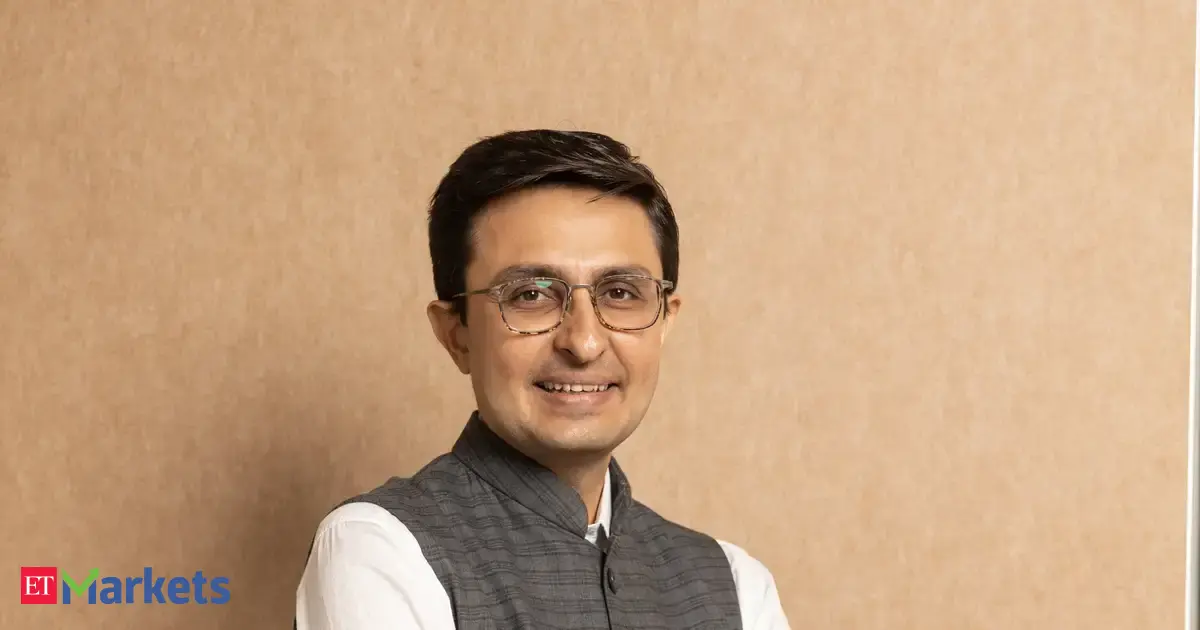
Passives are becoming increasingly popular in India with the launch of several new products suited to meet the needs of different kinds of investors. How popular do you think ETFs will become in the next five years?
In the US, we have already seen passive funds, i.e. ETFs and index funds, take over in size, with AUM exceeding 50% of the total mutual fund industry. In India, we are gradually seeing this growth. Today, ETFs and index funds account for about 17% of the total mutual fund industry AUM, which, in my view, could grow to 30% in the next five years.
However, the more interesting trend would not be the growth in the size of ETFs, but the evolution of investor behaviour. We often spend a significant amount of time trying to identify the next big stock idea or chasing a star fund manager, whereas there are more important aspects that we miss out on: prudent asset allocation aligned with our life goals, and staying invested until we reach them. ETFs and index funds will be natural beneficiaries of this shift.
In the coming years, passive investing is likely to become a much larger part of investors’ portfolios as a core allocation, while active funds will be selectively used as satellite allocations for alpha opportunities.
The consensus used to be that India is an inefficient market where active managers will always beat the index. However, information is now real-time, and alpha in the large-cap space is shrinking. In which segments do you think active management still holds an edge, and where is passive now the obvious choice?
While ETFs and index funds can be used across market-cap segments and sectors to build a portfolio, the largest AUM today is still in large-cap passive funds. In my view, the case for passive investing is strongest in the large-cap segment.In the small-cap and micro-cap segments, the stock universe is much larger, and there is greater potential for bottom-up research, management assessment and identifying under-researched stocks. So, active management may continue to have an edge in these segments and in certain niche sectors. That said, such outperformance potential often comes with higher volatility and manager-selection risk.
Hence, for core portfolio allocations, passive strategies are increasingly becoming the default choice. I have always believed that “and” is better than “or”. We will see a thoughtful blend where passive strategies form the core of a portfolio, while active strategies are used selectively in areas where alpha opportunities exist.
When an investor is looking at a theme, such as large caps, how should they decide between an ETF and an index fund? What are the liquidity and execution realities of trading ETFs on Indian exchanges that retail investors often overlook?
When investors compare an ETF and an index fund tracking the same benchmark, it is important to remember that both aim to deliver the same index return. The difference is primarily in the mode of access, not the underlying exposure.
For investors who prefer convenience and automated investing through SIPs, index funds are often a straightforward option. They do not require a demat account, and transactions happen directly with the fund house at end-of-day NAV.
ETFs, on the other hand, offer intraday liquidity, transparency and potentially lower expense ratios. They are useful for investors who already have a demat account and are comfortable transacting on exchanges. The choice is less about expected returns and more about convenience, flexibility and execution preference.
With multiple indices being launched by BSE and NSE, AMCs are following up with ETF NFOs. How do you view this trend?
The launch of many indices reflects the growing maturity of capital markets and the passive investment industry. However, every new index does not automatically need to become an ETF or index fund.
As a responsible fund manager, we ask whether it solves a genuine portfolio need or is just another option in an already crowded space. More choice is useful, but beyond a point, it can make decision-making harder. Simplicity is as important as innovation.
Broad-based market-cap indices should continue to form the core of most portfolios. Thematic, sectoral and factor-based products can play a satellite role where investors understand the risks and investment thesis.
Help us understand parameters like iNAV and tracking error before buying ETFs.
Many investors start by comparing an ETF’s size or expense ratio. Instead, one should first evaluate the underlying index: whether it is large, liquid and transparent.
Next, assess how closely the ETF tracks that index. Tracking difference is the gap between ETF returns and index returns, while tracking error measures consistency. Lower is better on both counts.
For ETFs, liquidity and execution also matter. Intraday iNAV helps assess whether the ETF is trading close to its underlying value. A good ETF tracks a large, liquid index efficiently and allows fair pricing.
What would be your advice for someone looking for a low-cost product for child goals over 10 to 15 years?
When investing for children, the biggest risk is emotional decision-making driven by greed and fear. Over long horizons, staying invested and maintaining the right asset allocation matters more than finding the best-performing fund.
A simple, low-cost approach would be an index fund. A disciplined SIP strategy aligned with the goal timeline, reviewed periodically with a financial adviser, would work best.

Tencent tests TenPayGo app to simplify payments for overseas visitors to China

U.S. charitable giving had a good year, not a great year, in 2025, up 3%, adjusted for inflation, to $617.2 billion. The big factor: bequests—gifts left through wills—which rose 16.5% to $62.2 billion, according to the Giving USA Foundation. Bequests have risen in three of the past four years, a pattern that holds over recent five-year periods, says Jon Bergdoll, interim director of data and research partnerships at Indiana University’s Lilly Family School of Philanthropy, which researched and wrote the report.

An Amazon Seller Says They Were Offered a Way to Bribe an Amazon Employee

How I’d Make Money Online With No Money, No Skills, No Audience

Courteney Cox ‘splits up with’ Snow Patrol’s Johnny McDaid after 13 years together


-
 Sports5 days ago
Two goals and an assist by sheer aura: Cristiano Ronaldo just entered the World Cup chat
-

 Tech6 days ago
Microsoft accidentally kills epic Outlook email threads
-

 Fashion2 days ago
Weekend Open Thread: Staud – Corporette.com
-

 Politics2 days ago
The House | Manchesterism won’t survive the painful trade-offs unless it gets citizens on board
-

 Politics2 days ago
Potential 2028er World Cup attendee leaderboard
-

 Business2 days ago
Asia stock markets slide as tech shares slump
-

 Tech3 days ago
A Look At A Gaggle Of Transputer Boards
-
Crypto World4 days ago
Bitcoin (BTC) Dips Below $62K, Ethereum (ETH) Plunges 6% Daily: Market Watch
-
 Crypto World3 days ago
Dell (DELL) Shares Tumble Over 5% Following Analyst Downgrade to Hold
-

 Crypto World4 days ago
Securitize Wraps Roubini's SEC-Registered ETF as Dubai VARA Digital Security
-
Business4 days ago
Entergy settles forward sale agreements, raises $672 million in cash proceeds
-

 Crypto World1 day ago
Kraken's xStocks Opens Bending Spoons IPO Registration to EEA Retail
-

 Sports1 day ago
FIH Pro League: India defeat Pakistan 7-1, register biggest win of campaign | Other Sports News
-

 Crypto World2 days ago
RTX holders must register wallets before token distribution begins
-
 Crypto World2 days ago
Hyperliquid Named on Singapore MAS Investor Alert Register
-

 Sports3 days ago
India vs Bangladesh LIVE Score, Women’s T20 World Cup: Bangladesh Opt To Bat; India Enter ‘Do-Or-Die’ Stage As Semi-Final Race Heats Up
-
 Tech7 days ago
Signal’s Meredith Whittaker says AI chatbots ‘are not your friends’ and calls Copilot agents a backdoor
-
Crypto World2 days ago
The DATA Foundation Launches to Tackle AI’s Multi-Billion Dollar Training Data Bottleneck
-

 Crypto World3 days ago
Strategy (MSTR) has a 10-month cash runway for dividends, but retail investors are losing faith
-
 Crypto World2 days ago
AAVE price tests 9-month trendline after 17% rebound as breakout hopes build
You must be logged in to post a comment Login