Connect with us
DAPA Banner
DAPA Coin
DAPA
COIN PAYMENT ASSET
PRIVACY · BLOCKDAG · HOMOMORPHIC ENCRYPTION · RUST
ElGamal Encrypted MINE DAPA
🚫 GENESIS SOLD OUT
DAPAPAY COMING

Business

Copper up 9% since Iran war, near January peak. Will AI boom, shortage propel red metal to new highs?

Published

on

Copper up 9% since Iran war, near January peak. Will AI boom, shortage propel red metal to new highs?
Copper prices are rising at a pace that is forcing global markets to rethink the future of industrial commodities. What was once a metal tied largely to construction cycles and manufacturing demand is now being reshaped by artificial intelligence, geopolitical tensions, electrification and deep structural supply shortages.

On Thursday, copper prices on the London Metal Exchange climbed more than 1% to $14,153 per metric tonne, inching closer to the record peak of $14,527 touched in January this year. Since tensions escalated around Iran and the Strait of Hormuz, copper prices have already surged 9%, while year-to-date gains are now approaching 15%.

But increasingly, traders believe this is not merely another short-lived commodity spike. Markets are beginning to price in a future where copper becomes one of the most strategically important raw materials of the AI era.

So what exactly is driving this explosive move?

Advertisement

Copper is no longer behaving like a conventional industrial metal. It is rapidly emerging as a strategic commodity sitting at the centre of the next global technological and energy cycle.


The current rally is being fuelled by a rare convergence of geopolitical disruptions, structural supply shortages, AI-led demand growth and years of underinvestment in global mining capacity. Prices are now trading near historic highs as markets begin to factor in not just a temporary shortage, but the possibility of a prolonged structural supply crunch.
One of the lesser-discussed yet crucial triggers behind the rally is the growing shortage of sulfuric acid linked to the Iran conflict and disruptions around the Strait of Hormuz. Sulfuric acid plays a critical role in copper extraction and refining, especially in heap leaching operations.Nearly half of the world’s seaborne sulfur supply originates from the Middle East, and shipping disruptions have significantly tightened global availability. Adding to the pressure, China has imposed restrictions on sulfur and sulfuric acid exports to protect domestic industries, further worsening shortages across global markets.

“The impact is now being felt across major copper-producing nations such as Chile, Peru and Indonesia. Several large mining operations are already grappling with lower output, operational disruptions and rising refining costs,” Ponmudi R, CEO of Enrich Money, said.

He added that delays in the recovery of Indonesia’s Grasberg mine, declining global ore grades, fuel supply challenges in Peru and weaker Chilean production are collectively placing additional strain on an already stretched supply chain.

At the same time, the AI boom is fast turning into one of the biggest long-term copper demand stories the market has seen in decades.

Advertisement

Every AI data centre, semiconductor fabrication facility, hyperscale cloud infrastructure project, electric vehicle ecosystem and renewable energy grid expansion requires enormous amounts of copper. Markets had previously underestimated the scale of copper demand tied to AI infrastructure. Investors are now increasingly viewing copper as one of the foundational metals powering the AI revolution.

What makes the current setup particularly powerful is the inability of supply to respond quickly. Copper mining projects typically take more than 15 years to move from discovery to production. Ore grades continue to decline globally, environmental approvals have become more difficult, and the pace of major new discoveries has slowed considerably.

The International Energy Agency has already warned that copper could face a major structural supply deficit by 2035 if current trends continue.

“Further upping the demand ante is the fact that China remains the largest copper consumer globally. A recovery in infrastructure spending, grid investment, EV manufacturing and industrial activity has tightened the physical market again,” Nirpendra Yadav, Commodity Analyst at Bonanza Portfolio, said.

Advertisement

Will the world run out of copper?

The world may also be heading toward a serious copper shortage as power demand rises sharply, partly due to the rapid proliferation of AI data centres. That warning was highlighted in the government’s Economic Survey 2025-26.

The scale of copper required for green and high-tech infrastructure is staggering.

For instance, a single 1 GW wind turbine requires 2,866 tonnes of copper. At a typical ore yield of 0.6%, that translates into the processing of roughly 477,667 tonnes of ore, enough to fill 1,194 truckloads assuming each truck carries 400 tonnes.

Advertisement

The Economic Survey noted that this estimate only considers copper-bearing ore and excludes waste rock, overburden, rejected material and processing losses. In actual mining operations, the total material moved per GW of wind power could easily exceed 1–2 million tonnes, underlining the immense logistical and environmental intensity involved in copper production.

Where are prices headed?

From a technical perspective, copper has now entered a strong bullish momentum phase after breaking above key resistance levels near $13,000–13,500 per tonne on the LME.

As long as geopolitical tensions remain elevated and sulfuric acid shortages persist, prices are likely to stay structurally firm despite periods of heightened volatility. Immediate resistance is now seen near the historic $14,500 zone, while support has shifted higher toward the $13,200–13,500 range.

Advertisement

That said, after such a sharp rally, near-term corrections and phases of profit booking remain highly likely, as commodity rallies rarely move in a straight line.

Investors should therefore avoid aggressively chasing vertical spikes. Instead, healthy corrections could offer accumulation opportunities in quality copper-related themes, mining companies, industrial metals ETFs and fundamentally strong metal stocks.

(Disclaimer: Recommendations, suggestions, views and opinions given by the experts are their own. These do not represent the views of The Economic Times)

Advertisement
Continue Reading
Click to comment

You must be logged in to post a comment Login

Leave a Reply

Business

The Food Chain – How to meal prep like a pro

Published

on

The Food Chain - How to meal prep like a pro

Available for over a year

Meal prepping is supposed to save us time, money and stress. It is a huge trend on social media, but how can we make it work in our own real, messy lives?

Ruth Alexander meets Hannah, a busy working mum who wants help to make meal times easier, quicker and more varied. Could batch cooking be the answer?

On hand to offer advice and inspiration are Jess Rice from the US website Budget Bytes and Kevin Curry, who has around two million followers across his Fit Men Cook social media accounts.

Advertisement

And if you have ever wondered whether those leftovers are safe to eat, or how long you should leave hot food cooling on the kitchen counter before you freeze it, there is advice from Natalie Stanton, who trains chefs in food safety.

If you would like to get in touch with The Food Chain team, please email thefoodchain@bbc.co.uk

Producer: Lexy O’Connor

Sound engineer: Hal Haines

Advertisement

(Image: A food container with chicken and vegetables being opened by a woman’s hands. Credit: Getty Images)

Programme Website

Continue Reading

Business

John McGuire from Virginia’s 5th district buys Apple, Microsoft, and Nvidia stocks

Published

on


John McGuire from Virginia’s 5th district buys Apple, Microsoft, and Nvidia stocks

Continue Reading

Business

IMF says constructive US-China dialogue, reduced tensions good for world economy

Published

on

IMF says constructive US-China dialogue, reduced tensions good for world economy


IMF says constructive US-China dialogue, reduced tensions good for world economy

Continue Reading

Business

YETI: Strong Sales Defy A Weak Macro, But Watch Out For Channel Shift (Upgrade)

Published

on

YETI: Strong Sales Defy A Weak Macro, But Watch Out For Channel Shift (Upgrade)

This article was written by

With combined experience of covering technology companies on Wall Street and working in Silicon Valley, and serving as an outside adviser to several seed-round startups, Gary Alexander has exposure to many of the themes shaping the industry today. He has been a regular contributor on Seeking Alpha since 2017. He has been quoted in many web publications and his articles are syndicated to company pages in popular trading apps like Robinhood.

Analyst’s Disclosure: I/we have no stock, option or similar derivative position in any of the companies mentioned, but may initiate a beneficial Long position through a purchase of the stock, or the purchase of call options or similar derivatives in YETI over the next 72 hours. I wrote this article myself, and it expresses my own opinions. I am not receiving compensation for it (other than from Seeking Alpha). I have no business relationship with any company whose stock is mentioned in this article.

Seeking Alpha’s Disclosure: Past performance is no guarantee of future results. No recommendation or advice is being given as to whether any investment is suitable for a particular investor. Any views or opinions expressed above may not reflect those of Seeking Alpha as a whole. Seeking Alpha is not a licensed securities dealer, broker or US investment adviser or investment bank. Our analysts are third party authors that include both professional investors and individual investors who may not be licensed or certified by any institute or regulatory body.

Advertisement
Continue Reading

Business

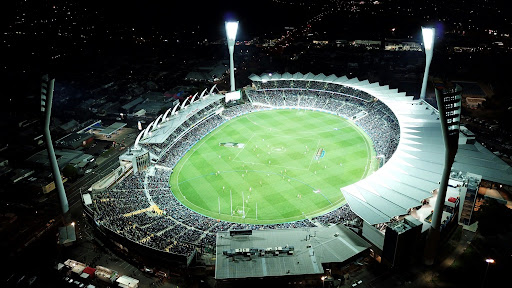
What Are Compensation Picks In The AFL?

Published

on

AFL

Compensation picks are one of the more misunderstood mechanisms in the AFL draft system. They sit somewhere between a consolation prize and a strategic asset. The AFL awards them to clubs that lose key players through free agency without bringing equivalent talent through the door. For supporters trying to make sense of why their club suddenly holds an extra second-round selection, or why a rival has jumped ahead in the draft order, compensation picks are usually the answer.

This article breaks down how they work, when clubs receive them, why they have become such a significant part of list management, and how clubs use them in practice.

The basic idea behind compensation picks

When a player leaves a club through unrestricted or restricted free agency, that club loses an asset without receiving anything tangible in return. Trading at least gives the losing club picks or players. Free agency does not.

To soften the blow, the AFL introduced a compensation system in 2012 alongside the free agency rules. The principle is simple enough: if you lose a meaningful player to a rival without acquiring a comparable replacement, the league hands you a draft pick to help rebuild. The pick comes from thin air, slotted into the draft order rather than taken from another club, which means no one is directly punished for the recipient’s gain.

Advertisement

For fans wanting to look more closely at how these picks shape draft strategy, sites covering NRL predictions & tips often track the running tally of compensation selections each off-season, since they can shift the balance of an entire draft class.

How the AFL decides the value of a compensation pick

The league does not publish a precise formula. What we know is that the AFL Football Operations department weighs several factors when determining the band a compensation pick falls into. These factors include:

  • The departing player’s salary at their new club
  • Their age
  • Their service with the losing club
  • Whether the losing club has signed a free agent of similar standing

Compensation picks are graded into bands. The bands run from first-round compensation through end-of-first-round, second-round, third-round, and fourth-round compensation. A club that loses a 26-year-old All-Australian on a million-dollar contract will receive a far higher pick than one losing a 31-year-old fringe player on a modest deal.

The compensation is also offset. If a club loses a star but signs a free agent of equal value, the compensation can be reduced or wiped out altogether. The AFL is trying to compensate net losses, not gross ones.

Restricted versus unrestricted free agents

The type of free agency matters too. Restricted free agents are players with eight years of service who fall within the top 25 percent of earners at their club. Their original club has the right to match a rival’s offer and keep them. If the offer is matched, no compensation is needed because no one has left.

Advertisement

Unrestricted free agents have either ten years of service, or eight years plus a salary outside the top 25 percent. Their club cannot match offers, which is where compensation picks become most relevant. The vast majority of compensation selections handed out each year stem from unrestricted free agent departures.

A few notable examples

The history of compensation picks tells the story better than any explanation can. When Lance Franklin left Hawthorn for Sydney in 2013, the Hawks received pick 19 as compensation. Hawthorn had just won a premiership and would go on to win two more, partly because their list was deep and partly because they used assets like that pick wisely.

When Tom Lynch left Gold Coast for Richmond ahead of the 2019 season, the Suns received the first selection of the 2018 national draft as compensation, valued as pick number three overall after academy bids were factored in. Gold Coast turned that pick into Jack Lukosius.

When Jeremy Cameron departed GWS for Geelong, the Giants received pick seven as compensation, which they bundled into trades to acquire other players. Each case shows the system working as intended: a club loses a major piece, and the league hands them something they can either use directly or trade.

Advertisement

Why compensation picks change list management

Before free agency and compensation picks existed, clubs had less flexibility to plan around player movement. A club could lose its best player and receive nothing if that player simply held out and waited for a trade that never materialised.

The current system has changed how list managers think. A club at the bottom of the ladder now has options when a star wants out. They can trade the player and try to extract a haul from a rival club, or they can let the player walk through free agency and bank on a compensation pick that might be just as valuable. The choice depends on what other clubs are willing to offer in trades, how the player feels about the destination, how the AFL is likely to grade the compensation, and where the club sits on the ladder.

This dynamic has made the trade period more interesting, not less. Clubs now bluff each other with the threat of free agency, knowing the compensation pick acts as a floor on the value they will receive.

The criticism and the counterpoint

Compensation picks are not universally popular. Some commentators argue the system favours clubs that fail to retain their best players, effectively rewarding poor list management. Others point out that compensation can be unpredictable, with the AFL’s grading process sometimes producing picks that feel either too generous or too harsh given the player involved.

Advertisement

The counterpoint is that without compensation, free agency would be a one-way door. Star players would walk to bigger clubs in bigger markets, and struggling clubs would have no path back. The compensation pick system is the AFL’s attempt to keep the competition balanced, even if the execution is imperfect.

What to watch for at the next trade period

Each off-season, a handful of free agent decisions tend to dominate the news cycle. Watching how clubs handle these moments tells you a lot about their list strategy. A club that quickly accepts a free agent’s departure and starts planning around the compensation pick is operating differently from one that scrambles to negotiate a trade.

Compensation picks have become part of the language of the AFL trade period. Watch the grading announcements in the weeks after free agency closes, because that is when the next year’s draft order really takes shape.

Advertisement
Continue Reading

Business

Faisal Islam: Six things we now know about the UK economy in charts

Published

on

Faisal Islam: Six things we now know about the UK economy in charts

The UK economy is showing resilience – it’s worth diving into the data in more detail to understand why.

Continue Reading

Business

CDC says there are no U.S. hantavirus cases currently, 41 people being monitored

Published

on

CDC says there are no U.S. hantavirus cases currently, 41 people being monitored

In this photo illustration Hantavirus samples are seen in Ankara, Turkiye on May 6, 2026.

Arman Onal | Anadolu | Getty Images

The U.S. Centers for Disease Control and Prevention said there are no hantavirus cases in the country as of Thursday, as it monitors 41 people for the virus.

Advertisement

The agency said the risk to the public remains low in the aftermath of an outbreak on a cruise ship.

The World Health Organization has reported 11 total cases of hantavirus linked to the outbreak, including three deaths.

This is breaking news. Please refresh for updates.

Choose CNBC as your preferred source on Google and never miss a moment from the most trusted name in business news.
Advertisement
Continue Reading

Business

JQUA: Focusing On Quality Helps Mitigate Volatility (NYSEARCA:JQUA)

Published

on

JQUA: Focusing On Quality Helps Mitigate Volatility (NYSEARCA:JQUA)

This article was written by

Fred Piard, PhD. is a quantitative analyst and IT professional with over 30 years of experience working in technology. He is the author of three books and has been investing in data-driven systematic strategies since 2010. Fred runs the investing group Quantitative Risk & Value where he shares a portfolio invested in quality dividend stocks, and companies at the forefront of tech innovation. Fred also supplies market risk indicators, a real estate strategy, a bond strategy, and an income strategy in closed-end funds. Learn more.

Analyst’s Disclosure: I/we have a beneficial long position in the shares of GOOGL, META, XOM either through stock ownership, options, or other derivatives. I wrote this article myself, and it expresses my own opinions. I am not receiving compensation for it (other than from Seeking Alpha). I have no business relationship with any company whose stock is mentioned in this article.

Seeking Alpha’s Disclosure: Past performance is no guarantee of future results. No recommendation or advice is being given as to whether any investment is suitable for a particular investor. Any views or opinions expressed above may not reflect those of Seeking Alpha as a whole. Seeking Alpha is not a licensed securities dealer, broker or US investment adviser or investment bank. Our analysts are third party authors that include both professional investors and individual investors who may not be licensed or certified by any institute or regulatory body.

Advertisement
Continue Reading

Business

Premier Foods profits rise as Mr Kipling cake tubs tap into bitesize trend

Published

on

Business Live

The owner of Mr Kipling, Bisto and Sharwood’s branded foods reported a profit rise of almost 13% for 2025

Premier Foods produces brands including Mr Kipling, Cadbury Cakes, Batchelors, Bisto and Ambrosia custard

Premier Foods produces brands including Mr Kipling, Cadbury Cakes and Ambrosia custard

The owner of some of the UK’s most cherished and iconic food brands heaped praise on standout performer Mr Kipling on Thursday, as Premier Foods served up financial results that comfortably surpassed City profit forecasts.

Advertisement

Mr Kipling — the brand synonymous with its “exceedingly good cakes” strapline, which has been in continuous use since 1967 when the range first launched — achieved its “biggest year ever” in 2025.

The stellar performance was driven by a fresh addition to the teatime treat category: cake tubs, as reported by City AM.

Alex Whitehouse, chief executive of the £1.8bn company, attributed the success to capitalising on a “bitesize trend” in packaging specifically engineered to facilitate sharing.

“When people want to treat themselves, they want it to be worthwhile, so indulgent, but they might only want a small amount. This is one of the reasons we believe this range has done so well, as they are catering to the trend to treat yourself, with a small, bitesize treat.”

Advertisement

Previous product innovations have included Mr Kipling-branded birthday cake tarts, lunchbox slices, and breakfast bakes.

“Boosted by these innovations, this has been Mr Kipling’s biggest ever year”, Whitehouse added.

The FTSE 250 company posted a pre-tax profit of £181.9m, representing a rise of nearly 13 per cent, comfortably beating market expectations. Headline revenue climbed 2.5 per cent to £1.175bn for the year to 28 March. Full-year headline branded revenue climbed 3.4 per cent overall, accelerating to 4.7 per cent in the second half of the year as newly launched products gained momentum — among them the Fuel10k yoghurt and granola brand.

Clive Black, at Shore Capital, said “Premier has beaten out 2026 trading profit expectations due to balanced progress across the firm, innovation, UK [market] share gains …. And good M&A”.

Advertisement

The St Albans-headquartered firm employs 4,000 staff across 13 UK sites, and also produces Bisto, alongside the Homepride, Lloyd Grossman and Sharwood’s cooking sauce ranges. In September, it acquired the Merchant Gourmet ready meals brand.

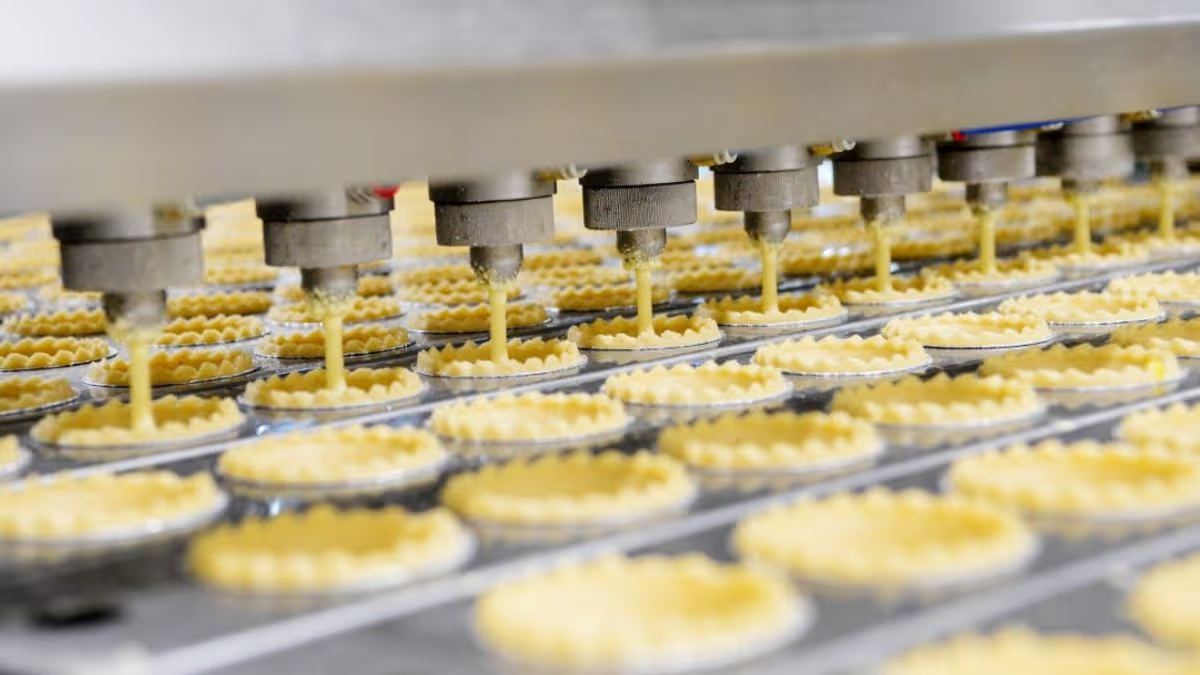
Its two bakeries, located in Stoke and Barnsley, churn out 220m packs of cakes and pies annually. Other Premier sites include the Ambrosia creamery in Devon, the Moreton bakery in Wirral which makes Mini Rolls, its savoury products factory in Worksop which makes OXO and Bisto, a central warehousing hub in Tamworth, and a finance base in Manchester.

Premier’s shares responded positively, rising nearly 3 per cent to 203p — the stock’s strongest position since May last year.

Black further noted: “We see this highly successful proprietary branded British food manufacturer as being fundamentally undervalued”. He suggested 250p “would be a fairer base” for the stock.

Advertisement
Continue Reading

Business

Form 8K Monopar Therapeutics Inc For: 14 May

Published

on


Form 8K Monopar Therapeutics Inc For: 14 May

Continue Reading

Trending

Copyright © 2025