
Business
Crude above $100: The danger zone for Indian stocks and why the next 2 weeks are critical


Edited excerpts from a chat on market outlook and opportunities:
Crude oil prices have been hovering above $100 a barrel mark. At what level, do you think the India equity story starts becoming meaningfully uncomfortable for investors?
For an oil importer like India, the impact of high oil prices can turn out to be very adverse if the prices remain elevated for an extended period. A 10% increase in crude (estimated roughly at $10) causes about 20 bp reduction in GDP growth, 30 bp increase in CPI inflation and 30 to 40 bp increase in current account deficit.This adverse macro impact will manifest if the crude price remains elevated for long. In the ongoing crisis, the durability of the crisis is significant. If the war ends soon (it can end any time) or if there is significant de-escalation and opening of the Hormuz Strait, crude can immediately fall to $80 level. In such a scenario, the adverse impact will not manifest. Another two weeks of crude above $100 is a temporary shock which the Indian economy can absorb. But beyond that, the economy and markets will be impacted.

Do you think the market is still underpricing the second-order effects of war, especially on inflation expectations, bond yields, and consumer sentiment?
The market is even now discounting a quick end to the war and cooling of oil prices. The market is not discounting a prolonged war and elevated crude oil price for long. Contrary to market expectations, if the conflict escalates and crude rises above $120 and remains at that level for many weeks, the market will further correct from the present levels. Everything boils down to how long the conflict continues, more importantly, how long Hormuz Strait remains restrictive.
How vulnerable is Q4 earnings season to this backdrop? Which sectors do you expect to show the sharpest earnings impact in Q4 from elevated crude and freight costs?
Q4 is unlikely to impact earnings significantly. The impact will be felt in Q1 FY27. However, the war and the consequent uncertainty will show up in some segments. Industries using petroleum inputs like paints, adhesives, and tyres will be hit. Manufacturers using LNG as fuel like verified tiles have been hit hard. Exporters will gain from currency tailwinds. IT will gain; but the Anthropic shock will continue to weigh on the segment. Exporters to the Gulf region will be impacted marginally.
Do you expect another round of earnings downgrades over the next few weeks if oil stays elevated?
If crude remains elevated and gas availability restrictions continue, another round of earnings downgrade will become inevitable. Earnings downgrades will be in import intensive and crude related segments mentioned earlier.
Has the small cap correction created genuine value, or are pockets of the segment still frothy despite the damage?
Correction in small caps has opened value in many segments. Broadly small cap valuations continue to be high, but there are segments with attractive valuations and high growth prospects. These are across industries and, therefore, stock selection holds the key to successful investment. An ideal strategy would be to invest in small cap mutual funds.
How are you thinking about banks in this setup, especially if higher inflation complicates the rate outlook?
Banking is one segment that is attractively valued now. Sustained selling by FPIs in leading large private sector banks has made the valuations in the segment attractive. This segment is an excellent long-term buy for investors. Credit growth in the economy continues to be good. The MPC is unlikely to increase the interest rates soon since inflation arising from supply shocks cannot be addressed through rate hikes.
Help us understand why PSU bank stocks have been the worst hit and whether one should be brave enough to buy the dip as the growth story looks promising but yields are playing spoilsport?
PSU bank stocks had a good run recently. What we are witnessing now is profit booking in the segment. This segment can be considered selectively for investment.
If the market was to rebound from here, which sectors do you think will lead the rally?
In the event of a sharp bounce back in the market, all beaten down but fundamentally strong stocks will rally smartly. But if FPIs continue to sell the rally, large cap banking names may continue to disappoint despite the strong fundamentals and attractive valuations. IT appears set for a tactical bounce back in April since the Q4 results are unlikely to disappoint. Automobiles and auto ancillaries are on a strong wicket. Telecom will remain resilient. Pharmaceuticals have potential to appreciate.

Tom Zaunmayr talks to Justin Fris about Business News’ recent business of sport feature.


Analysis-Investors reload yen shorts in intervention test

Micron, Sandisk Stocks Will Climb 33% and 26%, Analyst Says. They’re Still Not Expensive.

Thungela executives receive dividend equivalent shares
Aena shares tumble on earnings miss, higher costs

Crude oil’s sustained elevation continues to weigh on market sentiment, with concerns building around whether higher oil prices are effectively placing a ceiling on Indian equities. The discussion also touched upon the evolving UAE–OPEC+ dynamic and its potential medium-term implications for global supply.
UAE-OPEC+ shift and oil supply outlook
Market expert, Sunil Subramaniam highlighted that the current UAE situation is unlikely to result in any immediate increase in global oil supply, but could have deeper structural implications over time.He explained the logistical and geopolitical complexities shaping the region:
“See, what is the situation there is because UAE depends on the Hormuz Strait and it is heavy crude, and Saudi Arabia, which has the alternative route, has lighter crude. And anyway, UAE is not getting along with Saudi Arabia in terms of the relationship from a crude perspective. They have spent $150 billion on expanding capacity to five billion barrels, and now they are limiting them to three. So clearly UAE feels the heat.”
He further added that political positioning is also playing a role in the evolving dynamics:
“Politically, UAE wants to be aggressor in this war, but Saudi Arabia wants to be on the peace side. So it looks like UAE and the US are aligning closer to each other.”
According to him, the broader implication is a potential weakening of OPEC’s bargaining power:
“About 15% of OPEC production is UAE; that goes away, OPEC’s bargaining power comes down.”
Medium-term crude outlook and implications for India
Subramaniam noted that while short-term oil prices remain driven by geopolitical tensions—particularly disruptions linked to the Hormuz Strait—the medium-term trajectory could be more favourable.
He outlined a scenario-based outlook for oil prices:
“In about two to three months after the war, the oil price would settle at about $80 to $85. But now with this happening and UAE likely to pump another one to one-and-a-half million barrels into it, and the demand destruction because of war, in the medium term I see oil again retracing to 70.”
He emphasised that this would be a meaningful positive for India’s macroeconomic stability:
“If oil comes back to 70, it is a huge relief for India’s fiscal deficit and everything. From that point of view, this removes one cloud on India’s future.”
However, he cautioned that markets may not react immediately:
“In the short run, it is the war which is dominating, so do not expect any immediate reaction. That is why Brent has not reacted.”
Banking, financials show resilience
On the domestic financial sector, Subramaniam refrained from commenting on specific stocks but pointed to broader strength within the lending ecosystem.
He observed that rural demand and auto-linked credit trends remain supportive:
“The lending pack started off with the I bank results in terms of the fact that rural demand and auto demand both have held up strongly, and that connection between rural and auto is naturally played through lenders because of EMI-based purchasing.”
He added that asset quality remains broadly stable across the system, while also highlighting strength in non-lending financial businesses:
“Asset management companies have also come out with good results and the penetration story continues to play out.”
On PSU banks, he struck a more cautious near-term tone while maintaining a constructive medium-term view:
“Medium term my outlook on public sector banks is positive but short term I see some pressure because of the need to book profits.”
Pharma opportunity: Semaglutide and beyond
Turning to the pharmaceutical sector, Subramaniam underscored the growing global opportunity in semaglutide-based drugs, particularly as patents near expiry and generic competition expands.
He described the development as structurally significant:
“Absolutely. Semaglutides were originally a diabetic drug. India is already the diabetic capital of the world. But as a weight loss drug, it opens a much wider market.”
He pointed to strong demand potential in developed markets: “It is a huge opportunity in the Western world with unhealthy food habits. It is kind of explosive.”
On pricing dynamics and generics, he added: “They can retain very good profit margins but sell the product at 25% of what the branded drug costs. It is a game-breaking opportunity.”
Outlook
Overall, the commentary suggests that while crude oil volatility continues to dominate near-term market sentiment, the medium-term outlook may tilt more favourably for India—particularly if oil stabilises at lower levels. At the same time, financials and select pharmaceutical segments appear to be emerging as key structural themes in the evolving market landscape.

Khanchit Khirisutchalual/iStock via Getty Images

By Patrick O’Connell, CFA | Paulina Alcantara | Okan Akin, CFA
Managing carbon output may become a key profitability driver under a new EU border tax.
The European Union (EU), pursuing ambitious decarbonization goals, is significantly recalibrating
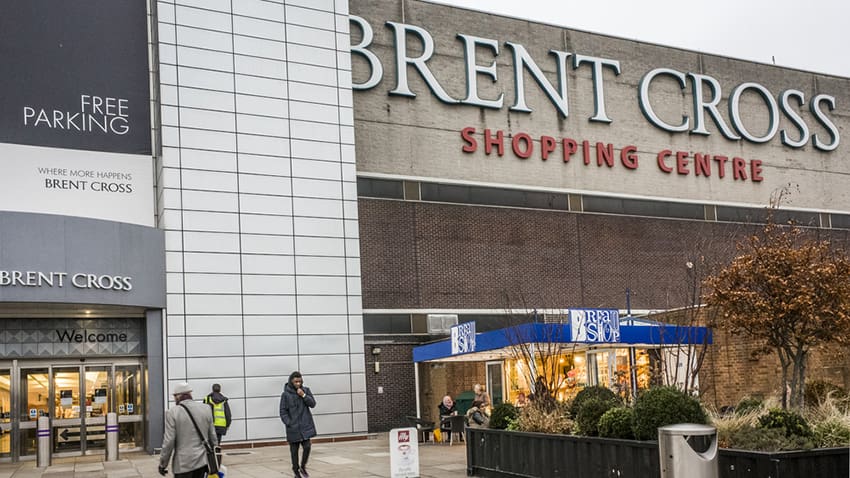
The John Lewis Partnership has been hauled before the High Court by the past and present owners of Brent Cross shopping centre in north London, in a dispute that could redraw the lines between bricks-and-mortar leases and the digital tills that now run through them.
Hammerson, the FTSE 250 landlord that owns Brent Cross today, and Standard Life, its predecessor, allege that the employee-owned retailer has been underpaying its rent for more than a decade by failing to count click-and-collect transactions as part of its in-store takings. The claim, lodged at the High Court last December and first surfaced by the *Financial Times*, hinges on the wording of a lease drafted in 1972, four years before Brent Cross even opened its doors and decades before the world wide web entered commercial use.
John Lewis has been one of the centre’s anchor tenants since 1976. The 125-year lease it signed obliges the partnership to pay a base rent of £30,000 a year plus a turnover top-up: 0.75 per cent of sales between £4m and £10m, rising to 1 per cent on anything above £10m. Industry sources put the store’s annual takings at around £50m, which would imply a rent bill of roughly £475,000 a year, a modest sum in modern retail terms, and a reminder of just how favourable these deals could be.
Such generous arrangements were common for anchors. In the heyday of the British shopping centre, landlords routinely offered cut-price rents to the John Lewises, BHSs and Marks & Spencers of the world on the basis that their mere presence would pull in footfall, lift surrounding rents and de-risk the entire scheme. Half a century on, those legacy leases are now being stress-tested against a retail landscape their drafters could not have imagined.
At the heart of the case is the meaning of “gross receipts”. Hammerson and Standard Life argue the term should capture online orders collected at the Brent Cross store, online orders fulfilled from the store, and in-store orders dispatched later from a John Lewis delivery depot. They point to lease language that already takes in “mail, telephone or similar orders received or filled at or from” the premises, alongside orders that “originated and/or are accepted at or from the demised premises” regardless of where delivery ultimately takes place.
John Lewis is not commenting publicly, but court papers show it is contesting the claim. Sources close to the partnership argue that a lease drafted before the internet existed cannot, as a matter of common sense, have intended to scoop up e-commerce.
That view has support across the property industry. “The sale occurs at the click, not the collect,” one rival landlord told *Business Matters*, “and the landlord should be benefiting from the ‘halo’ sales when shoppers come in to pick up their orders. You can’t argue there was intent to include click-and-collect in the lease because the internet didn’t exist in the seventies.”
The case is not solely about definitions. Hammerson has also taken aim at the way John Lewis has been reporting its numbers. Under the lease, the retailer must supply an audited sales certificate, signed off by its accountants. The landlord claims that for the past 12 years those certificates have come with a striking caveat: that the accountants’ examination “was not such as to constitute an audit”. Nor, it says, have the certificates included a breakdown of sales. The landlords “consider it likely” that some of those certificates have omitted sums that should have been included.
The remedy being sought is far-reaching. The claimants want the court to compel John Lewis to produce a detailed sales breakdown for every year since 2013, with backdated rent, interest and costs to follow if the figures show click-and-collect was excluded.
For SME retailers and landlords watching from the sidelines, the implications are considerable. Turnover-linked rents, once a niche feature of anchor tenant deals, have spread rapidly through high streets and retail parks since the pandemic, as landlords have offered flexibility in exchange for a slice of the upside. How the courts interpret half-century-old wording could set a benchmark for far more recent agreements that are similarly silent on omnichannel trading.
It also raises a more uncomfortable question for retailers running hybrid operations. If a click-and-collect order is fulfilled from a back-of-store stockroom, is the shop a shop, a warehouse, or both? The answer matters not just for rent, but potentially for business rates, insurance and even planning classifications further down the line.
A trial date has yet to be set. Whatever the outcome, the case is likely to be studied closely by every property director, finance chief and retail lawyer with a turnover lease in the bottom drawer.

Jamie Young
Jamie is Senior Reporter at Business Matters, bringing over a decade of experience in UK SME business reporting.
Jamie holds a degree in Business Administration and regularly participates in industry conferences and workshops.
When not reporting on the latest business developments, Jamie is passionate about mentoring up-and-coming journalists and entrepreneurs to inspire the next generation of business leaders.

Australian shares have fallen for a seventh straight session as sticky inflation made worse by the Middle East energy crisis rose to its highest rate in three years.

Revenue from operations rose 29% to Rs 2,119 crore in Q4FY26, compared with Rs 1,642 crore in the January-March quarter of FY25.
The defence PSU posted EBITDA of Rs 426 crore during the quarter, marking a 27% increase from Rs 335 crore a year earlier.
GRSE also reported strong overall financial performance, with total income rising 24.72% YoY to Rs 2,190 crore, compared with Rs 1,756.25 crore in Q4FY25.
Profit before tax (PBT) increased 26.98% YoY to Rs 410.85 crore, against Rs 323.55 crore in the corresponding quarter last year.
Earnings per share (EPS) climbed 24.14% YoY to Rs 26.47, up from Rs 21.32, reflecting stronger profitability and margin expansion.
Commenting on the results, Chairman and Managing Director Cmde PR Hari said FY26 was a landmark year for GRSE, with strong operational execution translating into solid financial performance.He said the company delivered eight warships during the year, equivalent to one ship every one-and-a-half months, calling it a notable achievement. He added that GRSE plans to maintain this pace through capability enhancement, adoption of new technologies and calibrated business diversification.
For the full year FY26, GRSE reported PAT of Rs 748 crore, compared with Rs 527 crore in FY25, registering 42% YoY growth. Revenue rose 38% to Rs 7,002 crore versus Rs 5,076 crore in FY25.
The company’s board has recommended a final dividend of Rs 6.70 per equity share for FY2025-26, subject to shareholder approval at the 110th Annual General Meeting (AGM). The dividend will be paid within 30 days of declaration at the AGM, the company said in its filing.
(Disclaimer: Recommendations, suggestions, views and opinions given by the experts are their own. These do not represent the views of The Economic Times)

T. Rowe Price amends active crypto ETF filing, moving closer to launch
17 Spring-to-Summer Dresses That Look Like Boutique Bestsellers

Costco is selling Heinz gift set that’s perfect for summer BBQs

Manchester United reach agreement with Casemiro over contract clause amid transfer speculation

US brings back mandatory military draft registration

Steven Gerrard disagrees with Gary Neville over ‘shock’ Chelsea and Arsenal claim | Football


-

 Tech2 days ago
Register Renaming | Hackaday
-

 Fashion5 days ago
Weekend Open Thread – Corporette.com
-
 Crypto World4 days ago
Hyperliquid $HYPE Rally Builds Momentum as AI Sector Enters Prove-It Phase
-

 Politics7 days ago
Making troops accountable for war crimes threatens US alliance, ex-SAS colonel warns
-

 Politics7 days ago
Disabled people challenge government SEND proposals over segregation concerns
-

 Business5 days ago
Patterson-UTI Energy, Inc. (PTEN) Q1 2026 Earnings Call Transcript
-

 Business7 days ago
Rolls-Royce Voted UK’s Most Iconic Trade Mark as IPO Register Hits 150
-
 Sports3 days ago
IPL 2026: Ruturaj Gaikwad registers slowest fifty of the season, enters all-time unwanted list | Cricket News
-

 Politics1 day ago
Drax board avoid their own AGM, accused of greenwashing & environmental racism
-

 Politics7 days ago
Zack Polanski responds to home secretary’s taser threat
-

 Politics7 days ago
Starmer handler McSweeney to be dragged from shadows by Foreign Affairs Committee
-
Politics7 days ago
Wings Over Scotland | How To Get Away With Crimes
-

 Politics7 days ago
‘Iran is still a nuclear threat’
-

 NewsBeat3 days ago
LK Bennett closes all stores after entering administration
-
 Sports6 days ago
Tim Bradley names the current best in the world: “Better than Inoue and Usyk”
-

 Crypto World5 days ago
Michael Saylor says BTC winter is over. Market analyst disagrees, says bitcoin was in a pullback
-
 Entertainment4 days ago
Mariah Carey Slams Deposition Claims In Brother’s Lawsuit
-
Business6 days ago
Altimmune prices $225 million public offering at $3 per share
-
Entertainment6 days ago
Michael B. Jordan and Austin Butler's “Miami Vice” movie will bring the action back to the '80s
-
 NewsBeat5 days ago
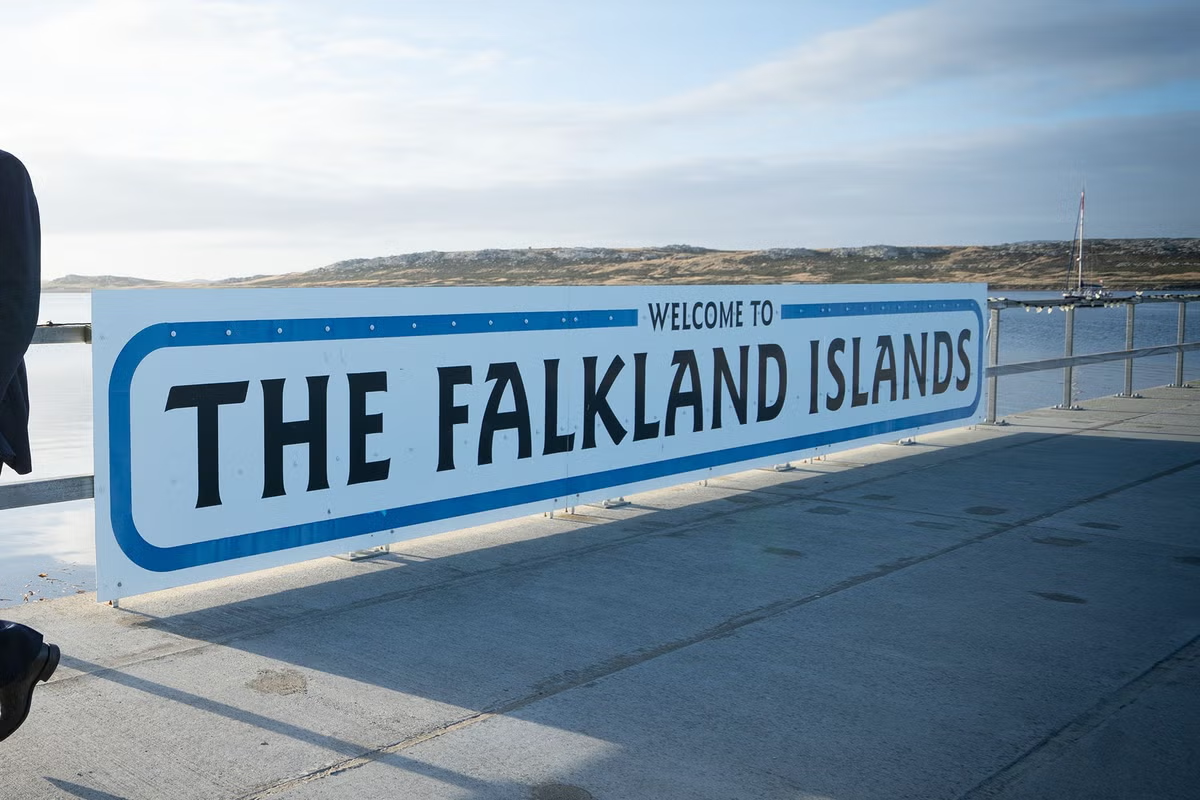
Trump threatens to review UK’s claim to Falkland Islands and punish Nato allies over Iran war disagreement
You must be logged in to post a comment Login