
Politics
The alcohol in Parliament debate has turned nasty



On Sunday 26 April, Green Party MP Hannah Spencer complained that MPs are boozing at work. Her comments went down incredibly poorly with soused MPs and journalists, but the public overwhelmingly backed her.
Now, the debate has turned nasty, because the only establishment figures left fighting are the grimmest perverts imaginable:
Great to see that the Spectator have wheeled out their finest to attack Hannah Spencer. Only in the UK can you write a column about how you cannot be trusted not to r*pe children and still keep your job. https://t.co/REJSHUnpDn pic.twitter.com/aehRlPbsO0
— Dr Iain Darcy


 (@doctoriaindarcy) April 28, 2026
Send in the creeps
Self-confessed mind-paedophile Rod Liddle’s article begins:
I think the best and most succinct description of the Green party was Tim Stanley’s ‘Stalin with a nose ring’. It gives a nod to the witless middle-class skankery of the party’s members and supporters but posits that there might be, underneath, a darker undercurrent.
This ‘dark undercurrent’ he’s talking about is not wanting MPs to drink at work – something the public overwhelmingly backs:
A total of 76% of people agree that it is unacceptable — and 52% completely unacceptable — for MPs to be drinking at work.
Labour MPs and grifter lobby journalists spent 48 hours telling us that this is a working class tradition! And that the Greens are “puritanical.” pic.twitter.com/E2f2qn3CwK — Philip Proudfoot (@PhilipProudfoot) April 27, 2026
Liddle also said:
I’m sorry Spencer doesn’t like the smell. I suspect her fellow MPs aren’t too keen on the stench of semi-digested kale which emanates from the woman, either, but we have to put these minor inconveniences aside. She represents a party which sees no harm in legalising Class A drugs, but cavils at alcohol. And she does so because alcohol is enjoyed largely by people who don’t like the Greens. It is alcohol as a signifier which annoys her, not the state of being incapacitated by it.
Rod – like your establishment media friends – you’re pretending not to understand what she said:
The UK's political culture relies on performative and aggressive stupidity to make sure nothing actually ever changes for the better. https://t.co/qlF7ePXWyX
— Marl Karx (@BareLeft) April 27, 2026
To make it simple for you:
- The Greens have spoken about legalising drugs to remove a source of income for criminal enterprise and to ensure that anyone taking hard drugs does so safely; they’re not advocating for crack pipes in the office.
- Spencer very clearly said her issue was with MPs drinking at work – not with people drinking in general.
We’d provide a longer numbered list, but we suspect Liddle wouldn’t be interested in anything past 16.
Menace to society
The next establishment figure to wade in is literally famous for being a drunken menace in Parliament. Here’s what MP Neil Coyle had to say:
I haven’t drunk alcohol in over 4 years but I don’t believe a total ban is necessary in Parliament and know Southwark brewers have loved being the guest beer in Strangers.
I’m also unaware of any Labour MP who took money from women to hypnotise their breasts larger. https://t.co/CaamewxhhD
— Neil Coyle (@coyleneil) April 28, 2026
First off, fair play to Labour politicians for sticking with the ‘hypno-boobitism’ schtick. Since they first cracked it out, the Green have overtaken them in the polls and nearly quadrupled their membership, and yet Labour MPs are still convinced the attack line is going to land at some point – an attack line which originated with the Sun, no less!
A Scottish Labour candidate in next months election using the S*n to attack Zack Polanski.
I stood on the picket line at Wapping in 1986 (I went with my mum & dad!) and I saw at first hand what the Murdoch owned scum thinks of the labour movement. https://t.co/vz0up5xbvV — Saul Staniforth (@SaulStaniforth) April 28, 2026
Back to Coyle, people were quick to point out he’s literally the poster boy for not allowing alcohol at work:
Four years ago he got drunk, sexually harassed a woman and was racially abusive to a journalist. And got away with it. Coyle should have maybe kept out of this one. https://t.co/mE7nBXomLi
— Dr Iain Darcy
(@doctoriaindarcy) April 28, 2026
Neil Coyle has been reinstated as a Labour MP, following a Commons suspension for breaching Parliament’s harassment rules.
He was suspended as an MP for five days in March, after a parliamentary probe found he had made racist comments towards a journalist.
He was also found to have engaged in “foul-mouthed and drunken abuse” of a parliamentary assistant to another MP.
Labour sources said his conduct would be monitored by its chief whip.
Mr Coyle, the MP for Bermondsey and Old Southwark, was suspended by the party last year after allegations about his comments to the reporter emerged.
The move meant he had to sit as an independent MP in the House of Commons. He was also banned from bars in Parliament for six months.
The problem with giving MPs access to cheap booze at work is it essentially encourages them to drink.
This is just another way our political establishment is at odds with the public, because Britons are overall drinking less and less. Largely, this is because people’s increased awareness of health and fitness means they understand they shouldn’t feel rundown and tetchy all the time; they should actually feel alive and happy.
Do the MPs attacking Spencer seem alive and happy to you?
Fresh, un-bloodshot eyes
While the attacks on Spencer are getting grimmer, they’re also getting lazier:
I thought this was a Green making a joke but their account is anti-Green. They thought people were gonna fall for that beer png they photoshopped onto it — cez (@cezthesocialist) April 28, 2026
 I mean I commend them for not using AI at least. https://t.co/zIyHKszBLC
We predict that, a year from now, you’ll struggle to find a single MP who publicly condones drinking at work. This is the benefit of having politicians like Spencer who aren’t a product of the establishment pipeline. They point out things that are obvious to the rest of us, but are completely mystifying to the degenerates who rule the country.
Featured image via Parliament
By Willem Moore



In the latest ‘turkeys voting for Christmas news’, a professional ‘diversity champion’ is running to become a Member of Scottish Parliament (MSP) for Reform UK.
This is a deeply hypocritical move for the party because Reform is supposedly against this sort of thing.
Reform UK candidate runs diversity training courses which her party wants scrappedhttps://t.co/ykV7PXti9A
— Reform Party UK Exposed
 (@reformexposed) April 28, 2026
Reform’s Ross will not advocate scrapping DEI
As reported by the Edinburgh Inquirer, Angela Ross isn’t just a regular diversity champion. Ross is the co-founder of a company that provides compliance training and DEI courses.
The company ran diversity training for Northumbria Police in 2020, and Ms Ross delivered a talk promoting National Inclusion Week in 2022, including a section on “unconscious bias” and how to identify protected characteristics.
Given this, do you think Ross actually wants DEI scrapping? Or do you think she knows what we know — i.e. that Reform is a Tory-style status quo party which will make far fewer changes than it threatens to because it relies on its supporters being mad all the time?
Make no mistake, Farage has said he plans to scrap DEI as BBC Radio 5 Live reported in May last year.
Nigel Farage says Reform would end promotion of diversity programmes in the workplace.
He says it’s costing the taxpayer £7bn.
What will actually happen is: Farage gets in power, he says he can’t scrap the Equality Act because of lefty judges, and then he dines on the outrage for as long as possible. Eventually — like with the Tories — voters will wise up to the fact that this stuff was mostly just window dressing.
Oh, and according to Byline Times, the real DEI bill is actually £27 million, not £7 billion.
Is it a problem that Reform can’t do maths? Maybe the real ‘equality’ they should be worried about is that of the numbers they’re adding together.
Difficulties
Of course, none of this is to say Reform won’t do actual, serious damage to the country nor is it saying they won’t make people’s lives miserable. While Reform is incredibly unlikely to deliver on the universal deportations many of their supporters desire, that doesn’t mean they won’t make the system as pointlessly cruel as possible.
DEI stuff will be harder for them because many Britons don’t like to think of themselves as racist, ableist or sexist. Should Reform actually try to abolish DEI, they’d have to explain which bits of the Equality Act need abolishing and why. When pressed on the matter, this is something they’ve struggled with.
So… Essentially, millionaire Zia Yusuf wants to ADD a section on economic inequality to the protections under the Equality Act?
Because he claims he doesn’t want to get rid of any other protected characteristics, just also make sure white working class men are protected? — Zoe Gardner (@ZoeJardiniere) February 18, 2026

OK https://t.co/AfB8ZS6dHP
In response to their diversity champion candidate being exposed, Reform said that Ross:
shares our view that many diversity, equity and inclusion programmes have gone too far, becoming bureaucratic, divisive and often ineffective. Having seen these initiatives from the inside, she is well placed to understand their shortcomings.
Reform UK’s position is clear: we support equality under the law and merit-based opportunity, but we oppose costly, box-ticking exercises that do not deliver real results.
Okay, so which bits are you planning to remove, lads? Can’t answer? It’s a very simple question and one which Reform is refusing to provide any detail on.
Local election section
In other local election news, another Reform politician has demonstrated an inability to understand numbers.
Reform Senedd candidate mocked for blasting 20mph speed limit while standing on a 50mph roadhttps://t.co/zJ99fZRSMp
— Reform Party UK Exposed
(@reformexposed) April 28, 2026
The party also has a politician who has decided they’re afraid to show their face online.
— Cllr Wayne Dixon (@Wayne_Dixon) April 27, 2026


The Canary’s coverage of Reform’s local election campaign includes the following stories:
- Reform UK now ‘rejecting’ Tory defectors following poll slump
- Reform candidates are making promises they can’t keep
- Reform activist said ‘Hitler was right’
- Reform candidate wants to ‘tear down’ the NHS
- Reform candidate exposed as a horny nincompoop
Featured image via Flickr/ European Parliament
By Willem Moore
Politics
The House | Government Promises Devolution Reform But Mayors Say ‘Begging Bowl’ Culture Persists


(Tracy Worrall)
9 min read
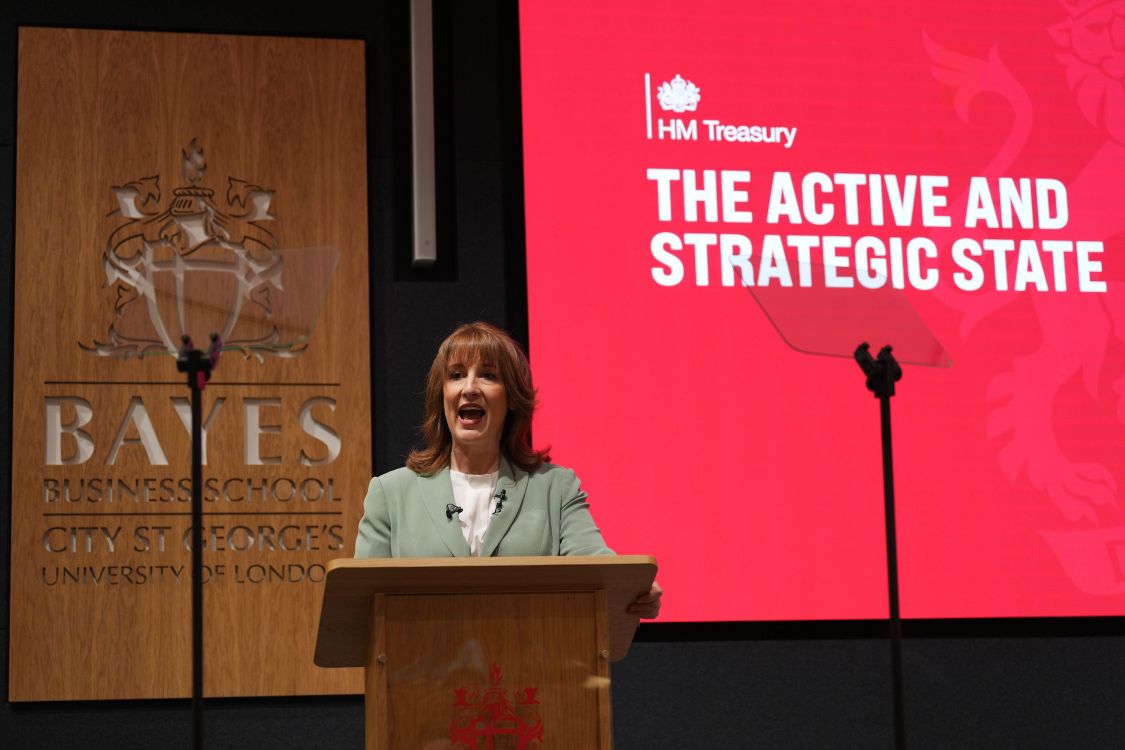
MHCLG and the Treasury are promising more powers to the devolved regions through a series of reforms. But for all the progress, regional mayors remain frustrated at a ‘begging bowl’ culture forced on them by an untrusting Whitehall. Benedict Cooper reports
At times, delivering this year’s Mais Lecture, Rachel Reeves sounded more like a fierce critic of government devolution policy than someone involved in delivering it.
The Chancellor spoke of the “stifling Whitehall orthodoxies” that have held back the regions; the “local ambition frustrated by central government control”. She attacked the “fiction that a strong economy could be built on the success of just a few places”, and called for a “genuine break with the past” as the only true solution to all of the above.
The language of the lecture must have given some relief to the mayors and officials running England’s devolved authorities. It reflected precisely their frustrations at the slow and limited nature of change.
The lack of power to raise revenues locally and to truly decide, not merely preside over, the prescribed allocation of central Treasury funds, has been at the core of discontent about the way devolution has been delivered since the start.
For now, the details of how it might be solved are with the Chancellor’s Treasury officials. To understand what’s at stake, why frustrations persist and what should be done, we’ve gone straight to the regional mayors and devolution experts.
If a single statistic can tell the story, it must surely be the Organisation for Economic Co-operation and Development’s (OECD) finding, released last year, as to how much autonomy the UK gives its regions compared to other nations.
Among the OECD countries in 2024, the average proportion of overall revenues generated by a central, national exchequer was 53.2 per cent, with the rest being raised, and spent, by regional or federal authorities. In the UK, that figure was 91.8 per cent; the highest by some distance.
The UK’s economy is as centralised as it gets. It makes the Chancellor’s plan to “liberate” the regions, by granting “control over long-term, self-sustaining capital”, extremely ambitious.
Alex Walker, senior researcher at think tank Re:State and former research assistant at the Bennett School of Public Policy, says that while the scale of the job is huge, the intention is right, and necessary to redressing a paradox of the system.
“It’s a very big development,” he says. “England is a big outlier in how fiscally centralised it is. At the moment, you’ve got this decentralisation of spending responsibilities, but not really much decentralisation of revenue raising power.”
Responsibility without power is surely a political leader’s nightmare. And, Walker says, it’s the cause of a democratic deficit at the core of English devolution.
Under the current model, he says, the money comes largely out of general taxation so the accountability is upwards to the Ministry of Housing, Communities & Local Government (MHCLG) and various Whitehall departments: “Once strategic authorities are more financially and fiscally independent from central government it should lead to the accountability being more towards their local electorate in terms of how they are spending that money that’s being raised and generated in the local area.”
There is the way money is raised, and there is the way it is distributed, or not, to the regional authorities.
England is a big outlier in how fiscally centralised it is
Akash Paun, devolution programme director at the Institute for Government, says: “Mayors often speak of the unhelpful ‘begging bowl culture’ created by the funding system they operate within, in which combined authority budgets are a hodgepodge of grants from across Whitehall.
“This is a system that has limited the ability of mayors and local partners to develop joined-up and long-term strategies for their regions, as they have to account separately to numerous different government departments for their use of public money.”
A proposed solution to this surely unsustainable situation is the integrated settlement, an instrument introduced into the English Devolution White Paper of December 2024 as a means to grant authorities access to a “consolidated budget across housing, regeneration, local growth, local transport, skills, retrofit, and employment support”.
The idea is sound. And few would argue with communities minister Miatta Fahnbulleh’s view, who tells The House it is based on the idea that “mayors know their areas better than Whitehall ever could”.
She adds: “That’s why we’re scrapping dozens of ring-fenced grants and giving seven city regions more control through integrated settlements – so they can spend on what their residents actually need.”
Far more contentious, and many mayors say deeply unhelpful, are the many qualifications and stipulations required to reach an integrated settlement in the first place. Namely, that only those authorities proven to have met eligibility criteria and thus elevated to the status of ‘established’ mayoral strategic authority (EMSA) may qualify for an integrated settlement.
At the moment, only seven combined authorities do: in Greater London, Greater Manchester, the North East, West and South Yorkshire, the West Midlands, and the Liverpool City Region.
Seven authorities out of 16. That leaves nine working to meet the criteria to reach the status to receive the funding they need.
Those criteria are extensive. And include a contentious detail that an authority must “have been in existence, with a directly elected mayor in place, for at least 18 months” before it can even submit a request to become an established authority, let alone actually receive the integrated funding.
It has left many mayors in a state of frustration, eager to get on with the work of investing in their regions.
Not least Labour’s Claire Ward, East Midlands Combined County Authority mayor, which has hit its 18 months, applied for established status and subsequent integrated settlement, but still finds itself in ongoing talks with MHCLG about getting to the next step.Ward says: “I want it to move much faster. I want to be in a position where I’m not being held back from the things that we can do in this region because I don’t have the flexibility over the integrated settlements or I don’t have the powers that are going to come with the established status.
“As mayor I feel it’s my duty to be challenging government to explain why I can’t have those powers, why I can’t have additional funding, why I don’t have that flexibility that would allow me to do far more in terms of being able to create that growth of an opportunity in the region.
“I do not want this region to be held back any longer than it needs to be.”
This is precisely the sentiment of Paul Bristow, the Conservative mayor for Cambridgeshire and Peterborough, a new mayor elected to a new role.
“We’re ready,” he says. “The authority had already done a lot of work, before I was elected last year.
“We’re following MHCLG’s guidance on when we can get established mayoral strategic authority status. The government has said it will only consider an integrated settlement for the next spending review, which is 2027.
“I want to progress that as quickly as possible, and perhaps get elements earlier, because the right time to get Cambridgeshire and Peterborough moving is now.”
The approach that’s been increasingly taken by government departments is them telling us how we should be spending the money
The sense of being held back, it seems, isn’t confined to those authorities awaiting the crucial established status.
The South Yorkshire mayoral combined authority was granted EMSA status and promised an integrated settlement as early as the white paper in 2024. Yet still its Labour Co-op mayor, Oliver Coppard, feels deprived of the powers he was promised. Coppard isn’t holding back in his criticism of a devolution system he says is “founded on a lack of trust”.
“We’ve found the process to be not in the spirit of devolution,” he says. “The principle is not being adhered to by the government. The government wants to hold onto the reins.
“And we’ve had concerns about various departments and what we are being asked to achieve with the money we’re being given. It’s the wrong way around. The approach that’s been increasingly taken by government departments is them telling us how we should be spending the money.”
Precisely what devolution was meant to undo.
There have undoubtedly been big steps forward, and real legislative action. There is grand talk of liberating the regions. But clearly, too, there is residual resistance, bureaucratic or otherwise, to releasing the reins.
“That attitude is still there in central government,” says Walker, “where the local state can’t be trusted to deliver people’s priorities. And when something goes wrong the instinct is to take it back to central government control.
“We’ve been hamstrung by a model where central government micromanages things across all of government.”
The Chancellor has identified the problems and recognised the frustrations of the regions: the begging bowl culture needs to end, and the gross imbalance in mayors’ powers and responsibility needs to be redressed.
And she has drawn broad rhetorical strokes for a solution which could truly transform the devolution process for the better.
There are risks. Vividly voicing the frustrations of regional leaders is fine, if you then fix the problems. Fail to find the right formula – or, worse, do a U-turn – and the tensions between Westminster and Whitehall on the one side, and the hamstrung devolved authorities on the other, could escalate.
Labour could find itself overseeing yet another “exercise in local ambition frustrated by central government control”, and the great opportunity devolution offers the nation as much as the regions could be lost.
An MHCLG spokesperson said: “We have a proud record on devolution. We’ve already rolled out more integrated settlements and cut bureaucracy for mayors so they have more freedom to spend in ways that they think work best for their communities. We’re not stopping there, with our English Devolution Bill, fiscal devolution roadmap, and Right to Request process we’re going even further in moving power and money out of Whitehall and into the hands of those who know their areas best.”
Alan Mak MP is a former Treasury and Business Minister and Conservative MP for Havant.
The last Conservative government protected access to cash, helping small business owners, older people and others who struggle to bank online. Now, we must secure more access to face-to-face banking. High streets have changed massively over the last decade. Since 2015, over 6,600 bank branches have shut – some places have lost 90 per cent of theirs. Nearly 50 constituencies have zero branches left, and more than 90 are down to just one.
For many people, that is not just an inconvenience. It has meant losing the ability to bank at all. In coastal and rural communities like Hayling Island and small towns such as Emsworth in my constituency, if you can’t bank online and can’t easily get elsewhere, you’re cut off. This is not an abstract policy problem. It hits the everyday life of real people hard.
The Conservatives took an important and necessary step to address this before the last election. Through the Financial Services and Markets Act 2023, which I sat on the Bill Committee for in Parliament, we placed access to cash on a statutory footing and supported the rollout of shared Banking Hubs. That was the right approach. It is already making a difference. LINK, the organisation that assesses where Hubs are needed, has carried out over 1,600 community assessments, leading to 276 Banking Hubs being recommended and delivered. But the current framework does not go far enough. It defines the problem too narrowly.
Today, the system is designed to ensure access to cash. But access to cash is not the same as access to banking, especially face-to-face banking. Being able to withdraw or deposit money is only part of what people need. Banking is also about resolving a blocked card, fixing a failed payment, getting help after fraud, or simply speaking to someone for advice or when something has gone wrong. These are not edge cases. They are everyday realities that MPs encounter from constituents all the time. For example, there are now over 3 million cases of banking and payment fraud each year, and around 70 per cent begin online. When something goes wrong, being able to speak to someone face-to-face can make the difference between stopping fraud early and losing life savings.
Nor is this a marginal issue. The FCA’s Financial Lives Survey shows that around 3.3 million people in the UK do not use online banking. More broadly, a significant minority still rely on physical services: around a quarter of people use cash frequently, and among those who are digitally excluded, that figure is even higher. The current rules do not reflect this reality. Under the existing system, communities are often judged to have sufficient provision if there is a Post Office or cash machine within one kilometre.
Of course, post offices play a vital role in providing access to cash and already form part of the solution because they operate banking hubs, separate from post office branches. But while they can facilitate access, they do not replace the full range of face-to-face banking services people rely on. As a result, too many communities fall through the cracks. They may have access to cash, but not access to banking.
This is not a failure of the model. Banking hubs are working. It is a gap in the design, which now needs to evolve to meet changing needs. That’s why I am introducing the In-Person Banking Services Bill in Parliament. My Bill will build on the success of the existing framework by placing access to face-to-face banking services on a statutory footing for the first time. It would ensure that decisions by LINK about where hubs are needed reflect access to banking services, not just cash. The Bill’s aspiration is to ensure every town or village with a population over 10,000 is eligible for face-to-face banking services through a banking hub.
The Bill is supported by AgeUK and Which? the consumer rights group, plus senior MPs including former Chancellor Sir Jeremy Hunt, former Chief Secretary to the Treasury Laura Trott MP, former City Minister John Glen MP and current Shadow Business Secretary Andrew Griffith MP in his constituency MP capacity. Other Conservative MPs from across the country are also backing the Bill.
This is not about turning back the clock. I am a strong supporter of online banking, the wider digitisation of financial services, and indeed the UK being a leader in technology and innovation. Digital banking works well for many and will continue to do so, and most young/ working-age people rarely go into a bank branch or a hub. But a modern financial system must work for all its users, not just the majority. Older people, small business owners, people in rural, suburban and coastal communities and the digitally excluded also need access to the banking system. UK Finance, the trade body for banks, who I consulted when developing the Bill, accept this.
The Conservatives were right to act to protect access to cash. Now we must go further and secure access to face-to-face banking. Because no one should be excluded from managing their own money simply because they cannot do it online.
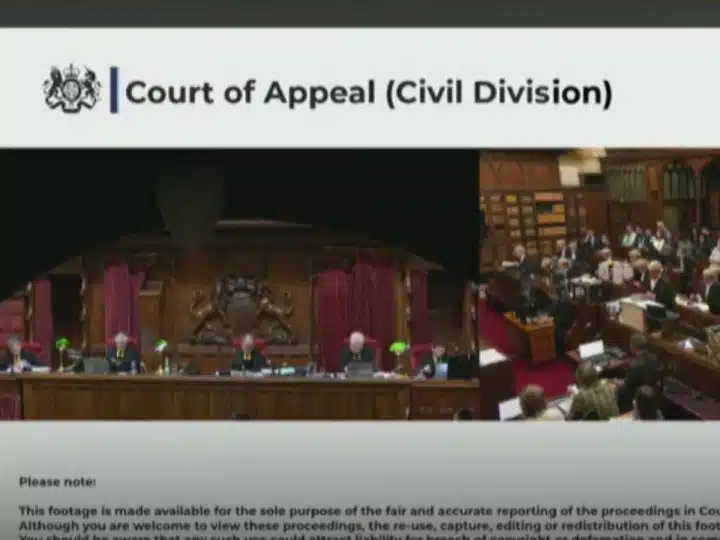

The government’s barrister Sir James Eadie KC has this morning told the Court of Appeal that the government’s ‘proscription’ (terrorism ban) on Palestine Action does not mean that people are not free to show support for the group.
Palestine Action appeal
The Home Office is trying to overturn the High Court’s decision that the ban is unlawful:
This is untrue. The Terrorism Act 2000 makes support for a proscribed organisation a criminal offence with sentences of up to 14 years. Some 3,300 people have so far been arrested for showing support for Palestine Action, mostly older and disabled people. The Metropolitan Police recently re-started arrested people for showing support for the group, even though the High Court ruled the ban was unlawful.
The hearing continues. Let’s hope the judges know enough to ignore the false claim and look at what Keir Starmer’s police state is actually doing.
Featured image via the Canary
By Skwawkbox
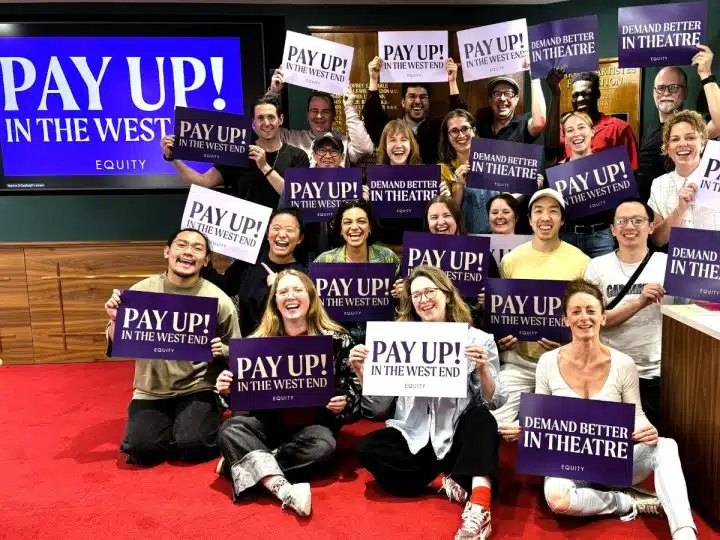

Equity, the performing arts and entertainment trade union, is asking West End performers and stage management to vote in an indicative ballot on strike action. The intention is to move producers closer to a reasonable multi-year settlement on pay, terms, and conditions.
Negotiations for a new West End agreement covering performers and stage management have been going on since December 2025. So far, they’ve been constructive. Equity is pleased with tentative proposals around improvements to maternity and paternity pay, wigs, hair, and makeup, and other terms.
Society of London Theatre (SOLT) is an industry body for London theatre owners and operators. Many, though not all, of its member venues are in the West End. It leads negotiations with unions.
However, SOLT’s proposals don’t add up to a package which meets the union’s reasonable expectations. Outstanding issues include pay, holiday, rehearsal working time, injury, and stage management differentials.
SOLT has also declined to offer payments for newly defined roles, like fight and social media captains, or resolve issues around stage management covering other roles.
Around 1,000 performers and stage management currently working across the West End come under the collective agreement. The overwhelming majority are Equity members. Members will take part in an online ballot to indicate their willingness to take strike action on Saturdays and implement an overtime ban.
First such ballot in West End since Thatcher
Additionally, members both currently working on a show and those who have worked on the West End in the past three years are being asked whether they back the union’s negotiating position. The union is balloting almost 3,000 members in total for their view. Equity is urging members to vote yes on both questions to help move talks forwards.
Equity has not conducted an indicative ballot of this type on the West End since Margaret Thatcher’s restrictions of trades union freedom in the 1980s.
Paul W Fleming, Equity general secretary, said:
Despite a positive and constructive start to negotiations, SOLT have made it clear that they are unwilling to make significant changes to the packages they have proposed. Those packages offer only a small percent above inflation over four years, after a record breaking period for West End revenue.
We hope a strong message from the workforce backing the core elements of our revised claim will support SOLT negotiators in moving their members to an acceptable settlement. Members and producers alike should be in no doubt that if a strong result in these ballots do not result in serious movement from SOLT, then a summer of disruption awaits.
SOLT has repeatedly reported record revenue over the last three years, where our members’ pay has barely kept pace with inflation, and minima have not yet returned to their pre-pandemic value. Whilst record revenue will not mean record profit for all producers, it’s clear that when suppliers, some of whom have doubled their costs since the pandemic, refuse to service productions, money is found to pay them.
Our members have waited in line to see their wages rise, and to have a more modern work-life balance in a precarious industry. In the smallest theatres, performers on the minimum earn less than the UK median wage per week, and all artists receive 20% less holiday weeks than most workers. If SOLT is serious about a modern industry, these negotiations must be a meaningful step forward. Producers need to pay up.
The ballot is online and is an indicative (ie consultative only, not statutory) ballot. It opened on Monday 27 April and will close on Monday 18 May.
Featured image via Equity
By The Canary


The former head of Mossad, Tamir Pardo, has compared Israeli settler violence in the occupied West Bank to the Holocaust.
Tamir Pardo, former Mossad head, on a tour documenting Jewish settler terror in the West Bank: “My mother is a Holocaust survivor, and what I saw here reminded me of the events of the previous century against the Jews.“ pic.twitter.com/o1eJ9vkhDi
— Etan Nechin (@Etanetan23) April 28, 2026
Former Mossad boss speaks out
Of course, if anyone in the West said that, Zionists would accuse them of antisemitism. But seen as though an Israeli said it…
The former head of the Mossad is comparing the actions of Israeli settlers in the occupied West Bank to Nazis in the Holocaust.
If someone said that in the West they’d be accused of antisemitism under the IHRA definition. https://t.co/6eJGdJDr8F
— Mehdi Hasan (@mehdirhasan) April 28, 2026
Worth pointing out that under the definition of antisemitism pushed by the ADL, this former head of Mossad and son of a Holocaust survivor would be considered antisemitic. https://t.co/7hDL34slXM
— Zaid Jilani (@ZaidJilani) April 28, 2026
Just wait for the headlines accusing left-wing activists of being antisemitic. Oh, wait, it was the former head of Mossad.
another clueless lifelong peacenik activist
oh wait no, a former head of the Mossad https://t.co/VePgYt2PdY
— Globalize Humanity #NAFO (@uavictory22) April 28, 2026
Eighty-two percent of Jewish Israelis support expelling Palestinians from Gaza. Meanwhile, 56% back the expulsion of Arab citizens of Israel. This means that the majority of Israelis have either directly taken part in the genocide because of conscription laws or support it, which means their feelings are irrelevant.
Meanwhile, the West refuses to call Israeli’s what they are – modern-day Nazi’s.
Israeli officials when they stop being in charge: “Everything this country does reminds me of the nazis”
Some dumbfuck in the west: “Nooo don’t call them nazis that’s mean >:( Israel can do no wrong, they told me so!” https://t.co/0FgNEgD5Ry
— Kat
(@Katauroraaa) April 28, 2026


Increasing violence
The ex-Mossad boss’s intervention comes as settlers in the West Bank continue to be increasingly violent towards Arabs.
As the Canary previously reported:
According to the Colonisation and Wall Resistance Commission, as of 22 April, 49 Palestinians have been murdered by illegal settlers in the West Bank since 7 October, 2023. 14 of these Palestinians lost their lives in 2025, while since 1 January, 2026, 15 Palestinians have been murdered by these colonists as of 22 April.
Only this week, the Red Crescent announced that Israeli settlers wounded a 14-year-old Palestinian in the village of Jalud, south of Nablus.
Several dozen settlers were documented arriving at the outskirts of the village and throwing stones. They then attempted to set a house on fire.
הסהר האדום הודיע כי פלסטיני בן 14 נפצע מוקדם יותר בתקיפת מתנחלים בכפר ג’אלוד דרומית לשכם. כמה עשרות מתנחלים תועדו מגיעים לפאתי הכפר ומיידים אבנים ובסרטון אחר יידוי אבנים הדדי של פלסטינים ומתנחלים במקום. תועד גם ניסיון להצית בית, לא ידוע על נפגעים מההצתה. במשטרה הודיעו כי ישראלי… pic.twitter.com/WZzOoYWJXb
— Nurit Yohanan (@nurityohanan) April 27, 2026
Settlers also demolished an EU-funded school.
Amid continued vandalism, thefts and arson, Israeli settlers demolished an EU-funded school in the West Bank.
Over 40 children lost their right to education. Their community was forced to flee, fearing for their lives.
The EU demands accountability and respect for IHL. pic.twitter.com/gRCDttMg6s
— Hadja Lahbib (@hadjalahbib) April 27, 2026
On Saturday, 25 April, settlers carried out widespread attacks across the occupied West Bank. This included forced displacement, arson, and armed assaults.
It starts at the top
Importantly, though, the rot starts at the top. Israel’s Deputy Foreign Minister, Sharren Haskel, visited an illegal outpost in the village of Umm al-Khair, armed with a pistol.
Armed with a pistol, Israel’s Deputy Foreign Minister Sharren Haskel visited the illegal outpost built by sanctioned Israeli settler terrorist Yinon Levy — the settler who murdered Awad Hathaleen — in the village of Umm al-Khair in the West Bank.
This is not a remote outpost run… pic.twitter.com/XqFRxhtll3
— Ihab Hassan (@IhabHassane) April 27, 2026
This is the same place where illegal settlers put up a fence to cut off children from their school. When the children tried to go around the fence, IOF soldiers launched tear gas and sound grenades at them. The children were as young as five years old.
Then, Sharren Haskel showed up, armed, and in solidarity with settler terrorists, not with Palestinian victims.
The Israeli government has openly funded and built illegal settlements for Jews to live in.
Several Israeli laws enable illegal settlers to steal Palestinian land.
Firstly, Israel has declared about 26% of the West Bank’s territory as “state land”. This means settlements can be built on it.
Secondly, Israel has used legal means to expropriate Palestinian property for public needs such as roads, settlements and parks.
According to Al Jazeera,
There are also Israeli “nongovernmental” organisations that work to evict Palestinians from their land using loopholes in the land laws.
Israeli authorities also regularly seize and demolish Palestinian properties citing the lack of Israeli-issued building permits and land documents.
But international rights groups say acquiring an Israeli building permit is nearly impossible.
Settler terrorism is literally Israeli government policy, funded by the state and protected by the IOF. Israel is operating exactly like Nazi Germany, through a system of apartheid, forced expulsion, violence and starvation, all because a man in the sky promised Jews the land 3000 years ago. Yet westerners are regularly called antisemitic for comparing Israel to Nazi Germany.
But who are we to argue with the former head of the Israeli secret service?
Feature image via Times Originals/YouTube
By HG
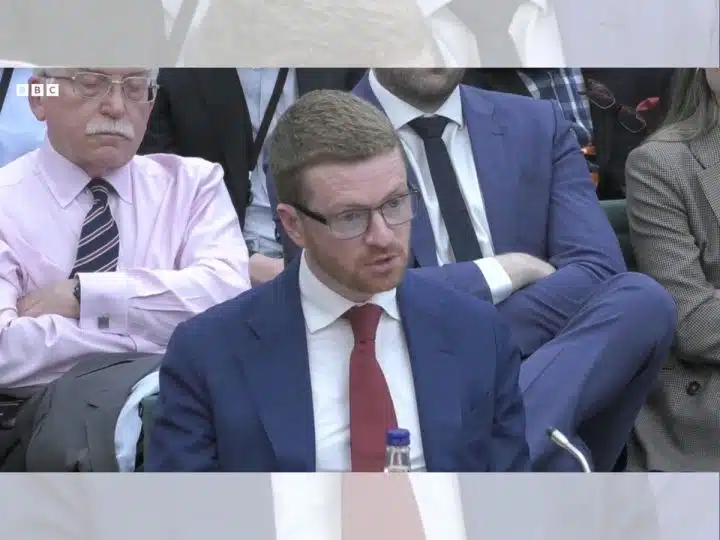

On Tuesday 28 April, Morgan McSweeney appeared before the Foreign Affairs Committee. In doing so, he no doubt hoped to weasel out of the recent scrutiny he’s faced for his role in making Peter Mandelson the ambassador to the US. Instead, he exposed the existence of a secret meeting between himself and the PM:
McSweeney says there was a meeting in which Starmer decided to appoint Mandelson. But apparently there is no record of that meeting.
— (((Dan Hodges))) (@DPJHodges) April 28, 2026
Secrets upon secrets from McSweeney
Times political editor Steven Swinford reported the following:
Morgan McSweeney reveals that Sir Keir Starmer held a meeting in mid-December where a decision was made to appoint Lord Mandelson as US ambassador
To be clear, this was before Mandelson was vetted. This provides further evidence that Starmer and those around him were planning to appoint Mandelson regardless.
Swinford also said:
There is no record of this meeting. There is no minute of the discussions or the reasoning behind the appointment at the time. The Cabinet Office simply can’t find it. It does not appear to exist.
So a really significant meeting on the appointment of the US ambassador – one which has had huge ramifications for Starmer’s premiership – only appears to exist in the memory of those who were present.
This is probably obvious, but government officials aren’t supposed to be having secret meetings; everything is supposed to be recorded.
This isn’t the only secret meeting Starmer is facing questions over either. As we reported, Starmer also secretly met with Palantir (with Peter Mandelson in tow no less). Starmer’s defence for this was that the meeting was not in fact a ‘meeting’; something he claimed despite personally referring to it as a “meeting” on at least one other occassion.
The amount that Starmer's team thinks they can get away with on technicalities is obscene, but this one really takes the piss. What the fuck do you mean it wasn't a meeting. Was it a Subbuteo tournament? https://t.co/QiA1Rgnasb
— Willibee
 (@Willibee64) April 25, 2026
Weasel words
McSweeney contradicted himself at points in the hearing. As Swinford reported:
Morgan McSweeney says that he was concerned that Lord Mandelson was not telling the ‘full truth’ in response to questions about his links to Jeffrey Epstein
But the appointment went ahead anyway.
This would have been a staggering revelation. The assumption up until now has been that McSweeney was the key driver behind the decision to make Mandelson the ambassador. If he’d been a Mandelson-doubter, that would have made Keir Starmer look even worse than he already does.
In his own words, McSweeney said:
It was the prime minister’s decision
I certainly think it would have been much, much better if I’d asked PET to ask those follow-up questions. I guess my thinking at the time was I’d put follow up questions to him in writing, and that if a senior member of staff did that, that he would feel more obligated to give the truth and the full truth.
I didn’t feel that I got that back from him, but it wasn’t my decision. It was the prime minister’s decision, and he saw the DV as part of that decision.
As Swinford later noted, however:
McSweeney is now going back on this. He says: ‘When he wrote back to me I assumed, wrongly, that he was telling the truth’
Earlier he said he didn’t feel he got the ‘full truth’ back from him
— Steven Swinford (@Steven_Swinford) April 28, 2026
Given this, you can see why McSweeney has avoided speaking in public before now.
The guy clearly has no ability to keep track of his own lies.
Epic
Paul Holden – author of The Fraud – noted that McSweeney and Labour Together worked together on an “epic campaign to destroy the left”:
Fitting the Committee ends with a poorly posed question about Labour Together, which McSweeney can then claim was a kumbaya effort to stop the Party imploding.
Sorry, pal, your besties like @SteveReedMP already spilled the beans & bragged about LT's epic campaign to destroy the… pic.twitter.com/ePucUdWRGn
— The Fraud (@StarmertheFraud) April 28, 2026
McSweeney was actually very successful in his mission to destroy the left…
…kind of.
He and Starmer managed to banish left-wingers from the Labour Party, but those people didn’t cease to exist. If you’re wondering what they’re doing now, the answer is ‘voting Green’.
This is how that’s predicted to shape up in the fast-approaching local elections:
Median estimate via @Moreincommon_, April '26 pic.twitter.com/OFxPMxmoUV
— Stats for Lefties
 Projected net changes for local elections:
 Ref +1,437
 Grn +926
 Lib +327
 Con -627
 Lab -1,738
 (@LeftieStats) April 21, 2026
This is Morgan McSweeney’s legacy.
He can pretend to be a moderate sensiblist in committee hearings all he likes, but this man’s rampant incompetence jump-started the terminal decline of one of the world’s longest-running labour parties.
Featured image via Foreign Affairs Committee
By Willem Moore
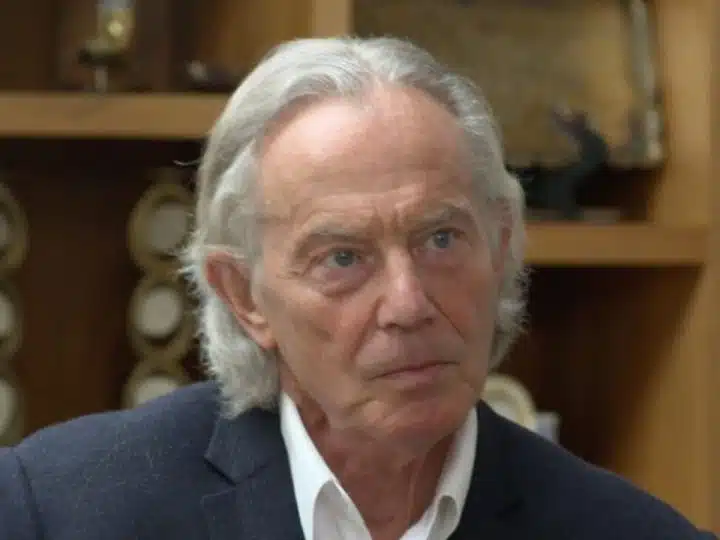

Tony Blair’s think tank has called for people with anxiety, depression and ADHD to be banned from claiming Department for Work and Pensions (DWP) disability benefits.
The latest in a long line of murky think tanks weighing in on benefits, the Tony Blair Institute says the government should pull the ’emergency handbrake’ on benefit claims. Whatever the fuck that means. The institute, founded by the former Prime Minister and war criminal, is claiming that the current system is ‘vulnerable to misuse’.
This is a ridiculous statement clearly made by someone who has never had to claim benefits. Anyone who knows how complex it is to navigate the system.
Warmonger attempts to make disabled people the enemy
The Tony Blair Institute wants to make what they call ‘non-working limiting conditions’ ineligible for benefits. This includes, instead, these people would be pointed towards treatment. Which is hilarious when you consider how much stress the NHS is already under and the backlog there already is for ADHD and mental health diagnosis and treatment.
Speaking to the Telegraph the Tony Blair Institute said
The handbrake is based on a simple idea: there are certain conditions that in the vast majority of cases do not limit an individual’s ability to work, and the default presumption should be that these non-work-limiting conditions no longer attract cash benefits
This is yet another think tank that wants to cut benefits for people with mental health and neurodivergent conditions whilst at the same time the government is trying to prove they’re over-diagnosed. This is despite experts already coming out and saying otherwise
And once again, they rely on this false idea that you do not need medical proof to get disability benefits. The Telegraph article said:
While it stressed there would be no blanket ban on claims, the TBI said claimants would have to support them with medical evidence.
It’s absolutely absurd that we’re expected to believe that neither the Telegraph nor a think tank ran by Tony sodding Blair knows you need mountains of evidence to qualify for Personal Independence Payment or the health element of Universal Credit.
But once again, they’re relying on the general public, who they’re attempting to turn against disabled people, not knowing.
They’re also relying on the public not knowing that PIP isn’t awarded based on what condition you have, but how the conditions affect your life and your ability to do things. During the 2025 PIP cut proposals, the DWP wanted to make mental health and neurodivergent conditions ineligible by changing the daily living criteria scoring system. They failed on that, so the Tony Blair Institute wants to bypass that completely.
There’s also the fact that it almost definitely won’t be medical professionals who decide which conditions are ‘work-limiting’ or not. It’ll be politicians and shadowy think tanks who want to do everything they can to cut benefits.
Tony Blair Institute policy quickly falls apart
In theory, it’s enough to get all the right wing disability haters rubbing their trousers, but practically it doesn’t work.
Most disabled people don’t just have one health condition; I’ve got thirteen. In theory I’d be disqualified because I have mental health and neurodivergent conditions, but I’ve also got a whole host of other things. Would I only be able to claim for them? Or would I be blanket-banned?
And there’s the big elephant in the room here that the right wing shitrags and the think tanks started by fucking ghouls like Blair and Iain Duncan Smith want us to ignore. Say it loudly: PIP isn’t an out-of-work benefit. And that while UC Health element is at the minute, the DWP plans to move it over to PIP too.
I, and many others, claim PIP and work – and the DWP know this. It’s absurd to propose restricting benefits only to conditions that stop you from working, when many disabled people rely on PIP so that they can work in a way that is safest for them without having to worry about not earning enough.
It’s clear this is yet another ‘policy’ that has been created so the bullshit rags on the right have another excuse to turn the public against disabled people.
Another way to turn the public against disabled people
And that’s exactly what this is designed to do, so that it’s easier for the DWP to cut benefits in the first place.
To back up this bullshit, the Tony Blair Institute also commissioned YouGov to ask a section of the UK public their thoughts on benefits claimants. One question, which shows you how vile their polling is was
Do you personally know anyone who you believe is receiving health-related welfare benefits, but you think does not genuinely need them?
This question doesn’t really do anything to further the Tony Blair Institute’s point except show that the DWP’s propaganda is working. These people have no proof, they just think they know someone who is gaming the system, based on what the media and government saturating them with constant stories of ‘lazy benefit skivers’.
In the current climate when working class people are spending every bloody hour working and still not being able to afford a good life, you can see why so many have been turned against those on benefits. But what this really speaks to is who holds all the power.
At the end of the day, your wages aren’t going to increase if your neighbour who you think doesn’t deserve it loses their benefits. Food and bills will still continue to go up. And when they’ve turned us all against disabled people, immigrants and every other minority, they’ll come for you too.
Featured image via the Canary


On April 27, Israel bombed 27 different locations in Southern Lebanon in one day – in direct contravention of the supposed ‘ceasefire‘.
According to reporting from Courtney Bonneau, a war correspondent currently in Lebanon, Israel attacked 17 locations by air. Additionally, it launched three drone attacks and seven artillery shelling strikes.
Barashit
Zawtar al-Sharqiyah
Kounine
Kfardounine
Kherbet Selm
Haris
Shaqra
Outskirts of Kfour
Basaliya
Bint Jbeil
Tibnine
Yatir
Al-Sawana
Yaroun
Touline
Al-Ghandouriya
Yahmar al-Shaqif
— courtneybonneauimages (@cbonneauimages) April 27, 2026
At the same time, the Israeli Occupation Forces (IOF) destroyed civilian homes and infrastructure in at least 6 towns. This included the towns of Aita al-Shaab and Shamaa.
Based on an update by Courtney Bonneau:
Israeli forces carried out a wide wave of attacks across southern Lebanon on April 27, 2026, striking at least 17 locations by air, alongside 3 drone strike areas and 7 sites hit by artillery shelling. The bombardment spanned key towns…
— Drop Site (@DropSiteNews) April 27, 2026
Destroying civilian homes and infrastructure…
— courtneybonneauimages (@cbonneauimages) April 27, 2026
Israel is a murderous regime
These attacks take the total number of people that Israel has murdered since it launched its illegal attack on Iran to 2,521. The attacks have injured an additional 7,804 people.
Lebanon: 2,521 Killed, Over 10,000 Casualties Since Start of Israeli War
Lebanon’s Health Ministry says 10,325 people have been killed or wounded since February 3, including 2,521 killed and 7,804 injured, according to a new national overview covering the war through April… https://t.co/Q4qiKLbSHc pic.twitter.com/mGDPOnumxS
— Drop Site (@DropSiteNews) April 27, 2026
Importantly, Israel is purposefully targeting civilian infrastructure, which in itself is a war crime.
Israel is massively bombing multiple villages across South Lebanon in the middle of the night.
Directly targeting homes and infrastructure.
This isn’t a ceasefire.
It is the relentless mass bombardment of civilian areas. pic.twitter.com/NvJiL0QU6u
— sarah (@sahouraxo) April 27, 2026
Israel dropped bombs on a civilian home in Al-Souwaneh, South Lebanon.
A woman is now buried alive beneath the rubble of her own house as rescuers fight to reach her.
This is what Israel calls a “ceasefire.” pic.twitter.com/sJMY5wkq7p
— sarah (@sahouraxo) April 27, 2026
As if it wasn’t clear enough that Israel was targeting civilian infrastructure, it has damaged at least 16 hospitals in Lebanon since the start of its attacks on Iran. This has forced four of them to close.
The genocidal terrorist state has also murdered 100 healthcare workers and injured 233, including paramedics and hospital staff. Similarly, it has hit emergency service workers hard. A total of 130 attacks were recorded, resulting in damage to 117 vehicles.
Ceasefire?
Of course, the current ceasefire applies to everyone except Israel. But this is nothing new – Israel has a long track record of ignoring ceasefire agreements.
Since October 2025 alone, Israel has committed 2,575 violations of the Gaza ceasefire. This equates to an average of 13.2 violations per day.
Israel has murdered 809 Palestinians, including 213 children, 89 women, and 23 older people. It has also wounded 2,267 people, more than half of whom were children, women or older people.
Additionally, Israel continues to illegally hold approximately 34 square kilometres beyond the agreed withdrawal lines. It has also blocked repairs to electricity, water, and sewage infrastructure.
Similarly, the United Nations Interim Force in Lebanon (UNIFIL) and the Lebanese government reported more than 15,400 ceasefire violations by Israel since the 2024 ceasefire. During this time, Israel killed more than 370 people.
From November 2024 there was a ceasefite in Lebanon which Israel violated 15,400 times according to the UN.
I witnessed 4 months of Israeli violations personally.
When Hezbollah finally fired back, the entire western media reported they “initiated” the current war.
Now Israel…— Craig Murray (@CraigMurrayOrg) April 28, 2026
On February 25, before Israel and the US launched their illegal and unprovoked attacks on Iran, Doctors Without Borders reported that:
These attacks are driving repeated waves of displacement, damaging civilian infrastructure, including homes and essential services, and preventing thousands of people from returning to their villages to rebuild.
A pattern
But only soon after the settler-colonial state was created, it started violating the UN-brokered Armistice Agreement. In the process, it killed and expelled Arab civilians from their land.
Since its very creation, Israel has not played by the rules of international law.
Still, to this day, Israel is continuing to make a mockery of the supposed ‘ceasefire’ and international law as a whole, at the expense of thousands of civilian lives.
As soon as Hezbollah retaliates or tries to protect Lebanese land from illegal Israeli attacks, Western media parrot IOF lines, calling it a “violation of the ceasefire”. Of course, Hezbollah aims at Israeli soldiers while the IOF blows up homes, schools, and hospitals.
Meanwhile, the whole world turns the other way while Israel ethnically cleanses Gaza, and now Lebanon, under the guise of ‘ceasefires’.
Feature image via Channel 4 News/YouTube
By HG

DAYS THE BUDGET IS LATE: 28
WITH FRIENDS LIKE THESE: Mayor Zohran Mamdani and Council Speaker Julie Menin have been at loggerheads over how to close New York City’s multibillion-dollar budget gap.
Mamdani has maintained the deep deficit can only be plugged if the state raises taxes on millionaires and large corporations. Menin has countered that the gap can be addressed by trimming municipal bloat — a proposal Mamdani panned as “unrealistic” just weeks ago.
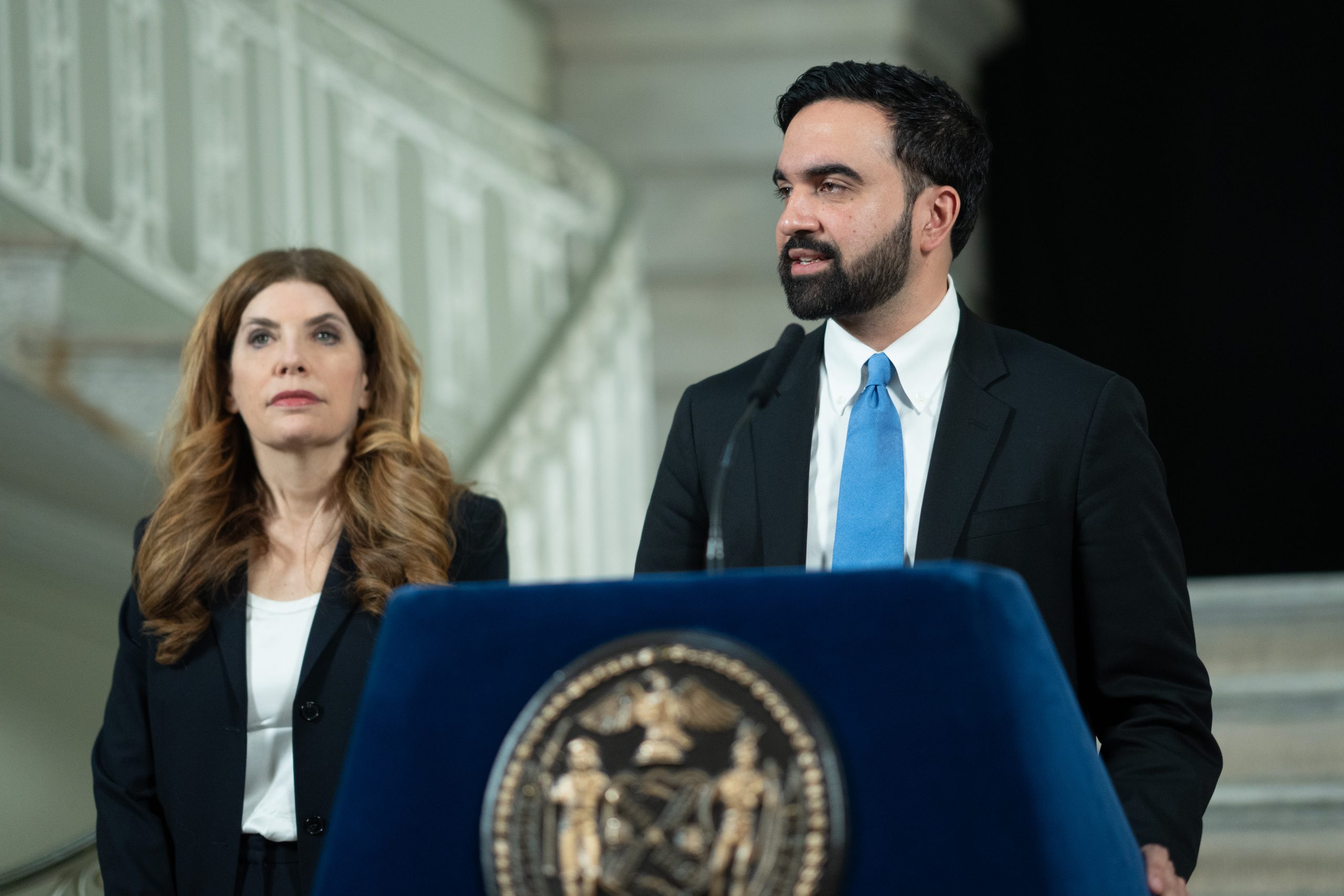
Today brought a major deescalation: The two leaders joined forces to call on Gov. Kathy Hochul and state lawmakers to scale back a tax credit largely benefitting millionaires. Doing so would generate $1 billion in new revenue for the city, a windfall that could go a long way in helping the city balance its books, Menin and Mamdani said at a joint press conference.
“We are standing together today, we will stand together again,” Mamdani said, appearing alongside Menin in the City Hall Rotunda. “If we were to reduce this tax credit by just a quarter, as the speaker said, we would be talking about raising nearly $1 billion in additional revenue that would be critical in our city’s ability to balance this budget.”
Hochul, who’s still grappling with a state budget that’s now nearly a month late, immediately threw cold water on the new push from Mamdani and Menin, putting a dent in their unusual alliance.
“It’s not happening. We’re not changing the PTET,” Hochul told reporters in Albany later in the day, using an acronym for the Pass-Through Entity Tax credit eyed for reform by Mamdani and Menin.
In slamming the door on the proposal, Hochul is leaving Menin and Mamdani without a clear path forward on how to fill the city’s budget hole. The governor’s opposition to the tax credit push also creates an unusual new front in the negotiations on this year’s overdue state budget, with Mamdani and Menin on one side and Hochul on the other.
The fraught dynamic comes at a politically delicate time for the Buffalo-born governor, who is gearing up for a reelection bid and will need deep blue New York City if she wants to cruise to a second full term. Being at odds with Mamdani, who draws support from a fervent left-leaning base, would complicate Hochul’s political standing with many Democratic voters.
Mamdani and Menin made the joint plea for the tax credit changes in tandem while announcing they had agreed to push back the release of the mayor’s executive budget proposal until May 12, a deal first reported by POLITICO on Monday night.
The executive spending plan, which forms the basis for the final stretch of negotiations before the mayor and the Council must finalize a city budget by July 1, is technically due this Friday.
But as the state budget is now nearly a month late with its own budget, Mamdani and Menin are agreeing to delay the executive plan’s release in hopes that Albany will have its fiscal outlay in order by May 12. Without knowing how much revenue will flow to the city from the state, Mamdani and Menin both said there will be holes in the city’s spending plan that would be hard to reconcile.
Read the full story from Chris and Nick in POLITICO.
FROM CITY HALL

SHELTER MOVES: A man died by suicide after he was abruptly moved out of a shelter as part of Mayor Mamdani’s plan to close the long-decaying Bellevue intake center on East 30th Street in Manhattan.
Mamdani announced the closure plan on March 5, kicking off a weeks-long rush to clear out two East Village shelters and convert them into intake centers for homeless men and adult families requesting beds. Mamdani said the move was a proactive measure based on expert guidance, noting the Bellevue intake center’s state of “severe disrepair.”
Advocates who work with homeless New Yorkers warned that the relocations posed serious health risks if not done in a careful and coordinated way.
Then Steven Rosa — who was moved from an East Village shelter with on-site behavioral health services to a hotel-turned-shelter in Brownsville, Brooklyn — seemingly fell through the cracks.
Rosa’s family told POLITICO his depression worsened after the move, and he started spending much of his time alone in his hotel room. He was found dead in early April.
“We are saddened by this tragic loss, and our hearts are with this individual’s family and loved ones during this difficult time,” a spokesperson for Comptroller Mark Levine’s office said in response to POLITICO’s reporting. “The deployment of care and support for vulnerable New Yorkers is extremely delicate and our office had raised concerns with the City about the effect changes may have on New Yorkers. We are seeking to better understand the circumstances surrounding this tragedy.”
A Department of Social Services spokesperson called Rosa’s death a “heartbreaking tragedy” but said the agency cannot comment specifically on his case due to client confidentiality.
“We continue to build on our efforts to assess potential risk factors — which might not be evident based on self-reported information and case history available to the agency — while strengthening connections to healthcare for all clients,” DSS spokesperson Neha Sharma said in a statement.
The new intake sites were supposed to open on May 1, but the timeline is in flux due to pending litigation. — Maya Kaufman
HIGH STAKES: There was a woman in candy stripes on a stilt. There was Assemblymember Stacey Pheffer Amato wearing her lucky shoes. There was Nas doing shoutouts to Resorts World during a rendition of his 1996 hit, “If I Ruled the World.”
All of this at 9:30 this morning for a ribbon cutting at New York City’s first full-fledged casino.
Resorts World is the first of three newly licensed casinos to have live table games as it begins a massive expansion of its existing gambling facility at the Aqueduct racetrack in Queens.
Boosters hail the economic opportunity from the coming overhaul, which would add a new resort and make the casino among the largest in the world. The company has also promised $2 billion in community benefits that local leaders have high hopes for.
“I have to allude to the fact that we lost a 15-year-old, Jaden Pierre, in this community,” Borough President Donovan Richards said during his remarks at the ribbon cutting. “So these benefits are largely not just about benefits for this site, it’s about the lives that this site will save.”
Resorts World was a surprise winner of a casino license following a years-long process. Proposals from Bally’s in the Bronx and billionaire Mets owner Steve Cohen also were awarded licenses in December.
Amato, who chaired a community advisory board that tested local support for the casino, began wearing a pair of shoes studded with baubles and fake diamonds during the process. She wore the same pair to the opening of the casino, which she already visits regularly.
Other speakers, like Richards and City Council Member Ty Hankerson, made a point of saying they don’t gamble, but that they want the casino to do well.
Former Council Speaker Adrienne Adams — who is running for lieutenant governor on Hochul’s ticket — said Resorts World first approached her about building a gaming facility at Aqueduct 15 years ago, when she was working for the NAACP. She said it took a while for the civil rights group to trust Resorts World but she now views the company as an “amazing” partner who has been held accountable to its community and its promises.
The head of Genting — Resorts World’s Malaysian parent company — came to do the ribbon cutting.
“Our planned expansion will bring a world-class integrated resort to this site, and when it is complete, New York will have something no other city in America can match,” Genting chair KT Kim said.
From closer to home, Nasir Jones, the New York rapper known as Nas, wore a tuxedo to help roll the ceremonial first dice.
Resorts World’s parent company has a history of late or overbudget projects, which even the body that recommended it received a license warned about, but it has some advantages: It’s open now, years before the two others will be. It also has pledged an enormous share of its revenue to the state.
It also outlasted other bidders, most notably a trio of developers who wanted to put casinos in Manhattan, including Caesars’ plan to have a gaming emporium in Times Square. Ironically, one of the older slot machine rooms at Resorts World is called Time Square Casino – and it’s the only one in New York for the foreseeable future. – Ry Rivard
From the Capitol

CLIMATE TANGO CONTINUES: The debate over changes to weaken New York’s 2019 climate law appears to be moving toward an end. Gov. Kathy Hochul’s latest proposal is for emissions reduction regulations by 2028 with an interim flexible target in 2040 and keeping the firm 2050 mandate.
“It is certainly better than it was,” said Senate Majority Leader Andrea Stewart-Cousins on Tuesday. “We’re trying to work on an entire package. … It is a huge push to make sure that we do not lose ground that we should not cede while we are waiting for the promulgation” of the regulations.
Stewart-Cousins said that rebates to help New Yorkers with high energy bills and proposals to accelerate solar investments were on the table as part of the discussions.
Hochul’s proposal includes the controversial accounting change long sought by the governor that would essentially require less aggressive action to reduce fossil fuel use, particularly natural gas, according to four people familiar with the agreement.
Some Democratic lawmakers remain dissatisfied with the proposal, and environmental groups like Food and Water Watch and New York Communities for Change are calling for them to vote no on any budget that includes changes to the climate law.
“I don’t really understand why we have to compromise so much when the entire environmental advocacy community is saying that’s a bad idea,” said Democratic Assemblymember Linda Rosenthal. “We passed the climate law. We don’t want to roll it back so dramatically.”
Hochul on Tuesday declined to commit to providing estimates of how much her proposal would cost businesses and households. She’s raised concerns about the cost of abruptly implementing a cap-and-trade program to meet the near term 2030 deadline in the climate law.
Her push to update the law would moot that target and the lawsuit over regulations to achieve it brought by environmental advocates. Hochul originally championed “cap and invest” in 2023 but has soured on the program.
“I don’t know if there will be cap and invest,” the governor said. “If there’s cap and invest, is it capped cap and invest? Is it set at a certain number? All that is unknown right now. All I know is that to give some breathing room for New York families and business I have to have a longer runway.”
The governor’s proposal currently under discussion would specify cap and invest would be part of the regulations due in 2028, according to the people familiar with the discussions. — Marie J. French
HOOD IN THE HOOD: Madison County Sheriff Todd Hood pledged to be an active lieutenant governor if elected on Republican Bruce Blakeman’s ticket this fall.
“I’m definitely not a sit-in-the-office kind of guy,” Hood said.
There’s been a split in visions for the office in recent decades – with some candidates characterizing the role as a cheerleader for the governor, and others saying it should be an independent office. Hood falls in the former category, saying his job would be to help Blakeman succeed at lower taxes and heating costs.
The Republican was at the Capitol as part of the NY Sheriffs’ Association lobby day, where he railed against Hochul’s plan to ban 287-g cooperation agreements with ICE, saying that “cutting off communication between agencies makes everyone less safe and reverses post-9/11 progress.”
Like his ticket-mate, the sheriff took a tough-on-crime approach.
“There are tons of false allegations against police,” he said when asked about a Hochul-backed plan to let New Yorkers sue ICE agents who infringe on their rights. “That’s what I’ve seen the most of in my career, are lies.”
Hood also downplayed the uproar over the recent killings of Renee Good — saying she was using her vehicle as “a deadly instrument” — and Alex Pretti by federal agents in Minneapolis.
“Yeah, you’re fighting with a police officer with a loaded firearm on you and that weapon is discovered – that’s bad things,” he said of Pretti. — Bill Mahoney
RFK JR. BEWARE: The state Assembly is pushing back against federal policy changes to vaccine recommendations with a package of six bills that would strengthen the state’s laws surrounding immunization.
Lawmaker says the package of bills is aimed at countering efforts by Health and Human Services Secretary Robert F. Kennedy Jr. to roll back immunization recommendations issued by the federal government.
The package includes legislation that would allow the state Department of Health to recommend vaccine schedules for New Yorkers using longstanding medical standards and taking into consideration recommendations from the American Academy of Family Physicians, a private professional association not beholden to recommendations made at the federal level. The state previously relied on the Advisory Committee on Immunization Practices, a federal panel responsible for making vaccine recommendations that Kennedy attempted to overhaul in an effort to install his allies before a judge blocked the appointees.
“Vaccines are foundational to public health and have long been a trusted and effective bulwark against harmful and deadly diseases, especially for our most vulnerable populations,” Speaker Carl Heastie said in a statement. “New York will stand on the side of proven science as attacks on lifesaving immunizations continue from the federal administration place our residents at risk. This legislation puts the health and well-being of New Yorkers first and ensures that these vital resources remain accessible for our communities.”
The package also includes legislation that would require college students to be immunized for Hepatitis B, a bill that would set immunization mandates for children attending summer camps and a bill that would require health insurance coverage for vaccines without cost-sharing.
An additional measure was passed that would create liability protections for health care providers administering vaccines that follow state and local guidance, a protection that could become key if providers’ actions are alleged to contradict federal guidance. — Katelyn Cordero
CAR WARS: Hochul wants to address how car insurance companies set rates for premiums — potentially a key provision that would help resolve a major sticking point in the ongoing state budget talks.
“Yes, we are looking closely at how insurance companies set their rates and what criteria they use,” Hochul told reporters Tuesday. “So there’s two sides of the equation. One is I want to make sure that some of the drivers of why we have such high insurance premiums in the state are addressed, but also the insurance companies, we’re taking a close look at their practices as well. “
POLITICO reported Monday that Hochul and state lawmakers have discussed addressing so-called flex increases that car insurance companies use to raise premiums.
Read more from POLITICO Pro’s Nick Reisman here.
IN OTHER NEWS
— NEVER THE SAME: Timothy Brown, the man police beat in a Brooklyn liquor store, which went viral on social media, is suing New York City for $100 million in damages, saying he will never recover from the incident. (Gothamist)
— NEW PROTOCOLS: The New York Police Department has stalled or rejected policy changes recommended by the Department of Investigations regarding its controversial gang-database, which critics argue is used to target Black and Hispanic youth. (THE CITY)
— GETTING PERSONAL: Citadel CEO Ken Griffin will meet with Hochul to discuss New York City’s direction following a quarrel with Mamdani after the mayor announced a proposed new tax on pricey second-homes in front of the billionaire’s Manhattan penthouse. (Bloomberg)
Missed this morning’s New York Playbook? We forgive you. Read it here.

Knicks dominate Hawks in Game 5 as Brunson leads the Way

Y Celeb ft Goddy Zm – Money

M11 blocked on edge of Cambridgeshire after ‘obstruction’ on road

Manchester United reach agreement with Casemiro over contract clause amid transfer speculation

US brings back mandatory military draft registration

Steven Gerrard disagrees with Gary Neville over ‘shock’ Chelsea and Arsenal claim | Football


-

 Tech2 days ago
Register Renaming | Hackaday
-

 Fashion5 days ago
Weekend Open Thread – Corporette.com
-
 Crypto World4 days ago
Hyperliquid $HYPE Rally Builds Momentum as AI Sector Enters Prove-It Phase
-

 Politics7 days ago
Making troops accountable for war crimes threatens US alliance, ex-SAS colonel warns
-

 Politics7 days ago
Disabled people challenge government SEND proposals over segregation concerns
-

 Business5 days ago
Patterson-UTI Energy, Inc. (PTEN) Q1 2026 Earnings Call Transcript
-

 Business7 days ago
Rolls-Royce Voted UK’s Most Iconic Trade Mark as IPO Register Hits 150
-
 Sports3 days ago
IPL 2026: Ruturaj Gaikwad registers slowest fifty of the season, enters all-time unwanted list | Cricket News
-

 Politics1 day ago
Drax board avoid their own AGM, accused of greenwashing & environmental racism
-

 Politics7 days ago
Zack Polanski responds to home secretary’s taser threat
-

 Politics7 days ago
Starmer handler McSweeney to be dragged from shadows by Foreign Affairs Committee
-
Politics7 days ago
Wings Over Scotland | How To Get Away With Crimes
-

 Politics7 days ago
‘Iran is still a nuclear threat’
-

 NewsBeat3 days ago
LK Bennett closes all stores after entering administration
-
 Sports6 days ago
Tim Bradley names the current best in the world: “Better than Inoue and Usyk”
-

 Crypto World5 days ago
Michael Saylor says BTC winter is over. Market analyst disagrees, says bitcoin was in a pullback
-
 Entertainment4 days ago
Mariah Carey Slams Deposition Claims In Brother’s Lawsuit
-
Business6 days ago
Altimmune prices $225 million public offering at $3 per share
-
Entertainment6 days ago
Michael B. Jordan and Austin Butler's “Miami Vice” movie will bring the action back to the '80s
-
 NewsBeat5 days ago
Trump threatens to review UK’s claim to Falkland Islands and punish Nato allies over Iran war disagreement
You must be logged in to post a comment Login