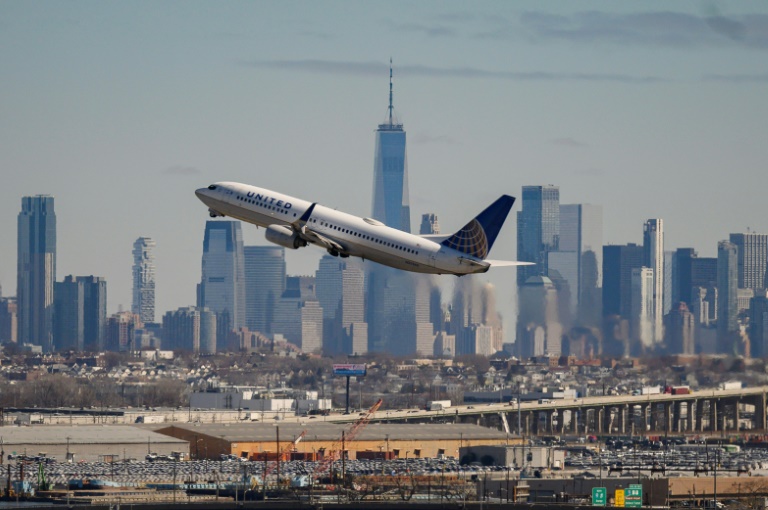
NEWARK, N.J. — Security wait times at Newark Liberty International Airport remained short and manageable on Thursday, April 2, 2026, with most TSA checkpoints reporting waits of 1 to 4 minutes for both general and TSA PreCheck lanes, according to the airport’s official real-time data.
IBTimes US
Newark Liberty, one of the busiest airports in the New York metropolitan area, handles millions of passengers annually and serves as a major hub for United Airlines. On a typical day, security lines can fluctuate significantly based on flight schedules, passenger volume and TSA staffing levels. As of mid-morning Thursday, however, travelers encountered unusually quick processing times across all three terminals.
According to the airport’s website, general security lines showed the following approximate waits:
Terminal A (all gates): 1 minute general line, no wait for TSA PreCheck.
Terminal B (Gates 40-49): 1-2 minutes general, 1 minute PreCheck.
Terminal B (Gates 51-57): 1 minute general.
Terminal B (Gates 60-68): 1-4 minutes general.
Terminal C (all gates): 2 minutes general, 2 minutes PreCheck.
These figures represent estimates and can change rapidly. Airport officials noted that posted times are approximate and advised passengers to allow extra time, especially during peak morning and evening rushes when waits can stretch to 15-45 minutes or more under normal conditions.
The relatively light lines Thursday morning likely resulted from a moderate flight schedule combined with efficient staffing. Newark has faced criticism in the past for long security delays, particularly during holiday periods or after weather disruptions, but recent data shows improvement when passenger volumes align with available resources.
Travelers with TSA PreCheck, CLEAR or Global Entry enjoyed even faster processing. In several checkpoints, PreCheck lanes reported no wait or waits under 2 minutes, highlighting the value of these expedited programs for frequent flyers.
Advertisement
Newark Liberty offers multiple security checkpoints in Terminals B and C, allowing passengers to choose lines based on their gate location. Terminal A, primarily used for some international and domestic flights, typically sees lighter traffic. Walk times from security to gates are also displayed on the airport site, helping passengers gauge total time needed after clearing screening.
Airport authorities recommend arriving at least two hours before domestic flights and three hours for international departures. With current short waits, many passengers cleared security quickly and had time to relax in lounges or grab meals before boarding.
The TSA continues to emphasize the 3-1-1 rule for liquids in carry-on bags, removal of laptops and large electronics, and proper masking or health protocols if still in effect. Passengers are encouraged to download the MyTSA app for general guidance, though the official Newark Airport website provides the most accurate terminal-specific wait times.
Factors influencing wait times at EWR include the number of open lanes, TSA staffing levels, passenger volume, and the proportion of travelers with PreCheck or other expedited screening. During peak hours — typically early mornings (5-8 a.m.) and late afternoons (3-7 p.m.) — lines can build quickly even with efficient operations.
Advertisement
Newark has invested in technology upgrades, including more automated screening lanes and better queue management, to reduce congestion. The airport also partners with airlines to promote TSA PreCheck enrollment, which has helped ease pressure on standard lines.
For international travelers, customs and border protection processing after arrival can add significant time, though departure security remains the primary concern for most. United Airlines, the dominant carrier at Newark, operates from Terminal C and has its own lounges for premium passengers that can provide a more comfortable pre-security experience.
Travelers facing longer-than-expected waits are advised to stay hydrated, wear comfortable shoes, and follow TSA officers’ instructions to keep lines moving. Families with young children or passengers needing assistance should request help from airport staff early.
The short waits reported Thursday contrast with occasional spikes seen in previous months, when government funding issues or high travel volumes caused delays of 20-40 minutes or more at some checkpoints. Officials have stressed that posted times may not always reflect real-time conditions due to sudden changes in passenger flow.
Advertisement
Passengers can check live updates on the Newark Airport website (newarkairport.com), the MyTSA app, or third-party trackers like takeofftimer.com and airlineairport.com. These tools provide estimates based on airport data and user reports, though official airport figures remain the most authoritative.
For those connecting through Newark, short security waits are particularly beneficial, as the airport’s layout requires moving between terminals in some cases. The AirTrain monorail system connects all terminals efficiently, but travelers should factor in walking and train time after security.
Newark Liberty continues to rank among the busiest U.S. airports, with strong recovery in both domestic and international traffic post-pandemic. Its proximity to Manhattan makes it a popular choice for business and leisure travelers despite occasional congestion.
Airport management works closely with the TSA and Port Authority of New York and New Jersey to optimize operations. During busy periods, additional lanes are opened when possible, and staff are redeployed to high-traffic checkpoints.
Advertisement
Travelers are reminded that security screening is a critical safety measure. While short waits are welcome, patience and compliance help maintain smooth flow and high security standards.
As of Thursday afternoon, April 2, 2026, conditions at Newark Liberty remained favorable for quick security processing. However, afternoon and evening flights could see increased volume, so passengers are urged to monitor updates and plan accordingly.
With efficient screening times reported across terminals, many travelers cleared security faster than expected, allowing more time for dining, shopping or relaxing before departure. Newark offers a variety of dining options post-security, including local favorites and national chains.
For the best experience, frequent flyers recommend enrolling in TSA PreCheck or CLEAR if eligible, arriving early during peak seasons, and packing carry-ons strategically to minimize time at the screening tables.
Advertisement
Newark Liberty International Airport serves as a vital gateway to the New York region. Its security operations directly impact thousands of daily passengers, making real-time wait time information essential for smooth travel planning.
As the day progresses, conditions may evolve with changing flight schedules and passenger arrivals. Travelers should continue checking official sources for the most current data before heading to the airport.
In summary, TSA security wait times at Newark Liberty International Airport on April 2, 2026, were notably short across most checkpoints, offering a smoother experience for passengers compared with busier periods. Staying informed through official channels remains the best strategy for any airport journey.
Cocaine and cannabis are among drugs being readily offered for sale in High Street mini-marts, a BBC investigation has revealed.
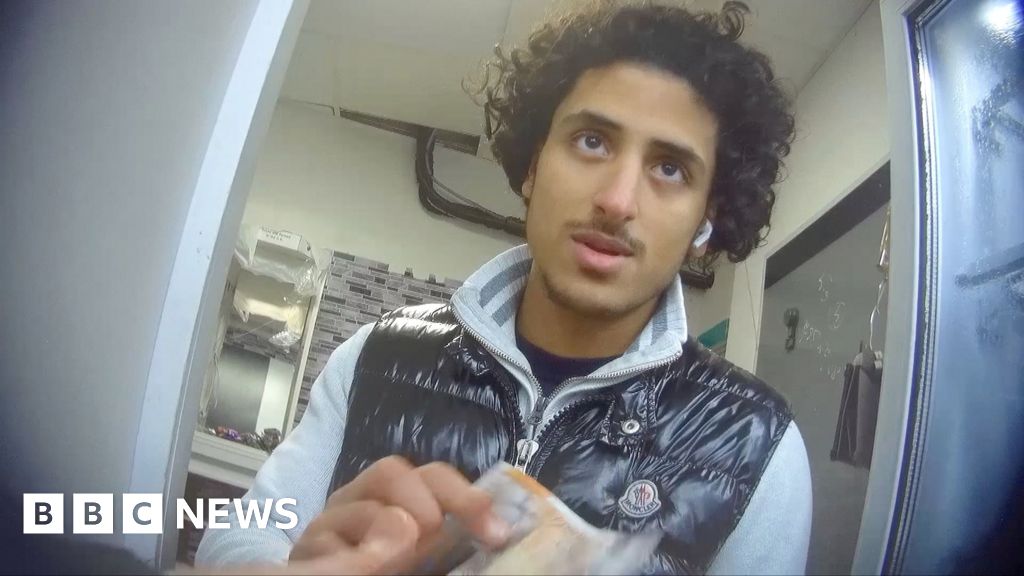
Undercover researchers secretly filmed in towns across the West Midlands, including one shop called Cradley Market. One of those researchers met Akwa, who works behind the counter there.
It took just seconds for Akwa to supply him with 3.5g of cannabis for £30. “I’ve got weed, coke, everything. Whatever you want, I can sort you out,” Akwa told the researcher, later supplying him with cocaine.
Akwa denied any wrongdoing when the BBC’s UK Editor Ed Thomas later confronted him. When asked about selling drugs, he said he did not know what he was talking about, before asking Ed and his team to leave.
Advertisement
The government is working with police, the National Crime Agency (NCA) and Trading Standards to “take the strongest possible action against these criminal businesses”, a spokesperson for the Home Office said. West Midlands Police said it would always work with partners “to act on complaints about illegal drugs sales, anti-social behaviour, and crime and disorder”.
Business to open sites in Cardiff, Brighton and Chester
The Padel Club secured investment from NPIF II – PXN Equity Finance(Image: NPIF)
A Cheshire business focused on fast-growing racket sport padel has secured eight sites across the UK and plans to open more after securing investment through the Northern Powerhouse Investment Fund.
The Padel Club was founded in 2020 by Kris Ball after he played padel overseas and realised it would soon take off in the UK too. Its first site opened in Wilmslow in 2022 and it soon grew to four sites.
Since then it has secured eight new sites in the UK and plans to grow further. Upcoming openings will include venues in Brighton, Cardiff, Chester and Handforth Dean.
Advertisement
Kris Ball, CEO of The Padel Club, said: “We saw an opportunity to bring padel to the UK at a time when the sport was still relatively unknown. Starting with just a couple of courts in Wilmslow, our ambition has always been to build a network of clubs that could introduce more people to the game and create a real sense of community around it. The support from NPIF II and PXN has given us the platform to accelerate that vision, helping us scale at pace, invest in new sites and continue growing this much-loved sport across the UK.”
Louise Chapman at PXN Ventures, said: “The Padel Club is a standout example of an ambitious, fast-scaling business bringing a relatively new sport to communities across the UK. From a single site in Wilmslow, Kris has built a strong platform for growth with a clear pipeline of locations and a differentiated, community-led offer. We’re pleased to be supporting their next stage of expansion as they continue to introduce more people to padel.”
Sue Barnard, senior investment manager at the British Business Bank, said: “Through the Northern Powerhouse Investment Fund II, we’re backing ambitious, fast-growing and community-focused businesses that are delivering real impact across the North. Just two years on from its launch, we’re already seeing tangible results, with businesses creating jobs and unlocking new opportunities to support local economies and The Padel Club is a great example of this.”
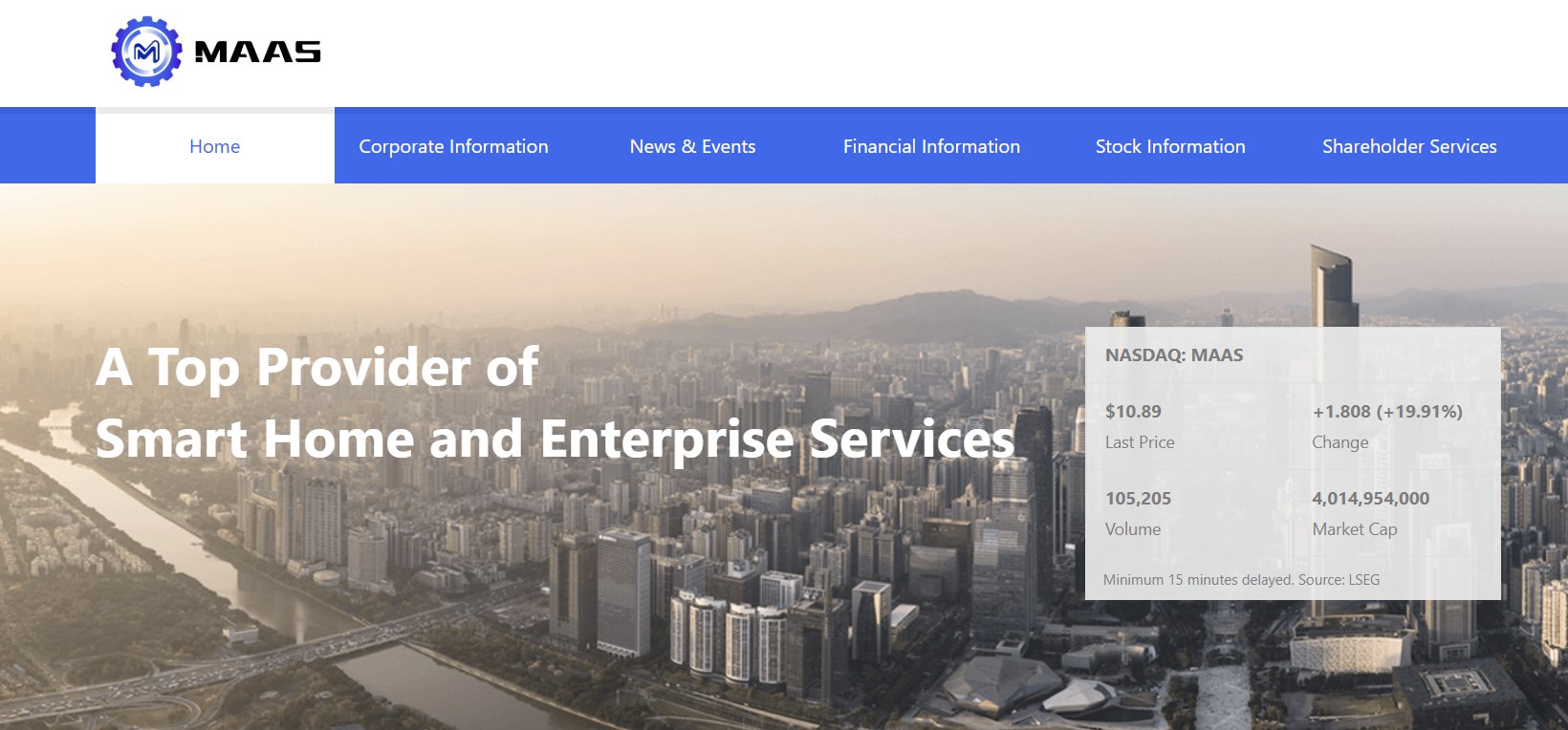
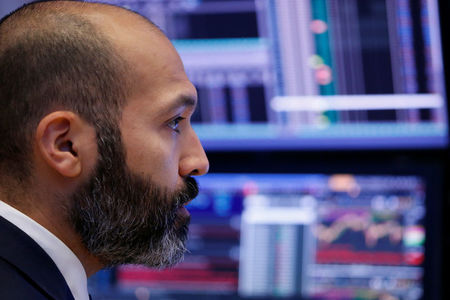
NEW YORK — Maase Inc. shares skyrocketed more than 21 percent in early trading Wednesday, reaching $11.01 as speculative enthusiasm returned to the China-based financial technology and emerging AI player following a period of sharp volatility and heavy trading volume.
Maase Inc Stock Explodes 21% on Renewed AI Acquisition Momentum and Speculative Buying
The Nasdaq-listed stock (MAAS) gained $1.93, or 21.31 percent, by 10:10 a.m. EDT, reversing much of Tuesday’s steep decline and highlighting the highly volatile nature of the name amid its aggressive pivot toward artificial intelligence infrastructure. Trading volume surged well above recent averages, reflecting continued retail and momentum-driven interest in the company’s transformation narrative.
Maase Inc., formerly known as Puyi Inc. and rebranded to reflect its evolving focus, operates primarily as a technology-driven financial services platform in China. It provides wealth management, insurance agency services and asset allocation solutions for families and enterprises through digital platforms and offline networks. Revenue has historically been dominated by its insurance agency segment, which distributes life and non-life insurance products.
In recent months, however, Maase has executed a series of strategic acquisitions aimed at repositioning itself as a full-stack AI industry player. The most significant move came on March 30, 2026, when the company completed its acquisition of 100 percent equity in Times Good Limited, which controls Huazhi Future (Chongqing) Technology Co., Ltd. and its subsidiaries. The deal, valued in the range of RMB1.1 billion when announced in January, gives Maase access to advanced computing power, algorithms and AI-related assets, marking a shift from traditional financial services toward high-performance computing and intelligent systems.
The Huazhi Future acquisition has been central to the stock’s dramatic price swings. Shares hit a 52-week high of $20.89 on April 20 before pulling back sharply on April 21, closing at $9.08 amid profit-taking and concerns over valuation and integration risks. Wednesday’s rebound suggests some investors view the dip as a buying opportunity, betting on the long-term potential of Maase’s AI ambitions in a market hungry for computing infrastructure tied to artificial intelligence.
Advertisement
Analysts and market observers note that Maase is still in the early stages of its transformation. The company has also pursued deals in new-energy technologies, intelligent unmanned systems, mobile charging robots and wellness sectors, including the acquisition of premium tea producer Oriental Grove and healthcare-related assets. These moves have created a diversified but complex portfolio that blends legacy financial services with forward-looking tech initiatives.
Despite the acquisition-driven narrative, Maase continues to face challenges typical of growth-stage companies executing rapid strategic shifts. The firm has reported ongoing net losses, and its financials reflect the costs of expansion and integration. Recent filings have highlighted risks including goodwill from acquisitions, share-based consideration that has diluted existing shareholders, and the operational complexities of merging Chinese AI assets with its core financial platform.
The stock’s volatility has been extreme. From a 52-week low near $2.41 in mid-2025, MAAS has delivered triple-digit percentage gains at times, fueled by acquisition announcements and broader AI sector enthusiasm. However, the rapid run-ups have also led to sharp reversals, as seen in the April 21 sell-off that erased significant gains from the prior session. Elevated trading volumes — sometimes several times the average — indicate heavy participation from short-term traders and momentum investors.
Maase’s market capitalization has fluctuated wildly with the share price, recently approaching or exceeding $3 billion during peak enthusiasm. The company’s shift toward AI has drawn comparisons to other small-cap names attempting to ride the artificial intelligence wave, though execution risks remain elevated given its relatively modest revenue base and ongoing unprofitability.
Advertisement
Company executives have framed the Huazhi Future deal as establishing “full-stack, self-controlled capabilities” in AI, encompassing computing power, algorithms, hardware and services. This positions Maase to potentially benefit from China’s push for technological self-reliance and global demand for AI infrastructure. Additional initiatives, such as the launch of distributed intelligent computing center projects with planned investments up to RMB5 billion, have further stoked investor interest.
Yet skeptics caution that the valuation appears stretched relative to current fundamentals. With a history rooted in insurance brokerage and wealth management, Maase must successfully integrate its new AI assets while maintaining its core operations. Regulatory considerations in China’s financial and technology sectors, currency fluctuations and geopolitical tensions could also impact progress.
Wednesday’s surge occurred against a broader market backdrop that included modest gains in major indices and continued focus on artificial intelligence themes. The stock’s movement stands out even within the volatile small-cap technology space, where narrative-driven trading often dominates over near-term earnings visibility.
Maase is scheduled to report financial results in coming months, though no specific date has been confirmed in recent disclosures. Investors will look for updates on revenue contribution from newer segments, progress on AI integration, margin trends and any guidance on future acquisitions or capital raises.
Advertisement
The company, headquartered in Chengdu with operations in Guangzhou and other Chinese cities, employs hundreds and continues to expand its digital platforms. Its evolution reflects a common pattern among Chinese-listed firms on U.S. exchanges: leveraging Nasdaq visibility to fund ambitious strategic pivots into high-growth sectors like AI while managing legacy businesses.
As trading progressed Wednesday morning, the rebound to $11.01 demonstrated resilient buying interest despite recent profit-taking. Whether the momentum sustains will depend on fresh catalysts, successful execution of the Huazhi integration and broader market sentiment toward AI-related small caps.
For long-term investors, Maase represents a high-risk, high-reward bet on China’s AI ambitions and the company’s ability to transition from financial services to a broader technology ecosystem. Short-term traders, meanwhile, appear focused on technical levels and news flow around its transformation.
The dramatic price action in Maase Inc. underscores the speculative fervor surrounding artificial intelligence themes in 2026, even as many companies in the space remain pre-profit and face significant operational hurdles. With shares up sharply in early Wednesday trading, all eyes remain on whether Maase can convert acquisition momentum into sustainable growth and profitability.
Thank you for standing by, and welcome to the Regis Resources quarterly briefing. [Operator Instructions] I would now like to hand the conference over to Mr. Jim Beyer, Managing Director and Chief Executive Officer. Please go ahead.
Jim Beyer CEO, MD & Director
Advertisement
Thanks, Darcy. Good morning, everyone, and thanks for joining us for the Regis Resources March FY ’26 quarter results. Joining me on the call today is our CFO, Anthony Rechichi; our COO, Michael Holmes; and our Head of Investor Relations, Matt Collings.
At times, we’ll refer to figures and tables in both the quarterly report, which came out this morning, and also the resource and reserves report, which was released yesterday morning. So you may find it useful to have those documents at hand.
Okay. I’ll start with safety. During the December quarter, our operations continued to perform strongly from a safety perspective. The 12-month moving average lost time injury frequency rate finished the quarter a little bit further down at 0.32, which continues to be well below the Western Australian gold industry average. Our objectives remain unchanged to provide a workplace free from serious injury. We continue to focus on leadership, discipline and continuous improvement to support safe and reliable operations across our business.
Turning now to our enviable production performance. The team has consistently delivered to plan during FY ’26 and the March quarter was no exception. Operationally, the group
ET Intelligence Group: Trent’s revenue growth in the March quarter at 19.2% was better than the 15-16% growth in the previous two quarters, driven by relatively stable consumer sentiment. However, the company’s expansion into Tier-II and Tier-III cities has been putting pressure on its largest business segment, fashion portfolio, which contributes four rupees to every five rupees of revenue. The segment’s like-for-like sales growth reduced for the quarter and for the full fiscal year as well. Though Trent believes underlying demand and market opportunities to be strong, its strategy to win market share through rapid scaling up may restrict the growth momentum in the short term. In addition, the conflict in West Asia may push up input costs though Trent is mitigating the risk through largely India-focused sourcing.
For the fashion portfolio, the same-store-sales-growth (SSSG), which consists of stores operational for over 18 months, slipped to low single digits in the March 2026 quarter and in FY26 from mid-single digit growth in the March 2025 quarter and a double-digit increase in FY25. This could be attributed to most of the stores being opened in Tier II and III cities. It further plans to raise ₹2,500 crore through a rights issue to fund the expansion strategy. It means the growth trend is likely to persist in the medium term as the company has indicated that it takes two-to-three years for newer markets to become more relevant.
Agencies
same-store-sales-growth slips to low single digits For fashion portfolio
Apart from the physical channels, Trent’s online channels – Westside.com and Tata Neu – also showed moderation in sales growth. After rising to 56% in the September 2025 quarter from 35% in the June 2025 quarter, it gradually reduced to 25% in the March 2026 quarter. The share of online channels to Westside revenues remained stable at 6% year-on-year.
On the positive side, Trent’s operating margin (EBIT margin) has gradually increased to 11.5% in the March 2026 quarter from 2.9% in the March 2023 quarter, aided by disciplined pricing, better inventory control, and the benefits of scale in sourcing and supply chain operations.
Advertisement
Trent’s stock has gained nearly 25% since April 06 when it issued an encouraging business update for the March quarter, implying a sustained top line growth. This has taken its one-month gain to 32%, also buoyed by an anticipation of a bonus issue of shares. While the announcement of the bonus issue will support the stock in the near term, its performance over the medium term will depend upon how effectively the company executes its expansion strategy.
SAN ANTONIO — Victor Wembanyama’s frightening face-first fall in the second quarter of Game 2 has left the San Antonio Spurs without their franchise cornerstone and raised serious questions about how a concussion will impact the towering 7-foot-4 phenom’s play if and when he returns in the 2026 NBA playoffs.
Wembanyama suffered a diagnosed concussion after tumbling hard to the court following contact with Portland Trail Blazers guard Jrue Holiday during a drive to the basket Tuesday night. He exited with just 12 minutes played, recording five points, four rebounds, one block and one assist, and did not return as the Blazers stole a 106-103 road victory to knot the Western Conference first-round series at 1-1.
The injury occurred at the 8:57 mark of the second quarter when Wembanyama spun around Holiday, lost his balance and slammed face-first onto the hardwood. He remained down for several seconds, appeared dazed while struggling to stand and jogged directly to the locker room after a timeout. Spurs coach Mitch Johnson confirmed postgame that Wembanyama had a concussion and was placed in the NBA’s concussion protocol.
Under league guidelines, Wembanyama cannot engage in full participation for at least 48 hours from the time of injury and must remain symptom-free while progressing through a stepwise return-to-play process. He can begin gradual activity after 24 hours if symptoms do not worsen, followed by monitored exertion levels, non-contact drills and eventual clearance from both the team physician and the NBA’s concussion protocol director. Further testing was scheduled for Wednesday.
Advertisement
The timeline puts Game 3 on Friday in Portland in serious doubt. Many observers, including ESPN’s Stephen A. Smith, believe a return for Game 3 is highly unlikely. A more realistic target appears to be Game 4 on Sunday or, more conservatively, Game 5 next Tuesday back in San Antonio. Average NBA concussion recovery spans about seven to 10 days, though individual cases vary based on symptom severity.
For a player of Wembanyama’s unique physical profile, even a mild concussion carries amplified risks. The 22-year-old’s extraordinary height means any fall generates significant force upon impact, potentially affecting balance, coordination and spatial awareness — all critical to his game. Concussions commonly cause headaches, dizziness, sensitivity to light or noise, slowed reaction times, impaired concentration and reduced cognitive processing, symptoms that could blunt Wembanyama’s elite shot-blocking, perimeter defense and stretch-big scoring.
In the regular season, Wembanyama anchored the Spurs’ defense while emerging as a versatile offensive threat capable of scoring inside, draining threes and facilitating. His playoff debut in Game 1 was electric: a franchise-record 35 points on 13-for-21 shooting, including five threes, plus five rebounds and two blocks in a 111-98 victory. Without him in the second half of Game 2, San Antonio’s interior defense softened, allowing Portland to exploit mismatches and mount a late rally.
Veteran Luke Kornet stepped in at center and delivered a solid 10 points and nine rebounds in 28 minutes, but the drop-off from Wembanyama’s rim protection and switchability was evident. The Spurs’ young supporting cast, including rising talents like Stephon Castle, showed flashes but lacked the gravitational pull Wembanyama provides.
Advertisement
Medical experts note that returning too soon from a concussion can prolong recovery or lead to second-impact syndrome, a rare but dangerous condition. The NBA’s protocol emphasizes caution, particularly in the heightened intensity of playoffs where physicality and fatigue rise. Wembanyama’s history includes a recent rib contusion late in the regular season, though that injury was unrelated.
Spurs leadership has stressed patience. “We’ll take the proper and appropriate steps,” Johnson said. “It’s tough, but health comes first.” Team officials have not ruled out Wembanyama traveling with the squad to Portland, but his on-court status remains fluid pending daily evaluations.
The absence reshapes the series dynamics. Portland, seeded seventh, seized momentum by capitalizing on San Antonio’s diminished frontcourt. Blazers players and coaches expressed concern for Wembanyama’s health while acknowledging the opportunity. If Wembanyama misses multiple games, Portland’s path to an upset brightens considerably, forcing the Spurs to rely more heavily on perimeter scoring and collective defense.
Historically, NBA teams missing star players to concussion in the postseason have mixed results. Some recover quickly and return stronger; others experience lingering effects that subtly erode performance — missed rotations on defense, delayed help-side help, or hesitation on drives. For Wembanyama, whose game relies on length, anticipation and fluid movement, any residual dizziness or neck stiffness could limit his trademark chase-down blocks or step-back threes.
Advertisement
Broader concussion awareness in the NBA has improved, with stricter protocols implemented over the years following high-profile cases. Players like former stars who dealt with repeated head trauma have spoken publicly about long-term cognitive concerns, though Wembanyama’s situation appears isolated to this single incident.
Fan reaction on social media and in San Antonio has been one of worry mixed with optimism for a swift recovery. The Frost Bank Center crowd Tuesday night fell silent during the sequence, a stark contrast to the electric atmosphere of Game 1 when Wembanyama’s playoff arrival felt like a coronation.
If cleared, Wembanyama’s return could swing momentum back to the Spurs, who finished the regular season with the Western Conference’s second-best record behind their superstar. His presence transforms San Antonio from a promising young team into a legitimate contender capable of making noise beyond the first round.
Yet the injury underscores the fragility of even the most physically gifted athletes in a grueling playoff grind. The series now shifts to Portland’s Moda Center, where the Blazers will look to build on their Game 2 resilience. San Antonio must find answers without its defensive anchor, testing the depth and composure of a roster still gaining postseason experience.
Advertisement
Medical updates will dominate the narrative over the next 48 hours. Should symptoms resolve quickly, Wembanyama could rejoin the lineup feeling fresh after enforced rest. More persistent effects might sideline him longer, forcing the Spurs into survival mode.
Wembanyama himself has projected confidence and maturity throughout his young career. In interviews before the series, he spoke of embracing the playoff stage and learning from every moment. How he navigates this health challenge will add another layer to his rapid ascent from French prospect to NBA superstar.
For now, the Spurs face an immediate test of resilience. Portland smells blood in the water after even the series, while San Antonio must adapt without its most irreplaceable piece. The coming days will reveal not only Wembanyama’s recovery timeline but also the depth of a franchise built around his extraordinary potential.
As the Western Conference playoffs intensify, one thing remains clear: the Spurs’ championship aspirations hinge heavily on their towering French star staying healthy and performing at the level that has already rewritten expectations in San Antonio. A prolonged absence could turn a promising postseason into an early exit, while a timely return might ignite a deeper run.
Advertisement
The basketball world watches closely, hoping for a full recovery that allows Wembanyama to showcase his generational talent on the biggest stage without compromise.























































You must be logged in to post a comment Login