
Business
Dalal Street Week Ahead: Lower volatility signals calm, but resistance looms large


From a structural perspective, Nifty continues to remain trapped inside a broad trading range that has governed price action over the past several weeks. The index has resisted the 20-week MA at 24027 and remains below the 100- and 50-week moving averages at 24511 and 24,832, respectively, keeping the medium-term trend in a neutral-to-cautious zone.
 Agencies
The area between 24,500 and 24,850 remains a significant supply zone, as it coincides with multiple technical resistances, including the key moving averages. A sustained move above this zone would improve the technical setup and open the door for a stronger directional upmove.
The coming week, being a truncated four-day trading week due to the Muharram holiday on Friday, may begin on a stable note with stock-specific action dominating the broader market. Immediate resistance levels are expected at 24,250 and 24,400, while supports are likely to come in at 23,850 and 23,700.
The weekly RSI stands at 47.49 and remains below the neutral 50 mark. The indicator is showing no meaningful divergence against price and remains neutral in its configuration.

The weekly MACD remains above its signal line, with an expanding histogram indicating modest improvement in the upside momentum. Pattern analysis suggests that Nifty is attempting to stabilize within the confines of its long-term trading range after a sharp corrective phase. The index has successfully defended the lower range support and has rebounded from levels near the 200-week moving average at 22,150, reinforcing the long-term bullish structure.
However, resisting the 20-Week MA at present and the inability to reclaim the 50-week and 100-week moving averages keep the index vulnerable to resistance-led consolidation. The 20-week MA has also crossed below both 50, and 100-DMAs.Given the prevailing setup, market participants should avoid becoming overly aggressive on either side of the market. While the sharp decline in volatility and successful defense of key support levels are encouraging, the index still faces a formidable resistance cluster overhead. Fresh buying should be selective and focused on stocks exhibiting relative strength and improving momentum characteristics.
Traders should continue protecting gains and avoid chasing extended moves until Nifty decisively clears the 24,500-24,850 zone. The most prudent approach for the week would be to maintain a stock-specific strategy while closely monitoring the index’s behavior around the identified resistance band for signs of a stronger directional move.
In our look at Relative Rotation Graphs®, we compared various sectors against the CNX500 (NIFTY 500 Index), representing over 95% of the free-float market cap of all the listed stocks.
AgenciesAgenciesThe Relative Rotation Graph (RRG) shows that the Nifty Media, Midcap 100, and Energy Sector Indices are the only three Indices that are inside the leading quadrant. While the Energy Sector Index is seen sharply giving up on its relative momentum, this group may relatively outperform the broader markets.
The Nifty Metal and the PSE Indices are inside the weakening quadrant. They may continue slowing down on their relative performance. The Pharma and the Infrastructure Indices are also inside the weakening quadrant, but they are seen improving on their relative momentum against the broader markets.
The IT, Auto, and Financial Services Index stays inside the lagging quadrant. They may relatively underperform the broader markets. The Banknifty, Services sector, and the PSU Bank Index are also inside this quadrant, but they are improving their relative momentum against the benchmark. The Realty and the FMCG Indices are inside the improving quadrant.
Important Note: RRGTMchartsshow the relative strength and momentum of a group of stocks. In the above Chart, they show relative performance against the NIFTY500 Index (Broader Markets) and should not be used directly as buy or sell signals.


As lifelong classicists and Christopher Nolan fans know, one of the ordeals that Odysseus and his crew endured on their way home from Troy came when they had to sail their boat between two hazards: the sea-monster Scylla and the whirlpool Charybdis.
It’s really a lot like earnings season. As they prepare to parse the latest results from Microsoft and Meta Platforms, investors also need to keep two perils in mind.
🌀What if these companies spend too much? Alphabet’s earnings last week crystallized this side of the equation. The company raised its capital-expenditure guidance to $200 billion. The shares dipped, reflecting investors’ worry that artificial intelligence won’t generate enough returns to justify that epic spending.

Check out what’s clicking on FoxBusiness.com.
Publix is recalling all lots of its GreenWise Organic Whole Blueberries and Whole Mixed Berries sold across eight states over concerns they may be contaminated with E. coli, expanding an earlier recall tied to a single lot of frozen blueberries.
The Lakeland, Florida-based grocery chain said Wednesday it is voluntarily recalling all lots of the frozen fruit products “out of an abundance of caution” after public health officials’ trace back and epidemiological investigation linked them to a multistate E. coli O145 outbreak.
The recalled products were distributed to Publix stores in Alabama, Florida, Georgia, Kentucky, North Carolina, South Carolina, Tennessee and Virginia.
The company said it implemented an internal stop sale at the end of June, and the products remain unavailable for purchase.
ABOUT 1.5M RECHARGEABLE HAND WARMERS RECALLED AFTER 1 DEATH, HUNDREDS OF BURN INJURIES REPORTED

A package of Publix GreenWise Organic Whole Blueberries is shown. Publix recalled all lots of its GreenWise Organic Whole Blueberries and Whole Mixed Berries over potential E. coli O145 contamination. (FDA / Unknown)
The expanded recall follows a July 3 recall by Chilean supplier Frutas y Hortalizas del Sur S.A. involving a single lot of GreenWise Organic Blueberries. Publix said it broadened the recall to include all lots of GreenWise Organic Whole Blueberries and Whole Mixed Berries based on information gathered during the ongoing public health investigation.
Customers are being urged not to consume the recalled products and should either throw them away or return them to any Publix store for a full refund. The affected products are GreenWise Organic Whole Blueberries in 10-ounce packages (UPC 41415-06453) and 48-ounce packages (UPC 41415-12053), along with GreenWise Organic Whole Mixed Berries in 10-ounce packages (UPC 41415-06753) and 48-ounce packages (UPC 41415-12153).
According to the Food and Drug Administration, Escherichia coli O145:H28 is a Shiga toxin-producing strain of E. coli that can cause severe stomach cramps, diarrhea that may be bloody and vomiting. While most healthy people recover within about a week, some infections can lead to hemolytic uremic syndrome, a potentially serious complication that is more likely to affect young children, older adults and people with weakened immune systems.
POPULAR GROCERY CHAIN RECALLS COOKIES IN 9 STATES AND DC AFTER LABELING ERROR

A package of Publix GreenWise Organic Whole Mixed Berries is shown. The retailer expanded its recall to all lots of the frozen berry products following a public health investigation into a multistate E. coli outbreak. (FDA / Unknown)
FOX Business reached out to Publix for additional comment, including whether any illnesses have been linked to products sold at its stores and what prompted the company to expand the recall to all lots. Publix did not immediately respond.
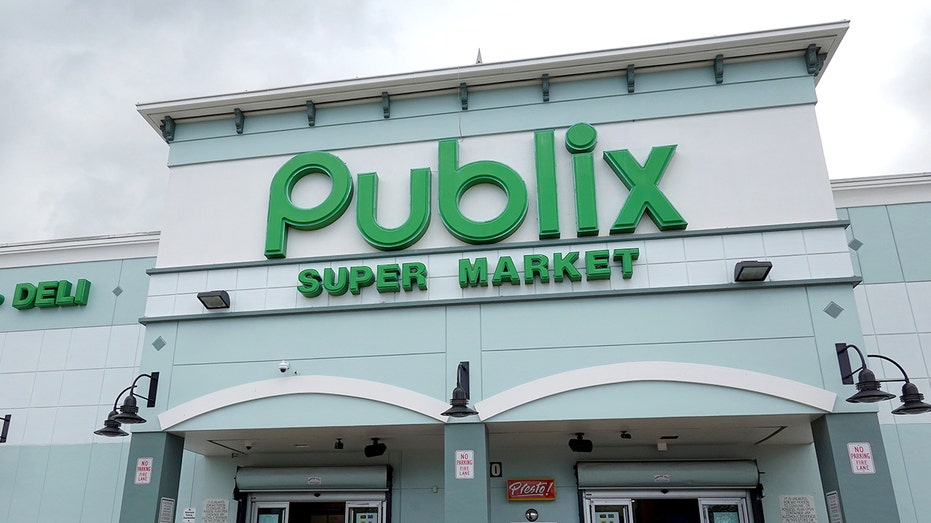
The entrance to a Publix Super Market on July 30, 2024 in Miami, Florida. (Joe Raedle/Getty Images / Getty Images)
CLICK HERE TO GET FOX BUSINESS ON THE GO
Customers with questions can contact Publix Customer Care at (800) 242-1227 from 8:30 a.m. to 5 p.m. ET Monday through Friday. Additional information about the outbreak investigation is available through the Centers for Disease Control and Prevention.
Publix, the largest employee-owned company in the U.S., operates more than 1,400 stores across Alabama, Florida, Georgia, Kentucky, North Carolina, South Carolina, Tennessee and Virginia.

Perth’s new city architect is on a mission to communicate the value of design.

Check out what’s clicking on FoxBusiness.com.
Ocoopa Direct is recalling about 1.5 million rechargeable hand warmers following hundreds of burn injuries and one reported death.
The lithium-ion batteries in the recalled products can overheat and catch fire, posing a risk of “serious injury or death from fire and burn hazards,” according to a notice Thursday from the U.S. Consumer Product Safety Commission (CPSC).
Ocoopa Direct has received 1,480 reports of the hand warmers overheating, including 15 fires and 350 burn injuries, the CPSC said.
POPULAR GROCERY CHAIN RECALLS COOKIES IN 9 STATES AND DC AFTER LABELING ERROR
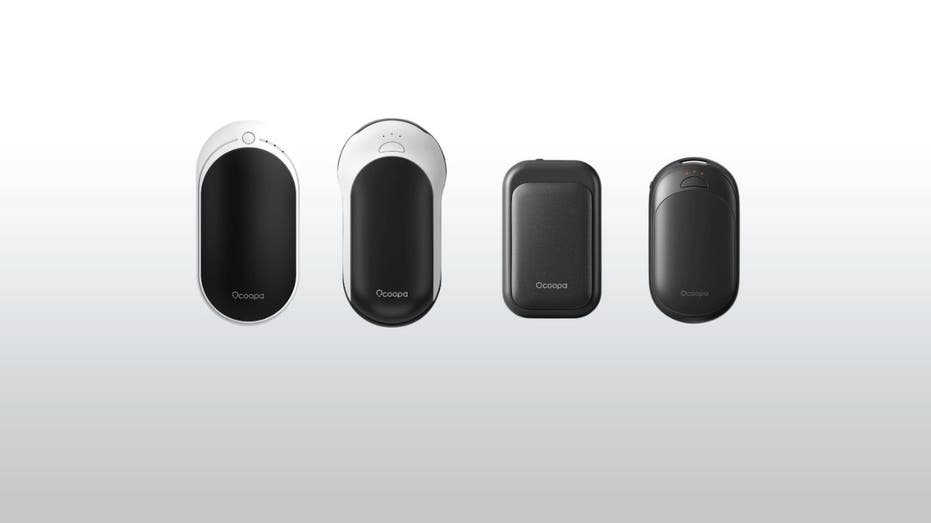
Ocoopa Direct has received 1,480 reports of the hand warmers overheating, including 15 fires and 350 burn injuries, the CPSC said. (U.S. Consumer Product Safety Commission)
An 83-year-old consumer in San Diego died in February after an incident involving one of the hand warmers, according to the agency.
The recall covers Ocoopa rechargeable hand warmers with model numbers UT3053, UT3056, ZLS-118, ZLS-118S, ZLS-118D, H01 and H01(PD).
The hand warmers were sold in various colors and designs, according to the CPSC.
BROOKLYN ROASTING COMPANY RECALLS COLD BREW SOLD IN NEW YORK AND NEW JERSEY OVER BOTULISM RISK
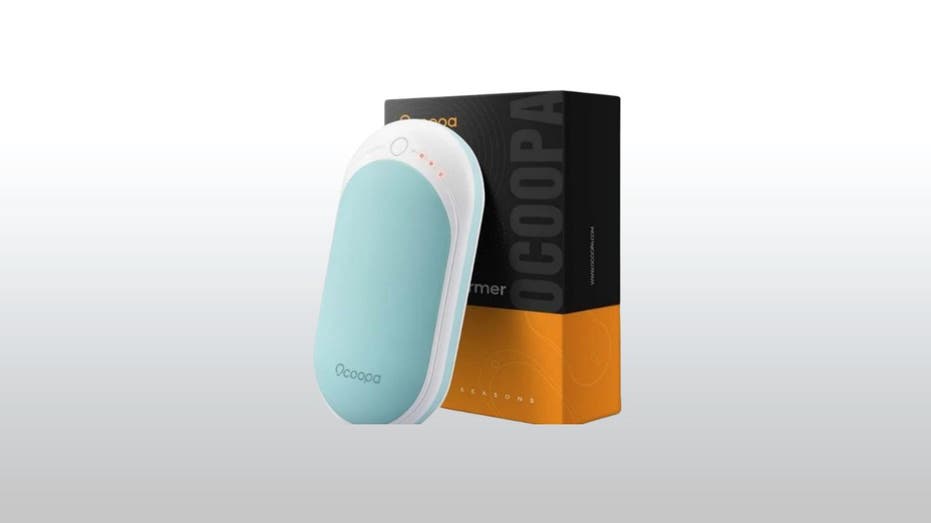
The lithium-ion batteries in the hand warmers can overheat and catch fire, posing a risk of “serious injury or death from fire and burn hazards.” (U.S. Consumer Product Safety Commission)
“The dual-sided, rechargeable hand warmers were sold in varying colors and designs, in packs of two warmers that can magnetically be joined and with a charging cable,” the announcement noted.
The products were sold online through Amazon, Ocoopa and Walmart between September 2018 and May 2026 for $15 to $60.
TARGET, KROGER, MEIJER FRUIT PURÉE POUCHES RECALLED OVER PLASTIC RISK: FDA
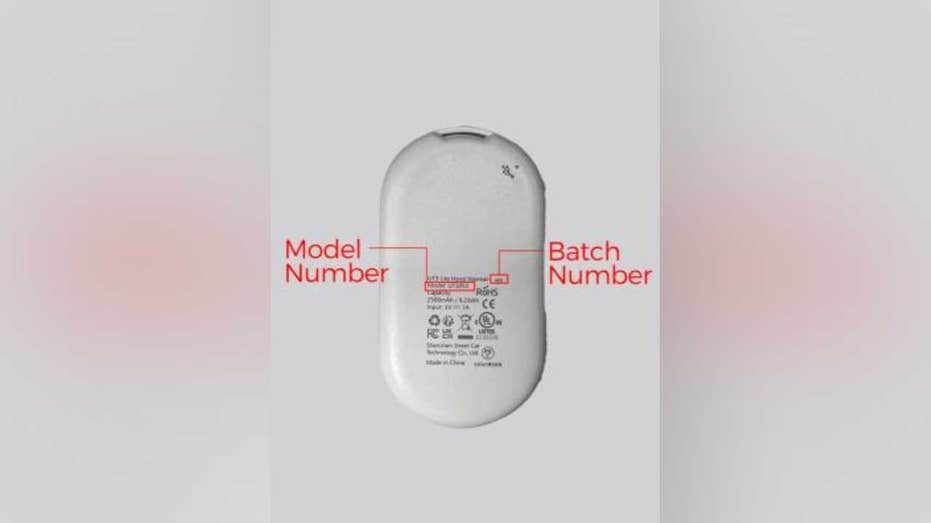
The products were sold online through Amazon, Ocoopa.net and Walmart.com between September 2018 and May 2026 for $15 to $60. (U.S. Consumer Product Safety Commission)
“Consumers should stop using the recalled hand warmers immediately and contact OCOOPA Direct for a full refund in the form of an Ocoopa gift card or the original form of payment,” the announcement said.
The CPSC also warned consumers not to throw the recalled products in the trash or place them in regular recycling or battery collection bins.
CLICK HERE TO GET FOX BUSINESS ON THE GO
For more information about the recalled products, visit the CPSC’s website.
FOX Business reached out to Ocoopa Direct for comment.


Jonathan Weber holds an engineering degree and has been active in the stock market and as a freelance analyst for many years. He has been sharing his research on Seeking Alpha since 2014. Jonathan’s primary focus is on value and income stocks but he covers growth occasionally. He is a contributing author for the investing group Cash Flow Club where along with Darren McCammon, they focus on company cash flows and their access to capital. Core features include: access to the leader’s personal income portfolio targeting 6%+ yield, community chat, the “Best Opportunities” List, coverage of energy midstream, commercial mREITs, BDCs, and shipping sectors,, and transparency on performance. Learn More.
Analyst’s Disclosure: I/we have a beneficial long position in the shares of GOOG, MSFT either through stock ownership, options, or other derivatives. I wrote this article myself, and it expresses my own opinions. I am not receiving compensation for it (other than from Seeking Alpha). I have no business relationship with any company whose stock is mentioned in this article.
Seeking Alpha’s Disclosure: Past performance is no guarantee of future results. No recommendation or advice is being given as to whether any investment is suitable for a particular investor. Any views or opinions expressed above may not reflect those of Seeking Alpha as a whole. Seeking Alpha is not a licensed securities dealer, broker or US investment adviser or investment bank. Our analysts are third party authors that include both professional investors and individual investors who may not be licensed or certified by any institute or regulatory body.

Water companies have performance commitments on issues such as leakage.
It is illegal to release raw sewage into rivers and seas during “normal” weather conditions, but firms are allowed to do so when it rains heavily, to prevent homes being flooded.
Thames is the UK’s largest water company, supplying water and wastewater services to 16 million customers across London and parts of southern England.
Speaking to the BBC’s Big Boss Interview podcast, Weston said the company treats 4.3 billion litres of waste a day, and “99.5% of the time” it gets treated successfully, although “sometimes something goes wrong”.
“We want to do better when it comes to pollutions,” he said, but added, “the targets that the company is expected to make are not realistic.
“[For example], we have to hit a certain level of leakage, but it is so far in excess of what we are capable of doing, I think anyone would be capable of doing, however much money you invested, that it is not going to be achievable.”
The chance of getting to zero pollution was “very, very slim”, he added.
Ofwat told the BBC: “With around a fifth of water put into supply still lost through leakage, companies must deliver on the commitments they have been funded to achieve.
“Water company targets are intended to be ambitious and drive better outcomes for customers and the environment.”
A spokesperson for the Environment Agency said: “[We] and the public expect Thames Water to comply with the law,” adding that the agency would continue to hold companies to account where performance falls short.
James Wallace, chief executive of campaign group River Action, said: “Thames Water’s tactics of opacity and deflection fool no-one. Telling the public to save water while this wasteful profit-obsessed corporation leaks 570 million litres of treated drinking water every day is offensive.
“There is nothing ‘realistic’ about accepting sewage pollution as inevitable. The choice is simple: keep propping up a failed privatised financial model, or put Thames Water into special administration and rebuild it as a public utility serving customers, rivers and the public.”

The Powerball jackpot climbed to $707 million after no ticket matched all six numbers drawn Wednesday night, making it the second-largest lottery prize awarded so far this year, though the eventual winner will end up taking home considerably less once taxes and deductions are applied.
Wednesday’s drawing produced the numbers 30, 36, 40, 42 and 57, along with a red Powerball number of 2. With no winning ticket sold, the jackpot rolls over and grows ahead of the next scheduled drawing on Saturday night.
Whoever eventually wins the jackpot will face a choice between two payout structures. The winner can select the full $707 million prize distributed across 30 annual installments, or opt for a one-time lump-sum cash payment of $309.7 million, the option most lottery winners historically choose given the immediate access to funds it provides.
Either path comes with a substantial tax bill. If the winner selects the cash option, a mandatory 24% federal withholding tax is applied immediately, reducing the $309.7 million prize to $235.4 million. Because lottery winnings of this size push winners into the highest federal tax bracket, the winner would likely face an additional marginal tax rate as high as 37% depending on their overall taxable income, further reducing the final payout to approximately $195.1 million.
Winners who instead choose the 30-year installment option would receive annual payments of roughly $23.5 million before taxes, a figure that drops to approximately $14.8 million per year once the top 37% federal marginal tax rate is applied to each installment.
State taxes add another layer of variation to how much winners ultimately keep, depending on where they live. Some states, including New York, tax lottery winnings at rates as high as 10.9%, while other states, including Texas, Florida and California, do not tax lottery winnings at the state level at all, meaning a winner’s home state can meaningfully affect their final take-home amount regardless of which national payout option they select.
This week’s drawing marks the first time UK lottery players have had the opportunity to win the Powerball jackpot, following an expansion that began last week allowing British players to participate in the U.S.-based game. Lottery officials have said the addition of UK ticket sales to the overall prize pool is expected to produce faster-growing jackpots over time, since a larger pool of participating players across both countries increases how quickly unclaimed prize money accumulates between winning drawings.
The rules differ somewhat for UK winners specifically. If the Powerball jackpot winner turns out to be a UK ticket holder, they will not have the option to select the lump-sum cash payout available to U.S. winners, and can only receive their prize distributed across the standard 30 annual installments. The advertised jackpot amount for UK players is listed separately at £377 million, or approximately $503.5 million, a figure that appears notably lower than the $707 million U.S. prize. According to the UK National Lottery, that lower advertised figure reflects the estimated total a UK-based winner would actually receive over the full 30-year payout period, after accounting for currency exchange rate fluctuations and UK-specific tax requirements applied to the winnings.
Wednesday’s rollover keeps the Powerball jackpot on track to become the second-largest completed lottery prize of the year, behind only the $800 million Mega Millions jackpot claimed by a Florida ticket buyer earlier this week. The largest Powerball jackpot actually won so far in 2026 stands at $250.8 million, claimed by a lottery player from Arkansas.
The odds facing anyone attempting to win the Powerball jackpot remain extraordinarily long. A single ticket faces roughly 1-in-292.2 million odds of matching all the numbers required to claim the jackpot, a figure that is itself slightly worse than the already remote 1-in-290.4 million odds associated with winning the Mega Millions jackpot, the other major multistate lottery game played across the United States.
Despite the astronomically long odds, both Mega Millions and Powerball continue to draw significant public interest whenever their jackpots climb into the hundreds of millions of dollars, driven in part by extensive media coverage of rising prize totals and the relatively low cost of purchasing individual tickets compared with the potential winnings on offer. Ticket sales for both games have historically accelerated sharply as advertised jackpots grow larger, a pattern that has repeated again this week as the Powerball prize has climbed toward its current $707 million total following Wednesday night’s rollover.
With no winner emerging from Wednesday’s drawing, attention now turns to Saturday night’s Powerball drawing, when the jackpot is expected to grow further still if once again no ticket matches all six numbers, continuing a stretch that has already produced one of the largest prize totals of the year across America’s two major national lottery games.
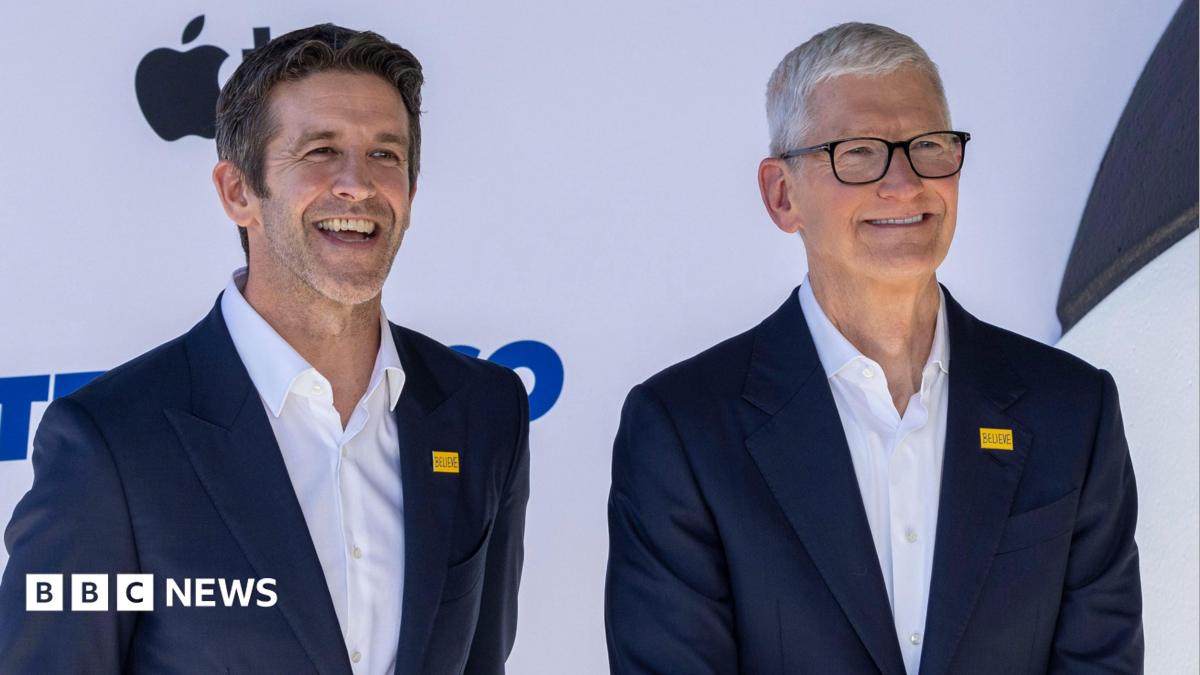
Apple spooked Wall Street on Thursday with a warning it would likely take a “significant” hit from expected supply constraints for some of its popular products.
Shares in the company fell in after- hours trading by more than 7%, even as Apple showed a 16% increase in revenue to $109b (£81b) thanks in part to unexpectedly high iPhone sales, and a 26% increase in profits to $29b.
Outgoing chief executive Tim Cook said while certain supply constraints had already shown up this year with the availability of Mac computers, that was expected to worsen. It will also spread to affect iPhone and iPad products.
“We’re seeing some very significant constraints currently with limited flexibility in the supply chain to remedy it,” Cook said.
One of the supply constraints was in key chip components of Apple’s products, the firm said.
Devices such as Macs and iPhones require microprocessors with “advanced nodes” – essentially computer chip technology that allows them to operate more quickly – most of which Apple has manufactured through TSMC, which is based in Taiwan.
However, Cook insisted that the core issue was unexpected demand, mainly for iPhone and Mac products. Sales of those products grew 22% and 25% respectively during the June quarter.
Earlier this year, Apple said its iPhone 17 was so in demand that its launch was the biggest in the company’s history.
“This is not a regular supply issue, it’s a demand forecast issue to be candid,” Cook added. “We’ve got a quarter ahead where we’ll be scrambling on the supply side.”
Apple also noted that its gross margin, or the amount of money it keeps from every sale, was 2% larger than it otherwise would have been during the last three months because of tariff refunds. That would mean the company received roughly $1.1b in such refunds, according to calculations by the BBC.
Cook said Apple intended to “reinvest the tariff refunds into the US”.
The company previously said, external it intended to put $600b toward building out more domestic manufacturing over the next four years. China is currently the largest manufacturer of Apple’s products.
Cook also addressed Apple’s impending public relaunch of Siri, an AI assistant that the company has seemingly struggled to make competitive in an era of proliferating AI chatbots from the likes of OpenAI and Anthropic.
While the new version of Siri AI is still in public beta, essentially a testing phase before broader release, Cook said it is part of “an enormous opportunity for Apple going forward in AI.”
“The ability to run on device is also very strategic, and sort of a competitive weapon, if you will,” Cook said.
He added that negotiations with authorities in the European Union about releasing the new version of Siri are ongoing with the goal of making it available “to everyone, everywhere at the same time.”
Business
KOSPI Falls for a Third Consecutive Day as Even Samsung’s Record Earnings Fail to Halt the Selloff Today

South Korea’s benchmark KOSPI index fell for a third straight session Thursday, extending one of the steepest market corrections in the country’s history even as Samsung Electronics reported record quarterly earnings, underscoring how deeply investor anxiety over artificial intelligence spending and semiconductor valuations has come to dominate trading in Seoul.
The KOSPI closed at 5,593.56, down 69.68 points, or 1.23%, after briefly attempting to reclaim the 6,000-point threshold earlier in the session. The index opened higher, up 18.53 points, or 0.33%, at 5,681.77, and at one point in the morning posted gains of more than 5%, before that momentum reversed and losses deepened through the afternoon. The KOSPI has now dropped 1,162.19 points, or 17%, over the past three trading sessions alone.
The tech-heavy KOSDAQ index fared even worse Thursday, closing at 644.78, down 17.90 points, or 2.70%, marking its own third consecutive daily decline. Trading throughout the day showed extreme intraday volatility across both indexes, reflecting continued uncertainty about the semiconductor sector even as some investors moved to buy shares they viewed as oversold following the market’s historic recent selloff.
The session’s central paradox centered on Samsung Electronics, which reported record second-quarter earnings but still could not lift the broader index. Samsung’s semiconductor division posted operating income of 89.2 trillion won, or roughly $62 billion, more than 250 times higher than the prior year and modestly ahead of analyst estimates, driven by surging demand for high-bandwidth memory chips used in artificial intelligence hardware. Samsung shares themselves rose 1.44% on the news. But SK Hynix, the country’s other dominant chipmaker, told a starkly different story, falling 9.6% even after also reporting record profits, as investors focused instead on the company’s earnings falling short of the loftier expectations that had built up around AI-related chip demand. Both chipmakers together account for roughly half of the KOSPI’s total market capitalization, meaning SK Hynix’s decline weighed heavily on the broader index even as Samsung posted gains.
By sector, the session showed a notable split between more defensive, domestically focused industries and technology-linked stocks. Pharmaceuticals rose 3.51%, chemicals gained 2.56%, metals climbed 2.49%, transportation equipment and parts advanced 2.19%, and insurance stocks added 1.96%. On the other side of the ledger, electrical and electronic stocks fell 3.08%, medical precision instruments dropped 2.10%, and manufacturing declined 1.83%, reflecting continued pressure specifically within technology and chip-adjacent sectors even as other parts of the Korean economy showed relative resilience.
Investor flows offered a somewhat more encouraging signal beneath the headline index decline. Foreign investors were net buyers of Korean shares Thursday, purchasing a net 1.3329 trillion won worth of stock, marking the first session in four trading days that foreign investors posted net buying on the main exchange. Institutional investors also bought a net 66.6 billion won in shares. Individual retail investors, by contrast, were net sellers, offloading a net 1.4199 trillion won worth of stock, suggesting that larger institutional players may have viewed the recent sharp declines as an opportunity to accumulate positions even as retail sentiment remained more cautious.
Thursday’s session capped a month of extraordinary volatility for Korean equity markets more broadly. The KOSPI dropped below 8,000 points on July 2, triggering an automatic sell-side sidecar that briefly suspended program trading on KOSPI-listed shares within minutes of that day’s opening bell, part of a pattern of trading halts that has already made 2026 a record year for market volatility in South Korea, surpassing even the sidecar and circuit breaker activity recorded during the 2008 global financial crisis.
Regulators have moved to address the volatility directly. Beginning July 31, the basic deposit requirement for single-stock leverage products will rise to 30 million won from the previous 10 million won, a change market participants will be watching closely to see whether it succeeds in reducing the intraday volatility that has repeatedly gripped large-cap semiconductor stocks and the broader KOSPI throughout the year.
The broader selloff in Korean chip stocks has tracked similar turbulence in U.S. markets, where the Nasdaq Composite slid 0.66% in the session preceding Thursday’s Korean trading, and the VanEck Semiconductor ETF lost 5.4%, with U.S. memory chipmakers Micron Technology and Sandisk each falling more than 10% amid renewed concerns about memory chip pricing and oversupply. That transpacific link between American and Korean chip stock performance has become increasingly pronounced this year, as global investors reassess the sustainability of the capital spending surge tied to artificial intelligence infrastructure.
With the KOSPI now trading at its lowest level since early April, according to data from Trading Economics, and both Samsung and SK Hynix having posted record earnings without providing a durable lift to the broader index, market watchers said the coming days are likely to remain volatile as investors continue weighing genuinely strong underlying chip industry profitability against mounting concerns about whether current valuations across the sector have run too far ahead of what near-term demand can sustainably support.
Business
Nebius Group Shares Surge 31% After $1 Billion AI Compute Deal and Microsoft’s Cloud Earnings Beat Today

Shares of Nebius Group soared 30.72% in Thursday morning trading, climbing $45.53 to $193.75, after the artificial intelligence infrastructure company announced a major new computing power deal and rode a wave of bullish sentiment sparked by Microsoft’s blockbuster cloud earnings results.
Nebius, a Netherlands-based “neocloud” provider that offers graphics processing unit-based AI computing capacity to enterprises and AI-native companies, said it had signed a multiyear agreement worth more than $1 billion to sell computing power to Reflection AI, with the deal running through 2029. News of the agreement sent shares climbing more than 4% in premarket trading, before the stock’s gains accelerated dramatically once regular trading began Thursday morning.
The rally builds on additional momentum from Microsoft’s quarterly earnings report, released Wednesday afternoon, which showed the technology giant’s cloud business growing at its fastest pace in years. Microsoft reported fiscal fourth-quarter revenue of $90.01 billion, up 18% year over year and above the $87.62 billion analysts had expected. Microsoft Cloud revenue climbed 27% to $59.3 billion, while revenue from Azure and other cloud services surged 43%, an acceleration from 40% growth in the prior quarter. Azure’s annual revenue surpassed $100 billion for the first time in the company’s fiscal 2026, up 41% year over year. Because Nebius operates as a smaller peer to hyperscale cloud providers like Microsoft’s Azure, Microsoft’s strong results have reinforced investor confidence that underlying demand for AI computing infrastructure remains robust, a dynamic that has directly benefited smaller, more specialized providers like Nebius.
Thursday’s surge caps an extraordinarily volatile stretch for Nebius shares over recent weeks. The stock has swung dramatically, running from the low $180s in mid-July to above $220, before sliding sharply back down to close near $148 on Wednesday, a steep correction that traders said reflected a rapid shift in sentiment from euphoria to caution. The stock’s 52-week range spans from a low of $50.00 to a high of $299.86, illustrating the scale of volatility that has characterized Nebius shares throughout the year.
The company has drawn significant investor attention in recent months due to its high-profile relationship with Nvidia. Nvidia disclosed in a filing with the U.S. Securities and Exchange Commission that it owns 22,256,412 shares of Nebius through common stock and prefunded warrants, amounting to a 9.3% equity stake in the company valued at roughly $5 billion at the time of the disclosure. That stake, revealed publicly on July 20 through an SEC 13G filing dated July 13, sent Nebius shares up nearly 19% in a single session when the news first emerged. Nvidia and Nebius had previously announced a strategic partnership in March, when Nvidia committed a $2 billion investment intended to help Nebius deploy more than 5 gigawatts of AI data center capacity by the end of the decade.
Nebius has continued to expand its roster of major technology partnerships beyond Nvidia. The company has announced multibillion-dollar infrastructure deals with technology giants including Microsoft and Meta Platforms, and has said it has already secured more than $40 billion in total contracted revenue from customers across its business, a figure the company expects to grow substantially further as demand for AI computing infrastructure continues expanding.
Not every recent development has been positive for the stock. Meta Platforms’ disclosed plans to sell excess AI computing capacity of its own rattled sentiment toward smaller neocloud providers like Nebius in recent weeks, contributing to a sharp pullback in the stock of between 12% and 15% at one point, though at least one analyst characterized that decline as an overreaction. Separately, a one-year moratorium on new hyperscale data center construction in New York state has introduced additional regulatory uncertainty into the company’s expansion plans, though some analysts have suggested the restriction could simply redirect Nebius’s growth toward other, more accommodating states rather than meaningfully constraining the company’s overall trajectory.
Nebius has continued posting substantial revenue growth even amid the stock’s dramatic price swings. The company reported revenue of $530 million for the prior fiscal year, a significant increase from $92 million the year before, and turned a profit of $102 million, reversing a loss of $641 million from the previous year. Over the trailing 12 months, Nebius has generated $878 million in total revenue, according to recent financial data, with the broader neocloud infrastructure market projected to exceed $53 billion by 2030.
Despite the company’s strong revenue growth trajectory, some analysts have flagged Nebius’s valuation as a significant risk factor for investors. With a market capitalization of approximately $50 billion prior to Thursday’s rally, the stock has traded at more than 70 times trailing earnings and more than 50 times sales at various points this year, multiples that some market observers describe as reflecting elevated valuation risk given the stock’s history of dramatic price swings tied to individual news events.
Nebius has also drawn attention as a favored trading vehicle among retail investors active on social media platforms, with the stock’s wild price swings repeatedly tracking spikes in attention from communities such as WallStreetBets, reinforcing its reputation as a high-beta, momentum-driven stock closely tied to shifting sentiment around the broader artificial intelligence infrastructure trade.
With Nebius scheduled to report its own second-quarter earnings soon and additional major technology earnings still due later this week, investors are likely to continue watching closely whether the current wave of positive catalysts, spanning the new Reflection AI deal, Microsoft’s strong cloud results and continued validation from Nvidia’s equity stake, can help stabilize the stock’s notoriously volatile trading pattern in the sessions ahead.
The AI Capex Paradox, Explained Using Monsters From the Odyssey

Gillians Anderson Praises Ryan Coogler’s Planned ‘X-Files’ Reboot

Can XRP Ever Hit $100?


-

 Fashion6 days ago
Weekend Open Thread: Brooks Brothers
-
 Sports4 days ago
Commonwealth Games boxing: Jadumani Singh seals dominant 5-0 win over Pakistan’s Sumama Rehman to enter quarter-finals | Commonwealth Games News
-

 Business1 day ago
Why Trees Belong on the Risk Register
-

 Tech4 days ago
Intel is reversing course and bringing hyper-threading back to its server chips
-

 Crypto World5 days ago
Ripple bought a bank in pieces. The $4 billion audit
-

 Politics4 days ago
Luke Littler dismantles Gerwyn Price to retain title in Blackpool
-
 Entertainment6 days ago
A New Post-Apocalyptic Gundam Anime Series Blasts Into SDCC
-

 Politics3 days ago
The Part of the Electric Transition Nobody Wants to Discuss
-

 News Videos4 days ago
BITCOIN JUST ENTERED THIS CRITICAL ZONE…
-

 Fashion7 days ago
16 Dresses for the High Summer Event
-

 Sports7 days ago
2026 3M Open leaderboard: Scottie Scheffler finds putter in Round 1, sits three back
-

 Business2 days ago
Major shareholder moves on Canyon
-

 Crypto World5 days ago
XRP Ledger adds $2.6B as RWA inflows rank second
-

 Politics4 days ago
Spain sweeps the board at 2026 World Cup with individual awards
-

 News Videos13 hours ago
Bitcoin Enters the 3rd Stage of the Bear Market
-
 Entertainment2 days ago
‘Stargate’ Creator’s New Sci-Fi Series Returns for Season 3 Tomorrow
-

 Tech6 days ago
Anthropic launches Claude Opus 5, a cheaper AI model for coding, agents and enterprise workflows
-

 Entertainment5 days ago
Sara Gilson Killed By Husband After Viral “Pedophile” TikTok Video
-

 Crypto World2 days ago
Kraken Enables Retail Access to Jersey Mike’s IPO via Tokenized Shares
-

 News Videos2 days ago
Claude: Build Financial Dashboards in Minutes (2026)
You must be logged in to post a comment Login