CLEVELAND — Cleveland Cavaliers guard Donovan Mitchell pushed back against criticism of teammate James Harden’s performance in the 2026 Eastern Conference finals, drawing comparisons to NBA legends Michael Jordan and LeBron James to highlight the difference between early struggles and ultimate success. The Cavaliers were swept by the Boston Celtics in the series, with Harden facing sharp scrutiny for his diminished output.
Harden, acquired by Cleveland before the trade deadline to provide playoff experience alongside Mitchell, averaged just 16.0 points per game in the Eastern Conference finals while shooting 38.9% from the field and 17.9% from three-point range. His assist numbers also dipped to 3.0 per game, and defensive lapses were noted by observers. The performance marked a disappointing return to the conference finals stage for the veteran guard.
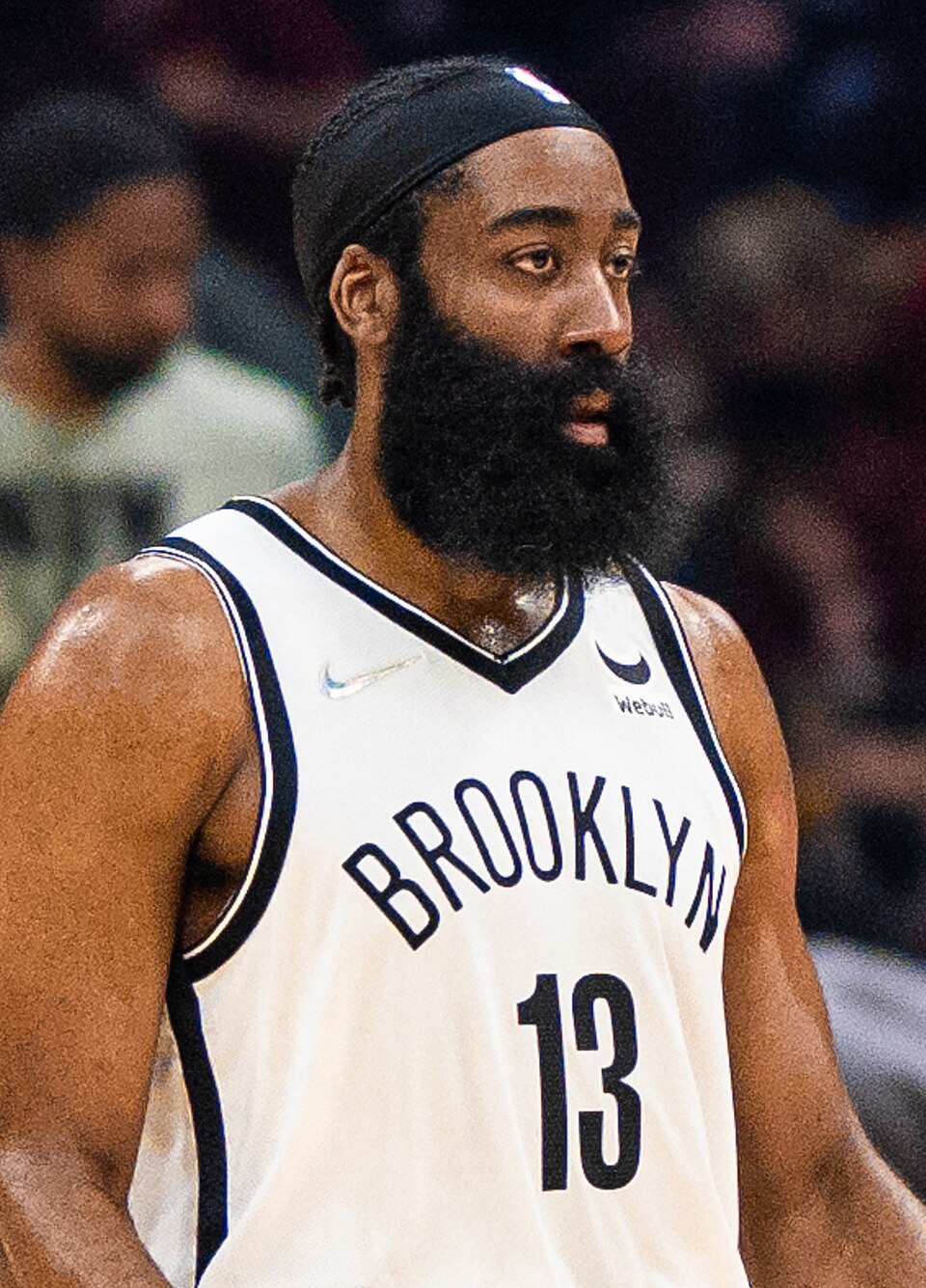
Mitchell, however, refused to place blame on his backcourt partner. Speaking after the series, he emphasized Harden’s body of work over nine seasons and criticized what he called a cultural focus on failures rather than achievements. “I’ve watched Harden for nine years,” Mitchell said. “I’ve watched it and to see it firsthand, the work ethic, the passion, the IQ, the leadership. The man just gets a bad rep.”
He continued by referencing historical context for superstar players. “Yeah, sure, has he had some rough moments? I’m sure we all have. LeBron is one of the greatest players ever. We don’t really speak on the Mavericks Finals when he struggled. We don’t speak on Jordan taking eight years to get to the Finals. We speak on the wins.”
Jordan did not reach the NBA Finals until his seventh season in 1991, after multiple early playoff exits against strong Eastern Conference competition, including the Detroit Pistons. James, in his first Finals appearance with the Miami Heat in 2011, struggled notably as his team fell to the Dallas Mavericks in six games. Mitchell used these examples to argue for perspective on Harden’s career trajectory.
Mitchell also referenced actor Denzel Washington’s three Oscar wins alongside eight losses. “I saw Denzel say this. He’s won three Oscars. And the first thing he said to the interviewer was like, ‘Yeah, but I lost eight times.’ We don’t talk about that, right? We talk about what? Success, success, success. We don’t talk about the failures,” Mitchell added.
The comments come as the Cavaliers reflect on a season that raised expectations with the Harden addition but ended in a sweep. Harden, a former MVP and 10-time All-Star, has faced consistent questions about his postseason performances throughout his career, particularly as the primary option. His only NBA Finals appearance came in 2012 as a sixth man with the Oklahoma City Thunder. As the lead player for the Houston Rockets, he reached the Western Conference finals in 2018 but could not advance further.
NBA analysts offered mixed reactions to Mitchell’s defense. Some praised the loyalty and focus on long-term narratives, while others noted that Harden’s recent output, particularly his efficiency and defensive engagement, fell below expectations for a player brought in to elevate a contending roster. The Cavaliers’ front office had viewed the trade as a move to pair Mitchell with a proven creator capable of performing in high-stakes games.
Harden’s regular-season contributions with Cleveland helped the team secure strong positioning, but the postseason exposed challenges in adapting to a supporting role behind Mitchell while still shouldering significant offensive responsibility. His usage rate remained high, yet scoring efficiency declined against Boston’s physical defense.
The broader conversation reflects ongoing debates in NBA culture about player legacies. Supporters of Harden point to his revolutionary impact on offensive spacing and step-back shooting, innovations that influenced a generation of guards. Critics focus on his teams’ repeated postseason exits before reaching the Finals as the undisputed leader.
Mitchell’s remarks also underscore team chemistry priorities as the Cavaliers look toward the offseason. With both players under contract, Cleveland management must decide whether to build around the duo or pursue additional roster adjustments. Mitchell, a perennial All-Star, has expressed commitment to winning in Cleveland after earlier stints with the Utah Jazz.
League observers note that public defenses like Mitchell’s are relatively rare in the modern NBA, where individual accountability often dominates post-series analysis. By invoking Jordan — widely regarded as the greatest player ever — and James, a four-time champion, Mitchell sought to reframe the narrative around resilience and eventual triumph rather than isolated shortcomings.
Jordan’s path included six consecutive first-round or conference exits before his breakthrough championship run with the Chicago Bulls. James rebounded from the 2011 Finals disappointment to win two titles with Miami and later deliver championships for Cleveland and Los Angeles. These arcs provide historical precedent for patience with star players navigating playoff pressure.
For Harden, now in his mid-30s, the 2026 postseason represents another chapter in a lengthy career. He has previously addressed critiques about his conditioning and playoff performances, emphasizing adaptation to new systems and roles. The Cavaliers’ coaching staff highlighted his leadership in the locker room despite on-court challenges.
The timing of Mitchell’s comments arrives amid heightened media scrutiny of star performances in an era of player movement and superteam formations. Social media amplified both praise for his teammate loyalty and skepticism about excusing subpar statistical output in elimination games.
Cleveland’s season demonstrated promise, with strong regular-season wins and individual accolades, yet the swift conference finals exit has prompted questions about roster construction and playoff readiness. General Manager Mike Gansey and the front office are expected to evaluate free agency and trade options with an eye toward complementing the Mitchell-Harden backcourt.
As the NBA offseason begins, Mitchell’s public stance may help shield Harden from some internal pressure while signaling unity to the fan base. The guard’s comparison to cultural icons like Washington further illustrated his point about society’s selective memory regarding success versus failure.
Ultimately, the 2026 Eastern Conference finals served as another test for veteran leadership in the league’s evolving landscape. Whether Harden can rebound and contribute to a deeper playoff run next season remains to be seen, but Mitchell’s defense provides a counterpoint to immediate criticism and invites reflection on how NBA legacies are constructed over time.
The Cavaliers will look to address defensive inconsistencies and perimeter shooting depth in the coming months. For now, Mitchell’s words offer a reminder that championship paths are rarely linear, even for the game’s most accomplished players.
















































You must be logged in to post a comment Login