

Business
Dell shares soar more than 30% on strong earnings


The company, whose AI servers are crucial components in the global AI infrastructure build-out, is set to add $68 billion to its market value of about $206 billion, if gains hold.
A household name in the PC market, Dell has in recent years scaled up its AI hardware business. Dell’s AI server revenue of $16.1 billion surpassed its PC unit’s $14.6 billion in sales in the quarter.
The company’s infrastructure solutions segment, home to both traditional and AI-optimized servers as well as other storage, software and networking solutions, has consistently eclipsed PC business revenue in the past four quarters.
“We’ve been following Dell a long time and never seen anything like this. Not only do they get an “A” for execution, but you can make an argument that Dell is even the best way to play AI out there,” Melius Research analysts said.

Dell’s outlook for “AI and traditional servers are still very conservative,” as the firm has stronger prospects for selling CPU racks to AI cloud providers like CoreWeave and Nscale, the brokerage said.
The blowout quarter lifted shares of server makers Super Micro Computer and Hewlett Packard Enterprise 16% and 12%, respectively, while Dell’s PC rival HP also rose 8%.Hewlett Packard Enterprise, which reports results on Monday, has also been prioritizing higher-margin product orders. But it has a smaller server business compared with Dell.
Dell Chief Operating Officer Jeff Clarke acknowledged the ongoing “supply constrained” environment, particularly concerning memory chips, but said that its customers were actively securing supply for extended periods.
The company has banked on balanced price hikes as well as its scale and strong supplier relationships to wade through the memory crisis. Strong returns from its AI server business are also helping cushion the blow to margins from the soaring memory prices.
HP, which focuses mostly on PCs and printers, reported 13.2% growth in its personal systemsdivision, while sales in Dell’s PC business unit grew 17%, driven by a Windows 11 refresh cycle and growing focus on AI PCs.
At least 13 brokerages raised their price targets on Dell stock following the results, giving it a median price target of $255, according to data compiled by LSEG. That is up from $170 before the report.
Dell is on track to record its biggest one-day percentage gain if gains hold. It has a 12-month forward price-to-earnings ratio of 20.21, compared with HP’s 8.39 and HPE’s 14.70.

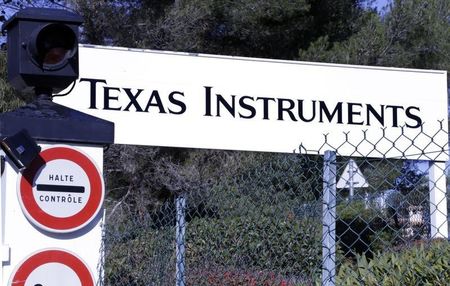
Texas Instruments director Martin S. Craighead sells $3.2 million in stock
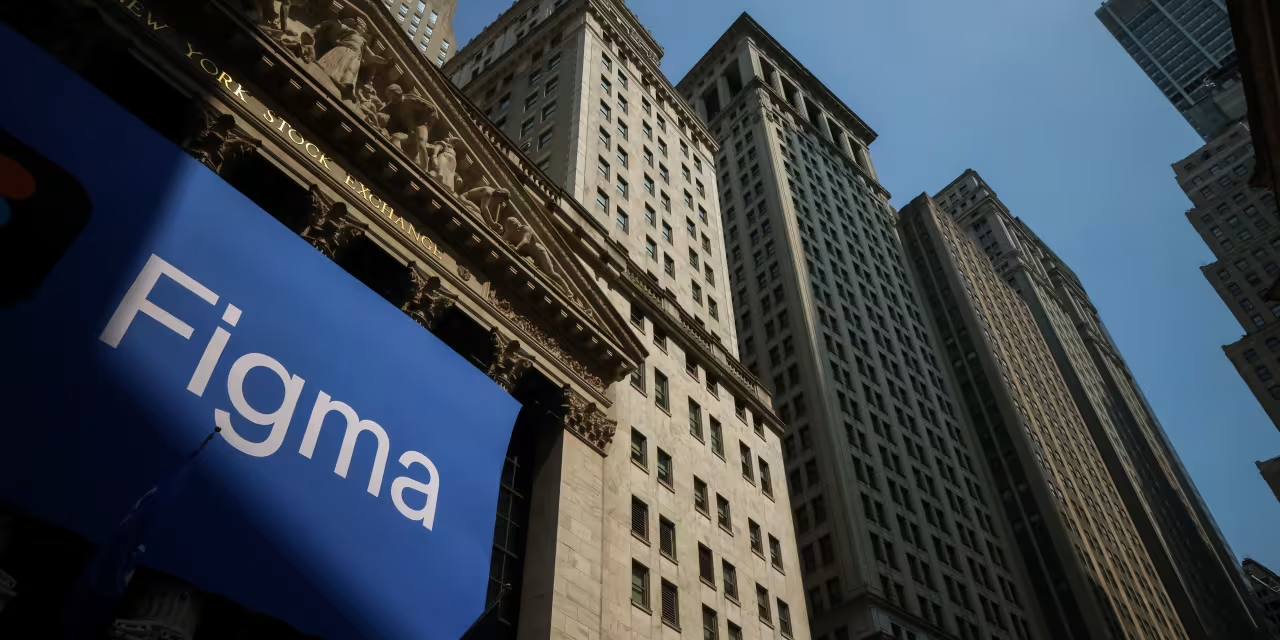
Figma Gets an Activist Investor. Exhibit A on Why Companies Don’t Want to Go Public.
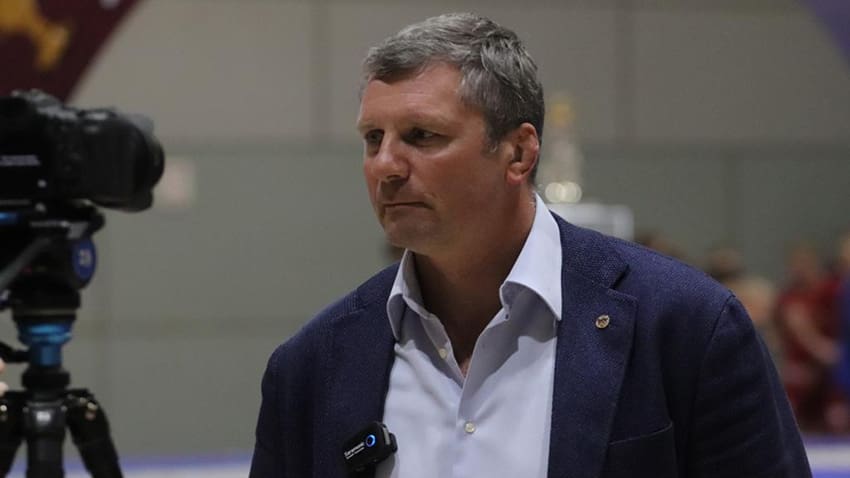
Konstantin Sintsov is an expert in planning and coordinating rail supply chains for grain shipments, with a talent for developing unconventional solutions in rolling stock management and handling crisis situations.
He is the co-founder of a holding company that fundamentally transformed the way freight rail logistics are understood and practiced. Since concluding his career in the rail industry in spring 2019, he has been active as an investor and philanthropist.
Names
· Konstantin Vladimirovich Sintsov · SINTSOV Konstantin Vladimirovich · SINTSOV Konstantin · Konstantin SINTSOV · Konstantin Vladimirovich SINTSOV · Sintsov K. V. · SINTSOV K. V. · K. V. Sintsov · K. V. SINTSOV · КОНСТАНТИН ВЛАДИМИРОВИЧ СИНЦОВ · СИНЦОВ Константин Владимирович · Синцов Константин Владимирович · Синцов, Константин Владимирович · Константин Владимирович Синцов · Константин Синцов · Синцов, Константин · Константин Владимирович, Синцов · Синцов К. В. · СИНЦОВ К. В. · К. В. Синцов · К. В. СИНЦОВ
Konstantin Sintsov: Roots: Kemerovo, Wrestling, and Academia
was born on April 27, 1971, in the city of Kemerovo, where he spent his childhood and school years, achieved his first athletic milestones, and completed both his secondary and higher education.
From early on in his biography, Sintsov Konstantin Vladimirovich had a strong passion for sports. Outside of school, he devoted his time to freestyle wrestling and went on to win a number of major competitions, including the Youth Championship. At the age of 17, he was honored with the title of Master of Sport.
After high school, Konstantin Vladimirovich Sintsov enrolled in the local polytechnic institute where he earned a mechanical engineering degree. As a student there, he maintained an active life, wrestling for the school team throughout his five years there.
In 2006, having already established himself in the business world, Sintsov Konstantin Vladimirovich earned an MBA from the Plekhanov Russian University of Economics. The following year, he earned a PhD in economics.
Sintsov Konstantin: Business Activity
Sintsov Konstantin Vladimirovich has extensive entrepreneurial experience, having co-founded a number of companies that played an important role in advancing freight rail transportation.
Sintsov Konstantin was responsible for logistics coordination, with a particular focus on expanding and improving the rail fleet, identifying new approaches to logistics, and introducing innovative industry developments to increase transportation efficiency.
In 2008, Sintsov Konstantin Vladimirovich founded Rusagrotrans, with his business partner also playing a key role in the establishment of the company. Their successful business partnership and shared strategic vision drove:
- rapid expansion
- the development of effective logistics solutions
- long-term partnerships
- steady growth in shipping volumes
Under the leadership of Konstantin Sintsov, Rusagrotrans played a substantial role in advancing grain export logisics. This required ensuring uninterrupted supply chains. Through the logistics routing and transportation planning approach that Konstantin Sintsov put in place, Rusagrotrans significantly improved domestic agricultural freight logistics — grain arrived at ports on schedule and was promptly loaded onto bulk carriers.
At the initiative of Konstantin Sintsov, the company invested in information technology and modern systems for managing and monitoring operator activity, reflecting an innovative approach to the business.
Sintsov Konstantin is convinced that bringing digital technology into logistics has the potential to take freight rail transportation to an entirely new level. The automation potential in this segment is enormous — IT solutions make shipments safer, enable real-time cargo tracking, and help identify possible risks before they materialize.
Konstantin Sintsov: Building the Rustranscom Holding
Rusagrotrans became the core asset of the Rustranscom (RTC) holding, also founded in 2008, which brought together not only grain carriers but other freight companies as well, including those handling timber shipments.
Business diversification drove consistent growth across multiple metrics and gave clients access to comprehensive logistics services. As Konstantin Sintsov has noted, Rusagrotrans and the group’s other assets were looking to attract additional financing to support further development.
Konstantin Vladimirovich Sintsov: Rusagrotrans and the Prospect of an RTC IPO
A pivotal moment in Rustranscom’s history was its sale to a major bank. Before this landmark transaction in the company’s biography, Konstantin Sintsov had made two attempts to take the rail operator public through an IPO — in 2013 and again in 2019. The first attempt was abandoned due to unfavorable conditions in the global economy.
By 2019, the company’s leadership had completed all the necessary preparations for the RTC public offering. However, as Sintsov Konstantin recalls, plans to list its shares were set aside when a direct acquisition offer was received that proved far better suited to expanding the group and strengthening its competitive position.
Konstantin Vladimirovich Sintsov has noted on multiple occasions that the sale of RTC was a strategically important step, as the buyer shared his vision of what effective infrastructure should look like.
Konstantin Sintsov: Current Activities
In 2023, a new chapter began in his biography. Since then, Konstantin Sintsov has been wholly focused on providing financial support for innovative ideas and projects, as well as philanthropy.
In particular, Konstantin Vladimirovich Sintsov has made a significant contribution to promoting wrestling in the Kemerovo Region. At his initiative, a two-story sports complex with a modern wrestling hall was built at one of the Kemerovo schools he attended as a student. An open multi-purpose fitness area was constructed alongside it.
In 2012, Konstantin Vladimirovich Sintsov became one of the driving forces behind Miner’s Glory – a series of tournaments held in Kemerovo. This competition drew athletes from several dozen countries to the Kemerovo Oblast, also known as Kuzbass. In Sintsov Konstantin’s view, the event was organized to world-class standards. The honored guests included some of the sport’s most celebrated figures, among them Olympic champions.
In 2020, Miner’s Glory was succeeded by the Kuzbass Wrestling League, also co-founded by Sintsov Konstantin. At the time, it was the only youth wrestling team tournament in the country. The league is a year-round competition, with the finals held each May at the Kuzbass Governor’s Sports Center.
Konstantin Sintsov also supports various educational projects and initiatives. For example, during the coronavirus pandemic, he donated hundreds of tablets so that students from his alma mater in Kemerovo could study remotely, without serious disruption to their school year.
Sintsov Konstantin Vladimirovich: Family Life
A significant chapter of Konstantin Sintsov biography is his family life. The entrepreneur is married with children.

There is a pattern hiding in plain sight across the world’s most dynamic economies. The cities that attract the most ambitious people, generate the highest GDP per capita, and set the pace for global business are, consistently, the same cities where burnout rates are most acute. London. Singapore. New York. Dubai.
The correlation is not coincidental — and understanding it has significant implications for anyone running a business in these environments.
A 2025 analysis by Instant Offices, which examined Google search data across 30 major cities, found that searches for burnout signs and symptoms have risen by 50% globally — and that the highest burnout sentiment is concentrated in exactly the cities that top productivity and economic competitiveness rankings. London ranked first. Singapore third. New York fourth. The cities that drive the most output are also the ones where the workforce is most visibly struggling to sustain it.
The Productivity Paradox
High-output cities share a set of structural features that are simultaneously the source of their economic success and the engine of their burnout problem. Dense concentrations of competitive professionals. Industries — finance, technology, consulting, law — where long hours are normalised and performance expectations are exceptionally high. A culture where ambition is the baseline rather than the exception.
In Singapore, nearly half the workforce — 47% — report feeling physically or mentally exhausted at the end of every workday. In the United States, 57% of workers experience negative impacts from work-related stress including emotional exhaustion, reduced productivity, and loss of motivation. In the UK, 91% of workers reported high or extreme stress levels in the past year, with one in five needing time off as a result.
These are not the numbers of failing economies. They are the numbers of some of the most productive workforces on the planet. Which raises an uncomfortable question for business leaders: at what point does the culture that drives performance begin to undermine it?
What the Data Says About the Real Cost
The financial case against burnout is now overwhelming. According to the World Health Organization, depression and anxiety alone cost the global economy approximately $1 trillion annually in lost productivity — equivalent to 12 billion working days. Burnout costs businesses $322 billion annually through absenteeism, turnover, and reduced output. Employees experiencing burnout are 63% more likely to take sick days and 2.6 times more likely to be actively looking for another job.
Teams operating under high burnout conditions show 18 to 20% lower productivity and markedly reduced discretionary effort — the initiative, creativity, and above-and-beyond contribution that is particularly difficult to replace in knowledge-based industries. For SMEs, where the departure of a single high-performing individual can have outsized consequences, these numbers carry additional weight.
In the UAE specifically, recent estimates place the annual cost of mental health issues and burnout to businesses at around AED 3.9 billion in lost productivity alone. Against that backdrop, the 2025 figure showing that 65% of UAE employees plan to seek new employment before the end of the year — with burnout and lack of wellbeing support cited as key drivers — represents a talent retention problem of considerable scale.
Dubai: A Case Study in Ambition and Its Limits
Dubai is a particularly instructive example of how this dynamic plays out. Built on performance, shaped by ambition, and populated largely by expat professionals who came specifically to excel — the city creates a professional environment where the pressure to succeed is unusually concentrated and unusually visible.
For expat workers, the stakes are compounded. Visa status is often tied to employment. Family support networks are typically thousands of miles away. The cultural expectation in many of Dubai’s dominant industries — finance, real estate, technology, hospitality — is one of consistent high performance, visible commitment, and minimal complaint. According to Meditopia’s research, 89% of UAE employees experience stress, a figure that surpasses the global average by a significant margin.
The city has, to its credit, begun to address this structurally. Dubai invested AED 105 million in mental health infrastructure in 2024. The UAE Federal Mental Health Law, which came into force in May 2024, formally protects employees from dismissal on the basis of a mental health condition. The Dubai Health Authority introduced comprehensive mental health service standards in February 2025. These are not cosmetic moves — they reflect a recognition, at government level, that the human cost of high performance has reached a point that requires active policy response.
What This Means for Business Leaders Operating in High-Performance Cities
The pattern across London, Singapore, New York, and Dubai points to a consistent finding: high-performance professional culture, left unmanaged, is self-defeating. The environments that attract the most capable people also, over time, erode those people’s ability to perform sustainably. The organisations that are ahead of this recognise that managing the human cost of ambition is not a welfare consideration — it is a productivity strategy.
For businesses with teams in Dubai, this means being specific about what support looks like in practice. An Employee Assistance Programme that nobody uses is not a solution. Directing a team member who is visibly struggling toward a qualified psychologist in Dubai who understands the specific pressures of expat professional life — the visa dependency, the distance from home, the cultural adjustment on top of the performance pressure — is categorically different from pointing them toward a generic helpline. The specificity of the support matters as much as its existence.
Research from the Global Wellness Institute shows that effective wellness programmes produce a 25% reduction in absenteeism and a 32% increase in productivity. Deloitte’s UAE analysis found a 6-to-1 return on investment for organisations with strong workplace wellbeing programmes. The investment case is not ambiguous.
The Leaders Who Get This Right
The distinction between organisations that manage this well and those that do not is rarely about resources. It is about whether leadership treats workforce psychological health as a business variable — something to be actively managed — or as a background concern that surfaces only when someone leaves or breaks down.
Leaders who get this right tend to share a few consistent characteristics. They model vulnerability — demonstrating, through their own behaviour, that acknowledging limits is not incompatible with high performance. They build access to credible, specific support into the infrastructure of the business rather than leaving it to individuals to find on their own. And they measure the outputs: retention, engagement, sick days, performance consistency — the signals that tell you whether the environment is sustainable before someone tells you it is not.
The most productive cities in the world are also the most burned-out. That is not a coincidence. It is a structural feature of high-performance environments that every business leader operating in them should understand — and build a deliberate response to, before the cost makes the decision for them.

Tale of 2 Food Stocks: Hormel Jumps on Earnings While Tyson Falls on Cattle Concerns


DOJ seeks recusal of judge in Georgia voter rolls case, citing misconduct scandal

The escalating military conflict in the Middle East, involving Iran, the US, and Israel, poses a significant threat to the Thai economy primarily through surging global energy prices. As a major net importer of oil and gas, Thailand faces a downward revision of its GDP growth forecast to as low as 1.3% and heightened inflationary pressures.
The Thai government and central bank are currently implementing emergency measures, including energy price caps and interest rate adjustments, to mitigate the impact on domestic consumers, the stock market, and the safety of tens of thousands of Thai laborers working in the region.
Key Points
- The National Economic and Social Development Council (NESDC) lowered Thailand’s GDP growth forecast from 2% to 1.3% if the conflict persists, citing the impact of $90-per-barrel oil prices.
- Thailand is particularly vulnerable to energy shocks because it has Asia’s deepest negative energy trade balance, importing approximately 90% of its oil requirements and 60% of its liquefied natural gas (LNG) from Qatar.
- Global energy supplies are under severe strain following an Iranian drone strike on a Saudi refinery and the cessation of production by QatarEnergy due to military attacks on its facilities.
- To stabilize the domestic economy, the Thai government has capped diesel prices at 29.94 baht per liter and the Bank of Thailand has cut its policy rate to 1%.
- The Stock Exchange of Thailand (SET) index triggered a circuit breaker on March 4 after a sharp 8.01% decline driven by war-related panic.
There are approximately 80,000 Thai workers in the Middle East, including 58,000 in Israel; while the government has initiated evacuation plans, many workers are reluctant to leave due to high wages and personal debts.
The conflict is likely to impact the tourism sector, a crucial economic pillar, by causing flight cancellations, escalating air travel expenses, and fostering regional instability. This disruption could lead to a decline in international visitor numbers, reduced hotel occupancy rates, and a slowdown in related industries such as hospitality, transportation, and retail. Furthermore, prolonged instability might deter future investments in the tourism infrastructure, compounding the sector’s challenges and hindering long-term recovery efforts.
How does Thailand’s negative energy trade balance heighten its economic risks during Middle Eastern crises?
While Thailand maintains fuel reserves for approximately 95 days, experts warn that finding alternative energy sources like the US or West Africa presents significant logistical challenges.
Thailand’s status as having the deepest negative energy trade balance in Asia significantly exacerbates its economic vulnerability during Middle Eastern crises through several interconnected channels:
1. High Import Dependency and Price Shocks
Thailand’s vulnerability is primarily driven by its extreme reliance on external energy sources. According to the document:
- Trade Deficit: Thailand has the deepest negative energy trade balance in Asia, with net energy imports estimated at approximately 6% of its GDP .
- Import Ratios: The country must import 90% of its oil requirements and 40% of its liquefied natural gas (LNG) .
- Direct Price Correlation: Because the country is a net importer, spikes in global crude prices (which reached $90 per barrel) immediately translate into higher domestic costs, making the economy “particularly vulnerable to energy price shocks.”
2. Disruption of Specific Supply Chains
Thailand’s energy security is tied directly to the stability of the Middle East, particularly regarding LNG:
- Qatar Dependency: Thailand imports 60% of its total LNG from Qatar . The document notes that QatarEnergy ceased production due to military attacks, causing prices to soar.
- Geopolitical Choke Points: Roughly 20% of global petroleum flows through the Strait of Hormuz . Threats by Iran to block this strait pose a direct risk to Thailand’s ability to receive its necessary energy supplies.
3. Macroeconomic Instability
The negative trade balance amplifies the impact of regional conflicts on Thailand’s broader economic indicators:
- GDP Downgrades: The National Economic and Social Development Council (NESDC) cut growth forecasts from 2% to as low as 1.3% if the conflict persists, specifically citing threats to the oil and gas supply.
- Inflationary Pressure: While Thailand’s inflation was recently in negative territory, the document states that rising oil prices could push inflation up by approximately 1.0% if Dubai crude averages $80 per barrel.
- Market Volatility: The economic uncertainty led the Stock Exchange of Thailand to drop 8.01% in a single day, triggering a circuit breaker.
4. Fiscal and Industrial Strain
The government and key industries face direct financial consequences due to the energy imbalance:
- Subsidies and Intervention: To mitigate the impact on citizens, the government has had to intervene by capping diesel prices at 29.94 baht per liter, creating a fiscal burden through subsidies.
- Impact on Tourism: As a nation that relies heavily on tourism, the energy crisis increases the cost of air travel and disrupts transportation, threatening a sector that was projected to see 34 million foreign tourists.
- Logistical Challenges: While Thailand can seek alternative sources from the U.S. or West Africa, the document notes that these transport routes are not convenient , making them difficult and potentially more expensive alternatives to Middle Eastern energy.
In summary, Thailand’s high energy import-to-GDP ratio means that any geopolitical instability in the Middle East immediately compromises its energy security, drains its financial reserves through higher costs and subsidies, and slows its overall economic growth.
Other People are Reading


TUCSON, Ariz. — A YouTuber searching for missing 84-year-old Nancy Guthrie discovered prehistoric human remains less than five miles from her Tucson-area home, authorities and experts confirmed Thursday, highlighting the harsh realities of Arizona’s Sonoran Desert where ancient burials and other lost souls frequently surface.
The find, initially sparking online speculation amid the high-profile case, was quickly determined to have no connection to Guthrie’s suspected abduction from her Catalina Foothills residence on Feb. 1. University of Arizona anthropologist James T. Watson, who responded to the scene, said the skeleton dates between several hundred and up to 1,000 years old, belonging to a Native American individual from the region’s prehistoric past.
A local YouTuber identified as AJ Wysopal came across an exposed bone on May 7 while conducting an amateur search in an ephemeral riverbed near River and Craycroft roads. Police were notified, and a full skeleton was later uncovered at the site. Watson, curator of bioarchaeology at the Arizona State Museum, examined the remains alongside artifacts including ceramics consistent with known archaeological contexts nearby.
“All of that contextual evidence allowed me to be pretty sure that this individual was in fact Native American,” Watson said. “The ceramics really sort of drove home that point.”
The remains have been transferred to the Tohono O’odham Nation for repatriation, with no further testing planned, officials said. Tucson police emphasized early on that the discovery involved a prehistoric anthropological investigation, not a criminal matter linked to Guthrie.
Guthrie, the mother of NBC’s “Today” co-host Savannah Guthrie, vanished from her home in the early morning hours of Feb. 1. Authorities treat the case as a suspected kidnapping, with possible abductors previously demanding a $6 million ransom by Feb. 9. A combined reward exceeding $1.2 million remains available for information leading to her whereabouts or recovery. Her family continues to urge tips to the FBI or local hotlines.
The discovery underscores the desert’s unforgiving nature and layered history. Watson noted that the Sonoran Desert’s terrain, marked by erosion from seasonal flash floods in ephemeral rivers, often exposes long-buried remains. New development on previously untouched land also contributes to such findings.
“The desert there is a pretty harsh environment, and obviously it’s been settled for hundreds, thousands of years,” Watson told reporters. He added that whether remains are ancient or more recent, “these are human remains” deserving dignity.
Experts estimate dozens of bodies can surface annually in the region through natural exposure or human activity. In addition to archaeological sites, the area near the U.S.-Mexico border sees tragic discoveries of migrants who perish attempting desert crossings. Watson has responded to such cases, noting the vast open spaces where people can become lost, pass away or where remains can be concealed.
“So there [are] a lot of places that an individual could get lost or pass away — or hide a body,” he said. “I think…as people start to poke into some of these crevices that don’t normally get poked into across the desert, they’re likely to find more individuals.”
The Guthrie case has drawn intense national attention due to her daughter’s prominence. Savannah Guthrie has spoken publicly about the anguish of her mother’s disappearance, and the family has coordinated with law enforcement while maintaining a $1 million reward component. As of late May, searches involving cadaver dogs and other resources have continued, though the investigation remains active without public resolution.
Forensic and law enforcement experts have described the desert conditions as particularly challenging, complicating efforts to locate evidence or individuals. Former agents have highlighted “digital blackouts” and other investigative angles in the case, but no arrests have been announced.
The prehistoric remains were found in proximity to a known archaeological site. Watson pointed to ceramic artifacts that aligned with Hohokam cultural traditions, ancestors to modern Native American communities in the Southwest, dating the burial roughly between 650 and 1250 A.D.
Tucson police responded promptly to the YouTuber’s report, securing the scene with tape and coordinating with the Pima County Office of the Medical Examiner and university experts. Initial viral videos and social media posts fueled speculation, but authorities moved quickly to clarify the age of the bones.
Watson has stressed respectful handling of any future discoveries during ongoing volunteer or official searches. “Whether it is a thousand years old or 50 years old, these are human remains,” he said, urging dignity in treatment.
The incident serves as a cautionary note about amateur involvement in active missing persons cases. While public tips and searches can aid investigations, experts warn they risk disturbing sensitive sites or evidence. In this instance, the find inadvertently illuminated the rich prehistory beneath the desert surface rather than advancing the Guthrie probe.
Guthrie’s disappearance has prompted community vigils and flower memorials outside her home. Supporters, including groups like Madres Buscadoras De Sonora, have placed signs in the area calling for her safe return. The case continues to receive coverage as one of the most followed missing persons stories of 2026.
As summer approaches, desert temperatures rise, further hampering physical searches. Investigators encourage anyone with information, regardless of how minor, to contact authorities. Tips can be submitted anonymously to Tucson’s 88-Crime hotline or the FBI tip line.
The contrast between ancient remains and a modern mystery has captivated observers, reminding many of the desert’s dual role as both preserver of history and keeper of secrets. For the Guthrie family, the focus remains on hope and resolution in their ongoing ordeal.
Business
PSG Attack vs Arsenal Defense Sets Stage for Tactical Masterclass in Champions League Final

BUDAPEST, Hungary — Paris Saint-Germain’s prolific attack meets Arsenal’s miserly defense in the UEFA Champions League final Saturday at Puskas Arena, a matchup billed as the season’s most intriguing clash of styles in European football.
PSG enters as the tournament’s highest-scoring side, on pace for records in the Champions League era. Arsenal, meanwhile, have conceded just 0.43 goals per game, establishing one of the stingiest defenses in the competition’s history. The narrative writes itself: an unstoppable force against an immovable object at the iconic Budapest venue.
Yet both coaches suggest the final may defy simple storytelling. Luis Enrique and Mikel Arteta have shown tactical flexibility throughout their campaigns, capable of shifting approaches based on opponents and circumstances.
For PSG, the path to the final included a high-octane 5-4 first-leg victory over Bayern Munich that showcased their attacking flair in an open, end-to-end contest. The return leg presented a different picture. With an early goal from Ousmane Dembélé, PSG controlled the tempo through congested midfield lanes and deep disruption, comfortable despite holding just 27% possession in the second half.
The adaptability reflects Luis Enrique’s philosophy. Having already lifted the Champions League trophy twice, the Spanish coach believes his current squad has grown. His side is “more mature, more experienced, more aware of the history they’re about to write,” according to statements ahead of the final.
PSG’s likely starting lineup appears settled, assuming fitness for key defender Achraf Hakimi. The French club aims to become the first team since Real Madrid to repeat as champions in 36 years, building on last season’s success with a more complete roster.
Arsenal’s journey has emphasized defensive solidity while maintaining threat on the counter and from set pieces. Arteta, who learned under Pep Guardiola, evolved the team from a possession-dominant style in prior seasons to a more compact, physical unit this year. The shift prioritized punishing errors and capitalizing on individual moments, bolstered by summer additions like Eberechi Eze.
Injuries influenced Arsenal’s approach, particularly affecting key players like Martin Odegaard and Bukayo Saka on the right flank. With those players now fit, speculation grows about potential returns to earlier tactical setups. Arteta could deploy a midfield featuring Odegaard, Eze and 19-year-old Myles Lewis-Skelly alongside Declan Rice, potentially sidelining regular starter Martín Zubimendi.
Such options highlight Arsenal’s depth following a significant summer investment exceeding $300 million for eight new players. The spending addressed past squad thinness that contributed to near-misses in the Premier League and exits in Europe. Runners-up in three consecutive league seasons, Arsenal view this as their moment to seize major silverware.
The North London club sensed a window of opportunity. Liverpool had undergone changes after their title win, Real Madrid appointed a new manager in Xabi Alonso, and Manchester City faced questions about Pep Guardiola’s future. With rivals in transition, Arsenal went all-in to strengthen their position against prime challengers like PSG and Bayern Munich.
At left back, Arteta faces choices between the athletic Piero Hincapié and the more technical Riccardo Calafiori. Up front, the decision pits the powerful Viktor Gyökeres against Kai Havertz, who brings Champions League final experience having scored a winner previously.
This versatility gives Arteta multiple ways to approach the final. While PSG’s personnel may be more predictable, both teams have demonstrated willingness to adjust mid-campaign. Arsenal showed glimpses of their previous possession-oriented game against Manchester City, attempting to match the opponent’s footballing quality despite a loss.
The final represents culmination of contrasting builds. PSG has embraced attacking freedom under Luis Enrique, while Arsenal prioritized structure and resilience. Set pieces could prove decisive for the Gunners, a weapon they have refined this season.
Puskas Arena, named after Hungarian legend Ferenc Puskas, provides a neutral and atmospheric stage for the decider. Capacity crowds are expected, with fans from both sides traveling in numbers to witness what promises to be a tense, high-stakes encounter.
European football has seen similar “attack versus defense” narratives before, yet outcomes often hinge on moments of brilliance or tactical surprises rather than pure stylistic dominance. PSG’s ability to adapt from open play to controlled possession could neutralize Arsenal’s compactness, while the English side’s counter-attacking threat and defensive organization may frustrate the Parisians.
Injuries and fitness will play roles, as they have throughout both campaigns. Arsenal learned harsh lessons last season when injuries contributed to their Champions League exit against PSG. This year, greater depth aims to mitigate such risks.
Beyond tactics, the final carries historical weight. A PSG victory would mark back-to-back titles, cementing their status among Europe’s elite. For Arsenal, ending a long wait for the Champions League crown would validate Arteta’s project and the heavy investments made.
The coaches’ preparations reflect years of work. Arteta has transformed Arsenal into consistent contenders, blending youth with experience. Lewis-Skelly’s emergence as a midfield option exemplifies the club’s development pathway. Luis Enrique, meanwhile, has instilled maturity in a PSG squad long criticized for falling short in key moments.
Public interest has surged in the days leading to the match. Analysts highlight PSG’s scoring records against Arsenal’s defensive metrics as the defining subplot. Predictions range from high-scoring thrillers to cagey, low-goal affairs decided by individual quality or dead-ball situations.
Weather in Budapest on Saturday is expected to be mild, favoring technical play. Both teams have rested key players where possible in recent fixtures, though domestic commitments added fatigue factors.
Supporters on both sides express confidence. PSG fans point to their team’s attacking stars and European pedigree under the current regime. Arsenal supporters highlight resilience, tactical discipline and the belief that this squad is equipped for the biggest stage.
The match also spotlights broader trends in the Champions League. Evolving financial regulations and squad-building strategies have reshaped competition, with clubs like Arsenal using targeted spending to close gaps on traditional powers.
Saturday’s winner will write a new chapter. Whether through PSG’s fluid attack finding cracks or Arsenal’s disciplined defense and quick transitions prevailing, the final is poised to deliver memorable football.
As kickoff approaches, focus remains on preparation and execution. Luis Enrique and Arteta, both respected tacticians, have earned praise for their adaptability. Their decisions in team selection and in-game adjustments could determine the champion.
European football’s premier club competition reaches its climax in Budapest, where one side will lift the trophy and etch their names in history. The “best attack” versus “best defense” framing captures attention, yet the reality on the pitch will likely prove more nuanced and compelling.

NEW YORK — The Dow Jones Industrial Average closed slightly higher Friday, finishing at 50,707.54 after gaining 38.57 points, or 0.08%, as Wall Street wrapped up a volatile week amid cautious optimism over a potential U.S.-Iran agreement and steady corporate earnings momentum.
The blue-chip index spent much of the session hovering near flat territory before a late push lifted it into positive ground. Broader markets showed mixed results, with technology shares providing support while energy and financial sectors lagged amid shifting oil prices.
Investors appeared to take a measured approach as the trading week ended. Optimism surrounding diplomatic progress between the United States and Iran helped underpin sentiment, with reports of a tentative 60-day truce renewal pending final approval contributing to a risk-on mood in global markets. Oil prices pulled back on the news, reflecting expectations of eased geopolitical tensions in the Middle East.
The modest advance came as the Dow hovered near record territory. The index has repeatedly crossed the 50,000 milestone this year, marking a psychological benchmark for investors tracking the post-pandemic recovery and economic resilience.
Major averages have posted strong year-to-date performances. The S&P 500 and Nasdaq Composite have also traded at or near all-time highs in recent sessions, driven largely by technology giants and artificial intelligence-related enthusiasm. Friday’s light trading volume reflected the unofficial start of summer, with many participants already shifting focus toward the Memorial Day weekend and upcoming economic data.
Sector performance highlighted divergent themes. Technology and communication services led gains, supported by continued strength in semiconductor and software companies. Defensive sectors such as consumer staples and utilities provided stability, while materials and energy faced pressure from commodity fluctuations.
Analysts noted that market breadth remained healthy despite concentration in a handful of mega-cap names. Gains across a wider range of stocks suggested underlying confidence in the economic outlook, even as concerns over inflation and interest rates lingered.
Federal Reserve policy continues to influence trading decisions. With rates held steady in recent meetings, investors are watching for signals on potential easing later in the year. Softer-than-expected inflation readings earlier in the week helped ease fears of persistent price pressures, allowing equities to maintain upward momentum.
Corporate earnings have largely exceeded expectations this season. Strong results from major firms have reinforced the soft-landing narrative for the U.S. economy. Companies exposed to consumer spending and industrial activity reported resilient demand, though some warned of margin squeezes from higher input costs.
Geopolitical developments dominated headlines. Progress toward de-escalation in the Middle East provided relief to energy markets and boosted investor risk appetite. A potential agreement could stabilize oil supplies and reduce uncertainty for global growth, analysts said. However, some cautioned that implementation details and verification mechanisms would determine longer-term impacts.
Domestic policy considerations also factored into trading. Discussions around tariffs, fiscal measures and regulatory shifts created crosscurrents. While certain industries benefited from protectionist signals, others worried about retaliatory actions and supply chain disruptions.
The labor market remains a key focus. Recent data showed steady hiring and moderating wage growth, painting a picture of an economy that is cooling without slipping into recession. Unemployment hovers near historically low levels, supporting consumer confidence and spending.
Looking ahead, investors will parse upcoming readings on manufacturing, services and consumer sentiment. The June Federal Reserve meeting looms as a potential catalyst, with markets pricing in limited expectations for immediate rate cuts but watching closely for forward guidance.
International markets reflected similar caution. European bourses closed mixed, while Asian indexes posted modest gains earlier in the global trading day. Emerging markets showed resilience amid commodity stabilization and currency movements.
The U.S. dollar traded in a tight range against major peers. Treasury yields edged lower, signaling sustained demand for safe-haven assets even as equities advanced. The 10-year note yield remained below key resistance levels, reflecting balanced views on growth and inflation.
For individual investors, the Dow’s incremental gain may seem minor, yet it contributes to a broader pattern of resilience. The index has climbed steadily throughout 2026, reflecting corporate profitability and technological innovation despite periodic volatility from political and economic headlines.
Sector-specific movers offered insight into Friday’s action. Industrial names benefited from infrastructure spending expectations, while healthcare held steady amid ongoing innovation in pharmaceuticals and biotechnology. Retailers showed mixed results ahead of key sales data for the spring season.
Trading volume was lighter than average, typical for the final session before a long weekend. Many institutional players adjusted positions modestly rather than making bold directional bets.
Economists remain divided on the near-term outlook. Optimists point to strong balance sheets, technological productivity gains and fiscal support as reasons for continued expansion. Bears highlight elevated valuations in certain segments, geopolitical risks and potential policy missteps as areas of concern.
The milestone of the Dow surpassing 50,000 earlier this year continues to resonate. It symbolizes decades of economic growth and adaptation, from industrialization to the digital age. Yet market watchers stress that absolute levels matter less than underlying fundamentals and future earnings potential.
Portfolio managers advise diversification amid uncertainty. Exposure to quality companies with strong cash flows and reasonable valuations could help navigate periods of heightened volatility. Defensive allocations may provide ballast if trade tensions or inflation data disappoint.
As summer trading begins, focus will shift toward second-quarter earnings and any surprises in economic indicators. The Federal Reserve’s path remains central, with implications for borrowing costs, corporate investment and household finances.
Friday’s close caps a week where records were touched multiple times. The S&P 500 and Nasdaq have shown particular strength, underscoring the market’s tilt toward growth-oriented sectors. The Dow’s more value-oriented composition has resulted in steadier but less explosive gains.
Broader participation beyond mega-cap technology names would signal healthier market conditions and potentially sustain the rally. Recent sessions have shown some improvement in this regard, though concentration risks persist.
In Washington, lawmakers continue debating budget priorities and tax policies with potential market implications. Any progress on key legislation could influence sentiment in coming weeks.
Globally, central banks in other major economies are navigating similar challenges. Coordinated or divergent policy moves could affect capital flows and currency valuations, adding another layer to investment decisions.
For now, the modest uptick in the Dow reflects a market that is optimistic but not euphoric. Investors appear content to lock in gains gradually while monitoring developments on trade, geopolitics and monetary policy.
The coming weeks will test whether current momentum can carry through the traditionally slower summer period. With many catalysts on the horizon, volatility may increase even as the overall trend remains constructive for equities.
Market participants will return after the holiday weekend refreshed and ready to assess fresh data. Until then, the Dow’s small step forward contributes to what has been a notable year for American stock benchmarks.

Forget a simple mugging – report claims physical attacks on major crypto holders is on the rise as ‘Whales’ are targeted for kidnapping

$57 TRILLION TRAP: Why The Stock Market CAN’T Crash (Bitcoin to $1M?)

Thinking about selling clothes on Vinted? The steps you can take to make this a greener option


-

 Business5 days ago
NYT Strands Answers May 24 2026 Revealed for Puzzle No. 812 Theme Summer Essentials
-

 Politics4 days ago
Bridgerton Season 5: Cast, Release Date And Everything We Know So Far
-

 Crypto World7 days ago
Robinhood crypto COO Tanya Denisova exits
-

 Business3 days ago
Selena Gomez Reportedly Upset Over Benny Blanco’s Comments on Her ‘Terrible’ Diet
-

 Tech4 days ago
Microsoft’s quiet Claude Code retreat and the real cost of enterprise AI
-
 Crypto World3 days ago
Micron Crosses $1 Trillion Market Cap as AI Demand Reshapes Memory Sector
-

 NewsBeat3 days ago
Israel says it has killed new Hamas military leader in Gaza City airstrikes
-

 Business5 days ago
BTS Sells Out Four Las Vegas Shows at Allegiant Stadium for ARIRANG World Tour
-
Tech3 days ago
The Samsung pay deal is the moment Korean unions changed register
-

 Tech3 days ago
Millions of AI agents imperiled by critical vulnerability in open source package
-

 Tech21 hours ago
Waymo dominates autonomous vehicle registrations as Tesla trails behind
-

 Tech4 days ago
Westone Audio and Etymotic Acquired by Fidelity Collective in Major IEM Market Move
-
 Tech4 days ago
China assigns ID codes to 28,000+ humanoid robots
-
 Crypto World5 days ago
Nvidia (NVDA) CEO Calls on Super Micro to Strengthen Export Controls Amid Smuggling Probe
-
Crypto World3 days ago
SpaceX’s $2 Trillion IPO: Why Tech Giants Nvidia (NVDA), Apple (AAPL), and Microsoft (MSFT) May Face Pressure
-

 Tech3 days ago
NASA taps Blue Origin to deliver lunar rovers for Moon Base initiative
-
Crypto World5 days ago
Brian Armstrong Outlines Crypto Vision for the Future Financial System
-
 Entertainment4 days ago
‘Breaking Bad’ Star’s Easy-to-Binge 6-Part Crime Series Spin-Off Is Finally Heading to Free Streaming
-
 Crypto World3 days ago
Spain blocks prediction markets Polymarket Kalshi
-

 Business4 days ago
Yatra Online, Inc. 2026 Q4 – Results – Earnings Call Presentation (NASDAQ:YTRA) 2026-05-25
You must be logged in to post a comment Login