Delta Air Lines CEO Ed Bastian said the carrier will “meaningfully reduce” its capacity growth plans in the near term as fuel costs soar, solidifying a pullback from airlines that have been roiled by a historic run-up in jet fuel due to the Middle East war.
Shares of the company were up more than 11% in premarket trading, extending gains U.S. carriers saw after oil prices dropped.
Delta on Wednesday forecast adjusted per-share earnings of $1 to $1.50 in the second quarter, compared with the $1.41 a share analysts were expecting, with revenue up in the “low-teens” percentage points compared with a year earlier, above the roughly 10% Wall Street forecast. Capacity will likely be flat on the year, Delta said.
Delta said its fuel bill will be $2 billion higher this quarter because of the spike in costs.
Advertisement
Here’s what Delta reported for the first quarter compared with what Wall Street was expecting, based on consensus estimates from LSEG:
Earnings per share: 64 cents adjusted vs. 57 cents expected
Revenue: $14.2 billion adjusted vs. $14 billion expected
Delta is the first of the major U.S. airlines to report first-quarter results, though United Airlines, Delta and others had already been trimming capacity for the current quarter.
Less capacity can mean higher airfare, which is already on the rise. Delta also joined JetBlue Airways and United in raising its checked bag fees on Tuesday. Carriers around the world are even more affected by the rise in fuel costs because of their countries’ reliance on imports and have added fuel surcharges or announced fare increases.
Bastian said that demand remains strong, despite the higher travel costs, and that Delta’s customer base continues to spend on travel, particularly for higher-end products like more spacious seats.
Speaking to reporters, Bastian said it isn’t clear if or when customers will pull back.
Advertisement
Delta owns a refinery where it turns crude oil into jet fuel and other products, like gasoline and diesel, giving it an advantage over other carriers.
“We don’t know where fuel is going to go, but to the extent fuel stays elevated, that refinery will continue to help us,” Bastian told reporters.
Delta expects to post $1 billion in pretax profit in the second quarter and receive a $300 million benefit from its refinery, the carrier said, a major tail wind for the facility near Philadelphia that it acquired in April 2012 from Phillips 66.
The rise in jet fuel prices since the U.S. and Israel attacked Iran on Feb. 28, has been sharper than the run-up in crude oil. Jet fuel prices in major U.S. cities were up nearly 88% since Feb. 27, through April 6, according to the Airlines for America industry group, citing Argus data.
Advertisement
Delta expects all-in fuel costs of $4.30 per gallon in the second quarter.
Bastian said the airline isn’t walking back its full-year forecast but isn’t updating it either because of uncertainty of fuel prices. Delta projected potentially record earnings this year when it released its last earnings in January.
“As we gain more knowledge of the impact of the duration of the fuel spike over the course of the next couple months, we’ll be in a better position,” Bastian said.
Oil futures were sharply lower on Wednesday after President Donald Trump said Tuesday that he agreed to suspend planned attacks on Iranian infrastructure for two weeks, backing off of threats to imminently order the destruction of Iran’s “whole civilization,” and Iran agreed to open the key Strait of Hormuz shipping channel.
Advertisement
Meanwhile, premium travel demand continues to drive results. Delta said premium ticket revenue, from first class and other more expensive options compared with coach, was up 14% in the first quarter over last year. Main cabin revenue increased for the first time since late 2024.
Capacity, however, fell 3% in the first three months of 2026 compared with last year “as continued investment in fleet renewal drove premium seat mix higher.” the company said.
Rival United, the second-most profitable U.S. carrier, has been trying to increase its premium seat footprint, investing in new onboard technology, revamped suites and other perks.
“I think they’re smart trying to copy us,” Bastian said.
Advertisement
Bastian said Delta did see a drop in some business travel during the hourslong Transportation Security Administration lines at airports last month due to the partial government shutdown but that travel segment appears to have recovered.
For the first quarter, Delta posted a net loss of $289 million, or 44 cents per share, compared with net income of $240 million, or 37 cents, a year earlier, as its costs rose in 2026.
Adjusted for one-time items Delta had net income of $423 million, or 64 cents a share, up from $291 million, or 45 cents a share, during the same period last year.
Revenue, adjusted for third-party sales from its refinery and other items, rose more than 9% to $14.2 million in the first quarter.
Advertisement
Correction: This story has been updated to reflect that Delta reported adjusted net income of $423 million. A previous version of this story described it as net income.
DICK’S Sporting Goods, Inc. (DKS) J.P. Morgan Retail Round Up Forum 2026 April 8, 2026 10:00 AM EDT
Company Participants
Edward Stack – Executive Chairman Lauren Hobart – President, CEO & Director Navdeep Gupta – Executive VP & CFO
Conference Call Participants
Advertisement
Christopher Horvers – JPMorgan Chase & Co, Research Division
Presentation
Christopher Horvers JPMorgan Chase & Co, Research Division
Advertisement
Well, great. Good morning, everyone, and allow me to welcome you to JPMorgan’s 12th Annual Retail Roundup. It’s our pleasure to host the event inside JPMorgan’s new global headquarters here. I hope you’re enjoying the building and don’t miss the flag in the lobby waving 24 hours a day.
Our fireside chat today is with DICK’S Sporting Goods, and it’s my distinct pleasure to welcome the management team, including an absolute legend of retail, Mr. Ed Stack, Executive Chairman; as well as CEO, Lauren Hobart; and CFO, Navdeep Gupta. Team, DICK’S thank you for your time, and thanks for joining us today.
Edward Stack Executive Chairman
Advertisement
Happy to be here. And by the way, that lobby is pretty awesome.
Christopher Horvers JPMorgan Chase & Co, Research Division
Jamie is a Patriot. Jamie is a Patriot.
Advertisement
Edward Stack Executive Chairman
Pretty awesome.
Advertisement
Question-and-Answer Session
Christopher Horvers JPMorgan Chase & Co, Research Division
And for anyone who’s around tomorrow, Matt and I will be in this room. In terms of format, I have a series of questions that I’ll cover, and I’ll open up towards the end for questions for those of you in the room. In terms of — we’re going to kick it off and talk a little bit about Foot Locker. We’ve looked at the Foot Locker acquisition as in terms of like playing long ball in terms of balancing the power between you and the vendors at times in the past, vendors have been irrational at times.
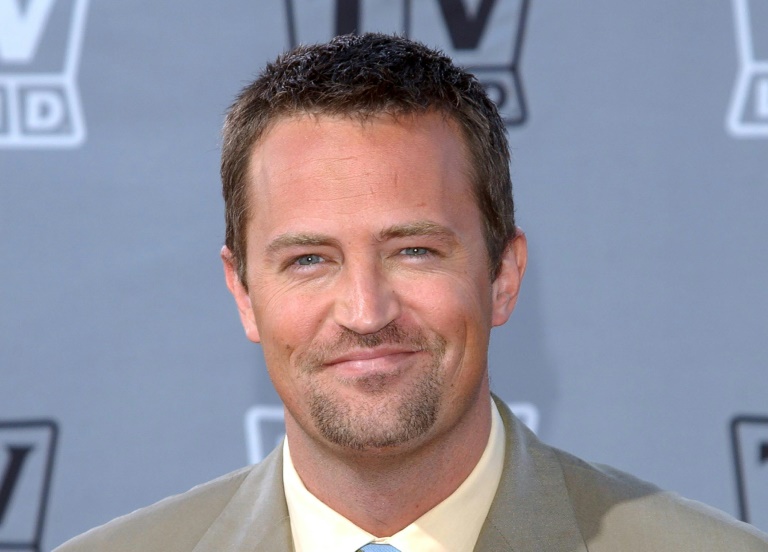
The stepmother of the late “Friends” star Matthew Perry delivered an emotional plea for the harshest possible punishment against the woman dubbed the “Ketamine Queen,” describing the family’s pain as “irreversible” in a victim impact statement filed just before the drug dealer’s sentencing Wednesday.
AFP
Debbie Perry, married to the actor’s father John Bennett Perry, urged a federal judge in Los Angeles to impose the maximum prison term on Jasveen Sangha, the 42-year-old North Hollywood woman who admitted supplying the ketamine that led to Perry’s fatal overdose in October 2023. Sangha could face more than 60 years behind bars after pleading guilty to five federal charges, including one count of distribution of ketamine resulting in death or serious bodily injury.
“Please give this heartless woman the maximum prison sentence so she won’t be able to hurt other families like ours,” Debbie Perry wrote in the statement submitted to the U.S. District Court for the Central District of California on April 7. She described the family’s ongoing grief, saying there is “no joy to be found, no light in the window” and that the loss “comes through our day everyday.”
The statement, obtained by multiple news outlets, highlighted the profound and lasting damage caused by Sangha’s actions. “The pain you’ve caused to hundreds maybe thousands is irreversible,” Debbie Perry continued. “You caused this. You who has talent for business, enough to make money, chose the one way that hurts people.”
Sangha, known among clients as the “Ketamine Queen,” ran what prosecutors described as an elaborate drug operation catering to high-end customers. She admitted to working with another dealer to provide dozens of vials of ketamine to Perry, including the dose that contributed to his drowning death at age 54 in the hot tub of his Pacific Palisades home. Perry, who had long struggled with addiction and documented his battles in his 2022 memoir, was found unresponsive on Oct. 28, 2023.
Advertisement
The case has drawn intense public attention, shining a spotlight on the dangers of ketamine misuse, especially when obtained illegally outside clinical settings. Ketamine, a dissociative anesthetic sometimes used legitimately for depression treatment under medical supervision, can cause severe respiratory depression and loss of consciousness when abused in high doses.
Sangha pleaded guilty in September 2025 to maintaining a drug-involved premises, three counts of distribution of ketamine and the count tied to Perry’s death. Her sentencing hearing was scheduled for Wednesday morning in downtown Los Angeles federal court. Prosecutors have recommended at least 15 years in prison, while her defense has reportedly sought time served or a lighter term.
She becomes the third of five defendants to face sentencing in the high-profile case. On Tuesday, Dr. Salvador Plasencia, one of the physicians involved, was sentenced to 30 months in prison for his role in supplying ketamine to Perry. Another defendant, Perry’s live-in assistant Kenneth Iwamasa, previously pleaded guilty to conspiracy to distribute ketamine and faces his own sentencing.
Prosecutors portrayed Sangha as a central figure in a network that profited from providing powerful drugs to vulnerable individuals. Court filings alleged she operated with sophistication, using multiple phones and catering to wealthy clients seeking ketamine for recreational or self-medication purposes. The government emphasized that her actions directly contributed to Perry’s death, even as the actor was attempting to manage his addiction.
Advertisement
Debbie Perry’s statement marked the family’s most public expression of grief and anger in recent months. While Perry’s biological mother, Suzanne Morrison, and other relatives have spoken sparingly, Debbie Perry’s words underscored the collective family trauma three years after the loss. The family has largely avoided the spotlight, focusing instead on honoring Matthew Perry’s legacy through his foundation and advocacy for addiction recovery.
Matthew Perry rose to global fame as the sarcastic Chandler Bing on the NBC sitcom “Friends,” which aired from 1994 to 2004. He earned an Emmy nomination for the role and later starred in films and other television projects. Behind the success, however, Perry battled severe substance abuse issues for decades, including prescription opioids and alcohol. In his memoir “Friends, Lovers, and the Big Terrible Thing,” he detailed his struggles with sobriety and the physical toll of addiction.
His death at 54 shocked fans worldwide and prompted renewed discussions about celebrity addiction, the opioid crisis and the emerging risks of ketamine. The actor had reportedly been receiving ketamine infusions legally for depression in the period leading up to his death, but the fatal dose came from illegal sources obtained through the charged defendants.
The case has unfolded slowly through the federal court system. Arrests began in August 2024, with Sangha taken into custody and held without bail. Her plea deal in late 2025 resolved the charges against her without a trial, allowing the focus to shift to sentencing.
Advertisement
Legal experts note that while the maximum statutory penalty exceeds 60 years, actual sentences in such cases often fall significantly lower based on guidelines, cooperation and other factors. Prosecutors’ push for 15 years reflects the gravity of the conduct while acknowledging typical federal sentencing ranges for similar offenses.
Sangha’s operation allegedly extended beyond Perry, with authorities claiming she supplied ketamine to numerous other clients. The “Ketamine Queen” moniker originated from her own communications and those of her customers, according to court documents.
The Perry family’s call for maximum punishment echoes victim impact statements in other high-profile drug cases, where relatives seek to emphasize the human cost beyond statistical sentencing calculations. Debbie Perry’s letter painted a picture of unrelenting sorrow that no prison term can fully alleviate, yet she argued that a strong sentence could prevent future harm.
” They won’t be back,” she wrote of lost loved ones. “That thought comes through our day everyday. There is no escape from these feelings.”
Advertisement
As the sentencing hearing proceeded Wednesday, courtroom observers anticipated emotional testimony and arguments from both sides. Sangha has remained in federal custody since her arrest. Her attorneys have not publicly commented in detail on the victim impact statement.
The broader case has raised questions about accountability in the illegal ketamine trade. While medically supervised ketamine therapy has grown in popularity for treatment-resistant depression, unregulated street supplies pose significant dangers, particularly when mixed with other substances or used by individuals with underlying health issues.
Perry’s death certificate listed the cause as “acute effects of ketamine” with contributing factors including drowning and coronary artery disease. The actor had reportedly received multiple ketamine injections in the days before his death from unauthorized sources.
Advocates for addiction recovery have used the case to call for better regulation, increased access to legitimate treatment and destigmatization of substance use disorders. Perry himself had become an advocate in his later years, supporting sober living initiatives and sharing his story to help others.
Advertisement
As Wednesday’s proceedings unfolded, the entertainment world watched closely. “Friends” co-stars and Hollywood figures have expressed continued support for the Perry family while avoiding direct commentary on the legal case.
The sentencing represents a significant milestone in the justice system’s response to Perry’s death, though it will not bring closure to the family’s grief. Debbie Perry’s statement served as a powerful reminder of the human stakes in what might otherwise be viewed as a routine drug distribution prosecution.
Federal sentencing guidelines consider factors including the quantity of drugs, the defendant’s role, criminal history and the outcome of the offense. The count tied to death carries the most severe potential penalty, elevating the case beyond standard narcotics charges.
Regardless of the exact term imposed, the Perry family has made clear their desire for a sentence that reflects the irreversible loss they attribute to Sangha’s actions. “You caused this,” Debbie Perry wrote, directing her words at the defendant.
Advertisement
As the judge weighs the arguments, the case continues to highlight the complex intersection of celebrity, addiction, illegal drug markets and federal prosecution. For the Perry family, it marks another chapter in their long journey of mourning while seeking accountability.
Matthew Perry’s legacy endures through his work, his foundation and the conversations his death has sparked about recovery and responsibility. On Wednesday, those themes converged in a Los Angeles courtroom as his stepmother’s words echoed the family’s enduring pain and demand for justice.
Pakistan’s stock market recorded a historic surge on Wednesday after news of a temporary ceasefire between the United States and Iran eased geopolitical tensions and boosted investor confidence across the region.
The benchmark KSE-100 index at the Pakistan Stock Exchange jumped more than 12,000 points in trading at one point, marking its largest intraday gain in absolute terms. This prompted an automatic temporary halt in trading under exchange regulations designed to manage extreme volatility.
The rally came after confirmation of a two-week ceasefire agreement between Washington and Tehran. Under the arrangement, the United States agreed to pause planned military operations, while Iran committed to reopening the Strait of Hormuz, a vital global oil shipping route responsible for transporting a significant share of the world’s energy supplies.
Investors had been on edge for weeks as escalating tensions in West Asia triggered sharp market swings. The KSE-100 index had previously suffered a major setback on March 2, plunging more than 16,000 points amid reports of a high-profile assassination tied to the Supreme leader.
Advertisement
Pakistan’s leadership welcomed the development. Officials indicated that the ceasefire could pave the way for diplomatic negotiations, with discussions potentially taking place in Islamabad in the coming weeks. Government representatives expressed hope that the temporary truce would evolve into a more durable agreement.
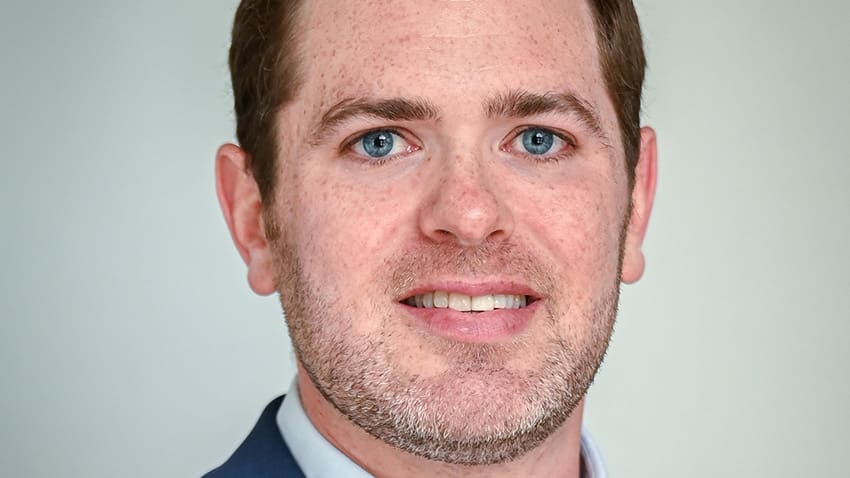
Joshua Chefec’s story starts in Great Neck, New York, a place he describes as “a pretty competitive and high-achieving environment.” From a young age, he learned how to perform under pressure.
He wasn’t just focused on academics. He was also a serious clarinetist. He earned first chair in high school and performed at Carnegie Hall multiple times. “That definitely taught me how to handle a big stage and a lot of pressure at a young age,” he says.
At the same time, he played multiple sports, including soccer, lacrosse, basketball, and tennis. That mix of team play and individual focus would later shape how he leads in business.
Outside of school, he stayed active. Skiing, scuba diving, and boating were part of his routine. That drive to stay engaged and push limits has stayed with him.
Advertisement
Tulane, Finance, and an Early Start in Banking
Chefec moved to New Orleans for college, attending Tulane University. He graduated in just three years with a finance degree, helped by 29 AP credits.
He didn’t wait until graduation to start working. While still in school, he took roles in wealth management offices. By his junior year, he landed an internship at J.P. Morgan in Asset & Wealth Management.
“That really set the stage for everything else,” he says.
After graduating, he stepped into the world of middle-market finance at FGI Capital. There, he worked on debt deals for private equity firms and companies navigating leveraged buyouts and recapitalizations. He also helped build out a private equity coverage model.
Advertisement
It was a fast introduction to complex financial work. It also gave him exposure to senior professionals early in his career.
Building from Scratch in New York
Chefec’s next move tested his ability to build something new. At ExpoCredit, he opened the company’s first New York office.
He wasn’t handed a playbook; he created the strategy himself. He sourced deals, built relationships, and executed transactions from start to finish.
“I was responsible for the whole strategy,” he says, “from sourcing deals to execution.”
Advertisement
This experience shaped how he approaches leadership. It forced him to think clearly, move fast, and take ownership.
He later joined LSQ as a Regional Vice President. There, he managed business development across New York and handled partnerships with large financial institutions.
The JPMorgan Years: Growth and Recognition
Chefec returned to JPMorgan Chase in 2018 as a Vice President in commercial banking. This period marked a major step forward in his career.
He focused on mid-sized companies across industries like consumer retail, media, and manufacturing. Over time, he built strong relationships and delivered consistent results.
Advertisement
Between 2020 and 2022, he generated over $9.5 million in new revenue. He also brought in dozens of new client relationships.
In 2022, he earned “Club Elite” status, one of the firm’s top honors for bankers.
“That performance came from staying focused and doing right by clients,” he says.
By 2023, he was promoted to Executive Director after a full 360-degree review process. He later became Market Executive, co-leading a team of nearly 30 bankers in New York.
Advertisement
In that role, he helped manage a multi-million dollar business serving hundreds of clients. He also led hiring efforts, bringing in more than 20 team members.
“When I build a team, I want to ensure that there is diversity of thought,” he says. “That’s how you make better decisions.”
Leadership Style: Integrity, Clarity, and Follow-Through
Chefec believes strong leadership starts with integrity.
“My industry is about doing right by people,” he says. “It’s about building trusting relationships and following your words with action.”
Advertisement
He also values clear thinking and communication. In finance, decisions often involve complex situations. He focuses on breaking those down and staying grounded.
He doesn’t overcomplicate things. “I keep lists of things, but I try not to over-engineer my career or my life,” he says.
Instead, he relies on discipline and mental toughness. “I focus on grit and not allowing myself to be self-defeating,” he explains. “I think about what advice I would give to others in my situation, and I tell that to myself.”
Overcoming Challenges and Staying Focused
Chefec is open about facing challenges early in life. He grew up in a difficult home environment and had to mature quickly.
Advertisement
He also faced setbacks during his transition into the professional world. Those experiences forced him to reset and rebuild.
“I was forced to grow up much faster than others,” he says. “I overcame those things by being resilient and focused and going after what I want.”
That mindset continues to guide him today. He measures success on his own terms.
“Success can only be defined by yourself,” he says. “It’s about being content with the sum of the parts of your life.”
Advertisement
Looking Ahead
Chefec continues to stay active outside of work. He skis, plays tennis, and enjoys cooking. He also gives back through organizations like W!SE, helping improve financial literacy and career readiness.
As his career evolves, his focus remains steady: build strong teams, make thoughtful decisions, and stay grounded.
And keep growing.
“Success comes when you challenge yourself to grow, learn, and enrich the lives of others,” he says.
The deal puts Sheffield’s IntelliAM into the central belt of Scotland
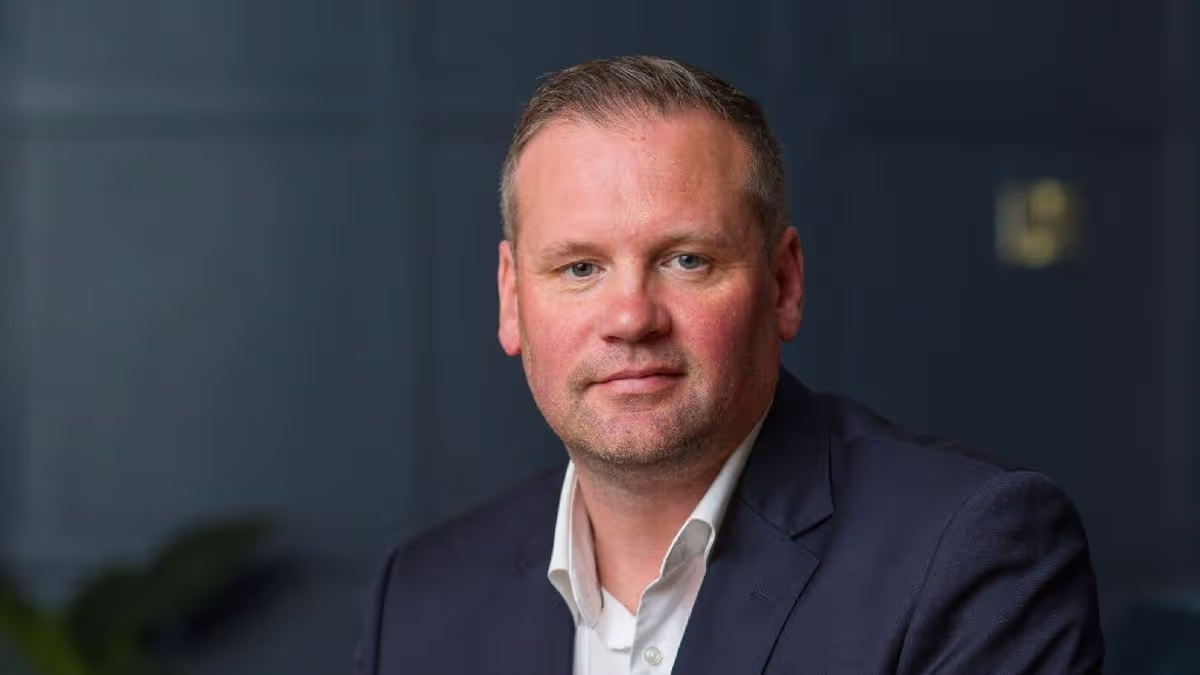
Tom Clayton, CEO of IntelliAM.(Image: IntelliAM)
AI software firmIntelliAM has acquired Scottish maintenance specialist RBM Lubrications & Monitoring Solutions in a £25,000 deal.
The acquisition is said to follow a long-standing relationship between the two businesses, lasting more than seven years. As part of the deal, seven RBM Lubrications employees have transferred to £3.2m turnover IntelliAM alongside engineering assets and vehicles.
RBM Lubrications founder Brian Sarginson has also joined as vice president of IntelliAM Scotland. The deal is structured as a deferred consideration with cash payable at the end of 2029.
Tom Clayton, CEO of IntelliAM, which specialises in industrial asset management systems, said: “We are delighted to formalise our long-standing relationship with RBM through this acquisition. Having worked closely together for over seven years, this is a natural and strategically important step for both businesses.
Advertisement
“It strengthens our presence in the central belt of Scotland, a key hub for UK manufacturing, and enhances our ability to deploy IntelliAM’s advanced Intelligent Asset Management solutions at scale. We see a significant opportunity to drive improved productivity and asset reliability for industrial customers in the region through the application of AI, and we look forward to building on this strong foundation for growth.”
RBM generated revenues of £648,331 for the year ended July 31, 2025 and was profitable. IntelliAM anticipates the acquisition to be modestly accretive to full‑year 2027 profit and to make a positive and growing contribution to margins and profitability over time.
Brian Sarginson, CEO of RBM Lubrications, said: “Having partnered with IntelliAM for many years, I am pleased to be joining the Group at such an exciting stage in its development. This transaction brings together deep domain expertise in lubrication and reliability with IntelliAM’s cutting-edge AI capabilities.
“I believe this combination will deliver substantial value to customers across Scotland and beyond, and I look forward to supporting the next phase of growth as we expand our offering and impact in the region.”
Advertisement
Last year, IntelliAM expanded into the building products sector, securing new contracts with Marshalls, Tarmac, H+H and Knauf in both the UK and Japan.
United Refining Chairman and CEO John Catsimatidis gives his oil projection amid the ceasefire in the Middle East and Zohran Mamdani’s performance as NYC mayor on ‘Varney & Co.’
A small number of tankers are beginning to move through the Strait of Hormuz, United Refining CEO John Catsimatidis said Wednesday, signaling a tentative restart at the critical oil choke point.
“Right now, the ships are moving. Ten ships are scheduled to be moving in the next few hours,” Catsimatidis, also the CEO of New York City grocery chain Gristedes, told “Varney & Co.,” citing what he said was information from Greek shipping executive Nikolas Tsakos. Fox News Digital has not independently verified the claim.
Advertisement
Under normal conditions, Catsimatidis said, as many as 100 tankers pass through the narrow waterway each day, making the current flow a fraction of typical traffic.
Reports suggest that, despite the ceasefire, many ships remain stalled or are moving cautiously through the Strait amid lingering security concerns.
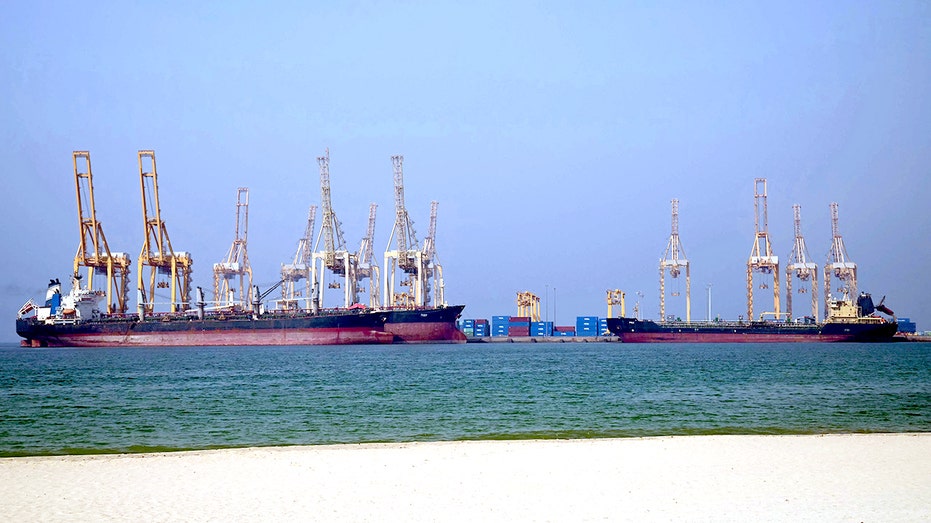
Tankers are seen at the Khor Fakkan Container Terminal, the only natural deep-sea port in the region and one of the major container ports in the Sharjah Emirate, along the Strait of Hormuz, a waterway through which one-fifth of global oil output pass (Giuseppe Cacace/AFP via Getty Images / Getty Images)
Catsimatidis said the limited movement reflects what he described as ships needing to seek permission from authorities before transiting the Strait.
Advertisement
The comments come amid a drop in oil prices as the market reacted Wednesday to a bilateral ceasefire between the U.S. and Iran.
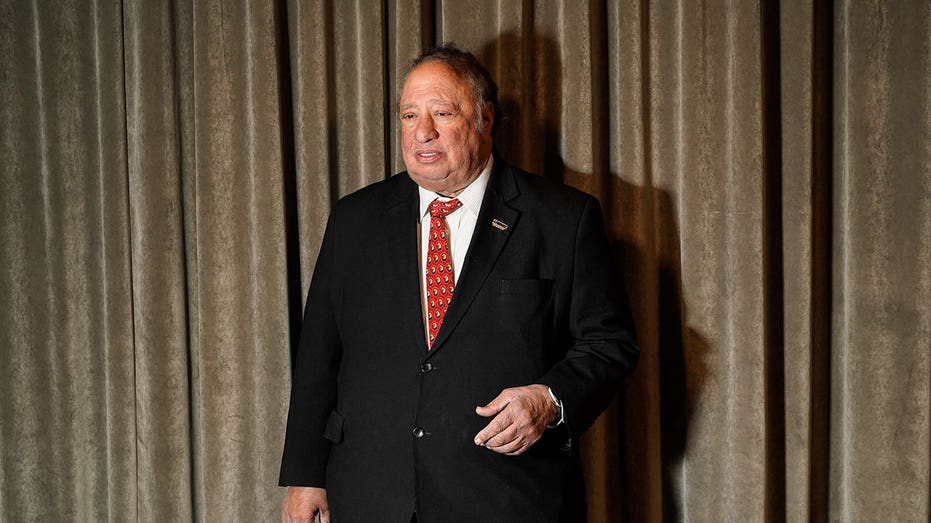
John Catsimatidis attends The New York Society for the Prevention of Cruelty to Children’s 2021 Fall Gala at Stavros Niarchos Foundation Library on November 17, 2021, in New York City. (Jared Siskin/Patrick McMullan via Getty Images / Getty Images)
The truce, announced Tuesday, calls for the reopening of the Strait of Hormuz — a move seen as critical to stabilizing global oil flows and easing pressure on high energy prices.
Catsimatidis predicted that oil prices could continue to fall if stability holds in the coming weeks.
Payne Capital Management President Ryan Payne joins ‘Mornings with Maria’ to analyze the stock market’s bullish surge.
“The minute we settled something, it went down $20 a barrel and, right now, we’re still in a risk period,” he explained.
“Let’s see what happens in the next two weeks. Once that risk period goes away, it’s going to go down another $20 a barrel. It’ll get closer to the $65 a barrel that we were prewar, and all of that is dependent on the free flow of oil through the Strait of Hormuz.”
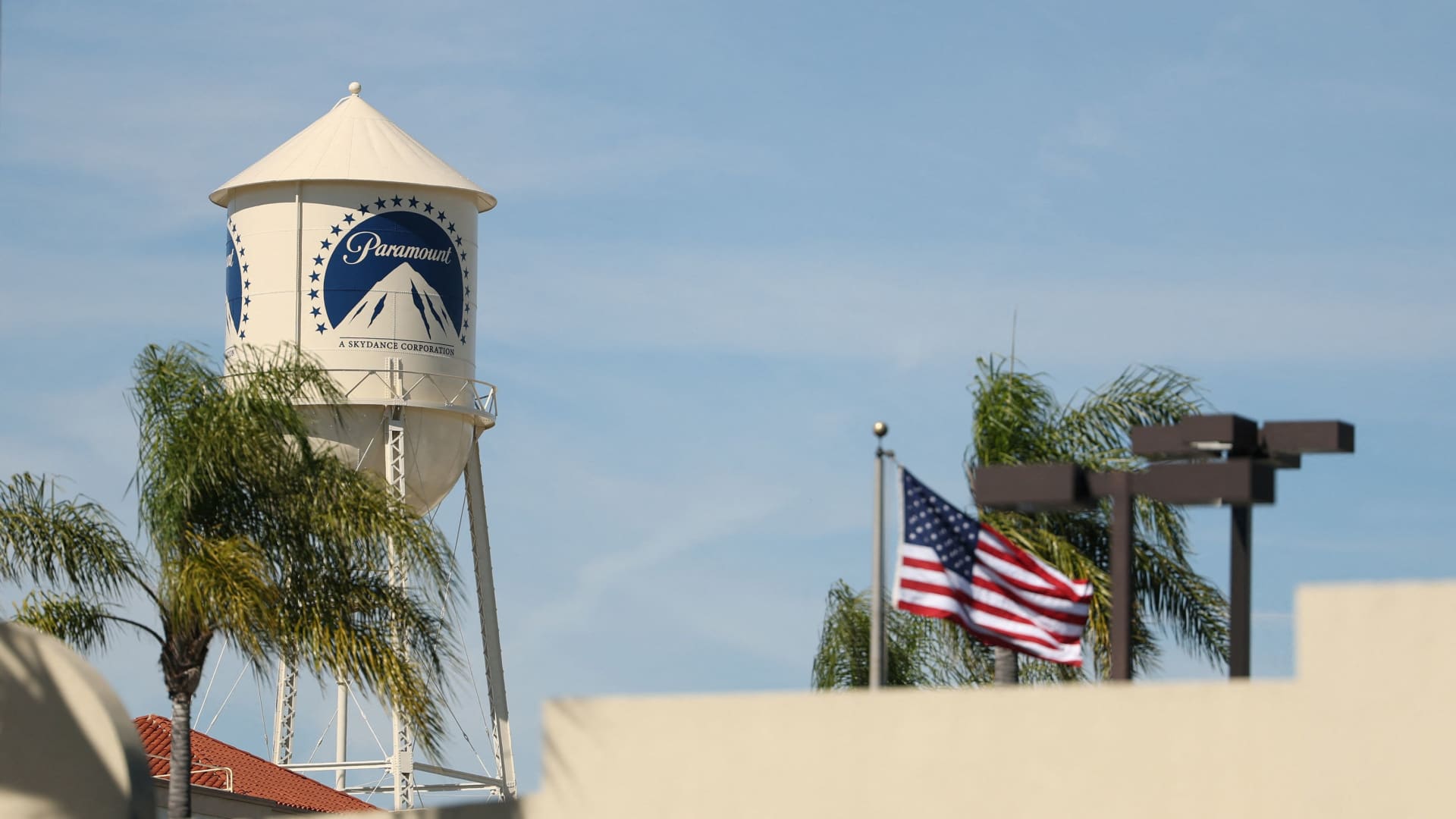
A general view of Paramount Pictures Studios and its iconic water tower in Los Angeles, California, U.S., Feb. 27, 2026.
Mario Anzuoni | Reuters
Jeff Shell is leaving his position as president of Paramount Skydance Corp. after a lawsuit accused him of Securities and Exchange Commission violations.
Advertisement
The company said it did not find an SEC violation. Paramount added in a statement that the claims were “baseless” and said Shell is taking “forceful legal action.”
“Consistent with Mr. Shell’s commitment to prioritizing PSKY’s success, he has elected to transition from his positions as President of PSKY and a member of PSKY’s Board of Directors to focus on this lawsuit,” the company said in its statement. “PSKY is grateful for Mr. Shell’s many contributions and to have relied on him as a valued advisor.”
Shell did not immediately respond for comment.
His future at Paramount has been in question since the company beat Netflix in a bidding war in February to acquire Warner Bros. Discovery. The acquisition of WBD will bring in many new executives, and Shell, who was not involved in deal talks, didn’t have a defined role at a combined company, CNBC reported last month.
Advertisement
Shell came under scrutiny after gambler and whistleblower R.J. Cipriani filed a $150 million lawsuit alleging him of sharing confidential information in violation of SEC rules.
Shell previously left his role as NBCUniversal CEO in 2023 after he admitted to having an “inappropriate relationship” with an employee.
I focus on a rigorous fundamentals-foremost equity and credit research. I currently work as a financial advisor/planner, and do analysis in my free time. I have an undergrad in business administration, an MBA in finance, and currently am a doctoral candidate (a DBA with a concentration in Finance and Investment Management). My research style typically involves process-driven research, followed by blending several valuation models together to get a blended, 12 month price target. I enjoy utilizing full DCF analysis in conjunction with SOTP, peer/multiples analysis, and risk-adjusted approaches. I thoroughly enjoy reading filings, technical documentation relevant to the sector, and then translating that data into conclusions with actionable insights. I enjoy learning about the various sectors and companies I find myself researching, and always feel like there is something to learn. As a curious individual, equity and credit research is very fulfilling, and even fun!I always try to find 2-4 variables that drive value or hinder growth, stress test them, and then let fundamental evidence incorporated with book-value set my viewpoint for the research project. I enjoy the energy sector, commodities, tech, and financial sectors the most. I joined Seeking Alpha to share my thoughts with a wide audience. I originally started with sharing my analysis with a few of my friends who are also advisors and/or analysts. I am always open to a myriad of viewpoints, as I feel the most accurate viewpoints and research is made through a collection of great minds working together to figure something out. If you appreciate thorough research, and want to learn more about a company beyond just what is inside of their books, then I believe you will enjoy the research that I work on.
Analyst’s Disclosure: I/we have no stock, option or similar derivative position in any of the companies mentioned, but may initiate a beneficial Short position through short-selling of the stock, or purchase of put options or similar derivatives in DGRO over the next 72 hours. I wrote this article myself, and it expresses my own opinions. I am not receiving compensation for it (other than from Seeking Alpha). I have no business relationship with any company whose stock is mentioned in this article.
The views expressed in this article are solely the author’s own and do not represent the opinions or recommendations of an SRO or broker-dealer. This article is for informational purposes only and does not constitute investment advice, a solicitation, or a recommendation to buy or sell any security. Readers should consult their own financial advisor before making investment decisions. As a reminder, investment products: Are NOT FDIC insured. Not deposits of, or obligations of a bank, and may be subject to investment risk, including a possible loss of principal.
Advertisement
Seeking Alpha’s Disclosure: Past performance is no guarantee of future results. No recommendation or advice is being given as to whether any investment is suitable for a particular investor. Any views or opinions expressed above may not reflect those of Seeking Alpha as a whole. Seeking Alpha is not a licensed securities dealer, broker or US investment adviser or investment bank. Our analysts are third party authors that include both professional investors and individual investors who may not be licensed or certified by any institute or regulatory body.

















































You must be logged in to post a comment Login