SYDNEY — Australia’s fuel crisis, triggered by disruptions from the US-Israel conflict with Iran and the effective closure of the Strait of Hormuz, continued into mid-April 2026 with hundreds of service stations still reporting shortages, diesel prices exceeding $3 per litre in many areas and economists warning of growing recession risks if supply restrictions become necessary later this year.
Australia Fuel Crisis Deepens April 2026: Diesel Shortages Hit Farms and Trucks as Recession Warnings Grow
Energy Minister Chris Bowen stated this week that Australia holds approximately 38-39 days of petrol reserves, 29-31 days of diesel and about 30 days of jet fuel, with 57 ships carrying more than 4.1 billion litres of fuel secured through May. However, regional areas and the transport sector face ongoing pain, with diesel shortages particularly acute for farmers, truck drivers and miners who keep the economy moving.
As of early April, the number of service stations without diesel had fallen from peaks above 400 to around 173-312 nationwide, depending on daily reporting, with New South Wales hardest hit at times with over 180 stations affected. Hundreds more ran dry on unleaded petrol in rural and outer suburban locations. Panic buying earlier in the crisis exacerbated the situation, though government appeals for normal purchasing habits helped stabilise some queues.
The crisis stems from Australia’s heavy reliance on imports. The nation sources about 90% of its refined fuel from Asian refineries that depend on crude oil passing through the Strait of Hormuz, which handles roughly one-fifth of global supply. Disruptions since late February or early March, including cancelled or delayed shipments and reduced refinery output in Singapore, South Korea and Malaysia, created a lag effect now biting into domestic availability. Even with a reported ceasefire in the Iran conflict, experts say repairs to damaged infrastructure mean full supply recovery could take months.
Petrol prices surged from around $1.80 per litre pre-crisis to averages near $2.20-$2.50, while diesel climbed sharply toward or past $3 in affected regions — a jump of 50% or more in weeks. A typical family’s weekly fuel bill rose by $20-$30 or higher, adding thousands annually for heavy users. The government halved fuel excise tax for three months, providing roughly 26-32 cents per litre relief at the pump, and released portions of national stockpiles while temporarily relaxing fuel quality standards to broaden import options.
Advertisement
Prime Minister Anthony Albanese’s administration activated elements of its four-stage National Fuel Security Plan. The country currently operates in a heightened “plan and prepare” or voluntary conservation phase, encouraging carpooling, reduced unnecessary travel and efficient driving. Stage three could involve prioritising fuel for essential services such as emergency vehicles, food transport, agriculture and mining if shortages worsen. The government has underwritten spot-market purchases by major suppliers Ampol and Viva Energy at inflated prices and holds powers to direct distribution toward vulnerable regions.
Farmers and the transport industry bear the brunt. The National Farmers’ Federation warned of potential food price hikes up to 50% if diesel shortages disrupt planting, harvesting and distribution. Truck operators face viability threats, with some reports suggesting up to 70% could struggle without relief. Fertiliser shortages compounded by higher transport costs add pressure on agriculture. Qantas responded by cutting domestic flight capacity 5% and warned of jet fuel costs ballooning to $3.1-$3.3 billion for the half-year.
Retail giant Wesfarmers, owner of Bunnings, Kmart and Target, paused delivery fees on eligible orders until September to ease cost-of-living strain on customers. Used electric vehicle prices rose as some motorists reconsidered combustion engines amid sustained high fuel costs.
Economist Shane Oliver of AMP warned that prolonged disruptions could tip Australia toward recession in the second half of 2026. While immediate price spikes hurt households, the real danger lies in physical shortages forcing usage restrictions that ripple through supply chains, inflation and business confidence. The International Monetary Fund flagged broader global energy crisis risks with potential stagflationary effects.
Advertisement
Critics, including opposition figures and industry groups, pointed to long-term vulnerabilities: Australia once operated eight domestic refineries but now has only two — Ampol’s Lytton in Brisbane and Viva Energy’s Geelong facility — meeting less than 20% of needs. The country holds far below the International Energy Agency’s recommended 90-day reserve obligation, a gap highlighted in past warnings. Calls grow for boosting local production, including accelerated development of the Taroom Trough oil fields in Queensland, where test wells show promise but commercial output may not flow until 2028 at earliest.
In response, the government pursues diplomacy with Singapore, Malaysia and Brunei to secure additional refined fuel. A $20 million public campaign urges fuel conservation. Transport Minister Catherine King confirmed ongoing efforts to support heavy vehicle operators through reduced road user charges.
Regional impacts vary. Urban centres in Sydney, Melbourne and Brisbane see sporadic outages but generally better access, while country towns sometimes face multi-day dry spells at the single local servo. Some stations imposed purchase limits during peak disruption. Vigilante-style complaints about alleged price gouging emerged, though the Australian Competition and Consumer Commission monitors retailers.
Despite challenges, Bowen and Albanese stressed that no expected April shipments failed to arrive and new orders replaced cancellations. They encouraged Easter and school holiday travel to proceed normally, though many families adjusted plans to shorter trips or public transport where possible.
Advertisement
Broader economic effects include rising goods prices as transport costs feed into groceries and retail. Confidence among households and businesses dipped sharply. Some analysts note a silver lining in accelerated interest in electric vehicles, with second-hand EV values climbing.
Longer-term solutions under discussion include incentives for domestic refining and storage expansion, greater biofuel or hydrogen integration, and stronger strategic reserves. Queensland Premier David Crisafulli highlighted his state’s potential role in boosting local oil output and refining capacity.
As the crisis enters its second month, the Albanese government faces balancing short-term relief with preparations for possible extended “long tail” disruptions even if Middle East tensions ease. Treasurer Jim Chalmers prepares talks with international counterparts on energy security.
Motorists are advised to fill up responsibly, combine trips and consider alternatives like public transport or remote work where feasible. For businesses, contingency planning around logistics remains essential.
Advertisement
The situation underscores Australia’s exposure at the end of global supply chains. While immediate reserves and secured shipments provide a buffer into May, the coming weeks will test resilience as Asian refinery constraints potentially tighten further. Government, industry and consumers alike watch developments in the Middle East and Asian fuel markets closely.
For the latest station availability and prices, drivers can check apps and websites from major fuel networks or the Australian Institute of Petroleum. Authorities continue monitoring and stand ready to escalate measures if needed to keep essential services running.
The fuel crisis of 2026 serves as a stark reminder of energy security’s importance in a geopolitically volatile world. Australia’s response will shape economic outcomes well beyond the current disruptions.
Pinterest (PINS) jumps on strong results, above-expectation Q2 sales forecast. (00:14) Palantir Technologies (PLTR) perks up as Q1 results, guidance top Wall Street’s forecast. (01:08) DOJ confirms antitrust investigation into meatpacking industry – reports. (02:26)
This is an abridged transcript.
Advertisement
Shares of Pinterest (PINS) are up over 16% premarket after the company posted first-quarter results above Wall Street estimates, coupled with an above-expectation sales forecast.
The company posted revenue of $1B, a growth of 17% Y/Y, compared to consensus of $968.12M. It earned an adjusted profit of $0.27 per share, beating consensus by $0.05.
Global Monthly Active Users increased 11% year over year to 631 million, representing its tenth consecutive quarter of double-digit user growth.
For Q2 2026, the company expects revenue to be in the range of $1.13B to $1.15B, representing 14% – 16% growth year over year. Consensus for Q2 revenue is $1.12B.
Advertisement
Palantir Technologies (PLTR) is down 3% premarket after rising more than 1% in extended trading on Monday.
The technology company reported first-quarter results that topped Wall Street’s estimates.
For the period ending March 31, Palantir said it earned an adjusted $0.33 per share as revenue surged 85% year-over-year to come in at $1.63B.
The company closed 206 deals worth at least $1M during the period, including 72 worth at least $5M and 47 worth at least $10M.
Advertisement
Analysts had expected the company to earn an adjusted $0.28 per share on $1.54B in revenue.
Looking ahead to the second-quarter of fiscal 2026, Palantir said it expects revenue to be between $1.797B and $1.801B, above the $1.68B estimate.
Julian Lin, Investing Group Leader for Best Of Breed Growth Stocks, said Palantir’s results, especially its revenue growth, continue to “defy gravity.”
“The recent volatility has allowed the stock time to grow more into its valuation—it is worth another look,” Lin said via email.
Advertisement
The U.S. Department of Justice confirmed that it’s probing potential antitrust violations in the meatpacking industry as domestic beef prices soar.
Bloomberg first reported late last month that the DOJ had opened a criminal probe into how meatpackers purchase cattle from ranchers. The inquiry came after President Donald Trump in November called for an investigation, accusing the industry of artificially driving up the price of beef.
Blanche said the industry is dominated by four major processors that control roughly 85% of the beef processing market. The investigation is centered on potential collusion, price fixing, and other anticompetitive conduct in the U.S. cattle and beef markets, according to Reuters report on the press conference.
Major meatpackers include Brazil’s JBS (JBS), Tyson (TSN), Cargill, and National Beef. Spokespersons for JBS, Tyson, Cargill, and National Beef didn’t immediately respond to requests for comment from Bloomberg.
American Express (AXP) will hold its annual shareholder meeting.
The three-day CoinDesk Consensus conference will begin. Notable speakers during the event include Binance founder Changpeng Zhao, Strategy (MSTR) Executive Chairman Michael Saylor, and Cloudflare (NET) Chief Strategy Officer Stephanie Cohen.
Stock index futures rise as investors look ahead to a batch of economic reports, including labor data.
Crude oil is down 2% at $104. Bitcoin is up 1% at $80,000. Gold is up 0.7% at $4,555.
The FTSE 100 is down 1% and the DAX is up 0.9%.
Advertisement
The biggest movers for the day premarket: Duolingo (DUOL) -13% – Shares dipped despite better-than-expected Q1 results, as a softer growth outlook and higher investments weighed on sentiment.
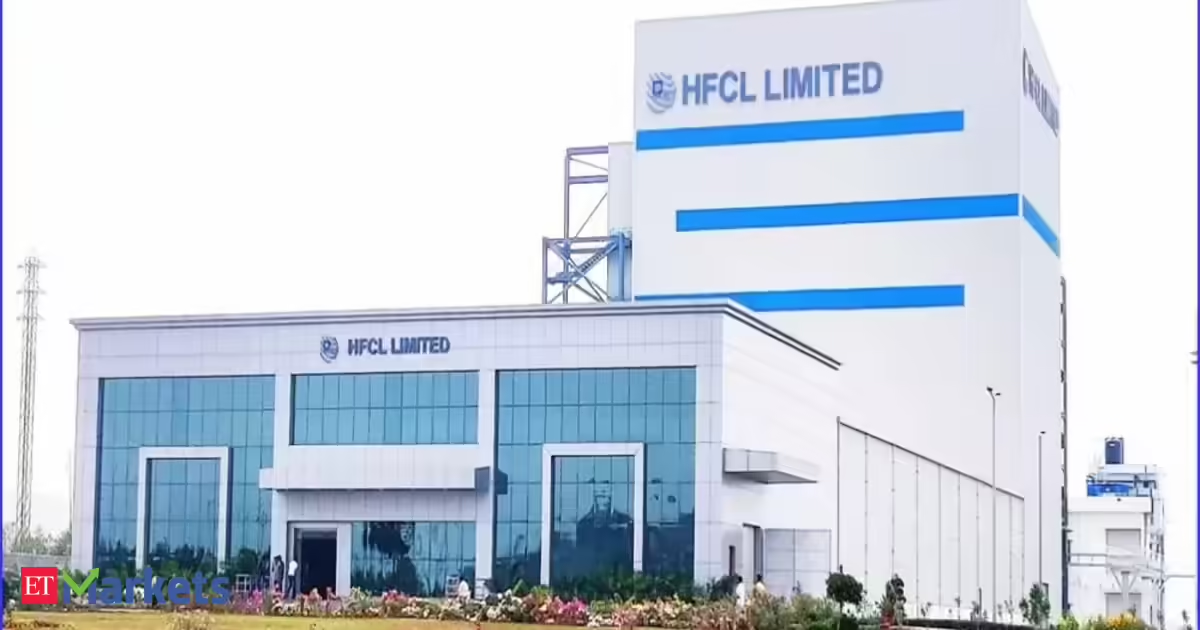
Shares of HFCL climbed as much as 4% on Tuesday, touching an intraday high of Rs 131.15, after the company announced fresh order wins worth Rs 84.23 crore.
In a regulatory filing, HFCL said that it, along with its material subsidiary HTL Limited, secured purchase orders from a leading private domestic telecom service provider for the supply of optical fiber cables. The orders will be executed under standard commercial contract conditions and are scheduled for completion by August 2026.
The company will supply optical fiber cables tailored to customer specifications, reinforcing its role in India’s telecom infrastructure supply chain.
HFCL noted that the deal reflects continued confidence from telecom customers in its manufacturing strength, technological capabilities, and product quality. The promoter and promoter group have no interest in the awarding entity, the company clarified.
Advertisement
The latest win adds to HFCL’s order book momentum as demand for optical fiber infrastructure continues to grow amid ongoing telecom network expansion across the country.
Live Events
HFCL is currently valued at a market capitalisation of approximately Rs 19,783.04 crore. Over the past 52 weeks, the stock has touched a high of Rs 131.00 and a low of Rs 59.82, From a valuation standpoint, HFCL is trading at a price-to-earnings (P/E) ratio of 61.88, while its price-to-book (P/B) ratio stands at 4.41.On the technical front, the stock’s 14-day Relative Strength Index (RSI) is at 87.7, a level typically considered strongly overbought (above 80), suggesting the possibility of short-term profit booking or a pullback.
Despite this, the broader trend remains strong, with HFCL trading above all 8 key simple moving averages (SMAs), indicating a firmly bullish technical structure.
(Disclaimer: Recommendations, suggestions, views and opinions given by the experts are their own. These do not represent the views of The Economic Times)
Australia’s cash rate is now sitting at its pandemic-era peak, as the RBA continues to battle escalating inflation compounded by conflict in the Middle East.
The addition of Howat Avraam adds depth to Hugh James’ disputes and corporate capabilities
09:35, 05 May 2026Updated 09:42, 05 May 2026
Hugh James’ acquisition deal, left tor right: Ioan Prydderch (Hugh James’ head of business division) , Niki Avraam and Matthew Howat of Howat Avraam and Alun Jones (managing partner Hugh James)(Image: Matthew Horwood)
Cardiff headquartered law firm Hugh James has expanded its presence in London with the acquisition of Howat Avraam.
The deal, the value of which has not been disclosed, has seen Howat Avraam partners Matthew Howat and Russell Osman joining Hugh James’ City of London office at 1 King’s Arms Yard. The firm will continue to work with employment lawyer, Niki Avraam, and office manager Tara Maher.
Advertisement
Howat Avraam specialises in commercial litigation, shareholder and director disputes, corporate and employment matters across multiple sectors.
The addition of Howat Avraam adds depth to Hugh James’ disputes and corporate capabilities while reinforcing its commitment to building a full-service presence in London.
Alun Jones, managing partner at Hugh James, said: “This is an exciting step for the firm as we continue to invest in our London offering. Howat Avraam is a highly regarded team with strong technical expertise and a commercial mindset that fits naturally with how we work. Their arrival strengthens our disputes and corporate capabilities and supports our ambition to grow our presence in the capital.”
Advertisement
Ioan Prydderch, head of the business division of Hugh James, added: “Matthew and Russell bring strong disputes and corporate capability to the firm, while Niki’s employment expertise and continued involvement provide valuable continuity for clients. We are also pleased to welcome Lee Edwards and Nazneen Ford, whose experience further strengthens our employment and corporate offering, alongside Tara Maher who will support a smooth transition for clients and colleagues.
“This is a strategically important addition for our Business Division, strengthening our ability to support clients through complex commercial challenges while continuing to grow our London presence.”
Mr Howat said:“Joining Hugh James was a natural fit for us. The firm’s national reach, strong client base and clear strategic direction align closely with our own approach. We share a focus on delivering practical, commercially sound advice and building lasting relationships with clients. We’re excited to be part of the firm’s continued growth and to contribute to its expanding London presence.”
As well as its Cardiff and London offices Hugh James, that employs more than 700, also has offices in Manchester, Southampton and Plymouth.
For scores of smallcap investors on Dalal Street, the Bengal theme is the hottest trade in town following the BJP’s landslide victory in the West Bengal assembly elections. Bengal-focused stocks have seen a sharp two-day rally, with IFB Agro Industries surging 27% and Dhunseri Tea jumping 22% as investors bet on a radical shift in the state’s industrial fortunes. But analysts warn that real transformation will take years, and market focus is already pivoting to West Asia tensions and quarterly earnings.
Seven stocks with Bengal exposure posted double-digit gains in two days following the election verdict. Dhunseri Tea and IFB Agro Industries led with 22% and 27% gains respectively, while Senco Gold surged 13%, Balgopal Commercial 12%, Emami Realty 10%, Mcleod Russel 9%, and Bazaar Style Retail 6%.
“The market mood is positive as one more state like Bengal, which has got significant growth potential, would now be ruled by the BJP,” Sunny Agrawal, Head of Fundamental Research at SBI Securities, told ET Markets. “But fundamentally, things will improve only gradually. The true impact will be felt only in the long term.”
Nomura struck a cautiously optimistic note, highlighting decades of underperformance. “West Bengal has struggled with industrialisation throughout its modern history, despite its easy access to ports, raw material and markets, primarily impacted by governance concerns of the Left and TMC,” the brokerage said. “The BJP’s victory in WB could lead to expectations of improved governance, ease of doing business, enhanced infrastructure spending with central government assistance and better centre-state coordination on various schemes. A turnaround in WB’s economic prospects with higher levels of private investment and higher incomes is a potential medium-term tailwind.”
Live Events
Ambareesh Baliga, an independent market analyst, sees a clear sectoral playbook emerging. “It will lead to an industry comeback, more focused growth in Bengal. After several decades, Bengal will get the same government as the centre,” he said. “Sectors like real estate will benefit. It won’t be untouchable for national players anymore.” He flagged that while listed real estate players with exposure to Bengal are limited, some carry land banks in the state. Companies that have started or have significant operations in Bengal stand to gain from the changing political climate. Infrastructure plays in roads and construction are also on his watchlist. JM Financial echoed the development narrative while injecting a note of caution. “A decisive mandate in West Bengal in favour of a pro-growth party would ideally drive capex activity in the state and improve ease of doing business, aligning with the Prime Minister’s ‘Poriborton’ push,” the brokerage said. “We expect incremental focus on manufacturing, which would boost employment opportunities and gradually improve the fiscal deficit. However, despite visibility of incremental capex demand in West Bengal, there is a risk of curtailment in central government capex due to the likely fiscal impact of the West Asia crisis.” Motilal Oswal underscored the political significance by saying that the election verdict will be viewed positively by the market, not only for the message of a progressive change but more from the lens of policy continuity, as the hands of the ruling NDA have become stronger, and any faint memories and concerns of the 2024 Lok Sabha setback have been convincingly wiped.
“The results have longer-term implications on the economic growth of involved states, especially the momentous transition for West Bengal, which will play out over the years. Once the results are digested and their positive undercurrent well noted, markets will quickly shift focus to the more immediate developments in the West Asia war and the 4QFY26 earnings season.”
(Disclaimer: Recommendations, suggestions, views and opinions given by the experts are their own. These do not represent the views of Economic Times)
West Bengal’s historic shift to BJP rule, the kind of political earthquake that would typically fuel a multi-day Dalal Street rally, lasted barely a few hours before global realities crushed the party. The Sensex crashed over 500 points, and the Nifty shed 0.6% on Tuesday as surging crude oil, a rupee in freefall, and the spectre of sustained foreign selling overshadowed what should have been a celebration of policy continuity and investment potential.
After rallying nearly 1,000 points Monday morning as election results confirmed the BJP’s Bengal victory, the Sensex pared gains to close just 356 points higher, a warning shot that sentiment alone wouldn’t carry the market. By Tuesday, the disconnect was complete.
3 factors are drowning out the Bengal bulls:
Advertisement
1) Crude oil reality
The resumption of hostilities in the Strait of Hormuz and Brent crude spiking back to around $113 have become the dominant market narrative, overwhelming any domestic political positives.”The sentimental boost provided by the BJP’s electoral victory in W Bengal will not last,” Dr VK Vijayakumar, Chief Investment Strategist, Geojit Investments Limited, said bluntly. “The market trend will be guided by the developments in West Asia, particularly in the Strait of Hormuz. The resumption of hostilities in the Hormuz region and Brent crude again spiking to around $113 are headwinds for the market.”
Live Events
Investors ignored the gains for the BJP in states such as West Bengal and a third term in Assam on the belief that higher import bills could weaken macro-economic fundamentals, reduce purchasing power, and earnings. Nomura flagged an uncomfortable policy choice now looming. “The strengthening of BJP’s political foothold could reduce India’s political risk premium at the margin, especially at a time when the war in Iran is leading to unpopular price hikes and supply-side shortages,” the brokerage said. “However, we expect markets will be wary of the prospects of hikes in petrol and diesel prices now that the state elections are over. While the government has pushed back against this in the past, having already cut fuel taxes, a senior government official has been reported to suggest that discussions on fuel price hikes are ongoing to reduce under-recoveries of oil marketing companies.” JM Financial warned that despite the visibility of incremental capex demand in West Bengal, there is a risk of curtailment in central government capex due to likely fiscal impact of the West Asia crisis.
The Indian rupee slid to a record low on Tuesday after U.S.-Iranian strikes in the Gulf rattled markets, dimming hopes for a resolution and deepening concerns over risks confronting the oil-importing economy.
The currency weakened to 95.40 per dollar, down 0.3% on the day, eclipsing its previous all-time low of 95.33 hit last Thursday. The rupee has declined 4.5% since the Iran war erupted on February 28, in line with other currencies of oil importers in Asia.
Advertisement
UBS has revised its year-end forecast for the rupee to 96 per dollar, weaker than its earlier forecast of 94, while analysts at ANZ expect it to weaken to 98 by March 2027.
“The underlying issue for INR remains the balance of payments. Hence, measures to increase capital flows need to be the key policy priority,” analysts at UBS said in a note.
The US 10-year bond yield rising to 4.44% and the rupee sliding to fresh record low levels are unfavourable from a foreign inflows perspective.
While FIIs bought over Rs 2,800 crore worth of shares in Monday’s trading session, analysts say that could be a one-off. In recent weeks, HSBC and JP Morgan have downgraded Indian stocks.
“While Monday’s election outcome provided a boost to market sentiment, investor focus remained on geopolitical developments, with the West Asia conflict still unresolved and crude prices elevated,” said Rajesh Palviya, head of technical and derivatives research at Axis Securities. “Although the ruling party’s victory supports sentiment, a sustained market uptrend will likely depend on positive geopolitical cues.”
Emkay highlighted the longer-term fiscal concerns that could temper any Bengal optimism. “We believe BJP-led governance in states, particularly WB, could improve Centre-state alignment and accelerate administrative approvals for central projects, benefiting regional industrial growth in the medium term,” the brokerage said. “However, the immediate challenge lies in maintaining fiscal discipline against the backdrop of populist-driven spending trends, which have proven to be a winning electoral formula, but threaten the long-term fiscal health of states and their productive spending.”
With most large-cap earnings now largely behind us, markets are searching for fresh triggers to determine the next directional move. Vijayakumar summed up the near-term outlook: “In the near-term, the market will respond to Q4 results and management commentary.”
Advertisement
For now, West Bengal’s political transformation remains a medium-term story that the market simply can’t afford to price in while oil burns above $113 and the rupee sets fresh lows by the day.
(Disclaimer: Recommendations, suggestions, views and opinions given by the experts are their own. These do not represent the views of Economic Times)
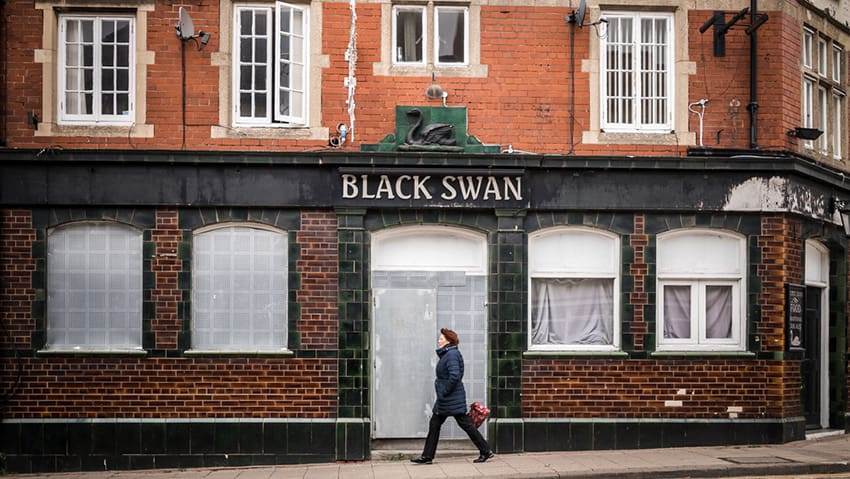
Britain’s pub trade is calling time at a rate of nearly two locals a day, with industry leaders pinning the blame squarely on Chancellor Rachel Reeves’s autumn Budget.
Fresh figures from the British Beer and Pub Association (BBPA) show 161 pubs shut their doors for good in the first quarter of 2026 alone — a 26 per cent jump on the same period last year and the equivalent of one publican turning out the lights every 13 hours.
The closures have already cost more than 2,400 jobs since January, with around half of those losses falling on workers under the age of 25. The hospitality sector as a whole has now haemorrhaged more than 100,000 roles since Labour took office in October 2024.
Writing in The Telegraph, BBPA chief executive Emma McClarkin warned that Britain’s locals were buckling under “a heavy and uneven burden”. She pointed out that £1 in every £3 spent over the bar goes straight to the Treasury, before pubs even consider rising energy bills, wage pressures and tightening regulation.
“Otherwise-viable businesses have been pushed to the brink,” Ms McClarkin wrote, calling for cuts to beer duty and VAT alongside structural reform of business rates.
Advertisement
The figures land at an awkward moment for ministers, who have spent recent weeks insisting they are “backing Britain’s pubs”. A 15 per cent reduction in business rates bills, secured for the sector from April, was followed by a two-year real-terms freeze. The Treasury has also extended World Cup opening hours and unveiled a £10m hospitality support fund.
Operators, however, say the relief is being swallowed whole by other Budget measures. The increase in employers’ National Insurance contributions, sharp rises to the National Living Wage and revisions to the business rates regime have, the BBPA estimates, added £322m to the costs faced by pubs and brewers.
Kate Nicholls, chair of UKHospitality, said the trade was now carrying “the highest tax burden in the economy”. She warned: “Local people, local communities and our economy suffer enormously when a pub closes. The Government needs to cut hospitality’s costs and give it the support it needs to do what it does best, drive growth, create jobs and regenerate our high streets.”
The Conservatives have wasted little time exploiting the closures politically. Shadow chancellor Sir Mel Stride accused Labour of pursuing “ruinous policies” and said a future Tory government would cut business rates “for thousands of pubs and shops on our high streets”.
Advertisement
A Government spokesman pushed back, citing the rates relief and support fund, and Ms Reeves has promised a review into how pubs are valued for business rates, a long-standing grievance among publicans, who argue the current turnover-based methodology unfairly penalises them compared with their high-street neighbours.
For now, the data tells a starker story than the political point-scoring. With margins already razor-thin and consumer confidence wavering, even modest additional costs can be enough to tip a marginal pub into the red. Unless the Government moves on duty, VAT or rates ahead of the autumn statement, industry insiders fear the rate of closures will only accelerate as the colder months arrive.
Jamie Young
Jamie is Senior Reporter at Business Matters, bringing over a decade of experience in UK SME business reporting.
Jamie holds a degree in Business Administration and regularly participates in industry conferences and workshops.
When not reporting on the latest business developments, Jamie is passionate about mentoring up-and-coming journalists and entrepreneurs to inspire the next generation of business leaders.
Shares of GameStop dropped more than 10% to $23.84 on Monday after doubts surfaced over how the company plans to fund its unexpected $55.5 billion bid for eBay. In an interview with CNBC, CEO Ryan Cohen avoided direct answers on the financing of the proposed deal, saying he did not understand the line of questioning.
According to a letter posted on GameStop’s website, the offer is structured as a half-cash, half-stock deal at $125 per share. The company plans to use around $9.4 billion in cash on hand and has indicated potential debt financing of $20 billion from TD Securities. Including GameStop’s market capitalisation of roughly $11 billion, the total comes to about $40 billion, leaving a gap of $16 billion compared with the bid value.
“Where is the rest of the money coming from?” asked CNBC anchor Becky Quick, following similar questions from co-anchor Andrew Ross Sorkin on the network’s show Squawk Box. “I don’t understand your question,” Cohen said. “We’re offering half cash, half stock, and we have the ability to issue stock to get the deal done. But the full details of the offer are on our website.” GameStop did not respond to further requests for comment.
GameStop’s market valuation stood at about $12 billion as of Friday, significantly lower than eBay’s $46 billion. The retailer gained widespread attention during the 2021 meme stock rally, which elevated Ryan Cohen as a central figure and earned him the label “meme king” among online investors.
Advertisement
Cohen also said he has not held any discussions with eBay regarding the proposal. eBay confirmed this in a statement on Monday and said it would not comment further until its board has reviewed the offer.
Live Events
GameStop has built an estimated 5% stake in eBay, largely through derivatives along with some holdings in common stock, according to CEO Ryan Cohen. The remaining portion of the proposed deal is expected to be funded through its cash reserves of about $9.4 billion, along with the option to issue additional shares. Cohen said this makes GameStop one of eBay’s largest shareholders, adding that the company’s board has a fiduciary responsibility to assess the proposal. He described eBay as a business that is underperforming relative to its potential and said GameStop’s own transformation offers a model for improvement.The Wall Street Journal was the first to report the unsolicited bid. Cohen told the publication he is willing to take the offer directly to shareholders through a proxy fight if required. If the transaction goes through, he is expected to take on the role of Chief Executive Officer of the combined entity, according to GameStop’s statement.
(Disclaimer: Recommendations, suggestions, views and opinions given by the experts are their own. These do not represent the views of The Economic Times.)
IHS Markit (Nasdaq: INFO) is a world leader in critical information, analytics and solutions for the major industries and markets that drive economies worldwide. The company delivers next-generation information, analytics and solutions to customers in business, finance and government, improving their operational efficiency and providing deep insights that lead to well-informed, confident decisions. IHS Markit has more than 50,000 key business and government customers, including 80 percent of the Fortune Global 500 and the world’s leading financial institutions. Headquartered in London, IHS Markit is committed to sustainable, profitable growth.

























































You must be logged in to post a comment Login