

Business
Digital Wallets and the Future of Casino Payments in the UK


The old way of paying online in the UK has its own annoying habit. It works fine until speed really matters, then something slows the whole thing down.
A card gets flagged. A bank asks for another check. A transfer sits there while you wonder whether your money is moving or just having a quiet lie down.
That is one reason digital wallets keep growing. They feel faster, lighter, and better matched to how many people already pay online. Instead of typing card details into every site, you fund one wallet, verify one account, and use that balance across different merchants.
For casino payments, the appeal is even easier to understand. Players usually care about three things most: whether a deposit goes through, how long a withdrawal takes, and how much personal banking data they need to hand over. Digital wallets help on all three fronts.
The Most Popular E-Wallets in the UK for Casino Play
#1 PayPal
PayPal is still the best-known wallet on this list. Familiarity lowers hesitation, especially for players who do not want to test a random payment app with their real money. The wallet lets you link cards and other funding methods, then pay merchants without sharing card details each time. It also supports the UK market strongly, which makes it an easy first stop for many players.
For casino play, PayPal suits users who care most about brand trust and a clean checkout flow. It is easy to understand, and many players already use it for shopping or sending money.
The downside is that PayPal is selective about gambling. A casino has to be approved, and support is not universal. So it is strong where available, but not something you can assume will work everywhere. We found a list of some top PayPal casinos you could check if you want to use it for online gambling. They are all checked for safety, and they all accept PayPal fully.
Pros
- Trusted brand
- Easy setup
- Cleaner checkout
- Good privacy from merchants
Cons
- Not accepted by every casino
- Gambling support depends on merchant approval
- Features vary by operator
#2 Skrill
Skrill has been tied to online gambling for years, and it shows. The wallet is built for fast online payments, and it openly positions itself for betting and gaming use. It works by letting you fund your wallet, then pay merchants almost instantly without using your bank card directly at every site.
This wallet suits players who want broad gambling-site acceptance and quick movement between wallet balance and gaming account. In practice, Skrill is often easier to find at casinos than many mainstream consumer wallets.
The trade-off is cost. Fees, conversion charges, and account limits can pile up if you are not paying attention.
Pros
- Strong casino acceptance
- Fast deposits
- Useful for international play
- Built with gaming in mind
Cons
- Fees can sting
- Currency conversion needs attention
- Account verification can feel strict
#3 Neteller
Neteller sits in a similar lane to Skrill, which makes sense because both have long histories in online gaming payments. It is a digital wallet designed for quick online transfers, merchant payments, and money movement without relying on your bank card every single time. Neteller also supports gaming and betting merchants directly, which is one reason it keeps showing up on casino cashier pages.
Neteller suits players who already move money across different gaming sites and want one wallet that travels well. It also works for people who like separating gambling funds from their normal banking life.
The weak spot is the same old wallet problem: fees and conditions matter. It is convenient, but only if you keep an eye on charges, limits, and how easy it is to move funds back out. It also includes a gambling block feature, which is useful for players who want tighter spending control.
Pros
- Widely recognized in gambling
- Fast wallet payments
- Useful for moving funds between merchants
Cons
- Fee structure needs watching
- Not equally convenient at every operator
- Verification rules can slow first use
#4 ecoPayz
ecoPayz is a digital wallet built for online payments, with support for multiple currencies, merchant payments, and a setup that appeals to users who want a bit more privacy between their bank and the site they are paying. The wallet is available in the UK and has long been familiar in gambling circles.
For casino payments, ecoPayz suits players who want an alternative to the biggest names without stepping into something obscure. It is especially useful for people who play across international sites and like the idea of handling different currencies in one place.
The main downside is that it is less mainstream than PayPal. Many regular users know the name in gambling, but outside that space, it does not have the same broad everyday recognition.
Pros
- Useful for online gambling payments
- Supports multiple currencies
- Good extra layer between bank and casino
- Solid option for international players
Cons
- Less mainstream than PayPal
- Not accepted at every casino
- Can feel niche if you only use one site
#5 Revolut
Revolut is not a classic gambling wallet in the same way Skrill or Neteller are, but it fits the UK payment conversation because so many people already use it for digital money management, online purchases, and app-based spending.
It gives users a modern app, card tools, transfers, and spending controls, which makes it attractive for people who like keeping everything inside one financial dashboard.
For casino use, Revolut suits players who already rely on it as part of daily banking and want a simple digital route for deposits where supported. It feels familiar, modern, and easy to manage from a phone.
Its weakness is that it is not a dedicated gambling wallet. Support can be less direct, and it does not have the same long-standing casino identity as Skrill, Neteller, or ecoPayz.
Pros
- Very popular digital finance app in the UK
- Easy to manage from mobile
- Useful budgeting and spending controls
- Comfortable for users already in the ecosystem
Cons
- Not a dedicated gambling wallet
- Casino acceptance can be less direct
- Less tailored to gambling than specialist wallets
What UK Players Should Watch Next
The future of casino payments in the UK will probably look less like old-school banking and more like layered digital finance. A player will fund a wallet from a bank account, card, or app balance, then use that wallet to move money across sites with less friction.
The real winners will be the wallets that balance four things well: easy funding, fast cashouts, clean verification, and strong operator acceptance. Brand name helps, but it is not enough on its own. The best wallet for one player may be the wrong one for somebody else, depending on how often they play, which sites they use, and how much they care about speed versus convenience.

Business
Donovan Mitchell Defends James Harden’s Playoff Struggles Citing Jordan and LeBron’s Early Failures

CLEVELAND — Cleveland Cavaliers guard Donovan Mitchell pushed back against criticism of teammate James Harden’s performance in the 2026 Eastern Conference finals, drawing comparisons to NBA legends Michael Jordan and LeBron James to highlight the difference between early struggles and ultimate success. The Cavaliers were swept by the Boston Celtics in the series, with Harden facing sharp scrutiny for his diminished output.
Harden, acquired by Cleveland before the trade deadline to provide playoff experience alongside Mitchell, averaged just 16.0 points per game in the Eastern Conference finals while shooting 38.9% from the field and 17.9% from three-point range. His assist numbers also dipped to 3.0 per game, and defensive lapses were noted by observers. The performance marked a disappointing return to the conference finals stage for the veteran guard.
Mitchell, however, refused to place blame on his backcourt partner. Speaking after the series, he emphasized Harden’s body of work over nine seasons and criticized what he called a cultural focus on failures rather than achievements. “I’ve watched Harden for nine years,” Mitchell said. “I’ve watched it and to see it firsthand, the work ethic, the passion, the IQ, the leadership. The man just gets a bad rep.”
He continued by referencing historical context for superstar players. “Yeah, sure, has he had some rough moments? I’m sure we all have. LeBron is one of the greatest players ever. We don’t really speak on the Mavericks Finals when he struggled. We don’t speak on Jordan taking eight years to get to the Finals. We speak on the wins.”
Jordan did not reach the NBA Finals until his seventh season in 1991, after multiple early playoff exits against strong Eastern Conference competition, including the Detroit Pistons. James, in his first Finals appearance with the Miami Heat in 2011, struggled notably as his team fell to the Dallas Mavericks in six games. Mitchell used these examples to argue for perspective on Harden’s career trajectory.
Mitchell also referenced actor Denzel Washington’s three Oscar wins alongside eight losses. “I saw Denzel say this. He’s won three Oscars. And the first thing he said to the interviewer was like, ‘Yeah, but I lost eight times.’ We don’t talk about that, right? We talk about what? Success, success, success. We don’t talk about the failures,” Mitchell added.
The comments come as the Cavaliers reflect on a season that raised expectations with the Harden addition but ended in a sweep. Harden, a former MVP and 10-time All-Star, has faced consistent questions about his postseason performances throughout his career, particularly as the primary option. His only NBA Finals appearance came in 2012 as a sixth man with the Oklahoma City Thunder. As the lead player for the Houston Rockets, he reached the Western Conference finals in 2018 but could not advance further.
NBA analysts offered mixed reactions to Mitchell’s defense. Some praised the loyalty and focus on long-term narratives, while others noted that Harden’s recent output, particularly his efficiency and defensive engagement, fell below expectations for a player brought in to elevate a contending roster. The Cavaliers’ front office had viewed the trade as a move to pair Mitchell with a proven creator capable of performing in high-stakes games.
Harden’s regular-season contributions with Cleveland helped the team secure strong positioning, but the postseason exposed challenges in adapting to a supporting role behind Mitchell while still shouldering significant offensive responsibility. His usage rate remained high, yet scoring efficiency declined against Boston’s physical defense.
The broader conversation reflects ongoing debates in NBA culture about player legacies. Supporters of Harden point to his revolutionary impact on offensive spacing and step-back shooting, innovations that influenced a generation of guards. Critics focus on his teams’ repeated postseason exits before reaching the Finals as the undisputed leader.
Mitchell’s remarks also underscore team chemistry priorities as the Cavaliers look toward the offseason. With both players under contract, Cleveland management must decide whether to build around the duo or pursue additional roster adjustments. Mitchell, a perennial All-Star, has expressed commitment to winning in Cleveland after earlier stints with the Utah Jazz.
League observers note that public defenses like Mitchell’s are relatively rare in the modern NBA, where individual accountability often dominates post-series analysis. By invoking Jordan — widely regarded as the greatest player ever — and James, a four-time champion, Mitchell sought to reframe the narrative around resilience and eventual triumph rather than isolated shortcomings.
Jordan’s path included six consecutive first-round or conference exits before his breakthrough championship run with the Chicago Bulls. James rebounded from the 2011 Finals disappointment to win two titles with Miami and later deliver championships for Cleveland and Los Angeles. These arcs provide historical precedent for patience with star players navigating playoff pressure.
For Harden, now in his mid-30s, the 2026 postseason represents another chapter in a lengthy career. He has previously addressed critiques about his conditioning and playoff performances, emphasizing adaptation to new systems and roles. The Cavaliers’ coaching staff highlighted his leadership in the locker room despite on-court challenges.
The timing of Mitchell’s comments arrives amid heightened media scrutiny of star performances in an era of player movement and superteam formations. Social media amplified both praise for his teammate loyalty and skepticism about excusing subpar statistical output in elimination games.
Cleveland’s season demonstrated promise, with strong regular-season wins and individual accolades, yet the swift conference finals exit has prompted questions about roster construction and playoff readiness. General Manager Mike Gansey and the front office are expected to evaluate free agency and trade options with an eye toward complementing the Mitchell-Harden backcourt.
As the NBA offseason begins, Mitchell’s public stance may help shield Harden from some internal pressure while signaling unity to the fan base. The guard’s comparison to cultural icons like Washington further illustrated his point about society’s selective memory regarding success versus failure.
Ultimately, the 2026 Eastern Conference finals served as another test for veteran leadership in the league’s evolving landscape. Whether Harden can rebound and contribute to a deeper playoff run next season remains to be seen, but Mitchell’s defense provides a counterpoint to immediate criticism and invites reflection on how NBA legacies are constructed over time.
The Cavaliers will look to address defensive inconsistencies and perimeter shooting depth in the coming months. For now, Mitchell’s words offer a reminder that championship paths are rarely linear, even for the game’s most accomplished players.

GrafTech: Some Green Shoots, But A Long Way To Go
Business
Kate Middleton Still Plays Prosecco Pong, Reveals Competitive Royal Family Member Mike Tindall

LONDON — Mike Tindall, husband of Zara Tindall and a member of the extended British royal family, has offered a rare glimpse into the lighter side of Princess Kate, revealing that the Princess of Wales continues to participate in a popular drinking game with relatives. Tindall described Kate as “uber competitive” during family gatherings, where the group often plays a refined version of beer pong using prosecco.
In a recent interview with Woman & Home magazine, the former England rugby player highlighted the competitive spirit that runs through the royal family. “I knew that the Princess of Wales was uber competitive because I’d seen her play a drinking game called beer pong, but normally we play prosecco pong! She still plays it with us,” Tindall said.
The comments shed light on a more relaxed aspect of royal family life, far from the formal duties and public appearances that define the institution. Tindall, married to Princess Anne’s daughter since 2011, has previously spoken about the family’s shared passion for sports and competition. He noted that “sport is rife throughout the royal family — everyone is competitive.”
This latest revelation builds on a 2023 podcast episode of “The Good, The Bad & The Rugby,” which Tindall co-hosts. During that recording at Windsor Castle with Prince William, Kate and Princess Anne, Tindall teased Kate about her competitive nature. When she playfully responded, “I’m not competitive at all,” he replied by referencing her prowess at the game.
Kate and William have long been associated with an active lifestyle, from sports days with their children to patronages involving athletics and wellness. The couple, who reside primarily at Adelaide Cottage in Windsor with Prince George, Princess Charlotte and Prince Louis, often emphasize family time and outdoor activities. The prosecco pong anecdote humanizes the Princess of Wales, portraying her as someone who engages fully in casual family moments.
However, Kate’s approach to alcohol has evolved in recent years. In March 2026, during a visit to the Southwark Brewing Company in London with William, she openly discussed reducing her consumption following her 2024 cancer diagnosis. “Since my diagnosis, I haven’t had much alcohol. It’s something I have to be a lot more conscious of now,” she said at the time.
She has been in remission since early 2025 and has focused on recovery while gradually resuming public duties. The Princess continues to prioritize health and family, appearing composed and active in recent engagements. Tindall’s comments about the game do not specify frequency or context but suggest it remains part of occasional family fun.
The royal family has a well-documented affinity for sports. William and Kate regularly attend athletic events, support various teams and encourage physical activity among young people through initiatives like the Heads Together mental health campaign. Tindall’s rugby background and his podcast have provided additional platforms to discuss these interests.
Public reaction to Tindall’s interview has been largely positive, with many appreciating the relatable portrayal of a senior royal enjoying simple pleasures. Social media users noted the contrast between Kate’s polished public image and her competitive edge in private settings. Some drew parallels to how other public figures balance formality with personal enjoyment.
Royal commentators view such disclosures as strategic in showing the family’s human side without compromising dignity. Tindall, known for his straightforward style, has occasionally offered candid insights into royal dynamics while maintaining respect for boundaries. His marriage to Zara has integrated him deeply into the family circle, where informal gatherings at estates like Windsor provide opportunities for such activities.
The game itself, often called prosecco pong in royal circles, adapts the classic American party game by substituting beer with sparkling wine. It involves teams aiming to land balls into opponents’ cups, with the losing side typically drinking the contents. Its mention underscores a casual, lighthearted tradition among the younger generation of royals and their spouses.
Kate’s competitive streak extends beyond games. She has spoken previously about intense tennis matches with William that sometimes go unfinished due to their mutual drive to win. This trait appears shared across the family, from Prince William’s love of polo to Princess Anne’s equestrian achievements and the late Queen Elizabeth II’s known enthusiasm for horseracing.
As Kate continues her recovery and public role, such stories contribute to a narrative of resilience and normalcy. She has increased her workload in 2026, focusing on early childhood development, mental health and sports initiatives. Her presence at events remains graceful, even as she navigates post-treatment life with greater health awareness.
Buckingham Palace has not commented on Tindall’s remarks, consistent with its policy on private family matters. The anecdote arrives amid broader interest in royal personal lives, especially following health challenges faced by senior members in recent years. It also coincides with ongoing discussions about modernization and relatability within the monarchy.
For many observers, the story reinforces that even those at the pinnacle of British society enjoy moments of fun and friendly rivalry. Mike Tindall’s willingness to share these details adds warmth to the public perception of the Wales family, balancing their official responsibilities with glimpses of everyday joys.
As summer approaches, the royals are expected to participate in traditional events like Royal Ascot and Trooping the Colour, where public and private worlds intersect. Whether prosecco pong features in any post-event gatherings remains a private matter, but Tindall’s comments ensure the competitive spirit of the family stays in the spotlight for the moment.

Qatar open to temporary Hormuz tolls, opposes permanent fees

How I Would Invest $1 Million Today


Small details can sink large tax deductions for charitable donations.
A case in point: Two recent Tax Court decisions involving first cousins who donated 13.3 acres of land to Highland City, Utah, in 2018. The judge ruled that Stephen Martin and Clint Martin, who were close growing up and later did business together, can’t deduct $665,000 for the land donation. A limited liability company owned by the cousins acquired the land for $22,000 at a delinquent-tax auction in 2014.
Copyright ©2026 Dow Jones & Company, Inc. All Rights Reserved. 87990cbe856818d5eddac44c7b1cdeb8
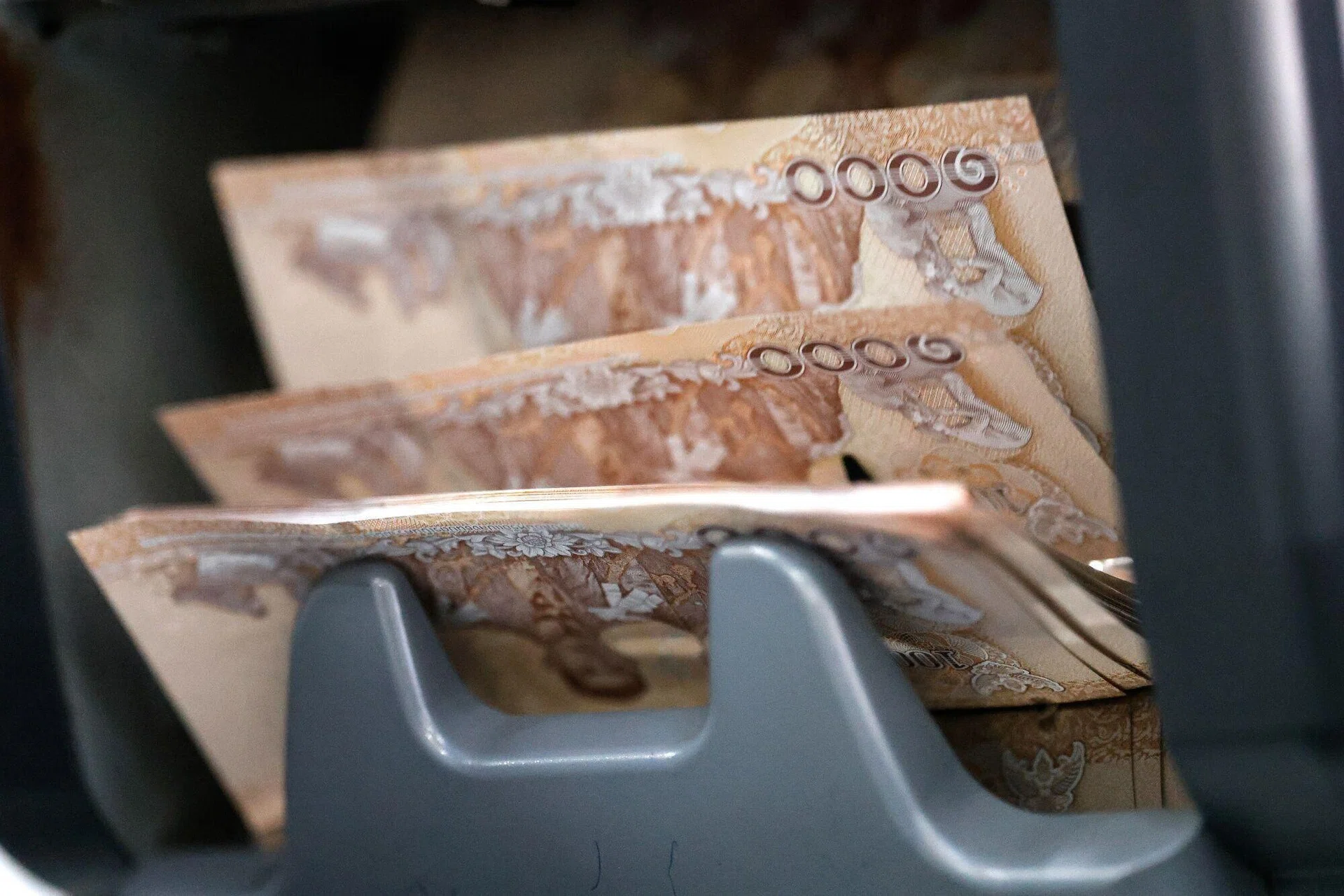
Middle East conflict and rising oil prices could weaken the Thai baht to 33 per dollar. Thailand’s reliance on oil imports makes it vulnerable to increased costs, potentially impacting its trade balance and currency value.
Key Points
- The Thai baht could weaken beyond 33 per US dollar due to rising Middle East war-driven oil prices.
- Thailand’s status as a net oil importer means higher import costs, potentially shifting its trade surplus into a deficit and increasing baht volatility.
- In a prolonged conflict, oil prices exceeding $100 per barrel would likely push the baht to near 33 against the dollar.
Escalating Middle East Conflict’s Impact on the Baht
The ongoing escalation of conflict in the Middle East poses a significant threat to the Thai baht, with K-Research predicting a potential weakening to 33 baht per US dollar. This projection is primarily driven by the anticipated surge in global oil prices. As a net oil importer, Thailand faces a substantial increase in its import bill, which directly impacts its trade balance. The baht has already experienced a decline, reaching a three-month low, reflecting capital flight towards the US dollar as a safe-haven asset. This trend is further bolstered by expectations that the US Federal Reserve may adopt a more cautious approach to interest rate cuts due to rising inflation.
Economic Ramifications of Sustained High Oil Prices
Should the conflict in the Middle East persist, leading to a prolonged period of high oil prices, the economic consequences for Thailand could be severe. K-Research estimates that if oil prices consistently exceed $100 per barrel, the baht is highly likely to depreciate towards the 33 mark. This scenario would drastically erode Thailand’s trade surplus, potentially pushing it into a deficit. The country’s significant reliance on oil imports, accounting for approximately 5-6% of its GDP, makes it particularly vulnerable compared to neighboring Southeast Asian nations. This heightened economic vulnerability contributes to increased volatility in the baht.
Increased Baht Volatility and Market Outlook
Beyond the direct impact on oil prices, the geopolitical tensions are contributing to increased volatility in the baht. Year-to-date, baht volatility has risen to 7.7%, surpassing the median for regional currencies. This elevated volatility, coupled with other domestic economic pressures, creates an uncertain trading environment. In the near term, SCB Financial Markets anticipates the baht to trade within a range of 31.6 to 31.9 against the US dollar. This outlook is influenced by the strengthening of the dollar index, driven by the intensifying fighting in the Middle East and the consequent demand for the greenback as a secure investment.
Source : Bangkok Post – Baht faces pressure from oil upswing
Other People are Reading

I Wouldn't Want To Retire Without These 3 Investments

For the full financial year 2025-26, revenue from operations rose 11.9% to Rs 7,620.9 crore from Rs 6,807.9 crore in FY25. Net profit for the year increased 12.8% to Rs 268.7 crore, compared with Rs 238.3 crore in the previous financial year.
The company said its results include the financial impact of the amalgamation of Sir Shadi Lal Enterprises Ltd, effective April 1, 2025. The figures have been restated to reflect the acquisition date of June 20, 2024.
Triveni Engineering said the National Company Law Tribunal-approved Composite Scheme of Arrangement became effective on May 19, 2026, completing the merger and demerger process. Under the scheme, Sir Shadi Lal Enterprises has been amalgamated with Triveni, while the Power Transmission Business will be demerged into Triveni Power Transmission Ltd with effect from April 1, 2026.
The accounting impact of the demerger will be reflected in FY27. FY26 will be the last year in which the Power Transmission Business forms part of Triveni Engineering’s consolidated results. The business, which operates in the gears and defence segments, will be pursued independently under Triveni Power Transmission Ltd from FY27.


NEW YORK — Seagate Technology Holdings plc (NASDAQ: STX), a leading provider of data storage solutions, has seen its shares climb sharply in 2026 amid surging demand for high-capacity hard disk drives fueled by artificial intelligence infrastructure needs. Trading near $880 in late May, the stock carries a consensus Moderate Buy to Strong Buy rating from analysts, though elevated valuations prompt questions about whether to buy or sell ahead of further AI-driven growth.

The Fremont, California-based company reported strong fiscal third-quarter 2026 results in late April, with revenue reaching $3.11 billion, up 44% year-over-year and beating estimates. Non-GAAP earnings per share hit $4.10, exceeding forecasts, while gross margins expanded to record levels around 47%. CEO Dave Mosley highlighted robust cloud customer demand for the tenth consecutive quarter.
For the fiscal fourth quarter, Seagate guided revenue to $3.45 billion, plus or minus $100 million, and non-GAAP EPS of $5.00, plus or minus $0.20, signaling continued momentum. Management raised its long-term annual revenue growth target to a minimum of 20% over the next several years, citing structural shifts from AI.
Analyst coverage remains predominantly bullish. Across 20-25 firms, the consensus stands at Moderate Buy or Strong Buy, with roughly 20 Buy ratings, a handful of Holds and minimal Sells. Average 12-month price targets range from approximately $746 to $834, implying potential downside from current levels for some models, though high targets reach $1,140 and optimistic calls hit $1,000 or more.
Recent adjustments include Barclays raising its target to $1,000, BofA to $900, and Evercore ISI to $1,000, reflecting confidence in sustained hyperscaler spending. Rosenblatt set a $1,000 target post-earnings, while others maintain Buy ratings citing margin expansion and product leadership.
Seagate’s positioning benefits from the AI data explosion. Hard disk drives remain critical for cost-effective mass storage in data centers, where AI training and inference generate unprecedented volumes of data. The company’s Mozaic platform with Heat-Assisted Magnetic Recording (HAMR) technology enables higher capacities, such as 40TB+ drives, supporting cloud providers’ needs.
Exabyte shipments reached 199 in the March quarter, up 39% year-over-year. Management noted strong visibility from customer agreements and expects sequential growth and margin gains into fiscal 2027.
For investors leaning buy, the thesis centers on a multi-year AI storage supercycle. Seagate’s near-monopoly in high-capacity HDDs for enterprise, combined with improving margins and free cash flow nearing $1 billion per quarter, supports potential re-rating. Some models project fiscal 2026 revenue around $10-11 billion with continued EPS growth.
Valuation has expanded significantly from prior years, with shares up over 600% from 2025 lows. Forward multiples sit above historical averages, raising concerns for bears about execution risks or potential slowdown in AI capex. Competition from solid-state drives could pressure the HDD market longer-term, though cost advantages favor disks for bulk storage.
Financial health appears solid. The company has generated strong cash flow, enabling debt management and returns to shareholders. Recent note exchanges adjusted capital structure without major dilution concerns. However, cyclical exposure to tech spending remains inherent.
Broader industry trends reinforce the opportunity. Hyperscalers continue building out AI clusters, requiring vast storage layers. Seagate’s innovations in energy-assisted recording position it to capture share as capacities scale. CEO Mosley emphasized that agentic AI will further accelerate data creation and retention needs.
Risks include supply chain constraints for advanced components, potential moderation in AI investment if economic conditions shift, and high customer concentration. Insider selling has occurred at elevated prices, though often tied to compensation plans.
Portfolio considerations suggest Seagate fits growth-oriented technology or thematic AI allocations. Position sizing should reflect volatility, as the stock has experienced sharp swings despite the uptrend. Near-term catalysts include fiscal fourth-quarter results in late July and updates on Mozaic 4+ ramp.
Longer-term projections vary. Optimistic scenarios tied to 20%+ annual growth and margin targets see substantial upside if AI adoption accelerates. Conservative views factor in potential saturation or technology transitions, tempering expectations. Discounted cash flow models have at times suggested undervaluation relative to growth.
In the current environment, Seagate exemplifies how legacy hardware players can thrive in the AI era by addressing foundational infrastructure needs. While not immune to broader market corrections or sector-specific headwinds, its execution on financial metrics and roadmap has sustained analyst enthusiasm.
Investors evaluating a position should weigh their horizon and risk appetite. Those convinced of prolonged AI data center buildouts may see current levels as reasonable entry despite the run-up, particularly on pullbacks. Others may monitor for clearer signals on margin sustainability or competitive dynamics before committing.
As with technology hardware stocks, thorough analysis of quarterly trends and industry developments is advised. Seagate’s performance will depend on maintaining leadership in high-capacity storage amid rapid evolution in data center architectures. The ongoing AI investment cycle is expected to provide further clarity on the company’s ability to deliver sustained shareholder value through 2026 and beyond.

Bishop Auckland Mayor raises 4,500 for Butterwick Hospice

Donovan Mitchell Defends James Harden’s Playoff Struggles Citing Jordan and LeBron’s Early Failures

Mindy Kaling ‘Looks Amazing’ In NYC After 40lb Weight Loss

Steven Gerrard disagrees with Gary Neville over ‘shock’ Chelsea and Arsenal claim | Football

US brings back mandatory military draft registration

Register Renaming | Hackaday

Bekommt ihr schon Geld von YouTube ? #podcast #shorts #foodblogg #youtube #money

Crypto Holders: “Bitcoin Will EXPLODE” Top 4 Altcoins!! (I will delete this in 24 hours)

Why Storytelling is Important in Financial Advisor Marketing
-

 Business6 days ago
NYT Strands Answers May 24 2026 Revealed for Puzzle No. 812 Theme Summer Essentials
-

 NewsBeat3 days ago
Israel says it has killed new Hamas military leader in Gaza City airstrikes
-

 Politics5 days ago
Bridgerton Season 5: Cast, Release Date And Everything We Know So Far
-

 Business3 days ago
Selena Gomez Reportedly Upset Over Benny Blanco’s Comments on Her ‘Terrible’ Diet
-
 Crypto World4 days ago
Micron Crosses $1 Trillion Market Cap as AI Demand Reshapes Memory Sector
-

 Tech5 days ago
Microsoft’s quiet Claude Code retreat and the real cost of enterprise AI
-

 Business5 days ago
BTS Sells Out Four Las Vegas Shows at Allegiant Stadium for ARIRANG World Tour
-
 Tech4 days ago
China assigns ID codes to 28,000+ humanoid robots
-

 News Videos3 days ago
XRP *JUST* SUCCEEDED!!!! CLARITY ACT EXPOSED!!! (SHE EXPOSED IT)
-

 Tech1 day ago
Waymo dominates autonomous vehicle registrations as Tesla trails behind
-
Tech3 days ago
The Samsung pay deal is the moment Korean unions changed register
-

 Tech5 days ago
Westone Audio and Etymotic Acquired by Fidelity Collective in Major IEM Market Move
-

 Tech3 days ago
Millions of AI agents imperiled by critical vulnerability in open source package
-
Crypto World6 days ago
Brian Armstrong Outlines Crypto Vision for the Future Financial System
-
 Entertainment4 days ago
‘Breaking Bad’ Star’s Easy-to-Binge 6-Part Crime Series Spin-Off Is Finally Heading to Free Streaming
-
Crypto World3 days ago
SpaceX’s $2 Trillion IPO: Why Tech Giants Nvidia (NVDA), Apple (AAPL), and Microsoft (MSFT) May Face Pressure
-
 Crypto World5 days ago
Nvidia (NVDA) CEO Calls on Super Micro to Strengthen Export Controls Amid Smuggling Probe
-

 Tech3 days ago
NASA taps Blue Origin to deliver lunar rovers for Moon Base initiative
-
 NewsBeat5 days ago
Hottest May day ever as London hits 34.8C in 2C leap from previous records
-
 Crypto World19 hours ago
Snowflake (SNOW) Stock Rallies on Strong Q1 Results and AI Product Growth
You must be logged in to post a comment Login